|
26th March
|
|
|
|
Prostitution customers to be fined $150 to fund re-education
|
From seattletimes.nwsource.com
|
Seattle's Attorney, Tom Carr, suggested that on top of fines and jail time, men now face a $150 fee and re-education classes for patronizing a prostitute.
The Seattle City Council have now approved the fee. The money will go to pay for
re-education classes for both prostitutes and their customers.
Prostitution or patronizing a prostitute is a misdemeanor punishable by up to $1,000 and 90 days in jail.
Carr said his office sees about 100 cases a year of people
patronizing prostitutes, a level that has remained constant over the past 10 years. He did not have figures immediately available on cases of people committing prostitution.
The new legislation extends legislation passed in 1994, when the council
required people convicted of prostitution to take a class on sexually transmitted diseases. The class eventually morphed into a peer-counselling session run by a former prostitute and showed success at helping women get out of the sex trade, Carr said.
Funding for the classes dried up in recent years, so Carr proposed setting up a new fee to fund the classes. He also proposed a class for prostitutes' customers, modelled on a program in San Francisco.
" ou look at men who are
patronizing and you bring in someone who has been a prostitute and humanize the whole person, Carr said.
We are realizing more and more that the person involved in prostitution is in many cases a victim as well, and are often subjected to
coercive violence, threats. It can be a pretty ugly existence. Our desire is to offer counselling and solutions that will move them out of that experience.
|
|
19th March
|
|
|
|
Iceland to criminalise paying for sex and to ban strip clubs
|
|
|
Iceland plans to introduce legislation criminalising the purchase of sexual services, the operation of strip clubs the government have said.
Parliament is expected to vote on the plan before Iceland's general elections on April 25, the minister
said.
Prostitution was legalised in Iceland in 2007 in order to protect prostitutes and make it easier for them to seek assistance and go to the police without fearing recrimination.
The ban on buying sex is aimed at hitting users of
prostitutes.
According to the bill currently being discussed by parliament, anyone who purchases or promises to purchase sexual services can expect fines or up to one year in jail.
Strip clubs are as a general rule forbidden in Iceland
but are allowed to operate with special permission from local authorities. The new legislation would abolish that exception.
|
|
1st March
|
|
|
|
Swedish sex crime on the rise after the ban on paying for sex
|
Thanks to spoonbender
Based on article from bra.se
|
|
|
|
Reported crimes of a sexual nature
in Sweden 1996-2006
|
Over ten years, the number of reported sex crimes has increased by 58% . This increase is probably due to a combination of an increase the tendency to report the crimes and an increase in actual criminality. At the same time, there is a large hidden
number as regards crimes of a sexual nature.
The most common sex crime in the statistics in 2006 was sexual molestation, which made up more than half of all reported offences. Rape constituted around 35% of the reported sex crimes.
|
|
14th February
|
|
|
|
UN denies that low convictions for trafficking may be due to wildly over exaggerated estimates
|
The UK has actively been seeking out traffickers yet has only convicted 79 traffickers in 4 years From independent.co.uk
|
Many of the world's governments are in denial about the extent and seriousness of human trafficking in which women are often significant offenders, according to a report by the UN Office on Drugs and Crime (UNODC).
The study is the first
comprehensive look at the world's trade in humans, drawing on evidence from 155 countries. It warns that the failure to prosecute modern-day slave traders means that efforts to fight the practice are severely hampered. And it draws the conclusion that in
many countries most traffickers are female.
The report found many countries, including China, Saudi Arabia, and Iran, failed to collect useful data on the problem.
Global conviction rates for human trafficking remain as low as 1.5 per
100,000 people. While a fifth of countries, many of them African, have no such offence on their books, the problems extend to many countries which have legislation in place: nearly 40% of the countries examined have failed to record a single conviction.
The problem is enforcement, said Tomoya Obokata, an expert in human trafficking, at Queens University Belfast. Law enforcement officers just don't know the legislation, and they can't identify what trafficking is.
In eastern
Europe and central Asia, women account for 60% of the traffickers, many of them former slaves themselves, the report said.
The British Government has seen 79 of the 217 prosecutions brought against traffickers between 2004 and 2007 result in a
conviction. We are doing fine in the global context, said Dr Obokata. But the conviction rate is low when you think of the number of victims.
|
|
10th February
|
|
|
|
Sex workers suffer predictably loss of trade
|
|
|
A Norwegian law against paying for sex has made a real dent in street prostitution, and for the few sex workers that remain, times are tough.
Since January 1, men caught buying sex face up to six months in jail and in some cases a fine. The
impact of the law has been immediate, with most sex workers disappearing from the streets at once.
The clients are extremely nervous. Most of them don't dare come here, said Nadia, a 22-year-old from Oslo. On a recent nighttime visit to
the centre of the Norwegian capital, only three prostitutes walked the snowy streets, in an area where there previously would have been women at every corner.
Before, you would work until you made 4,000-5,000 kroner (600 to 750 dollars, 450 to
560 euros). Now you have to work all night and you earn only about 1,000-1,500 kroner, Nadia told AFP as police patrols cruise by every few minutes.
The men are afraid to drive by, so they walk up to us, tell us 'my car is parked around
the corner, meet me there', said Michelle, 25, also from Oslo: Before we would go down to the harbour and be back in 15 minutes. Now they drive us out of town, where there is no one, and we're back one hour later .
At least 23 men have
been arrested since the law came into force. Of these, 20 accepted an on-the-spot fine of between 8,000 kroner (1,195 dollars, 898 euros) and 9,000 kroner. Three have refused to pay and will go to court.
The law also affects Norwegians who buy
sex abroad, but as yet no one has been arrested for the crime.
There is as yet no official figure showing whether the law has had a real impact on demand or whether street prostitutes have shifted to the indoor scene.
|
|
8th February
|
|
|
|
P4P criminalisation debated in House of Commons Committee
|
Thanks to Donald, Freeworld & Harvey
See 5th February committee transcript from
publications.parliament.uk
See also
proposed amendments from publications.parliament.uk
|
From House of Commons committee proceedings on 5th February 2009 for the Policing and Crime Bill Comments by Freeworld Nadine Dorries (Mid-Bedfordshire) (Con): We have spoken to a number of sex workers—I
certainly have—over the past two weeks who have chosen to be sex workers as their way of life. That is what they want to do. You went on to talk about the closure orders and what you felt they would do. Will not some of the measures laid down in the Bill
further impinge on the rights of those women to carry out their trade? I was trying to think of a way of putting it, but that is how they describe it, as carrying out their trade. Should we not be moving the emphasis of the Bill? Could it not be drafted
to move the emphasis away entirely from the women? I am thinking of the closure orders and the issue of the three meetings. We have heard from sex workers that many will not and do not want to attend—they regard it as coercion. They would like more in
the way of voluntary help and assistance, if they could have it, but they do not want to attend the meetings or to have closure orders. Do they not have rights too?
Julie Kirkbride (Bromsgrove) (Con): I have concerns about the phrase
“controlled for gain” because, from what we have heard in previous evidence, there will be circumstances in which women in a brothel would be happy with that arrangement, because it is a safer way of operating their trade. Technically, they are in
control of the gain, because there is someone there answering the telephone and sorting it all out. So, while the Government's intention to tackle trafficking is entirely laudable and desirable, the catch-all “controlled for gain” will be more likely to
attack or cause a problem for the better forms or organisation of prostitution. Is there another phrase that could be used, Mr. Lodder, other than “controlled for gain”, which could get the traffickers rather than the blanket? Do not they have rights as
well?
Vernon Coaker : I just want briefly to clarify something. I am sorry if my body language was so obvious. In response to one of the points made in answer to Nadine Dorries, the Government's intention is not to ban prostitution. It
is important to put that on the record. We have never said that a ban was a policy intention. We looked in Sweden at the idea of a full offence of paying for sex, and making any payment for sex illegal, and we thought that was not appropriate; we also
looked at other models. It is not our intention to bring about a ban in a back-door way. Our intention, which I know everyone on the Committee shares, as has been demonstrated by this morning's evidence-taking session, which has explored where we are
rather than being confrontational, has been about how to end exploitation and the exploitative elements, where there is NO FREE CHOICE. Julie and others raised the question of “controlled for gain”, and we have lawyers who say—I am not trying to be funny
about it, because Mr. Lodder has said something on that point—that “controlled for gain” as defined in case law means what one would regard as the common-sense definition. It would NOT be where somebody is helping somebody else: organising, protecting,
looking after them and so on. I am not a lawyer; that is the legal advice that I have had. Certainly, it is something that we are looking at. “Controlled for gain” is a key part of ensuring that we have absolute clarity of meaning. As the Bill goes
through Committee and beyond, we will take up the points that Julie and others have made and look at them to give certainty (oh goodie!-F) , which will help if the Bill should be passed by Parliament (should,
Vernon?-F).
Mr. Coaker : ..The problem with “controlled for gain” is that, as I am told by other lawyers, the control aspect is the ordinary, common-sense, dictionary understanding of the word. In the case of R v.
Steven Massey in 2007........
I am told that control within the meaning of the Sexual Offences Act should be given its ordinary dictionary meaning of directing a relevant activity that included, BUT WAS NOT LIMITED TO (what a world of
difference 4 words can make-F) , individuals who forced another to carry out a relevant activity.
(So there you go...thus saith the Vernon-only people "with no free choice"-forced into it, except, Vernon,
the definition being used does not seem to actually limit it to that at all, and this is exactly what you have said, I think? Doublespeak?-F)
Mr. Campbell (HO) "Yes, but we need to remain focused as far as we can
on the intent of what we are doing, which is to have something in place to tackle the kind of exploitation—whether trafficked women, internally trafficked women or not—that we all agree is wrong. Our view is that our definition, “controlled for gain”,
does not apply outside the group we are trying to address in the legislation. Therefore, many of the concerns raised by the International Union of Sex Workers and others will prove to be unfounded. It is not about whether someone can employ a maid, or
employ someone to give them greater protection and safety in what they do. Our strong advice is that our proposal will not affect that situation, unless there is clear and demonstrable evidence of control" ( will there be some guidance to the
police from the CPS to make this clear then?-F).
Julie Kirkbride (Bromsgrove) (Con): I would like to ask two quick questions, if I may. The POPPY project wants the abolition of prostitution. It thinks that
prostitution should not be allowed, period, and that you should not be allowed to sell your body for sex, end of story. Why not just go for that? One of the other things that the collective was saying was that, under the previous legislation, the phrase
“controlling...for gain” encouraged the police to raid a variety of premises on the basis that there was a madam there, because it fell within the definition of “controlling...for gain” even if it did not fall within the intent of the legislation. Given
that that is its experience, and that your catch-all provision would potentially criminalise many people who are doing something which most of us think is their right to do, if that is what they want, are you not worried that previous experience of the
legislation is that it is a big catch-all under which the police have been carrying out raids which were not necessarily the intention of the original legislation?
Nadine Dorries (Mid-Bedfordshire) (Con): I am not sure why this part of
the Bill is here at all (No? It`s because this is a fascist government, Nadine-F) . I do not believe that most men who go to procure the services of a prostitute have a great understanding of the law. They probably do not
have a clue—they just decide to procure those services, and they go and do it because it is so easily and readily available. I also think that society's attitudes have changed towards that particular industry anyway (but not in New Labour -F)
. Given that the evidence we have heard says that this Bill will categorically make life considerably worse for some of the most vulnerable people—those prostitutes who are in the business as a result of a need, whether drug use,
poor circumstances, poor background, being coerced into it, o whatever—why are we doing it? ( "we" aren`t, the "sort of elected" dictatorship are-F)
Julie Kirkbride : This is the real
world in which the people to whom we are rightly trying to reach are women who have been trafficked and who are terrified of their pimp and everything else. Goodness knows, but I suspect that the kind of people who go and visit those women are not
particularly cognisant of the law and possibly do not even care about it. Who is going to shop them? The police should be raiding these establishments anyway. How are we going to find such people? Two days later, the DNA evidence of what they might have
been doing has gone. I do not understand how they are going to be shopped.
I can see, however, that the pensioner who goes along to see Mrs. Bloggs occasionally and suddenly finds himself criminalised because Mrs. Bloggs was running an
establishment that was not approved under the law will suddenly get a criminal offence and be shamed in his community. On practical grounds, I worry whether the Bill will really get the person who you are looking for.
...
Mr. Coaker (Minister for Security, Counter-Terrorism, Crime and Policing): We should not let this moment pass without reflecting on what is happening in Committee Room 11 today. We have seen a seismic shift. The Government
are introducing a strict liability offence under clause 13, which the Opposition spokesmen have said that they will not oppose. We are debating how to make the clause effective. That is a phenomenal change, as the Government, in the broadest sense, are
looking at how to deal with the problem that we have been wrestling with for decades, indeed centuries.
I do not want to over-egg matters, but when people look back they ought to reflect sometimes on moments such as this. What is happening in
Committee represents a fundamental shift and change in how this country is seeking to look at the whole issue. To be fair to all members of the Committee, that deserves to be put on to the record.
Mr. Ruffley (Shadow Minister for police): I am most grateful to the Minister and I absolutely agree with his sentiments, but none of us in Committee yet know—only time will tell—whether the enforceability problems that many witnesses and some Committee members see will be overcome successfully. The jury is out, but we travel hopefully, those of us who would see the clause pass into law. The Minister was entirely right in what he said. However, it remains the case—this is not a proviso or a conditional comment of any kind—that good law has to be tightly drafted. If there is any suggestion that it is not operating as it should or is not as effective as it should be, or, let us not forget, if injustices are being committed because of the construction of the words or of how judges or prosecuting authorities interpret the words, it behoves any Government to revisit the measure. Bad law ends up being no law at all. On that note of positive support for what Ministers are trying to do, I conclude my remarks.
There are a series of rational proposed opposition amendments to clause 13 from the opposition parties trying to make the bill`s definitions fit "real" /trafficked prostitutes only-.
Details of a few from the
official Conservative opposition-
Tory proposed amendments from James Brokenshire and
David Ruffley (Shadow Home affairs minister, probably in the Home office next year?)
Clause 13, page 13, line 31, leave out
paragraph (b) and insert—
‘(b) any of B's activities relating to the provision of those services are procured by a third person through the use of or threat of the use of force or coercion or B has been the subject of trafficking arrangements by
a third person which would constitute an offence by such third person under section 57 (trafficking into the UK for sexual exploitation), section 58 (trafficking within the UK for sexual exploitation) or section 59 (trafficking out of the UK for sexual
exploitation) which together shall mean “controlled” for the purposes of this section, and to clause 13c) either—
(i) A does not reasonably believe that any of B's activities relating to the provision of those
services are controlled, or
(ii) A is reckless as to whether any of B's activities relating to the provision of those services are controlled.'.
The bill is in commons committee till 26 Feb. Then the report stage.
Comment: Coaker's Relief From Harvey I agree that Dr. Evan Harris is often a fairly lonely, sane voice on matters such as this. The amendments in his and his LD
colleague Paul Holmes` name seek to remove the strict liability element of the P4P offence, and tighten the definition of "controlled for gain".
The amendments by James Brokenshire and David Ruffley would actually extend the offence to
not only those who make or promise payment, but those who know that someone else has made or promised payment. Of the other 3 Tories, neither Julie Kirkbride nor Nadine Dorries even attended the committee when clause 13 was debated, though Dorries in
particular has written about the effect of the law on "working girls" and might have something to say about clause 20, in respect of closure orders.
Dr. Harris was, as I said, a lone voice in committee. No other Opposition member spoke
to criticise the creation of a strict liability offence, so it`s not really surprising Vernon Coaker made the comment he did. Like me he was probably expecting a rougher ride, and you can almost feel the relief in his words. I didn`t think the Tories
would be quite such a push over. Having said I doubted the offence would be created as one of strict liability, I now revise that, and can see it sailing through without much more discussion.
One thing Coaker is right about, is that if that
happens it will be a seismic shift in the way prostitution is viewed by the law.
|
|
6th February
|
|
|
|
P4P criminalisation getting an easy ride in Committee
|
Thanks to Janus17 and the Punternet Forum
See 5th February committee transcript from
publications.parliament.uk
See also
proposed amendments from publications.parliament.uk
|
A report from the punternet forum concerning the latest Parliamentary committee meeting regarding the P4P legislation which took place yesterday...
Evan Harris, as usual, proved to be the voice of reason and common sense. He spoke very well
against the clause as it stands and particularly in the areas of a strict liability offence and that the control for gain clause should not include maids or when girls are working together they have some other person there as security. Nor should control
include people who do advertising / arrange rotas for the girls or where the girls and parlour owners are working in a mutually beneficial arrangement.
Alan Campbell made it clear that those people mentioned were excepted, on the issue of a Madam
however he couldn't give an answer and said he'd come back to that. However, I can't see that he will come back with a definition which excludes the Madam, because then surely this effectively would legalise brothels?
This still has a way to go,
including getting through the Lords, but here's the real kicker. Apparently (and I'm just relaying my findings from the punternet forum) the Conservatives said in committee late on yesterday that they support Clause 13, including strict liability, but it
would seem only on the understanding that control for gain was clarified and did not include maids, security, ladies working together and Madam. Campbell said it didn't but on the issue of Madam he said he'd come back to it. Most worrying thing is that
the Tories, led by Davis Ruffley, who is Vernon Coaker's shadow, DID NOT really appear to have a problem with strict liability per se. Which does not bode well for future NL legislation.
It would seem as though this bill is proceeding with very
minimal changes. What really worries me is that all it would take would be a small oversight, or a bit of wrangling from Campbell and Coaker, and this could get through completely unchanged, with the suggested exemptions in the 'controlled for gain'
description falling by the wayside. Then we'd be faced with a law which is exactly the same as Jacqui Smith's nightmare vision.
Just to add insult to injury, Commandant Coaker then proceeded to indulge in a self-congratulatory spot of
sabre-rattling (doubtless in an attempt to impress Smith), talking about changing history (so did Hitler) and what a moment this was and how they should all take a moment and reflect on this meeting. He also made a comment about a 'seismic shift' in
attitudes. No shit. I smell a VERY big rat here somewhere.
|
|
6th February
|
|
|
|
Singapore MP suggests copying UK ban on p4p
|
Based on article from todayonline.com
|
If you pay for sex with a prostitute working for a pimp, you should be prosecuted. This is the policy shift — being considered in the United Kingdom and Wales — that Singapore MP Christopher de Souza believes Singapore needs as the vice
numbers continue to rise and the serious limitations of police enforcement become apparent.
The number of foreign prostitutes arrested in 2006 and 2007 rose by 34% and 25% respectively.
In 2007, an average of about 100 vice-related
arrests per week were made, with 91% arrested here on Social Visit visas. Those numbers, though, should be put in the context of the 190,000 tourists entering Singapore weekly, replied Senior Minister of State (Home Affairs) Ho Peng Kee, who added: It's possible to tighten up further on checks and screening on female tourists, but this will cause delays and inconvenience and hamper our efforts to promote tourism.
|
|
2nd February
|
|
|
|
Kerb Crawling criminalised in Northern Ireland
|
Based on article from
belfasttelegraph.co.uk
|
New laws to penalise kerb crawling and prostitution were introduced in Northern Ireland on 2nd February 2009.
More laws in the name of youth protection and exploitation also come into effective.
The Sexual Offences (Northern Ireland)
Order, which passed through parliament last year, brings legislation in the region into line with the rest of the UK.
The courts will now be able to impose harsher penalties for a range of sexual offences and new offences of kerb crawling and
soliciting for prostitution have been placed on the statue book.
Criminal Injustice Minister Paul Goggins claimed the new framework was victim centred: The new legislation clearly sets out the parameters of acceptable sexual activity in a
modern society and clearly states what the law will not tolerate. The law puts victims first. They are designed to protect everyone - adults, as well as children and vulnerable people - from abuse and exploitation.
The new offences include :
- Sexual activity involving a child under 13 can mean a maximum life sentence
- Sexual activity with anyone under 16 means a maximum sentence of 14 years
- Rape and other serious sexual assault means a maximum of life
- Offences of
familial sexual abuse, or where an adult is in a position of trust, will apply to young people up to 18
- Offences involving abuse of young people in prostitution or pornography will likewise apply to those up to 18
- Offences relating to
making, taking and possessing indecent images of children will be extended to apply to children up to 18 instead of 16 as at present.
Goggins said: The Order also sets the age of consent at 16 - in line with the rest of the UK. This defines the age in law at which a criminal offence takes place even when consent is given.
|
|
2nd February
|
|
|
|
Criminalisation of Sex Workers Must Be Opposed
|
Based on article from indymedia.org.uk by Ava Caradonna
See
also x:talk
|
The Policing and Crime Bill goes before the House of Commons Scrutiny Committee this week and will hear evidence for a month from Tuesday 26th January through to 26th February. The bill includes proposals to criminalise the demand for sex work by
creating a new offence of paying for sex with a prostitute who is controlled for gain, alongside changes to loitering offences, kerb-crawling offences and brothel closure orders.
The proposed measures threaten the safety and incomes of sex
workers at a time when economic conditions are worsening. It is likely to make sex workers more, not less, vulnerable, making it more difficult for workers to denounce cases of exploitation, abuse or assault at work.
The proposed legislation has
been justified by ministers, including Home Secretary Jacqui Smith, as a means of protecting women who have been trafficked into the UK and are working in the sex industry against their will. But a host of experts have challenged the accuracy of the
government's statistics on trafficking. Labour MP Fiona McTaggart has claimed that 80% of women working in prostitution in the UK have been trafficked or are controlled by a ‘pimp' or drug dealer, a figure the Home Office itself does not endorse. Even
the Poppy Project, a government-funded initiative to support trafficked women, admits it is impossible to estimate how many women are trafficked into the UK. Professor Julia O'Connell of Nottingham University Davidson, who has done extensive research on
trafficking and the global sex industry disputes the government's numbers .
Previous government attempts to ‘rescue' trafficked women have failed to
locate large numbers of victims. In 2006, Operation Pentameter carried out 515 raids on indoor prostitution establishments in the UK and Ireland over four months, identifying 84 women and girls who were suspected of being trafficked. During Pentameter 2
in 2007, 822 premises were raided and 167 trafficking victims identified
In October 2007 Jacqui Smith refused to guarantee that women ‘rescued' during
Pentameter 2 would not be deported if found to be in violation of UK immigration laws. This strongly suggests that the proposed legislation is less about protecting women and more about enforcing immigration law.
We urge all trade unionists and
allies to support the safety and rights of sex workers by opposing the proposed criminalisation and lobbying Members of Parliament to vote against the proposed legislation.
Signed:
The
x:talk project collective
|
|
30th January
|
|
|
|
Even providing condoms is criticised by Swedish nutters
|
Based on article from thelocal.se
|
Malm๖ district council has been criticized for distributing free condoms to customers of prostitutes working in the southern Swedish city.
What sort of a signal does this give if you distribute condoms to men committing a criminal
offence, said local councillor Katrin Stjernfeldt Jammeh to Skๅnska Dagbladet.
The prostitution unit at Malm๖ council announced that it planned to start distributing a parcel of items including condoms and a rape alarm, to
prostitutes. But it has now emerged that condoms are also on offer to those buying sex.
Sweden criminalized the purchase, but not the sale, of sex in a new law passed on January 1st 1999. The law has subsequently been criticized for focusing on
only one side of the problem and that prostitution in Sweden has simply moved underground.
|
|
27th January
|
|
|
|
MPs sign Early Day Motions supporting sex workers
|
|
|
Early Day Motion 523 : Prostitution And The Criminal Law Proposed by Lynne Jones on 20.01.2009
That this House considers that the measures in relation to prostitution contained in
the Policing and Crime Bill, though well-intentioned, are deeply flawed; believes that there is no justification for involving the criminal law in consensual transactions that cause no public nuisance; notes the opposition to the proposals from the Royal
College of Nursing and other members of the Safety First Coalition, who call for an end to the criminalisation of prostitution, which they consider makes sex workers more vulnerable to attack; further notes that police evidence to the Home Affairs Select
Committee has cast doubts on the enforceability of the proposals on paying for the sexual services of a prostitute controlled for gain and therefore opposes these provisions in the Bill; and calls on the Government to make more effective use of existing
laws against trafficking and sexual exploitation and to enlist the support of purchasers of sexual services to help expose those establishments that use trafficked women. Signed by: Lynne Jones, Evan Harris, Mark Fisher, Brian Iddon,
Greg Pope, Alan Simpson, Paul Holmes, Glenda Jackson, Nick Harvey, Andrew George, Rudi Vis, Philip Davies Early Day Motion 524 : Policing And Crime Bill Provisions Introducing Orders Requiring Attendance At Meetings
Proposed by Lynne Jones on 20.01.2009
That this House notes that Clause 16 in the Policing and Crime Bill providing for the introduction of Orders Requiring Attendance at Meetings for those found to be
loitering or soliciting for the purposes of prostitution is simply a rehash of the abandoned proposal in the Criminal Justice and Immigration Bill for compulsory rehabilitation; considers that there is no evidence that compulsion assists in
rehabilitation and agrees with the Royal College of Nursing that the proposal will lead to greater detention of some of the most vulnerable, stigmatised and marginalised people in society whose criminalisation helps institutionalise them in prostitution;
and therefore urges the Government to concentrate instead on providing high-quality outreach programmes, independent of the criminal justice system, which offer healthcare and support, sexual health advice and drug rehabilitation opportunities that
individuals who want to leave prostitution can access. Signed by:
Lynne Jones, Evan Harris, Mark Fisher, Brian Iddon, Greg Pope, Alan Simpson, Paul Holmes, Glenda Jackson, Andrew George, Dai Davies Early Day Motion 525 :
Definition of a Brothel Proposed by Lynne Jones on 20.01.2009
That this House notes with disappointment that the Government has failed to use the Policing and Crime Bill to honour
the commitment in the Home Office report of January 2006, A Co-ordinated Prostitution Strategy and a summary of responses to Paying the Price, for an amendment to the definition of a brothel so that two or three individuals could work together from
shared accommodation; and is concerned that the omission of this provision misses an important opportunity to allow women in the sex trade to work more safely, to have more control over their work and to make it easier for them to leave the trade should
they so wish. Signed by:
Lynne Jones, Evan Harris, Mark Fisher, Mike Hancock, Bob Spink, Brian Iddon, Greg Pope, Alan Simpson, Paul Holmes, Glenda Jackson, Nick Harvey, Andrew George, Rudi Vis
|
|
26th January
|
|
|
|
Bar Council object to the discouragement of prostitution at the cost of fairness
|
Thanks to Janus17
See 2nd Reading Debate from
publications.parliament.uk
|
Re 2nd reading of the Policing and Crime Bill, primarily the section on the criminalisation of men who pay for sex with someone who is 'controlled for gain'.
All the usual noises being made by the ghastly Fiona MacTaggart and good old
goose-stepper Vernon Coaker, but the biggest surprise is the response of Keith Vaz. He may have an utterly unwarranted and prejudiced outlook on the issue of violent videogames, but he's not buying this for one minute. He's clearly not impressed with the
fact that the police have not been properly consulted for their opinion on the proposals either (a pretty fundamental oversight) and, according to Vaz, Fatty Smith seems to have neglected to mention that the police consider the proposals UNENFORCEABLE!
Lots of opposition MPs getting stuck right into the strict liability angle too. The Bar Council seem to be recommending that unless the strict liability aspect of the legislation is amended significantly, it is essentially unworkable:
Problems with the strict liability offence
14. The principal concern that the Bar Council has with the proposed new offence is that a defendant may be found guilty in
circumstances where he could have had no idea at the time that he was committing the offence. The offence as currently drafted risks convictions which may well be seen as unfair by reasonable people. Such convictions would bring the criminal law into
disrepute, particularly given the stigma which would result.
15. There is a further problem with the proposed clause. If the prostitute is controlled by a third party, by offering sexual services he or she will in most circumstances commit an
offence under section 44 of the Serious Crime Act 2007 (And under section 44 of the Magistrates Courts Act 1980). They will almost inevitably (It is possible that he or she may have a defence under section 51 of the Act as a person in a ‘protected
category’) be doing an act capable of “encouraging or assisting the commission of an offence.” A prosecution under this section requires the Crown to prove a specific intent in respect of his or her role, but not for the purchaser of
the sexual activity. The double standard that results is an additional reason why the clause as currently drafted should not form part of the proposed Act.
16. The view of the Bar Council is that the proposed clause as currently drafted is
unworkable, wrong in principle and will create unfairness.
Following the Second Reading debate, the Bar Council will provide a further briefing on how the clause as currently drafted could be, in our view, made more workable.
Conclusion
17. The Policing and Crime Bill 2009 is a substantial piece of draft legislation. It currently runs to ninety-one clauses comprising eight separate parts. The Bar Council is generally supportive of the Bill but urges Parliamentarians to consider
carefully our reservations concerning the changes proposed to proceeds of crime and extradition legislation as well as the provisions that create an offence of strict liability relating to prostitution. While this last provision may serve to discourage
the use of prostitutes, it raises the question of at what cost. If the cost is fairness, that cost is too great."
Now, it would seem, Harman, McTaggart and Smith must rework this so that it does not clash with existing
law, and is deemed acceptable by the Bar Council, police and magistrates.
|
|
25th January
|
|
|
|
Countries to be restricted from US aid unless they reduce commercial sex
|
Thanks to Donald
|
|
|
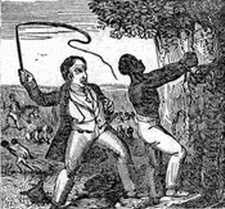
...And if you don't ban slavery...
We'll punish you bad
|
The original William Wilberforce Trafficking Victims Protection Reauthorization Act created the Trafficking in Persons Office, an organization to monitor trafficking worldwide and to rate countries in a three-tier system based on trafficking levels
and government efforts to combat the trade. The most recent revision updates the criteria by which nations are evaluated, requiring that they show serious and sustained efforts to reduce the demand for commercial sex. This new stipulation
is intended to address nations in which prostitution is legal. The bill provides for sanctions against countries that receive poor ratings. Countries scoring in the lowest tier risk losing aid in certain areas, and their officials can be denied
admittance to the country.
|
|
25th January
|
|
|
|
Liberal Democrats accuse Government of driving prostitution underground
|
From libdems.org.uk
|
A mixture of the pernicious, the vexatious and the supernumerary was how Chris Huhne summed up the Government's Policing and Crime Bill, which got its second reading in the House of Commons on 19th January.
The Liberal Democrats did not
call a division on the bill at this stage, but Chris vowed that the party would do their best to amend the proposals in committee.
The most objectionable part of the Bill, according to Chris, was the part dealing with sexual offences and sex
establishments. The Government's proposals would, he said, drive sex workers underground, into less safety, more isolation and a greater risk of disease. He said the right way to protect vulnerable sex workers would be to regulate the sex industry
so that brothels are places of safety.
Evan Harris intervened on the Home Secretary to make a similar point, arguing that driving prostitution underground would make it more difficult to identify women who have been trafficked. He said we should
recognise that prostitution in western societies would not be obliterated and that the key thing was harm reduction.
Paul Holmes, also intervening, asked the minister to explain why the Government were following the policies of Finland in this
area when no successful prosecution had been made in the two years since the policy was introduced there.
|
|
21st January
|
|
|
|
|
Paying for Sex criminalisation bill received 2nd Reading in the House of Commons See article from
publications.parliament.uk
|
|
10th January
|
|
|
|
80% of what politicians say about prostitution is bullshit
|
Based on article from news.bbc.co.uk
Listen to
More or Less radio programme discussing government statistical claims (link valid 1 week only)
|
Plans are afoot to persecute men for buying sex in the name of addressing the issue of sex trafficking. But how big is the current problem? It's hard to know, although that hasn't stopped some people from thinking they do, writes Ruth Alexander,
of Radio 4's More or Less.
Fiona Mactaggart, a Labour MP and former Home Office minister, is a supporter of the government's plans to change the laws on prostitution. In November, she told BBC Radio 4's Today in Parliament that something like 80% of women in prostitution are controlled by their drug dealer, their pimp, or their trafficker.
In fact, it is impossible to find that number in any research done on this subject.
The anti-prostitution campaigners of the Poppy Project found 81% of prostitutes working in London in 2004 were foreign nationals. But foreign doesn't
mean forced.
Yet the two are often confused, says Julia O'Connell Davidson, professor of sociology at Nottingham University and an expert on trafficking and the global sex trade. Some academic and press reports imply that foreign sex workers are
all being made to work against their own free will, she says.
She and her team did some research, ringing up massage parlours and escort agencies in London, asking exactly what sort of services they offered and what nationality the workers were.
It is significant, she notes, that in two-thirds of cases researchers were told the prostitutes would not offer anal sex: That suggests to me that more sex workers in indoor prostitution in London exercise more control over the details of their
working practices than a lot of the commentators believe, says O'Connell.
And she points to high-profile police operations, where the results, in her opinion, do not match the hype.
In 2006, Operation Pentameter carried out 515
raids on indoor prostitution establishments in the UK and Ireland over four months. It resulted in the 'rescue' of 84 women and girls believed to have been trafficked. This was followed by Operation Pentameter 2 in 2007. Again, the results didn't match
the hype. In total 822 premises were visited and 167 victims identified. [and many of the 167 will surely prove to have not been trafficked as the cases come to court]
So that is more than 1,300 premises
raided in total - specifically targeted by police as likely to be abusive - and around 250 women rescued. That suggests the proportion of women in forced trafficking situations, while disturbing, is much lower than 80%.
We do not even know for
sure how many prostitutes there are working in the UK. The consensus is about 80,000. That figure - recently used by Home Secretary Jacqui Smith in an interview about the proposed new law - comes from research done 10 years ago by Hilary Kinnell, when
she was working for an organisation providing health services to sex workers.
Ms Kinnell contacted 29 projects that provided services for sex workers to ask how many prostitutes they were working with. She had 17 responses. The average number of
prostitutes per project was 665. She then multiplied that figure by 120, the total number of projects on her mailing list, to get an estimation of the total number of prostitutes.
That brought the total up to very close on 80,000, which is
still being quoted, Ms Kinnell says. And I find that quite bizarre really. The figure was picked up by all kinds of people and quoted with great confidence but I was never myself at all confident about it. I felt it could be higher, but it also
could have been lower.
Kinnell is the first to point out the possible problems with her method: the centres responding might be larger than most; some sex workers might use more than one centre, and some might not be on the radar at all.
So is Fiona Mactaggart sticking by her 80% figure?
Inevitably it's very difficult to get exact numbers here, she says. But it's a combination of studies, many conducted by universities and so on which are quoted in the Paying the
Price Home Office document [a 2004 consultation paper on prostitution].
Information from the UN suggests there is a very large extent of trafficking, she says, and that most of it is women or children, and that the experience of
most women in prostitution is akin to that of being trafficked. MacTaggart also admitted to subscribing to the US/US nonsense that the economic hardship suffered by prostitutes is akin to being trafficked and is hence counted as
trafficking. This basically means that the UN/US believe that all prostitution can be counted as trafficking and hence the ludicrously high figures like 80% get bandied around. Denis MacShane was also brought to account for his nonsense about
their being 25,000 trafficked prostitutes in Britain. It appears that he read the figure in the Daily Mirror and trusted it because he once worked for the paper.
The Home Office have told us that they do not endorse or use the figure that 80% of
prostitutes are controlled by others.
|
|
5th January
|
|
|
|
|
Step one, inflate the size of the problem See article from theregister.co.uk
|
|
3rd January
|
|
|
|
London police tolerate well behaved brothels
|
Based on article from
thisislondon.co.uk
|
London's Metropolitan police have admitted turning a "blind eye" to many of London's brothels and massage parlours because it believes the public would not support a total clampdown on prostitution.
Commander Allan Gibson told a
committee of MPs the force knew rapidly when sex was being sold and could devote a lot more of its resources to tackling the problem, but chose not to do so.
Gibson, the officer in charge of the force's human trafficking unit, claimed this
was because police felt Londoners were willing to tolerate a certain level of prostitution and a full-scale crackdown would be a very difficult thing to sell to the public. The Met insisted it was determined to stamp out serious criminality
connected to brothels, such as people-trafficking. But the admission that it allows many to operate produced an angry response from fem-Nazis. The Met's stance was revealed in evidence to the Commons home affairs select committee.
Gibson said the
force only raided brothels where it believed serious offences were being committed. We could commit a lot more of our resources to prostitution. Would that be the right thing to do? It is a matter of to what extent we target our resources at this
problem. There is a sense in which there is a tolerance of a certain level of prostitution in society.
Gibson added that prostitution would be a difficult problem to eradicate and conceded, when asked if the Met was turning a blind
eye , that it frequently did so. However, Gibson said raids to combat people-trafficking, rape and other serious crimes were conducted regularly.
He added: I f we were to focus on prostitution alone, I think you would end up in a situation
of saying there is a certain amount we should do but perhaps not exhaust all our resources doing it.
Jenny Jones, a man hating member of the Metropolitan Police Authority, said many women would support a far more aggressive approach: Who
are the Met to decide that we want them to turn a blind eye? This a very misogynistic view which is out of date
London MEP Mary Honeyball, who campaigns against men's rights, described the Met's stance as astounding. Giving brothels
the green light so publicly is to say, 'Yes, we will tolerate violence and abuse against women so long as it's behind closed doors'.
|
|
3rd January
|
|
|
|
P4P ban minister can't even spell his own name right
|
Based on article from pattayadailynews.com
|
|
|
Aaargh Fucking Fem-Nazis!!!
|
The Norwegian Minister Of Justice, Knut Storberget, has stated that all Norwegian sex clients should now be wary and has made it clear that the ban on buying sex also applies to Norwegians purchasing sexual favours outside of the country. It will be
difficult to prosecute, he said, but not impossible.
Pattaya Daily News decided to gauge the reaction to the new law among Norwegian visitors in Pattaya. They chose Kๅre’s Party Bar on Pattaya’s second road, a beer bar popular
among Norwegian tourists who make up 90% of the bar’s clientele.
The co-owner of the bar said the law had long been a popular theme of discussion but no-one took it seriously. He suggested Norwegian authorities should put their own house in
order before persecuting its citizens abroad. He also wondered how the authorities planned to enforce the law in Thailand. Would Norway be sending undercover agents to gather evidence? Would the Thai Police cooperate?
The law also specifically
defines the sexual activities it covers. These include payment for sexual intercourse, physical contact between exposed genitalia, one or two-way masturbation or touching someone’s private parts or breasts. Payment is defined as the exchange
of money, or payment in kind, including the giving of flowers and gifts.
Pattaya Daily News suggested selling t-shirts in Pattaya with the slogan: Have you broken the law today?
|
|
2nd January
|
|
|
|
Miserable Norway can't even read about Pattaya fun
|
From pattayasecrets.com
|
As miserable Norway welcomed in the new year, it introduced a nasty new law making the purchase of sex a criminal act, threatening even to put Norwegians who buy sex abroad behind bars. An interesting corollary to the new law is that it has had a
chilling effect on media that may be seen to be promoting prostitution. A contributor on the Pattaya Secrets forum reports: I work offshore for a Norwegian company and on all our vessels the internet is
heavily policed. I cannot log onto Pattaya secrets because it promotes prostitution, I kid you not it is blocked, along with several other Pattaya forums.
The companies are so paranoid for being held liable for contributing to prostitution that
they have just blanket banned anything to do with prostitution.
|
|
|


