|
January
|
Recognising Good Porn...
|
|
|
|
|
|
From What Satellite
|
 I have always intended to devote more columns to reviewing the content of Euro hardcore channels but find the task just a little too difficult.
The enjoyment of porn and whether a particular star or scene is a turn on is simply too personal.I say
this because I do not know myself what makes good porn. I know it when I see it, but I can rarely predict when I will see it from simply looking at cast and credits.
The introduction of hard disk recorders provided me with an excellent tool to
find things to enjoy. I generally record an entire evening of viewing from one channel and scan it the next day at breakneck speed looking for the gems.
And the gems I find are not well correlated to the obvious stars and studios. It depends upon
settings, interactions or maybe just mood. Far too personal to recommend my own preference to others.
Such practicality is never allowed to get in the way of self promotion though. The adult industry is always happy to give awards to what it
thinks is the best. Probably the most notable industry awards are the US Adult Video News Awards. The Americans excel themselves in bringing glitz and glamour to the event. They even address my own concerns about how personal porn is by including an
award for just about every possible genre of porn. There were in fact 95 categories of awards handed out in January 2006. From foot fetish to BDSM, from all girl to transsexual, you get the picture? The award for the Most Outrageous Sex Scene is simply
unprintable (but you can look for yourself at www.avnawards.com/2006winners.php)
A few more of the more mainstream award winning titles may be worth looking out for on Pay Per View channels:
Best Video/DVD - Pirates
Best Foreign
Feature - Robinson Crusoe on Sin Island
Top Renting Title - The Masseuse
Top Selling Title - 1 Night in China
Best Film - The New Devil in Miss Jones
Of course having 95 awards has the extra advantage to the sales departments that
there are also 500 nominations generated. So next time you see a film advertised as 'nominated for an AVN Award' just remember that this may not be so exclusive as it sounds.
UK satellite viewers may be amongst the most restricted in Europe but
at least we are one step of India.
The Bombay high court on Wednesday restrained cable operators and satellite services from showing any film with an ‘A’(adults only) certificate on television. The court upheld a public interest petition by
activist Pratibha Naithani. Naithani’s lawyer said: "How can a film that has been certified as an adult film be shown on TV, which is watched by the entire family, including children?"
Better news for Norwegians though.Norway's Supreme
Court cleared editor Stein-Erik Mattsson of charges related to publishing hardcore pictures in one of his magazines. This sets a legal precedent and effectively legalises hardcore magazines.
Satellite channel, Canal+, said they had no immediate
plans to drop the black bars that obscure the action on their late night erotic films though. They interpret the ruling to apply to the printed medium and not film. Luckily for satellite viewers, these black bars are in fact generated by the subtitle
text facility and can be simply turned off.
It is a pity that it is not so simple to work around UK censorship. However things will surely be getting better in the very near future. The age of Internet TV should let us view the hardware that want
on our TV. Hopefully it will available as another set top box to make it easy for all, not just computer users. Of course Governments are aware of this and they are now sniffing round the issue of regulation. But it simply isn't going to be easy for them
to exert the control that they can over satellite TV. I really do think that I will soon be recognising good porn streamed to my UK TV. Perhaps I will even be able to view the award wininng Most Outrageous Sex Scene.
|
|
February
|
Not So Nasty...
|
|
|
|
|
|
From What Satellite
|
 "Snuffed Out: Cops swoop to seize 3,000 sick killer videos".
The Daily Star front page carried this lurid headline back in 1992. By 2003 the BBFC, the British censor, had passed Snuff, the seized video uncut, suitable for
adults, and of course suitable for screening on satellite TV.
Video nasties came to the attention of sensation seeking newspapers in 1982. Video shops were in their infancy and distribution companies were looking to sell their cheap acquisitions.
So marketing departments dreamt up some pretty outrageous cover art to catch the eyes of the video shop browser. Rather predictably, the video sleeves also caught the eye of the tabloid press.
There seemed no limit to the world's ills that could
be blamed on the video nasty. The press, police, prosecutors and politicians had a field day. The press dredged up the titles, the police raided, the prosecutors prosecuted and the politicians promised a censorship system that the KGB would be proud of.
By 1984, 74 videos had been identified as prosecutable under obscenity legislation. And a goodly number of videos were indeed successfully prosecuted. In 1984 the Government supported Video Recordings Act came into force that requires that state
appointed censors must pre-vet nearly every second of video and DVD that is sold in the UK.
For the next 15 years the BBFC, appointed as state censors, cut, banned and mutilated practically every sex/horror/action video that was ever released.
(Maybe a little sensationalist exaggeration here).
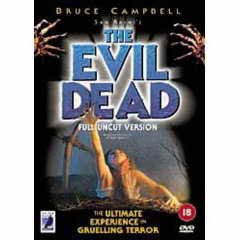
Sam Raimi's Evil Dead proved to be a fine example of mistreatment at the hands of the censors. It is was not an obscure cheapo exploitation video, but a mainstream horror movie that had a very
successful run on the big screen. The censor had already demanded 17 cuts totalling 59s for the 1982 cinema release. The video nasties scare caused him to change his mind and he decided that the video release needed 41 cuts totalling about 2 minutes. He
went through the video with a toothpick to ensure that we didn't get to see any violent abuse of zombies. For example the repeated slapping of a zombie's face was reduced to a single slap. The amount of time he must have spent detailing and debating 41
cuts must have been significant. Yet one wonders if it made a single significant difference to the moral well being of Britain. One suspects not, particularly as all 41 cuts were to be officially waived 11 years later.
Perhaps due to the
ruthlessness of the censorship, the video nasty issue quickly faded from the interest of the press. It was no longer so easy to blame videos when they were approved by the censors. In addition, the BBFC quickly learnt to use 'expert opinion' to defend
their decisions. Even politicians and the press can't argue with 'experts'.
There was a bit of a blip in the fading of nasty memories when the James Bulger killings were blamed on the Child's Play video. This resulted in increased BBFC powers to
censor home video even more strictly than cinema films but time was already well into the healing process.
Perhaps the final demise of the video nasty occurred when James Ferman, the rather autocratic, secretive and self important censor was
pushed out for allowing a little hardcore sex without Government approval.
The next generations of film censors decided that their work should be transparent and accountable to the public. Most of the cutting and banning simply did not stand up
to such scrutiny and censorship policies were quietly relaxed.
In the meantime the original video nasties had become rather collectable. The arrival of DVD provided the ideal excuse for distributors to tap into the notoriety of the films and the
video nasties gradually crept back into the shops. By my count, (I may have missed a few), 28 of the 74 original nasties have reappeared without any need for cuts. Two of them were actually passed as suitable for 15 year olds. 32 were passed after censor
cuts and many of these would not be cut if they were resubmitted today. Only 2 of the nasties have been banned and perhaps 3 or 4 more would require cuts if re-released now. The remaining videos have failed to appear simply because they were not good
enough or have been lost.
So when you catch the Evil Dead on TV; or when you get to see Don't Go Near the Park, Tenebrae or Evilspeak on the Horror Channel (recently changed to Sky 321); don't forget to reflect that in 1980's Britain you would be
considered depraved and corrupted by what you have just seen.
And if you have just fallen asleep during a showing of Snuff then don't forget that just about every politician, policeman and journalist of the 80's fell hook, line and sinker for
those unbelievably cheesy special effects.
So how times have changed! Or have they? Perhaps the focus of blame for all the world's ills has simply moved onto computer games or cartoons!
Finally, look out for a repeat showing of Blood
Sucking Freaks on The Horror Channel. I was rather glad that the special effects were rather less than special. In fact if somebody did a modern high quality remake, I think it would be me that would be urging the cops to 'swoop and seize 3,000 sick
killer videos'
|
|
March
|
Censorship Crazy...
|
|
|
|
|
|
From What Satellite
|
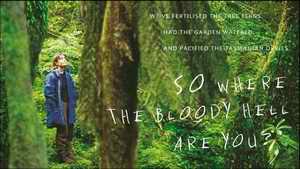 "Where the bloody hell are you?" asks the Australian Tourist Board. Or at least they do in the press, in magazines, at the cinema and on the web.
When it comes to advertising on TV, the British Advertising Clearance Centre were simply
not impressed by the adjective, 'bloody', and were inclined to ban it from the airwaves.
The Australians took it as an opportunity to gently mock the British censors and it was kindly pointed out that the offending word is a favourite with no
less than our very own royal princes. One Australian ministerial visit later and the censors relented.
Of course the Australians are themselves a little shaky when it comes to occupying the moral high ground. They had all sorts of problems their
version of Big Brother when it came to drunken nudity in the shower... And there wasn't even the hint of a wine bottle being used as a sex toy.
The Australian Government are hardly on the high ground in accepting a little satire either. A parody
web site was set up in which their Prime Minister, John Howard, seemed to make a speech apologising for the Iraq war. The site was down for two days before a phone call from Melbourne IT advised the owner that it had been shut down 'on the advice from
the Australian Government'.
Henry Rollins found another good reason to stay away from Australia. He was reported to the National Security hotline during his recent Australian tour because of a book he was reading on flight to Brisbane. A furious
Rollins was informed he was "nominated as a possible threat" for reading the book, Jihad: The Rise Of Militant Islam In Central Asia.
Rollins then received a letter from the Australian government warning him not to read such books in
future. His response was to post the letter on his web site and tell the Australian government why the bloody hell he will never visit again. (Actually he said something a little ruder, so I had to self censor).
The animated comedy, South Park,
has been doing good wind up business in the Southern Hemisphere. Even New Zealand's prime minister, Helen Clark, joined in the uproar against the notable Bloody Mary episode. She said she had not seen the show but that it sounded "revolting".
The episode depicts a statue of Mary, mother of Jesus, bleeding. People declare it as miracle but Pope Benedict XVI puts it down to menstruation, rather than a miracle.
Broadcasting Standards Authority chief executive Jane Wrightson sagely said
that any attempt to stop the cartoon being aired is state censorship and that's not what we do.
Catholic Church in New Zealand spokeswoman Lindsay Freer called the broadcast an arrogant, cynical and unethical effort to capitalise on the debate
and boost ratings...And guess what, it worked, The Bloody Mary episode enjoyed six times the usual audience for South Park.
South Park also caused a stir the US.The comedy has been picking off targets for some gentle mockery for quite a while but
taking on the Scientologists generated more flak than usual. A scheduled repeat of the Trapped in the Closet episode was pulled apparently to avoid jeopardising an advertising budget under control of Scientologist movie star Tom Cruise.
Not only
is this the first time that the South Park creators have been officially censored in their ten hit seasons with Comedy Central, Viacom officials also reportedly ordered Matt Stone and Trey Parker not to discuss the reason why their episode was cancelled.
Other casualties result from the Trapped in the Closet episode. Isaac Hayes, the deep-voiced soul singer, quit his role as Chef saying that the satirical cartoon television show has overstepped the mark with its ridiculing of religion. Hayes, an
outspoken Scientologist, had somehow managed to tolerate the ridicule of other religions without quitting since joining the cast in 1997!
The Land of the Free is always provides inspiration when seeking examples of crazy censorship. My favourite
example this month is from a debate amongst the Kentucky legislature with the purpose of limiting striptease to a stage 2 metres from customers and raised by at least half a metre. The argument that carried the day was from Kent Ostrander,
executive-director of the Family Foundation of Kentucky. He contended that patrons are catching sexually transmitted diseases from the placing of a tip in the waistband of a stripper's attire. State Senator Perry Clark chipped in with the observation
that adult businesses wouldn't thrive if so many people didn't patronize them. He added that if church members would stop going to these places, we wouldn't have to deal with this issue.
The Americans may have fined CBS $550,000 for airing Janet
Jackson's nipple, they may get in a pickle over scientology, they may get worked up by a naked stripper but at least they can bloody well advertise: "where the bloody hell are you?" without a fuss.
|
|
April
|
Bullshit Regulations...
|
|
|
|
|
|
From What Satellite
|
 It seemed that the whole world was enraptured by the sight of Janet Jackson's nipple popping out at the 2004 Super Bowl. The US were shocked at the extent of the indecency and the rest of the world were shocked at the extent of the American prudery. It
made a good story at the time but few would have guessed the resulting waves would still be gaining momentum two years later.
It seemed that the whole world was enraptured by the sight of Janet Jackson's nipple popping out at the 2004 Super Bowl. The US were shocked at the extent of the indecency and the rest of the world were shocked at the extent of the American prudery. It
made a good story at the time but few would have guessed the resulting waves would still be gaining momentum two years later.
The escalation started when US politicians seized the opportunity to hike the fines that could be imposed by the TV
regulator, the Federal Communications Commission (FCC). The FCC were no doubt under pressure from the religious right and did indeed invoke hefty penaties.
CBS were hit with fines to the total of $3.6 million. Janet Jackson's wardrobe malfunction
cost the network $550,000. That was not quite so painful as the fine for the depiction of a teen orgy in the series, Without A Trace. The fines totaled $2 million when 72 affiliate TV companies were each made to pay $32,500.
The MTV channel, VH1,
was also stunned to find that pixelation of the naughty bits doesn't appease the FCC. VH1 was fined for an episode of The Surreal Life 2 where hardcore actor Ron Jeremy and Andy Dick attend a nude pool party. Although the nudity was pixelated, the FCC
concluded that despite the obscured nature of the nudity, it is unmistakable that party goers are exposing and discussing sexual organs.
Probably in the simple world of the politicians and FCC, the networks should have just paid up the easily
affordable fines, cleaned up their act and moved on to produce high quality family friendly TV. Things are never quite that simple.
The nub of the problem is that the TV indecency regulations only apply to broadcast TV and in particular are not
applicable to cable and satellite TV.
Cable is massively popular in the States and provides some heavyweight competition for the broadcast channels. HBO are a major player and have been very successful with their Sex in the City and Sopranos
series. The broadcast networks are pretty angry that HBO are allowed to make series that feature nudity and gritty language, when they themselves are restricted by FCC fines and regulation.
The FCC recently upped the stakes in strong language
too. They declared that 'shit' and all its variants, including bullshit, are not merely indecent but are now profane if broadcast. That is a profound distinction. Legally, a profane word is "certain of those personally reviling epithets naturally
tending to provoke violent resentment or denoting language so grossly offensive to members of the public who actually hear it as to amount to a nuisance". In effect they had moved 'bullshit' to the same level of offence and prohibition as 'fuck'.
I can almost hear the roar of 'Bullshit' in the boardrooms of the TV networks. The four major networks, ABC, CBS, NBC & Fox soon got together to challenge the FCC in federal court. They are seeking to overturn a ruling that found the CBS News
program, The Early Show, Billboard Music Awards on Fox and ABC's drama NYPD Blue to be indecent because they contained variations on two obscenities: 'fuck' and 'shit'.
The networks want the FCC to not only reverse its ruling, but also to
establish clearer guidelines about what is indecent. It seems the networks will now challenge pretty much every FCC penalty with their combined and not insignificant finacial muscle.
No doubt the ensuing court reports will have to censored to
bleep out the expected strong language.
Our own TV regulator, Ofcom, tend to be a little more diplomatic over issues of strong language.
A recent complaint about strong language during an interview with Charles Dance on the Paul O'Grady
show was handled somewhat differently to the Americans. The teatime interview featured such colourful terms as 'shit', 'wanking' and 'bitch'.
ITV said that this was an unfortunate and unwelcome element to this show. The production team had taken
steps to establish whether Charles Dance would be likely to swear. They had been assured that this was not the case.
Paul O’Grady made it clear to Charles Dance after he said 'shit' that it was not acceptable to swear. The actor appeared to
accept that he'd made an error and to understand. Inexplicably, he went on to swear again.
Ofcom concluded: "We agree that the swearing was unacceptable for broadcast in this programme, broadcast at this time of day. However ITV took
reasonable precautions to ensure that such language was not broadcast during this early evening show. The broadcaster’s compliance record with this series demonstrates that its efforts were generally successful. We consider the matter resolved".
I wonder what it will take before the FCC will say the same about strong language: "We consider the matter resolved".
|
|
May
|
Pirates...
|
|
|
|
|
|
From What Satellite
|
The British video censors recently donned their best eye patches, hooks and parrots; they armed themselves with some fierce cutlasses and went on a raiding party. They showed no mercy whilst they pillaged and hacked the very soul out of the hardcore
fantasy, Pirates. Before the day was done, 94 minutes and 13 seconds were cut and plundered, no doubt to be buried where X marks the spot.
The censors, the BBFC, justified their misdeeds with the statement: "Cuts were required to potentially
harmful and abusive images - knife blade pressed on nipple / breast; and images which render woman incapable of giving or withdrawing consent - bound and gagged while engaged in sexual activity". Cuts were are also required to sight of urination
during masturbation, censor speak for female ejaculation.
It is totally ludicrous to suggest that such a major production featured any lack of consent. The BBFC are clearly living in a fantasy world where the slightest possibility of a risk is to
be taken as proof that all the worlds nutters will be inspired to go raping and pillaging. The BBFC are living in Never Never Land and should be keel hauled.
Although the cuts were severe, the original film by Joone was very long, and the end
result still has a running time of 175 minutes. The R18 film is marketed by Digital Playground as a triple DVD set.
Pirates is a major American feature that has been doing well for adult awards. It is billed as the biggest epic in the history of
adult films. The swashbuckling adventure follows a deadly sea chase between a villainous pirate, and a playboy pirate hunter through the bloody waters of the Caribbean Sea. Pirates sees action from deadly swordplay against skeleton warriors to firing
cannons and offshore fight scenes. With 10 sex scenes, awe-inspiring Incan magic and grandiose sea battles, Pirates is the most comprehensive movie the adult industry has ever produced.
Now before you dismiss this as hype, it is interesting to
note that Pirates, has been named one of Home Cinema Choice magazine's "Top 50 Greatest Import DVD's of All Time". Pirates is the only adult DVD to make the list. It is ranked at number 38, appearing above such Hollywood hits as Godzilla and
Clerks, and alongside T2 & Kill Bill.
It was excellent to see that a hardcore production is able to compete with mainstream films. Now if only we could see the full version (or even the censored hardcore R18 version) on UK satellite.
It was also excellent to see the satellite censor, Ofcom, take a bit of stick in The Guardian newspaper.
Charlie Brooker reviewed the Dr Who spoof, Dr Screw, on the Adult Channel:
"What got me was this: the pornstar cast are clearly having genuine sex - yet thanks to our hopeless censorship laws both they and the programme's editors are
forced to perform a bizarre game of muckypup peek-a-boo as they do so".
"The end result is a nonsensical compromise. It's OK to see an erect penis, apparently, but you can't see it penetrating anything... except sometimes you sort of
can. Cunnilingus is shown in fairly explicit detail, while blowjobs are hidden behind cupped hands or strategically-posed thighs... except sometimes they're sort of not. It's like an orgy that can't decide how rude it wants to be".
This
present fudge just makes Ofcom look like bigger idiots than the pornographers themselves. And that's saying something".
One of the issues that could undermine Ofcom's ludicrous ban on hardcore is the emergence of free to air adult
channels. The current Ofcom programme codes states that R18 hardcore is banned totally from all channels. 18 rated softcore can be shown, but of course it can also be shown on free to air channels after the watershed.
Readers have been noting
that the free to air Playboy One on Sky is showing material that is sometimes stronger than seen on the encrypted pay channels such as the TVX: The Fantasy Channel. Fleeting glimpses of hardcore have also been spotted, so even there, they are rivaling
the encrypted services.
Perhaps someone may twig that the king is not wearing any clothes (His naughty bits will surely still be obscured by an inconvenient plant pot though). What is the point in paying the subs for softcore when the same is
available free of charge. Maybe this will stir the UK adult channels into taking up their cutlasses and making a legal challenge to Ofcom's rights abusing programme code. Hopefully it can then be buried alongside the missing 94 minutes from Pirates.
|
|
June
|
Seeking the Holy Grail
|
|
|
|
|
|
From What Satellite
|
 Satellite X has a holy grail. It takes the form of a little black box connected to the TV, satellite dish and telephone. When I tun it on has a simple display looking something like Google. I type in a film title, part of a title or genre. A
couple of key clicks later I sit back with my wife/girl/beer as appropriate and watch whatever film takes my fancy, unimpeded by censors and regulators.
Satellite X has a holy grail. It takes the form of a little black box connected to the TV, satellite dish and telephone. When I tun it on has a simple display looking something like Google. I type in a film title, part of a title or genre. A
couple of key clicks later I sit back with my wife/girl/beer as appropriate and watch whatever film takes my fancy, unimpeded by censors and regulators.
As with all the best Monty Python style holy grails, there are still a few multi-headed
monsters that need to be defeated on route. Some of the monsters will surely prove to be fearful opponents, those that control payment services, technology and digital rights.
But some of those blocking the way will prove as ineffective as the
Black Knight from Monty Python and the Holy Grail.Our very own film censors seem keen to set themselves up in this role. They speak with honour and respect earned in days long since past. They forge their armour from misguided confidence in their ability
to inform and protect society. They arm themselves with inflexible blades best designed to cut and hack at physical film and video.
But just like the film, they will surely be left on the wayside as a limbless wreck once they cross swords with
the might of the Internet. The momentum, the flexibility and the modern Internet weaponry will prove more than match for the antique ideas of the censors.
In fact the UK film censors (BBFC), have offered up their services as the Internet censor.
In their recent annual report, the President of the BBFC, Sir Quentin Thomas, called on the Government to bring together commercial, regulatory and creative interests to consider how best to provide the public with information that may assist them to
choose which content they wish to consume and how to protect children and vulnerable people from harm.
The BBFC’s Director David Cooke added: "We are putting a good deal of effort into researching, and speaking to others about, the
implications of the growth of new media for our system of regulation. We do not argue for regulation except where it is genuinely needed. But effective regulation has clear benefits: the prevention of harm; enabling informed choices; creating a safe
environment within which to enjoy creative content. We regularly see and deal with material, whether so-called ‘extreme reality’, abusive pornography, or simply content which is unsuitable for the age group to whom it is addressed, where our intervention
is clearly necessary. We believe we have unique expertise and experience to offer".
All very laudable sounding, but a few weeks later a more threatening tone emerged. I would guess that the BBFC have been talking with the Home Office about
the "regulatory hole" that appeared due to the invention of the Internet.
Pornography has always been regulated by the Government who generally set the line as to what is legal and what is not. For everybody's convenience, censorship
laws were originally applied to the 'few' sellers as opposed to the 'many; buyers. So if the police come across, say a spanking video, (still deemed obscene by our Government), they could find someone, ie the seller, to bring to book and to block the
supply. This approach is supplemented by Customs who seek to prevent purchase from abroad.
With the Internet, the seller will be located abroad and cannot be touched. Customs have no jurisdiction over electronic transfers so cannot prevent the
import of a downloaded movie. And finally there is currently no law preventing the purchse, download or ownership of an 'obscene' spanking movie. Effectively the Internet is a massive loophole in the Government's control of our viewing. So Suddenly
spanking movies are effective legal.
The Government is clearly not pleased. So it was hardly surprising when the BBFC started to allude to closing this regulatory loophole.
Have you noticed that when people talk about imposing censorship,
they always say "I don't believe in censorship...BUT..." Well Sue Clark, spokeswoman for the BBFC proved no exception.
She started by saying that the huge growth of online video content risked making the regulation of old media
redundant as more and more people get access to video over the Internet. She said that people recognised that the Internet may not be regulated, ...BUT... expected certain types of content such as films to have passed through a classification process.
She proposed (sensibly) that the BBFC certificates, U, PG, 12, 15, 18, R18, could be used to label Internet content as they are now very familiar to British customers. But then she continued "We don't want to go down the route of cutting and
banning things and blocking sites...BUT... a lot of the content that's out there on the Internet is not something the majority of people would want to view".
She cited the example of Terrorists, Killers and Middle East Wackos, a compilation
of video clips of actual killings and terrorist attacks. The compilation is banned on video or DVD in the UK because the BBFC believed it to contravene the Obscene Publications Act, but it is freely and legally available on the Internet through
file-sharing sites.
Then she picked up on the regulatory hole: "The BBFC knew of at least one distributor who sees video-on-demand as a way of getting around its controls on pornography: This guy has stated that he will be putting stuff out
which the BBFC will not classify. He has to be prosecuted to stop that".
But before we all start to worry it should be noted that there is just too much content provided by too many web sites to make the idea of pre-vetting video anywhere
near tenable. According to the Guardian, the video site YouTube sees 35,000 new clips added and 30m clips downloaded every day, while it would take almost 500 years to watch all the content currently indexed by Blinkx, which claims to be the largest
online video search engine.
Hopefully watching this amount of video will keep the censors occupied whilst I continue the search for the holy grail.
|
|
July
|
What's Cut & What's Not...
|
|
|
|
|
|
From What Satellite
|
An article in the Daily Telegraph caught my eye recently. It seemed to be a tearful nostalgia piece harping back to a long forgotten Golden Age of Film Censorship.
The authors were referring to the 1970s when an amazing 27% of cinema films
suffered cuts from the censors (BBFC). This figure has now declined to 3% of cinema films released over the last 10 years.
So when you sit down to watch Sky Movies you may like to ponder what it is that is still being cut from a few of the films
that you are paying good money to view. I will leave a discussion of the censorship of 18 rated films for another time and will concentrate on the more mainstream films on Sky.
All cinema films cut so far in 2006 have the same underlying reason.
Marketing and profit. All were cut to achieve a 12A rating (Open to anyone over the age of 12. Younger kids are also allowed if accompanied by an adult). In fact all the cut films could have been shown uncut with a 15 certificate. Maximising the
potential audience is usually considered more important than the ethics of showing movies as the makers intended so the distributors chose to make the cuts.
Hollywood productions now have very tight marketing strategies to ensure their target
audiences are achieved. In fact there have been no cinema cuts so far this year to any Hollywood titles. Foreign language films though have suffered trims to remove strong expletives, bloody injuries and details of a suicide.
Hollywood has been
known to trip up occasionally though, as in last year's Zathura - A Space Adventure. The censors felt that showing an aerosol being used as a blowtorch and setting fire to a sofa may prove too educational for inquisitive young teens and so the scene was
cut.
A New Zealand/British film called In My Father's Den was cut to achieve a 15 (rather than an uncut 18). A 2 minute scene showing consensual asphyxiation was removed. Presumably due to, "don't try this at home", thinking.
The only other recent cinema cut I could find was to Chairman of the Board. A 2 minute cockfight was considered to be real animal cruelty and was therefore deleted. Note that this is the only cinema release so far in 2006 that has suffered mandatory cuts.
Modern films are generally produced with almost exaggerated care to ensure that "no animals hve been harmed during the making of the film". In fact most countries have humane societies that ensure that these claims on the credits are
true. But this was not always the case.
Cuts to animal cruelty are very common for the DVD and video releases of old films. Re-releases of Lassie, Tarzan and even Charge of the Light Brigade have seen animal cruelty removed. It seems like most
cowboys and indians fight scenes featured a horse fall usually caused by a trip wire. All such scenes are routinely cut.
Pester power is usually associated with kids, but the BBFC also seem to suffer from parental pester which results in a very
low tolerance of strong language in kids films. No doubt the youngsters are well used to swearing in the playground, but even occasionally used expletives used to good dramatic or humorous effect are routinely excised. No doubt these cuts are nominally
voluntary, but it would be commercial suicide to saddle a kids film with a 15 certificate. Recent examples include The Pacifier with Vin Diesel where the cruel word 'spazz' was replaced by 'crud'
The BBFC always make a point of also being strict
on the portrayal of drugs. In reality though cuts of drug use are rare. Americans, and Hollywood in particular, take a dim view of drug use, which even when shown, is rarely promoted or glamourised. In fact you can usually rest assured that any character
taking drugs in a US movie will eventually get their comeuppance. This morality tends to keep the censors at bay on this issue. A party scene featuring fun with bong proved the excpetion and was cut the from the 12A rated Dukes of Hazzard. The scene was
restored though for the 15 rated DVD release.
Suicide is always treated seriously by the censors even when not treated seriously by the filmmaker. A 3 minute song was cut from the Out West episode of the Ren and Stimpy show. The BBFC simply did
not see the funny side of cartoon characters dancing when hanging by a noose and a short length of rope. More seriously, several suicide scenes have been cut because they show methods that are effective but not well known. Obviously the BBFC want to keep
it that way.
And just to finish by noting that BBFC cuts do apply to most modern films shown on UK satellite TV.The regulator has specified that all UK channels should show the BBFC censored home video versions of films where they exist and are
still relevant.
Surely a little too much censorship for my tastes, but I am sure glad that we have moved on from the Daily Telegraph's Golden Age of Film Censorship.
|
|
August
|
Economics...
|
|
|
|
|
|
From What Satellite
|
 I try to keep my ear to the ground on all topics to do with regulation and censorship. I have always felt that these issues shape the direction of sex on TV.
As hardcore becomes ever more commonplace I an starting to realise that
economics is surely more influential than regulation.
One of the first books I read about the economics of the adult market was Porn Gold by David Hebditch & Nick Anning. The basic premise was that 10% of the adult male population were keen
subscribers to hardcore. The gold from the title was referring to the income from customers willing to pay good money for their hardcore. And 10% of adult males is an awful lot of customers.
In those days porn meant big bucks. I remember paying
£30 for my first adult video tape. To this day, high end DVDs still cost £30 but my income has increased 10 fold in the meantime.
My first subscription to X rated TV was a bit of a disaster. I paid £120 for 12 months viewing of the doomed
channel, TV Erotica. It went bust just one month later. But I did not feel that I lost out. The channel showed high quality films that would surely cost £30 each if bought on VHS. Repeats were few and far between for that first month and I made
recordings of enough films to consider that I still had a bargain.
The channel was driven out of business by the UK Government using a proscription order preventing marketing of the channel. I naively thought that once censorship became a
thing of the past, then such channels would be guaranteed a secure future. High quality porn on tap.
I was wrong!
What I had failed to consider was that: when porn became legally available on satellite then it would also became available
via many more media such as your local sex shop, mail order and the Internet.
There are so many adult films available in the marketplace that prices are being driven rapidly downwards. My ideal of a channel showing high quality films for £120 a
year got replaced by a four channel package priced at £60 a year. And the quality of films shown dropped accordingly.
Given the existence of free low quality channels on the Internet, free 'shared' DivX movies and knock-off DVDs costing £1.50
from my local market trader I wonder exactly how any TV channel can hope to get people to pay for premium content.
I have just been following an Internet discussion about the availability of British made material in sex shops. Fans of Brit porn
were complaining that it is becoming hard to locate good material in amongst the dross that is being packed onto the shelves. Again the problem is occurring as swathes of very cheap films are pushing out the gems. Distributors are buying job lots of
featureless titles very cheaply, packaging them up in attractive boxes and swamping the shops. A scan of the shelves reveals little to distinguish the good from the poor. They are presented as a jumble of pretty coloured boxes with unknown stars and
unknown labels. Very much a lucky dip.
The nature of pornography is not really conducive to discerning tastes. A pretty fresh faced starlet featuring in a cheap film can often be far more of a turn on than a rather jaded, but well known actress,
being rendered featureless by big hair, excessive make up and tired direction. By the time an attractive starlet has played in enough videos to get well known, her sell by date is rapidly approaching.
I rather guess that the direction of adult
entertainment is going to be multiple channels of very cheap material with viewers frantically tapping away at the remote control button trying to locate a scene that catches the eye as a potential turn on.
The management of adult channels will
be throwing their hands up in despair wondering how to get their viewers to pay more than £60 a year to subscribe to a package of 24 channels. And yet those same viewers will happily go and spend £60 on a single nights revelry at a lap dancing bar.
Economics... I never did understand the subject.
|
|
September
|
Re-animated Nasties
|
|
|
|
|
|
From What Satellite
|
 2006 is proving to be a vintage year for satellite horror. Particular accolades go to Zone Horror and Film Four for some landmark broadcasts.
It was only twenty five years ago that a wave of press hysteria swept through the land.
Perhaps well characterised by Lord Coggan, previously Archbishop of Canterbury who said: "Video nasties are the product of diseased minds. I would put those who knowingly pedal video nasties with those who pedal drugs".
During this
period people were being put in prison for selling these so called video nasties. An unfortunate London video shop owner was sentenced to 12 months for renting out a handful of copies of "I Spit on Your Grave" and "Nightmares in a Damaged
Brain".
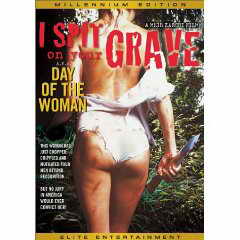
I wonder how the guy feels now, seeing the recent TV premiere of "I Spit on Your Grave" on Zone Horror.
Director Meir Zarchi's brutal rape-revenge movie of 1978 film deals with the violent rape of a young woman
writer in secluded woods by a group of locals, followed by her bloody revenge. In the publicity material it is described as a classic which still stands as one of the most controversial films ever made. It is an uncompromisingly brutal piece of film
making and at the same time groundbreaking and original. The film still has the power to shock almost 30 years on.
As it happens, the version of "I Spit On Your Grave" being shown on satellite TV was heavily cut by the BBFC in 2002. The
cuts were required to remove several sequences of sexual violence and humiliating depictions of female nudity.
But the cuts would not have saved the film from the Video Nasties list. The qualifications for being nasties were more to do with lurid
covers and sensational story lines rather than the subtleties of potential harm.
Zone Horror have several other video nasties in their library at the moment. Recommendations that I would set the video for are: "Mother's Day",
"House on Straw Hill" (aka "Expose"), and "Blood Sucking Freaks". Actually only "Expose" is an official video nasty. "Mother's Day" was banned by the censor and "Blood Sucking Freaks" would
easily have made the list if anyone had been brave enough to have released it.
Film Four have invented a new game to keep horror movie fans amused called "Spot the unexpected uncut movie".
Long suffering horror fans have
always had a sharp eye for cuts and are keenly aware of the TV regulator's requirement to show versions as cut by the film censor, the BBFC.
One of my favourite films of the Genre is "Re-animator" by Stuart Gordon. This stars Jeffrey
Combs as a wonderfully manic inventor of luminous green gunk that when injected into corpses, re-animates them. The highlight of the film is where a re-animated headless corpse has its evil way with the heroine whilst being spurred on by the dismembered
head.
Hardly serious stuff, but the BBFC decided to impose nearly 2 minutes of cuts as recently as 2001. It was expected by many that Film Four would have broadcast this censor approved cut version. But no, they actually broadcast the film in its
complete uncut glory.
It turns out that the TV Regulator Ofcom, has a rather useful clause in it programme code. This allows previously cut films to be broadcast uncut if the BBFC say that they would no longer cut the film if re-submitted today.
Also the BBFC have also kindly set up an informal advice service. This allows the TV companies to submit a film to the BBFC and ask whether cuts would be required. This is a less rigorous (and cheaper) screening than a full submission but it is
enough to convince Ofcom.
And in the case of "Re-animator", the BBFC did in fact advise that cuts would be waived if the film were to be resubmitted today.
Unfortunately the results of such informal advice are not published to
the public and so we don't get to hear of some useful decisions. But it does mean that the versions broadcast on TV are sometimes better than the video or DVD version.
The rules governing the showing of 18 rated movies on TV suggest that 18
rated material shouldn't be shown on open channels until the watershed at 9pm.
I don't really suppose that anyone noticed it, but ITV 4 recently showed an 18 rated uncut episode of Miami Vice at 6pm. The offending scene was a fight between two
characters were a rather hard ear slap was issued by both hands, ouch! The BBFC had in fact noticed this scene in 1986 when even a cut version was given a 15 certificate, the uncut version was awarded an 18 certificate.
All in all a good time
for horror on TV. Perhaps someone has been injecting luminous green gunk into the censors and regulators
|
|
October
|
Extreme Censorship...
|
|
|
|
|
|
From What Satellite
|
 In a speech titled, "Our Nation's Future - Social Exclusion", Tony Blair said: "It is not for the State to tell people that they cannot choose a different lifestyle, for example in issues to do with sexuality".
I am sure that
long suffering UK softcore viewers will agree with me that Tony Blair is hardy living up to his ideals. As for example the State has banned hardcore on TV.
In fact things are soon to be getting worse...Much worse. During the week of Tony Blair's
speech, his own Government published their intention to ban the possession of pornographic images involving extreme violence.
The Home Office minister Vernon Coaker has been charged with pushing through the legislation. Coaker announced that
anyone caught with pornographic images "featuring violence that is, or appears to be, life-threatening or is likely to result in serious and disabling injury", could be jailed for up to three years.
I would guess that many readers may
nod and say it's a good thing too. I would be joining in as well, if it wasn't for the little phrase "or appears to be". There are thousands of horror and action movies "featuring violence that is, or appears to be, life-threatening or is
likely to result in serious and disabling injury". We can watch these films without a glimmer of concern. We know that film makers use make up and special effects to achieve such imagery and we know that absolutely nobody is being hurt in the making
of the movie.
Why should it be so different for sex movies. I can think of many sexy vampire films that may fit the bill. An explicit sex scene may be terminated with the vampire swooping on the girl's neck. A few blood spurting special effects
later and you have potentially got a film that could get one locked up for 3 years.
You are probably now thinking, well I wouldn't buy such a film in the first place. But such logic is a little dangerous to rely on. You could for instance be
channel hopping through the Euro hardcore channels and see a scene that appeals. You don't quite realise that the lead man would soon be baring his fangs. Unfortunately the TV detector van drives past just as the fangs appear. You soon hear a knock on
the door...
Alternatively you could have recorded the film off satellite and not got round to watching it yet. Unfortunately your hard disk packs up and you send it in for repair. You soon hear a knock on the door...
Perhaps one has faith
in the system and just says: "I haven't watched the film yet and didn't know what was in it". I rather suspect that the police are going to hear that explanation countless times and simply will not believe it. In fact every single person caught
with 'illegal' images is surely going to claim that they did not know what they had, as they haven't looked yet.
Perhaps one can argue that vampires don't exist and therefore injuries could not be considered life threatening. But of course the
State can (and will) hire incredibly eloquent barristers that can simply brush aside such arguments whether they are right or wrong.
I am sure that the Government actually set out to commendably criminalise possession of real violence but their
reasoning was that it will be simply impractical to prove that what looked real was 'actually' real. This is especially true if the movie was some obscure Far Eastern flick where no records are kept of who made it. For example, the notorious and
disturbing Guinea Pig videos from Japan were famously reported to the US police as snuff movies by Charlie Sheen. The violent scenes of course turned out to be just clever special effects. The makers were even able to exploit the films further by
publishing a 'Making of' video featuring the behind the scenes footage.
Three years in jail is an awful long time for merely possessing an image and I don't really suppose that the Government intend this level of sentence for an otherwise
innocent person. The high level sentence is probably there to ensure that the crime qualifies as 'serious'. Also the long sentence may be used to bargain with people to accept the cheap option of a police caution rather than running the risk of 3 years
in prison should one lose in court. Of course a caution for a serious crime will no doubt get one a listing on the sex offenders register. The real punishment will then be dealt out by the divorce lawyer, personnel officer and people from neighbourhood
watch who will be watching like a hawk.
And all this from a 'free' country where the Prime Minister says: "It is not for the State to tell people that they cannot choose a different lifestyle, for example in issues to do with
sexuality".
(Note, see www.number-10.gov.uk/output/Page10037.asp for transcript of Tony Blair's speech: Our Nation's Future - Social Exclusion)
|
|
November
|
Bondage and Hype...
|
|
|
|
|
|
From What Satellite
|
Have you ever noticed that those advocating censorship always start off by saying: "I don't believe in censorship...BUT..." This month will feature a few challenges to those who surely do believe in censorship.
A new James Bond is
always a talking point. It seems strange that such a large scale production has failed to identify its market and finds that it has to be cut the world over to achieve family friendly ratings. One can't help but think that maybe the makers have a
'Director's Cut' in mind.
The British film censor (BBFC) explained the cuts as follows:
"This film was originally seen by the BBFC in an unfinished version, for advice as to the film's suitability at '12A'. The BBFC advised the
company that the torture scene placed too much emphasis on both the infliction of pain and the sadism of the villain for the requested '12A' category. When the completed version of the film was submitted for classification, reductions to the torture
sequence had been made, including the removal of lingering shots of the rope, close shots of Bond's facial reaction and the substitution of a more distant shot of the beating compared to the original version".
The US version was cut for a
PG-13. The Irish 15A is the same version as the cut UK release. It appears that the German version has suffered even more cuts than the US/UK versions to achieve a 12 rating.
Unfortunately the Government have now announced the Dangerous
Pictures Act, a new piece of legislation that will make it a criminal offence to view images of rape and sexual torture. Offenders would be liable to be jailed for up to three years, even if the images actually featured actors who had given their
consent.
Already this causing alarm as one reader, Bob, asked:
"I've just seen Casino Royale and James Bond was tied naked to a chair and his private parts subject to sexual torture. Am I in danger of being prosecuted even though the
actors were consenting?"
Another film to look out for on satellite is Saw III. The publicity department has been working overtime to build up the controversy. The plot of Saw III is like Crystal Maze except that people die when they fail
to complete their tasks.
The gore was said to have induced fainting fits among cinema-goers in Stevenage, Peterborough and Cambridge.Ambulances were called to assist those stricken by the shock. The UK Ambulance Trust surely aided the publicists
by advising:
"squeamish or faint-hearted people to seat themselves where they could easily leave the theatre if the gore becomes too much".
The story of the UK fainting fits quickly spread around the world as far as New Zealand.
A spokesman for the New Zealand censors advised viewers to follow the advice of the UK Ambulance Trust.
An American independent filmmaker has also spotted the opportunity for a little free publicity. Steve Anderson has produced a movie titled
'Fuck' all about the history of the English language's most vulgar word. He said:
"I've always been intrigued with this one specific word that can be used in so many ways, as a noun, a verb or an exclamation". Strange he didn't mention
the use of the term to generate free controversy.
The movie has the dubious honour of containing the biggest number of cinematic uses of 'fuck', counted at more than 800. It will be interesting to see how Sky handles publicity for this movie. And
indeed, how What Satellite copes. If it helps the editor, US publicity writes the word F*CK with the asterisk being a five pointed star emblazoned with the American flag.
Controversy seekers may also be interested in a haunting film
documentary called 'The Bridge'. The film is a study of the real suicides of people leaping off Golden Gate Bridge. The documentary breaks one of the film's last taboos, by showing the real deaths of six jumpers.
Predictably, the film by Eric
Steel, has provoked worldwide controversy. It was rejected by several film festivals, including Cannes and Berlin, with one of the events’ organisers describing it as voyeuristic and nothing more. Suicide experts accused Steel of glamorising his subjects
and cautioned that the film would trigger copycat deaths.
Again it will be interesting to see how satellite TV handles this movie. Probably one for FilmFour rather than Sky though.
And finally, on the subject of controversial films on
TV a big raspberry for Channel 4. Their showing of the documentary 'Inside Deep Throat' was censored of its explicit blow job. This was despite it having an uncut 18 certificate from the BBFC. Theoretically this should mean that 'Inside Deep Throat'
could be shown on any channel uncut. After the watershed of course!
Oh well, at least we know that Channel 4 do actually believe in censorship.
|
|
December
|
Consumer Protection...
|
|
|
|
|
|
From What Satellite
|
 When channel hopping through the almost uncharted depths of the complete Sky channel list I generally show little interest in the so called babe channels.
These are the programmes where scantily clad girls try to sell their premium rate phone
lines to viewers who would like to chat with the girls or their friends.
However the TV regulator, Ofcom is beginning to show more than a little interest in this type of programming.
They were officially spotted in a November
complaints ruling when Babestar.TV Live XXX was hauled over the coals for several different reasons. Ofcom investigated Television Concepts, the company behind the adult station Look4Love. The regular was clearly unimpressed and revoked the company's
broadcasting licence and imposed a £175,000 fine as a result of repeated breaches of the advertising standards code.
Ofcom also said that said the material transmitted by the company was deemed "seriously unacceptable". In particular,
the extreme explicitness of the language transmitted was of such an adult sexual nature that it was wholly unsuitable for transmission on a free-to-air service.
The Advertising Standards Authority referred the case to Ofcom, after voicing
concerns about advertising on the channel. Including the fact that premium rate phone callers were invited to talk live to the models when in fact the programme seemed to be pre-recorded.
Clearly several issues arose when working through this
complaint and now Ofcom have decided to consult further on how babe channels should be regulated.
Ofcom have coined the term Participation TV to encompass quizzes, psychic shows and babe channels. These all rely heavily upon interaction with
viewers, usually by means of premium rate telephone lines.
Ofcom is seeking views on the broader question of how the content of these services should be regulated. Specifically, should these services be considered as editorial, subject to the
Ofcom Broadcasting Code, or advertising subject to the Advertising Code enforced by the Advertising Standards Authority (ASA).
Ofcom’s Broadcasting Code, which applies to editorial material, allows as much freedom of expression as is consistent
with the law, provided it is editorially justified and the audience is given appropriate information. However, broadcast advertising regulation has greater emphasis on consumer protection, with specific rules to ensure that audiences are not misled.
A generic review of babe services is pretty illuminating as to where Ofcom is coming from. Ofcom characterises them as free to air with one or more female presenters, often referred to on-air as 'babes', who repeatedly ask viewers to call an onscreen
premium rate number in order to talk to them (or to an off screen 'babe')
On dialling the number, a caller is presented with a number of options, including connecting to the onscreen presenter or connecting to an off-screen 'babe'. Before being
able to speak to any 'babe', callers are often kept on hold for extended periods or must listen to lengthy recorded messages. Phone conversations with the onscreen presenter are not audible to viewers; while the presenter is on the phone, there is
either recorded music or another 'babe' talks to viewers, usually doing little more than asking viewers to call in
Comments about these issues are invited by Ofcom with a deadline of 31 January 2007. Further details at
http://www.ofcom.org.uk/consult/condocs/participation/
In Ofcom's more established role in denying us the content what we would like to see, they fined the misleadingly named XplicitXXX £35,000 for broadcasting hardcore snippets. An unimpressive
audience of 62 people tuned in the an episode of Rubber Ron which featured a 21 minute sequence showing graphic images of a woman using a dildo. One person complained to Ofcom.
And thinking of consumer protection...Starting next year, French
cable television channels will no longer be allowed to air hardcore with scenes of unprotected sex because it sets a dangerous example. This is according to the official French broadcasting watchdog High Audiovisual Council (CSA).
An AIDS
awareness organization, Act Up, wrote to the CSA saying that the risks actors take by having unprotected sex during filming are real. The also claimed that such films trivialize and possibly glorify risky sex.
The CSA agreed and decided to
classify unprotected sex in hardcore as "delinquent behaviour," noting that the films rarely showed sex between partners in committed relationships. l
The new rule will affect nine cable channels licensed to broadcast porn. Movies on
demand, however, won't be affected because they aren't regulated by the CSA. Although the regulation is not aimed at satellite TV, it seems likely that channels carried by both satellite and cable will have to adopt the new rules and insist on condoms.
The channels will surely suffer from a much diminished choice of programming as some of the premier producers tend to avoid scenes with condoms.
Unfortunately the policy of whether to insist up on condoms or not is not likely to concern viewers
of UK channels for some time to come. Brits are way too over protected to see anything where condoms would be relevant.
|
|
|