The BBC has issued staff new guidance on the use of racist language in the wake of the controversy provoked by the use of a racial slur in a news report.
Use of the strongest racist language, as defined by broadcasting regulator Ofcom, must be
personally approved by the corporation's divisional directors. There must be exceptional editorial reasons to use the strongest racist terms, the updated guidance reads.
The new guidance says the use of racist language must be editorially
justified, and signposted, to ensure it meets audience expectations, wherever it appears.
It says the editorial justification test would now carry a presumption that such language will not normally be used unless a judgement at divisional director
level had ruled otherwise.
Oliver Dowden, Secretary of State for Digital, Culture, Media and Sport has been writing to museums and libraries about policies in the face of claims of British history being now considered as toxic. Dowden explained the Government position::
History is ridden with moral complexity. Statues and other historical objects were created by generations with different perspectives and understandings of right and wrong. Some represent figures who have said or done
things which we may find deeply offensive and would not defend today. But though we may now disagree with those who created them or who they represent, they play an important role in teaching us about our past, with all its faults.
It is for this reason that the Government does not support the removal of statues or other similar objects . Historic England, as the Government's adviser on the historic environment, have said that removing difficult and contentious
parts of it risks harming our understanding of our collective past. Rather than erasing these objects, we should seek to contextualise or reinterpret them in a way that enables the public to learn about them in their entirety, however challenging this
may be. Our aim should be to use them to educate people about all aspects of Britain's complex past, both good and bad.
As set out in your Management Agreements, I would expect Arm's Length Bodies' approach to issues of contested
heritage to be consistent with the Government's position. Further, as publicly funded bodies, you should not be taking actions motivated by
activism or politics. The significant support that you receive from the taxpayer is an
acknowledgement of the important cultural role you play for the entire country. It is imperative that you continue to act impartially, in line with your publicly funded status, and not in a way that brings this into question. This is especially important
as we enter a challenging Comprehensive Spending Review, in which all government spending will rightly be scrutinised.
One of the most hotly anticipated blockbuster exhibitions on the art world's horizon has been pushed back after organizers raised concerns over images evoking racist violence in certain works. After its original planned summer opening was delayed until
2021 because of the pandemic, a high-profile Philip Guston retrospective organized by the National Gallery of Art in Washington, D.C., Tate Modern in London, the Museum of Fine Arts Boston, and the Museum of Fine Arts Houston has now been put on hold for
four years.
A joint statement signed by directors of all four museums said the exhibition was being pushed until a time at which we think that the powerful message of social and racial justice that is at the center of Philip Guston's work can be more
clearly interpreted:
We recognize that the world we live in is very different from the one in which we first began to collaborate on this project five years ago. The racial justice movement that started in the U.S. and
radiated to countries around the world, in addition to challenges of a global health crisis, have led us to pause.
Organizers raised concerns over painful imagery including the recurring Ku Klux Klan characters that appear in Guston's
late-period works. Twenty-five such drawings and paintings featuring KKK imagery were to be included in one or more iterations of the show.
The postponement has been met with opposition from Musa Mayer, the artist's daughter and head
of the Guston Foundation. Mayer said in a statement:
Half a century ago, my father made a body of work that shocked the art world. Not only had he violated the canon of what a noted abstract artist should be painting at a
time of particularly doctrinaire art criticism, but he dared to hold up a mirror to white America, exposing the banality of evil and the systemic racism we are still struggling to confront today.
They plan, they plot, they ride
around in cars smoking cigars. We never see their acts of hatred. We never know what is in their minds. But it is clear that they are us. Our denial, our concealment. My father dared to unveil white culpability, our shared role in allowing the racist
terror that he had witnessed since boyhood, when the Klan marched openly by the thousands in the streets of Los Angeles.
The art historian and curator Darby English told the New York Times that the decision to postpone the show was
cowardly and patronizing, an insult to art and the public alike:
Guston's paintings were thoughtfully created in identification with history's victims, English said, adding that it should be part of one's attitude to see
them as opportunities to think, to improve thinking, to sharpen perception, to talk to one another, and not to grimly proceed with one's head in the sand, avoiding difficult conversations because you think the timing is bad.
The BBC received complaints about a joke on Frankie Boyle's New World Order where a black comedian, Sophie Duker, jokingly supported the idea of 'killing whitey'.
In a segment where the panelists discuss if the movement glosses over the complexities
of a world where we all need to come together and kill whitey, Boyle played a clip of black author James Baldwin talking about black power in an interview on the Dick Cavett Show in the 1970s.
Responding to the clip, Duker said white power is
Trump Tower - a nod to Left-wing allegations that the US President is a racist.
She continued: But when we say we want to kill whitey, we don't really mean we want to kill whitey. Duker then quips to the panelists we do to roars of
laughter.
The BBC has now responded on its website to the complaints, as always without explaining what the complaints were about. The BBC wrote:
We received complaints from people who felt comments made during
the programme were offensive.
Our response
Frankie Boyle's New World Order was shown after 10pm and its content is within audience expectations for a post-watershed, topical, satirical programme from a comedian whose style and tone are well-established.
Every week on the
show Frankie puts forward a number of topics for debate, this episode was no different. The panellists' comments were in response to a motion that was written and presented in line with the programme's tone and style.
Sophie Duker
is a talented comedian and a regular panellist on Frankie Boyle's New World Order, and we look forward to continue working with her at the BBC.
Frankie Boyle defended by BBC after Priti Patel joke sparks a few more complaints.
The comedian joked
that the Home Secretary is the one woman in Britain who can orgasm by imagining a slow puncture at sea in reference to the refugee crisis
Portland's Stripper Strike is over a fair crack for all performers, but does this clash with a right for customers to be turned on by whoever they like?
A disgraceful speech censorship bill will be tweaked to remove at least they very worst parts of the bill. Injustice Secretary Humza Yousaf admitted they would curb freedom of speech.
The SNP minister says that the censorship will only apply to those
with intent to stir up hatred against any group. Previously the hatred would be as perceived by the easily offended. A disaster in the modern world where people claim offence at the most trivial hint of an insult. Think religious offence of so called
micro-aggressions or unconscious bias etc.
Yousaf said:
There is a real risk that if the offences don't require intent to stir up hatred, there could be a perception and indeed uncertainty that the operation of
this aspect of the offences may be used to prosecute what are entirely legitimate acts of expression.
This in itself might lead to an element of self-censorship. This is not the aim of the legislation.
The Hate
Crime Bill also adds new characteristics to the law, such as age and sex, but it was claimed the plans will curb civil liberties, criminalise comedy and even target religious books.
Yousaf said that he is still pushing ahead with the bill. He
confirmed the government will amend the Bill at the next stage of scrutiny, when MSPs start going through the plans line by line.
Opposition Tory MSPs said they want to see even bigger changes before the laws can be passed with support at Holyrood.
Jamie Gillies, spokesman for the Free to Disagree Campaign against the stirring up plans, said:
There's still too low a threshold for offending, the wording is hopelessly vague, free speech provisions are inadequate, there
is no 'dwelling defence', and people outside Scotland could be caught.
Withdrawing the 'stirring up' offences wholesale is the only way to resolve these complex issues and ensure that other, vital civil liberties are upheld. The
fact that the government hasn't done this means opposition to the bill will continue for months to come. It's a missed opportunity.
Offsite Comment: Plan to amend Scottish hate crime bill isn't enough
The National Secular Society has welcomed news that Scotland's current hate crime bill will be amended, but warned that offences within the bill remain a menace to free and open debate.
A Facebook post by the car leasing company, LINGsCars, posted on 16 June 2020, included the text ***BLACK***. In light of recent events, I'm resurrecting my Audi deal. The ad featured the image BLACK CARS MATTER. I ASKED HOLLY FOR A HEADLINE FOR THIS
A4...AND SHE SAID: 'ONCE YOU GO BLACK, YOU NEVER GO BACK!'. The ad then featured an image of a black raised hand with a wristband displaying the Audi logo alongside an image of a black Audi. Text stated AUDI A4 BLACK POWER EDITION. Further text stated
MANUAL GEARBOX (BIG GEARKNOB).
Three complainants, who believed the image of the claims Black Cars Matter, Once you go black, you never go back and the image of the raised fist were insensitive and offensive, challenged whether
the ad was likely to cause serious offence and was socially irresponsible.
Response Lingscars.com Ltd believed Black cars matter was inoffensive. They said the phrase was a pun on the launch of the new car, the Audi Black Edition,
and that Once you go black, you never go back was a well-known phrase that would not be offensive to black people. They said the image of the raised fist was the symbol of the Black Power movement; they argued it was a positive symbol and was not seen as
offensive in other contexts, such as the recent Grand Prix where Lewis Hamilton raised his fist.
ASA Assessment Complaints upheld
The ASA noted that the ad appeared shortly after the Black Lives Matter
protests and during a public debate about racism in the UK. We considered that people would understand the headline BLACK CARS MATTER, the image of the raised fist and the name Audi A4 Black Power Edition to be references to the Black Lives Matter and
Black Power movements. By using that slogan and iconography simply to draw attention to an ad for a car had the effect of trivialising the serious issues raised by those movements. The claim, ONCE YOU GO BLACK, YOU NEVER GO BACK! in addition to the claim
BIG GEARKNOB, we also considered was likely to be seen as objectifying and fetishising black men. Because those claims, particularly in the context of an ad for an unrelated product alongside references to recent protests opposing racism against black
people, were likely to cause serious offence on the grounds of race, we considered the ad was socially irresponsible. We therefore concluded that the ad breached the Code. The ad breached CAP Code (Edition 12) rules 1.3 1.3 Advertisements must comply
with the law and broadcasters must make that a condition of acceptance.
The great-grandson of the British novelist Agatha Christie, James Pritchard, has belatedly decided to change the French title of the book 'Ten Little Niggers'. An initiative taken many years ago in the English speaking world. Since the 1980s the book
has been titled 'And Then There Were None'.
Now the book, which was originally published in 1939, has just been retitled in France from 'Dix petits nègres' to 'Ils étaient dix' (They Were Ten).
Pritchard commented:
This story is based on a popular nursery rhyme that is not signed by Agatha Christie. I'm pretty sure the original title was never used in the US. In the UK it was changed in the 1980s and today we change it everywhere.
Agatha Christie was above all there to entertain and she would not have liked the idea of someone being hurt by one of her turns of phrase (...) If only one person felt this, it would already be too much! We must no longer use terms
that could hurt: this is the behavior to adopt in 2020. "
In addition to the title an island in the book, called the Île du Nègre is also changing its name. The word "negro" appears 74 times in the text and all of these
have been revised.
We've received complaints from some viewers about a same-sex pairing on the programme.
Our response
Strictly Come
Dancing is an inclusive show and is proud to have featured same sex dancing amongst the professional dancers in group numbers in previous series.
We have stated, in the past, that we are open to the prospect of including same sex
pairings between our celebrities and professional dancers, should the opportunity arise.
Nicola Adams requested an all-female pairing, which we are happy to facilitate. The show is first and foremost about dance, the sex of each
partner within a coupling should have no bearing on their routine.
Britain's Got Talent has been the subject of 10,267 viewer complaints from furious viewers over an act on the show. This is the second highest tally of complaints in the last ten years.
Ashley Banjo led the Diversity dance troupe in a Black
Lives Matter routine. The performance, which saw Jordan's brother Ashley lying on the floor with a white police officer kneeling on him , referenced the death of George Floyd in the US. There were also backing dancers performing dressed in riot gear and
the group took the knee during the performance.
Ashley reported that he had received a barrage of abuse over the performance. He tweeted:
So much to say... But I'll Just let the performance talk. Thousands of messages
of Love and support - Thank you. For the thousands of messages of hate and ignorance - Thank you. You highlight exactly what needs to change. Sending nothing but love to you all.
The Sun seemed a little reluctant to describe what the
complaints were about but summarised that they were insisting that a political statement had no place on the talent show.
TV censor Ofcom has confirmed the number of
complaints for Britain's Got Talent have continue to rise over the weekend and now stand at 23,308.
An ITV spokesman responded to the complaints:
Britain's Got Talent has always been an inclusive show, which
showcases diversity and supports strong storytelling in all forms and ITV stands behind the decision to broadcast Diversity's performance on BGT.
Ashley and the group are a great example of the talent, creativity and diversity of
modern Britain and their performance was an authentic, heartfelt response to many of the issues and events which have affected society in 2020.
Ofcom received approximately 24,500 complaints about this performance on Britain's Got Talent.
We also received a number of messages of support and praise for the performance. In
summary, the complaints about the performance raised a range of concerns, including that it:
was unsuitable for a family audience due to themes of violence and racism;
encouraged societal division and was racist towards White people;
negatively
portrayed White police officers, including in a depiction of the death of George Floyd, and encouraged violence against the police; and,
expressed support for the political organisation Black Lives Matter.
Ofcom has assessed this programme against the relevant rules in the Broadcasting Code. Our assessment is that this programme did not raise any issues which warranted investigation. In our view, Diversity's performance was an
artistic expression of topical social issues and did not contain any content which was racist, unsuitably violent or otherwise inappropriate in the context of this programme.
Given the significant publicity surrounding
this case and the high volume of complaints received, we have decided to publish our reasons for this assessment.
An advertising poster reading I love JK Rowling at Edinburgh's railway station was censored for being too political and supposedly offensive.
Network Rail confirmed that the digital advertisement had been taken down because it breached its
policy by promoting a political viewpoint. A Newtwork Rail source told the Times:
While the words were harmless, their context -- an acrimonious argument on social media between the author and her critics who accuse
her of transphobia -- was likely to cause offence.
The poster had been bought by a campaigner against reform of gender recognition laws.
Now the debate has moved onto Canada where a larger billboard version of the same poster
has been taken down citing similar concerns about unwanted political controversy.
IN the meantime JK Rowlings has made an eloquent appeal for calm. She blogged:
I believe the majority of trans-identified people
not only pose zero threat to others, but are vulnerable for all the reasons I've outlined. Trans people need and deserve protection.
All I'm asking -- all I want -- is for similar empathy, similar understanding, to be extended to
the many millions of women whose sole crime is wanting their concerns to be heard without receiving threats and abuse.
Sales of a French feminist book entitled I Hate Men have gone through the roof after a government official tried to have the work banned for inciting gender hatred.
Pauline Harmange's essay Moi les hommes, je les déteste explores whether
women have good reason to hate men, arguing that this type of anger could actually be a joyful and liberating path, if it is allowed to be expressed.
While the work was expected to generate modest sales of a few hundred copies, its first three
print runs were quickly snapped up after an adviser to France's gender equality ministry threatened the small publishing house Monstrograph with legal action if it didn't remove the offending material from shelves.
Presumably in response to the
publicity, the ministry has now distanced itself from the matter, saying that the adviser was speaking in a personal capacity.
The book's publisher responded:
This book is not at all an incitement to hatred ...
The title is provocative, but the subject matter is measured. It's an invitation not to force oneself to date or deal with men. At no time does the author incite violence.
TV is now a battleground for society's culture wars. The new director of the BBC might axe left-wing comedy, but humour exposes what defines, unites and divides us
Only a few months ago, in the wake of the murder of George Floyd, producers at major channels and streaming services quickly made moves to clear their catalogues of anything that could be perceived as racist. In this rush, the most iconic episode of
Fawlty Towers was removed. It later reappeared with a warning at the start.
At Index on Censorship, as part of a report in the upcoming autumn issue, we did a tally of just how many shows had been taken off air. The result?
Dozens. And some of the biggest as well. On the BBC, Little Britain was taken down in its entirety. The same fate befell Bo' Selecta! from All4. Other has-beens include episodes from 30 Rock and Scrubs .
Nicola Sturgeon has suggested disgraceful censorship proposals could be overhauled to listen to concerns that new laws will diminish freedom of speech.
The plans have faced criticism from a range of voices over worries that freedom of speech will be
eroded. The Scottish parliament's justice committee received almost 2,000 submissions in response to a consultation on the bill. The committee's convener has described this response as unprecedented.
Even the police criticised the plans. The Scottish
Police Federation has said ministers have grossly underestimated policing costs associated with the bill.
Sturgeon said in a speech to the Scottish Parliament:
I want to give an assurance that we will listen
carefully. Freedom of speech and expression is fundamental in any democracy.
There's really good reasons why we need to make sure we've got laws in this country that are capable of tackling hate crime because it is pernicious and
horrible and we should have zero tolerance to it.
We've got to do that in a way that respects and protects people's legitimate freedom of speech and expression. As with so many really important things we do in society, these are
not always straight forward things -- they involve striking balances and they involve getting into the real detail of how we get this right.
We're at the start of a legislative process. I think the right thing to do is to listen
to concerns, to go through the committee scrutiny process and if there are amendments we need to make to reassure people who have legitimate concerns, we certainly give an undertaking to do that.
We hear these concerns and we want
to navigate a way through this bill that does what we want to do around hate crime but doesn't leave people thinking the legitimate right to freedom of speech is being compromised.
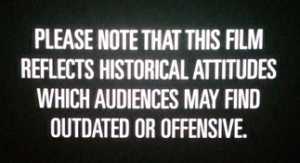
Distributors of Bill and Ted's Excellent Adventure add ludicrous PC caption about outdated stereotypes
3rd
September 2020
2nd September 2020. Thanks to Mark
Bill & Ted's Excellent Adventure is a 1989 USA comedy Sci-Fi romance by Stephen Herek. Starring Keanu Reeves, Alex Winter and George Carlin.
Ted Theodore Logan (Keanu Reeves) and Bill S. Preston, Esquire (Alex Winter), are in danger of flunking school most heinously if they fail their history exam, and if they do they'll have to break up their totally
bodacious band, WYLD STALLYNS. No way!
Mark writes:
I've just bought the new Bill and Ted's Excellent Adventure DVD and can report that there is a caption added to the film warning viewers of outdated
stereotypes that some people may find offensive.
Basically, we can expect to see it more on DVD's and Blu Ray's, now.
The distributors are Studiocanal. And no doubt their virtue signalling will prove more
divisive than curative of social ills.
Update: Flash trigger
3rd
September 2020. Thanks to Ben
Flash Gordon had the same warning which seems... extra unnecessary because it was already had a BBFC warning for discriminatory stereotypes. I don't see a problem with these warnings if it
means the film itself is uncut.
The trigger warning seems related to the presumption that the Emperor Ming character is poking fun at the Chinese. The warning reads:
Any insult targeted at a French mayor will now be considered an offence that carries a maximum penalty of community service or a 7,500 euro fine.
Frances minister of 'justice' Eric Dupond-Moretti announced the decision claiming that an insult to a
mayor is an insult to France. He promised that from now on there will be a systematic, immediate and proportionate answer to any aggression.
Tim Davie officially takes over from previous BBC Director-General Tony Hall today.
Davie thinks comedy broadcast by the BBC is perceived as targeting the Conservative party more often than it does the left. He strangely omits to mention a similar
bias in the BBC's anti-government news shows, notably Emily Maitlis and Newsnight.
The corporation's new director-general is due to outline the issue in his first speech on Thursday. Advance news releases say the BBC will commit to producing
material that is more inclusive of beliefs across the political spectrum.
Davie hopes this will help restore trust and confidence in the public broadcaster as it faces questions over the future of its publicly-funded model.
Sources have
said no firm decisions have been made on how the BBC will tackle perceptions of left-wing bias, though they did say some shows would be axed, hopefully this includes Newsnight. In addition, comedy panel shows will be expected to include guests with a
broader range of views.
The BBC has
reversed its PC decision not to have Rule, Britannia! and Land of Hope and Glory sung at The Last Night of the Proms. References to slaves were the reason for the ban, but the BBC spouted some unlikely bollox about coronavirus and singing.
The U-turn
follows fierce criticism from the prime minister, the British people and much of the press. The original ban had prompted Prime Minister Boris Johnson to intervene:
I cannot believe... that the BBC is saying that they
will not sing the words of Land of Hope And Glory or Rule Britannia! as they traditionally do at the end of The Last Night of The Proms.
I think it's time we stopped our cringing embarrassment about our history, about our
traditions, and about our culture, and we stopped this general bout of self-recrimination and wetness.
I do think this country is going through an orgy of national embarrassment about some of the things that other people around
the world love most about us. People love our traditions and our history with all its imperfections. It's crazy for us to go around trying to censor it. It's absolutely absurd and I think we should speak out loud and proud for the UK and our history.
Culture Secretary Oliver Dowden said:
Confident forward-looking nations don't erase their history, they add to it.
Now a select group of singers will now perform the songs after all.
The BBC's change of heart seems related to a change of boss with the incoming Tim Davie promising to be less woke than the outgoing Tony Hall.
A disgraceful censorship law proposed by Scotland's Justice Secretary Humza Yousaf has been widely condemned by a wide range of religious and secular organisations. But Atheist Scotland says it could be useful to prevent faith leaders from expressing
vitriol against a variety of groups including trans people and homosexuals.
Atheist Scotland's convenor, Ian Stewart, said in a letter to a local newspaper that group planned to monitor scripture, sermons in places of worship and social media accounts
and report any hatred to Police Scotland for criminal investigation.
The Christian Institute, which opposes the legislation, warned preachers noting that it could expose church ministers to the risk of prosecution at the instigation of
anti-religious zealots.
The law would make stirring up hatred against certain groups a criminal offence, even if a person making the remarks had not intended to do so or made them in private. Those found guilty would face up to seven years in
jail.
Luke EVans being touched up to look good in a photo
Conservative MP Luke Evans has drawn up a Private Members Bill which would mean celebrities would have to label images which have been digitally altered to change how they look.
Evans, a member of the Health and Social Care Committee and a GP, claimed
that edited photos on social media were fuelling a mental health crisis as it was creating a warped view of beauty. Celebrities such as Lauren Goodger and Khloe Kardashian have been criticised for doctoring their photos on Instagram.
A Jamaican minister is set to make a formal complaint over a BBC Three sketch from the show Famalam , which she has described as outrageous and offensive. Kamina Johnson Smith, Jamaica's minister of foreign affairs and foreign trade, tweeted:
This is outrageous and offensive to the incredible country which I am proud to represent along with every Jamaican at home and within our diaspora... I will immediately be writing formally on this! #StopThisShow
Ramocan told HuffPost UK:
It is unbelievable that the, BBC an institution with an international reputation for trustworthy broadcasting, could find itself in the gutter of promoting such harmful and
destructive pornographic material that can only serve to damage the morals and values we seek to encourage in our young people.
This broadcast which serves to tarnish and insult the image of Brand Jamaica must be immediately
pulled from the BBC programme. I call on all well-thinking listeners and viewers to join us in this call.
Nathaniel Peat, Global Jamaica Diaspora Council lead for the south UK and chairman of Jamaicans Inspired said:
The program is over sexualised, regressive, discriminatory, derogatory and has stereotypical racist tropes especially at a time when Black Lives matter has highlighted the need for a more balanced and better portrayal of black people
in the media.
It is deeply upsetting that the national broadcaster has chosen to promote this highly explicit content on a public forum such as twitter that has exposure to youth as young as 14, what type of image does this set in
their minds when there already is a lack of positive black role models that are seen in the British media.
The clip has also been slammed by high commissioner of Jamaica to the United Kingdom Seth George Ramocan, who claimed it serves
to tarnish and insult the image of Brand Jamaica.
A preview of the segment titled Jamaican Countdown , a parody of the long-running game show Countdown , includes jokey language used towards the female character selecting numbers and
letters. Part of the sketch also shows the silhouette of a man, referencing the stereotype of black men having large penises.
The programme is made with a cast of black British actors, and presumably the programme makers too.
The BBC posted
the following response on its website:
Famalam is a well-established, award-nominated BBC Three sketch comedy show that is now in its third series. It stars some of the UK's best comedy talent and explores aspects of
contemporary life from a black perspective.
Like many sketch comedy shows Famalam finds humour in a wide range of scenarios and regular viewers who are familiar with the tone of the show will know that it has a reputation for
challenging stereotypes and confronting social issues. We can assure you that the intention of this sketch isn't to diminish Jamaican people or Jamaican culture, and nor is there any intention to cause offence.
Sainsbury's is removing a mug from sale that features the words: The germ of a brilliant idea hit her, after PC campaigners ludicrously claimed that phrase was a call to domestic abuse.
The mug is decorated with a quote from Roald Dahl's
1988 book Matilda . The full quote reads:
When at last the germ of a brilliant idea hit her, she began to expand on it and lay her plans with the same kind of care the Duke of Wellington had done before the
Battle of Waterloo.
The design's emphasis on the words 'brilliant idea' leaves the 'hit her' part of the phrase hanging, and allows for a different interpretation of the two words.
Pictures of the mug circulated on social media
and it became the target of the PC lynch mob. Ruth Mason from the campaign group Women's Aid criticised the mug and called on Sainsbury's to pull it from supermarket shelves:
We were dismayed to see the Sainsbury's design
with the slogan
This slogan can be read two ways -- and that is the problem. It can be read as the author Roald Dahl wrote in Matilda: 'When at last the germ of a brilliant idea hit her'. However, it can also be read as a
trivialisation of the violence that women experience in their own homes.
Perhaps it would be a 'brilliant idea' to change the design and donate to domestic abuse charities instead.
A spokesman for Sainsbury's
apologised and confirmed that it is removing the mug from sale said:
We are apologising to customers for any upset this may have caused and working with the Roald Dahl team to remove the mug from sale while the design
is reviewed
Blazing Saddles is currently streaming on HBO Max, along with a preaching introduction that automatically plays before the Mel Brooks classic begins.
An HBO Max spokesprat told The Hollywood Reporter:
The intro
was added to ensure that the film was put into the proper social context,
TCM host and University of Chicago cinema and media studies professor Jacqueline Stewart provides the intro to Blazing Saddles. She says:
As the storyline implies the issue of race is front and center in Blazing Saddles. And racist language and attitudes pervade the film. But those attitudes are espoused by characters who are portrayed here as explicitly small-minded,
ignorant bigots. The real, and much more enlightened perspective, is provided by the main characters played by Cleavon Little and Gene Wilder.
Offsite comment: Don't even think about cancelling Blazing Saddles
Cuties (Mignonnes) is a 2020 France comedy drama by Maïmouna Doucouré. Starring Fathia Youssouf, Médina El Aidi-Azouni and Esther Gohourou.
Amy, an 11-year-old girl, joins a group of dancers
named "the cuties" at school, and rapidly grows aware of her burgeoning femininity - upsetting her mother and her values in the process.
Netflix has removed a promotional image which showed girls posing in skimpy outfits in a
new film called Cuties. The poster for the French drama, along with a trailer, were received from a little online 'outrage' and a petition calling for Netflix to drop it. A petition claiming it sexualizes an 11-year-old for the viewing pleasure of
paedophiles attracted 25,000 signatures.
The film itself is not a Netflix production, just a film that was set to be shown on the service. The award-winning drama follows an 11-year-old who joins a dance group. Its maker says it is meant to tackle the
issue of sexualisation of young girls.
Netflix has now said it was deeply sorry for the inappropriate artwork. Netflix told BBC News:
This was not an accurate representation of the film so the image and description has
been updated.
The company later tweeted:
We're deeply sorry for the inappropriate artwork that we used for Mignonnes/Cuties. It was not OK, nor was it representative of this French film which won an
award at Sundance. We've now updated the pictures and description.
But director Maimouna Doucoure has explained that the story aims to highlight how social media pushes girls to mimic sexualised imagery without fully understanding
what lies behind it or the dangers involved.
Boulder County, Colorado officials have taken down a black covering that had been draped over a statue depicting a Union Civil War soldier as claiming to be part of an art installation.
Morey Bean claimed his art's intention was to bring to light the
injustices inflicted on Native Americans, while showing solidarity with the Black Lives Matter movement. Bean said he had applied for permit for his work and was not willing to remove the cover anytime soon. Bean commented:
I think it's institutional censorship, Bean said. It's a comfortable lie that they just don't want to have told. I think everybody, to a great degree, wants to get back to business as usual and that means no controversy. That means
sticking with the history we are comfortable with.
Michelle Krezek, the chief of staff for the Boulder County Commissioners' Office, said the installation was removed based on the fact that the use of county property use permit Bean
obtained was only for one day. The county is storing the covering for him, until he communicates what he would like done with it.
An Update to How We Address Movements and Organizations Tied to Violence
Today we are taking action against Facebook
Pages, Groups and Instagram accounts tied to offline anarchist groups that support violent acts amidst protests, US-based militia organizations and QAnon. We already remove content calling for or advocating violence and we ban organizations and
individuals that proclaim a violent mission. However, we have seen growing movements that, while not directly organizing violence, have celebrated violent acts, shown that they have weapons and suggest they will use them, or have individual followers
with patterns of violent behavior. So today we are expanding our Dangerous Individuals and Organizations policy to address organizations and movements that have demonstrated significant risks to public safety but do not meet the rigorous criteria to be
designated as a dangerous organization and banned from having any presence on our platform. While we will allow people to post content that supports these movements and groups, so long as they do not otherwise violate our content policies, we will
restrict their ability to organize on our platform.
Under this policy expansion, we will impose restrictions to limit the spread of content from Facebook Pages, Groups and Instagram accounts. We will also remove Pages, Groups and
Instagram accounts where we identify discussions of potential violence, including when they use veiled language and symbols particular to the movement to do so.
We will take the following actions -- some effective immediately, and
others coming soon:
Remove From Facebook : Pages, Groups and Instagram accounts associated with these movements and organizations will be removed when they discuss potential violence. We will continue studying specific terminology and
symbolism used by supporters to identify the language used by these groups and movements indicating violence and take action accordingly.
Limit Recommendations : Pages, Groups and Instagram accounts associated with
these movements that are not removed will not be eligible to be recommended to people when we suggest Groups you may want to join or Pages and Instagram accounts you may want to follow.
Reduce Ranking in News Feed : In
the near future, content from these Pages and Groups and will also be ranked lower in News Feed, meaning people who already follow these Pages and are members of these Groups will be less likely to see this content in their News Feed.
Reduce in Search : Hashtags and titles of Pages, Groups and Instagram accounts restricted on our platform related to these movements and organizations will be limited in Search: they will not be suggested through our Search
Typeahead function and will be ranked lower in Search results.
Reviewing Related Hashtags on Instagram: We have temporarily removed the Related Hashtags feature on Instagram, which allows people to find hashtags
similar to those they are interacting with. We are working on stronger protections for people using this feature and will continue to evaluate how best to re-introduce it.
Prohibit Use of Ads, Commerce Surfaces and
Monetization Tools : Facebook Pages related to these movements will be prohibited from running ads or selling products using Marketplace and Shop. In the near future, we'll extend this to prohibit anyone from running ads praising, supporting or
representing these movements.
Prohibit Fundraising : We will prohibit nonprofits we identify as representing or seeking to support these movements, organizations and groups from using our fundraising tools. We will
also prohibit personal fundraisers praising, supporting or representing these organizations and movements.
As a result of some of the actions we've already taken, we've removed over 790 groups, 100 Pages and 1,500 ads tied to QAnon from Facebook, blocked over 300 hashtags across Facebook and Instagram, and additionally imposed restrictions
on over 1,950 Groups and 440 Pages on Facebook and over 10,000 accounts on Instagram. These numbers reflect differences in how Facebook and Instagram are used, with fewer Groups on Facebook with higher membership rates and a greater number of Instagram
accounts with fewer followers comparably. Those Pages, Groups and Instagram accounts that have been restricted are still subject to removal as our team continues to review their content against our updated policy, as will others we identify subsequently.
For militia organizations and those encouraging riots, including some who may identify as Antifa, we've initially removed over 980 groups, 520 Pages and 160 ads from Facebook. We've also restricted over 1,400 hashtags related to these groups and
organizations on Instagram.
Today's update focuses on our Dangerous Individuals and Organizations policy but we will continue to review content and accounts against all of our content policies in an effort to keep people safe. We
will remove content from these movements that violate any of our policies, including those against fake accounts, harassment, hate speech and/or inciting violence. Misinformation that does not put people at risk of imminent violence or physical harm but
is rated false by third-party fact-checkers will be reduced in News Feed so fewer people see it. And any non-state actor or group that qualifies as a dangerous individual or organization will be banned from our platform. Our teams will also study trends
in attempts to skirt our enforcement so we can adapt. These movements and groups evolve quickly, and our teams will follow them closely and consult with outside experts so we can continue to enforce our policies against them.
John Wilkes Booth's hatred of Lincoln grew as the Confederacy's cause collapsed. On April 11, 1865, he heard Abraham Lincoln address a crowd outside the White House. Lincoln advocated extending the
vote to educated African Americans and all black veterans. Booth turned to his companion Lewis Powell and exclaimed, That means nigger citizenship. That is the last speech he will ever make.
On April 14, 1865, the Lincolns and
their two guests, Clara Harris and Maj. Henry Rathbone, arrived late to Ford's Theatre for a production of Our American Cousin. As the president entered the theater, the crowd wildly cheered and the orchestra played Hail to the Chief. Lincoln set his
silk hat on the floor, and the actors resumed where they had left off.
At about 10:15 p.m., John Wilkes Booth entered the presidential box, pointed a derringer pistol at the back of the president's head and fired. Booth then
pulled out a knife, slashed Rathbone, and jumped onto the stage, declaring Sic semper tyrannis -- Thus always to tyrants, the Virginia state motto. Despite breaking his leg as he hit the stage, Booth escaped backstage and onto a waiting horse.
And this rather important slice of history was factually retold in a BBC history programme, American History's Biggest Fibs with Lucy Worsley , BBC Two, 1 August 2020:
And of course the BBC received complaints about the factually
important explainer of the motivation behind the assassination of Abraham Lincoln.
The BBC reported that it had received 158 complaints and responded:
The BBC posted the following response on its website (without explaining what the complaints were about):
Firstly we understand and we are sorry for any distress caused to any of our audience by language included in the programme.
We recognise it is an offensive term and one that is rarely included in our output. We assess all content we broadcast on a case by case basis taking into consideration a range of factors including the programme and the context.
This film was the second episode of a history series originally shown on BBC FOUR last year and it explored the American Civil War, featuring contributions from a number of African American scholars. This episode included a John Wilkes Booth quote uttered in reaction to President Abraham Lincoln's 1865 speech in which Lincoln declared that people, regardless of colour, should have equal rights to vote. The language used in Wilkes Booth's statement was included to indicate the strength of his views and his attitude towards African Americans -- racist views shared by many at that period in America's history. A continuity announcement at the start of the programme flagged to viewers the nature of the content; this was reinforced by the presenter who alerted the audience before reading from the Wilkes Booth statement.
We have listened to audience concerns and have re-edited the programme on BBC iPlayer. If we were making this programme today we would not have included the word.
The BBC Director-General has issued the
following statement which, whilst primarily about a recent BBC News report, also states that the BBC will be strengthening guidance on offensive language across our output.
Nick Cave, a notable maverick musician, has spoken of cancel culture.
As far as I can see, cancel culture is mercy's antithesis. Political correctness has grown to become the unhappiest religion in the world. Its once honourable
attempt to reimagine our society in a more equitable way now embodies all the worst aspects that religion has to offer (and none of the beauty) -- moral certainty and self-righteousness shorn even of the capacity for redemption. It has become quite
literally, bad religion run amuck.
Twitter has started blocking links to Infowars founder and host Alex Jones' Banned.video platform which serves as a hub for broadcasts and clips from right leaning media outlets.
When users open a Twitter link to Banned.video , they're presented with
a warning screen that says:
Warning: this link may be unsafe.
The link you are trying to access has been identified by Twitter or our partners as being potentially spammy or unsafe, in
accordance with Twitter's URL Policy, and lists several reasons the link could have been blocked.
It then presents users with a large Back to previous page button and in a small section at the bottom of the page, it gives users the
option to Ignore this warning and continue.
Banned.video was launched in July 2019 after Infowars had been banned from all of the major Big Tech platforms including YouTube -- the world's biggest video sharing site and the second most visited site in
the world.
Twitter has also banned Bill Mitchell, a conservative pundit and radio host with a large Twitter following. Twitter confirmed it permanently banned the pro-Trump internet personality after his widely-followed account, @mitchellvii, abruptly
vanished.
A joint open letter from over 20 individuals and organisations highlights their concerns over the impact on artistic expression and free expression of the draft Hate Crime and Public Order (Scotland) Bill.
The letter co-ordinated by Humanist Society
Scotland has support from authors Val McDermid, Chirs Brookmyre and Alan Bissett alongside arts administrators Dame Seona Reid and the artistic director of Dundee Rep, Andrew Paton. They join Cartoonists Rights International and academics such as Prof AC
Grayling and Prof Timothy Garden Ash alongside many others.
The letter reads:
We represent a diverse group of individuals and organisations concerned about the impact on freedom of expression of the proposed Hate Crime and
Public Order Bill as currently drafted.
We welcome the provisions to consolidate existing aggravated hate crimes and the repeal of the blasphemy law.
However, the Bill creates stirring up offences without
any intent being examined; merely that the words, action, or artwork might do so. This offence could even be applied to being in possession of materials produced by someone else, where sharing the material could stir up hatred.
The unintended consequences of this well meaning Bill risk stifling freedom of expression, and the ability to articulate or criticise religious and other beliefs.
As currently worded, the Bill could frustrate rational debate and discussion which has a fundamental role in society including in artistic endeavour. The arts play a key part in shaping Scotland's identity in addition to being a
significant economic contributor.
The right to critique ideas, philosophical, religious and other must be protected to allow an artistic and democratic society to flourish.
Fraser Sutherland, Chief
Executive, Humanist Society Scotland Andrew Copson, Chief Executive, Humanists UK Scottish PEN Index on Censorship Chris Brookmyre, Novelist Val McDermid, Writer Elaine C Smith, Actor and Comedian Dame Seona Reid, Arts Administrator Alan Bissett, Playwright and Novelist Ruth Wishart, Journalist and Broadcaster Andrew Panton, Artistic Director Dundee Rep / Joint CEO Dundee Rep & Scottish Dance Theatre Ltd Prof. Maggie Kinloch, Theatre Director & Chair Humanist Society Scotland Ariane Sherine, Comedian and Journalist Joan Smith, Journalist, novelist, and human rights activist Peter Tatchell, Director, Peter Tatchell
Foundation Rowan Atkinson, Comedian Prof. A C Grayling, Philosopher and Author Prof. Timothy Garton Ash, Historian and author of Free Speech Nick Ross, Television and Radio Presenter Terry Anderson, Executive Director, Cartoonists Rights Network International
Gary McLelland, Chief Executive, Humanists International Michael Connarty, Former MP and former Chair of Parliamentary Humanist Group Dr Evan Harris, Former MP and former Vice-Chair of Parliamentary Humanist Group
Quilliam Foundation
The BBC has issued a statement after a news reporter used the word 'nigger' when relaying how the word word used in a racially motivated crime.
Social Affairs correspondent Fiona Lamdin was fronting a segment about a black NHS worker who was hit by a
car in a suspected racially aggravated assault, when she said the word whilst recalling racist language shouted at the victim by the attackers.
Viewers of the BBC report took to Twitter to criticise the reporter's use of the word, with one user
writing : A white reporter just said the N word on BBC News...am I hearing this correctly? Another wrote about how they were absolutely flabbergasted at the news reporter's choice of language, adding: Have they apologised for this disgusting
behaviour?
The BBC is also receiving complaints about the broadcast. Ofcom reported that it had received 280 complaints about the issue.
In a statement about the broadcast, the BBC wrote on its website:
Clearly
we would never want our reporting to become the focus of such an important story. We have listened to what people have had to say about the use of the word and we accept that this has caused offence but we would like people to understand why we took the
decision we did.
This story was an important piece of journalism about a shocking incident. It was originally reported by some as a hit and run, but investigations indicated that racist language was used at the scene and it was
then treated by the police as a racially aggravated attack.
The victim's family were anxious the incident should be seen and understood by the wider public. It's for this reason they asked us specifically to show the photos of
this man's injuries and were also determined that we should report the racist language, in full, alleged to have been spoken by the occupants of the car.
Notwithstanding the family's wishes, we independently considered whether the
use of the word was editorially justified given the context. The word is used on air rarely, and in this case, as with all cases, the decision to use it in full was made by a team of people including a number of senior editorial figures.
You are, of course, right that the word is highly offensive and we completely accept and understand why people have been upset by its use. The decision to use the word was not taken lightly and without considerable detailed thought:
we were aware that it would cause offence. But, in this specific context we felt the need to explain, and report, not just the injuries but, given their alleged extreme nature, the words alleged to have been used - a position which, as we have said, was
supported by the family and the victim.
These are difficult judgements but the context is very important in this particular case.
We believe we gave adequate warnings that upsetting images and language
would be used and we will continue to pursue this story.
The BBC has received more than 18,600 complaints about the factual use of the word 'nigger' in a TV news report.
Broadcast regulator Ofcom said it received 384 complaints about the same report.
In its fortnightly bulletin, the
BBC said it had received 18,656 complaints about the incident by Sunday 2 August. That makes it the second-most complained about incident since the BBC began using its current system in 2017. Only Newsnight's biased opening monologue about Dominic
Cummings in May received more, with 23,674.
Update: The left eats itself and so the BBC has to offer grovelling apology
BBC director general Tony Hall has
apologised and said a mistake was made after a news report containing a factual use of the word 'nigger' was broadcast last month.
The BBC initially defended the use of the slur after more than 18,600 complaints were made.
Hall said he now
accepts the BBC should have taken a different approach. In an email, sent to all BBC staff, Hall said:
I recognise that we have ended up creating distress amongst many people.
In his message, Hall
emphasised it was the BBC's intention was to highlight an alleged racist attack. He said:
This is important journalism which the BBC should be reporting on and we will continue to do so. Yet despite these good intentions,
I recognise that we have ended up creating distress amongst many people.
The BBC now accepts that we should have taken a different approach at the time of broadcast and we are very sorry for that. We will now be strengthening our
guidance on offensive language across our output.
Every organisation should be able to acknowledge when it has made a mistake. We made one here.
We consider that the use, in full, of highly racially offensive language during three pre-recorded news reports was unjustified in this context. However, given the action already taken by the BBC, we concluded that the programme did
not raise any further issues warranting investigation by Ofcom.
Hungary's Data Protection Chief has proposed new legislation which would enable social media platforms to ban people from their services only with a compelling reason, while also granting the right to Hungarian authorities to review the decisions.
The
head of the Hungarian Data Protection Authority (NAIH), requested a regulation on social media at a meeting of the Digital Freedom Working Group, according to which community profiles can only be suspended for compelling reasons. Also, according to
Attila Péterfalvi, Hungarian authorities should have the right to review these decisions.
The justice ministry's digital freedom committee aimed at improving the transparency of tech firms has penned a letter to the regional director of Facebook
asking whether the company's supervisory board complied with the requirements of political neutrality and transparency in its procedures, Justice Minister Judit Varga said:
Péterfalvi said:
I made the suggestion of
establishing a Hungarian authority procedure in which the Hungarian authorities would oblige Facebook to review unjustified suspensions so that freedom of expression would remain free indeed.
More censorship legislation is needed to protect people online after social media giants' failure to tackle hate speech on their websites, claims the Labour Party.
Jo Stevens, shadow secretary of state for digital, culture, media and sport, claimed
the UK desperately needed legislation forcing platforms to act because self-regulation isn't working.
The Labour party is accusing the Government of delaying the introduction of an online harms bill to protect Internet users. It comes after
politicians and campaigners condemned Twitter for being too slow to remove anti-Semitic tweets by rapper Wiley.
The Mayor of London Sadiq Khan said he has written to Instagram and Twitter to make it clear that they need to act immediately to
remove social media posts that Labour does not like.
A public consultation has closed on changes to Scotland's hate crime laws that will diminish free speech even further.
The plans to make it a criminal offence to stir up hatred, criticise or insult anyone based on their age, disability, religion,
sexual orientation or transgender identity.
The bill will massively step up the definitions of what people are not allowed to stay lest it be considered insulting to easily offended identity groups, particularly sensitive religions. The bill also
extends from people's words into the possession of material that might be considered critical of sensitive identity groups.
The disgraceful bill has been opposed by many particularly the most effected, like newspapers.
Opposition to the
bill has united the Catholic Church and the National Secular Society in opposition to the plans - along with academics, playwrights and newspaper columnists who all say they fear the proposed legislation will pose a threat to their freedom of speech. For
example comedians could become too frightened to dare make a joke about a Scotsman, an Englishman and an Irishman walking into a bar.
The public were invited to make their views known to the Scottish parliament's justice committee before midnight
on 24 July.
Amanda Millar, president of the Law Society of Scotland, said:
It was right that laws provide a clear message that hatred should have no place in our society. However, we have significant
reservations regarding a number of the bill's provisions and the lack of clarity, which could in effect lead to restrictions in freedom of expression, one of the foundations of a democratic society. We have real concerns that certain behaviour, views
expressed or even an actor's performance, which might well be deemed insulting or offensive, could result in a criminal conviction under the terms of the bill as currently drafted.
Scottish Labour criticised the offence of stirring up
hatred and accused ministers of failing to learn the lessons of the repealed Offensive Behaviour at Football Act. The party's justice spokesman James Kelly said:
There is a significant divergence from similar law in
England and Wales where intent is required for a person to be criminalised for behaviour which another finds insulting. Under the current proposals, the law here would not require this intent to be present - which sets an alarming legal precedent and
could result in the criminalisation of expressions of religious views.
In its submission to Holyrood's Justice Committee, the Scottish Newspaper Society warned that it contained highly dangerous measures which pose a serious threat to
freedom of expression in its broadest sense. The organisation's director, John McLellan, said it had the potential to provoke a string of vexatious complaints against journalists and columnists, which could then lead to police investigations. He raised
further concerns about provisions against communicating insulting material:
It would also be an offence to distribute it, which potentially could see newspaper delivery boys and girls, or shops, fall foul of the law.
Allowing courts to direct the destruction of material had echoes of darker times and could lead to the banning of books or censorship of the internet, he warned.
He added that JK Rowling, who has recently faced a
deluge of criticism from transgender rights activists after she expressed her views online, would almost certainly have seen her subjected to a police investigation had the proposed law been in force.