| 25th December | | |
German nutters produce the Cologne Declaration against 'killer games'
| From gamepolitics.com
|
A coalition of German nutters has published an anti-game violence position paper that is being referred to as the Cologne Declaration.
The declaration was issued in response to the German Culture Council's recent recognition of video games as
cultural assets.
The Cologne Declaration argues that violent games are harmful to children as well as to the building of a peaceful society. Several prominent German social scientists have signed on to the edict, which specifically refers
to Counter-strike, DOOM 3, Crysis, Call of Duty 4 and Grand Theft Auto IV as killer games and landmines for the soul.
The document revives the notion that shooting games were developed by the U.S. military in order to
condition recruits to kill and asserts that violent games further the aims of the military-industrial-media complex. Researchers who have defended games are labelled as collaborators and accomplices of the video game industry by the
declaration, which calls for the government to end state support for game development and ban violent games. The document concludes with:
|
| 21st December | | |
Police remove Russian art photos of naked man with animals
| Based on article from timesonline.co.uk
|
An eccentric Russian performance artist who likes pretending to be a dog and biting members of the public has complained of censorship in France after police removed from a prestigious art fair in Paris several photographs of him cavorting with animals.
Police confiscated 30 photographs by Oleg Kulik. The pictures, taken in the late 1990s, show Kulik naked on all fours. In some of them he appears to simulate sex with animals.
Owners of XL, the Moscow art gallery, who were attending the
international art fair, were questioned about the collection for several hours by police and complained of being handcuffed.
Martin Bethenod, head of the fair, denied the works were offensive. The art world had been deeply shocked by the raid, he
said.
Photographs of Kulik in his kennel, in a pigsty and surrounded by cattle had previously been exhibited in France without any problem, he said, adding that the photographs had an unquestionable artistic status and that Kulik's art is
represented in French national collections. The gallery, he noted, had put up a warning that some people might find the images distasteful.
|
| 19th December | | |
Fitna to be screened at the House of Lords
| From nisnews.nl
See also video, Fitna
|
The UK's House of Lords will show Geert Willders' controversial Islam film Fitna . So says Wilders following the European Parliament's refusal to show the short film.
The European Parliament rejected a request by the UK MEP Gerard
Batten of the anti-European Independent Party to allow Fitna to be shown in Strasbourg to MEPs and journalists. Wilders called the ban "censorship" and compared the European Parliament to Saudi Arabia.
Wilders has recently shown
Fitna at meetings in Jerusalem and New York. He said the film will also be on view in the House of Lords in January.
Christian democratic MEP Maria Martens was pleased by the decision not to show Fitna in the EP. The film has nothing to
do with freedom of expression. This freedom does not give the right to offend. Conservative MEP Jeanine Hennis-Plasschaert on the other hand called the banning of Fitna unbelievably stupid because the film does fall within the
boundaries of the law and Wilders has now got more publicity and attention than if he had been able to show his film.
|
| 18th December | | |
| Fitna banned from European Parliament
| Based on article from
mediawatchwatch.org.uk
|
A press conference showing of Geert Wilders' anti-Islam/anti-immigration film Fitna has been cancelled by order of European party leaders. UKIP MEP Gerard Batten had invited Wilders to the parliament to show the film and give a talk.
Now he will just give a talk.
|
| 16th December | | |
European Court upholds conviction resulting from 9/11 newspaper cartoon
| Based on article
from cyberlaw.org.uk
|
The European Court of Human Rights held that the publication of a cartoon representing the attack on the twin towers of the World Trade Centre, with a caption which parodied the advertising slogan of a famous brand: We have all dreamt of it… Hamas did
it, provoked a certain public reaction, capable of stirring up violence and demonstrating a plausible impact on public order in a politically sensitive region, namely the Basque Country. Therefore the conviction did not violate Article 10
(freedom of expression) of the European Convention on Human Rights in respect of the applicant's conviction for complicity in condoning terrorism. The drawing was published in the Basque weekly newspaper Ekaitza on 13 September, 2001, two
days after the attacks of September 11.
Following publication of the drawing, the Bayonne public prosecutor brought proceedings against the cartoonist Denis Leroy and the newspaper's publishing director on charges of complicity in condoning
terrorism and condoning terrorism.
In January 2002 the court convicted them of these charges and ordered them to pay a fine of EUR 1,500 each, to publish the judgment at their own expense in Ekaitza and two other newspapers and to pay costs.
Denis Leroy then appealed to the European Court. Summary of the judgment The Court considered that the applicant's conviction amounted to an interference with the exercise of his
right to freedom of expression. This interference was prescribed by French law and pursued several legitimate aims, having regard to the sensitive nature of the fight against terrorism, namely the maintenance of public safely and the prevention of
disorder and crime. It remained to be determined whether this interference was necessary in a democratic society.
The applicant complained that the French courts had denied his real intention, which was governed by political and activist
expression, namely that of communicating his anti-Americanism through a satirical image and illustrating the decline of American imperialism. The Court, however, considered that the drawing was not limited to criticism of American imperialism, but
supported and glorified the latter's violent destruction. In this regard, the Court based its finding on the caption which accompanied the drawing, and noted that the applicant had expressed his moral support for those whom he presumed to be the
perpetrators of the attacks of 11 September 2001. Through his choice of language, the applicant commented approvingly on the violence perpetrated against thousands of civilians and diminished the dignity of the victims.
Although the domestic
courts had not taken the applicant's intentions into account, they had examined whether the context of the case and the public interest justified the possible use of a measure of provocation or exaggeration. In this respect, it had to be recognised that
the drawing had assumed a special significance in the circumstances of the case, as the applicant must have realised. He submitted his drawing on the day of the attacks and it was published on 13 September, with no precautions on his part as to the
language used. In the Court's opinion, this factor - the date of publication - was such as to increase the applicant's responsibility in his account of, and even support for, a tragic event, whether considered from an artistic or a journalistic
perspective. In addition, the impact of such a message in a politically sensitive region, namely the Basque Country, was not to be overlooked; the weekly newspaper's limited circulation notwithstanding, the Court noted that the drawing's publication had
provoked a certain public reaction, capable of stirring up violence and demonstrating a plausible impact on public order in the region.
Consequently, the Court considered that the grounds put forward by the domestic courts in convicting the
applicant had been “relevant and sufficient”.
In conclusion, having regard to the modest nature of the fine imposed on the applicant and the context in which the impugned drawing had been published, the Court found that the measure imposed on the
applicant had not been disproportionate to the legitimate aim pursued. Accordingly, there had not been a violation of Article 10.
|
| 14th December | | |
Recent developments in Irish film censorship
| Thanks to Anthony
|
I decided to fire off some more questions to the Southern Irish State Film Censor, John Kelleher. Here are a few news articles covering some of the film censorship developments over recent times.
This one is particularly interesting, and
depressing. At least the censors hired by the BBFC aren't selected on a party political-jobs for the boys
basis.
I said to the Irish Censor, about a year ago, that the assistant censors were largely female, and married (or had children) or were older, and that all three of these factors had been shown to give a predisposition towards censorship.
He had the nerve to question my basis for saying that!
5 minutes spent reading the public research on either the BBFC or Ofcom websites would convince anybody of that, quite apart from it being plainly obvious to anyone who has talked
about these issues to these different groups or just has a grasp of real life.
Of course I was on the wrong tack, what I didn't know back then was that the assistant censors were largely picked for their present or past membership of the Fianna
Fáil political party!
In addition, despite the appeal by Shauna's Adult shop over Anabolic Initiations No.5 to the Supreme Court still not having been resolved, the police here are still seizing adult dvds on the basis that
they don't have a certificate from IFCO which IFCO refuses to grant, of course.
This article says that it's IFCO sending
them in.
But the censor told me that they were just called in by the police to adjudge whether a seized video was something that would be classifiable or not, ie just an expert witness which is also the BBFC official line.
Other
articles:
There is now a new act, the catchily named Civil Law (Miscellaneous Provisions) Act 2008 . It is available online as a pdf
The
sections to do with censorship are sections 9 and 10.
It amends the law on cinema certification and dvd certification, reaffirming as it does so, a ban on a cinema certificate if the film contains blasphemy , something I raised with the
censor as they clearly just copied the phrases used in the Censorship of Films 1923 Act.
The (Irish) Video Recordings Act 1989 in contrast talks about stirring up religious hatred which isn't quite as bad, or out of date as a concept if
still objectionable on free expression grounds.
This new law was reported in the press:
I have received a reply from the censor but I want to follow up some of his answers so I'll send you more when I have it.
|
| 13th December | | |
Italians unimpressed by TV's cutting of key scenes in Brokeback Mountain
| Based on article
from artinfo.com
|
Italian politicians, commentators, and gay rights groups are taking Italian state television to task for airing the 2005 film Brokeback Mountain without two scenes depicting sexual encounters between its male lead characters, reports the
Associated Press.
The Oscar-winning film tells the story of two cowboys who fall in love and have a years-long secret affair. Protesters say that the unaired scenes — in which the two lead characters, played by Jake Gyllenhaal and the late Heath
Ledger, kiss and have passionate sex in a tent — are central to the film's plot and would never have been cut from the film if they involved heterosexual characters.
RAI TV said in a statement that the cut version of the film, provided by the
distributor to be shown during prime time, had been aired by mistake. No one had checked for an uncut version for the late-night airing in question, it said.
But some protesters said that the scenes should have stayed in no matter when the film
was shown.
I don't believe it was an oversight, I believe it was preventive censorship, said gay rights advocate and former lawmaker Vladimir Luxuria, adding that cutting the key scenes was like showing the Mona Lisa without its head.
It is grotesque that RAI censored scenes that have the same content as those seen in most prime-time movies, conservative lawmaker Benedetto Della Vedova was quoted as saying by the Corriere della Sera newspaper. Luigi Vimercati, a
center-left lawmaker, told the paper he would take up the issue in parliament.
|
| 13th December | | |
EU starts a Safer Internet Programme on 1 January 2009
| Based on
article from europa.eu
See also EU Safer Internet Programme 2009-2013
|
JThe EU will have a new Safer Internet Programme as of 1 January 2009. Following the overwhelmingly positive vote on 23 October in which the European Parliament expressed its support for the new Safer Internet Programme, the Council of Ministers
has adopted the new Programme. The €55 million programme will cover the period 2009-2013. A new Eurobarometer survey shows that 60% of European parents are worried that their child might become a victim of online grooming and 54% that their
children could be bullied online.
The proposed new programme will co-fund projects to:
- Increase public awareness: empower young people, their parents and teachers to make responsible choices online by advising them on relevant precautions to take.
- Provide the public with a network of contact points that could be
reached either via a website or a phone number, for reporting illegal and harmful content and conduct, in particular on child sexual abuse material, grooming and cyber bullying.
- Foster self-regulatory initiatives in this field and
involve children in creating a safer online environment.
- Establish a knowledge base on new trends in the use of online technologies and their consequences for children's lives by bringing together at European level technical,
psychological and sociological expertise.
The € 55 million budget for the new Safer Internet Programme will be distributed as follows: 48% should serve to raise public awareness, 34% to fight against illegal content and tackle harmful conduct online, 10% to promote a safer online environment
and 8% to establish a knowledge base.
|
| 4th December | | |
Berlusconi to steer G8 nations into regulating the internet
| Based on article from
theregister.co.uk
|
Italian president and media baron Silvio Berlusconi has said that he would use his country's imminent presidency of the G8 group to push for an international agreement to regulate the internet.
Italy's G8 presidency begins on January 1.
The holder country is responsible for organising and hosting the G8's meetings and setting the agenda.
Berlusconi didn't explain what he meant by regulate the internet , but the mere mention of it has prompted dismay among Italian
commentators. Berlusconi owns swathes of the Italian mass media.
The left-wing newspaper L'Unita wrote: You can not say that it is not a disturbing proclamation, given that the only countries in the world where there are filters or
restrictions against internet are countries ruled by dictatorial regimes: those between China, Iran, Cuba, Saudi Arabia.
La Stampa reports Italian bloggers are planning to protest against any move by the president to tighten government
control over the web tomorrow. They plan to display anti-Berlusconi banners on their websites.
Any G8 move next year to regulate the internet led by Berlusconi is likely to attract criticism. He has often been accused of using his power to
try to silence dissent. He lost a long-running libel battle against The Economist earlier this year after it said he was not fit to run Italy and was this week suing American critic Andrew Stille for defamation*. |
| 3rd December | | |
European Parliament delegation compare Turkey to pariah states
| Based on article from hurriyet.com.tr
|
A delegation from the European Parliament urged Turkish officials to make the necessary legal arrangements to enhance freedom of expression and eventually lift the ban on access to YouTube.
Banning YouTube, Google's blogging site, the websites
of a teachers' trade union, Richard Dawkins and even a Turkish dictionary stands alongside more than 40 cases against writers and journalists even since the reform of the so-called anti-Turkishness article of the penal code, Richard Howitt, the vice
president of the European Parliament's Human Rights Sub-Committee, said in a written statement on Friday.
The British Euro MP called for the ban to be overturned at a meeting with Turkish Justice Minister Mehmet Ali Sahin in Ankara on Thursday,
the statement added.
Howitt criticized the ban, saying that around 1,000 websites are blocked in Turkey and this places the country alongside some of the world's worst nations for cyber censorship. As a modern country looking forward to European
Union membership, Turkey should be embracing new communications rather than putting itself in the same bracket as some of the world's pariah states, Howitt added in the statement. |
| 1st December | | |
Irish politicians given a cushy number of censoring films
| Based on article
from independent.ie
|
Ten politically appointed censors were each paid an average of €30,000 a year for watching films.
The Assistant Classifiers earned a total of €1.2m in pay and expenses over the last four years for travelling to Dublin to watch movies and
deciding whether or not they should be banned, or for what age group they are suitable.
Assistant film classifiers earn €182 a day plus travel and subsistence for their work of classifying videos, said the Fine Gael justice spokesman Charlie
Flanagan.
Of the 10, many of whom have no apparent qualifications in the area of film, a number have been Assistant Classifiers for 15 years.
Among them is former Fianna Fail Dail candidate Olga Bennett, the Fianna Fail Meath activist
Tony Stapleton, former Kildare Fianna Fail county councillor PJ Sheridan and the former Fianna Fail TD Marian McGennis. Former Fianna Fail senator Tom Fitzgerald, who was a close associate of Charles Haughey, has been in the job for the last six years. A
more recently appointee is Green activist Elizabeth Davidson. In this new age of quango busting, where departments were supposed to look forensically through their books, it was amazing this convenient retirement home, where ex Fianna Fail
politicians and one Green activist get paid to spend the day watching films, had escaped unscathed, said Flanagan: The minister should give this particular perk an X-rating and abolish it.
|
| 30th November | |
| Italy resurrects it's 25% porn tax idea
| From news.bn.gs |
The Government of Italy, headed by President Silvio Berlusconi decided to apply a special tax on materials and artistic expressions related to pornography. The measure, approved recently by the Council of Ministers to fight the ongoing global
financial crisis, establishes a tax of 25% that will be applied to pornographic newspapers and magazines, including DVDs and associated products.
The Italian Government left no room for doubt as the tax covers all literary, theatrical,
cinematographic, audiovisual and multimedia works, including those made and reproduced with computer or tele-matic support, in which there are sexually explicit images or scenes ... by adults, Section 31 of the Article says.
The porn tax
was initially proposed in 2002 by Vittorio Emanuele Falsita, the then Parliamentary Representative of the Italian political party Forza Italia (Italian Force) - founded by Berlusconi in 1994 -, but was never applied.
The Government has
established what it considers pornography but the Executive will still have to approve a decree within two months in which all the details will be given and the different categories established, including what is sexually explicit and what is not,
Italian media said.
|
| 30th November | | |
Counter terrorism laws counter media freedom
| Based on
article from
p10.hostingprod.com |
Privacy International have a new report, Speaking of Terror: A survey of the effects of counter-terrorism legislation on freedom of the media in Europe. It finds:
International bodies including the Council of
Europe (CoE) and the European Union (EU) have adopted many international agreements that either ignore or only pay scant attention to fundamental human rights and the importance of a free media. Their agendas are often driven by those countries that are
most aggressive in adopting expansive counter-terrorism laws including the UK, US and Russia. The role of European institutions such as the EU and the CoE have resulted in greater adoption and harmonization of these laws than most other regions.
New laws on prohibiting speech that is considered
extremist or supporting of terrorism have been a particular problem. These laws are used in many jurisdictions to suppress political and controversial speech. Newspapers have been closed and journalists arrested. Web sites are often taken down or
blocked.
State secret and national security laws are regularly being used against journalists and their sources even as access to information laws are widely accepted and adopted across the CoE. There are also growing restrictions imposed on
photographers not based in law.
Protection of journalists' sources are often undermined by governments seeking to identify officials who provide information even though they are widely recognized both in national laws and in decisions of the
European Court of Human Rights. Newsrooms are often searched.
New anti-terrorism laws are giving authorities wide powers to conduct surveillance. Other new laws impose technical and administrative requirements on the ability to intercept
communications and keeping information. Of particular concern are data retention laws which require the routine surveillance of all mobile and Internet users that can be used to easily identify sources and journalists' investigations.
|
| 28th November | | |
German nutters and politicians discuss violent computer games
| From gamepolitics.com by Soldat Louis |
German nutters and politicians have just held a conference on violent computer games: Douglas Gentile was, by far, the most moderate of the panel. He called to get rid of the simplistic idea that video games are either
good or bad. And although he criticized ESRB, he opposed to a ban of the most violent games, asking for more media literacy instead.
Werner Hopf, who presented a longitudinal
study claiming that violent video games is the most important risk factor in violent criminality rejected this idea, claiming that it
was a trick of video game industry. Not only did he call for a ban of extremely violent computer games, but he also called for the suppression of USK (German rating systems) because according to him it's too close to the industry. He asked for its
replacement by a more independent rating organization. [Hopf's study found that (1) playing violent electronic games is the strongest risk factor of violent criminality and (2) both media-stimulated and real experiences of aggressive
emotions associated with the motive of revenge are core risk factors of violence in school and violent criminality. The results of our study show that the more frequently children view horror and violence films during childhood and the more frequently
they play violent electronic games at the beginning of adolescence the higher will these students' violence and delinquency be at the age of 14].
USK was also criticized by researchers from the KFN, the Criminology Institute
lead by Christian Pfeiffer, one of the most vocal German opponents against killer games . Regine Pfeiffer, Christian's sister, even attacked Electronic Arts violently, calling it a pig company. [According to the report, she was
frustrated in her efforts to sue EA over a violent game (Dead Space?) because the publisher is not headquartered in Germany].
Finally, journalist Rainer Fromm reiterated his objections against sadistic and militaristic games.
But he also said that he considered video games per se as a great hobby, even telling that he plays them regularly as well as his children. He also reiterated his very positive opinion of eSports.
Bavarian Interior Minister Joachim Hermann was
happy about the success of this conference, and it confirmed him in his view that some violent games such as GTA 4 or The Godfather : Don Edition must be banned...
|
| 27th November | | |
Sex workers speak against Nordic nutters who want remove prostitution from MEP's hotels
| Based on article from
icenews.is |
A new morality restriction being put up for proposal by the European Parliament would forbid any MEP from staying at a hotel that maintains contacts with prostitutes. The Sex Workers Interest Organisation (SIO) in Denmark has condemned the move by
the EU, saying that it stigmatizes prostitutes.
The SIO has called on all European sex workers to boycott any politician who supports the policy at next year's European Parliament elections.
One sex worker named Sue told Politiken: The
hotels are where we work. We can't do it in backyards or in cars. The proposal will force many out into the streets. Soren Sondergaard of the People's Movement Against the EU defended his position by saying that his proposal is neither for nor
against prostitution ...BUT... that he is primarily concerned about protecting the women. If you're just a little bit internationally founded and don't just sit around fiddling with your navel, you'd know that lots of women are kept as slaves
and have no free choice in what they do. If the Sex Workers Organisation can't see that, they're a really bad union, Politiken quoted the left-wing Sondergaard as saying.
|
| 21st November | | |
PEGI to roll out new rating symbols in Europe next spring
| From gamesdog.co.uk |
The new traffic light rating system from PEGI is to be introduced into mainland Europe this spring.
Age rating symbols are yet to be finalised, but the current imagery that includes a spider, fist and syringe, is to be expanded on to include
descriptive text. This follows suggestions from the Byron report that the symbols were previously too confusing for consumers.
When settled upon, age ratings will be coloured red, orange and green, rather than the current black and white.
However, they are currently being reworked from the first design to avoid copyright issues with the UK's BBFC colour-coded ratings.
PEGI has agreed those changes and they will be implemented as part of the PEGI system in the new year, probably
in the spring by the time the information has been transmitted to all publishers and incorporated as part of the approvals process for the format holders, said Michael Rawlinson, managing director of ELSPA.
It's still unclear if the traffic
light system will be used in the UK as the government is currently looking through information submitted following the Byron review before it decides on the way games should be rated.
The introduction of traffic light colours and changes to
the descriptors have been approved, they are now being worked through with lawyers to ensure they do not infringe any existing trademarks and can be adopted smoothly.
|
| 19th November | | |
European Commission publishes reports on classification and age verified
| Based on article from
qlinks.net
See Consultation
Results: Age verification, Cross media rating and classification and Online social networking [pdf]
See
Expert report on age verification solutions and cross media rating and classification [pdf]
|
The European Commission have reported on the results of a public consultation on Age verification, Cross media rating and classification and Online social networking: Conclusion
The detailed responses
received to these questions are indicative of the seriousness with which respondents view the issue of the safety of minors using social networking services. The areas of consensus, as set out in the points 1-5 of the introduction to this summary
document, cover many of the most important policy aspects of social networking:
- Bullying and other threats which young users inflict upon each other may be more likely to arise than threats from adults.
- Much is known about potential risks, but more research on the
nature and extent of harm actually experienced by minors online is needed.
- Parental involvement in their children's online activity is important, but principles of privacy and trust should dictate how parents help
children to stay safe.
- Education and awareness are the most important factors in enabling minors to keep themselves safe.
- Industry self-regulation is the preferred approach for
service providers to meet public expectations with regard to the safety of minors. Legislation should not place burdens on service providers which prevent them from providing minors with all the benefits of social networking. However, available safety
measures vary greatly from one provider to another and mandatory minimum levels of provision may need to be established.
They have also published an expert report on age verification solutions and cross media rating and classification, including the results of the public consultation on these topics. Conclusions
A significant
number of stakeholders gave their input to the online consultation and provided valuable input at the Safer Internet Forum on the issues of pan-European Cross Media Rating and Classification and Age Verification Solutions.
Industry and consumer
organisations do not believe that a pan-European Cross Media Rating and Classification policy is either feasible, or instrumental for the protection of minors from harmful content for traditional offline media distribution platforms. Users are accustomed
to existing national solutions and efforts to introduce a new system will only create confusion and not the clarity sought after by the approach.
PEGI, the cross border solution for games has been a success, even if improvements may still be
achievable. There are also national and industry driven initiatives for rating and labelling of web pages and video on demand that are promising, including machine readable techniques. Some Member States are also considering implementing Cross Media
Solutions based on the model of Kijkwijzer.
The Commission is, however, not pursuing a top down approach, but will continue to act as a facilitator and encourage the uptake of solutions for the protection of minors within the EU.
A number
of Age Verification Solutions are available for the protection of minors within the EU, some of which were presented at the Safer Internet Forum. In some Member States there are legal requirements for their use. There is an overall consensus, however,
that existing technologies are not sufficiently effective and should not be used to replace educational efforts, parental control and other means of protecting minors online. Despite the shortcomings, there is a certain market acceptance for their use.
Concerns were also raised about the false sense of security that might be provided and the adverse effects on safety this might have. Privacy and data protection were also raised as important issues. Additional research is needed, and a standard for Age
Verification can be pursued.
|
| 18th November | | |
German politician censors local wikipedia
| Based on article from telegraph.co.uk
|
A far-left German politician has been forced to withdraw an injunction against online encyclopedia Wikipedia after it revealed details of his Stasi past.
Former secret service bodyguard Lutz Heilmann faced a storm of criticism and ridicule after
taking legal action forcing the website to remove the information
Donations to the German Wikipedia soared five fold to around 16,000 euros a day, fuelled by angry users. The response has been overwhelming, said Mathias Schindler, a
spokesman for Wikimedia, a non-profit group that supports Wikipedia's German-language version. It's reassuring that an attempt at censorship triggers such a huge reaction from the public.
Heilmann was reportedly upset that Wikipedia stated
he had not finished his university degree, had worked for an pornography company and had been a bodyguard for the Stasi secret police until it was disbanded after the communist regime's collapse in 1989.
While the first two claims were untrue,
the third was a case of hairsplitting, Schindler said. Heilmann quit the Stasi several days before it was disbanded, he said.
These details have been changed but it was the heavy handedness of Heilmann's response that sparked anger.
The
www.wikipedia.de portal – the doorway to German-language Wikipedia entries – resumed service at lunchtime yesterday after Heilmann dropped his injunction and offered his sincere regret. In no way did I intend censorship, he said.
He
is reportedly pursuing legal action against three individuals who he claims contributed to the entry. |
| 18th November | |
| Sectarian football song condemned in the European Parliament
| Based on article from
thescotsman.scotsman.com
|
THE notorious Famine Song sung by Rangers fans was condemned on the floor of the European Parliament last night.
Irish MEP Eoin Ryan described the chant aimed at Celtic supporters as despicable, and has written to all Scotland's MEP's,
seeking their support to end the sectarian behaviour. The Famine Song I often wonder where they would have been
If we hadn't have taken them in
Fed them and washed
them
Thousands in Glasgow alone
From Ireland they came
Brought us nothing but trouble and shame
Well the famine is over
Why don't they go home?
Now Athenry Mike was a thief
And Large John he was fully briefed
And that wee
traitor from Castlemilk
Turned his back on his own
They've all their Papists in Rome
They have U2 and Bono
Well the famine is over
Why don't they go home?
Now they raped and fondled their kids
That's what those perverts from
the dark side did
And they swept it under the carpet
And Large John he hid
Their evils seeds have been sown
Cause they're not of our own
Well the famine is over
Why don't you go home?
Now Timmy don't take it from me
Cause
if you know your history
You've persecuted thousands of people
In Ireland alone
You turned on the lights
Fuelled U boats by night
That's how you repay us
It's time to go home.
|
| 16th November | | |
Facebook removes pages inciting violence against gypsies
| Based on article from nytimes.com
|
Facebook has removed several pages from its site said to have been used by Italian neo-Nazis to incite violence after European politicians accused the Internet social networking site of allowing a platform to racists.
Seven different group pages
had been created on the site with titles advocating violence against gypsies.
The existence of these groups is repulsive, said Martin Schulz, Socialist leader in the European Parliament which lodged a complaint with the California-based
company.
Facebook said it had removed the pages because they violated its terms of use: Facebook supports the free flow of information, and groups provide a forum for discussing important issues. However, Facebook will remove any groups which
are violent or threatening .
Italy's Roma, or gypsy, communities have been subjected to several attacks in recent months while Italy's media has focused attention on violent crimes committed by gypsies. The government has dismantled illegal
shantytowns where many Roma live.
|
| 13th November | | |
Sweden debates bestiality
| Based on article from timesonline.co.uk
|
The unmasking this week of an animal sex network by the Stockholm newspaper Expressen has highlighted the issue of bestiality. Members of parliament are urging a tightening of the laws (bestiality was decriminalised along with homosexuality in
1944) but the government is resisting the pressure.
Should a human be allowed to affectionately stroke the teats of a female dog? asked Eskil Erlandsson, the Agriculture minister, explaining the complexities of an anti-bestiality law: or does that count as the sexual abuse of an animal?
The minister, famed for his outspoken manner, later left many Swedes aghast when he gave an even more explicit example.
One, the Swedish Animal Welfare Agency, registered 115 cases of bestiality between 2000 and 2005. This is regarded however
as the tip of the iceberg and some published projections suggest that between 200 and 300 dogs and cats a year are being sexually assaulted.
The Expressen story has stoked up the debate even more. It infiltrated a reporters into a group run by
the organiser of a flourishing internet animal sex forum. He owns a farm with dogs and horses and told the newspaper that he had regular sex with his female dog but claimed the animal initiated the act. This is a sufficient defence under current Swedish
laws to prevent prosecution under charges of animal cruelty.
The network of around 30 people, mainly men, organise regular rendezvous with different farmyard animals and dogs. The events are often filmed for later use in pornographic films.
|
| 11th November | | |
Call for protected freedom of speech for muslim reformers
| Based on article from
news.bbc.co.uk
See also report Victims of Intimidation
|
Governments across Europe must do more to safeguard freedom of speech for Muslim reformers who face threats from extremists, a think tank has warned.
The UK-based Centre for Social Cohesion highlighted the cases of 27 writers, including Sir
Salman Rushdie, activists, politicians and artists.
The centre said they had suffered violence and intimidation for criticising Islam or seeking reform.
It said governments had a duty to ensure free speech for all citizens.
The
report - Victims of Intimidation: Freedom of Speech within Europe's Muslim Communities - said official failure to offer victims the protection they needed had left "significant numbers" of Muslims unable to express themselves.
It
said this also created the impression that more Muslims were opposed to free speech than was actually the case.
The centre called for European governments to promote greater religious and social harmony by demonstrating that they see Muslims
and those of Muslim background as complete citizens, neither restricted in their freedoms nor unduly permitted to issue threats against others.
Douglas Murray, director of the Centre for Social Cohesion and co-author of the report, said
Muslims found it increasingly difficult to criticise elements of their faith or culture without fear of reprisal.
In a free society, no belief or set of values should remain beyond open criticism. To grant a belief system amnesty
from discussion concedes that intimidation and violence can succeed.
Unless Muslims are allowed to discuss their religion without fear of attack there can be no chance of reform or genuine freedom of conscience within Islam.
|
| 10th November | | |
Magazine forced to censor mock up of police chief having sex with secretary
| Based on article from
rsf.org
The montage was featured on a TV show which is posted on YouTube
|
Reporters Without Borders condemns a Brussels court ruling on 4 November ordering the weekly Humo to immediately withdraw all copies of its latest issue from sale on penalty of paying a fine of 250 euros for each copy left on sale. The
summary judgment was issued in response to an action brought by the federal police chief about a satirical photo-montage showing his head, and that of his secretary, super-imposed on naked bodies.
After the newspaper filed an appeal, the court
put a ceiling of 25,000 euros on the fine.
We deplore the court's ruling and the disproportionate nature of the legal procedure used,” Reporters Without Borders said: Satire is by definition an inalienable part of freedom of expression.
Morality and good taste cannot under any circumstances justify media censorship in a country that belongs to the European Union.
The satirical section of Humo 's 4 November issue, called the Het Gat van de wereld (Backside of
the world), had photomontages of federal police chief Fernand Koekelberg frolicking naked with his secretary, Sylvie Ricour, who had been suspended after several newspapers suggested there was something irregular about the way she got the job - only to
be reinstated on the orders of the Council of State.
Humo put a new version of the issue on sale today with a black strip across the cover page and the words Humo censored. Page 175 with the photomontages was kept, only now the photos were
covered with a black strip and the word Censored.
|
| 10th November | | |
Italy to take Google employees to court over YouTube bullying video
| Based on
article from pcworld.com
|
Google is awaiting confirmation that four employees will face charges in Italy for failing to stop the publishing of a video of a disabled teenager being bullied.
The employees will face charges of defamation and failure to exercise control over
personal data, with court proceedings to start Feb. 3 in Milan.
Prosecutors appear concerned that the video also highlighted the boy's disability, which could run afoul of data protection rules, said Marco Pancini, Google's European public policy
counsel. The three-minute video in question depicts four youths harassing a boy with Down's Syndrome and eventually hitting him in the head with a pack of tissues.
It was posted in September 2006 on Google Video, one of the company's video
upload sites. Google removed the video within a day after it received a complaint from the Italian Interior Ministry, which has a department that investigates Internet-related crime. By that time, the video garnered around 12,000 hits.
Google
maintains charges against the employees are unwarranted, Pancini said. Europe's E-commerce Directive exempts service providers from prescreening content before it is publicly posted, he said. Also, the video was technically uploaded to a Google server in
the US, not in Italy, Pancini said.
|
| 10th November | |
| Little House on the Prairie 18 rated in Finland
| Thanks to Nick
Based on article from
perezhilton.com
|
Finland has just rated the DVD release of the children's television series, Little House on the Prairie , as suitable only for adult viewing. In an attempt to save money, the heads at Universal Pictures decided not to submit the series to
the censors for inspection.
Turns out that Finnish authorities charge around $2.57 per minute to assess the age limit on films and television series.
The distributors who decide not to pay the fee can only sell their flicks with the
sticker Banned for under-18s.
Matti Paloheimo, Director at the Finnish Board of Film Classification, said Long series can get quite expensive to check, and some use this exemption in the law to their advantage. Such unchecked material
should not be shown to children publicly.
|
| 7th November | |
| Insulting religion to carry a 1 year jail sentence
| Based on article from
mediawatchwatch.org.uk
|
It appears we were a little hasty in celebrating the demise of the Dutch blasphemy laws.
Danish journalist Flemming Rose has contacted MWW, relating the concerns of a Dutch colleague about this supposed repeal. All is not as it seems.
The
intention is to introduce the concept of indirect insult and expand an existing law which protects people on the basis of race, age, disability, and sexual orientation to include protection on the basis of religion or conviction . This
means that remarks directed at Islam, Christianity, Buddism or - depending on your interpretation of conviction - even homeopathy and astrology, could be interpreted as indirect insults to people, and prosecuted as such.
According to a
commenter on the original story, this law carries a maximum sentence of 12 months, whereas the original defunct blasphemy law carried a maximum 3 month sentence.
Writes Rose: This spring the Dutch minister
of justice Hirsch Ballin wrote a note to parliament asking them to consider stiffening blasphemy laws. In the aftermath of the scandal surrounding the arrest of Gregorius Nekschot parliament refused to go along, and this proposal is the compromise that
the government came up with.
|
| 6th November | | |
Constitutional challenge to impossibly vague German law
| Based on article from
xbiz.com
|
Hustler Europe has filed a constitutional complaint against a newly enacted section of German law that criminalizes sales and distribution of content depicting adult actors who show a youthful appearance.
The new law, section 184c of the
German criminal code, went in effect November 5. It immediately affects the Barely Legal series produced by Larry Flynt Publications' company in Europe.
In the complaint filed with the Federal Constitutional Court, Hustler Europe alleges
the law violates constitutionally protected rights to freedoms of opinion, occupation and property. It is asking the court to suspend the provision until it reaches a final decision.
The Federal Constitutional Court will have to check whether
§184c Criminal Code violates the constitutionally guaranteed freedom rights, Marko Dörre, Hustler Europe's attorney, said. We demand clear regulations for more legal certainty.
Hustler Europe Managing Director Helen Clyne
told XBIZ it was ultimately about more than the affect on Barely Legal , a popular series both in the U.S. and in Europe. Until the court rules, Hustler Europe is barred from distributing Barely Legal , Not the Brady XXX series and
This Ain't the Munsters XXX.
|
| 5th November | | |
Irish press council ruling is limiting freedom of speech
| Based on article
from independent.ie
|
Freedom of speech is being limited by the Irish Press Council and its Press Ombudsman.
Some editors are worried by a decision of the Press Council relating to Africa. They believe these decisions may make it harder for writers to say what they
feel, or for the media to report on stories that matter to the public.
Columnist Kevin Myers has just been rapped across the knuckles by the Press Council for his offensive opinions on Africa. It has never been a crime simply to cause grave offence,
nor can you sue if offended by someone's words unless you are actually libelled.
Kevin Myers is a controversialist who caused consternation in last July's Irish Independent, he claimed that Africa is giving nothing to anyone ... apart from
Aids.
The Press Council received dozens of complaints about that Myers article.
Principle 8 of the Code of Practice of the Press Council, as agreed with media, states: Newspapers and periodicals shall not publish material intended
or likely to cause grave offence or stir up hatred against an individual or group on the basis of race, religion, nationality, colour, ethnic origin, membership of the travelling community, gender, sexual orientation, marital status, disability, illness,
or age.
The Press Council found against Myers because he used the failings of some to stigmatise whole societies, employing a level of generalisation that was distorting and seriously insulting to Africans as a whole. His article was
likely to cause grave offence to people throughout sub-Saharan Africa and to the many Africans in particular who are now resident in Ireland.
Which is no doubt true. But the Press Council specifically rejected complaints that Myers was
anything more than offensive. It did not find reason to conclude that the article was likely to stir up hatred or that there was any intention of doing so.
So it is now clear that Principle 8 of the Press Council code is actually two principles.
The first is simply that Newspapers and periodicals shall not publish material intended or likely to cause grave offence, to anyone! The rest of Principle 8, including its long list of possible victims, relates only to cases where someone has
stirred up hatred.
Where is the balance between causing offence and suppressing freedom of speech? Many readers welcome some offensive comments about the powerful or rich, or about irritable self-righteous pressure groups. What is freedom of
speech if it is not the freedom to say on occasion things that most people in society find offensive?
|
| 2nd November | | |
Swedish number plate censors and oral sex
| Thanks to Donald
Based on article from
thelocal.se
|
Officials with Sweden's Road Administration (Vägverket) have denied a driver's request for a licence place with what at first glance appears to be a completely innocent combination of characters.
Recently, the agency received a request from
an individual who wanted a licence plate reading X32IARO. Despite no obviously offensive reference in the desired combination, Vägverket nonetheless rejected the application.
When read in reverse, as it would be seen through a rear-view
mirror, X32IARO suddenly appears nearly as ORALSEX.
The guiding principle is that a licence plate shouldn't be offensive, regardless of whether it's read forwards or backwards.
|
| 1st November | | |
Dutch Justice minister recommends to repeal blasphemy law
| Based on article from dutchnews.nl
|
Justice minister Ernst Hirsch Ballin (Christian Democrats) has finally given into pressure and is to recommend that blasphemy is no longer a criminal offence.
Although the law, which was brought in to protect Christians from being insulted is
almost defunct, in the past the minister has believed it to be useful to protect Muslims from Islam-bashing, says Friday's Volkskrant.
The law was last used in 1968 against the writer Gerard Reve. He was found not guilty.
Hirsch Ballin
had suggested expanding the current legislation to cover all religions but MPs were against the move, arguing it would conflict with freedom of speech, the Volkskrant says.
|
| 1st November | | |
Website wishing misfortune on Hamilton under fire
| Perhaps someone could raise an extradition warrant on the grounds of pin sticking being an offence in Haiti. Surely Hamilton's talent will simply outshine
any ill-will nonsense. I'd say good luck...but that is surely equally ineffective. Based on article from
thescotsman.scotsman.com
|
The Foreign Secretary was urged to make a formal protest to the Spanish government over online racist abuse of Formula One driver Lewis Hamilton.
The FIA, the sport's world governing body, and McLaren, Hamilton's F1 team, have condemned a voodoo-style
website in Spain where hundreds of abusive messages, many of which refer to Hamilton's colour, have been posted.
Visitors to the site – about 20,000 to date – are encouraged to drop imaginary nails, pins or porcupines on a mock-up of the
Interlagos circuit, in Sao Paulo.
Hamilton will take to the circuit on Sunday for the Brazilian Grand Prix, needing only to finish in the top five to become the youngest champion in Formula One history.
Labour MP Keith Vaz, the chairman
of the party's Ethnic Minority Taskforce, condemned the abuse and said more action needed to be taken. He urged the Foreign Secretary, David Miliband, to make a formal protest to Spain asking them to stop the abuse. |
| 30th October | |
| French president pained by the decision
| From thescotsman.scotsman.com
|
A French court has rejected a demand from Nicolas Sarkozy, the president, for a ban on a Sarkozy doll and voodoo manual that encourages readers to stick pins in it. The doll is decorated with some of the French leader's most famous quotes, like
Get lost you pathetic a***hole – to a bystander who refused to shake his hand at an agricultural show in 2007. Update: Undignified 29th November 2008. From
thescotsman.scotsman.com A doll representing the French president, Nicolas Sarkozy, and an accompanying voodoo manual with directions for sticking pins into the
figurine can remain on sale, a court has ruled – but it must carry a notice saying it harms the president's dignity. The court ruled that the kit constituted an offence against the personal dignity of Sarkozy. But it said it would be disproportionate and harmful to liberty of expression
to ban their sale outright.
It ruled the doll may be sold provided it carries a notice of the judgment attached. The manufacturers must also pay the costs of the case as well as a symbolic 1 Euro in damages.
|
| 29th October | |
| French minister supports allowing internet websites for wines
| From decanter.com
|
The French minister of health supports changing the Evin Law to allow wine advertising on the internet.
Despite continued fierce opposition from anti-alcohol groups, Roselyne Bachelot told Le Figaro: When we initially drew up the Evin Law we
did not take into account the internet, because at the time it was not as developed as it is today.
Despite this, national demonstrations against the law will still go ahead on Thursday.
A CIVB spokesperson told decanter.com: While
we welcome the news that the internet may now be a legal method of promotion for winemakers, this has not yet been made official – and is not the only threat to French wine.
Demonstrators will cover up any signs for villages that also carry
the name of an appellation - such as Saint Emilion, Pauillac or Margaux - to highlight the absurdity of the censorship.
|
| 28th October | | |
Left 4 Dead game sold with censored cover art in Germany
| Based on article from
kotaku.com.au
A vailable at
UK Amazon for release on 21st November 2008 |
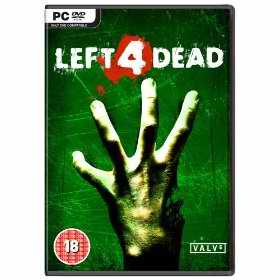 The USK are Germany's game classification board. And as you may already be aware, they're a conservative bunch, banning games that even Australia let slide. But this is new. Witness Germany's box art for Valve's upcoming zombie co-op shooter, Left
4 Dead
The USK are Germany's game classification board. And as you may already be aware, they're a conservative bunch, banning games that even Australia let slide. But this is new. Witness Germany's box art for Valve's upcoming zombie co-op shooter, Left
4 Dead
While every other region's box art shows a left hand with the thumb bitten off - zombies feast on the flesh of the living. On the German version, the thumb's simply tucked in behind the hand there. No gore.
|
| 23rd October | | |
Gears of War 2 banned in Germany and maybe Japan
| From edge-online.com
A vailable at
UK Amazon
|
A Microsoft spokesperson has told Edge that Epic's long-awaited Gears of War 2 game will not be released in Japan.
We can confirm that Gears of War 2 will not be available in Germany or Japan indefinitely said the spokesperson.
The reasons why the game will not be released remain unclear. In May this year Germany's ratings organization declined to issue the game an age certificate. The BBFC passed Gears of War 2, 18 uncut.
Update:
Evidently this story is causing waves within Microsoft. A spokesperson has contacted us to clarify that no announcement has been made about plans for Gears of War 2 in Japan.
|
| 22nd October | | |
French president gets wound up by voodoo doll
| Based on
article from
dailymail.co.uk
|
French President Nicolas Sarkozy has threatened to sue a publishing company unless it withdraws a Sarkozy doll that comes with a voodoo manual telling readers to plant pins in it.
The doll is emblazoned with some of Sarkozy's most famous
quotes such as Get lost you pathetic arsehole -- his words to a bystander who refused to shake his hand at a farm show last year.
Readers are encouraged to plant pins in the quotes.
Sarkozy
Nicolas Sarkozy has instructed me
to remind you that, whatever his status and fame, he has exclusive and absolute rights over his own image, his lawyer Thierry Herzog wrote to publishers K&B in a letter published by newspaper Le Monde. Herzog said Sarkozy would sue the
publishing firm if it didn't respond and pull the product. K&B has issued 20,000 copies of the manual and doll.
|
| 16th October | | |
Ireland censors to merge
| Based on article from
rte.ie
See also
banned books list [word]
|
Ireland's Department of Justice has introduced a series of cutbacks to save €11m across 20 bodies.
One of many measures is that the Film Censor's Office and Censorship of Publications Office are to be amalgamated.
The Censorship of Publications Board Based on
article from
citizensinformation.ie The Censorship of Publications Board is an independent board in Ireland established by law to examine books and periodicals for sale. The Board
may prohibit the sale and distribution of books and periodicals if they are found to be obscene. A prohibition on the sale and distribution of a particular publication means that it is illegal for this book to be bought, sold or distributed around the
country. Books that are prohibited may be appealed to the Censorship of Publications Appeal Board. Both the Censorship of Publications Board and the Appeals Board consist of five members each. Members of both boards are appointed by the Minister for
Justice, Equality and Law Reform. Posts on these boards are without remuneration (i.e., they are unpaid).
Rules
The Censorship of Publications Board will examine any book or periodical referred to it by a Customs and Excise officer and any
book referred to it by a member of the public. It may also examine any book or periodical on its own initiative. In Ireland, there is no category of restricted access - a publication is either prohibited or it is not prohibited. The Board does not
prohibit publications very often, and in some years, nothing is prohibited.
The Board has regular meetings to discuss publications referred to it. Every member of the Board will have read the publication before the meeting. For a book to be
prohibited, at least three members must agree with the decision and only one can dissent (i.e., disagree). If the prohibition is passed, it comes into effect as soon as it is announced in Iris Oifigúil (Ireland's official State gazette). A
prohibition order on a book ceases on the 31 December following a period of 12 years beginning on the date of the order coming into effect. Books are prohibited if the Censorship of Publications Board considers them to be indecent or obscene.
Periodicals are prohibited if the Censorship of Publications Board considers them to be frequently or usually indecent or obscene. Both books and periodicals may be prohibited if the Board considers that they advocate abortion or ways of carrying out
abortions. Periodicals may also be prohibited if the Board is of the opinion that they have given an unduly large proportion of space to matters relating to crime. In practice, however, publications are usually only reported to the Board for obscenity.
The Board will measure the literary, scientific or historical merit of the publication. It will take note of its general tenor, the language in which it is written, its likely circulation and readers and anything else it feels is relevant. It may take
into account any communication with the author, editor or publisher.
The Gardai may be issued with a search warrant if they suspect that prohibited books or periodicals are being kept anywhere for sale or distribution. If they find prohibited
publications, they may remove them. If you are convicted of possessing prohibited publications, you may be liable for a fine of 63.49 euro or six months imprisonment.
|
| 14th October | |
| EU Audio-Visual Media Services Directive to be adopted by Council of Europe
| Thanks to CyberLaw Blog
Based on article from out-law.com
See
also Revision of the European Convention on Transfrontier Television [pdf]
|
The Council of Europe (CoE) is a larger body than the EU with 47 rather than 27 member states.
It intends to extend the scope of a convention that affects the regulation of TV broadcasting to include video on-demand services and some online
video. The changes will match those already made by the European Union.
The most important change to the rules will relate to their coverage. The regulations will no longer apply simply to television content, but to video on demand services.
The Convention does not include home-made audio visual material, such as that which someone would post to a sharing site such as YouTube. It only includes commercial material.
The Convention also governs the retransmission of services and
orders states to allow material which complies with the rules in the Convention to be re-transmitted into their country, with exceptions for material which breaks the rules of the Convention or broadcasting rules in the country of first broadcast.
On the subject of content restriction it proposes:
- television broadcasts do not, include programmes which might seriously impair the physical, mental or moral development of minors, in particular those that involve pornography or gratuitous violence7. This provision shall be
extended to other television programmes which are likely to impair the physical mental or moral development of minors, except where it is ensured, by selecting the time of the broadcast or by any technical means, that minors in the area of transmission
will not normally hear or see such broadcasts.
- on-demand services which might seriously impair the physical, mental or moral development of minors are only made available in such a way that ensures that
minors will not normally hear or see such on-demand services.
The Government has asked for responses to the initial consultation by 31st October, and the CoE has said that a more formal consultation will take place at the end of the year.
|
| 14th October | | |
German copyright cases goes against Google Image Search
| Based on article from
blogoscoped.com
|
Bloomberg reports that Google lost two court cases in Germany over the display of thumbnails in their image search results.
Google's preview of a picture by German photographer Michael Bernhard violates his copyrights, the Regional Court of
Hamburg ruled, his lawyer Matthies van Eendenburg said in an interview today. Thomas Horn, who holds the copyrights on some comics that were displayed in Google search result.
“It doesn't matter that thumbnails are much smaller than
original pictures and are displayed in a lower resolution,” the court said in its ruling for Bernhard. By using photos in thumbnails, no new work is created, that may have justified displaying them without permission.
In the US, fair
use laws make it possible to offer such third-party services without specifically asking for permission. Adult magazine Perfect 10 once lost a case against Google in these regards, after an original decision was reversed. (In any case, Google's bots
respect the “robots.txt” protocol, where webmaster can disallow the spidering of images.) A Google rep said: The ruling of the Regional Court of Hamburg is bad for internet users and users of image search engines in Germany in general – just as
it's bad for thousands of site owners who based their business on image searches.
Charges were also brought against other provides of image searches, such as AOL, T-Online, Yahoo. With this ruling, the court of Hamburg throws German internet
users back into the digital stone age. And this is not just in regards to Google image search, but all of them. We are confident that the Regional Court will correct the ruling in the appeals procedure.
|
| 11th October | | |
France to apply TV watershed to internet
| Based on article from
thepour.blogs.nytimes.com
|
The French wine industry is calling for demonstrations across the country on October 30 to protest recent government and court decisions that would severely limit not only wine advertising, but wine writing.
This year alone, the wine industry has
been hit with these blows:
- A French court ruled that newspaper and magazine articles on wine must contain health warnings, in much the same way the United States requires tobacco advertising to include warnings. But remember we're not talking about advertising, but journalism.
- That same court ruled that wine and beer cannot be advertised on the Internet.
- Proposed new laws will put wine on the same level as pornography by limiting access to wine- and alcohol-related sites only to certain hours, with the
rationale of protecting minors.
The recent court decisions are the latest manifestations of the French Evin Law, which was enacted in 1991 to control the advertising of wine and spirits. The law limited advertising to showing a product, naming the place where it was made, how it was
made and how it should be consumed. It eliminated all references to social or financial success, or to wine as part of any social or domestic scene.
The rationale for the law was the high rate of deaths in France that could be attributed to
alcohol and tobacco abuse. But the recent restrictions betray hostility to any sort of pleasure derived from wine. This, I would think, is about as un-French as you can get.
|
| 8th October | | |
Lesbian kiss winds up Irish nutters
| Based on
article from herald.ie
|
RTE's new series Raw is proving too hot to handle for some viewers who have complained to the Broadcasting Complaints Commissioner about certain scenes.
The new TV drama received a number of complaints over the week following scenes
broadcast last Monday night.
Now the BCC has contacted the national broadcaster about the complaints and is awaiting a response from RTE.
Monday night's episode reportedly received five objections from viewers to the national broadcaster
and the BCC received one complaint.
The episode in question featured a lesbian kiss and a full frontal scene between two men.
But a spokeswoman for RTE said that she believed the show on Monday did not cause huge offence as there were
only five complaints received.
The six-part series is set in a fictitious Dublin restaurant and follows the lives and loves of the staff. The series has already shown several sex scenes and one incident where bodily fluids were served at the
restaurant as part of a practical joke. |
|
|