|
1st April
|
|
|
|
Male nipples cause offence in Orlando
|
And before you ask, the story was published well before April Fools Day. Thanks to Nick
See full article from
TMZ
|
Nipplegate 2008 has broken out in Florida! Wrestlers John Cena, Triple H, Randy Orton and Big Show are all proudly baring their nipple-free chests on a huge banner in downtown Orlando.
City officials met with some WWE suits to figure out how to
keep the wrestling poster from looking "too provocative." The outcome - the WWE have airbrushed the nipples into oblivion.
According to the Orlando Sentinel, Mayor Buddy Dyer liked the nipple-free poster and added that there was
some sort of city ordinance that banned public display of male nipples. But according to the city's press secretary no such ordinance exists.
|
|
29th March
|
|
|
|
Gary Lineker crisps advert withdrawn after complaints
|
From the Scotsman
|
Walker's Crirps have withdrawn a television advert that shows the top of a bus being sliced off, after dozens of complaints from Scottish viewers.
Walkers apologised for any offence caused by the advert and said it was removing the offending
scene, with a new version airing from today.
The advert shows the former footballer Gary Lineker driving a bus while eating crisps. He fails to notice a low bridge and crashes into it, slicing off the top of the bus.
91 people complained
to the Advertising Standards Authority, which is deciding whether there are grounds for an investigation.
|
|
28th March
|
|
|
|
Twinings tea advert cleared by the ASA
|
From the Scotsman
|
A TV advert for Twinings tea in which three white women flirt with a young black American was yesterday cleared of playing on negative racial stereotypes.
The ASA said it had decided not to uphold a lone complaint from a viewer who believed the
ad suggested black men were sexually promiscuous and existed to provide sexual services for white women.
The complainant alleged that an ad for Lady Grey tea and another for Earl Grey, which also featured the black character, were both offensive
and harmful.
The commercial features Stephen Fry behind the counter of a tea shop, as the black man, named Tyrone, writes a message on a noticeboard informing customers that the drink puts the zing in your ding-a-ling.
Dismissing
the claims of racial bias, an ASA panel described the innuendo used to promote the aromatic beverages as unlikely to cause widespread offence.
The panel observed: Although we acknowledged the innuendo was mildly sexual, we did not consider
that it was reliant on the young man's ethnic origins or a racial stereotype.
|
|
14th March
|
|
|
|
Who advertises to lighten the burden of having a daughter
|
See full article from
Medindia
|
The federal government of India has directed TV channels not to screen an ad from a life insurance firm calling girl children a burden.
The Information and Broadcasting Ministry has asked the Advertising Standards Council of India (ASCI) to ask
all TV channels to stop airing the advertisement immediately. We have also asked the ASCI to take action against the advertising company for making such an advertisement, a senior ministry official said.
Life insurance firm ING Vysya is
behind the controversial advertisement, which has the following tagline for the girl child: hai to pyaari lekin bojh hai bhari (though loving, she is still a burden). An insurance cover for the girl child, it says, would lighten the burden. The ad
has been on air for the past few months.
The National Commission for Protection of Child Rights (NCPCR), which received several representations against the advertisement, has sought an immediate ban on the ad. The advertisement is totally
unethical. Television channels have failed in their duty to censor content before airing it, said its chairperson Shantha Sinha.
The Delhi government and several states have gone to the extent of saying the advertisement can promote female
foeticide. Internet bloggers call the ad evidence of the typical “Indian bias” against the girl child. I could not have imagined that a company of international repute could air such views about the girl child, said a blogger on Youtube.
|
|
14th March
|
|
|
|
|
Blasphemy is dead! Long live blasphemy! See article from spiked-online.com
|
|
12th March
|
|
|
|
Christianity needs defending from gentle allusion in advert
|
Based on an article from the Times
See also advert on YouTube
|
|
|
|
Britishness is...
Whinging about minor offence
|
The Advertising Standards Authority has banned the television advertisements after the company Jemella, that trades as Ghd, used “erotic” images of women combined with with the text, thy will be done, to promote a heated hair styler.
In
one scene, a woman wearing lingerie sat on the edge of a bed with rosary-style beads clasped in her hands and prayed in Italian: May my new curls make her feel choked with jealousy. Another showed a woman lying on a bed, with her thoughts in
Swedish and printed on the screen: May my flirty flicks puncture the heart of every man I see. A third showed a woman carrying a votive candle through to her bedroom before looking upwards and praying: Make him dump her tonight and come home
with me. Finally text stated ghd IV thy Will Be Done, with the letter “t” appearing as a cross. On-screen text then stated ghd. A new religion for hair.
The advertisement prompted complaints from the shameful Archdeacon
of Liverpool, Ricky Panter, and 22 other members of the public who claimed the images were offensive to the Christian faith.
Panter told The Times last night: It seemed to me the advertisement crossed a line. I felt very uncomfortable
with it. It was targeting the Lord’s Prayer and I felt it was taking the mick. This is not about censorship or about being prudish ...[BUT]... It is simply about every individual’s right to signal when they think a line has been crossed.
The advertising clearance organisation Clearcast, which had approved this and previous Jemella campaigns, claimed the advertisements did not seek to mock any particular religion and contained language that had been used by Ghd for the past seven
years.
The ASA decided however that the devotion to hair prayer depicted in the advertisements went too far: The women in the ads appeared to be in prayer, the ASA said in its ruling. “Their hands were clasped and they were looking
upwards towards the sky. One was holding a votive candle and another was holding a set of beads that resembled rosary beads. We also noted the images of the women in their bedrooms, some of them in their underwear and others on their beds, were presented
in a way that could be seen to be erotic
The ASA concluded that the eroticised images of the women apparently in prayer, in conjunction with religious symbols such as the votive candle and the rosary beads, the use of the phrase ‘thy will
be done’ from the Lord's Prayer and the image of the letter t as the Cross of Jesus, were likely to cause serious offence, particularly to Christians.
The advertisement is still running on YouTube and on the company’s own website. The
industry is at present debating how it can regulate new media. A spokesman for the ASA said: If consumers want to stop the ad appearing on a company’s website then, in the first instance, we recommend that they contact them directly.
Comment: ASA for the Succour of the Easily Offended Thanks to Alan, 13th March 2008 Interesting to see the Archdeacon of Liverpool's
whingeing and the craven response of the ASA, which seems to act as an association for the succour of the easily offended.
I notice that the archdeacon doesn't support censorship ...BUT....
Strange thing is, archdeacons have
always had a lousy reputation. In the middle ages, they were so notorious for their corruption that theologians seriously debated whether they could be saved. They're not much more highly regarded today, and the favourite definition of an archdeacon in
the Church of England is the crook at the head of a bishop's staff.
|
|
5th March
|
|
|
|
Orlando weekly drops escort ads in return for charges being dropped
|
See full article from
The Times-Tribune
|
Charges have been dropped against a Times-Shamrock Communications-owned alternative weekly in Orlando, Florida, in exchange for an agreement to stop running "adult services" ads, officials said.
Orlando Weekly, a free alternative
weekly, was charged in October with aiding prostitution by running ads for escort services. All 18 charges were dropped Wednesday at a pre-trial hearing in front of Orange County Circuit Court Judge Tim Shea.
We've maintained all along these
charges against the Orlando Weekly were baseless, said Timothy Hinton, corporate counsel for Times-Shamrock Communications. The prosecutor's agreement to dismiss these charges on the eve of the hearing on our motion to dismiss the case confirms
our position.
Vice squad investigators charged three of the Weekly's advertising sales reps after undercover officers with Orlando's Metropolitan Bureau of Investigation Vice Squad placed ads while posing as people selling prostitution
services.
Officials with Orlando Weekly and Hinton have said the charges were brought as retaliation for critical coverage of the Metropolitan Bureau of Investigation in the past.
Among the terms of the agreement:
- The Weekly has agreed to stop publishing "adult services" advertisements and will require photo identification and copies of state licensing paperwork from anyone placing an ad for a massage parlor or related business.
- The
Metropolitan Bureau of Investigation will notify the paper of any businesses charged with prostitution or related crimes so the paper can immediately pull ads for those businesses.
- The paper has agreed to pay nearly $10,000 in costs for the
investigation by the Metropolitan Bureau of Investigation.
- The three ad reps will serve 100 hours of community service and will be on probation for the next nine months, after which their records will be expunged.
|
|
3rd March
|
|
|
|
|
Pre-emptive censorship is a cross we all bear See article from spiked-online.com
|
|
2nd March
|
|
|
|
Complainants are a bunch of whinging puppies
|
Based on an article from the Guardian
|
The advertising watchdog has cleared a Setanta TV ad campaign featuring Des Lynam which received 36 complaints that it degraded women by referring to breasts as puppies.
Setanta's Setanta Claus ad featured Lynam dressed in a yellow Santa
suit in a grotto, while his scantily clad helper "Tinseltoes" - Big Brother's Thaila Zucchi - flashed her cleavage.
This prompted a male visitor to the grotto to grin, stare and absentmindedly mention a "couple of puppies".
The Advertising Standards Authority received 36 complaints that the ad was offensive as it objectified and degraded women and was sexist. Nine of the complainants also argued that the Santa theme would be of interest to children and that such an
ad should not be broadcast before 9pm.
The ASA noted that some viewers might see the portrayal of Zucchi with her cleavage on display as objectifying women and that the reference Give him what he wants this Christmas could be seen by some
as treating women as sex objects. However, it decided that most viewers would see it as mild sexual innuendo that was unlikely to provoke serious or widespread offence.
The ASA also rejected the nine complaints that the ad was unsuitable
for children and should not be shown before 9pm. It concluded that the ad, which aired with a restriction not to be shown around programmes targeted at children, had enough differences from a real Christmas scene - such as Lynam dressed in Setanta yellow
- that children would know the difference.
The ASA also said children would not understand the double entendre messages in the ad and take them at face value . Setanta's ad was cleared by the ASA.
|
|
23rd February
|
|
|
|
London Underground panders to the easily offended
|
From the Freethinker
|
London Underground have rejected the advert for Fat Christ , a black comedy starring topless model Abi Titmuss, on the grounds that it was likely to offend ethnic, religious or other major groups.
The poster depicts a portly man on
a cross. He is wearing pink striped boxes and a crown of thorns. It was banned from Angel Tube station, where the Upper Street theatre had booked an advertising spot.
The ban has been criticised by the Rev Stephen Coles, of St Thomas's Church in
Finsbury Park, according to the Islington Tribune. He is quoted as saying: The itch to censor is something one should resist. I can't quite see how this could cause offence. We're grown-ups and Jesus can defend himself. One has to be a little wary of
indulging the super-sensitive.
Gavin Davis, the author of Fat Christ who also features as the man on the cross, insisted he had not set out to offend: The play is a comedy and the poster accurately reflects its content and themes –
the central character stages his own mock crucifixion for an art project. We don't believe it to be blasphemous and can't understand London Underground's censorious position. I am, however, prepared to apologise for my choice of boxer shorts.
A London Underground spokesman said the Fat Christ poster was “declined” because it contravened a commitment not to display adverts likely to offend ethnic, religious or other major groups: Millions of people travel on the London Underground
each day and they have no choice but to view whatever adverts are posted there. We have to take account of every passenger and endeavour not to cause offence in the advertising we display.
|
|
14th February
|
|
|
|
SAW IV advert cleared by the ASA
|
See full article from the Guardian
The uncut region 2 DVD is available at UK Amazon for a 3rd March 2008 release
|
An advert for the horror film Saw IV featuring a man's severed head has been cleared by the advertising watchdog, despite 57 complaints from members of the public that it was likely to disturb children.
The print, online and outdoor ad was
run by film distributor Lions Gate and featured a side view of a man's head sitting in a metal dish.
Lions Gate's outdoor ad appeared on the side of buses last October and ran with the headline You Think It Is Over But The Games Have Just
Begun.
Lions Gate argued that most of the advertising campaign was targeted at people aged 18 years and over as the film had an 18 certificate, but acknowledged that younger readers might be able to see them. The film distributor admitted
that a minority of people might find the film and the campaign distasteful, but the ads were intended to be "tongue in cheek".
Lions Gate also said that it had taken advice from media owner CBS Outdoor on whether the image was likely to
cause offence. CBS had cleaned up most of the blood in the ad to make the poster more acceptable.
In its ruling, the ASA said that the ad was likely to be distasteful to some members of the public but dismissed the idea that it was likely to
cause widespread offence to children or adults. The regulator also ruled that the ad did not contain more blood or gore than was usual for a horror film poster. From the BBFC
SAW IV is the latest in a series of horror films about a man called Jigsaw who, even after his death, can play terrifying games with his victims, leading them to gory deaths.
The film was passed '18' for strong horror, bloody violence and gory
images. One scene at the very start of the film shows the autopsy of a man in close- up images and was considered too strong for the '15' category as the Guidelines at '15' state: 'the strongest gory images are unlikely to be acceptable'.
The
film also has frequent uses of strong language, containable at the '18' required for the violence, gore and horror.
|
|
14th February
|
|
|
|
London Underground ban historical nude
|
Thanks to Nick
See full article from the Guardian
|
Venus has been delighting connoisseurs for almost 500 years - but she has been banned from London Underground, as they decided she is likely to offend rather than enchant the capital's weary commuters.
She was intended as the main poster for
the Royal Academy's show on the German artist Lucas Cranach the Elder, noted for his sensuous nudes.
Millions of people travel on the London Underground each day and they have no choice but to view whatever adverts are posted there. We have to
take account of the full range of travellers and endeavour not to cause offence in the advertising we display, a spokesman said. [You just have to know who they are alluding to!]
London Underground advertising is vetted by a firm called CBS Outdoor, and Venus seems to have fallen foul of the guideline that advertising should not
depict men, women or children in a sexual manner, or display nude or semi-nude figures in an overtly sexual context.
|
|
8th February
|
|
|
|
Fitness center advert winds up the Catholic League
|
See full article from WCBS TV
|
A photo showing models dressed as nuns sketching a buff, naked man -- for an Equinox Fitness Center in Boston -- is raising eyebrows all over.
The Boston Archdiocese thinks the ad is a slam against the Catholic Church and wants an apology.
Keira McCaffrey is with the Catholic League in New York. It's gratuitous, McCaffrey said: it's a slap at nuns, but you know what? It's trite. It's not even clever. This is an old cliché... let's make fun of nuns.
Is it the
worst thing in the world? No, McCaffrey said. It's a sophomoric ad. It doesn't speak well of Equinox.
In a statement, Judy Taylor, a spokesperson for Equinox, said: The ads capture the energy and artistry of the well-conditioned
body in a thought-provoking fashion, blending fantasy and impact. Equinox reps also said there will be no apology for the ad, which can soon be seen in five other cities, including New York.
|
|
7th February
|
|
|
|
Lap dancing advert offends the ASA
|
I would have thought that the tag line where fantasy becomes reality , is surely a dubious claim and far more of a justification for censure. As if fantasy ever became reality at a lap dancing club Based on an article from
Brand Republic
|
A provocative ad for a lap dancing club has fallen foul of the advertising watchdog's rules.
The poster for a lap dancing club called Grace showed a woman in underwear kneeling on the floor, while holding a foaming bottle of champagne in
her hand.
The cork from the bottle is shown flying through the air alongside the line: Brighton's first fully nude lap dancing club... where fantasy becomes reality.
The poster attracted complaints that it was offensive and on
display where it could be seen by children. It was claimed that the ad's bubbling bottle clearly plays on sexual references, which would upset the easily offended.
Grace said it had not meant to cause offence. However, the ASA said that
the club did not cooperate fully with its investigation.
The ASA has banned the poster on the grounds that it was inappropriate and likely to cause serious or widespread offence. It said: Although we considered children were unlikely to
understand sexual imagery, we considered that many adults would see the woman holding the bottle as an allusion to a sexual act.
|
|
6th February
|
|
|
|
Christians told to stop advertising their anti-gay nonsense
|
See full article from the BBC
|
A poster claiming that gay people want to abolish the family has been criticised by the advertising regulator.
The Christian Congress for Traditional Values (CCTV) advert showed a man, woman, boy and girl with the statement Gay aim:
abolish the family .
A complainant had said the advert did not accurately represent gay people's views and was offensive.
The Advertising Standards Authority (ASA) said the organisation could not stand up the claim that was likely to
cause serious or widespread offence.
The ASA upheld complaints against the ad, ruling that it could be inflammatory. The poster broke advertising rules on social responsibility, decency, matters of opinion and truthfulness, the ASA said: We
considered the statement and the way it appeared was likely to cause offence both to the mainstream gay community and supporters of equality .
The ASA added that it was also likely to be seen as controversial and possibly inflammatory by a
significant number of people who saw the poster in an untargeted medium. We concluded that the poster was likely to cause serious or widespread offence and might lead to anti-social behaviour.
The CCTV, which describes itself on its website
as an alliance of Christians but not a church organisation, was instructed to make sure future campaigns would not be offensive.
The group defended the poster, citing gay organisations' manifesto documents from the 1970s which described the
traditional family unit as working against homosexuality.
|
|
4th February
|
|
|
|
New Zealand ASA show inane sensibilities over soda advert
|
Based upon an article from
TV3.co.nz
See the advert on YouTube
|
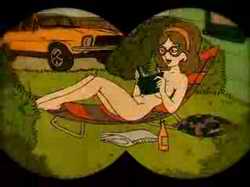 A complaint to the New Zealand Advertising Standards Authority (ASA) about a crude and sexual advertisement for Charlie's Soda has been upheld.
The complaints board ruled the TV advert was indecent, used sexual appeal to sell an unrelated
product and did not meet the required sense of social responsibility.
The complainant objected to the cartoon-style depiction of two young boys spying on a woman sunbathing nude in her backyard before cutting to the boys squeezing lemons to make
homemade lemonade.
It was not cute, funny or entertaining, he said. Making a point of focusing on the woman's barely hidden breast, then the boys simultaneously squeezing/rotating lemons...is a very crude sexual innuendo.
In
its submission to the ASA, Charlies Group Ltd said some people may not get the advertisement. However on reflection it was not suitable for children. The company then raised the commercial's broadcast time to Adults Only (AO).
The ASA
acknowledged the move by Charlies to reclassify the advertisement but still found it to be in breach of three separate broadcasting principles.
The company said the advertisement had humorous elements and defended its use of a nude character as
she was decently covered at all times.
The Television Approvals Bureau (TVCAB) also defended the advertisement: The depiction of hands squeezing lemons could perhaps be seen as provocative but only due to assumptions made by the viewer's
imagination.
|
|
1st February
|
|
|
|
Letter to the Advertising Standards Authority
|
Thanks to Alan
|
Letter to the ASA: Congratulations! You have done something which I never thought possible.
I am mightily unimpressed with Ryanair's appalling attitude towards its customers and its dodgy commercial practices in disguising its real fares
(and destinations). I have not yet travelled with that company, and it would be my last choice of airline for future flights. I now find myself for the first time actually sympathising with the company.
Your ruling in the case of their
"schoolgirl" advertisement strains credulity. I understand, from an article by Brendan O'Neill on the online journal Spiked, that the advertisement appeared in media with a combined readership of about 3.5 million and generated only thirteen
complaints. This really does seem to be a quite grotesque case of allowing yourselves to be swayed by a tiny number of absurdly prudish people.
|
|
31st January
|
|
|
|
ASA find Billie Piper inoffensive
|
From Brand Republic see full article
|
A poster showing Billie Piper lying on a white sheet in her bra and knickers to promote ITV1's Secret Diary of a Call Girl has escaped censure from the ad watchdog.
The Advertising Standards Authority launched an investigation after
receiving two complaints that pointed out the poster appeared in close proximity to schools. The poster was displayed at 1,000 sites around the UK.
Both complainants believed it was inappropriate for the poster to be seen by children. It also
featured the line My body's a big deal.
ITV said the show, in which Piper played a high-class prostitute, was aimed at adults aged 18-34, but did not believe the poster was likely to cause offence.
The commercial broadcaster said
it had deliberately avoided any references to prostitution and drew a comparison with similar ads in which models wear underwear to promote high street stores. It added that they believed the term "call girl" was likely to be understood by
adults only.
The ASA ruled the image was not explicit and agreed with the comparison with ads for lingerie and designer fragrances. It said: Given that the image and the language used were not overtly sexual we concluded that the poster was
unlikely to cause mental or moral harm to children.
|
|
31st January
|
|
|
|
|
ASA are a bunch of unelected, self-appointed dimwits. See spiked-online.com
|
|
30th January
|
|
|
|
Reading Post pulls escort small ads
|
Based on an article from Crawley Observer
|
The Reading Post has been praised for putting a stop to advertisements selling sexual services.
The move follows a survey by the Government Equalities Office which found up to 75% of local newspapers are carrying small ads selling sexual services
worth £44m amid supposed concern about human trafficking.
It also discovered a large proportion of the ads specified that the women were foreign. [But this of course does not infer that they are
trafficked]
The Government is already in talks with the newspaper industry about removing such ads.
Harriet Hardnose, minister for women and equality and Labour's Deputy Leader, said: Within these ads are girls who've been
trafficked into modern day slavery. And Ms Harman hailed the example of the Reading Post in putting a stop to the ads. If other papers follow this example, and when the guidelines are implemented, we can make progress towards eradicating this
intolerable trade.
|
|
30th January
|
|
|
|
Ryanair ignore the advert censors
|
From All Headline News
|
Irish airline Ryanair announced its decision to defy the orders of the UK advertising watchdog, and continue to run a controversial ad that was told to be taken out of circulation.
The airline called the order "absurd." The ad, showing
a woman dressed in a provocative schoolgirl outfit, was deemed as "irresponsible" by the Advertising Standards Authority. Underneath the photo was the tagline about the airline's hottest back to school fares.
The ad appeared in
the Herald, Daily Mail, and the Scottish Daily Mail, obtaining a 3.5-million circulation, according to The Press Association.
A total of 13 complains from readers cried out that the ad linked teenage girls to illicit and sexual behaviours. The
ASA recently catered to the outcry, ordering the three newspapers to take down the ad and never run it again.
We considered that her appearance and pose, in conjunction with the heading 'hottest' appeared to link teenage girls with sexually
provocative behavior and was irresponsible and likely to cause serious or widespread offence, the ASA was quoted as saying.
The airline responded by saying that 13 complaints out of a more than 3 million readership was an
"insignificant" proportion.
It is remarkable that a fully clothed model is now claimed to cause 'serious or widespread offence', said Ryanair head of communications Peter Sherrard, when many of the UK's leading daily
newspapers regularly run pictures of topless or partially dressed females without causing any serious or widespread offence. Sherrard continued by calling the ASA demanding orders for censorship's sake, and not advertising regulations.
Update: What Can They Do? 12th February 2008 See full article from Brand Republic The ASAs decision not to invoke its ultimate sanction and
refer Ryanair to the Office of Fair Trading (OFT), despite repeated breaches of ASA regulations, has raised questions about whether self-regulation in advertising is really working.
The ASA claims that advertisers who persistently breach its
non-broadcast advertising codes are referred to the OFT, but only after a 'longlist' of other sanctions have been considered.
A spokesman for the ASA said a referral would be made only under the Control of Misleading Advertisements Regulations,
while offensive ads are governed by rules on breaches of taste and decency: Only when other sanctions have been exhausted, such as refusing an advertiser media space, invoking compulsory pre-vetting, or taking away trading privileges, do we consider a
referral. In most cases, sanctions are effective in bringing advertisers into line.'
Ryanair's latest breach was of the taste and decency rules, and the sanction the ASA imposed was to issue an alert to newspapers instructing them not to run
the ad.
|
|
24th January
|
|
|
|
Complaints about Boots nipple cream rejected
|
Based on an article from the Guardian see
full article
|
An ad campaign for Boots' nipple cream has escaped a ban from the advertising watchdog.
A press ad, for the Boots Expert moisturising nipple cream, ran in magazines including OK!, Mother & Baby, Best and Chat. It featured a sketch drawing of a
woman holding her baby at arm's length with a grimace on her face. Her dress was open and showed the skin on her breast stretched taut from the baby's mouth. In the ad the woman complains that breastfeeding has caused her to have extremely sore nipples.
Text at the foot of the ad states: If you've got cracked nipples, Boots understands how it feels ... The new Boots Expert range. For every problem, there's now an expert solution.
The Advertising Standards Authority received a
total of 19 complaints about the ad from members of the public and organisations including the Association of Breastfeeding Mothers and the National Childbirth Trust.
Complainants said the ads were misleading because they implied that sore
nipples were normal when breastfeeding, whereas in fact it was usually due to incorrect feeding techniques. The complainants added that the ad was also misleading because Boots positioned its cream as the only product that could alleviate the problem of
sore nipples.
They also argued that the ads were irresponsible, because they might discourage new mothers from seeking professional guidance about correct feeding, and offensive because they presented an unfair and negative image of
breastfeeding.
Boots said the ads were designed to look at a problem commonly experienced by mothers in a light-hearted and humorous way. In its ruling, the ASA said breast-feeding mothers were likely to be reasonably well informed
about the causes of sore nipples through antenatal classes and literature.
The advertising regulator concluded that the campaign sought to offer the Boots cream as a product to alleviate sore nipples and that it would not discourage new
mothers from seeking professional guidance about correct techniques.
It also said the ads did not present an "unfair or negative" image of breastfeeding and therefore were not likely to cause widespread offence.
|
|
16th January
|
|
|
|
ASA bans advert for Stranglehold game
|
From In the News
|
A television advert for a computer game promoted 'violent revenge' and was unsuitable to be shown before the watershed, a watchdog has ruled.
The Advertising Standards Authority (ASA) said the ad for Stranglehold , which came out on
Xbox 360 and PlayStation 3 last year, encouraged and condoned violence.
It has ruled that the advert should not be shown again after deciding time constraints would not address concerns.
The advert for the John Woo-directed game shows a
"prolonged shootout" between four men.
Accompanying the action is a disclaimer explaining the images are not actual game footage and the voiceover: Honour is his code. Vengeance is his mission. Violence is his only option. John Woo
presents Stranglehold . The next generation of action gaming has arrived.
A few viewers complained that the game, which features a motion capture version of martial arts star Chow Yun Fat, glorified violence and gun crime and could be
a dangerous incitement to susceptible people.
The ASA explained in its ruling the advert was suggesting it was honourable to seek revenge and that violence was an acceptable solution to a situation. Because the issues raised by the ad
could not be addressed with a timing restriction, we considered the only solution was to withdraw the ad from transmission completely.
|
|
11th January
|
|
|
|
Church images removed from Russian Coca-Cola
|
From the Guardian see full article
|
Coca-Cola's main Russian bottling distributor has removed religious images from its drinks refrigerators after a group of Russian Orthodox believers accused it of blasphemy. Local people in the city of Nizhny Novgorod, 400 km from Moscow,
complained to the prosecutor's office last month about pictures of an orthodox cross and onion-shaped church domes on the outdoor refrigerators.
At the time, Coca-Cola Hellenic Bottling Co. said it would not drop the marketing campaign and there
had been no negative reaction in other Russian cities where similar images were used on the sides of the refrigerators.
Russia's tolerance towards Western influences has lessened, with the Kremlin's political rhetoric notably hostile to the
United States, the birthplace of Coca-Cola.
I would assure people that we used these images to promote Russian culture and not to offend anybody's feelings, a spokeswoman said, confirming the company's decision. She said it would
take some time to remove the offending images from hundreds of outdoor sales refrigerators.
|
|
|


