|
15th December
|
|
|
|
Theresa May has a whinge at job centre adverts for sex related posts
|
From 24dash.com
|
Rules that allow jobcentres to advertise sex related opportunities are being reviewed by the Government, Commons Leader Harriet Hatemen said today.
Work and Pensions Secretary James Purnell is looking into guidelines that allowed more than 350
sex industry jobs to be advertised in Jobcentre Plus offices across the country last year.
Shadow Commons leader Theresa May said jobs included topless semi-nude bar staff and nude cleaners.
During exchanges on future
Commons business, May told MPs of Harman's quest to stop local newspapers advertising the sex trade.
She told Harman: Pity you can't persuade the Work and Pensions Secretary to join your campaign. A new report shows that Jobcentre Plus
advertised 351 vacancies in the adult entertainment industry last year, including adverts for topless semi-nude bar staff and nude cleaners.
Two jobseekers complained - they were asked to perform sexual services after contacting an
employer about a vacancy advertised at Jobcentre Plus.
May demanded an end to this hypocrisy within Government.
Harman, who is also Women's Minister, said: I absolutely agree with you that there is no way that job centres
should be used as a place for advertising jobs for sexual services, for lap dancing, for sex encounter establishments. I raised this with the Secretary of State for Work and Pensions - he is reviewing the situation. We don't want any of those sorts of
jobs in our jobcentres.
|
|
8th December
|
|
|
|
Straw considering the responsibility to be loyal to Bollox Britain
|
So Jack Straw is looking at social responsibilities such as staying healthy. So is he telegraphing new criminal offences such as drinking, smoking, overeating, sunbathing and casual sex? Based on
article from dailymail.co.uk
See also Taking liberties with the law from guardian.co.uk
by Shami Chakrabarti
|
Jack Straw plans to overhaul the Human Rights Act amidst claims that it has become a charter for criminals.
The Injustice Secretary wants to reflect complaints that the act protects rights but says nothing about responsibilities.
In an
interview with the Daily Mail, he says he is frustrated by the way the legislation he introduced ten years ago has sometimes been interpreted by the courts. He blames nervous judges for refusing to deport extremists and terrorist suspects
despite assurances by ministers that their removal is in the national interest.
In a move which will alarm the civil liberties lobby, Straw reveals that he is studying whether the act can be tightened and has taken legal advice.
In due
course I could envisage that there could be additions made to to work in the issues of responsibilities, he says.
He tells the Mail that he wants to rebalance the rights set out in the Human Rights Act by adding explicit responsibilities
, specifically to obey the law and to be loyal to the country. He is also looking at ways of promoting social rights such as access to health care, as well as social responsibilities such staying healthy or the education of children.
|
|
2nd December
|
|
|
|
Government plan to ban criminal memoirs is moronic
|
Based on article from telegraph.co.uk by Sam Leith
|
In addition to banning free drinks for women, and big glasses in pubs, the government has made it known that Wednesday's Queen's Speech contains notice of legislation to prevent criminals profiting from their crimes by writing memoirs. Sounds well and
good. Lot of cobblers, though. This is not to say that I'm in favour of criminals making money from their memoirs. There is a moral or ethical problem here, clearly. On the one hand, it is bordering on the absurd to imagine that the prospect of a
book deal will incentivise people to commit crimes: if you're doing the sort of crime that would really command a big advance – a kill-hack-and-eat job, say – you're unlikely to be the sort of person for whom the book deal is the big thing.
On
the other hand, nevertheless, it's not nice to think of vicious killers ending up on the chat-show circuit. Try the thought experiment. Harold Shipman: I Did It My Way. Dahmer: The Cookbook. Manson: My Family And Other Animals. You think: disgusting,
yuk, why in any civilised society would these beasts be heard from again?
You think: O J Simpson (obviously, he didn't do it, but profiting from the titillating speculation that he might have done it is unattractive, no?); you think
"Mad" Frankie Fraser; you think Ronnie Biggs. No need for books from them, you think.
Then you think: Jeffrey Archer, Nick Leeson, Howard Marks, Jonathan Aitken. You say: "hmmm." Then again, you think: conscientious objectors,
metric martyrs, foxhunting men, repentant members of the Weather Underground or former Islamists like Ed Husain. You say: "hmmmm" with even more "m"s. And then again, you think, Jean Genet. You think William Burroughs. Perhaps if you
have that cast of mind, you think Aung San Suu Kyi or Nelson Mandela.
You think... well, you end up thinking that this is a law – or a provision in law – designed to sound good and serious, but whose implementation is so impossible, whose
ambition so fuzzy, as to be no more than a calculatedly fatuous electoral gesture.
|
|
19th November
|
|
|
|
UK Government make terrorism internet filter available
|
Based on article from press.homeoffice.gov.uk
|
Filtering technology will allow parents, schools, businesses and web users to further restrict access to websites said to be advocating or promoting terrorism.
Following joint work between the internet industry and government, web users now have
the opportunity to download software allowing them to restrict access to websites that may encourage the endorsement or participation in acts of terrorism.
The software can be downloaded voluntarily and is available to parents, schools, colleges
and businesses. Home Secretary Jacqui Smith said, Stopping people becoming or supporting terrorists is the major long-term challenge we face. I want to give parents and guardians the power to decide what content is downloaded on their computers
at home, which is why we have worked hard to develop these tools with various software companies.
|
|
15th November
|
|
|
|
Shrill censorship noises from the new culture minister, Barbara Follett
|
Umm...it may be that the idea enables a little consumer power. We can avoid ISPs that pander to the easily offended. Based on
article from guardian.co.uk
See
Westminster debate transcript from theyworkforyou.com
|
Politicians are ready to introduce league tables naming the speed with which internet service providers take down supposedly 'offensive' material.
The culture minister, Barbara Follett, and her Tory shadow, Ed Vaizey, have backed the idea that
web providers must be embarrassed into dealing with violent, sexually explicit web content.
Follett said she wants to see the pre-screening of material on sites such as YouTube, as occurs at present on MySpace. She claimed there was growing chaos
out there on the internet, and order needed to be brought.
She has also admitted barriers aimed at preventing children from accessing over-age material on the internet are not just porous but leak like a sieve. "People can get straight
through it, or straight by it."
Follett warned: We must teach children of the dangers of the internet. It is sad to make children more scared than interested, but fortunately the internet is so interesting that children tend to overcome
their fear.
Discussing the internet and video games at a Westminster debate and facing suggestions that the industry is lax about controlling content, Follett said: We agree information about take-down times and levels of search need to be
much clearer. Asked if she supported league tables of take-down times by internet service providers, she said name and shame can sometimes can work very well indeed.
Follett said: Many people have said that the internet is like the
wild west in the gold rush and that sooner or later it will be regulated. What we need is for it to be regulated sooner rather than later.
She added: We must ensure that search engines have a clear link to child safety information and safe
search settings on the front page of their website. She also said she saw some value in some form of age identity card for the internet. It is useful when it comes to alcohol and cigarettes and it is certainly useful when it comes to buying video
games and other material on the internet.
The proposal for a take-down league table is backed by Vaizey. He said: The government is in a position to put out the information, and it is up to the internet service providers to react to
it. If they are happy to be 55th in a league table of take-down times so be it.
Overall, Follett's remarks suggest she will be more interventionist than some other ministers, although she has stressed she favours the internet and largely
thinks self-regulation is best option. She also insisted there was not yet compellingly persuasive evidence of a link between watching violent video games and subsequent acts of violence.
|
|
15th November
|
|
|
|
Vernon Coaker now minister for policing, security and crime
|
Thanks to MichaelG
Based on article from vernon-coaker-mp.co.uk
|
On Saturday 4th October Vernon Coaker received a call from Gordon Brown offering him a promotion within the Home Office to become the Minister of State for Policing, Security and Crime. He was very happy to accept this position and is tremendously
excited to take on this new role.
|
|
9th November
|
|
|
|
More D-Notices issued by the Government
|
Based on article from mathaba.net
|
Seven D-notices were sent to all UK newspaper editors by the Defence Press and Broadcasting Advisory Committee (DPBAC) in 2007 and a further five so far this year, Defence Minister Kevan Jones revealed in a written parliamentary reply published.
This compares with just two being issued in each of the previous three years from 2003, one in 2002, three in 2001, two in 2000, three in 1999 and none in either 1998 or 1997.
The D-Notice system, which is a virtual blanket publication ban, is a voluntary code that began back in 1912 to provide guidance to the British media on the publication or broadcasting of national security information.
The committee, a
joint government-media body, says the objective is to prevent inadvertent public disclosure of information that would compromise UK military and intelligence operations and methods, or put at risk the safety of those involved in such operations, or
lead to attacks that would damage the critical national infrastructure and/or endanger lives.
No details are given of the latest bans. Some journalists have argued that the bans often include subjects that are merely unflattering to
government, rather than a matter of national defence and thus are a form of soft censorship.
|
|
8th November
|
|
|
|
Government announces Digital Britain Report Steering Board
|
Surely getting cynical but it always ominous to hear of yet more people shaping 'society' Based on press release from
culture.gov.uk
|
A forum of independent experts has been appointed to guide the work of The Digital Britain Report and develop a comprehensive plan to further our digital economy and society.
Among the members of the Steering Board, who will provide input
into the Digital Britain Report are the authors of recent and related reviews, including Dr. Tanya Byron, Francesco Caio, Barry Cox, Chairman of the Digital Radio Working Group, Andrew Gowers and Robin Foster from the Convergence Think Tank. Along with
other members of the Steering Board, they will provide sponsorship and expertise in their particular areas of focus and will advise on the overall strategy and direction of The Report.
Stephen Carter, the Minister for Communications, Technology
and Broadcasting said:
Fully embracing a digital future is a must for any successful knowledge economy. The Steering Board will serve and advise The Digital Britain Report in its ambition and its practical recommendations.
The expert
advisers and their primary area of focus are:
- Peter Black - Network technology
- Dr. Tanya Byron – Online protection
- Francesco Caio - Next generation networks
- Andrew Chitty - Production/new media
- Barry Cox - Digital radio
- Matthew d'Ancona – Print
media/new media
- Robin Foster - Public service content
- Andrew Gowers - Creative economy
- Ian McCulloch - Media markets
- Peter Phillips – Regulatory frameworks
- Stephen Temple – Spectrum
|
|
3rd November
|
|
|
|
|
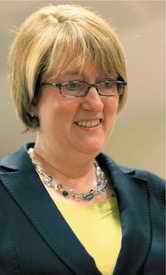 Website censorship erodes the very freedoms that the home secretary purports to defend
 See article from guardian.co.uk
|
|
29th October
|
|
|
|
Britain fucker whinges at granddaughter fucker
|
From independent.co.uk
See also the
transcript from guardian.co.uk
|
Gordon Brown and David Cameron weighed in to the row over a series of offensive telephone calls made by Jonathan Ross and Russell Brand to the veteran actor Andrew Sachs on their Radio 2 show as the media regulator Ofcom launched a major investigation
into the incident.
As the number of complaints about the incident topped 10,000, Ofcom announced its inquiry and Cameron andBrown joined other MPs in condemning the broadcaster's actions.
Brown described the prank calls as inappropriate and unacceptable
, while Cameron called on the BBC to be transparent about how the programme came to be broadcast, given that it was pre-recorded.
After receiving a rash of complaints about their comments, Ofcom took the decision to launch an inquiry.
In a statement, it said: All UK broadcasters must adhere to Ofcom's Broadcasting Code which sets standards for the content of television and radio broadcasting. It also deals with issues such as fairness and privacy.
Ross and Brand have
since issued personal apologies to Sachs, with Ross delivering flowers and a letter to the actor's door. The BBC has also apologised over the matter, and is launching an internal inquiry. Tim Davie, director of audio and music at the BBC, said: We're
going to have a full investigation, look at the facts and take the appropriate action. In an interview with the BBC, he admitted the programme was unacceptable and said clear editorial guidelines needed to be followed, but added that
apportioning blame prematurely would be the wrong thing to do. Asked if anyone would take the rap, Davie said the most important thing was to conduct a fair, balanced report and then take action.
Cameron said the BBC had some very straightforward
questions to answer. The main question is why did they allow this programme to be broadcast, given that it was pre-recorded? he said.
The subject of the prank calls had arisen earlier yesterday during a debate in the House of Commons,
in which the Justice minister David Hanson told MPs that the broadcast was not appropriate . Later, the Tory MP Nadine Dorries called on the BBC to sack both broadcasters.
It was also claimed that should Sachs wish to take the matter
further, Brand and Ross could possibly be prosecuted on the grounds of harassment. The Metropolitan Police said it had received complaints about the comments, but would not confirm how many had been made. This will be looked at and a decision
taken, but there is no police investigation at this time, a police spokesman said.
Sachs last night appeared to play down the saga. Jonathan Ross has personally delivered a letter of apology and some flowers. He made no excuses and was
very frank and open. He's in a lot of trouble and I don't want to pile any more on him. My granddaughter hasn't heard from either Ross or Brand and I do think they owe her an apology.
|
|
24th October
|
|
|
|
D-Notice history book censored by D-Notice committee
|
From entertainment.timesonline.co.uk
|
|
|
|
Spell checker & censor
Air Vice-Marshal Vallance
|
There is a long tradition of the military suppressing news that it considers detrimental to national security by slapping a D-notice on it.
But when the D-notice committee decided that the time was ripe to publish its own official history,
nobody imagined that it would fall victim to its own system. The history of the D-notice committee has, in effect, had a D-notice slapped on it by the D-notice committee.
Secrecy and the Media , written by Rear-Admiral Nick Wilkinson, who
was secretary of the committee from 1999 to 2004, should have been hitting all good bookshops this month, according to the academic publisher Routledge's website.
The book will now be published in May, but without its final five chapters. These
cover the Blair years, charting the winding-down of the Irish terrorist campaigns and the War on Terror.
The censored chapters will eventually be published in a later edition of the book after a change of administration. The Times has
learnt that the manuscript was cleared for publication by all the relevant government departments – MI5, SIS, GCHQ and the Foreign, Home and Cabinet offices, as well as the Treasury Solicitor and the Attorney-General. However, when it arrived at the
Ministry of Defence it was passed not to the department's security and legal experts but to the current D-notice secretary, Air Vice-Marshal Andrew Vallance.
He advised that the book be withdrawn altogether for reasons of style and structure,
and that a new official history should be commissioned, to be written instead by a trained historian , a source has told The Times. He said: It's poorly presented history. It's very thorough, but it's just difficult to read. The
air vice-marshal's view was endorsed by the MoD
|
|
21st October
|
|
|
|
|
UK government says: Regulate the internet See article from theregister.co.uk
|
|
11th October
|
|
|
|
|
Porn, abuse, depravity - and how they plan to stop it See article from theregister.co.uk
|
|
4th October
|
|
|
|
TV censor becomes broadcasting minister
|
Based on article from guardian.co.uk
|
Stephen Carter, the prime minister's strategy chief, has been appointed as a junior minister of communications, technology and broadcasting as part a cabinet reshuffle.
Carter, a former chief executive of TV censor Ofcom, has also been given a
peerage in order to take up his new role in the House of Lords.
Carter Said: Given the global financial challenges, the communications sector has never been more important to our economy. This role is an opportunity to make a
contribution to the growth of this key sector, and I look forward to working closely with Peter Mandelson and Andy Burnham.
His remit will be split between the department for culture, media and sport under secretary of state Andy Burnham, and
Peter Mandelson at the department for business, enterprise and regulatory reform.
|
|
4th October
|
|
|
|
Councils 'working together' with local media
|
Thanks to David
See Guidance for local authorities on community cohesion contingency planning [doc] from
communities.gov.uk
|
The Department for Communities and Local Government is the United Kingdom government department for communities and local government since May 2006. The department originated in 2001 as the Office of the Deputy Prime Minister. They have produced
an interesting document entitled: Guidance for local authorities on community cohesion contingency planning and tension monitoring And its shows that councils have been working with local newspapers to censor stories that may inflame local
tensions. The document gives the following examples: Working with the media Middlesbrough Council The council has close links to the editor
of the Evening Gazette, the main local newspaper, who also sits on the Local Strategic Partnership (LSP). This helps to ensure that press and media related issues are considered in cohesion contingency planning.
Tameside Metropolitan Borough
Council
Tameside holds regular meetings with local newspaper editors to gather information and stop sensationalist reporting which might otherwise start or add to rising tensions, e.g. in response to a Kick Racism out of Football campaign, an
extremist political group wanted to picket a local football stadium. A local newspaper was going to print the story on its front page – an action that was likely to bring unwanted publicity to the picket and fuel rising community tensions. The
intervention of the Community Cohesion Partnership prevented the story from being run and in the event no-one turned out for the picket.
Berwick-upon-Tweed Borough Council
The Berwick Crime and Disorder Reduction Partnership (CDRP) is
working with the local press/media to vet stories involving migrant workers from eastern Europe and Portugal employed in the food processing and agricultural sectors to prevent stigmatisation.
|
|
4th October
|
|
|
|
|
Hobbling the internet to keep television safe is a bad idea See article from news.bbc.co.uk
|
|
3rd October
|
|
|
|
|
UK minister looks for delete key on user generated content See article from theregister.co.uk
|
|
1st October
|
|
|
|
Andy Burnham picks up the job of UK government internet censor
|
Based on article from
dailymail.co.uk
|
Video-sharing websites - such as YouTube - could be forced to carry cinema-style guidance ratings, it has emerged.
Ministers are planning to introduce tough new rules to make websites carry age certificates and warning signs on films featuring
sex, violence or strong language.
Minister of Nasty Cultures, Andy Burnham, said that tougher content guidance would help parents monitor their children's internet use.
Burnham said he wanted online content to meet the same standards
required for television and the cinema. At the moment, there is no overall regulation of the internet. He said video clips may soon have to carry ratings such as the 'U', 'PG', '12' and '18' ones used by cinemas.
Burnham pointed to the example of
the BBC iplayer which carries content warnings on programmes screened after the 9pm watershed and allows parents to turn on a parental guidance lock to stop youngsters accessing inappropriate material.
He said: With the 9pm watershed,
parents had complete clarity about the content. But with the internet, parents are ensure about what is appropriate and what isn't. We have to start talking more seriously about standards and regulation on the internet.
I don't
think it is impossible that before you download something there is a symbol or wording which tells you what's in that content. If you have a clip that is downloaded a million times then that is akin to broadcasting.
It doesn't seem
over-burdensome for these to be regulated.
His comments were backed by the Home Secretary Jacqui Smith who said she had been 'shocked' at some of the material viewed by her sons. She added: I do think it's important that parents of young
children are clear, just as they are when going to see a film at the cinema, about what's appropriate and what isn't appropriate.
|
|
|