|
23rd December
|
|
|
|
Casualty criticised for pre-watershed injuries
|
From Ofcom see full article
|
Casualty
BBC1, 8 September 2007, 20:25 Casualty is a long-running hospital drama. In this episode, a junior doctor is confronted by the effects of a bomb explosion at a coach station on his first day at work. The doctor gives medical
attention to several badly injured people, including a man whose stomach has been ripped open exposing his intestines, and another requiring an arm amputation. Four viewers complained about the graphic and repeated imagery of the injuries
sustained by the victims in view of the programme's pre-watershed start. Three complainants noted there was no specific warning about this content in advance of the programme. The BBC responded that Casualty has been a staple of the BBC1
schedule for some time and has covered major incidents causing severe injuries in the past. It considered that the pre-transmission announcement and clear build up to the scenes would have sufficiently prepared viewers for such images. In
particular, it pointed out that the process of the arm amputation was explained to the junior doctor before it began, so giving the audience an opportunity to look away if they wished. The broadcaster argued that the storyline warranted showing
these injuries, as they were repeated in a series of flashbacks illustrating how the self-belief of the junior doctor had nearly collapsed. Decision Rule 1.3 requires that children must be protected by
appropriate scheduling from material that is unsuitable for them.
Rule 1.11 states that violence, its after-effects and descriptions of violence...must be appropriately limited in programmes before the watershed…and must also be justified by
the context.
Ofcom was concerned by the graphic nature of the images broadcast of two particular injuries (the exposed intestines and arm amputation), given that children may have been watching at this time on a Saturday evening. We recognise
that Casualty is a well-established drama regularly shown before the watershed and that it often contains scenes of surgery. However, even taking into account these expectations of the audience, Ofcom considered this material to be unsuitable for
children.
While appreciating the experiences of the junior doctor were integral to the storyline, Ofcom does not accept that the repeated images of injury were sufficiently brief and limited. Images were shown of the intestinal injuries of one
victim in four separate shots all within one minute, with one shot depicting the injuries in close-up. In view of the duration and graphic nature of the injuries shown, the information provided before the programme was not, in Ofcom's opinion, adequate
to warn viewers about the images of the aftereffects of violence broadcast in the programme.
Breach of Rules 1.3 and 1.11
|
|
18th December
|
|
|
|
Softcore erotic thrillers now banned on broadcast TV
|
Dangerous Sex Games is a standard erotic thriller. It is strictly softcore and has a plot as well as sex scenes. It is a US film directed by Veronica Hart in 2004. From
Ofcom see full article
|
Dangerous Sex Games
Bravo, 25 August 2007, 23:00 Bravo is a channel in the entertainment sections of the Sky EPG which broadcasts content aimed at men aged between 18 and 44 years of age. Ofcom received a complaint about explicit sex
and full female nudity in Dangerous Sex Games , a film broadcast on the channel. The broadcaster commented that they did not believe the content was equivalent to ‘adult-sex' material. While Virgin Media TV acknowledged Dangerous Sex
Games contained scenes of a sexual nature, it argued these were in the context of a plot and such scenes were not continuous throughout the film's hour and a half duration.
It said the material was an “erotic thriller” and Virgin Media TV
believed the sex scenes did not mean the programme should have been encrypted as it judged these scenes were not explicit or sustained.
Virgin Media TV said the film had been viewed prior to transmission by an experienced compliance executive who
felt that no cuts or blurring were necessary to make the content suitable for broadcast. It said that while there was “little ambiguity” as to the adult nature of the sex scenes, the footage employed specific camera angles to avoid gratuitously explicit
sexual interplay between the actors. The broadcaster therefore considered the film was not ‘hardcore' but rather ‘erotica', a genre it felt UK audiences were familiar with.
The broadcaster said the channel had become sufficiently well-established
for viewers to be generally aware of the adult nature of its late-evening schedule. A warning was given prior to the film which stated it contained strong scenes of a sexual nature from the start, Decision
Under the Code, content classified as ‘adult-sex' material can be broadcast only under encryption (Rule 1.24) with appropriate protection mechanisms in place. Ofcom's guidance on this Rule states that in deciding whether content is ‘adult-sex'
material Ofcom is guided by the definitions used by the BBFC and its reference to ‘sex works'. The BBFC defines a ‘sexwork' as works…whose primary purpose is sexual arousal or stimulation.
Taking all the relevant factors into account,
Ofcom has concluded that the material complained of was ‘adult-sex' material as defined under the Code. We noted that the total duration of Dangerous Sex Games was approximately 90 minutes, of which around 30 minutes Ofcom assessed to consist of
‘narrative' material linked to the plot. About 60 minutes of the material was dedicated to scenes of a sexual nature. While these scenes included some dialogue, their focus was predominantly the depiction of sexual activity.
The sexual scenes
themselves showed naked actors – although genitalia were not seen – engaged in what appeared to be various sexual activities including oral sex, vaginal penetration and masturbation. The focus of the camera was on the actors' bodies throughout. Taking
into account all the circumstances (including the style and focus of the camerawork on the actors' bodies, the considerable duration of the sex scenes, and the clear predominance of sex scenes compared to narrative scenes), the primary purpose of the
film appeared to be the sexual arousal/stimulation of the audience. The content overall amounted in Ofcom's view to a series of strong and prolonged sex scenes joined together by limited narrative. Material of this nature should only be broadcast under
encryption.
We also concluded that the inclusion of such material on a channel situated in the general entertainment section of the EPG went beyond the generally accepted standards required by Rules 2.1 and 2.3 to be applied to the contents of
such a channel. We recognise that Bravo is aimed at an adult male audience - and broadcasts programmes to attract that audience. Ofcom also acknowledges the film was broadcast late in the evening and preceded by an announcement which indicated the sexual
content of the broadcast. However, this material was so strong as to be ‘adult-sex' material. As a result it cannot be justified by the context – for example by means of information about content provided to viewers. ‘Adult-sex' material should not be
broadcast unless all the required protection mechanisms have been put in place. As Bravo is an unencrypted channel, this material should not have been broadcast at any time on the channel.
Due to the serious nature of this breach, Ofcom
considered whether the matter should be referred to the Content Sanctions Committee for consideration of a statutory sanction. However, taking into account all the circumstances including the fact that this is the first time Bravo has breached the Code
for the transmission of adult content, Ofcom decided not to take further regulatory action on this occasion.
Breach of Rules 1.24, 2.1, 2.3
|
|
1st December
|
|
|
|
Ofcom fines Babeworld TV
|
Based on an article from the Guardian
|
 Ofcom have fined a free-to-air adult channel £25,000 for transmitting sexually explicit material 15 minutes after the 9pm watershed.
The regulator ruled that Babeworld TV, an unencrypted channel available in the adult section of the Sky
Digital satellite service, had committed "serious and repeated" breaches of broadcasting rules aimed at protecting under-18s from unsuitable material.
Babeworld TV also fell foul of Ofcom's code by inviting viewers to contact
"off-screen" girls through premium-rate phone services that strayed outside the editorial content of programming.
Describing this programme, on February 12 this year, Ofcom said: The presenters were dressed provocatively in underwear
and behaved in an extremely sexual manner, for example thrusting their breasts and buttocks directly at the camera and appearing to masturbate. They encouraged viewers to call them using explicit sexual language.
Just after 10pm, Ofcom noted,
the presenters removed their tops and continued to act in a sexually explicit manner"
Ofcom said that the explicit sexual content ... both language and visuals was in breach of rules protecting under-18s.
The content
was so explicit, and in particular the language, it was considered to be 'adult-sex' material, Ofcom said. This meant it should have been broadcast under encryption.
In deciding on a £25,000 fine, Ofcom's content sanctions
committee - chaired by former Trinity Mirror chief executive Philip Graf - said it had taken into account that Connection Makers had a "record of poor compliance". Last year Ofcom twice reminded the company of its obligations to restrict the
degree of sexual content on Babeworld and to separate advertising from programme content.
|
|
24th November
|
|
|
|
Police reject complaints
|
From the National Secular Society
|
 The National Secular Society has demanded an explanation from West Midlands Police about why it conducted a witch hunt against the makers of Channel 4's Dispatches programme Undercover Mosque . But attempts by the NSS to force the W.
Midlands force to explain their actions through the Police Authority and the Independent Police Complaints Authority have been dismissed.
The National Secular Society has demanded an explanation from West Midlands Police about why it conducted a witch hunt against the makers of Channel 4's Dispatches programme Undercover Mosque . But attempts by the NSS to force the W.
Midlands force to explain their actions through the Police Authority and the Independent Police Complaints Authority have been dismissed.
The NSS has tried to discover what was behind the West Midlands (WM) police's pursuit of the
programme-makers by initiating a formal complaint against WM Police and its Police Authority, and later appealing to the Independent Police Complaints Authority. As we suspected would happen, these have been ruled inadmissible – third party compplaints
will not be entertained, even when there is a public interest at stake. We made the complaints to register our concerns and, if they were rejected, to draw attention to the inability in such circumstances to challenge the police.
Keith Porteous
Wood, Executive Director of the NSS, said: We welcome Ofcom's adjudication. But it raises the uncomfortable question as to why the top echelons of West Midlands Police and their Police Authority were prepared to go to such extraordinary lengths to try
to punish Channel 4 executives for exposing the truth about the situation in mosques.
The supervisory bodies — The Independent Police Complaints Commission and HM Inspector of Constabularies — although acknowledging the seriousness of the
complaints, were powerless to investigate. The Police Reform Act should be amended to permit consideration of third party public interest complaints in serious cases. This is even worse than shooting the messenger. If the police had managed to bring a
prosecution or their Ofcom complaint had been successful, it would have sent the clear signal that they had the power to silence journalists investigating issues that were inconvenient to them. This would have resulted in a disastrous increase in
self-censorship.
A major investigation should be launched into whether regional police forces can be vulnerable to undue local pressure. The Government must also take some blame for creating an environment in which religion and race are
conflated in the public sector thinking, and for creating a climate where religion is given a privileged position, and it seems, excused a great deal. From the Guardian see
full article David Henshaw, the managing director of Hardcash Productions which made the Dispatches film Undercover Mosque , said
he was still "very, very angry" and considering legal action
With the backing of Channel 4 he hoped to launch a libel action against the West Midlands police and a Crown Prosecution Service lawyer who was quoted in a joint press release
accusing Hardcash Productions of "completely distorting" what some of the preachers were saying. The media regulator dismissed the complaint saying it was a legitimate investigation.
Hardcash's reputation has been severely damaged
and it was a good reputation, Henshaw told the Guardian. The Ofcom judgment is great. But damage was done that day in August, huge damage. Update: Award Nomination
6th February 2008 The Dispatches programme is nominated in the best current affairs category of the Royal Television Society Journalism Awards, to be announced on February 20.
|
|
22nd November
|
|
|
|
MPs question police motives over Undercover Mosque
|
From the Times
|
David Davis, the Shadow Home Secretary, said: Once they [the police] were clear that no criminal offence had been committed, it was, in my view, a serious misjudgment to continue to pursue the editorial team and
risked impeding freedom of speech.
“The Dispatches programme raised matters of wide public interest, touching on security and community relations. The documentary handled inherently sensitive issues in a responsible manner. Having been advised by
the Crown Prosecution Service that no criminal charges should be brought, there was no cause for a police complaint to Ofcom. That decision drew the police into scrutinising editorial decisions of a television producer, which is not an appropriate law
enforcement function and risks deterring legitimate investigative journalism. Don Foster, media spokesman for the Liberal Democrats, said: This whole case raises serious questions about West Midlands
Police and the CPS in what appears to be an attempt to censor television, stifle investigative journalism and inhibit open debate.
|
|
21st November
|
|
|
|
Questions must be asked in Parliament
|
From the Spectator by Melanie Phillips
|
Questions must now be raised in Parliament about the behaviour of the West Midland police. By their actions, they have made the people of Britain signally less safe. The
Dispatches programme performed a public service in exposing sources of the kind of extremism that threatens the safety and security of this country. For the police to turn on this programme with patently implausible charges against it is deeply sinister
and against the public interest. As Channel Four said after the ruling, the police action had given: legitimacy to people preaching a message of hate.
The West Midlands police appear to have turned themselves into a mouthpiece for
Islamists trying to shut down legitimate and necessary debate. The idea that the police should believe that ‘community cohesion’ — aka the sensitivities of the Muslim community – should trump the need to identify those endangering not only the cohesion
but the security of the whole country suggests that the police have totally lost the plot here. There is also something badly wrong with a system which is unable to act against those identified on this
programme inciting hatred in this way. Is this because of the pusillanimity of the CPS? Is it the inadequacy of the law? Whatever the reason, this is the way a culture offers up its own throat to the knife.
|
|
20th November
|
|
|
|
Serious concerns about police motives
|
By David Henshaw, executive producer of Undercover Mosque From the Telegraph
|
Twenty years ago, a young black man walked into a pub in Bristol and ordered a drink. Behind him, a gang of white youths started a chant: Nig nogs on the starboard bow, starboard bow… Straightforward, everyday
racism. Only this time, it was caught on camera and broadcast on BBC1.
Fast forward 20 years, and another young man walks into a mosque in Birmingham, one apparently committed to interfaith dialogue. The preacher, however, seems less than
committed. Christians and Jews are enemies to Muslims, he says. What about a gay man? Throw him off the mountain. And women? Allah created the women deficient. Again, all caught on film, this time broadcast on Channel 4.
Two
clear cases of antisocial, illiberal behaviour. But here's the difference. Twenty years ago, Avon and Somerset Police were full of praise for our undercover exposé; at last, people could see what they were up against, that racism wasn't the
invention of an oversensitive race relations industry. How naïve we were to imagine that such a sensible reaction would follow the broadcast of Dispatches: Undercover Mosque.
advertisement
When the film was first shown, local politicians
in the West Midlands were understandably horrified. The police went to court to obtain an order to go through our rushes, convinced there was enough to investigate a possible breach of the law, including the encouragement of terrorism.
We said
they were wasting their time - what we had filmed was offensive, but we couldn't see that it broke any laws. It was just plain nasty, and clearly at odds with Green Lane Mosque's supposed commitment to moderation. This was the job of investigative
journalism - to expose what was really going on, rather than what we were being told was going on.
So it was no great surprise that we heard nothing for months. We assumed it had all gone away. What we really didn't expect was a press statement
out of the blue from West Midlands Police and the Crown Prosecution Service saying that not only did the featured imams have no case to answer, but that they had turned their attentions on us.
They had considered prosecuting us for inciting
racial hatred, but decided there wasn't quite enough evidence, so had referred the case to Ofcom, the broadcasting regulator. A CPS lawyer, Bethan David, made one of the most damaging allegations: The splicing together of extracts from longer
speeches, she was quoted as saying, appears to have completely distorted what the speakers were saying.
Well, we knew all along what Ofcom has now shown to be the case, that what was going on was the everyday television technique of
editing, reducing material to broadcast length. Distortion? At no point in any of the diatribes we recorded, or broadcast from DVDs and tapes, did any of the preachers renege on the offensive statements they made in the film.
Context? No one from
the West Midlands Police, the CPS or Green Lane Mosque has yet given us the correct context for the notion that women are born deficient, that homosexuals should be thrown off a mountain or that young girls who refuse to wear the hijab should be hit.
So what was the police's intervention about? Why did the police and the CPS feel entitled to act as television critics and, in effect, as potential censors of what we could watch? Clues to the motive, I think, lie in the slightly sinister phrase
"community cohesion".
Anil Patani, the Assistant Chief Constable who reported the programme to Ofcom, is in charge of "cohesion" in the West Midlands force. He said he was worried that those featured in the programme "had
been misrepresented".
His chief was worried that our alleged "distorted editing" would create an unfair perception of sections of the Muslim community in the West Midlands. Feelings of public reassurance and safety would be
undermined. (The feelings of gays and women, apparently, were not so high on the agenda.)
But here's the strange thing. It emerged that, in the aftermath of Dispatches: Undercover Mosque , the West Midlands Police received no formal
complaint about the programme. Not one.
I have now written to the DPP and the Chief Constable of the West Midlands Police asking for an explanation for the highly damaging allegations made in August - allegations that sought to undermine
legitimate investigative journalism and that unjustly blackened the reputation of my company and my courageous and entirely honest team of programme makers.
The lingering suspicion must be that here was a police force over-anxious to placate
local "community leaders" - and that those efforts took precedence over protecting free speech.
|
|
18th November
|
|
|
|
Ofcom to clear Channel 4 over Undercover Mosque
|
From the Daily Mail
|
The police have been criticised for taking action against a television programme which exposed how some Islamic preachers use British mosques to spread a message of hatred and segregation.
Broadcasting
watchdogs have cleared Channel 4 of wrongdoing over the controversial documentary about Muslim extremism.
The programme featured footage of preachers at a number of mosques, including one who praised the Taliban for murdering British soldiers.
West Midlands police rejected calls to take action against the preachers for stirring up racial hatred – and turned on the film-makers.
Three months ago, the police, backed by the Crown Prosecution Service, made a formal complaint to
Ofcom, alleging that the way 50 hours of videotape had been edited was 'distorted'.
But The Mail on Sunday has been told Ofcom has backed Channel 4's claim that the film was fair and has criticised the police response.
The programme, Undercover Mosque
, broadcast in January, featured TV footage of an Islamic preacher praising the death of a British soldier.
At a meeting in a Birmingham mosque, the cleric said: Do you know what was written in a newspaper? Hero of Islam! The hero of Islam
is the one who separated his head from his shoulders!
Abu Usamah, a preacher at the Green Lane mosque in Birmingham, was secretly filmed saying: If I were to call homosexuals perverted, dirty, filthy, dogs who should be murdered, that is
my freedom of speech isn't it?
The film prompted the Saudi Arabian government to complain directly to the Foreign Office. The Dispatches documentary claimed the Saudis recruited young Muslims in the UK, trained them in Saudi Arabia and
sent them back to the West to spread a radical ideology of intolerance and bigotry" through British mosques and Islamic organisations.
|
|
15th November
|
|
|
|
Stewart Purvis appointed as Partner for Content and Standards
|
From Digital Lifestyles
|
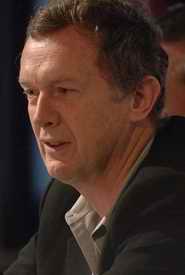 Stewart Purvis has been appointment as the new Partner for Content and Standards at Ofcom.
The Content and Standards Group oversees regulation of television and radio quality and standards and compliance with the Broadcasting Code.
He’s a
hard-bitten newsman who has a strong understanding of technology and the changes that it is bring to the world of media.
Purvis worked for many years in the news business, rising quickly through the ranks to the become Editor-in-Chief at ITN, and
then their Chief Executive from 1995-2003.
Following that he became the first Chair of Television Journalism at City University, London in 2003 and News International Visiting Professor of Broadcast Media at Oxford University in 2005. Tim
Suter is leaving the same post at Ofcom to set up a media consultancy with former colleague Kip Meek.
|
|
29th October
|
|
|
|
Injuries of bomb victim too graphic for the news
|
From Ofcom
|
 Geo News 27 July 2007, 12:00
 GEO News broadcasts news from the Asian sub-continent which is of particular relevance to an Asian audience. A viewer complained about some of the footage shown on this edition. The material included
images of the aftermath of a bomb blast in Pakistan. This included the repeated use of footage of a crowd surrounding a vehicle in which a man had been killed. There were extreme close up shots of the dead man’s face revealing in detail the facial
injuries sustained. Ofcom queried the broadcast with regard to Rule 1.11 (violence before the watershed) and Rule 2.3 (offensive material to be justified by the context). Decision
The footage
complained of was particularly disturbing and graphic. It was so strong in nature that, even in the context of a news channel, with a largely adult audience with certain audience expectations, Ofcom concluded that its use could not be justified. The
potential to cause offence was compounded by the fact that it was broadcast on a number of occasions. Further, the fact that the broadcaster repeated the image no fewer than sixteen times before the watershed within a short news report meant that the
violent nature of the image was not appropriately limited as required by Rule 1.11.
Ofcom was particularly concerned at the broadcaster’s admission that the repeated use of this image was due to a lack of available footage. After the execution of
Saddam Hussein, Ofcom highlighted that broadcasters need to consider very carefully the use of strong material as general ‘background’ imagery in news reports. Such consideration was not evident here.
Breach of Rules 1.11 and 2.3
|
|
28th October
|
|
|
|
Wire in the Blood too menacing too close to watershed
|
From Ofcom
|
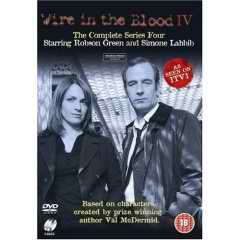 Wire in the Blood
ITV1, 18 July 2007, 21:00 This is the fifth series of the crime drama based on the books of Val McDermid. In this episode, the clinical psychologist Dr Tony Hall helps the police trace a serial killer who appears
to subject the victims to witchcraft and pagan rituals. Three viewers complained about the violent and menacing scenes at the start of this episode before the title credits. They were concerned that these scenes were too close to the 21:00 watershed.
Ofcom asked ITV for comments in relation to Rules 1.3 (appropriate scheduling) and 1.6 (the transition to more adult material must not be unduly abrupt at the watershed). The broadcaster explained that the opening scenes had been carefully
considered to avoid an “unduly abrupt” transition immediately after the watershed. The scene established the hate-filled and sadistic nature of the killer with short shots and the brief appearance of a machete. However, it was dark and menacing rather
than a graphic portrayal of violence.
Decision Ofcom acknowledges the steps taken to alert viewers to the content of this episode and that regular viewers would be aware that the series does dwell on
the darker side of crime.
However, we were concerned that a threatening and violent scene was shown immediately after the watershed before the title credits. It opened with a brief witchcraft or voodoo ceremony and, then, almost immediately cut
to a very distressed man tied to a chair in an abandoned warehouse. Another man entered, proceeded to dress in chain mail and, then, took a machete out of a case. The captive was in such fear for his life that he was shown to urinate in his trousers.
After taunting him, the attacker wielded the machete, swinging it at the man’s head. However, the decapitation was not seen - only the man’s screams were heard as the machete swung towards him. The title credits immediately followed.
The Bill
preceded this programme, which appeals to a wide-ranging audience including children. It is likely that some of these children were still watching at around 21:00. For this reason, Rule 1.6 requires that the transition at the watershed does not
immediately contain strong, adult material. Although the information announcement would have given viewers some indication of the content, we felt that the length of the opening sequence and its undisputed menacing and violent tone went beyond what was
acceptable at 21:00 on a channel that provides a general range of programming.
Given the preceding programme and the likelihood that children could still be watching, this episode was in breach of Rules 1.3 and 1.6.
|
|
27th October
|
|
|
|
Daytime TV promoting website fleetingly with hardcore video
|
From Ofcom
|
 Show Off UK
Turn On TV, 2 July 2007 Show Off UK is broadcast pre-watershed on Turn On TV. On-screen presenters invite viewers to chat to them via a premium rate telephone number, and to send in pictures and messages, some of which are
then displayed on screen.
In addition, the programme has a website, www.showoffuk.com which is promoted during the programme. The website contains user-generated content, that is, videos posted by members of the public, which may be viewed by
anyone visiting the website.
Ofcom was alerted to video content available on the website, which was entitled Anya Filthy Slut . This featured very explicit pornography. Whilst the video clip was not broadcast on air, Ofcom was concerned
that it appeared in a website that was promoted in pre-watershed programming. Ofcom therefore requested the broadcaster’s comments with reference to the following rules of the Code:
- Rule 1.2, which requires broadcasters to take all reasonable to protect people under eighteen
- Rule 1.3, which provides that children must also be protected by appropriate scheduling from material that is unsuitable for them
- Rule 2.1, which requires that generally accepted standards must be applied to the contents of television and radio services so as to provide adequate protection for members of the public from the inclusion in such services of harmful and/or
offensive material
- Rule 2.3, which requires that in applying generally accepted standards broadcasters must ensure that material which may cause offence is justified by the context.
Decision
Whilst the content of PRM is not itself broadcast content and therefore not subject to the requirements of the Code, any on-air reference to PRM is clearly broadcast content. Such reference must therefore comply with the Code.
In this particular case, the video clip was extremely explicit (equivalent to BBFC R18- rated content) and could have been viewed by under eighteens who had visited the website after seeing it promoted during daytime television. This was of the
utmost concern to Ofcom.
Ofcom considered that, before deciding to promote the website within the Show Off UK programme, the broadcaster should have ensured that it had rigorous compliance processes in place to avoid the posting of pornographic
material. As this case clearly illustrated, reviewing website content once a day on weekdays was not adequate to protect under eighteens and indeed other viewers of the programme who might visit the website, having seen it promoted within the programme.
Ofcom therefore decided that, in including references within a programme to a website that featured pornographic material, the broadcaster was in breach of the Code.
In this case, Ofcom considers that until such time as the broadcaster
can demonstrate to us that it has sufficiently rigorous compliance procedures in place, the programme and channel must not refer to the website. Breach of Rules 1.2, 1.3, 2.1 and 2.3
|
|
26th October
|
|
|
|
Ofcom whinge at tardy apology over Iggy Pop comment
|
From the Times
|
 The BBC presenter Jo Whiley should have made an immediate apology to viewers after the singer Iggy Pop used the phrase “paki shop” in a live Glastonbury Festival interview, Ofcom has said.
The regulator criticised the BBC’s response to
the lapse, which occurred in a late-night television interview with the controversial performer. Pop told Whiley that his transparent trousers solicited admiring glances when he walked down Camden High Street at a paki shop.
The BBC said
that the veteran American punk star was probably unaware that a term commonly used 30 years ago has now passed out of ‘polite usage’.
Ofcom said that the term “paki” was racial abuse which is generally considered very offensive. Although the term was not intended to be pejorative, its use was offensive.
The BBC said that the programme’s producers discussed Pop’s appearance when the BBC Two show came off-air and concluded that the presenter should have been told to apologise at the time. An apology was issued later that day on the BBC News
website in the light of complaints made directly to the BBC.
|
|
20th October
|
|
|
|
Suggest that all material intended to arouse requires PIN protection
|
From Ofcom
|
 Notice to Broadcasters re Babe Channels
 In 2006, Ofcom wrote to broadcasters operating channels in the adult section of Sky’s Electronic Programme Guide (EPG) that transmit programmes based on viewer interaction with on-screen
presenters (known as babes). These channels, which are broadcast free-to-air without encryption, invite viewers to contact the presenters via premium rate telephony services (PRS). The letters were written because Ofcom had a number of concerns about the
material shown on the channels, including:
- the appropriateness of sexual content broadcast before the 21:00 watershed, including the promotion of premium rate services offering adult chat
- the explicitness of sexual content broadcast after the watershed
- the promotion of
premium rate services within programmes.
As a result of these letters and Ofcom investigations in 2006, significant improvements were made to the daytime content on the channels. However, concerns have remained about the degree of sexual content broadcast after the 21:00 watershed as well
as continued problems relating to the promotion, within programmes, of PRS that appear to contribute neither to the editorial of the programme nor meet the definition of programme-related material.
The following Findings result from recent
investigations in this area. In addition to the cases detailed below, Ofcom has a number of other on-going investigations, some of which may result in consideration of further regulatory action. Due to Ofcom’s serious concerns about levels of compliance
in the ‘adult’ sector, by both ‘babe-style’ channels and free-to-air content on encrypted channels, Ofcom is considering amendments to the Code so as to require that all material transmitted in the adult section of the EPG is protected by a mandatory
PIN. Any such proposals would be subject to a full public consultation.
Due to the serious nature of the Code and Licence breaches recorded in this Bulletin concerning babe channels, Ofcom considered whether some of these matters should be
referred to the Content Sanctions Committee for consideration of a statutory sanction. However, Ofcom has monitored the output of babe channels in recent months and noted some significant improvements in compliance after the watershed (e.g. there was
less or no very crude or explicit language or visual content). In view of the remedial action taken by relevant broadcasters to improve compliance, we decided against referring these matters to the Committee. Nevertheless, any breach of a similar nature
by a broadcaster of a babe channel in future is likely to result in further regulatory action.
All providers of babe style channels should therefore study carefully the findings
below Get Lucky TV
Grandiose Limited, 6-7 March 2007, 23:00-01:00 Ofcom found that the broadcaster failed to adequately demonstrate that the following services contributed to the editorial of the programme or met the definition of Programme Related
Material:
- the off-screen chat service
- the private text service
- the service that allowed viewers to submit photos to the channel.
Additionally, the promotion of the services that provided viewers with photos of presenters was unduly prominent.
Breach of Rules 10.4 and 10.9 Lucky Star Escape Channel Limited, 17 March 2007, 23:37 & 7
May 2007, 00:20 The recordings provided by Lucky Star, through their provider EBS, were not adequate for Ofcom’s investigation. The condition in licences obliging broadcasters to provide material as broadcast is a crucial one, since Ofcom relies
on it for evidence when investigating potential breaches of the Code. The broadcaster’s failure to supply a recording of adequate quality was a breach of its licence conditions. Breaches of Rules 10.2, 10.3 and 10.9 Breach of Licence Condition 11
Star Bazaar 7/8 May 2007, 00:00-01:00 Ofcom judged that the promotion of the PRS within the programme was in breach of the Code.
When judging what constitutes ‘adult-sex’ material, Ofcom guidance for
broadcasters takes account of definitions used by the BBFC for ‘sex works at 18’. These are defined as: works… whose primary purpose is sexual arousal or stimulation.
We consider that the actions of the presenters (e.g. masturbation) and
the explicit sexual language used demonstrated quite clearly that one of the main aims of the programme was to arouse viewers sexually: there was no other significant editorial context for the explicit images and language. Such explicit material is
suitable for broadcast only on subscription/pay per view channels that have appropriate protection mechanisms in place. The broadcast of the programme was contrary to viewer expectations for a free-to-air unencrypted channel (albeit one situated in the
adult section of the EPG and broadcasting after the 21:00 watershed). The broadcast was inconsistent with the application of generally accepted standards to ensure protection for viewers from harmful and/or offence material.
Breach of Rules 1.24,
2.1, 2.3 and 10.9 Breach of Licence Condition 11 LivexxxBabes 17 April 2007, 21:00-01:00 & 18 April 2007, 21:00–01:00 Ofcom was particularly concerned by the sexual language and behaviour used shortly after
the 21:00 watershed. In view of the above matters, the programme was in breach of Rule 1.3.
The content on 17 and 18 April exceeded generally accepted standards and there was insufficient context to justify the potential offence. It was therefore in
breach of Rules 2.1 and 2.3.
Moreover, Ofcom considered that one of the primary purposes of the sexual content broadcast on 18 April 2007 after 22:00, which included highly explicit sexual language and prolonged scenes of vigorous masturbation
with a dildo, was sexual arousal or stimulation. This content therefore in Ofcom’s opinion comprised ‘adult sex’ material and its broadcast on an unencrypted channel was in breach of Rule 1.24.
For clarity, Ofcom considers that depictions of
masturbation, simulated or otherwise, are not appropriate for unencrypted broadcast unless there is strong editorial justification. In this case, there was not sufficient justification. Breach of Rules 1.3, 1.24, 2.1 and 2.3
|
|
20th October
|
|
|
|
Ofcom: practical, proportionate, balanced and bollox
|
From Ofcom
|
 Ed Richards, Chief Executive, Ofcom delivered the Annual Ofcom Lecture which included the following paragraphs on internet censorship:
 "Finally, the issue of harmful content online.
This is an issue
which has recently come to the forefront of public debate, but one that we at Ofcom have been quietly thinking about for some time.
Clearly some of the examples of harmful content on the internet we are seeing have no place in our society.
By way of illustration, let me highlight a report shown on BBC London a month or two ago, which examined some of the appalling content freely available today.
In this case it included the torching of an Asian figurine in what was a shocking
and disturbing display of racism.
One of these clips, one of the worst, remained on a major video sharing website for some six months, despite its deeply offensive content.
Even worse, despite the producers reporting the piece as
offensive every day for a week, pretending to be normal users, the piece was not taken down until they identified themselves as BBC journalists.
This case, at the very least, demonstrates that a voluntary take down policy was ineffective in this
one instance.
Let me say that while I do not yet claim to know precisely what the right answer is in this area, I do not regard this kind of situation as one that can be in any way acceptable to any of us as citizens.
What we need is a
policy response that is based on the data and evidence of the prevalence of this kind of content and of the potential harm it causes.
This will require a combined solution involving Government, industry, consumers and, where necessary, the
regulator.
We need to understand the risk of harm and then what we can practically and proportionately do about it - balanced of course with the widely shared desire to protect the wonderful freedoms and openness that lie at the heart of the
internet.
These freedoms and openness are well worth protecting and nurturing... BUT ... we cannot do so in a way which ignores the wider issues that are raised by the rapid march of the internet and broadband networks into our
living rooms and into the lives of our children.
So we welcome the Byron Review and look forward to making our contribution to that work. It is in an important area and one which is rightly receiving attention from across the political
spectrum".
|
|
13th October
|
|
|
|
No fun allowed at Ofcom
|
From Ofcom
|
 The Breakfast Show
Power FM (South Hampshire), 17 April 2007, 07:40 In this programme, the presenters, Rick, Donna and Bob, asked listeners to contact them with their stories of what had “…gone wrong during sex”. Over the course of the
programme listeners texted and phoned in with their stories. These in turn were read out to listeners. Contributions included such descriptions as:
- Having a ‘bit of fun’…christening all the rooms
- My skirt got stuck…my boyfriend’s parents [could see] my bum…
- …that ‘sex’ can be on your own, or with another person…
- I squeezed into really tight
knickers…when the moment came to get them off, I couldn’t…
- I [was] with my ex-boyfriend…I [was] on top, having a good time…
- …cries of passion…
- At it – in the throes of passion
- In the throes
of passion his…pride and joy got bent in half…
- My [future] husband and I were…at it… shall we say?
- …that’s called ‘dogging’ these days…
- We were in a state of undress
- …having it away…
- My first time…in someone else’s bed…I lunged…she had to help me detach me from the sheets…
One listener complained that this was inappropriate content for the time of day. Power FM said that most of the incidents read out were not in its view offensive. Power FM believed that the discussions had centred on the humiliating
experiences in which people had found themselves, as opposed to their sexual experiences specifically. In its view, the discussion had been acceptable because it was sufficiently inexplicit, with scant reference to, or any discernible acknowledgement of,
any particular sexual activity. Decision
Rule 1.3 states that Children must…be protected by appropriate scheduling from material that is unsuitable for them. much of what was
transmitted fell into the realm of innuendo. It is possible that such conversations could have passed some children by. However, the presenters repeatedly invited listeners to tell the programme: what’s gone wrong during sex?
The show did
not contain one off comments during general banter, but was in fact a whole section devoted to the topic. As the broadcaster acknowledges, the overall context of the discussions and the length of the item meant the content became inappropriate for
broadcast at breakfast time when a number of children were likely to be in the audience. The programme was therefore not scheduled appropriately in order to protect children from unsuitable material.
Breach of Rule 1.3
|
|
12th October
|
|
|
|
Ofcom whinge at Hindi action film
|
From Ofcom
|
 Ek Ajnabee
Zee TV Cinema, 27 May 2007, 12:00 Zee Cinema is a subscription movie (not pay per view) channel aimed at a predominantly Hindi audience. Ek Ajnabee is a thriller/crime film rated ‘18’ by the BBFC. The plot centres on a
bodyguard who goes on a quest to find his employer’s daughter, who has been kidnapped by gangsters. In doing so he systematically searches for, tortures and kills those he believes to be responsible for the kidnapping.
One viewer complained. She
was shocked that both she and her nephews were able to watch such a violent film during the afternoon at the weekend. Ofcom asked Zee TV to respond with regard to Rule 1.3 of the Code (children must be protected from unsuitable material by appropriate
scheduling).
Zee TV said that programme was broadcast in edited form to ensure the content was editorially justified and suitable for broadcast pre-watershed. As a consequence, the channel argued that the film would not have disturbed a child
viewer. Decision
This 18-rated film as broadcast contained material of a highly adult, and often violent nature – kidnapping, torture, shoot outs, suicide and drugs use. Ofcom notes Zee TV’s attempts
to minimise harm to children and offence through editing. Upon viewing the material, however, Ofcom found that in its opinion many of the edited scenes were still too harmful to be shown before the watershed at the time of broadcast. For example,
although torture scenes may have been edited so that violent detail of the protagonist inflicting pain on his victims was minimised, these scenes were still nevertheless too extreme by their very nature, including body parts such as fingers and ears
being severed, and the chief protagonist toying with the idea of suicide, by placing a gun in his mouth.
In addition, certain sequences containing unsuitable content still remained in the film as broadcast – for example, a brief scene of a
criminal snorting cocaine. Ofcom considers that this film was clearly unsuitable for children and it was not appropriate to broadcast it before the watershed. It was therefore in breach of Rule 1.3.
|
|
10th October
|
|
|
|
Ofcom whinge at daytime swearing
|
From Ofcom
|
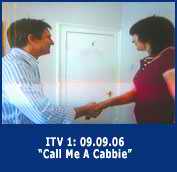 Call Me a Cabbie
Sky Three, 16 August 2007, 07:30
Call Me a Cabbie is a factual entertainment reality series which was repeated in morning timeslots on Sky Three. Ofcom received two complaints that the episode broadcast on 16 August
2007 contained several swear words including the words ‘fuck’ and ‘fucking’ at a time when this channel, available on the Freeview platform, was accessible for children to view.
Sky responded that the series as originally broadcast contained
language that was inappropriate for broadcast at times when children were likely to be watching. A version with offensive language edited out was therefore created for the repeats of this series on Sky Three in the morning. However, as a result of human
error the wrong version of the programme was broadcast on this occasion. Sky has confirmed to us that this was the only occasion in the series where the incorrect version was played.
Decision
Although
this series did not attract a significant child audience, it was broadcast at 07:30 and on a service readily available to a large majority of households and therefore available for children to view. Our research indicates that ‘fuck’ (or ‘fucking’) is
one of the most offensive swear words1. This programme contained four instances of these words as well as ‘bollocks’, ‘shit’ and ‘tosser’. Furthermore, all of this language was included in the subtitling provided for this programme.
We welcome
Sky’s assurances that it has reminded staff of the importance of due diligence in assigning the correct versions of programmes to respective timeslots in their schedules. However, this programme contained several instances of bad language, including the
most offensive type, and was broadcast before the watershed. This programme was therefore in breach of Rule 1.14 of the Code. Update: Sexist Celebrity Babes
11th October 101 Sexiest Celebrity Bodies
ITV2, 31 July 2007, 20:00 This programme was also in breach of Rule 1.14 of the Code for 5 'fuck' or 'fucking'. The ITV censors
were apparently distracted by issues of sexuality.
|
|
3rd October
|
|
|
|
All material intended to arouse banned from free to air TV
|
From Ofcom
|
 Complaint
 House of Fun is a free-to-air adult entertainment channel featuring female presenters - known as babes who invite viewers to call them on premium rate phone lines for sexual conversation.
A
complainant said the output broadcast around midnight on 7/8 May 2007 was too sexually explicit for un-encrypted transmission, particularly in a segment at 00:27 .
- Rule 1.24 of the Code says premium subscription services and pay-per view/night services may broadcast "adult-sex" material between 22:00 and 05:30 - provided there is a mandatory PIN protection system, or
equivalent protections, to restrict access to those authorised to view.
- Rule 2.1 says generally accepted standards must be applied to ensure the public is protected from harmful and/or offensive material.
- Rule 2.3 says broadcasters must ensure that material which may cause offence is justified by its context.
Response
The broadcaster, House of Fun, said the output did not represent the more explicit images of sexual activity as defined in the Code as "adult-sex"
material, and so did not come into the category of programme requiring mandatory encryption and PIN protections. The representations of sexual intercourse were simulated; they did not involve the use of sexual toys; and the presenters wore underwear at
all times. Further, the content was justified by its context in an adult show, on an adult channel, and within the adult section of the Sky electronic programme guide ( EPG ).
Decision
In deciding what is "adult-sex" material, Ofcom guidance for broadcasters refers to definitions used by the BBFC for "sex works at 18". These are defined as works whose primary purpose is sexual
arousal or stimulation.
The output of House of Fun featured two topless women apparently engaging in masturbation inside their underwear, and then simulating oral sex. A third woman, apparently naked, was later presented in a separate window on
screen with her legs spread and appearing to engage in masturbation, obscured by pixellation of her genital area. There was however no sound transmitted, except for a music track and an occasional voice-over urging viewers to call the babes on premium
rate lines.
Images featuring simulated sexual acts that are not justified by context (such as the editorial content of the programme) will be considered "adult-sex" material by Ofcom if one of their primary purposes appears to be sexual
arousal or stimulation.
Ofcom considers that this output went beyond acceptable limits for free-to-air broadcast, in spite of the presence of underwear and pixellation, because of its explicit sexual content, and so amounted to
"adult-sex" material. One of its primary purposes was to provoke sexual arousal or stimulation as part of a commercial offer linking the on-screen sex acts with chat on premium rate sex lines.
The Code makes it clear that such
"adult-sex" material should be secured behind a mandatory PIN protection system. This requirement is not met by the voluntary system available through the satellite PIN system, which requires viewers to apply the protection themselves.
It follows that this material was therefore inconsistent with the application of generally accepted standards to ensure protections from harm and/or offence.
This was a serious breach of the Code. Ofcom considered whether the matter should be referred to the Content Sanctions Committee for consideration of a statutory sanction. However, Ofcom noted that on this occasion that there was pixellation of
the more explicit images; no explicit sexual language was transmitted; and, the late time of broadcast. Nevertheless, any similar breach in future is likely to result in the consideration of a statutory sanction.
Breach of Rules 1.24, 2.1 and 2.3
|
|
25th September
|
|
|
|
Children's fare only at tea time please according to Ofcom
|
From the Times
|
 ITV must not replace children’s programmes with scenes of graphic murder, the broadcasting regulator said.
Ofcom upheld complaints over ITV’s decision to show repeats of Midsomer Murders at tea-time.
Viewers complained that the programme, shown at 4pm during half term, included strong language and scenes of graphic violence likely to disturb children. This meant that the material was clearly not suitable for children and therefore inappropriately
scheduled.
|
|
25th September
|
|
|
|
Ofcom rejects complaints about photos used in Diana: The Witnesses in the Tunnel
|
From Broadcast Now
|
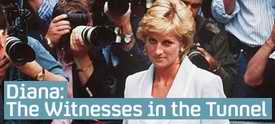 Ofcom has rejected 62 complaints over Channel 4's controversial documentary Diana: The Witnesses in the Tunnel , ruling that the use of photographs of Princess Diana's fatal car crash was justified by their
context.
Ofcom has rejected 62 complaints over Channel 4's controversial documentary Diana: The Witnesses in the Tunnel , ruling that the use of photographs of Princess Diana's fatal car crash was justified by their
context.
The complaints largely centred on the use of the photographs and the purpose of the programme. Some viewers said screening the programme was disrespectful to the wishes of Prince William and Prince Harry, who had called for it not to be
broadcast.
Ofcom said Diana's death was a sensitive issue and that any documentary treatment of it could offend some viewers.
But it said the images and themes of the programme were in line with viewers' expectations of an investigative
C4 documentary and that the use of the photographs was therefore not gratuitous: The photographs were integral to the credibility of the argument being made and the corroborated first hand testimony .
|
|
11th September
|
|
|
|
Comes to the rescue of Trevor McDonald
|
From Ofcom see Complaints Bulletin 92
|
 News Knight with Sir Trevor McDonald
ITV1, 24 June 2007, 22:00
This topical news comedy programme was introduced by Sir Trevor McDonald. At one point, Sir Trevor McDonald introduced an item by
saying: It’s time for ‘Racist and Dead’, this week, it’s the turn of corpulent, narrow-minded northerner Bernard Manning. Personally, I never thought of Bernard Manning as a racist comic… just a fat, white bastard…
112 viewers complained that the use of the expression “fat, white bastard” was inappropriate and/or racist.
Decision
The Code was drafted in the light of the Human Rights Act 1998 and the European Convention
on Human Rights. In particular, the right to freedom of expression, as expressed in Article 10 of the Convention, encompasses the audience’s right to receive creative material, information and ideas without interference, but subject to restrictions
prescribed by law and necessary in a democratic society.
Ofcom must ensure that generally accepted standards are applied to the content of television services, so as to provide adequate protection for members of the public,
for example from
the broadcast of offensive material.
Rule 2.3 of the Code states that …in applying generally accepted standards broadcasters must ensure that material which may cause offence is justified by the context . There is therefore no prohibition
on the broadcast of an expression such as the one used by Sir Trevor McDonald, provided that it is justified by context. Context includes, amongst other things: the time of broadcast; the editorial content of the programme; the degree of offence likely
to be caused by the material; and the likely expectation of the audience.
The programme was broadcast a full hour after the 21:00 watershed, when more challenging material can sometimes be expected. It was clear from the outset that the
programme, whilst a comedy, was an edgy, satirical look at the week’s news, and that on occasions there would be some material that risked offending some viewers.
In the case of this programme, Sir Trevor McDonald obviously, and intentionally,
drew on Bernard Manning’s own style of humour, which frequently played on the real or apparent prejudices of his audience. The comments were clearly intended to parody Manning’s own comedy, where he claimed he was not himself racist, but simply made
‘jokes’ based on racial stereotypes. It was in such a context that Sir Trevor McDonald could therefore state that he did not consider Manning to be a racist but then went on to say that he was “…a fat white bastard”.
Taking the above into
account, therefore, we do not believe this specific expression went beyond the likely expectations of an audience for a satirical news-based comedy programme broadcast well after the watershed, and that any offence that may have been caused was justified
by the context. Comment: John Beyer, Pedantic Bastard John Beyer, director of mediawatch-uk said: While Sir Trevor
McDonald's comments were untypical, I still think Ofcom should have reached a different outcome. If the comment had been made in reverse (a white man calling someone a ‘fat black bastrd') there would have been utter outrage, and rightly so.'
|
|
29th August
|
|
|
|
Allowed before the watershed
|
From Ofcom
|
 Sky News, 25 April 2007, 19:00
A viewer complained that the channel broadcast the word ‘fuck’ during a live link to the opening of the trial of Phil Spector. The complainant objected to the fact that an early
evening news programme allowed this to happen and had not used a time delay.
Ofcom considered the complaint against Rule 1.14 (the most offensive language must not be broadcast before the watershed or when children are particularly likely to be
listening) and Rule 2.3 (generally accepted standards) of the Code.
Sky accepted that the word was broadcast before the watershed but regretted that it was impossible to have anticipated that such language would have been used by the lawyer at
the trial.
Ofcom Decision
Because of the immediacy of news and the necessity to go live at times, the broadcaster has less control of its editorial output. There is always the possibility that material transmitted on these channels may be
unsuitable for children, although these services are generally aimed at adults and for a ‘self-selecting’ audience.
In this case, Ofcom took the view that offensive language was unlikely to have been anticipated from a live news report from a
courtroom, unlike for example, in programmes where the inclusion of such language was more likely and necessitated greater care over compliance.
We then considered the context of this programme and whether within context it had complied with Rule
2.3. We took into account the editorial content, the service on which the material was broadcast, the likely size and composition of the potential audience and any supporting information that was given. In this case, it was a live news broadcast from a
courtroom, contained within a rolling news service, and aimed primarily at an adult audience. An apology was made very soon after the word had been broadcast.
We welcome the apology given shortly after the incident and Sky’s assurances that it
takes the broadcast of offensive language seriously. Taking into account all of these factors, Ofcom considers the matter resolved.
|
|
21st August
|
|
|
|
Ofcom wound up by pantomime horror
|
From The West Australian
See also Madness and Magic
|
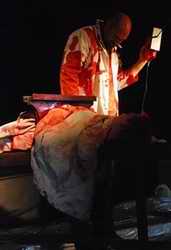 A UK talent show that featured an illusionist who pretended to chop off his hand before cutting open an assistant with a power-saw broke broadcasting rules.
Ofcom said Dr Gore's blood-soaked
performance on Britain's Got Talent on ITV was unsuitable for weekend family viewing.
Dr Gore had reached the semi-final of the ITV series to find an up-and-coming act to play before the Queen at the Royal Variety Performance.
The
show's hosts, Ant and Dec, warned viewers that he wasn't for the faint-hearted. Ant said: He can make an entire audience feel sick in seconds.
Dr Gore walked on stage in black leather biker boots and a blood-stained doctor's coat.
He appeared to slice off his hand with a large knife before asking the audience: Do you want to see some gore? He then took an electric rotary saw to a young helper lying on a trolley and pretended to rip out his organs.
The act ended when
the three judges - Simon Cowell, Piers Morgan and Amanda Holden - said they'd seen enough.
The show went out at 7.45pm on June 16. Twenty-one people complained to Ofcom.
The show's makers said they had asked Dr Gore to tone down his act
and had made sure the presenters warned the audience about what to expect. Producers said the act was more pantomime than horror.
|
|
10th August
|
|
|
|
Ofcom challenge the very essence of babe channels
|
From Ofcom
|
 This decision challenges the very essence of free to air Babe channels. If they are not allowed to show on-going advertisements then their days must surely be numbered
 Bang Babes
Turn
on TV, 6/7 May 2007, 23:47 - 00:51
Turn on TV2, 6/7 May 2007, 00:04 - 01:04 Introduction
Both channels broadcast interactive chat-based programme where viewers are
invited to contact on-screen presenters via premium rate services. Both of the programmes complained about featured female presenters (referred to as ‘babes’), dressed in underwear, inviting viewers to call them. The complainant objected that the
programmes promoted services that were not linked to the editorial content.
We requested and viewed a sample of the channels’ output and noted the following:
- On the service Turn on TV 2 there was an almost continuous on-screen promotion of a club that offered to send pictures and videos to members’ mobile phones. Membership of the club was offered via a premium rate text
service.
- The club was also promoted on Turn on TV. Additionally, Turn on TV promoted a service that offered viewers an option of buying, via a premium rate text service, pictures of the ‘babes’.
Decision
Turn on TV2
The Code requires broadcasters to ensure that the programming and advertising elements of a service are kept separate (Rule 10.2) and prohibits the
promotion of products and services within programmes (Rule 10.3). It makes clear that premium rate services will normally be regarded as products and services and must not therefore appear in programmes, except where they either meet the definition of
programme-related material or contribute to the editorial content of the programme. In this case, the service promoted (i.e. the club sending pictures and videos to mobile phones via a premium rate text service) neither contributed to the programme’s
editorial content nor met the definition of programme-related material. Therefore, as accepted by the broadcaster, the advertising of the service within the programme was in breach of the Code.
Turn on TV
The advertising of the same
service on Turn on TV was also in breach of the Code. The promotion of the text club on Turn on TV was in two forms:
1. a text box broadcast intermittently that was ‘overlaid’ on the programme; and
2. scrolling text that appeared underneath
the main telephone number used for contacting the on-screen ‘babes’.
In the case of the ‘overlaid’ text box, regardless of the duration of the message, viewers were likely to see this message not as advertising but as an integral part of the
programme. As such, there was not sufficient separation between what was an advertising message and the programme content.
In the case of the scrolling text, this accompanied the main channel telephone number and its associated information (e.g.
call costs). Again, it was therefore likely to be understood by viewers as forming part of the programme information rather than a separate piece of advertising.
|
|
31st July
|
|
|
|
Turtle is apparently cooked alive
|
From The Times
|
 Ofcom has censured ITV for editing a programme to make it appear that a turtle was being roasted alive by Bear Grylls, the “survivalist”.
ITV breached broadcasting rules during a family show by showing Grylls
apparently biting the head off a live frog and cooking a turtle in its shell on an open fire.
Edited clips from the former SAS soldier’s Channel 4 show, Born Survivor , were included in the ITV1 satirical show, Harry Hill’s TV Burp .
Viewers raised concerns about the animals’ welfare, and several parents complained that their children had been upset by the scenes.
Harry Hill’s producers said that some viewers did seem to believe that the turtle had been ‘cooked
alive’, which was of course not the case; however, unlike the programme makers of Born Survivor, we did not show the killing of this poor animal, which may have led to this confusion.
Ofcom rejected that argument and ruled that the clips were
inappropriately scheduled. ITV compounded the offence by editing the clips so that viewers were not aware that the turtle had been killed before being cooked.
|
|
18th July
|
|
|
|
Swearing on Radio offends Ofcom
|
From The Times
|
 Ofcom has found BBC Radio 2 in breach of broadcasting rules after a lunchtime f-word outburst from Jack Dee during a comedy programme. The BBC admitted that it had not checked for offensive material before the
broadcast.
Ofcom has found BBC Radio 2 in breach of broadcasting rules after a lunchtime f-word outburst from Jack Dee during a comedy programme. The BBC admitted that it had not checked for offensive material before the
broadcast.
Listeners complained about the programme, The Green Guide to Life , a sketch show about the “complications and confusion of modern-day living”, broadcast at 1pm in April. Dee was heard to say: What do you mean, fuck off ,
during the Saturday show. The BBC said that the language was completely inappropriate for broadcast and apologised.
The prerecorded programme was made for the BBC by an independent production
company. It had been intended for a late-evening broadcast but the producers did not indicate that it contained strong language.
Ofcom Said: It is the clear responsibility of the broadcaster to ensure that all material, irrespective of who
originally produced it, is suitable for broadcast and appropriately scheduled.
|
|
17th July
|
|
|
|
Ofcom warn of frequent watershed lapses
|
From Broadcast Now
|
Ofcom has issued a warning to broadcasters after a rise in the number of supposedly inappropriately edited programmes being aired before the 9pm watershed.
The concerns centre on material originally produced for a
post-watershed timeslot that has been transmitted unedited - or inadequately edited - before 9pm when children are likely to be listening or watching.
A statement from Ofcom said that in such cases broadcasters frequently blame the failures on
scheduling problems and/or human errors.
But the regulator said that broadcasters are under a clear duty to ensure that robust procedures are in place, supported by a sufficient number of appropriately qualified and trained staff, to ensure
full compliance with the [Broadcasting] Code.
Ofcom warned that regulatory action would be taken if compliance procedures were not in place.
|
|
3rd July
|
|
|
|
Ofcom wound up by Cops on Camera
|
From Digital Spy
|
 The regulator has ruled that Bravo breached watershed rules when it aired Cops on Camera at 8am on January 20. The episode featured black and white footage captured by a CCTV camera of a violent attack on a
man by a gang of youths. One viewer complained to Ofcom that the violence was unsuitable for broadcast at the time of day.
The regulator has ruled that Bravo breached watershed rules when it aired Cops on Camera at 8am on January 20. The episode featured black and white footage captured by a CCTV camera of a violent attack on a
man by a gang of youths. One viewer complained to Ofcom that the violence was unsuitable for broadcast at the time of day.
Virgin Media Television said that only a small number of children watched Bravo during the timeslot when the programme went
out and that the 8am slot on weekends competed against children's programming on terrestrial TV. It also said that the CCTV footage was of poor quality and not presented in a graphic or sensationalist manner and so was appropriately limited.
In its response, Ofcom said: Ofcom has concluded that at 08:00 on a Saturday, a higher proportion of the audience is likely to consist of children, both the very young as well as older children; and they may well be watching without an adult
present in the room to make decisions about what material is watched. Further the nature of the content of Cops on Camera includes elements that may well attract children. Ofcom has concluded therefore that children were not protected by appropriate
scheduling from this unsuitable material and there was a breach of Rule 1.3.
It added: Ofcom is concerned that this is the fourth breach of the Code it has recorded against Bravo regarding unsuitable content in daytime programmes. If there
are any further breaches of this nature by Bravo, Ofcom may consider further regulatory action.
|
|
6th June
|
|
|
|
Ofcom reject complaints against Russell Brand at the Brit Awards
|
From The Guardian see full article
|
 Complaints about comedian Russell Brand's controversial hosting of the Brit Awards on ITV1 this year have been rejected by Ofcom.
The media regulator received 262 complaints about the ITV1 broadcast in
February - which started at 8pm, before the watershed - in which Brand made a series of risqué jokes about "intimate parts of the human body", drugs, Iraq, the Queen and Robbie Williams.
Ofcom quoted Brand as saying: What
about the rumours David Cameron smoked drugs as a schoolboy? What worries me most is that he dressed up as a schoolboy to do it, the pervert.
Though, perhaps let's not condemn him regardless. Who among us didn't smoke just a little bit of
weed at school, just to take the edge off those irksome crack come-downs?
Actually, as it turns out, it's about as good an anti-drugs campaign as you're going to get, don't take drugs or you might end up leader of the Tories with a face
like a little painted egg.
Ofcom also singled out: "... time to find out who has pierced the hymen of awareness to ejaculate success into the uterus of popular culture.
The watchdog said it did not consider any of Brand's
other comments to be worthy of investigation, saying they were justified in the context of what was a rock and pop event aimed at a primarily youth audience.
Ofcom concluded that the two statements by Brand it had singled out were "on
the margins of suitability".
But Ofcom ruled that they were acceptable in the context of an established music awards ceremony where a certain amount of controversy was likely to be expected by the audience.
|
|
28th May
|
|
|
|
Ofcom find offensive language on Revelation TV
|
From Ofcom
|
 Revelation TV is a religious channel that often features live phone-in programmes and discussions which from time to time deal with controversial and topical issues. Ofcom received seven complaints from viewers who
alleged that some presenters and contributors during some editions of the programmes World in Focus and R Mornings used offensive language when discussing homosexuals, homosexual behaviour and immigrants.
Revelation TV is a religious channel that often features live phone-in programmes and discussions which from time to time deal with controversial and topical issues. Ofcom received seven complaints from viewers who
alleged that some presenters and contributors during some editions of the programmes World in Focus and R Mornings used offensive language when discussing homosexuals, homosexual behaviour and immigrants.
In an edition of the
programme World in Focus a panel of three contributors criticised the newly implemented Equality Act and, in particular, the associated Sexual Orientation Regulations, which they alleged would force schools to teach children about homosexuality as
part of the national curriculum. Three viewers complained that the discussion was wholly against the new Regulations, with no balance or opposing points of view were given, and that some of the remarks were disparaging and offensive to the gay community.
Four other viewers complained of offensive comments made by Howard Conder, the owner and presenter of Revelation TV, and some of his guests concerning homosexuality and also immigrants in various other programmes.
Ofcom asked Revelation
TV to comment with regard to the following Rules in the Broadcasting Code (“the Code”): 2.3 (generally accepted standards) and 5.5 (due impartiality on matters of political or industrial controversy and matters relating to current public policy).
Decision
Ofcom understands that the issue of homosexuality is a contentious one both within and outside religious communities, and that a number of opposing views are held. The expression of such
sincerely-held and controversial views may give rise to the potential for offence.
It is therefore important that, where there is the potential for offence, broadcasters must comply with Rule 2.3 of the Code which states that: “…in applying
generally accepted standards broadcasters must ensure that material which may cause offence is justified by the context. Such material may include but is not limited to, offensive language…discriminatory language…on the grounds of age, disability,
gender, race, religion, beliefs and sexual orientation”.
The issue of the treatment of homosexuality (in relation to the Equality Act and the Sexual Orientation Regulations) was a matter of political controversy and/or matter relating to current
public policy at the time it was discussed on Revelation TV. Due impartiality was therefore required. The discussions of the topic on the channel however did not include any representation at all of alternative views. The content therefore breached Rule
5.5.
Breach of Rules 2.3 and 5.5
|
|
27th May
|
|
|
|
Daytime free to air channel ticked off
|
From Ofcom
|
Naughty Nurse
Turn On TV, 14 September 2006, 13:00-16:00 Introduction
Turn On TV is an unencrypted channel, situated in the adult section of the Sky EPG,
broadcasting programming based on premium rate adult chat services.
In June and September 2006, Ofcom wrote to broadcasters who provide such services due to serious concerns about their compliance with the Broadcasting Code (“the Code”). In
particular, we were concerned about the degree of sexual content on these channels (both before and after the 21:00 watershed) and the separation of advertising from programme content. Following these letters, we monitored the output of the services.
On 14 September 2006, we monitored a programme entitled Naughty Nurse on Turn On TV between 13:00 and 16:00. This programme featured female presenters, dressed provocatively as nurses, encouraging viewers to call them. Investigation of this
telephone service by Ofcom revealed that callers were given the option of connecting to an on-screen or off-screen ‘nurse’. Connection to an off-screen ‘nurse’ resulted in an explicit live conversation of a sexual nature.
During monitoring of
Naughty Nurse on 15 September 2006, one of the presenters could be seen engaged in a call. While the presenter’s microphone was not on, she could be overheard saying “Oooh, baby fuck me” and moaning in a sexual manner.
Decision It is clear from the content of the call made by a member of Ofcom staff to the
number broadcast on 14 September 2006 that the premium rate service promoted
during daytime programming was for an adult sexual service.
Additionally, the actions and language used by the presenter on 15 September 2007
were unacceptable for broadcast during daytime programming and also suggested
that the number promoted was for an adult sexual service.
We therefore
consider that the programmes breached programme Ruleon the following grounds:
- the clothing and posing of the presenter was overtly sexually provocative and
the sexual behaviour was therefore not appropriately limited - the broadcaster had failed to
take all reasonable steps to protect children in
that this content (in terms of both the appearance and actions of the
presenters and the promotion of adult services) was inappropriately
scheduled pre-watershed -
the language used by the presenter was unacceptable and offensive for the
time of broadcast and not justified by the context.
We put the Licensee on notice that should there be any future breaches of
the Code of a similar nature, Ofcom will not hesitate to consider the imposition of
statutory sanctions (which may include a fine and/or
revocation of the licence).
|
|
13th May
|
|
|
|
About the TV showings of Saddam's execution
|
From Ofcom
|
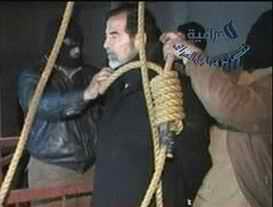 The execution of Saddam Hussein on 30 December 2006 attracted worldwide attention. The former head of state was executed after judicial process and officially released footage of the execution, by the Iraqi
government, was made available for broadcast. Many broadcasters chose to show extracts of these pictures and this was done at different times of the day and in different ways by individual broadcasters. The execution dominated news headlines for at least
the first two weeks of January 2007, as unofficial mobile phone footage of the event came into the public domain (some of which was also broadcast on UK television).
The execution of Saddam Hussein on 30 December 2006 attracted worldwide attention. The former head of state was executed after judicial process and officially released footage of the execution, by the Iraqi
government, was made available for broadcast. Many broadcasters chose to show extracts of these pictures and this was done at different times of the day and in different ways by individual broadcasters. The execution dominated news headlines for at least
the first two weeks of January 2007, as unofficial mobile phone footage of the event came into the public domain (some of which was also broadcast on UK television).
Ofcom received 70 complaints from viewers who found some of the images broadcast
to be offensive. Many complainants also expressed concern at the effect such images may have had on younger viewers. The complaints related to coverage on several channels and programmes. Ofcom viewed all of the material complained of and concluded that
in most cases, the use of the footage was justified in context given the huge public interest there was in the news and that, for example, warnings were given to viewers about the nature of the material they were about to see and what was shown was
appropriately limited. There was therefore no need, in these cases, to seek a response from the broadcasters.
The Broadcasting Code recognises the broadcasters and the audience’s right to freedom of expression (particularly, in this case, the
right to receive and impart information and ideas). The issue Ofcom had to consider here was whether that right was exercised responsibly and therefore in accordance with the Code. The execution of Saddam Hussein had been widely anticipated. Further, the
execution was clearly a matter of public interest. Nevertheless, many people found the footage leading up to the execution disturbing. We do not consider that the images themselves were too offensive for broadcast – provided they were properly justified
in context. The BBC News 24 bulletin, on the 30 December 2006, was broadcast in the hours immediately following the execution and the focus was on the events of the day. BBC News 24 prefaced the use of the
images with the words you’re watching a BBC News special, with extensive coverage of the execution of Saddam Hussein . The Sky News bulletin, on 2 January 2007, was reporting how the Deputy Prime
Minister had described the manner of the execution as deplorable. Sky News referred in its introduction to the “jeering” in the execution chamber. We, therefore, believe that while there were no specific warnings, the broadcasters - in both cases - did
provide “appropriate information” (for news channels) as required by the Code and so viewers would have been aware to a great extent of the nature of the subsequent reports
Given the unique nature of the events, Ofcom considers in both instances
the use of the pictures was justified by the context, so that there was no breach of the Code. At all times the footage was curtailed to events surrounding the execution; the moment of death was never shown. We also bore in mind the fact that both BBC
News 24 and Sky News are rolling news channels, the audience for which is overwhelmingly adult and self-selecting.
While we do not consider that there were breaches of the Code in respect of these two bulletins, broadcasters should be aware that
footage, such as, this may contain particularly disturbing images (for instance, the jeering and taunting of Saddam Hussein before his execution). Broadcasters therefore need to consider very carefully the use of such strong material as general
‘background’ imagery in, for examples, interviews or live discussions with correspondents. It may be the case that where images are extremely powerful broadcasters will need to give greater context to the pictures (e.g. by careful scripting).
Complaints not upheld
|
|
7th May
|
|
|
|
Near the watershed
|
From Ofcom
|
 An appeal about a previous decision regarding Hellbound: Hellraiser II on Rapture TV, 15 May 2006, 21:00
Introduction
Rapture TV is a general entertainment channel. Hellbound: Hellraiser II is a well-known 1980's horror film rated 18 by the BBFC. A viewer complained about the broadcast of graphic violence so near to the
watershed on a channel which is not PIN protected, and therefore widely accessible. Rapture TV was asked to comment in relation to Rules 1.6 and 1.21 of the Broadcasting Code which state: Rule
1.6: The transition to more adult material must not be unduly abrupt at the watershed or after the time when children are particularly likely to be listening. For television, the strongest material should appear later in the schedule.
Rule 1.21:
BBFC 18-rated films or their equivalent must not be broadcast before 2100 on any service except for pay per view services, and even then they may be unsuitable for broadcast at that time.
Response
Rapture TV said that the film was preceded by an 18 visual and audio warning and that it was transmitted after the watershed. It said that the EPG description was clear and highlighted that the film was a horror film and therefore unlikely to
be family viewing. It commented that the weekly slot promoted by the channel for a horror movie should have meant that the audience would expect a horror film at that time.
Decision
This film contains graphic sequences of violence
from the start, e.g. a scene of a man, whose face is impaled by hooks, being torn apart; graphic scenes of bloodied mutilation which explained how the main character, Pinhead came to be; and an image of a corpse covered in maggots.
The film was
preceded by a visual warning which included the BBFC's 18 rating symbol and text noting that the film was not suitable for persons under 18. An accompanying audio warning stated: The following film is not suitable for any persons under the age of 18
years. It may contain scenes of an adult nature and contains bad language from the beginning.
The information given before this film was in both audio and visual format. However the wording of the on-screen text was insufficient to fully
inform viewers of the nature of the content to follow. Similarly, although the audio information was more comprehensive, this suggested that the film may contain scenes of an adult nature which would not have prepared viewers for the sequences of
graphic violence which were present from the very start of the film.
We accept that regular viewers of the channel may be familiar with this weekly horror slot and that some information had been provided before the broadcast of the film. However,
given the extreme violence in the very early scenes of the film, it was unsuitable for broadcast so soon after the watershed on a free-to-air, general entertainment channel. The violent and extreme nature of the imagery at the beginning of the film
resulted in the transition after the watershed to more adult material being unduly abrupt. For the same reason, this film was not suitable for broadcast at 21:00. The scheduling of the film was therefore in
breach of the Code, rules 1.6 and 1.21.
|
|
2nd May
|
|
|
|
Jeremy Clarkson re-reprimanded for gay remark
|
From Ofcom see report [pdf]
|
 Top Gear, BBC Two, 16 July 2006, 20:00
In this episode, Jeremy Clarkson invited a man in the studio audience to comment on a car the team were discussing. The audience member described the car as
“gay”. Jeremy Clarkson repeated this word and went on to add “it’s a bit ginger beer”. Five viewers complained that the expressions used were offensive to homosexual people. Rule 2.3 of the
Broadcasting Code states that broadcasters must ensure that material which may cause offence is justified by the context…. The BBC Editorial Complaints Unit (“ECU”) had already concluded that:
As Jeremy Clarkson supplemented the term “gay” with a phrase which is rhyming slang for “queer”, there was no doubt that it was being used in the sense of “homosexual”, and was capable of giving offence… in this instance there was no editorial
purpose which would have served to justify the potential offence and the complaints were therefore upheld… the Executive Producer of Top Gear has reminded the presenters and the production team of the importance of avoiding derogatory references to
sexual orientation. Decision Any use of the word “gay” which results in a negative portrayal of homosexual men and women can give rise to concern. Some
in the homosexual community are sensitive to the word being used in a pejorative way, having seen adoption of the word as a means of referring to themselves and their community in a positive manner. To use it as a term of ridicule therefore runs the risk
of giving offence. In Ofcom’s view there is not sufficient evidence to conclude that use of the word “gay” is necessarily and automatically intended to be, or is, offensive. Broadcasters’ right to freedom of
expression should not be restricted without at least some objective evidence that the word in context was capable of causing offence.
In this edition of Top Gear, the presenter’s use of a Cockney rhyming phrase made clear he intended to give a
particular meaning to the use of the word “gay” by the member of the audience, i.e. not to restrict its meaning simply to foolish or stupid, but clearly linking the reference to homosexual people. This, in Ofcom’s opinion, meant that the use of the word
became capable of giving offence. In the context, there was no justification for using the word in this way. We note, however, that the BBC has taken steps to remind the production team and presenters of the importance of avoiding derogatory references
to sexual orientation. In light of the ECU ruling and the BBC’s actions, we consider the matter resolved.
|
|
24th April
|
|
|
|
Soaps reach the limit of acceptability
|
From the Daily Mail
|
 Media watchdog Ofcom said violence in programmes such as Coronation Street and EastEnders - both shown before the watershed, at a time when children are likely to be watching - has reached the
'limit of acceptability'.
Media watchdog Ofcom said violence in programmes such as Coronation Street and EastEnders - both shown before the watershed, at a time when children are likely to be watching - has reached the
'limit of acceptability'.
The move was prompted by four episodes of Emmerdale , broadcast last September, which showed a woman being shot in the chest.
The regulator said: Ofcom recognises that these programmes are aimed at an
adult audience and that, to reflect real life, producers will include challenging material.
However, given that these programmes are generally transmitted some time before the 9pm watershed, such content must be treated with particular and due
care. ITV, which said the shooting episode had been one of the most popular in Emmerdale's history, apologised for having caused offence. But it defended its decision to run the storyline, saying:
While our stories do not condone violent acts, it need not and should not shy away from them.
|
|
2nd April
|
|
|
|
Censorship required due to category in EPG
|
From Ofcom
|
 The Extreme Truth
Men & Motors, 15 March 2006, 23:30
This programme featured couples who were hypnotised to reveal their most intimate secrets including their most extreme sexual experiences and
secret sexual fantasies. These experiences and fantasies were re-enacted (filmed in soft focus and black and white) as they are described by the person under hypnosis. During the programme there were portrayals of vaginal, oral and anal sexual acts.
A viewer objected to the explicit nudity and sexual content within the programme. ITV, the broadcaster responsible for Men & Motors, was asked to comment in the light of Rules 1.24 (adult sex material), 2.1 and 2.3 (generally accepted standards) of
the Broadcasting Code.
ITV said that the series was carefully edited by a dedicated and highly experienced Men & Motors compliance editor. ITV acknowledged that the programme was quite sexually explicit. However, it stated that the series was
aimed solely at an adult audience, very late night and in the clear context of the Men & Motors channel. The show was labelled at the outset; an on-screen caption carried the single word "EXPLICIT" and the accompanying voice-over said: We'd
like to inform viewers that the following programme contains scenes of a sexual nature.
In relation to whether the content amounted to "adult sex material" requiring encryption, ITV considered that it followed the guidance issued by
Ofcom. In judging what material is adult sex material, Ofcom suggests that broadcasters should be guided by the definitions used by the BBFC. The BBFC defines "sex works" as works whose primary purpose is sexual arousal or stimulation. The Code
makes a similar differentiation. On this occasion ITV concluded that the series did not meet the definition of a "sex work" and therefore did not require encryption.
Decision
In this case, Ofcom notes the programme was preceded
by detailed information alerting viewers to its sexual content and was broadcast late in the evening on a channel that attracts a predominantly adult male audience. The channel is known for broadcasting mainly motoring based programming and, later in the
schedule, programmes of a more adult nature.
However, the channel is situated in the general entertainment section of the Electronic Programme Guide. Although the editorial basis of the programme ostensibly appeared to be the impact of the
revelations on the couples , the actual content was principally the portrayal of the sexual fantasies and experiences. This focus on the sexual acts, coupled with the filming techniques used, created a programme that appeared predominantly to be what the
Broadcasting Code refers to as "adult sex material" in terms of both style and intent . We consider that the degree and explicitness of the sexual activity shown and the overall tone of the programme was not editorially justified and went
beyond what is generally acceptable on an unencrypted channel.
We consider this programme was in breach of the Code and welcome the steps taken by the broadcaster to improve compliance in this area. We expect these improved compliance procedures
to prevent this or similar material from being broadcast without encryption in future.
Breach of Rules 1.24, 2.1 and 2.3
|
|
13th March
|
|
|
|
Complaints against Coronation Street not Upheld
|
From the BBC
|
 Scenes of bullying and torture in ITV soap Coronation Street have been cleared by Ofcom after more than 30 viewers complained.
An episode shown last October featured womanising builder Charlie Stubbs
tying up teenager David Platt and forcing his head under water.
Ofcom received 31 complaints saying such scenes were unacceptable before the watershed and might be imitated.
ITV1 insisted the audience knew that Charlie was a womanising
bully and were prepared for the confrontation. The broadcaster said the words "Charlie has a nasty surprise for David" before the programme hinted at what was to come.
The episode had Charlie luring David into a flat to exact revenge
for weeks of taunting over an affair.
Ofcom said: Even if there were some risk of imitation, we believe that the scenes were editorially justified by the plot development, the characters involved and the manner in which it was edited. But
it added that the broadcaster could have given more warning about the violent content before the episode was aired.
|
|
8th March
|
|
|
|
Some viewers may find some of Gordon Brown's words disturbing
|
From The Guardian
|
 A "labelling" system for media content is under way to help parents protect their children from unsuitable content in the digital age, Gordon Brown revealed today.
The chancellor said that Ofcom,
the industry regulator, has agreed to introduce a media content rating scheme to provide better information about websites, TV programmes, computer games and other media.
Brown also signalled the need for international agreements to block the
scourge of inappropriate content available to children on the internet.
Speaking to an audience of mothers and fathers in central London, Brown drew on his own experiences as a father to expose the new challenges faced by parents trying to teach
their children right from wrong as sensationalist images of violence, drugs, and sex proliferated on the internet and other new media outlets.
He said: We want to promote a culture which favours responsibility and establishes boundaries:
limits of what is acceptable and unacceptable. We can't and shouldn't seek to turn the clock back on technology and change. Rather we need to harness new technology and use it to enable parents to exercise the control they want over the new
influences on their children.
As part of its responsibilities for content regulation and media literacy Ofcom will introduce common labelling standards providing information on the type of content, regardless of the medium concerned: cinema,
TV, radio, computer games, or the internet, Brown told the parents.
An Ofcom spokesman said the labeling system will cover all media content in a "text-based" form. This will spell out the level of nudity involved in the content, for
example: We have not set in stone yet is what these labels will look like but it won't be like age related labelling you get in cinema classifications.
The regulator will also conduct an information campaign to let parents know about the
software available for computers and TV set-top boxes to control what their children see. Ofcom will also work with the Internet Watch Foundation to ensure internet service providers tell their subscribers about software which blocks access to sites,
Brown said.
Other measures will include persuading technology manufacturers to give better information on blocking software and investigating new ways of restricting access to violent and obscene material sent over the internet.
A
Treasury spokeswoman was unable to confirm when the scheme will be introduced, but said: The labelling is going to affect all visual media - DVDs, videos, films and games. It is still currently under discussion and will involve various organisations.
|
|
30th January
|
|
|
|
Complaints dismissed against A Girl's Guide to 21st Century Sex
|
From Digital Spy
|
Ofcom has cleared A Girl's Guide to 21st Century Sex , ruling that the Five programme did not breach the Broadcasting Code.
21 viewers complained to the regulator, claiming that the programme contained
"shocking and explicit" material worthy of an R18 rating from the BBFC. The complainants also claimed that the programme could impart inappropriate information to vulnerable young girls.
The show contained footage of sexual
activity including the filming of ejaculation in a woman's vagina. Topics ranging from masturbation to STIs were discussed in detail.
In its response to the complaints, Ofcom said that the programme was "factual" and
"educational", and noted that there was no ban on the broadcast of non-simulated sexual intercourse on television. The regulator said that images of "real" sex "should not automatically be equated with BBFC-rated R18
material," and added that the portrayal of sex in this programme genuinely sought to inform and educate rather than stimulate or arouse sexually.
|
|
25th January
|
|
|
|
TV evangelists to be allowed to ask for cash
|
From The Times
|
Ofcom are changing their rules to allow TV evangelists to appeal for money on screen.
The change, opposed by the Church of England as having a clear potential for exploiting viewers’ sensitivities,
comes after a consultation process by the regulator Ofcom. It found that channels being beamed in from overseas, and therefore not subject to British broadcasting rules, rendered the previous regulations ineffectual.
The new rules come with
caveats such as not creating unrealistic expectations of what a donor’s gift will actually accomplish . Ofcom said: There is evidence that this move will help religious broadcasters who otherwise might not be able to get off the ground by
giving them a way to raise money.
The change was welcomed by Revelation’s boss, Howard Conder: I said to Ofcom last year that I was going to have to break the law. It wasn’t fair that the channels broadcasting via satellite from overseas
could appeal for funds when we couldn’t ask for anything on-air, or even thank anyone who had sent anything in.
All we want to do is tell people how much we need to run the channel, and show them what our shortfall is. At the moment we
want an outside broadcast van so we can broadcast from other cities. We want to do less of the preaching and more documentaries.
The change could also pave the way for greater involvement of American evangelicals in Britain. The Billy Graham
Evangelistic Association, one of America’s biggest ministries, said that it was aware of the rule change and right now we are consulting with our partners in the UK and considering a range of options.
Twelve satellite channels beam
Christianity to Britain. Ten broadcast from outside the UK and so are out of Ofcom’s jurisdiction. UCB, the other British channel, said that it would not appeal for funds.
|
|
24th January
|
|
|
|
Ofcom criticise BBC plan for time shift downloads
|
From the BBC
|
The BBC's plans to offer all its TV and radio shows on-demand via the internet and cable TV have been criticised by Ofcom.
Ofcom said that certain aspects of the BBC's on-demand service, which is due to start later
this year, could have a "negative effect" on commercial rivals.
It added that while the BBC's plans would boost interest in rival services, it would likely limit their investment. Ofcom said such an outcome would not be in the
long-term public interest.
Under the BBC's proposals, viewers would be able to watch any BBC programme from the previous seven days via the internet, using a tool called iPlayer, or through NTL-Telewest's cable television service at a time of
their choosing.
Ofcom estimates that the BBC's on-demand service could account for almost four billion viewer and listener hours by 2011. In addition to limiting investment by commercial rivals, Ofcom said it was also concerned about the impact
on related markets such as DVD rentals and sales. For this reason it has recommended that the BBC's on-demand service reduces from 13 weeks the planned amount of time that users could keep downloaded programmes.
|
|
24th January
|
|
|
|
Ofcom Content Board appointment
|
From Mad
|
Ofcom has appointed Chris Banatvala to executive member of its content board. Banatvala is director of standards at Ofcom with responsibility for the implementation and policy
development of standards regulation in broadcasting. He is responsible for the development of Ofcom's first broadcasting code, which sets standards for television and radio broadcasts.
The board is currently reviewing some 40,000 complaints about
Channel 4's Celebrity Big Brother over allegations of racism.
As a member of the content board, Banatvala will sit as a full member of both Ofcom's content sanctions committee and its fairness committee.
Banatvala takes his new
position with immediate effect.
|
|
18th January
|
|
|
|
Ofcom fine You TV2 100,000
|
From IndianTelevision.com
|
Ofcom has slapped a hefty £100,000 fine on Gamecast UK Limited for the breaching of broadcasting guidelines by its service You TV2.
Cellcast UK Limited, the parent company of Gamecast, was hauled up before the
Ofcom sanctions committee after complaints that its service had transmitted six minutes of sexually explicit material on the afternoon of 1 September 2005 on TV2, which is a free-to-air service.
You TV2 currently transmits material promoting
adult chat lines and is placed in the adult section of the Electronic Programme Guide under its You TV2 licence.
Ofcom also received a complaint that Gamecast was broadcasting a pre-recorded quiz, on 28 July 2005, but had not informed viewers
that the telephone number was not live.
A complaint was made by a member of the general public concerning a quiz called Guess the Celebrity Live , part of a programme called Play2Win .
|
|
11th January
|
|
|
|
Babestar too explicit to broadcast, not enough to watch
|
From The Guardian
|
 Ofcom has revoked the licence of adult TV channel Look4Love following multiple breaches of its broadcasting code and a failure to pay a £175,000 fine.
The regulator has moved to close Look4Love for
broadcasting 18-rated material unencrypted and repeatedly ignoring previous warnings about its content.
Look4Love, run by Television Concepts, broadcast the material in a programme called Babestar.tv Live XXX , featuring a number of women
in various states of undress using sexual actions and extremely explicit sexual language to promote a premium rate chat line , said Ofcom.
This included apparent masturbation and verbal invitations to both anal and oral sex.
The
content was found to be in "serious breach" of seven rules of the broadcasting code, including unsuitability for children, mental harm, misleading advertising and harm and offence.
In November, Ofcom's content sanctions committee gave
notice that it was threatening the channel with closure if it did not clean up its act and imposed a £175,000 penalty.
Television Concepts failed to either change its content or pay the fine.
Ofcom said that the extreme
explicitness of the language transmitted was of an adult sexual nature and was wholly unsuitable for transmission on a free-to-air service.
Look4Love is a free-to-air service which broadcasted after 10pm on Sky Digital channel number 916.
|
|
5th January
|
|
|
|
Complaints about TV coverage of the killing of Saddam
|
From The Guardian see Saddam news coverage draws
complaints
|
Ofcom is to investigate UK broadcasters' coverage of Saddam Hussein's execution after receiving 30 complaints from viewers.
The complaints are believed to include criticism of the broadcasters' decision
to use audio and video extracts of the controversial mobile phone footage of the former Iraqi dictator being mocked on the gallows by his executioners.
However, no UK broadcaster showed footage of the moment when Saddam was actually killed.
BBC1 news coverage of Saddam's execution received the most complaints, 11, with a further 8 about BBC News 24.
Ofcom has also received four complaints about Sky News coverage, and one each for ITV1 News, Channel 4 News, Fox News and Classic
FM.
|
|
3rd January
|
|
|
|
Stephen Carter gets a CBE
|
|
|
 Stephen Carter was always good with fine words at Ofcom. But he excelled even more at failing to live up to his fine words.
 From OfcomWatch Former
Ofcom CEO Stephen Carter was honoured in the New Years lists with a CBE 'for services to the Communications Industry'.
|
|
|


