|
30th July
|
|
|
|
Max Hardcore loses challenge to validity of trial
|
Based on article from xbiz.com
|
 A federal judge has denied a new trial for Max Hardcore, convicted last month of distributing obscene materials.
Hardcore requested a new trial on several grounds, but U.S. District Judge Susan Bucklew said that the issues relating to the
firing of the juror and other instances of alleged irregularities involving jurors did not affect the outcome of the case and did not detract from Hardcore's constitutional rights.
With Monday's order, Hardcore is scheduled to be sentenced Sept.
5. Update: Extreme Delay 5th September 2008 The sentencing of Paul Little a.k.a. Max Hardcore, originally scheduled for tomorrow before U.S. District Judge
Susan C. Bucklew, has been postponed until October 3.
|
|
30th June
|
|
|
|
Google suspends anti-Obama blogs
|
From The New Media Alliance
|
It looks like Google has officially joined the Barack Obama campaign and decided that its contribution would be to shut down any blog on the Google owned Blogspot.com blogging system that has an anti-Obama message. Yes, it sure seems that
Google has begun to go through its many thousands of blogs to lock out the owners of anti-Obama blogs so that the noObama message is effectively squelched. Thus far, Google has terminated the access by blog owners to 7 such sites and the list may
be growing. Boy, it must be nice for Barack Obama to have an ally powerful enough to silence his opponents like that!
It isn’t just conservative sites that Google’s Blogger platform is eliminating. For instance, www.comealongway.blogspot.com has
been frozen and this one is a Hillary supporting site. The operator of Come a Long Way has a mirror site off the Blogspot platform and has posted the suspension message received from Blogger Dear Blogger
user,
a message from the Blogger team.
Your blog, at http://comealongway.blogspot.com/, has been identified as a potential spam blog. You will not be able to publish posts to your blog until we review your site and confirm that it is not
a spam blog.
Sincerely,
The Blogger Team
It turns out that there is an interesting pattern where it concerns the blogs that Google’s Blogspot team have summarily locked down on their service. They all belong to
the Just Say No Deal coalition, a group of blogs that are standing against the Obama campaign. It seems the largest portion of these blogs are Hillary supporting blogs, too.
Here is a list of the Blogspot blogs that have been frozen by Google
thus far:
- Blue Lyon
- Come A Long Way
- Hillary or Bust
- McCain Democrats
- NObama Blog
- politicallizard.blogspot.com
- Reflections in Tyme
Update: Restored 16th July 2008 Google has restored posting rights to the blogs that were affected.
|
|
28th June
|
|
|
|
Litigious lawyers surprised at the lack of people 'offended' by Hot Coffee.
|
See full article from AVN
|
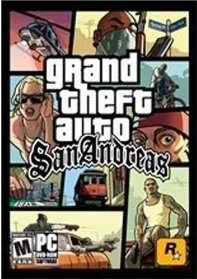 Lawyers involved in a civil class-action lawsuit against the creators of the video game Grand Theft Auto: San Andreas reportedly are surprised that most players weren't offended by sex scenes hidden in the game.
Under a
settlement the lawyers hatched with the game's creators, Rockstar Games and its parent company Take-Two Interactive, buyers who took issue with the hidden sex scenes could file claims. Of the millions who bought the game since its 2004 release, 2,676
filed claims.
Am I disappointed? Sure, Seth R. Lesser, lead lawyer for the plaintiffs, told The New York Times: We can't guess as to why now, several years later, people care or don't care. The merits of the case were clear.
Lesser and colleagues from 10 other law firms are asking for more than $1.3 million. Take-Two Interactive's lawyers say the company will dole out $300,000 to resolve the claims.
It doesn't typically go that way, said Mary J. Davis, a
University of Kentucky law professor who has studied this type of litigation. She said it is sort of backwards for legal fees to dwarf a settlement payout.
|
|
27th June
|
|
|
|
Contributing to the hype for Autopsy
|
From Shock Till You Drop
|
When a horror movie with a title like Autopsy enters the halls of the MPAA, it's immediately walking in with a bullseye on its head.
Co-writer/director Adam Gierasch said: It took five submissions to get an R rating for the movie, he says like a proud father enthusing over his rebellious offspring. The scene that riled up up the MPAA board involved one of the leads in an unsettling predicament involving a drill and an oxygen tank.
We wound up having to cut almost forty seconds out of that scene. First we just did some trimming and they were like, 'No.' Then we cut a little bit more, and they said, 'No.'
Gierasch assures us an unrated director's cut of Autopsy will
ultimately be released.
|
|
25th June
|
|
|
|
New York State passes bill mandating video game ratings
|
from Game Politics
|
The New York State Senate has voted 61-1 to approve a bill proposed by Senator Andrew Lanza.
The video game bill mirrors that passed yesterday by the State Assembly and the measure will now go to Gov. David Paterson for consideration. If Paterson
signs the bill, it will become law in 2010.
Prior to that, however, the video game industry is likely to sue, arguing that the measure is unconstitutional.
The bill says that every video game sold in the state of New York simply should
have a rating consistent with what the ESRB does presently in a voluntary way.
Last year's version included a provision that would have made it an E-felony to sell these games. This was taken out for the latest bill.
|
|
23rd June
|
|
|
|
Watching films about pregnancy makes you pregnant
|
Thanks to Dan
See full article from the Times
|
When a 15-year-old girl at Gloucester high school in Massachusetts discovered she was pregnant earlier this year, she displayed no trace of fear or concern. Shown the results of her pregnancy test, she responded: “Sweet!” She then rushed off to tell
her friends.
The girl was among a group of up to 18 Gloucester teenagers who may have made an apparent “pregnancy pact” that has stunned this decaying fishing community and sparked a renewed national debate about sex education in American
schools. Christopher Farmer, the British-born superintendent of local schools, found himself under siege as reporters around the world attempted to link events in Gloucester to the recent Hollywood vogue for cheery films about unplanned pregnancy.
Films such as Juno and Knocked Up have been blamed for romanticising a social evil, as has massive media coverage of Britney Spears and her family. Spears’s actress sister, Jamie Lynn, gave birth last week after becoming pregnant at
16.
Yet Farmer and other local officials are not so sure they have found the cause of the pregnancy surge. School officials confirmed last week that 18 students had become pregnant in the past 12 months, compared with an annual average of three
or four.
The initial report of a pregnancy pact was based on supposed remarks to Time magazine by the school’s headmaster, Joseph Sullivan, who was on holiday last week. Nobody disputes Sullivan’s contention that several girls were trying to get
pregnant, but he did not specifically mention a pact and for all the media attention lavished on Gloucester last week, nobody was able to produce a girl who could testify to its existence.
|
|
21st June
|
|
|
|
Supporting the hype for Zack and Miri Make a Porno
|
See full article from Digital Spy
See also trailer
|
Kevin Smith's upcoming film Zack And Miri Make A Porno is struggling to secure an R rating in the US, MTV reports.
The movie, in which Seth Rogen and Elizabeth Banks play lifelong friends who try to solve their cash problems by making
an adult film, has encountered ratings problems with the Motion Picture Association of America (MPAA).
Rogen said: The MPAA is gunning for us, I think. It's a really filthy movie. I hear they are having some problems getting an R rating from
an NC-17 rating, which is never good.
|
|
20th June
|
|
|
|
Max Hardcore challenges validity of trial
|
See full article from AVN
|
Attorneys for "Max Hardcore" (Paul Little) and Max World Entertainment yesterday filed a Motion for New Trial And/Or Judgment of Acquittal on behalf of both defendants in the U.S. District Court for the Middle District of Florida.
The motion, largely written by Max World attorney Jennifer Kinsley, cites six reasons for overturning the jury's verdict of guilty on all counts, including:
- That the federal obscenity statutes are invalid under the Fifth and Fourteenth Amendment substantive due process rights, as well as being unworkable when applied to Internet speech under the current COPA holding that the "community" for the
'Net is the entire world
- That the judge erred in allowing prosecutors to present only excerpts from the charged videos - the "Euro" versions of Max Extreme 20, Pure Max 19, Golden Guzzlers 7, Fists of Fury 4, and Planet Max 16 -
thereby prohibiting the jury from considering the material "as a whole," as well as prohibiting the defense from playing some "extras" on four of the DVDs
- That the Court should have recused herself from presiding over the
trial after she made comments indicating that she had already formed an opinion as to the guilt of the defendants without having heard all the evidence
- That the Court should have dismissed the counts involving mailing of the five DVDs to Tampa
on the basis that the government presented insufficient evidence that defendants knew the mails would be used to send the videos, and also that the defendants did not in fact mail the videos at all
- That the Court failed to properly handle
several jury irregularities, including a note sent from one juror during the trial asking that only excerpts of the charged videos be played rather than the videos in their entirety, and the fact that on the evening of the first day of deliberations, one
juror was informed that she had been fired from her job that day, and such firing was not brought to the attention of either the prosecution or the defense
- That the government failed to show that the charged material met the federal standards
for obscenity in relation to the material's target audience: the "dominant and submissive sexually deviant group."
The prosecution has 30 days to respond to the defense motion, and Judge Bucklew will rule shortly thereafter.
|
|
18th June
|
|
|
|
Press agency to meet with bloggers over fair use
|
See full article from
Wired
|
The Associated Press, following criticism from bloggers over an AP assertion of copyright, plans to meet this week with a bloggers' group to help form guidelines under which AP news stories could be quoted online.
Jim Kennedy, the AP's director
of strategic planning, said that he planned to meet Thursday with Robert Cox, president of the Media Bloggers Association, as part of an effort to create standards for online use of AP stories by bloggers that would protect AP content without
discouraging bloggers from legitimately quoting from it.
The meeting comes after AP sent a legal notice last week to Rogers Cadenhead, the author of a blog called the Drudge Retort, a news community site whose name is a parody of the prominent
blog the Drudge Report.
The notice called for the blog to remove several postings that AP believed was an improper use of its stories. Other bloggers subsequently lambasted AP for going after a small blogger whom they thought appeared to be
engaging in a legally permissible and widely practiced activity protected under "fair use" provisions of copyright law.
|
|
17th June
|
|
|
|
Press agency harangue website over 'unfair use' of content
|
Clearly of massive interest to the internet world. Maybe because of its syndicated nature, AP get little direct benefit from link backs etc. Blogger's links are more likely to be directed to the newspapers publishing AP stories
rather than AP themselves. So where BBC and major newspaper websites become massively dominant, partly through millions of sites linking to them, AP tend to miss out. See
full article from the Guardian
|
The US news agency Associated Press has found itself at the centre of a furious debate over the fair use of material by bloggers after its lawyers issued a takedown notice to a small, independent news site that it claims had quoted too heavily from its
news stories.
AP said six instances of copyright violation have taken place on Drudge Retort – a leftwing comment site set up as an alternative to the Drudge Report – including one post that pasted 18 words from a story on Hillary Clinton
followed by a 32-word direct quote. The news agency's vice-president and director of strategic planning, Jim Kennedy, appeared to acknowledge the upset over the weekend, telling the New York Times that AP didn't want to "cast a pall over
the blogosphere by being heavy-handed".
AP is understood to have suspended its attempts to challenge bloggers until it can review its guidelines, but Kennedy said it has not withdrawn its legal notice to Drudge Retort.
Cutting
and pasting a lot of content into a blog is not what we want to see, he told the New York Times: It is more consistent with the spirit of the internet to link to content so people can read the whole thing in context.
|
|
14th June
|
|
|
|
Obscenity case declared mis-trial
|
See full article from LA Times
See also
Justice needs to be blind to a judge's lawful sexual interests from
business.timesonline.co.uk
|
A federal appeals court judge has stepped down from a high-profile obscenity trial in Los Angeles, three days after acknowledging that he had posted sexually explicit material on a publicly accessible personal website.
In light of the public
controversy surrounding my involvement in this case, I have concluded that there is a manifest necessity to declare a mistrial, wrote Alex Kozinski, chief judge for the U.S. 9th Circuit Court of Appeals: I will recuse myself from further
participation in the case and will ask the chief judge of the district court to reassign it to another judge.
On Wednesday, Kozinski suspended the trial of Hollywood filmmaker Ira Isaacs to allow the prosecutor to explore what he saw as a
potential conflict of interest concerning the court having a . . . sexually explicit website with similar material to what is on trial here. Update: Supreme Double Jeopardy
22nd February 2010. See article from xbiz.com The Ira Isaacs obscenity case
could be headed to the U.S. Supreme Court. It's not certain whether justices will take his appeal, but Isaacs' attorney has asked a lower court on Tuesday not to send any pretrial proceedings relative to his retrial until the highest court in the
country decides. Obscenity Prosecution Task Force attorneys don't oppose the request, Isaacs attorney Roger Jon Diamond told XBIZ: You never know if the justices will take the case, but I'm upbeat, Diamond said. Isaacs'
obscenity case was put on hold last year after Judge Alex Kozinski recused himself after it was revealed that he used a website to distribute sexually explicit photos and videos. Diamond contends that Isaacs shouldn't be retried because there was
no manifest necessity for the declaration of the mistrial, which was declared without Isaacs' consent, and that it would amount to double jeopardy, a procedural defense hat forbids a defendant from being tried twice for the same crime on the same set of
facts. Isaacs has until May 3 to file a petition to the U.S. Supreme Court to request review.
|
|
13th June
|
|
|
|
US ISPs to ban large parts of their Usenet citing child porn reasons
|
See full article from CNET News
|
An announcement this week by New York State Attorney General Andrew Cuomo that three Internet service providers would "block" sources of child porn has caused a surprising amount of confusion.
First, some news reports assumed that meant
blocking, say, overseas Web sites that are deemed illegal. But Cuomo's press release talked only of broadband providers agreeing to "purge their servers of child porn websites"--which they've done for years, making this point mere public
relations puffery.
Second, some readers thought that the three companies involved in the deal--Verizon Communications, Time Warner Cable, and Sprint--would block access to Usenet newsgroups hosted elsewhere. That would include blocking
pay-per-Usenet services like Supernews, Giganews, and Usenet.com.
As far as I know, that's not the case, and it's worth setting the record straight. What's happening, as we reported on Tuesday, is that the three companies are changing policies
about what newsgroups they offer to their customers through their own Usenet servers:
Time Warner Cable will cease to offer Usenet. Sprint is cutting off the alt.* hierarchy, Usenet's largest, which will primarily affect its business customers. A
Verizon spokesman said he didn't know details, saying "newsgroups that deal with scientific endeavors" will stick around but admitted that all of the alt.* hierarchy could be toast.
In the future, perhaps, a constitutionally impaired,
censor-happy New York attorney general could try to force these companies to block access to Usenet completely (ports 433 and 119, for instance). Or only connections to attorney-general-certified-free-of-alt-groups Usenet servers might be permitted.
But that's not the case today. Let's hope this puts to rest misunderstandings like this reddit.com thread that talked about broadband providers blocking access to Usenet servers elsewhere. For now, at least, that's not happening.
|
|
12th June
|
|
|
|
Obscenity case suspended whilst Judge is checked for same
|
See full article from LA Times
|
An upcoming trial will screen hours of hard-core fetish pornography as Ira Isaacs faces a trial on obscenity charges.
If all goes according to plan, an otherwise stately federal courtroom in downtown Los Angeles will be converted into a makeshift
movie theater this week, screening a series of graphic sexual fetish videos.
At issue is how a jury will define obscenity in a region that boasts its status as the capital of the pornography industry and at a time when technology has made the
taboo adult flicks of a generation ago available to a mainstream audience.
Hollywood filmmaker Ira Isaacs says the videos he sells are works of art, protected under the Constitution. Federal prosecutors contend the movies are criminally obscene.
The prosecution is the first in Southern California by a U.S. Department of Justice task force formed in 2005 after influential Christian conservative groups appealed to the Bush administration to crack down on smut.
For jurors to
determine whether Isaacs' work is obscene, they will have to view hours of hard-core pornography so degrading that in one film, an actress cries throughout, prosecutors said in court papers.
But if jurors find that any of the four videos at issue
in the case have any literary, scientific or artistic value, the work is not legally obscene, according to a 1973 Supreme Court ruling.
In a statistic that some may find every bit as shocking as his work, Isaacs said he was selling about
1,000 videos per month at $30 apiece before being raided by the FBI early last year. Isaacs predicted that many jurors would not be able to stomach viewing the movies, some of which feature acts of bestiality and defecation. The indictment
alleges that Isaacs shipped obscene videos outside the state of California.
Presiding over the trial will be Alex Kozinski, chief judge of the 9th Circuit Court of Appeals. Kozinski was assigned the case as part of a rotation in which he and
other appeals court judges occasionally oversee criminal trials in addition to deciding appeals.
His involvement in the case may be a stroke of luck for Isaacs. That's because Kozinski is seen as a staunch defender of free speech. When he learned
that there were filters banning pornography and other materials from computers in the appeals court's Pasadena offices, he led a successful effort to have the filters removed.
Judging the Judge See
full article from X Biz The obscenity trial of “shock artist” Ira Isaacs has now been suspended as
questions arose today following a Los Angeles Times report in which the trial judge said he kept sexually explicit pictures and videos on his personal website.
Judge Alex Kozinski granted the joint motion to suspend the trial after the
prosecution claimed it needed time to investigate the matter. The jury is expected to return on Monday.
Earlier today, the LA Times published a report in which Kozinski reveals that he maintained explicit photos and videos on a subdomain of his
publicly accessible website, Alex.Kozinski.com.
The Times reports that Kozinski’s explicit material was extensive. There were images of masturbation, public sex and contortionist sex. There was a slide show striptease featuring a transsexual and
a folder that contained a series of photos of women's crotches as seen through snug-fitting clothing or underwear. There also were themes of defecation and urination, though they are not presented in a sexual context.
Kozinski claims that the
images were not accessible to the general public, and though some were “inappropriate,” he kept them to share with friends.
|
|
12th June
|
|
|
|
US attempt to revive law making websites responsible for age verification
|
See full article from AVN
|
Despite opponents' claims that the law is significantly outdated and blocks legal speech while not blocking much questionable content from overseas, government lawyers tried Tuesday to revive the 1998 Child Online Protection Act.
Representatives
from the American Civil Liberties Union went before the 3rd U.S. Circuit Court, urging judges hearing the matter to uphold a ban on COPA, which would impose draconian criminal sanctions.
Under the law - which was created long before the days of
chat rooms, YouTube and other interactive sites the law does not address - those convicted could face fines up to $50,000 per day and up to six months in prison for online material acknowledged as protected for adults but deemed "harmful to
minors."
The judges hearing the case questioned the law's effectiveness, given estimates that half of all online porn is posted overseas, beyond the reach of U.S. law.
Lawyers with the American Civil Liberties Union argued that
Internet filters block 95% of offensive content and can be set according to a child's age or a parent's judgment. Federal attorneys argued that only about half of all families use Internet filters.
The three-judge panel did not indicate when it
would issue a ruling. A federal judge declared the law unconstitutional in 2007. The Department of Justice is hoping to overturn that ruling.
|
|
10th June
|
|
|
|
Contributing to the hype for Zack and Miri Make a Porno
|
Based on article from FirstShowing.net
See also trailer
|
A short, hilarious teaser trailer for Kevin Smith's Zack and Miri Make a Porno riled the MPAA who went ape shit and forced them to take it down. The reason? Weinstein Co. (like most studios) is a signatory of the MPAA. As such, there
are protocols involving trailers that we failed to follow.
Kevin Smith goes on to explain that they never submitted the teaser trailer to the MPAA because they assumed since there was no real footage they didn't need to. And we all know what
happens when you assume. Unfortunately since the vulgar content of this trailer would earn it a red band rating, they were not allowed to keep it up because there is no way to check the age of those who are watching it. Are you kidding me?! It wasn't
that bad!
Turns out all promotional material for any film financed/distributed by a signatory of the MPAA has to be signed-off on by the MPAA - including internet-only materials. I never realized this, as it'd never been a problem in the past:
we've been doing 'net-only teasers since Jay and Silent Bob Strike Back and nobody ever raised a red flag before (not even on the last flick, for which we also put up two 'net-only teasers in advance of the rated trailer). But I guess since the
teaser was so, shall we say, racy… a rating was in order.
Smith says that Quick Stop Entertainment had to take down the trailer from their site for the time being and plans to get it back up as soon as the MPAA does approve the trailer.
Given the title of this movie contains the word "porno" and is literally about two friends who decide to make a porn movie, it's been under intense scrutiny since the start. I'm sure this isn't the last we'll hear of the MPAA clamping down on
Zack and Miri Make a Porno . Not only that, but I'm sure we'll see activists and religious kooks alike come out of the woodwork when it actually hits theaters in October to protest its vulgar nature and obscene content. Oh the world we live in…
|
|
9th June
|
|
|
|
US auctioning spectrum for free and censored wireless internet access
|
See full article from AVN
|
The FCC will meet June 12 to discuss the auction of a piece of spectrum. The winning bidder will be required to offer some free wireless Internet access in the US
There is a catch for carriers: They will be required to offer the free wireless
Internet without perceived obscene or adult content. Another FCC requirement calls for content filtering on the free service to prevent minors from accessing adult sites.
The highest bidder for the spectrum would be responsible for building
out the network and would have to make it available for free to 50% of the population within four years, FCC Commissioner Kevin Martin said: In addition, the top bidder will have to reach 95% of the US population within 10 years."
Reed Lee, a member of the boards of the Free Speech Coalition and the First Amendment Lawyer's Association, told AVN Online that he opposes the proposal because of its filtering requirement: One major problem I have with the proposal is that it
promotes - indeed, requires - channel filtering, the worst kind of all. From the point of view of a free-expression enthusiast, one of the greatest things about the Internet - so far - is that it makes channel filtering impossible as a practical matter.
I would oppose anything which encourages channel controllers to do it, either by changing the Internet or by researching ways to do it as is.
|
|
7th June
|
|
|
|
Cameras banned for US railway stations despite official denial
|
Thanks to Nick
See full article from
The Online Photographer
See
video news report
|
The Fox channel in Washington D.C. became aware that photographers were being hassled by security in Union Station (the train station in Washington), so they dispatched a reporter and a crew to do a story on it. So they're interviewing the
head spokesman for Amtrak, who is explaining that there aren't any laws or rules against photography inside the train station...when a security guard comes up and tells the TV crew they'll have to turn the cameras off.
|
|
6th June
|
|
|
|
Max Hardcore found guilty of distributing obscene material
|
See full article from AVN
|
Producer Max Hardcore was found guilty today of 10 federal counts of distributing obscene materials over the Internet and through the mail. His company Max World Entertainment was also found guilty on 10 related charges.
It's a sad
day for all Americans when they smash any kind of free speech and that's what happened in Tampa today, Max Hardcore told AVN. They trampled on free speech, and I intend to appeal.
The government had separately sought the forfeiture of
Hardcore's home in Altadena, California, but the jury ruled against that sanction.
I'm full of good spirits and they didn't get my house, Hardcore said. We're talking to a couple of jurors and they felt very strongly for me, but the way
the laws are formulated, they were boxed in to a corner. I should have got off for this nonsense; obscenity is an archaic term, it's not defined well. I received no warning and they attempted to put me behind bars; they've got a conviction, but we intend
to fight on.
The jury returned its verdict after deliberating for a total of 14 hours in the past two days. After the jury returned its verdict, the judge dismissed the defense's motion to dismiss the case which had been held in reserve.
It was a travesty but we had no choice because of the way the law is written, one juror told AVN. Several jurors approached Max Hardcore and his attorneys to express their sympathy at having been forced to convict him on the counts due to the
"poorly written" law regarding the transportation of obscene material via the internet and the mailing of the DVDs to the middle district of Florida. Another juror reportedly said that if two words in the law had been different, he would have
held out for acquittal.
Max Hardcore will be sentenced September 5. He is free on bail until that date.
|
|
31st May
|
|
|
|
US police arrest owner of Hard2Find website
|
See full article from AVN
|
Hard2Find Videos owner Loren Jay Adams was released from Marion County jail on his own recognizance following his arrest on federal obscenity charges. In an exclusive interview with AVN, Adams revealed details of the three videos seized by the FBI during
the bust.
Two of them were bestiality videos, and one of them was a fisting video, Adams told AV: I did not produce these; I did not make them. These are videos I've acquired over the years through trading.
Federal agents
ordered copies of the three DVDs from Adams' website XXXHard2FindVideos.com in February, requesting that the videos be sent via the U.S. postal service to an address in Martinsburg, West Virginia. A federal grand jury used that transaction to indict
Adams on charges of distributing obscene materials through the mail.
The way I'm looking at it, at the very least it's entrapment, Adams said: I have a disclaimer on the front page of the website that says the user certifies that this
stuff is legal where the user is located, that they are over 18 and that the user takes responsibility for the material. They [the government] are venue shopping; they want to prosecute people in West Virginia where they think it will be considered
obscene.
|
|
28th May
|
|
|
|
Obscenity trial of Max Hardcore begins
|
From AVN
|
The Max Hardcore Obscenity Trial has begun in Tampa, Florida. Practically from the moment court convened this morning before Judge Susan C. Bucklew in the case of United States v. [Max Hardcore] and Maxworld Entertainment, issues that
could determine the entire course of the obscenity trial were hard-fought between the prosecution and the defense.
At primary issue was the government's contention that it was not required to show all of the footage on the five DVDs which it had
charged as being obscene. The middle portion of the day was taken up in selecting the jury itself. A panel of 40 Middle District residents was assembled in the courtroom, and Judge Bucklew, who had earlier denied the defense's request to submit a
detailed questionnaire to the jury pool, herself asked the majority of the questions in determining which of the panel would sit on the trial jury.
The judge's questions covered such areas as the potential jurors' employment, their backgrounds,
their religiosity, their membership in any religious or secular pro-censorship groups; whether any of them regularly listened to Rush Limbaugh or Howard Stern; whether any of them owned personal computers and had ever seen sexual material on the Web;
whether any owned a VCR or DVD player (all did); and whether any regularly read newspapers or watched the news on TV.
In deciding what questions to ask, the judge disclosed her dislike of questions that began with, "Do you believe" and
"Do you feel," and specifically rejected the defense's request that she ask whether any potential juror had any "moral convictions" regarding adult material.
But although she didn't ask the question, at least three jurors made
their religiously-based dislike of the material known during the questioning.
One also said that since he had four daughters, he wouldn't be able to look at the movies and be impartial about the performers vomiting and drinking piss within them.
Another potential juror also disclosed that she was unable to look at anyone vomiting without getting nauseous herself, and she was eventually excused for that reason, with the judge agreeing with Kinsley's contention that if the woman vomited
while the movies were being played, that that might prejudice the rest of the jury against the material.
|
|
25th May
|
|
|
|
Gamecock magazine to be pulled from Amazon to settle law suit
|
From the nola.com
|
 A poultry magazine from western Arkansas has agreed to ask Amazon.com to stop selling its publication online, but a lawyer representing The Gamecock says the publication does not promote cockfighting or violate a federal ban on the
bloody sport.
A poultry magazine from western Arkansas has agreed to ask Amazon.com to stop selling its publication online, but a lawyer representing The Gamecock says the publication does not promote cockfighting or violate a federal ban on the
bloody sport.
The settlement filed in US District Court in Washington, DC, is related to a lawsuit the Humane Society of the United States filed against Seattle-based Amazon.com in February 2007.
In the lawsuit, the HSUS accused
Amazon.com of violating federal animal-cruelty laws by selling The Feathered Warrior and The Gamecock, which HSUS described as two cockfighting magazines. The Marburger Publishing Co., which publishes The Gamecock, agreed to settle
with HSUS because it was a way to remove itself from the case, said attorney Ali Beydoun. Beydoun said that the magazine also promised in the settlement to be more vigilant in its content. He said the magazine intends to follow the agreement and
all applicable laws.
HSUS lawyer Jonathan Lovvorn said his organization is hoping the agreement with Marburger, which had not been signed yet by the judge hearing the case, will encourage Amazon.com and The Feathered Warrior , another
Arkansas magazine, to come to similar agreements.
Amazon has argued that it has a constitutional right to sell the publications and called pulling them from the shelves a form of censorship.
|
|
24th May
|
|
|
|
Play cancelled after whinge that dialogue is inappropriate for an 18 year old
|
From Reformer
|
The board of the Arts Council of Windham County, Vermont, is unanimous in condemning the shutting down of Zeke Hecker's play, The Lift . We are appalled by what appears to be an act of intimidation that has robbed the public of the opportunity to
see a production that took many months to bring to the stage, and who knows how many months, even years, to write. It is our understanding, that a member of the audience felt the age of the individual playing the part of the
"younger man" was too young. A woman in the audience complained of "inappropriate" material; namely, a segment involving aural suggestions of sex between an 18-year-old and an older woman.
|
|
18th May
|
|
|
|
Red Rose author pleads guilty to obscenity in US text fiction
|
See full article from AVN
|
The US government has chosen agoraphobic Karen Fletcher to indict for text-based obscenity, and now that she's pleading guilty, it's not unreasonable to ask, Why Karen?
We know her "subscription base" consisted of just 29 people.
We know that she charged a mere $10 for access to her (and others') stories about abuse and torture of children - fictional children, not real children - not to make income from the site, but in order to keep minors away - minors who might get the wrong
idea that she was writing about them.
And we know, as the government with all of its resources must also have known, that this poor indigent invalid was so scared of nearly everything that she could barely go out of her house - not to go shopping
at the mall, not to go to the movies, not to attend a sports game - not to do any of the things that give more sane people pleasure.
And it's just possible that someone in the bowels of that great government machine decided that that combination
made 54-year-old Karen Fletcher the perfect "test case" for the first text-based obscenity prosecution in more than 30 years - so Fletcher was indicted in September, 2006, for publishing six "obscene" stories.
US attorney Mary
Beth Buchanan opined that the targeted stories were disturbing, disgusting and vile. Of course, in order to render that opinion, if she hadn't had FBI print-outs to reference, Buchanan would have had to affirmatively sign on to RedRoseStories.com,
pay her $10 like anyone else and then search out the stories in question ... and actually, voluntarily, read them.
With text, you can always stop reading, First Amendment attorney Reed Lee told the Pittsburgh Post-Gazette. You're less
likely to be offended than if an image is just splashed at you.
|
|
16th May
|
|
|
|
Whingeing at toys promoting PG-13 films
|
See full article from the CommonDreams.org
|
Citing thousands of toys and kid-targeted promotions already under way for a slew of violent summer blockbusters, the Campaign for a Commercial-Free Childhood launched a letter-writing campaign today to the MPAA to stop allowing film companies to promote
PG-13 movies to young children. In January, in response to a complaint by CCFC, the Federal Trade Commission urged the MPAA to develop an explicit policy, incorporating objective criteria to ensure that PG-13 movies are not marketed in a
manner inconsistent with their rating, but the MPAA has refused that request. As a result, ads promoting PG-13 movies and their related merchandise continue to be a staple of children'
s television programming.
CCFC'
s Director, Dr.
Susan Linn, said: The PG-13 rating states that parents should be ‘strongly cautioned'
that ‘material may be inappropriate for children under thirteen,'
but the film industry is doing everything and anything to ensure that
violence-packed movies are the talk of elementary and preschool playgrounds. In their cynical attempt to wring every last dollar from families, film companies are undermining parents who are trying to shield their children from media violence.
While the MPAA claims it reviews marketing plans for every PG-13 movie, they focus primarily on the content of the ads, not whether the film advertised is appropriate for a younger audience. The MPAA does not review ads for licensed toys and
movie-linked food promotion.
|
|
14th May
|
|
|
|
Debating a 25% tax for adult businesses in California
|
Based on article from Orange County Register
|
Sex shops and strip clubs would have to pay an extra 25% tax on their sales and services under a proposed state law supposedly meant to offset the costs of allowing such businesses into a community.
But California's $4 billion-a-year adult
industry has attacked the proposal by Assemblyman Charles Calderon as unconstitutional and based more on opinion than on fact. Adult-business owners in Orange County say the tax would put strippers out of business and break sex shops that already must
abide by strict rules about where they can operate.
I don't know how this business has any kind of bad reputation, said Jerry Tatarian, the manager of the Flamingo Theater, a strip club in Anaheim. You walk in here on your own free
will. We don't show anything outside. We're just a regular business. Twenty five percent? he added. What's he trying to do, become a partner?
On the other side of the debate are teacher unions, which see a new line of revenue
for districts hard-hit by budget cuts and layoffs. The sex tax would essentially target luxury items, said Linda Barnett, the president of the Anaheim Secondary Teachers Association.
The bill would add the 25% tax to any items sold in an
"adult entertainment venue." That would be anyplace that gets at least half of its revenue from sexually explicit performances or from the sale of adult videos, magazines or other media.
In other words, you would have to pay a 25% tax
on anything you bought in a porn store – even a pack of gum.
Calderon's bill says that strip clubs, sex stores and other adult venues generate community problems such as prostitution, drug use and sexually transmitted diseases. It also says the
easy availability of Internet pornography is unhealthy for children. The tax would pay for education as well as social services that could include law enforcement and treatment for substance abuse and sexually transmitted diseases.
The industry
has challenged the legality of Calderon's bill, saying that it targets sexually explicit performances at strip clubs, but makes exceptions for "legitimate" theatrical productions. Gray also dismissed many of the claims made in the bill, saying
they were based more on opinion than on studies or other real evidence. See full article from AVN
After an hour and a half of discussion, Charles Calderon's porn tax bill, AB 2914, never made it before the nine members of the Assembly Revenue & Tax Committee for a vote yesterday, with Calderon electing to keep the bill in the suspense
file.
The suspense file is for any bill that costs more than a certain dollar amount, a threshold, and in this committee, that's $500,000 to implement, explained Matt Gray, California lobbyist for the adult entertainment industry.
What happens is that all the bills that cost over that $500,000 mark are put in that suspense file, and then at the end, they prioritize which bills come out based upon how much money they have to spend. The earliest it could come out is this coming
Monday, and the latest is sometime probably in August. It's a two-thirds vote bill and can move without deadlines. But the important part to remember is, it was supposed to be considered along with all other bills on suspense file yesterday, and he
announced that it would not be taken up on suspense. Update: Reduced Impact 25th June 2008 Assemblyman Charles Calderon has
reduced his proposed California state tax on adult entertainment to 8.3% in the latest version of the bill.
The bill originally called for a 25% on adult entertainment, including porn videos, strip clubs and other goods and services. The proposal
met with strong opposition from Republicans as well as adult industry lobbyists who denounced the measure as selective taxation.
The tax would now be levied on the gross receipts from the sale of qualified tangible personal property, as
defined, of a qualified business whose gross receipts from the sale or rental of adult material exceed 50% of all gross receipts of the retail establishment.
The previous version of the bill called for a tax on any business whose gross
receipts from adult material exceeded 10% of the business's total gross receipts. As the Free Speech Coalition pointed out, such a sweep could easily include art galleries, mainstream bookstores and any video store that rented or sold a
substantial amount of "R-rated" or "Unrated" mainstream videos.
|
|
13th May
|
|
|
|
Facebook blocks links to adult sites
|
See full article from AVN
|
Criminal Social networking website Facebook has instituted a number of enhanced privacy safeguards and obscenity blockers.
The move was part of an agreement with 49 state attorneys general to increase the level of protection for the site's
younger users.
The company also agreed to join MySpace on the Internet Safety Task Force, which MySpace established in its agreement with state attorneys general. The task-force agreement calls for the social networking sites to establish
"age locking" around the profiles of users younger than 18.
In September 2007, New York Attorney General Andrew Cuomo threatened to subpoena Facebook after investigators posing as underage users were sexually solicited by adults.
Facebook agreed to enhance its age and identity identification tools, issue automatic warning messages when children attempt to give personal information to unknown adults, restrict users' ability to change their listed ages and immediately sever
links to pornographic websites.
The deal also calls for Facebook, which has about 47 million users, to allow someone independent, and approved by Cuomo's office, to report on its compliance with the new safeguards for two years.
|
|
11th May
|
|
|
|
Challenging Indiana over ludicrously wide sex business registration
|
See full article from AVN
|
An association of First Amendment supporters and retailers have filed suit against the state of Indiana over a new law that would require sellers of sexually explicit and even softcore material to pay a litany of fees in order to do business.
Among the plaintiffs in the suit are the ACLU of Indiana, the Indianapolis Museum of Art, the Media Coalition, the Association of American Publishers Inc. and the National Association of Recording Merchandisers.
At issue is Indiana House Bill 1042, which Gov. Mitch Daniels signed into law at the end of March. The new law, which covers any business opening after July 1, 2008, or any existing business which changes location after that date, requires the
affected business to register with the Secretary of State and pay a $250 registration fee, with several other fees possibly to follow, if the business sells sexually explicit materials.
The big question, of course, is, what constitutes sexually explicit materials
? Well, among other things, it's any product or service that is harmful to minors or that is designed for use in, marketed primarily for, or provides for the stimulation of the human genital organs or masochism or a masochistic
experience, sadism or a sadistic experience, sexual bondage, or sexual domination.
As to what is harmful to minors :
- It describes or represents, in any form, nudity, sexual conduct, sexual excitement or sadomasochistic abuse.
- Considered as a whole, it appeals to the prurient interest in sex of minors.
- It is patently offensive to prevailing
standards in the adult community as a whole with respect to what is suitable matter for or performance before minors.
- Considered as a whole, it lacks serious literary, artistic, political or scientific value to minors.
Rep. Terry Goodin claims the law will target pornography vendors that pop up along interstate exits in unincorporated areas. What it will do, however, is to require any business that deals in any way with any product or service that's remotely
sexual - for instance, museums or art stores that sell statues of Michelangelo's David, or bookstores that sell mildly erotic literature or information on erectile dysfunction - to pay the $250 fee.
We're talking about a law that has very
broad and very vague and, we would contend, very unconstitutional restrictions and burdens, said Ken Falk, legal director of the American Civil Liberties Union of Indiana: To the best of my knowledge, there is no similar law in the United States.
|
|
8th May
|
|
|
|
US law proposed requiring age verification for buying video games
|
See full article from Variety
|
With Grand Theft Auto IV in the headlines, a bipartisan pair of House members has introduced a bill that would require videogame retailers to check identification in order to prevent minors from buying games intended for adults.
Representatives Lee Terry and Jim Matheson have introduced the Video Games Ratings Enforcement Act to ensure that children
can only access age appropriate content without parental permission.
Terry said. Many young children are walking into stores and are able to buy or rent these games without their parents even knowing about it. Many retailers have tried
to develop voluntary policies to make sure mature games do not end up in the hands of young kids, but we need to do more to protect our children.
Bill would require ID checks for purchases of games rated M (mature) or AO (adult only). It
would also compel game retailers to post ratings system explanations in the store. Retailers found in violation of either requirement would face a $5,000 civil penalty.
Several state legislatures have enacted similar laws, but each has been
struck down by courts on First Amendment challenges.
Terry said he remains optimistic because, unlike the state laws: This bill doesn'
t involve itself in content or defining the standards for ‘mature'
or ‘adults only'
. It
simply requires the retailer to post what the industry has defined as ‘mature'
and ‘adults only'
so that parents can know, and requires checking of identification .
|
|
7th May
|
|
|
|
The years most challenged books in US school libraries
|
Based on article from Christian Post
|
 A children's story about a family of penguins with two fathers once again tops the list of library books some people object to the most.
And Tango Makes Three , released in 2005 and co-written by Justin Richardson and
Peter Parnell, was the most "challenged" book in public schools and libraries for the second straight year, according to the American Library Association.
The complaints are that young children will believe that homosexuality is a
lifestyle that is acceptable. The people complaining, of course, don't agree with that, Judith Krug, director of the ALA's Office for Intellectual Freedom, told The Associated Press.
Other books on the ALA's top 10 list include Maya Angelou's
memoir I Know Why the Caged Bird Sings , in which the author writes of being raped as a young girl; Mark Twain's The Adventures of Huckleberry Finn, long attacked for alleged racism; and Philip Pullman's The Golden Compass , an
anti-religious work in which a former nun says: The Christian religion is a very powerful and convincing mistake.
Overall, the number of reported library challenges dropped from 546 in 2006 to 420 last year, well below the mid-1990s, when
complaints topped 750. For every challenge listed, about four to five go unreported, the library association estimates.
The atmosphere is a little better than it used to be, Krug says. I think some of the pressure has been taken off of
books by the Internet, because so much is happening on the Internet.
|
|
7th May
|
|
|
|
First steps in lawsuit against council using building regs to censor
|
See full article from
timesunion.com
|
The city of Troy in New York State is facing legal action for shutting down the Sanctuary for Independent Media for building code violations when a controversial exhibit opened in March.
The New York Civil Liberties Union and the arts group filed
a notice of claim against the city and city Public Works Commissioner Robert Mirch seeking unspecified damages.
The city shut the facility to public gatherings after digital artist Wafaa Bilal's video game and exhibit Virtual Jihadi moved
there from Rensselaer Polytechnic Institute.
City officials cannot selectively enforce building codes to shut down an art exhibition they find distasteful, said Melanie Trimble, executive director of NYCLU's Capital Region chapter.
The notice is a first step toward filing a lawsuit. Trimble said the arts group and NYCLU have not assessed what damages they seek.
There is a climate of fear in the city, Sanctuary for Independent Media co-founder Steve Pierce said.
Pierce, who is also an adjunct professor at Rensselaer Polytechnic Institute, said city officials use their government authority to go after people who do not agree with their political views.
Mirch led a demonstration protesting Bilal's video
game exhibit, which features himself as a suicide bomber on a mission to assassinate President Bush. Mirch supervises code enforcement and also is majority leader of the Rensselaer County Legislature. Update:
Night of Bush Capturing 24th July 2008, See article from gamepolitics.com Bilal, an American citizen as well as a faculty member at the Art Institute of Chicago, is currently exhibiting
Virtual Jihadi at the Windy City's FLATFILE galleries, accompanied by a renewed round of controversy.
During a speech, Bilal said that the idea for the game started with Quest for Saddam... in which the object is to find and kill Saddam Hussein.
Apparently someone in Al Qaeda obtained a copy of the game, changed the skins of the soldiers and Saddam so that now the player is an Iraqi killing Americans and hunting George Bush [the so-called Night of Bush Capturing game].
|
|
4th May
|
|
|
|
Old racially stereotyped Merrie Melody cartoons on YouTube
|
Based on article from the New York Times
|
Among the millions of clips on the video-sharing Web site YouTube are 11 racially stereotyped Warner Brothers cartoons that have not been shown in an authorized release since 1968.
Despite efforts to suppress them, racist cartoons from the 1940s
have been circulating on the Web.
Some of the cartoons were removed on April 16. A message saying the cartoons were no longer available because of a copyright claim by Warner appeared in their place. By evening the messages disappeared, and some
of the cartoons were back. Representatives for YouTube and Warner would not confirm whether the companies had tried to remove the cartoons.
A representative for Warner wrote in an e-mail message that Warner Brothers has rights to the titles
in question and that we vigorously protect all our copyrights. We do not make distinctions based on content.
The cartoons, known as the Censored 11 , have been unavailable to the public for 40 years. Postings no longer appear if
YouTube is searched for Coal Black and de Sebben Dwarfs, a parody of Snow White and the most famous of the cartoons. But a search for Coal Black does find the cartoon.
These cartoons were controversial when first released;
the National Association for the Advancement of Colored People (NAACP) unsuccessfully protested Coal Black before it was shown in 1943. Richard McIntire, the director of communications for the NAACP, wrote in an e-mail message that the cartoons
are despicable. We encourage the films'
owners to maintain them as they are — that is, locked away in their vaults.
WMAV01, a YouTube user who posted some of the cartoons wrote in an e-mail message that these cartoons were never
officially ‘banned'
by any law and added that the cartoons had historical value. WMAV01 said the cartoons were available on other websites like foundrymusic.com.
The cartoons are also available on bootleg DVDs from Web sites
like banned-cartoons.com, which sells a collection of 165 such cartoons.
Michael Barrier, author of four books on the history of animation and comics, said the cartoons should be presented in an informed way for an intelligent, adult audience.
|
|
4th May
|
|
|
|
Florida looking to ban bulls balls
|
From X Biz see Chron.com
|
They're proudly displayed by any self-respecting bull, but dangling big metal ones on the back end of a truck could be banned in Florida.
Metal replicas of bull testicles have become trendy bumper ornaments in some parts of the Sunshine
State, but state Sen. Carey Baker is campaigning to ban the orbs.
Baker acknowledged that Florida lawmakers have more pressing issues, including huge revenue shortfalls, but said the state needs to draw a line on what's obscene before more
objectionable adornments appear.
State Sen. Steve Geller argued against Baker's bill: I find it shocking that we should be telling people that have the metallic bull testicles ... you're now going to have points on your license for this.
Geller was in the minority. Baker's bill to fine drivers $60 for displaying the ornaments passed the Senate. It's now up to the House, but there's only a slim chance that members of that chamber would pass the measure before the session ends this
coming Friday.
If it were to be passed, Gov. Charlie Crist has not indicated whether he would sign it, although he has not been too critical of this and other not-so-pressing issues.
It's good to have some things that maybe aren't
quite as serious. Got to have a little levity, the governor said.
|
|
2nd May
|
|
|
|
Challenging Oregon's book censorship law
|
Based on article from Portland Tribune
|
Portland bookseller Michael Powell and owners of a dozen independent bookstores and community organizations are suing the state attorney general and all 36 county district attorneys to block enforcement of a law forbidding the sale of sexually explicit
material to people younger than 18.
Attorneys for the booksellers claim the four-month-old law violates their constitutional right to free speech and criminalizes material that would otherwise not be considered sexually explicit, like textbooks,
comics or magazines.
The lawsuit was filed Friday, April 25, in U.S. District Court. No date has been set for a hearing on the issue. The booksellers and organizations are seeking an injunction to block the law. State Attorney General Hardy Myers
and the district attorneys have not yet filed a response to the lawsuit.
In the lawsuit filed by attorneys P.K. Runkles-Pearson and Michael A. Bamberger, the plaintiffs focus on House Bill 2843 that was signed into law July 31, 2007, by Gov. Ted
Kulongoski. The law went into effect Jan. 1 and makes it a crime to provide sexually explicit material to a child through sales or viewing, if the material was meant to satisfy a sexual desire.
Bookstores are liable if they sell books
about sex to minors, even if the material is in a textbook, according to the lawsuit.
The lawsuit claims the new law violates the booksellers'
U.S. Constitution First, Fifth and 14th amendment rights to free speech and equal protection.
It claims the law is overly broad and promotes self-censorship by creating a chilling effect on the sale, display, exhibition and dissemination of constitutionally protected speech and expression.
In an affidavit, Michael Powell
said his six stores sold books of all types that could be considered sexually explicit under the new law. Those include the sale of books in stores and online on photography, graphic novels and health and wellness titles.
Powell'
s has in
stock over 2 million volumes constituting over 1 million titles, Powell said in his affidavit. We receive on an average over 5,000 new titles per week. Obviously we cannot read each new title to determine whether there are any sexual explicit
portions and if so whether such portions ‘serve some purpose other than titillation'
(even if I knew what that meant).
|
|
1st May
|
|
|
|
|
A summary of US obscenity cases brought in 2007 See article from defendourporn.org
|
|
27th April
|
|
|
|
Jack Thompson gets Miami to ban Grand Theft Auto IV bus adverts
|
Based on article from Game Politics
|
A complaint by games nutter, Jack Thompson, has prompted Miami's transit authority to remove ads for Grand Theft Auto IV from local bus shelters.
Miami thus joins Chicago as the second major US city to pull GTA IV ads from its public
transit system in recent days.
GamePolitics reported on Thursday that Thompson had complained about the GTA IV ads to Miami Mayor Carlos Alvarez. The GTA IV ads were apparently removed sometime on Friday afternoon. Hugh Chen, Miami-Dade
Transit's deputy director of operations, told GamePolitics on Friday evening, via e-mail: The posters were removed after a review of our approval process and contract… Be assured that the circumstances around placing and removing these specific
posters were reviewed before action was taken. We are governed by our contract with our shelter contractor and County ordinances.
In the wake of this success, Thompson is proceeding to get all GTA IV ads pulled from all US transit systems
since such ads clearly violate promises made by the [ESRB], found right at its web site, not to place “Mature-rated” game ads in venues that will be seen by teens.
However, Thompson's contention about the ESRB appears to be incorrect. An ESRB
spokesman told GP on Friday, Considering the overwhelmingly adult demographic profile of mass transit riders… the placement of GTA IV ads in these types of outlets would typically not be in violation of [Ad Review Council] guidelines.
|
|
25th April
|
|
|
|
Court tests the sidelining of free speech into designated zones
|
Based on article from World Net Daily
|
A US government decision to limit the First Amendment to certain often-fenced "zones" is being tested in a court case in Philadelphia by a man who was arrested for not following by the terms of a "speech permit" he didn't request and
didn't agree to accept.
The judge hearing the case against Michael Marcavage of Repent America this week heard prosecution arguments, then agreed to review written motions to dismiss the case and said the hearing would be continued at a later
date, if it is needed.
Marcavage is a street preacher who regales passers-by on public property with exhortations to review their own spiritual condition and consider their future whether they choose Christianity or not.
He was arrested
in 2007 by rangers at the Liberty Bell Center in Philadelphia, which houses the Liberty Bell, the artifact from American history that rang to announce the first public reading of the Declaration of Independence and is inscribed with Proclaim LIBERTY
throughout all the Land unto all the inhabitants thereof.
Marcavage was speaking to passersby about the national issue of abortion when he was arrested.
This case is not just about Christians, he said: The outcome affects
everyone. His arguments are focusing on the government's ability to censor the speech of dissidents by requiring them to protest in a single location separated from the audience the protester is trying to reach. The government alleges the preaching
created a safety concern.
At the Liberty Bell Center, Marcavage had preached a number of times. But in the 2007 visit, he was told that new rules required him to be in a specially designated permit-required free speech zone that was located on
the far side of the property away from the audience.
The ranger told him since it was a new policy, he would grant Marcavage a verbal permit for his preaching. Marcavage rejected that, saying he did not need a permit to exercise his First
Amendment rights. He then was arrested for violating the conditions of the permit he did not accept.
Marcavage noted on a free speech blog that such free speech zones are routine when cities sponsor various "gay" parades or other
events, as well as on college campuses where officials want to maintain a tight control over events.
|
|
24th April
|
|
|
|
Shameful politician sets out to ban Playboy from troops
|
See full article from X Biz
|
Adult industry attorneys today blasted a Georgia lawmaker, who has introduced a proposal that would further restrict adult material sold at military exchange stores.
The Military Honor and Decency Act, introduced last week by Representative
Paul Broun would amend a provision of the 1997 Defense Authorization Act that limited sales of sexually explicit material on military bases.
Broun said in a statement that he wants to bring the Defense Department into compliance with the intent
of the 1997 law so that taxpayers will not be footing the costs of distributing pornography. The Military Honor and Decency Act will right a bureaucratic — and moral — wrong , he said.
Broun's proposal would require the Defense
Department to review on an annual basis all material that is not deemed sexually explicit now, and is therefore allowed in military stores, to determine if it should be prohibited.
Broun's legislation also would modify the current definition of
sexually explicit, to lower the threshold required to deem material sexually explicit. It also adds a new definition of “principal theme,” adds a definition of “lascivious” that is broader than what is included in the current definition, and adds a
definition of “nudity” that makes it much more difficult for the sale of sexually explicit material.
Attorney Greg Piccionelli told XBIZ that he was offended by the proposal by ignorant and intolerant hypocrites like Broun and his ilk that are
currently plaguing the planet.
May I remind the congressman that our troops honor stems from their willingness to lay down their lives to preserve the very freedom that he is so willing to take away from them. They are defending our way of
life, which fortunately includes our ability to read Playboy and Penthouse magazines. How dare he insult our brave soldiers by claiming they can be sullied by viewing ink on a page.
If one of our troops, who daily risks being blinded or killed by
a roadside explosive tomorrow, would like to view nude images of one of God's greatest creations, a woman, on what could be his last day of sight, how dare this hypocritical imposter of a patriot try to take that sacred right away from one of our true
guardians of freedom. Shame, shame, shame on you Mr. Broun.
|
|
24th April
|
|
|
|
Grand Theft Auto IV brings out the nutters
|
From Game Politics
|
With the Grand Theft Auto IV launch less than a week away, the expected wave of nutter publicity continues with an alert issued by watchdog group the Parents Television Council.
According to PTC president Tim Winter:
Since
the first version was released in 1997, the Grand Theft Auto series has lowered the bar for appalling video game content…
In past versions, players could re-enact having sex with a prostitute, beating her bloody, taking her money and running her
over with a car; shooting at police officers; and, by using a code easily accessible on many internet sites, having a realistic sexual encounter on screen — complete with audio commentary.
In the alert, PTC urges its members to pressure
retailers not to carry GTA IV. Or, if retailers do choose to stock the game, PTC suggest that it be displayed where minors will not see it. Based on article from Game Politics On the side of a bus kiosk in South Florida, there
is a poster. On the poster is a drawing of a man. The man is sneering, but he's not doing anything remotely pornographic or violent. He's not doing anything, really. There are some words on the poster, too. They're not obscene. Nor do they incite
violence. The poster is an ad for Grand Theft Auto IV.
And anti-game nutter attorney Jack Thompson wants it torn down and wrote: I was shocked today to see a six-foot-high advertisement for Grand Theft Auto IV, a hyperviolent video game… on
the side of a Metro Miami-Dade bus stop located… near Children's Hospital. In fact, the advertisement was adjacent to a kids' park…
The Grand Theft Auto games have been obsessively played by a number of teens who have then copycatted the
outrageous, sociopathic violence in the games and killed innocent people…
The ESRB descriptor on GTA IV indicates this game contains “Strong Sexual Content.” The sale of this game to any minor will constitute a criminal act violative of…
Florida's “Sexual Material Harmful to Minors Law”…
|
|
17th April
|
|
|
|
Credibility blown away about Marilyn Monroe film
|
See full article from Live News
|
A deeper investigation into the story that a sex-tape of Hollywood icon Marilyn Monroe had been sold to an anonymous New York collector, shows that the sale of the tape is most probably a hoax.
The New York Post's Hasani Gittens broke the story
after speaking with Keya Morgan, a memorabilia collector who claimed to have sold the 15-minute reel of a young Monroe performing a sex act on an unidentified male.
However, Morgan is well known in Monroe memorabilia collector circles as being
hungry for press to promote his upcoming documentary on the silver screen starlet.
Morgan did not give details or the name of who he sold the alleged tape to, and has not been able to provide evidence that the sale of the tape even occurred.
Collector keeps Marilyn Monroe blow job film to himself 15th April 2008, See full
article from the Guardian A 15-minute film of Marilyn Monroe engaging in an oral sex act with an unidentified man will be kept from public
view by a New York businessman who has bought it for $1.5m (£750,000), the broker of the deal said.
Memorabilia collector Keya Morgan said he recently arranged the sale of the silent, black-and-white film from the son of a dead FBI
informant who possessed it to a wealthy Manhattan businessman who wants to protect Monroe's privacy.
The gentleman who bought it said out respect for Marilyn he's not going to make a joke of it and put it on the internet and try to exploit
her, said Morgan.
Monroe is clothed and the man's head remains out of the frame for the entire 15 minutes of the film, said Morgan, who viewed the footage.
Monroe was rumoured to have had an affair with former US President John F
Kennedy, and Morgan said former FBI director J Edgar Hoover, a Kennedy rival, went to great lengths to try to prove it was Kennedy in the film.
Morgan said he learned of the existence of the film while working on a documentary about Monroe. A
former FBI agent told him about it, and Morgan said he confirmed it by tracking down the son of the FBI informant, who had provided a copy to the FBI.
|
|
17th April
|
|
|
|
FCC considering telecoms company's blocks on SMS services
|
See full article from ars
technica
|
The FCC has been collecting comments on the subject of text message censorship in preparation for a policy review that will address whether or not mobile carriers should be allowed to discriminate against text message transmitters based on content.
The controversy over text message censorship began last year when Verizon initially declined to permit pro-choice abortion activism group NARAL to use an SMS short code for distributing opt-in messages to Verizon customers. Verizon doesn't monitor or
filter individual messages, but does reserve the right to deprive short code holders of access to its networks in cases where the company deems the content too controversial. Verizon was the only carrier to turn down NARAL, and quickly reversed the
decision after receiving widespread criticism.
Tech freedom advocacy group Public Knowledge, Free Press and other groups were unsatisfied with Verizon's turnaround and have asked the FCC to issue a clear policy position that will block Verizon
from engaging in similar practices in the future. Noting that the FCC already unambiguously forbids similar discrimination in voice calls and e-mails, the activist groups argue that there is no reason why those same protections shouldn't extend to SMS
messaging, especially since it is becoming an increasingly important vector for communication.
On the other side of the debate, the carriers claim that regulation barring any discrimination of short code usage would be detrimental because it
would weaken their ability to block legitimately obnoxious content like Viagra ads and phishing schemes.
The FCC will have to decide whether SMS short codes should be held to the same standards as common carrier services like voice and e-mail.
|
|
16th April
|
|
|
|
John Stagliano launches Defend Our Porn website
|
Based on an article from X Biz
See also
www.defendourporn.org
|
Evil Angel has launched DefendOurPorn.org, a website that will serve as the company's hub of information related to the obscenity prosecution brought against its owner, John Stagliano (alter ego Buttman).
DefendOurPorn.org contains news links
about the case from numerous media outlets, a Contact Your Congressperson button, a PayPal page to make a donation to Stagliano's legal fund and a guestbook.
Evil Angel established the Defend Our Porn fund in response to fans wanting to
help Stagliano's defense effort. Donations initially will be applied towards Stagliano's case, and the fund will live on after the trial. Any funds left over will be rolled over to other free speech causes.
Stagliano will be arraigned April 21 in
U.S. District Court in Washington, D.C. after which he will hold a press conference where he and his attorney, Allan Gelbard, will make statements and answer questions from the press.
|
|
13th April
|
|
|
|
John Stagliano and Evil Angel facing obscenity charges
|
Based on an article from X Biz
See also
Indictment Raises Unique Questions Regarding Minors' Internet Access
|
Evil Angel owner John Stagliano has been charged with multiple counts of US federal obscenity violations. Stagliano was indicted by a federal grand jury in Washington.
Stagliano, Evil Angel Productions and John Stagliano Inc. were charged
with eight counts of operating and obscenity distribution business and related offenses. The charges stem from the mail and Internet distribution of movies Milk Nymphos (featuring milk enemas) directed by Jay Sin, Storm Squirters 2 (featuring female ejaculation) directed by Joey Silvera and a trailer from Belladonna's
Fetish Fanatic 5 (lesbian film also featuring female ejaculation).
Stagliano and his related companies were charged with three counts of using a facility of interstate commerce to sell and distribute DVDs containing obscene films
together with a movie trailer in violation; two counts of using a common carrier for the conveyance or delivery of DVDs containing obscene films in interstate commerce; one count of engaging in the business of selling or transferring an obscene film and
a movie trailer; one count of using an interactive computer service to display an obscene movie trailer in a manner available to a person under 18 years of age; and one count seeking forfeiture of certain assets of the defendants.
The Guilty Parties Pamela Satterfield of the Justice Department's Obscenity Prosecution Task Force, is persecuting the case with support from the Washington, D.C.'s U.S. Attorney's Office. The investigation
was done by the FBI's Adult Obscenity Squad. The Los Angeles Police Department also assisted in the investigation. The Defenders of Free Speech Stagliano will appear in court on 21st April represented
by Allan Gelbard, who previously won a multimillion-dollar judgment for Evil Angel in a piracy case against Canadian distributor Kaytel. In addition to Gelbard, it's likely that First Amendment attorney Lou Sirkin, assisted by Jennifer Kinsley, will be
on the defense team.
|
|
13th April
|
|
|
|
Arizona law holding the media responsible for consumers crimes fails
|
See full article from Game Politics
|
The Arizona Senate Judiciary Committee held a hearing on HB2660, a measure which would potentially hold media content producers liable for violent acts committed by consumers of books, movies, video games and the like.
According to a report in
this morning's Arizona Republic, the measure, which was approved by the Arizona State House in March, was defeated in the Senate Judiciary Committee by a 4-2 vote. From the newspaper account: Saying they had too many unanswered questions, members of a
state legislative panel on Monday snuffed out a proposal that would make companies financially liable for creating or distributing books, movies and other media that eventually led to a serious crime.
Bill sponsor, Rep. Warde Nichols (R),
said that he planned to reintroduce a more concisely-written version of HB2660 in 2009. Wendy Briggs, a lobbyist representing various entertainment industries, including the video game sector,at the hearing, said: The First Amendment is not a
defense, it's a right. It is a right to have the freedom to speak and to not have that speech chilled in any way because of your fear of the collection of civil penalties.
|
|
13th April
|
|
|
|
|
The US can't censor the internet...can it? See article from avn.com
|
|
11th April
|
|
|
|
US Government get hearing to re-impose 2257 record keeping restrictions
|
Based on an article from AVN
|
The 6th Circuit U.S. Court of Appeals has granted the federal government's request for a rehearing on the 2257 federal record-keeping law struck down as unconstitutional by a 6th Circuit panel last October. The 2257 rules require adult producers
to keep onerous records of participants ready for inspection at short notice. They are onerous to the point of being repressive and are way beyond the requirements of checking for under age performers.
The government filed its petition for a
rehearing on the 6th Circuit ruling in January. While the decision to move forward with an en banc (full court of senior judges) rehearing of the panel decision is bad news for the porn business, it comes as no surprise.
When any kind of
federal statute is struck down, there's a much higher likelihood of an en banc hearing being granted than there is with any other form of ruling, attorney Jeffrey Douglas told AVN: While this news is certainly disappointing because of how bad the
law is, it can't be characterized as surprising.
The original panel ruling striking down 2257 as unconstitutional and overbroad was the result of a long, hard-fought battle by Rondee Kamins of GVA and attorney J. Michael Murray. The rehearing
could overturn a major victory for the adult industry - but Douglas remains optimistic: Because the opinion by the panel was so well-written and well thought-out, and because of my confidence in [attorney] Mike Murray, I'm still optimistic that this
is going to come out right .
|
|
1st April
|
|
|
|
Male nipples cause offence in Orlando
|
And before you ask, the story was published well before April Fools Day. Thanks to Nick
See full article from
TMZ
|
Nipplegate 2008 has broken out in Florida! Wrestlers John Cena, Triple H, Randy Orton and Big Show are all proudly baring their nipple-free chests on a huge banner in downtown Orlando.
City officials met with some WWE suits to figure out how to
keep the wrestling poster from looking "too provocative." The outcome - the WWE have airbrushed the nipples into oblivion.
According to the Orlando Sentinel, Mayor Buddy Dyer liked the nipple-free poster and added that there was
some sort of city ordinance that banned public display of male nipples. But according to the city's press secretary no such ordinance exists.
|
|
|