The government is well on its way to criminalise possession of 'extreme pornography' without proper research into its effects. Call me naive but I am surprised and aghast: in particular, that this Bill will go through with no proper public debate.
Tucked away in Section 6 is the nasty piece of legislation which will define many kinds of sexual behaviour as inherently deviant and criminal. You won't need to have actually indulged in these acts yourself to be brought within the ambit of the law -
possessing an image of it will do, and could get you three years in jail.
The Justice Ministry claims that "increasing public concern about extreme pornography" makes this legislation necessary. But it seems that only a few members of
the public actually know about or have seen the kinds of material that will fall under the legislation. A further claim is made, that were it not for the availability of "extreme pornography", Graham Coutts would not have murdered the
schoolteacher Jane Longhurst -a claim that attempts to silence any objection to the Bill as evidence of not caring about the tragic death of a young woman.
There are a number of problems with this reactionary Bill. As Rabinder Singh QC concluded,
the legislation is probably incompatible with the European Convention on Human Rights. But of particular concern to me is the enthusiastic pushing through of this Bill with no public debate and no examination of the government's central claim that merely
looking at pornography causes aberrant behaviour.
It is in the promulgation of this particular claim that the ministry has effected a sleight of hand, first in refusing to engage with any of the objections to the original consultation document
offered by researchers and academics whose careers and reputations have been built on the examination of taboo media forms and their audiences. Thus the Bill has no intellectual or evidential base for its claims.
Secondly, in order to present
some semblance of substantiation rather than the rhetoric of the moral crusader, a "rapid evidence assessment" was commissioned. Again, academics with expertise in the study of media were overlooked in favour of three professors known for their
anti-porn views and their PhD students who have produced an entirely one-sided account focusing on some of the most discredited lab-based studies as ad hoc justification for the legislation. As a colleague puts, it "You might as well ask Esso to
investigate the role of the oil industry in global warming." Academic research which might undermine the central premise that pornography causes harm was completely ignored and now, in parliamentary debates, this document is quoted and used as if it
represented a comprehensive review of the current state of research.
The government has no evidential base for the legislation and has been entirely careless in its drafting of the particular provisions relating to pornography - its definitions
of what constitutes porn are so loose that there are real dangers that all kinds of material currently available will fall under the watchful gaze of the police and moral entrepreneurs. Indeed, this is precisely what supporters of the provisions hope
for: that in succeeding against "extreme" materials, they will be able to move forward to ensure that no one has access to sexually explicit materials, hard or soft. The particular problem with this legislation is that it sows the tendentious
belief that pornography does things to people, that it is a form of "heroin for the eyes", creating monsters of its viewers. Once it is enshrined in law, there will be no need to understand tastes and pleasures or to research people's use of
porn, it will simply be identified as criminal behaviour. The government has not and cannot make a compelling case for this legislation; we should be calling the ministry to account. Comment:
A call for campaign support From freeworld on the Melon Farmers Forum Can I suggest as many people as possible write to the Ministry of Injustice, asking for the prompt release of the legal
advice saying the measures are compatible with the Human Rights Act/European Convention of Human Rights This in the light of HR barrister Rabinder Singh's conclusion that said measures give cause for real concerns about their compatibility.
Personally, I doubt the existence of any advice at all (or maybe they are hiding advice which says the measures aren't compatible?) Legal advice like this is probably only covered by a qualified exemption to its release-dependent on public interest.
There is obviously a strong case for public interest over advice as to the compatibility of this proposed law, which the Ministry of Injustice themselves admit interferes with Article 8 (Private family life) and 10 (freedom of expression) of the HRA/ECHR
.
|


 Letter to Parliament from
  The City of London police have been in, and, says Graham Sheffield, artistic director of the Barbican: they are completely cool. We're kosher. The first ever mainstream exhibition devoted to sex was therefore opened to the public on Friday for the
next three months.
The City of London police have been in, and, says Graham Sheffield, artistic director of the Barbican: they are completely cool. We're kosher. The first ever mainstream exhibition devoted to sex was therefore opened to the public on Friday for the
next three months. 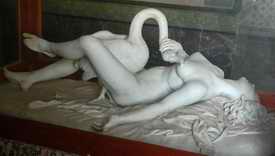 This is a serious, art-historical exhibition, which is why even potentially controversial material - such as certain photographs by Goldin showing nude children as part of her sometimes explicit work Heartbeat - is, according to the curators, acceptable.
 Jackboots Straw introduced the Criminal Injustice & Immigration Bill and Nick Herbert responded for the Tories.
 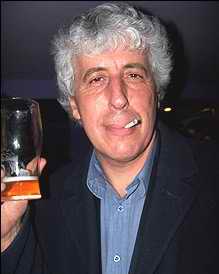 Interesting to see "Jackboot" Straw's proposal to introduce an amendment banning stirring up hatred on the basis of sexual orientation.
  As the Commons returns, the first item on the agenda is the government's plan to ban violent porn - it should be the first proposal kicked out.
  The Libertarian Alliance joins the denunciation of war on “violent” pornography
  Ministry of Injustice commission research 'evidence' from feminists

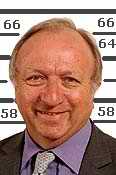
 Church mark 40th anniversary of Sexual Offences Act 1967
  Britain launched an attempt at the European court of human rights yesterday to overturn an 11-year-old judgment by the court which bans the deportation of suspected terrorists to countries where they face a risk of torture or degrading treatment.
  Bloggers on Dangerous Pictures
  'Experts' want more material defined as dangerous pictures

 To Government ban on "violent" pornography
  Textual rape fiction takes the rap
  Re-trial starts at the Old Bailey
  Martin Salter on curtailing basic freedoms
  Extreme pornography debated on the Today Programme
  David Lepper sets his sights on censoring YouTube
  A dangerous world of pictures
 Animal porn distribution to be banned
  Criminalising the Possession of Extreme Porn