|
18th December
|
|
|
|
How should the babe channels be regulated?
|
From Ofcom
|
 Ofcom has set out its next steps towards a potential tightening of the rules around so-called participation television channels and programmes. These services - typically quiz, psychic and adult chat services - rely heavily
upon interaction with viewers, usually by means of premium rate telephone lines.
Ofcom has set out its next steps towards a potential tightening of the rules around so-called participation television channels and programmes. These services - typically quiz, psychic and adult chat services - rely heavily
upon interaction with viewers, usually by means of premium rate telephone lines.
Ofcom’s issues paper has been published in the context of:
- a changing media environment where the boundaries between programming and advertising are becoming increasingly blurred as broadcasters seek new revenue streams. This has led to a rapid increase in the number of
participation television services
- an ongoing review by ICSTIS, the premium rate regulator, of television quiz services which seeks to assess whether pricing and the element of chance involved are
sufficiently transparent to viewers
- the Gambling Commission’s recent discussion document focusing on the boundary between lotteries and competitions. This seeks to ensure quiz television services operate
within the boundaries of gambling legislation.
Ofcom’s issues paper sets out, and asks for views on, the areas which Ofcom proposes to address in its full public consultation in the new year. Ofcom is also seeking views on the broader question of how the content of
these services should be regulated. Specifically, should these services be considered as editorial – subject to the Ofcom Broadcasting Code – or advertising – subject to the Advertising Code enforced by the Advertising Standards Authority (ASA). The
issues paper also asks for views as to whether there may be a more appropriate alternative way to regulate these services.
Ofcom’s Broadcasting Code, which applies to editorial material, allows as much freedom of expression as is consistent with
the law, provided it is editorially justified and the audience is given appropriate information. However, broadcast advertising regulation has greater emphasis on consumer protection, with specific rules to ensure that audiences are not misled.
The deadline for responses is 31 January 2007.
Ofcom's concerns about the babe channels are transcribed below 3.15 These services usually have the following features:
- they are unencrypted; one or more female presenters, often referred to on-air as “babes”, repeatedly asks viewers to call a premium rate number in order to talk to them (or to an offscreen “babe”)
-
the premium rate number is displayed on-screen throughout
- on dialling the number, a caller is presented with a number of options, including connecting to the onscreen presenter
or connecting to an off-screen “babe”. Before being able to speak to any “babe”, callers are often kept on hold for extended periods or must listen to lengthy recorded messages
- phone conversations with the
onscreen presenter are not audible to viewers; while the presenter is on the phone, there is either recorded music or another “babe” talks to viewers, usually doing little more than asking viewers to call in
-
we are aware that many of the phone calls – whether taken on- or off-air – are adult and sexual in nature, even pre-watershed
- the way in which the on-screen presenter is dressed and behaves, and the language
used, become increasingly adult and sexual as the day progresses, particularly after the watershed
- viewers are also repeatedly asked to send text messages or to text other premium rate numbers; it is often
unclear what relation these numbers have to the editorial content of the programme.
3.16 The adult chat genre has existed for a few years and pre-dates the Broadcasting Code. However, these services have proliferated and changed in format over recent years – with an increasing emphasis on the PRS
element and less on the editorial, and little (if any) direct interaction with the presenter. 3.17 Adult chat services are currently categorised as editorial and must therefore comply with the standards set
out in the Broadcasting Code; the rules regarding protection of under-18s and ensuring adequate protection against harm and offence are particularly relevant to this genre (however, these issues will be outside the scope of the consultation). With
reference to Section Ten of the Broadcasting Code, we currently have concerns about the prevalence in these programmes of messages to viewers to call a premium rate number. It is also unclear how the phone calls made by viewers contribute to the
editorial content of the programme. Often the television content appears to be little more than a continuing promotion for an adult chat premium rate service, particularly as most viewers appear not to get through to the on-screen “babe” but instead are
connected to an off-screen service. 3.18 The BCAP Advertising Code restricts the advertising of premium rate services of a sexual nature to encrypted elements of adult channels only. There is an argument that
these adult chat television services are essentially commercial in nature and, in effect, a form of advertising. It could therefore also be argued that one of the consequences of being categorized as editorial is that these services are currently
circumventing the advertising prohibition. Categorizing adult chat services as advertising, and therefore making them subject to the BCAP Advertising Code, would therefore have significant consequences for the genre, given that a number of these services
are currently operating on open-access, unencrypted channels.
|
|
9th December
|
|
|
|
XplicitXXX fined 35,000 for hardcore snippets
|
From OfcomWatch.
|
 Ofcom, has fined Digital Television Production Company Limited (DTPC) £35,000 for broadcasting material, under PIN encryption on XplicitXXX, that was the equivalent of BBFC R-18 content (Hard Core Porn). Apparently,
back on 13th December 2005 an impressive audience of 62 people tuned in the an episode of Rubber Ron which featured a 21 minute sequence showing graphic images of a woman using a dildo for vaginal self-penetration, One person complained to
Ofcom.
Ofcom, has fined Digital Television Production Company Limited (DTPC) £35,000 for broadcasting material, under PIN encryption on XplicitXXX, that was the equivalent of BBFC R-18 content (Hard Core Porn). Apparently,
back on 13th December 2005 an impressive audience of 62 people tuned in the an episode of Rubber Ron which featured a 21 minute sequence showing graphic images of a woman using a dildo for vaginal self-penetration, One person complained to
Ofcom.
It has been said before, but there has to be something wrong when we allow a regulator to ban the broadcast of a whole section of legally available films, which have been classified by the body charged with deciding if films can be legally
shown in the country - our Film Classification Board. Even when you read Ofcom's own research on this matter, it is hard to find the justification - but, don't forget, Ofcom is an evidence based regulator, that makes it
decisions on the basis of the evidence, nothing else.
|
|
28th November
|
|
|
|
|
Based on an adjudication from Ofcom
|
 Big Brother 7 , Channel 4, 18 August 2006, 20:00
 At
approximately 20:45 Nikki Grahame was evicted. A housemate, Aisleyne Horgan-Wallace, expressed her shock at this, saying to Nikki Grahame: you're fucking fantastic, they don't hate you . Shortly afterwards she said Nikki, you're fucking
beautiful . When Nikki Grahame reached the top of the stairs before the Big Brother doors opened she became shocked at the waiting crowd's reaction, saying I'm fucking shitting it , before exiting the house. Two
viewers felt that the broadcast of this language was unacceptable before the watershed. Channel 4 said that the Finale was broadcast live, without a delay. In previous series, it had been agreed by the Legal and Compliance
department that there would be a five minute delay in pre-watershed shows which featured:
- live links to the Big Brother house; and
- the eviction of one or more housemates; and
- where the remaining housemates were particularly problematic in terms of compliance
issues such as use of offensive language
However Channel 4 felt, though, that Big Brother Finale, which has a significant interactive element should be transmitted live so that viewers could witness their votes and voting results being tallied in real time.
Channel pointed out that it had received no complaints at all in relation to this incident, despite viewing figures averaging 6.4 million. The Ofcom decision referred to Rule 1.14 of the Broadcasting Code:
The most offensive language must not be broadcast before the watershed or when children are particularly likely to be listening
Turning to the Big Brother Live
Final, we considered the type of programme it was, and the kind of audience it was likely to attract. This was a highly-publicised and major television entertainment event attracting 6.4 million viewers. Significantly, 14% of this audience were children
(896000). Regardless of any information provided at the outset, a 20:00 start meant that viewers might have thought it suitable for a family audience. We took into account the Channel's compliance record bearing in mind the
great volume of material broadcast and the considerable protective effort in place. We do not solely rely on numbers of complaints as indicators of level of offence taken. But, we recognise that whilst the programme attracted a large audience, the
complaints received were few. Despite the significant efforts made by the broadcaster to prevent offence, during both an "awards ceremony" following the conclusion of Celebrity Big Brother in January 2006 and the
eviction of Craig Coates in Big Brother 6, contestant's use of strong swearing went to air unedited pre-watershed. These were reported in Bulletins 62 and 50 respectively. We appreciate that the broadcaster took steps to
issue an apology to viewers and has seriously reviewed the compliance issues surrounding future broadcasts of the Finale of this series. However, while recognising the lengths that Channel 4 had gone to in complying this series, it is surprising that the
decision was taken to broadcast the Finale without a delay, given its pre-watershed start, and the audience it was likely to attract. We were also concerned that the language was broadcast three times, without, apparently, any of the on-site production
team noticing. While we accept that certain housemates may not pose a significant risk of swearing, as Channel 4 itself noted in its submission concerning Big Brother 6, the eviction of housemates raises tension and the
possibility of extreme reactions. The swearing in this context was in breach of the Code.
|
|
25th November
|
|
|
|
|
From The Independent
|
 The telecoms and media regulator Ofcom has also taken action against Television Concepts, the company behind the adult station Look4Love. It has revoked the company's broadcasting licence and imposed a £175,000 fine as a
result of repeated breaches of the advertising standards code.
The telecoms and media regulator Ofcom has also taken action against Television Concepts, the company behind the adult station Look4Love. It has revoked the company's broadcasting licence and imposed a £175,000 fine as a
result of repeated breaches of the advertising standards code.
It said the licensee transmits adult material under the title "Babestar.TV Live XXX". The regulator said the material transmitted by the company was deemed "seriously
unacceptable".
Ofcom said: In particular, the extreme explicitness of the language transmitted was of such an adult sexual nature that it was wholly unsuitable for transmission on a free-to-air service.
The Advertising
Standards Authority referred the case to Ofcom, after voicing concerns about advertising on the channel. Including the fact that premium rate phone callers were invited to talk live to the models when in fact the programme seemed to be pre-recorded.
|
|
15th November
|
|
|
|
|
From The Independent
|
A ban on television adverts for junk food has been agreed by the media regulator, Ofcom, after three years of rancour between health campaigners and the advertising industry.
In a move which will have wide-ranging consequences for television
channels, advertisers and the health of the nation, the board of Ofcom agreed that advertising of foods deemed officially unhealthy should be halted before a nightly watershed to protect children.
Adverts for burgers, sweets and soft drinks will
now be banned from children's television in the afternoon. A ban on the adverts into the evening is likely, with the cut-off point expected to range between 7pm and 9pm. Update: Ofjunk
From The Telegraph Rules to cut children's exposure to junk food adverts were unveiled to a hail of criticism from the food industry and health campaigners.
The food industry said rules were "over the top",
could damage the quality of children's television and were riddled with inconsistencies. It also pointed out that regulations allowed fast food companies such as McDonald's to sponsor children's television programmes but banned adverts for olive oil,
raisins and Marmite. The rules, which have gone much further than expected, will cost broadcasters around £39 million in lost advertising revenu. Ofcom will use a nutrition profiling formula devised by the Food
Standards Agency to rule which foods are high in fat, salt and sugar.
The ban will cover programmes made for children, dedicated children's channels and shows with a "higher than average" proportion of child viewers.
Ofcom
believes its measures will lead to under-16s seeing 41% fewer junk food adverts. Children under nine will see 51% fewer under the changes to be introduced by the end of January.
Health and food campaigners, who have called for a total ban before
9pm, said the regulator had "betrayed children" by not going far enough. Dr Vivienne Nathanson, head of science and ethics at the British Medical Association, said: Some of the most popular
programmes amongst the under-16s are soaps which will not be covered by this ban.
|
|
3rd November
|
|
|
|
|
Based on an article from OfcomWatch
|
The Ofcom Board today announced that Chief Policy Partner Kip Meek will be standing down from the Ofcom Board with effect from early 2007.
Kip Meek joined the Ofcom Board in March 2003 and is responsible for Ofcom's content and standards, legal
and international functions.
|
|
1st November
|
|
|
|
|
|
|

|
|
Maggie looking sexy
|
Based on an article From Ofcom Friday Night With Jonathan Ross
BBC1, 23 June 2006, 22:45
Jonathan Ross interviewed the Leader of the Opposition, David Cameron. The presenter asked
him about the possibility that he had a crush on Margaret Thatcher in his formative teenage years and “ may have considered Margaret Thatcher in a carnal manner. . . . as pin up material ”. Jonathan Ross later interrupted David Cameron’s comments
about party policy with the question: But did you or did you not have a wank thinking about Thatcher?
251 viewers complained that Jonathan Ross’ line of questioning of David Cameron, including suggestive sexual references to Margaret
Thatcher, was vulgar, disrespectful and unfair to both parties. Viewers also objected to the inclusion of strong language and that the BBC did not edit out these elements of the programme.
In law Ofcom cannot consider
complaints of unfair treatment or unwarranted infringements of privacy made by third parties, unless those third parties are explicitly authorised to do so by a programme participant or someone directly affected by a programme.
Neither David
Cameron nor Baroness Thatcher – nor people acting on their behalf and with their authority – have complained to Ofcom about the interview. We are therefore not able to consider complaints made by members of the public that the interview was unfair to
David Cameron or Baroness Thatcher.
Freedom of expression means that broadcasters have the right to explore ideas providing they comply with the law and with Ofcom’s Broadcasting Code. The legislation requires Ofcom to balance the necessary
protection of members of the public from offensive and harmful material with an appropriate level of freedom of expression for broadcasters.
Jonathan Ross has a very well-established presenting style, which is deliberately provocative. The
decision by the BBC to schedule this series at this time of night is an indication to viewers that the programme may contain provocative material. We recognise that the interview with David Cameron may have attracted some people who were not regular
viewers of the series and who may have found Jonathan Ross’ comments uncomfortable. We also acknowledge that for some viewers the use of this language would be considered to be crude.
However, Jonathan Ross’ comments were made in the context of
an interview with a senior politician who is extremely experienced in handling the media. The interview was part of a late night chat show hosted by a presenter whose style is deliberately risqué, satirical and provocative – an approach with which
the large majority of the audience is very familiar. In the context of a chat show, with the interview itself being shown well after the watershed at 23:30, and in its regular slot, we do not consider that the content of the interview was so extreme that
it breached generally accepted standards.
It was also noted that the use of strong swearing in the programme was bleeped.
Not in Breach
|
|
17th October
|
|
|
|
|
Spotted by Sergio on The Melon Farmers' Forum
|
 From SFC
 Stitched Up by Channel 4 over Animal Farm
The RadarTV programme The Real Animal
Farm , the last in the Darker Side of Sex series, featured myself. I was stitched up.
1) I was labelled a pornographer - which I am not. I am a retired woman who works voluntarily full time as a charity coordinator. Being labelled a
pornographer will hardly do much to help the charity with our funding and credibility. I feel sure that when asked how I wished to be labelled, I would have said "Campaigner".
2) My quotes were used out of context to make me to appear
to be a bestialiy porn smuggler. I this I never been.
3) The infamous Julie Bindel, renouned for unreliable research and misinformation about matters sexual, was given more time to put forward her anti-sex propagana than I was given to explain my
views against censorship - and how can "films of dead women rotting in graves" be of relevance since this would be illegal and immediately investigated by the police?
The above leads me to the conclusion that this
"documentary" was a propaganda programme instigated by the Home Office and/or Labour Party lickspittles within C4 to persuade the public that the proposed "Extreme Pornography" legislation should become law.
I know that the
BDSM community is up in arms about the S/M programme in the Darker Side of Sex series, and the programme about "Snuff" movies was intentionally confusing to make the public nervous.
As a spokesperson of the Sexual Freedom Coalition who
is constantly being asked to contribute to and help with TV programmes, I shall in future be uncooperative unless they can prove that the documentary is not government propaganda. I advise others to do likewise.
Dr Tuppy Owens, April 22 2006
From Ofcom , Fairness & privacy cases The Search for Animal Farm , Channel 4, 12 April 2006
Summary: Ofcom has not upheld this complaint of unfair
treatment. This programme looked at the history behind the making of the pornographic film that became known as Animal Farm . Dr Tuppy Owens was interviewed for the programme.
Dr Owens complained to Ofcom that she was treated unfairly in
the programme. Dr Owens claimed that the programme described her as a 'pornographer' and implied that she had been a smuggler of bestiality videos. She also complained that footage from her interview was presented unfairly in the programme.
Ofcom
found the following:
Ofcom was not satisfied that describing Dr Owens as a pornographer was likely to have materially affected viewers' understanding of her in a way that was unfair;
Ofcom was not persuaded by Dr Owens' claim that
comments she made regarding the illicit importation of pornography included in the programme could have implied that she had smuggled bestiality videos into the country; and,
Ofcom did not consider that Dr Owens' contribution was misrepresented or
otherwise presented in a manner that was likely to result in unfairness to her.
|
|
16th October
|
|
|
|
|
Oh dear, do I detect a change of emphasis from not sticking their repressive hook into the Internet to unbelievable promises of a light touch From
IT Pro
|
Ofcom say they aren't going to rush into regulating web-based TV in the same way as broadcast
The regulator's head of telecoms technology, Chinyelu Onwurah, used a panel debate on emerging internet issues this week as an opportunity to reassure
the industry that the regulation of web-based TV is something it won't be tackling lightly: It shouldn't be a matter of the wholesale rolling over one set of regulation into another world , My natural reaction is hold on because I don't want to
see another huge wave of regulation unleashed. We are looking to avoid any knee jerk reaction which says the internet must stay the way it has always been or it says that broadcast television is the right model for regulating the internet.
Onwurah said that Ofcom's role is to protect consumers. But, in the case of TV on the net, to do so it must first understand the potential pitfalls and how to guard against them:
If regulation is required on the internet in the interest of end users and consumers, that regulation will develop as part of the normal process.
The internet has thus far evolved using a somewhat self regulatory model and Ofcom plans to
use the current debate as an opportunity for some self assessment.
We need to concern ourselves with the potential harm for consumers by education as well as self or co regulatory measures, said Onwurah. [This]
makes us reconsider our approach to regulation and the reasons for maintaining regulation in certain areas. So, as part of that we need to understand where regulation is necessary and where it may be less necessary. In Ofcom, we are certainly reviewing
what we are looking to achieve by existing regulation.
|
|
6th October
|
|
|
|
|
From Ofcom
|
The Ofcom Board today announced it had appointed Ed Richards as Chief Executive Officer with immediate effect.
Ed Richards joined the Ofcom Board in March 2003. In July 2005 he was promoted to Chief Operating Officer, in which role his
responsibilities included strategy, research, consumer policy, business planning, finance, human resources and Ofcom's functions in the Nations and Regions.
Prior to his appointment to Ofcom, Ed was the Prime Minister's Senior Policy Advisor on
Media, Telecoms, Internet and e-Government. Before that he was Controller of Corporate Strategy at the BBC. He also worked in consulting at London Economics Ltd.
Ofcom Chairman David Currie said: Ed has played a
critically important role in the establishment of Ofcom. He has a profound understanding of the markets we regulate and is ideally placed to lead the organisation into the future.
|
|
2nd October
|
|
|
|
|
See Ofwatch for the full story
|
 Ofwatch have now received a number of documents from Ofcom concerning various aspects of the broadcasting code and the R18 prohibition that were requested under the Freedom of Information
Act.
Ofwatch have now received a number of documents from Ofcom concerning various aspects of the broadcasting code and the R18 prohibition that were requested under the Freedom of Information
Act. Following the intervention of the Information Commissioners Office, Ofcom decided that it was in the public interest to release these documents after all. It would appear that
the claims made by Ofcom's company secretary and chief executive officer on two previous occasions concerning where the public interest lay were not entirely correct. Unfortunately (and yes there is always an 'unfortunately'
when discussing Ofcom) despite som e items of interest the documents released have a certain Swiss cheese quality about them in that 277 'redactions' have been made, meaning that Ofcom
have edited out most of the key information content that was not already in the public domain.
|
|
9th September
|
|
|
|
|
From Press Gazette
|
ITV News and GMTV have introduced a new policy on the use of footage depicting violent scenes after viewers complained to Ofcom over the broadcasters' use of CCTV images showing a knife attack on two students, in which one of the victims died.
Six viewers complained to Ofcom about ITV1, the BBC, Sky News and GMTV, whose news bulletins broadcast the images in June, on the day that the attackers were sentenced.
Ofcom said in a report: We welcome the assurances that tighter editorial control has been introduced over the use of violent images in pre-watershed news bulletins.
ITV defended its decision to use the CCTV images, as the issue of
knife crime was high on the public agenda when the story was broadcast. In addition, both the police and the victims' families made it clear that they wanted the media to air the images to demonstrate how dangerous the results can be when young men carry
knives.
Ofcom said that while it welcomed GMTV's assurances that lessons had been learned and the procedures had been changes, the particular handling of this story, within the regional news opt-out, was especially
inappropriate and unsuitable, and therefore in breach of Ofcom's Broadcasting Code.
|
|
8th September
|
|
|
|
|
From Ofcom
|
Ofcom commissioned research in order to understand the extent to which viewers utilise the current provision of content information at the point of consumption, and whether these methods of informing viewers will remain viable in the future in their
ability to protect people from potentially harmful or offensive material. The research was quantitative in nature with a multi-phased methodology that was designed to mirror the consideration process that takes place when
viewers think about these issues. Viewers use a wide range of information sources to provide information on programme content.
- Printed material dominates as an information source, weekly television listing magazines, weekly or daily newspapers.
- Use of the Electronic Programme Guide (EPG) and flicking through channels in
multichannel households is as frequently cited as printed material.
The first phase of the research asked for viewer's initial thoughts on a number of questions related to programme information The majority of viewers feel that current programme information sources are
adequate.
- Over half of people feel there is currently sufficient programme information and a majority of these are largely satisfied.
- However, just over a third of adults claim they would like more information on
programme content prior to viewing, with more people wanting 'a little more'rather than 'a lot more'.
- There were no major differences by platform user type (terrestrial versus multichannel versus Personal Video Recorder
(PVR) versus Video On Demand (VOD)), suggesting that perceived needs do not change with time-shifted viewing.
- However, there is a stronger desire for more information about content on the smaller cable and satellite
channels.
However, half of UK adults express some level of concern regarding programme content.
- When asked directly, half of adult television viewers expressed some level of concern regarding what is shown on television these days.
- The older the viewer, the more concerned they were.
- Female viewers were more likely to be offended than their male counterparts.
- Those in terrestrial households were more likely to be concerned than those in multichannel homes, however as the former tended to comprise older viewers, this could be an age-related finding, not a platform finding.
- Violence, bad language and sexual content were the issues most likely to offend.
- A third of people claimed to be offended at least once a month, 1 in 5 claimed to be offended less than every 6 months, and
a further 1 in 5 claimed to be never offended by what they see on television.
Programme information is considered helpful by many viewers in its ability to mitigate offence.
- Over half of all adult television viewers claimed that pre-transmission information helped to reduce potential offence.
- Programme information's ability to mitigate offence was felt more strongly by
parents and those in multichannel households.
There are stronger needs and concerns among parents on behalf of their children.
- Parents claimed they would like more programme information when considering viewing decision made for their children. However, they still showed high levels of satisfaction with current information.
- Parents were more aware of content control measures such as the 9.00pm watershed and age classification for films, than non-parents.
- Around half of parents spontaneously claimed they had some concerns regarding television content when considering their child's viewing habits. This rose to three quarters when prompted.
- The
same issues that offend them as adults, offend them as parents.
- Parents were likely to send their children out of the room if something they considered harmful or offensive was on television.
Once respondents had considered the issues in more depth they were again asked for their views. Deliberation led to a greater desire for programme information across all channels - particularly for
terrestrial viewers.
- There was an increase in dissatisfaction with existing programme information post deliberation.
- Perceptions of programme information’s ability to mitigate offence increased significantly
after the consideration period.
When given a choice, viewers express a preference for on-screen text based programme information.
- Viewers were presented with the options of text based information, symbols, age ratings or the existing EPG information.
- On balance respondents preferred the on-screen text based information option shown
to them, both before the deliberation period and after it.
- Text was thought to give more detail as to the nature of the programme content.
- The vast majority of viewers would also prefer all
channels to use the same information system.
|
|
24th August
|
|
|
|
|
Based on an article From Ofcom
|
 A listener complained that a track played by the radio station, Kiss 100, contained the lyrics “suck me off, fuck me off”. They felt that these lyrics were offensive and unsuitable for broadcast at a time when children were available to listen.
Kiss 100 said that it regretted that an unedited version of ‘S’Express’ had been aired. The station had a vigorous procedure to ensure that all music selected for inclusion during daytime was fully compliant with the relevant Code rules.
The broadcaster assured us that since this incident, steps had been taken to ensure that all non-playlisted tracks included in the Friday afternoon mixes were pre-vetted and either edited as appropriate or excluded if the content was not Code
compliant.
Rule 1.14 of Ofcom’s Broadcasting Code states: The most offensive language must not be broadcast (before the watershed or) when children are particularly likely to be listening.
Although we appreciate that the station
was introducing an initiative to include nonplaylisted material during daytime, more care should have been taken to thoroughly vet the material and exclude explicit or offensive language. However we welcome the broadcaster’s subsequent action and, in the
circumstances, we consider the matter resolved.
|
|
23rd August
|
|
|
|
|
Based on an article From Ofcom
|
 In two separate cartoons Texas Tom and Tennis Chumps there were scenes involving smoking. In Texas Tom, Tom tried to impress a female cat by rolling a ‘rollup’ cigarette, lighting it and smoking it with just one hand. In Tennis Chumps,
Tom’s opponent in a match was seen smoking a large cigar.
In two separate cartoons Texas Tom and Tennis Chumps there were scenes involving smoking. In Texas Tom, Tom tried to impress a female cat by rolling a ‘rollup’ cigarette, lighting it and smoking it with just one hand. In Tennis Chumps,
Tom’s opponent in a match was seen smoking a large cigar.
One viewer complained that these scenes of smoking were not appropriate in a cartoon aimed at children. Turner, the licensee for
Boomerang, conducted an extensive internal review of the Tom & Jerry library to reassess the volume and context of smoking in these cartoons. The licensee has subsequently proposed editing any scenes or references in the series where smoking appeared to
be condoned, acceptable, glamorised or where it might encourage imitation (for example where, in Texas Tom, Tom tries to impress by smoking). Turner believed however, that editing out all references to smoking, where such
references neither glamorised nor condoned, might adversely affect the value of the animation. Decision Rule 1.10 of Ofcom’s Broadcasting Code states: The use of illegal drugs, the abuse of drugs,
smoking, solvent abuse and the misuse of alcohol:
- must not be featured in programmes made primarily for children unless there is strong editorial justification
- must generally be avoided and in any case must not be condoned, encouraged or glamorised in
other programmes broadcast before the watershed, or when children are particularly likely to be listening, unless there is editorial justification
- must not be condoned, encouraged or glamorised in other programmes likely to
be widely seen or heard by under eighteens unless there is editorial justification.
We are not aware of evidence from research in the UK that shows a direct correlation between children who see smoking on television with a greater propensity to take up smoking. However, broadcasters and Ofcom are required to protect
those under eighteen and that protection is particularly important where the youngest children are concerned. There are concerns that smoking on television may normalise smoking. For precautionary reasons Ofcom expects broadcasters to generally avoid
smoking in pre-watershed programmes. We recognise that these are historic cartoons, most of them having been produced in the 40s, 50s and 60s at a time when smoking was more generally accepted. Depictions of smoking may not
be problematic given the context, but broadcasters need to make a judgement about the extent to which they believe a particular scene may or may not genuinely influence children. We note that in Tom and Jerry, smoking usually appears in a stylised manner
and is frequently not condoned. However while we appreciate the historic integrity of the animation, the level of editorial justification required for the inclusion of smoking in such cartoons is necessarily high. We will look at all such cases
individually. Given Turner's commitment to adopt a precautionary approach, we welcome its review of archive material and action taken to minimise the possibility of harm. Ofcom consider the matter resolved.
|
|
22nd August
|
|
|
|
|
Based on an article from the BBC & Ofcom
|
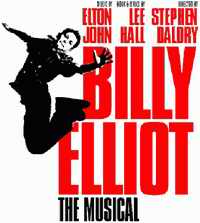 Sir Elton was talking about the first anniversary of the Billy Elliot musical live on Channel 4's The New Paul O'Grady Show.
He said that when one of the show's young stars asked his middle name, he replied it
was Hercules. His real name, Reginald Kenneth Dwight, made him sound like a banker, or a wanker, one of the two , he said. O'Grady ended the programme by saying: Sorry if it has been a bit raucous, ladies and
gentlemen.
About 20 nutters complained after the show to the TV station. A Channel 4 spokeswoman said: It is a live show and Elton is a guest but Paul dealt with it there and then and apologised. She added: I
don't think it is the strongest language, and we feel that Paul dealt with it appropriately. In addition 10 people complained to Ofcom to which Ofcom concluded: Ofcom’s research suggests that
while this word is considered quite mild by most, a small minority of sections of the community (e.g. older people) find it quite offensive. This series does tend to attract an older audience and, in this context, the use of the word “wanker” was
unfortunate. While the host did offer an apology of sorts, this was not definitive – And if we have been a bit raucous tonight, I’m very, very sorry but we’re highly excited really… - and went on to become a pitch for a late night series. It is
possible that a more formal apology may have lessened the offence caused to some viewers, but we also recognise that the comments accorded with the style of the show and the level of language used.
However we recognise the steps taken by the
broadcaster to prevent such language being used by guests in this live programme. We welcome the action taken by the broadcaster to re-emphasise the importance of these precautions. We felt that there was no need to intervene further on this particular
occasion. Ofcom consider the matter resolved.
|
|
16th August
|
|
|
|
|
Ummm... I wonder if she will represent the interests of those that enjoy hardcore on TV? From PublicTechnology.net
|
Ofcom has announced the appointment of Joyce Taylor as a non-executive member of its Content Board. Joyce will become the Content Board member for Scotland.
Joyce Taylor has extensive experience in broadcasting and has been the chair of Ofcom’s
Advisory Committee for Scotland since September 2005. Joyce will step down from the Advisory Committee with immediate effect. In the past she has been managing director of Discovery Networks Europe, CEO of Flextech Television and a non-executive director
of Mersey Television.
Under Section 12 of the Communications Act 2003 four non-executive members of the Content Board are appointed to represent to Ofcom the interests and opinions of people living in Wales, Scotland, Northern Ireland and
England.
|
|
1st August
|
|
|
|
|
|
|
All this 'justification' for a prohibition on R18 material, then they act on this 'justification' by allowing some R18 material. Beats me! Has anyone got an R18 screenshot that can be posted as proof of Ofcon
double speak? Letter from Francesca O`Brien of Ofcom to Rustin Mann on The Melon Farmers' Forum
In answer to your further points:
generally accepted standards
The Code does not have to change when "generally accepted standards" change in the community because the code refers to the generic phrase "generally
accepted standards" and not to specific standards that people find harmful or offensive.
If you have read our statement you will be aware that the broadcast of R18s on encrypted channels with protections was deemed compatible with generally
accepted standards by Ofcom:
Ofcom is therefore satisfied that generally accepted standards could be applied and that there are sufficient protections available now (e.g. scheduling, encryption, subscription etc) - to ensure that adults who do
not want to view this material do not..
research
We take a view as to whether to conduct research dependent on many factors. Importantly is the research necessary for us to compete work in the annual plan.
At present we
are considering further work on language eg different attitudes towards what is offensive language and the protection of children who participate in programmes. Both may assist us, broadcasters and viewers and listeners. It is not necessarily the case
that either project will go ahead.
The Code and TWF
Yes broadcasters regulated by Ofcom must comply with the Code and TWF ( with certain exceptions in the case of the BBC and S4C).
Ban on R18
This is fully
explained in our statement:
Ofcom ... concluded that the transmission of R18 material is compatible with Article 22 (1) of the TWF.
In the absence of evidence of “serious” harm to minors, there can be no justification for an outright
ban on this type of material under Article 22 (1) of the Television Without Frontiers Directive (“the TWF Directive”). However, if the material is caught by the test of being material which is “likely to impair” the development of minors (TWF Directive,
Article 22 (2)), then Ofcom still needs to be satisfied that suitable protections are in place to so as to ensure that minors will not normally see or hear such broadcasts, before the transmission of such material can be allowed.
Ofcom’s view is
that measures currently available, such as PIN security and a late watershed, are consistent with the requirement that minors will not “normally” access these broadcasts. Article 22(2) does not therefore require a prohibition on the transmission of this
material.
However, Ofcom is not bound to adopt the standards applied in other European countries. It must consider its policy in the light of the UK legislation and its specific duties under the Act.
"n addition to the European
provisions [above], UK legislation namely, the Act places specific duties on Ofcom, in particular it sets out a standards objective to protect the under-eighteens (Section 319 2(a)). It also requires Ofcom to have regard to “the vulnerability of children
and of others whose circumstances appear to Ofcom to put them in need of special protection” (section (3)(4)(h)). In light of this, if Ofcom is not satisfied that sufficient measures to protect the under-eighteens can be applied (for example, through
scheduling and/or security mechanisms), then R18 material should not be transmitted.
In conclusion, taking all the above into account, Ofcom considers there is a significant risk, that a least a proportion of children would be able to access
R18 material if it were to be broadcast under current security mechanisms. Given the strength of this material and the absence of evidence demonstrating that children could be effectively protected, Ofcom considers a prohibition of this material, in the
current environment and for the time being, consistent with its objective to set standards to protect the under-eighteens.
Ofcom anticipated that responses to this issue would be polarized. We have assessed the arguments carefully, with
particular reference to our statutory duties, the need to balance competing interests between the protection of children and freedom of expression and the available evidence including the recent research we have commissioned into the effectiveness of
prevailing security mechanisms in the UK (as outlined in detail elsewhere in this assessment).
In view of doubts about the effectiveness of those security mechanisms, we have concluded that a precautionary approach was an appropriate and
proportionate response to this strong sexually explicit material. Such an approach is consistent with that taken by Parliament when the “R18” category was introduced under the VRA (and see recent judgement of the Divisional Court on Interfact Limited and
Pabo Limited v Liverpool City Council [2005] EWHC 995 (Admin) where an approach designed to eliminate as far as possible the risk that such material might be viewed by persons under-eighteen and which confirms a wide degree of discretion to individual
member states in terms of restricting freedom of expression.
We believe that we would be failing in our responsibilities under the Communications Act 2003 if we were to remove the current prohibition on the broadcast of “R18” material at this
time. We consider that retaining the prohibition is necessary, appropriate, proportionate and targeted to an area where it is necessary, in all the circumstances.
However, we accept that future developments might make it possible for more secure
protections to be put in place in the future. We are therefore willing to consider whether to review this issue again in the light of relevant developments.
Accordingly, the broadcast of “R18” and “R18” equivalent material is not permitted at
present.
strength of R18s
Again we address this issue in our statement:
Overall, Ofcom acknowledges that PIN mechanisms in the current broadcast environment do provide protection for minors to some extent and should
therefore continue to be used as a form of protection against the sort of material currently broadcast, along with a watershed and clear information. But it should be noted that the potential harm/offence that could be caused from exposure to material
currently available in the broadcast medium is limited - because of the limited nature and strength of that material.
Conclusion
You express your belief that the prohibition on the broadcast of R18s by Ofcom licensees is
incompatible with the law. That is not the view of Ofcom. As our statement demonstrates we considered the legal framework very carefully and we believe that we have complied with the law.
|
|
21st July
|
|
|
|
|
From Ofcom
|
Ofcom have just published their annual report. On the subject of adult programming they say: In its first eight months of operation the new Code has had an encouraging start. It offers simpler
and clearer rules, supported by crisp guidance on how to avoid contravention and Ofcom looks forward to continuing to work with broadcasters in implementing the Code. Er excuse me...the only consistency I can see is that
all forms of adult programming adhere to unpublished Ofcon guidelines that are consistently at odds with the published guidelines. Some subscription adult channels are allowed to show R18 rated cunnilingus and some are too
scared to show 18 rated nudity. Free to air babe channels have an unpublished midnight watershed and can show near zero nudity. But the guidelines say that free to air channels can show 18 rated material after the 9pm
watershed. Yet a recent documentary shows them working to unpublished guidelines such as a prohibition on transparent pants. Ofcon continue on the adult theme:
The second significant decision
the Content Board considered was whether to allow the more explicit form of adult content, known by the BBFC classification as R18, on cable and satellite television. This decision centred on whether protection mechanisms PIN numbers and so forth
provided adequate security to prevent access by children. The Board concluded that, currently, for the strongest sexual material they do not, and therefore recommended to the main Ofcom Board that the restriction should remain. As technology develops,
the judgement may change. Also in today's news, Ofcom's outgoing Chief Executive, Stephen Carter, is departing this month, 3 months earlier than planned.
|
|
17th July
|
|
|
|
|
From The Guardian
|
Ofcom has appointed Richard Ayre, the former deputy director of BBC News, as one of three new non-executive members of its content board. He becomes the content board member for England
The second new appointee to the Ofcom content board is
Anthony Lilley, the chief executive of digital media production and consultancy company Magic Lantern. The third, representing Northern Ireland, is academic Dr Paul Moore.
The new appointments follow a review of the role of the content board
undertaken by Philp Graf following his appointment as chairman - and deputy chairman of Ofcom - in January. Graf's review outlined how the focus of the content board would be greatly expanded with digital switchover beginning in two years.
In
addition, two members have been reappointed. Sue Balsom, board member for Wales, is managing director of PR and publishing company FBA; and Pam Giddy, who is director of the Power Inquiry, the independent commission looking at democratic issues. A new
non-executive member is being sought to represent Scotland.
|
|
29th June
|
|
|
|
|
From America's Network
|
 The European Union is planning to seize regulatory control over the UK's communications sector in a plan that government officials have branded “harmonization by force,” a report from the UK's Daily Mail said.
The report said the idea was being
promoted by EU Commissioner for Information Society and Media Viviane Reding.
But regulators and senior industry figures were queueing up to scrap the proposals, the report said.
The plan suggested that national regulators should give up
powers to a new European central power. It would effectively be in control of regulating all broadcasting, telecom and the Internet, the report said.
The proposal is that Europe should be able to veto any penalty demanded by a national
regulator. We are not happy with this. The impact could be enormous, Alex Blowers, international director of Ofcom, the UK communications watchdog, was quoted as saying.
Giving every national decision a further layer of regulation would not
only rob local regulators of power but add a needless layer of complex red tape, Blowers claimed, according to the report. Update: Ofcom OffPensioned From The Telegraph
Ofcom is heading for a showdown with Brussels over plans for EU-wide regulation of the continent's €270bn (£180bn) telecoms industry.
The UK watchdog has been fearful for some time that the EU information society and media commissioner
Viviane Reding wants to create a single, all-powerful telecoms industry regulator.
Last night she confirmed those plans.
Ofcom is known to be concerned about aspects of plans by the EU to regulate some content carried on the internet.
Many of Reding's proposals have sparked outrage among telecoms companies, who accuse her of being a populist who fails to listen to the industry.
Speaking two days before she officially unveils her plans to reform the industry, Reding's most
controversial proposal was the creation of an independent European telecoms regulator to guide and instruct member states on how to apply EU rules: Variations of regulatory approach are today an obstacle to the internal market
and to effective competition. The most effective way to achieve a real level playing field for telecom operators across the EU would of course be create an independent European telecom regulator that would work together with national regulators.
|
|
28th June
|
|
|
|
|
|
|
First rate work from Ofwatch in getting Ofcom to reveal a little more about how they made the decision to ban R18s. More details and commentary at Ofwatch
 After pressure from Ofwatch, Ofcom have now published minutes from some of the key meetings to discussion the issue of R18s on TV.
 As far as the Content Board minutes were concerned it
would appear that there was considerable disagreement at Ofcom over what should have happen regarding the R18 issue:
T he (non unanimous) recommendation of the executive was: That the transmission of “R18” sex
material was acceptable under Article 22(1) of the TWF Directive i.e. the transmission of such material might not ‘seriously impair the physical, mental or moral development of minors’; and
That generally accepted security standards could be applied, so that members of the public would be adequately protected from offensive and harmful material. But that the executive had decided not to make a recommendation on the third test whether people under the age of 18 could be protected by means of adequate security mechanisms.
The Content board was divided over the first point, agreed with the second point but after considerable, the Content Board agreed that the current level of protection
available would not adequately protect people under the age of 18. It was also noted that should the R18 ban be lifted that Ofcom would need to identify what level/form of
protection would be required and that any such requirements would need to be potentially achievable by all broadcasters/platform providers. On balance (although the Board was
very evenly divided), the Content Board felt that there was insufficient evidence to indicate whether or not the physical, mental or moral development of minors might be seriously impaired by the transmission of such material, and therefore until such
evidence was available they should take a cautious approach to this issue.
|
|
27th June
|
|
|
|
|
So where is the midnight restriction in Ofcom's programme code? and where are the 'revised' guidelines published? The published guidelines allow free to air channels to broadcast 18 rated material after the 9pm watershed. There is a new forum devoted to the UK free to air softcore channels at The Babewatch Forum
From Ofcom
|
Babeworld TV , 11 April 2006, 22:15
A viewer complained about the explicit sexual content of this channel, which is transmitted free-to-air on satellite TV.
Response
 Babeworld said that it was unable to supply a recording of the relevant part of the channel’s output for 11 April 2006 . This was due to a technical failure by the company administering the channel’s compliance recordings.
Nevertheless, it
acknowledged that some of the content carried before midnight on Babeworld was “too explicit for our market”. As a result, it had changed its production and editorial partners, and the output was now being produced to revised guidelines.
Babeworld also confirmed that it was now producing its own compliance tapes, and was no longer dependant on outside contractors.
Decision
We welcome the steps Babeworld has taken to avoid any future failure to supply recordings.
It is a condition of a Cable and Satellite Licence that the licensee retains recordings of its output for 60 days, and
provides Ofcom with any material on request. Failure to supply the recording from 11 April 2006 is a serious and significant breach of Babeworld TV’s licence. This will be held on record.
Breach of Licence Condition 11
|
|
26th June
|
|
|
|
|
From Ofcom
|
The regulation of internet services is the subject of significant international debate. Consumers expect to be protected from fraud or other forms of harm; and their children protected from inappropriate content. To date, this protection has been
provided largely through a framework of domestic and international statutory regulation which has been evolving for decades. However, the global reach and open nature of the internet gives rise to some well-known problems, which cannot be addressed by a
translation of existing powers and structures. These problems include the ubiquitous availability of pornography and increased availability of illegal imagery (e.g. violent pornography, child abuse), and easier access to products and services otherwise
tightly-controlled like gambling or prescription drugs.
As the UK communications regulator, Ofcom has oversight of the wholesale and retail markets for internet connectivity. We also have a statutory duty to promote media literacy, a role in
encouraging audiences to connect to the internet, and in helping them learn how to manage the risks to which they are exposed when online. We therefore have a clear interest in the protection of consumers from harm when they use the internet.
Furthermore, the current draft of the EU Audiovisual Media Services Directive proposed an extension of a broadcast-like regulatory framework to audiovisual content delivered in other ways – and might therefore require statutory content regulation to be
applied to a broad range of internet services.
This document is a research report intended to inform the debate about the most appropriate ways to address the consumer protection challenges raised by the internet, such as those identified above.
It is a broad survey of the key internet consumer protection issues and the national and international approaches taken to tackling those issues across the world. It does not include policy recommendations, though we do comment on the varying success of
some of the initiatives adopted.
We can also draw some general lessons from the survey. There is no doubt that consumers will need to bear a greater degree of responsibility when they engage with internet services. Secondly, the broad range of
internet services – from e-commerce to VoD to email – will require a broad and flexible set of regulatory solutions. There is no single answer to the issues to which the internet gives rise. However, there are already many factors contributing to
consumer protection online, from the application of general law through to initiatives from individual internet players and collective industry bodies like the Internet Watch Foundation. We believe that such self-regulatory initiatives, allied to
effective media literacy initiatives and supported by general law, will continue to be the most effective way to deliver consumer protection.
|
|
21st June
|
|
|
|
|
Based on an article from The Times
|
Kiss FM humiliated a man on air in a hoax that Ofcom says is its worst breach of privacy case. The Kiss FM breakfast show has been given the largest fine to be imposed on a British radio station for serious breaches of broadcasting rules. Emap Radio, the
owner, was ordered to pay £175,000 for a hoax interview and failing to protect children from strong and sexually explicit language during the show, presented by the DJ Bam Bam who has now been fired.
Bam Bam, whose real name is Peter
Poulton, had 800,000 listeners. He was the London station’s star DJ for seven years but Ofcom, the independent regulator, found his show guilty of eight broadcasting code breaches in six months. One of his offences was appearing to condone group and
under-age sex when children were listening.
The most serious breach was when Bam Bam’s assistant, Streetboy, posed as a human resources officer and made a hoax call to a man to discuss his redundancy options. The man became increasingly desperate
as he was told that he was fit only for “flipping burgers”. When the item ended, the presenters were heard laughing and acknowledging that Streetboy had been dealing with this guy’s whole future and career.
Ofcom was angered that strong
language was broadcast despite being pre-recorded. Kiss FM was out of control, with management unable or unwilling to monitor its output. The regulator accused Emap of totally inexcusable broadcasts, which showed an almost wilful disregard by the
licensee for not only Ofcom’s codes but also the station’s audience.
But Ofcom was annoyed that Emap had not improved its performance after being fined £125,000 last year over offensive remarks made about the murdered Iraq hostage
Kenneth Bigley on its Manchester station. This time it fined Emap £75,000 for the hoax call and £100,000 for the seven sex and language breaches. The money goes to the Treasury.
|
|
13th June
|
|
|
|
|
Based on an article from the Daily Mail
|
 The BBC says it will start fining Radio 1 presenters who swear on air, and may even sack repeat offenders.
The action comes after the broadcasting watchdog Ofcom threatened regulatory action - with the possibility of fines of up to £250,000
- against the station following a series of complaints about bad language by star presenters such as Chris Moyles.
The regulator issued its warning after upholding complaints over three outbursts on Chris Moyles's breakfast show. In the first,
aired in January, he referred to women as 'dirty whores', while a few weeks later a guest used the words 'piss' and 'twat'.
Shortly afterwards Moyles angered some listeners a third time when he told a phone-in contestant that her children were
'fucking brats' because they were making too much noise.
In a separate decision, the watchdog also criticised Scott Mills's Radio 1 show over a hoax call in which a woman's son was called a 'little shit.'
Ofcom said the rulings were the latest in a number of findings against Radio 1. We have concerns about the number and in some cases, the seriousness of compliance issues that have arisen. Any future similarly serious compliance issues may result in the consideration of further regulatory action.'
Yesterday, in a bid to avoid that eventuality the BBC announced a new code of conduct for its DJs. Presenters who swear - even accidentally - will now be subject to disciplinary measures, while two transgressions in 12 months would result in
a fine. Repeat offenders face being taken off air altogether, it said.
Moyles escaped a formal reprimand for his latest transgression - calling the listener's children 'fucking brats' - because he apologised profusely on air immediately
afterwards.
Ofcom yesterday acknowledged that the outburst was a 'slip of the tongue'. Nonetheless, such language was unacceptable - particularly at a time when young children were likely to be listening, it said.
|
|
31st May
|
|
|
|
|
From Ofcom
|
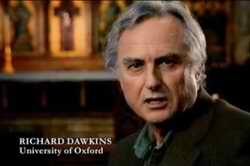 The Root of All Evil?
Channel 4, 9 January 2006 & 16 January 2006; 20:00 Introduction
This was a short series of two programmes presented by Professor Richard
Dawkins challenging, what he described as, "process of non-thinking faith". In the programmes he questioned why militant faith appeared to him to be on the increase and why religious people were allowed to teach their children their beliefs
from an early age.
Over the two programmes, 23 viewers complained to Ofcom that the programme:
- showed a negative portrayal of religious beliefs and called religious faith a virus and that this was both offensive and harmful
- contained inflammatory comments, slanderous remarks and atheist propaganda,
which resulted in possible incitement to religious hatred
- allowed an ill-informed presenter to treat religion with ridicule and scorn, and misrepresented religious views, which - along with disingenuous editing - offered no
opportunity for debate.
- allowed the presenter to air bigoted, intolerant, biased and anti-religious views
- attempted to promote religious (i.e. atheist) views by stealth
-
generally contravened Ofcom's rules on due impartiality and due accuracy
Response
Channel 4 said that the two programmes were a polemic series. It described Professor Dawkins as one of the foremost evolutionary scientists. He had gained prominence as a "professional
atheist" and was an ambassador for the rationality of science.
Channel 4 was confident that the proper degree of responsibility with respect to the content was demonstrated, in that the proposed content was considered at a high editorial
level and with advice from a lawyer. Decision
Broadcasters have the right to impart information and ideas and viewers have a right to receive them as long as the Code is complied with.
Overall, these programmes were serious documentaries, questioning the validity of religion. In such areas as political and religious debate, it is essential that broadcasters and viewers have as much freedom of expression as is compatible with the
law, to explore ideas. The programmes were clearly authored and the presenter had every right to challenge orthodox religion so long as there was a proper degree of responsibility and people's religious views were not subject to "abusive
treatment".
Furthermore, this was an authored programme about religious faith presented by Professor Dawkins who has a reputation as a noted atheist. This was made clear from the start and throughout both programmes. Professor Dawkins
regularly used expressions such as "believe (that)" and "I think (that)" signalling the polemic nature of these programmes.
With this in mind - and given Channel 4's general reputation, we concluded that such a challenging and
provocative series was unlikely to exceed the likely expectation of viewers to Channel 4.
For those viewers of Channel 4 who were unaware of Professor Dawkin's reputation, we recognised that the series title and the explicit presentation
information given before both programmes made it clear that this was a polemic which challenged religious faith.
From the complaints received, it is clear that viewers were able to engage with the challenging material, but did not necessarily
accept the conclusions of Professor Dawkins. However, this was not, in this case, a reason for finding that the programme breached the requirements of the Code. The degree of offence likely to be caused from content with a series which is presented by a
noted atheist and which is clearly signalled by the title and before and during the series as a polemic which questions religious faith and is within the likely expectation of the viewers for that service and series must be considerably reduced.
Taking this context into account we did not consider that the programmes had breached generally accepted standards as set out in rule 2.3 of the Code:
Some complainants stated that, in their opinion, the programme would incite religious hatred.
We appreciate that for some, such opinions may cause offence. However, the programmes contained no calls, direct or implied, to action -
militant or otherwise - towards a particular religion or to individuals or communities. The series was about ideas and religious philosophy and so did not, in our view, amount to the encouragement or incitement of the commission of crime or were likely
to lead to disorder.
Some complainants stated that the issues in the programme were not addressed with due impartiality and accuracy. However, the requirement for due accuracy and impartiality relates solely to news. Outside of news, only
programmes dealing with matters of political or industrial controversy and matters relating to current public policy are required to maintain "due impartiality". Therefore the requirements for due accuracy and impartiality (as set out in
Section Five of the Code) are not applicable to these programmes overall.
Taking all the above into account we do not believe the series was in breach of the Code.
|
|
31st May
|
|
|
|
|
From Ofcom
|
 Robin Hood - Prince of Thieves
TV3 Sweden, 5 March 2006, 13:45 Introduction
A viewer was concerned that this film was inadequately edited for the time
of broadcast. The film showed a close-up scene of a stabbing, the attempted hanging of a young boy, a sexual assault and included strong language such as "bollocks" and "fuck me".
Response
TV3 Sweden said that
it had erroneously broadcast the original version of this film, rather than the UK version which had been edited and rated a PG by the BBFC. The broadcaster accepted that some of the scenes and language were inappropriate for the time the film was
scheduled. This version of the film would not be shown again before the watershed at 21:00. [in which country? Sweden or the UK]
TV3 apologised for its oversight.
Decision
We welcome TV3 Sweden's
acknowledgement of its error and the review of procedures that it has undertaken. We believe that this resolves the matter.
|
|
26th May
|
|
|
|
|
Stephen Carter always had a way with fine words...But presided over some pretty shitty regulation... From the Guardian:
|
Dedicated adult channels aren't allowed to show explicit consensual sex. Why? Because porn's embarrassing and tawdry and we don't want that muck on our airwaves? Then ban it outright and have done with it. This present fudge just makes Ofcom look like
bigger idiots than the pornographers themselves. And that's saying something. From The Times Ofcom will announce today that Stephen Carter, its chief executive, will be leaving the communications regulator.
Carter, who has been
at Ofcom since February 2003, is set to leave in the autumn. It is understood that Mr Carter, who was previously chief operating officer of NTL, the cable company, he is keen to move back into the commercial world. [Maybe he should be appointed to head
up a UK adult channel]
It is not known who will replace Carter, and last night the regulator refused to comment on whether he would be leaving and who would replace him. Ed Richards, the former Downing Street policy adviser who is, in effect
Carter’s deputy at Ofcom, was recently sent on the obligatory Harvard management course.
|
|
16th May
|
|
|
|
|
From Ofcom
|
Five More4 Trail on E4, 26 September 2005, 00:10 shown during Six Feet Under
E4 transmitted a trail for its sister channel More4. The promotion, which lasted nearly a minute, started with two women, wearing only thongs, kissing,
fondling and embracing each other. As they lay on a bed, they engaged in foreplay, only to be interrupted when one of them lent on the remote control, turning on a news report on More4. They began to watch and then became engrossed in a report about the
price of postage stamps. They were then joined on the bed by the rest of the film crew who, it transpired, had been filming their activities.
A viewer complained that this trail, which was broadcast post midnight after Six Feet Under, featured
offensive and demeaning content. The complainant said that as this was a trail, rather than a programme, they had no prior information about the content which would have enabled them not to watch it.
Response
Channel 4 said that its
consideration of a new trail included not only the content, but also the time of transmission, the type of programming surrounding the trail and the likely expectations of the audience.
The broadcaster said that it was obvious from the outset
that the trail was of an adult nature. While further into the trail it was made clear that the two women were partially naked, the images were not explicit or graphic. They simply showed two women engaging intimately. Given the provocative nature of the
trail, its broadcast was restricted to a post 22:00 slot, to be scheduled with care between programmes with adult content.
Channel 4 said that it considered that the gentle, humorous although admittedly provocative approach, taken in the trail
was in no way out of context with the material frequently seen in programmes around the trail and at that time of night.
Ofcom Decision
Rule 2.3 of the Broadcasting Code states that in applying generally accepted standards broadcasters
must ensure that material which may cause offence is justified by the context . The rule also notes that appropriate information should also be broadcast where it would assist in avoiding or minimising offence. The meaning of “context” notes
that it includes (amongst other matters) the effect of the material on viewers or listeners who may come across it unawares.
We appreciate the trailer’s creative approach and the content’s humorous treatment – which would help mitigate
potential offence that might be caused.
While the images were certainly sexually strong in the context of a trailer, they were not as explicit as would be expected under encryption on “adult entertainment” channels. In itself, the imagery was not
of a nature that could be described as unacceptable for transmission on a channel like E4 after midnight . However, in this case the material appeared in a trailer and the scenes lacked the sort of context that would be provided within a programme - for
example that provided by storylines and character development in a drama. Viewers would therefore have had no likely expectation of what they would see. Furthermore viewers were not given the opportunity, through information about content to make an
informed choice about whether to watch.
While the “adult nature” of the content may have been apparent from the outset, its purpose – and that it was a trail - was not made clear until 48 seconds in. The scenes of “foreplay” between the two women
were detailed - as one woman lay between the other’s legs, there were close-ups of her crotch as well as of the other’s naked breasts.
Although Six Feet Under does contain adult themes (including strong language), it does not frequently
contain sexual scenes of a type shown in this trail. An audience for Six Feet Under would, therefore, not necessarily be expecting to encounter material of this nature. Therefore although accepting that E4 has an established reputation for showing
programmes with strong adult content, we consider that viewers of the channel at this time would not necessarily expect, or accept, such sexually strong material during a trailer.
In these circumstances, we consider, given the context in which
the material was broadcast, that information should have been provided to the audience. The trail was therefore in breach of Rule 2.3.
|
|
6th May
|
|
|
|
|
From Ofcom
Thanks to Jon
|
Five people required of eleven content board members (CBM), 6 days a month, £21k with a free sky+ family package, mainly London based meetings. Seeking:
- Experience or understanding of content in the digital age and its impact on audiences (this would be a breath of fresh air)
- A clear vision of future issues to be faced in content regulation. (IPTV, personal choice and the looming irrelevance
of Ofcom)
- A proven ability to make editorial judgments would be a significant advantage editorial board or production experience in the context of digital content recent senior level experience in new media.
(ie Ofcom would prefer to
maintain a closed shop - this rather conflicts with Ofcom rhetoric that Content Board members are ... drawn from diverse backgrounds across the UK, including both lay members and members with extensive broadcasting experience. ) - Challenges include new ways of delivering content. (read IPTV is coming fast)
Current members (profiles listed for just 7 of 11 members):
- A teacher turned quangocrat.
- The CEO of General Teaching Council for Scotland, native Scots Gaelic speaker (which implies strong religious connections given the make up of the active Gaelic region of Scotland)
- A former playschool
presenter
- A former BBC jounalist with an interest in religious broadcasting
- A democracy campaigner from Charter88
- The guy who launched the Discovery Channel in the UK helped create UKTV
- A former Border Television,
Director of Broadcasting.
Ideally balance would come from an adult content provider, although the CBM code of practise would then probably lead to their exclusion (through conflict of interest) on any relevant matter!
|
|
4th May
|
|
|
|
|
Part of response From Ofcom
|
Ofcom received 123 complaints about Dispatches - The New Fundamentalists , shown on Channel 4, 6 March 2006, 22:00 This edition of the Channel 4 current affairs strand was a personal view programme
authored by journalist Rod Liddle. He profiled what he termed “Evangelical Christianity”, examining the growth in Britain of what he described as a movement. He looked at how some Evangelical Christians view issues such as freedom of speech, education
(including the sex education of young people) and homosexuality. He suggested that the movement’s certainty of beliefs is leading to a growing intransigence which should be a cause for concern. Issues raised included:
- allegations that the programme was not duly impartial
- that it was offensive to Christians and their beliefs
- that the pre-broadcast trailers were inaccurate.
Current affairs programmes like Dispatches may air provocative journalism and viewers have a right to receive this as long as the requirements of the Broadcasting Code are met. Impartiality
The rules on due impartiality apply to ‘matters of political or industrial controversy and matters relating to current public policy’. Where this programme dwelt on education issues in particular, these rules applied. The fact
that this was a personal view or authored programme was clearly signalled to the audience at the outset as required by Rule 5.10. Rule 5.9 allows presenters of personal view programmes to express their own views on matters of political controversy or
matters relating to current public policy. It goes on to explain that due impartiality will be achieved in such programmes when alternative viewpoints are adequately represented either in the programme, or in a series of programmes taken as a whole.
An examination of the various discussions within this programme demonstrated that throughout alternative views were adequately represented, meaning that the rules on due impartiality were satisfied.
The latter half of
the programme concentrated on three City Academies run by Sir Peter Vardy, a prominent Christian businessman. These state schools have been the subject of intense debate because of their overtly Christian ethos. Ofsted has investigated the weight given
by teachers at the school to Creationist beliefs which critics say inform the entire curriculum at the school. Whilst Liddle certainly challenged the appropriateness of the schools – which under the Code he is entitled to do
– Vardy was also permitted to mount a strong defence of his initiative.
Overall, while Rod Liddle was able to take a position in the programme, his opinions and views were adequately challenged by others so that due impartiality was achieved.
Offence
In our view the programme did not subject religious views and beliefs to abusive treatment. Rod Liddle did undoubtedly make his case robustly – but he allowed his challenges to be debated
by his interviewees and also included positive comments. Overall, in Ofcom’s view, the programme did not seek to abuse religious beliefs but sought to critically analyse them. Trails
The
commentary in trails for the programme described people holding certain views as ‘The Evangelicals’ which might be taken to imply all Evangelicals. It also included the expression Evangelism (general Christian outreach practiced by all denominations)
instead of Evangelicalism (a particular approach to Christianity).
Broadcasters should be careful when they use such terms to ensure that they are not used out of context and therefore could cause offence. It is important to be clear what
specifically is meant when using terms such as ‘fundamentalism’, ‘evangelical’, ‘evangelism’ and ‘evangelicalism’. However, the use of these terms was not so misleading as to be a breach of the Code.
Not in breach
|
|
30th April
|
|
|
|
|
From The Guardian Charlie Brooker reviewing Dr Who spoof, Dr Screw on the Adult Channel
|
It's traditional for highbrow critics to feign ennui in the face of pornography. Well I ain't highbrow: I be dumb. As such, I don't mind admitting I didn't find Dr Screw boring. No. I found it morbidly fascinating.
What got
me was this: the pornstar cast are clearly having genuine sex - yet thanks to our hopeless censorship laws both they and the programme's editors are forced to perform a bizarre game of muckypup peek-a-boo as they do so.
The end result is a
nonsensical compromise. It's OK to see an erect penis, apparently, but you can't see it penetrating anything... except sometimes you sort of can. Cunnilingus is shown in fairly explicit detail, while blowjobs are hidden behind cupped hands or
strategically-posed thighs... except sometimes they're sort of not. It's like an orgy that can't decide how rude it wants to be.
I'm not complaining - just baffled. These regulations seem inherently pointless, like the American public drinking
law that leads winos to swig cans of beer from within brown paper bags. At the end of the day, they're still winos, still in public, still drinking beer. So what's the point?
Protection, presumably. Yet since the show is broadcast on a
restricted-access post-watershed channel requiring PIN code entry (and a payment) to view, then who, precisely, are we protecting? The mugs prepared to pay to watch it? That's so circular it makes my head spin.
Hardcore smut has been legally
available in Britain since the introduction of the R18 certificate six years ago. More recently, Michael Winterbottom's 9 Songs (which features more real sex than most marriages) was broadcast uncut on Sky Box Office (another PIN-restricted service). The
other week, a leering C4 documentary on notorious bestial porn flick Animal Farm included a close-up of a man's face while he had sex with a chicken. Yet dedicated adult channels aren't allowed to show explicit consensual sex. Why?
Because porn's
embarrassing and tawdry and we don't want that muck on our airwaves? Then ban it outright and have done with it. This present fudge just makes Ofcom look like bigger idiots than the pornographers themselves. And that's saying something.
|
|
19th April
|
|
|
|
|
From the BBC
|
An ITV1 children's drama which showed a character gagged and apparently hanging from coat hooks has been criticised by TV regulator Ofcom.
The January episode of ITV1's Bernard showed the lead character taking steps to
prevent a class bully from ruining a school jousting tournament. But Ofcom said the scene, in a school changing room, was "problematic". It added that broadcasters should be aware of showing dangerous behaviour which could be easily imitated.
The regulator said it was concerned that children could imitate this behaviour, without recognising the consequences.
Nicolette, the class bully in the show, appeared to be hanging directly from the coat hangers with rope, Ofcom said: Although the scene illustrated Bernard's success in foiling Nicolette's plans, this did not provide a sufficient editorial justification for this content.nd we have no reason to doubt this - this was not apparent from the footage,
the watchdog said.
|
|
5th April
|
|
|
|
|
From Ofcom
|
Ofcom today published its Annual Plan for 2006/7 which sets out nine priorities for the financial year April 2006 - March 2007. The priorities, which stakeholders broadly supported during the consultation phase
are:
- Spectrum release: auctions and liberalisation – releasing and liberalising spectrum, facilitating spectrum trading and raising awareness of the opportunities offered by a more market-led approach to
spectrum management.
- Implementation of the Strategic Review of Telecommunications – promoting competition and innovation in voice and broadband services by ensuring effective implementation of
the Undertakings offered by BT Group plc.
- Continued deregulation – continuing to explore opportunities to reduce and better target regulation.
- Next-generation
deployment – understanding how the next generation of telecoms networks and services are evolving and considering the implications for regulation.
- Public service broadcasting: future
developments – work will include: a financial review of Channel 4; the development of Ofcom’s proposal for a Public Service Publisher; the conclusion of work on the television production sector; and further research on local
television.
- Content delivery – understanding how new methods of delivering internet and media content are creating opportunities for innovation.
- Protection of
citizens and consumers – taking enforcement action, promoting media literacy, handling complaints and carrying out research to understand better the varying needs of different groups within the UK population.
-
Availability and access – identifying areas where market failures make intervention necessary, informed by research into the needs of different consumers, including older people, the disabled and small and
medium-sized enterprises.
- International engagement – seeking to influence the way that regulatory policy evolves, in particular: the new EU directive on TV and other audio-visual content; the
revised EU framework for electronic communications; and international negotiations on spectrum, including the Regional Radio Conference 2006.
The Annual Plan 2006/7 publication follows eight weeks of public consultation. Ofcom received more than 50 written responses to its proposals and more than 380 people attended nine separate public events around the UK.
|
|
4th April
|
|
|
|
|
From Ofcom
The Paul O’Grady Show
ITV1, 6 December 2005, 17:00
|
A viewer complained that this magazine programme featured an interview with the actor Charles Dance in which he used the words “shit”, “wanking” and “bitch”. The viewer thought that this language was unacceptable for the time of broadcast.
ITV said that this was an unfortunate and unwelcome element to this show. The production team had taken steps to establish whether Charles Dance would be likely to swear. They had been assured that this was not the case. On the evening, they
again made it clear to him that there should be no strong language. ITV sometimes pre-recorded guests who it was felt might be likely to use such language, but it was felt that Charles Dance would be unlikely to do so.
Paul O’Grady made it clear
to Charles Dance after he said “shit” that it was not acceptable to swear. The actor appeared to accept that he’d made an error and to understand. Inexplicably, he went on to swear again. At that point the production team asked Paul O’Grady to finish the
interview as quickly as possible, which he did. During the break Charles Dance’s microphone was turned down so that if he did swear again the audience would not hear him.
ITV apologised for any offence caused.
Ofcom concluded:
We agree that the swearing was unacceptable for broadcast in this programme, broadcast at this time of day. However ITV took reasonable precautions to ensure that such language was not broadcast during this early evening show. The
broadcaster’s compliance record with this series demonstrates that its efforts were generally successful. We consider the matter resolved.
|
|
24th March
|
|
|
|
|
From the Daily Record
|
Radio 1 DJ, Chris Moyles, has been reprimanded for calling newsreader Georgina Bowman a "slut" during his breakfast show.
Ofcom investigated his joke, made during a hand-over in November, after four listeners complained
that it was offensive A BBC spokesman said: This comment was part of the light-hearted atmosphere that the team sought to create.
|
|
21st March
|
|
|
|
|
From The Guardian
|
Channel Five was yesterday rebuked for airing gruesome scenes of plastic surgery before the 9pm watershed. Brand New You featured five women sent to Los Angeles to be transformed by
surgeons, dentists and stylists.
But media watchdog Ofcom said explicit, close-up scenes of surgical scissors cutting through flesh and skin being lifted away from the face were unacceptable for children who might be watching.
Five failed in
its appeal against the verdict, arguing that the series, shown at 8pm, was preceded by an on-air warning and that the scenes were justified by context.
|
|
21st February
|
|
|
|
|
From The Scotsman
|
The BBC was censured yesterday by Ofcom, the media watchdog, after a number of performers used bad language during live coverage of last summer's Live 8 concert.
No time delay was used for the broadcast and the language,
which sparked 400 complaints, was heard by young viewers before the 9pm watershed.
Madonna broke the swearing ban when she shouted Are you fucking ready, London? as she came on stage, while Johnny Borrell, lead singer of Razorlight, said:
I say sign the fucking petition in reference to calls to ban world poverty. Snoop Dogg repeatedly chanted Get your motherfucking hands in the air.
The BBC said it regretted the offence caused to viewers, but also blamed a
"confrontation" with the organisers for the fact that its key staff missed the performance by Snoop Dogg.
By the time the scale of the problem with Snoop Dogg's performance had become clear, the Corporation said it was felt that the
moment for a full apology had passed, and that to have returned to the issue would have merely drawn further attention to the original offence.
BBC officials told Ofcom they had approached some performers before the concert over the issue of
language, but had not been given access to all the stars.
Snoop Dogg's record company had assured the BBC the rapper would do "TV versions" of his songs, without swearing.
However, Ofcom criticised the BBC for not imposing a
time delay, failing to ensure a senior editorial figure was monitoring output, and not giving an apology during the broadcast.
In a separate ruling, ITV soap opera Coronation Street was cleared by Ofcom following the use of the term
"poor white trash" by an Asian character, a remark which prompted 500 complaints.
Ofcom said that while the term had obvious racist overtones, it could also be used in context to describe a "low socio-economic group".
Glasgow radio station Xfm apologised to the media regulator after broadcasting an Ice Cube song containing "fuck". The station's owners said the song had been mistakenly labelled as a "clean edit" in the station's computer system.
BBC Radio 1 breakfast DJ Chris Moyles was reprimanded by station managers yesterday after using "fuck" in conversation with a caller.
|
|
7th February
|
|
|
|
|
Based on an article from the Sunday Express
|
Ofcom was criticised last night for planning to let broadcasters police themselves. It will no longer handle complaints about sex and violence on commercial channels. The BBC already deals with its own complaints under its charter.
John Beyer, director of the nutters mediawatch-uk said: ‘Ofcom wants to become an appeal only regulator’. If someone is aggrieved with something on TV they will have to write to the broadcaster. ‘Then if they’re not happy with the
response they can take it up with Ofcom. But what the watchdog is actually trying to do is cut its workload because it is costing broadcaster so much to keep Ofcom going. Its an economy measure. ‘It should be acting in the interests of the public, not
the broadcasters. The question is, are they going to preside over a situation where standards continue to go downhill, or are they going to stand their ground and say this is unacceptable.’ Former Home Office Minister Ann Widdecombe said the move could
open the floodgates on offensive material. ‘Ofcom is toothless and far too close to the broadcasters. We need an independent body taking a tough line.’
|
|
1st February
|
|
|
|
|
Read more on Ofwatch
|
Following on from demands made by the Information Commissioner last year Ofcom have finally published censored versions of the minutes for the first 21 content board meetings. Unsurprisingly not a lot has been revealed , however one or two
snippets are noteworthy and some of the censored sections make amusing reading. It would seem that paper CB 65(04) looked at safe guards and how security might be regulated if Ofcom decided to allow the transmission of R18 material. The content board
also requested to see some R18 content for themselves (yet were not so keen on allowing others the right to view it on subscription television). Some members of the content board also asked about the availability of such content on the web and
(presumably) were informed that access was very easy indeed. The prize for the most censored minutes must go to the ninth meeting held in Riverside house on the 20th January. The agenda merely
states that the purpose of the meeting was "The hearing and determination of a complaint", whilst the "minutes" are shown below, in their entirety, as published by Ofcom - a true masterpiece of censorship that will strike a cord with
those of you who are familiar with the way in which our transparent regulatory friends deal with adult service issues. Strangely the announcement of the £25,000 fine imposed on Playboy for showing R18 rated content was made in early February, but
whether the two are connected remains a secret. Why does the regulation of adult service cause such regulatory paranoia? Present
|
Richard Hooper
|
Chairman
|
|
Matthew MacIver
|
Member
|
|
Adam Singer
|
Member
|
|
Pam Giddy
|
Member
|
|
Kip Meek
|
Senior Partner, Competition and Content
|
In Attendance [Withheld from published minutes] By Invitation Appearing on behalf of The Number [Withheld from
published minutes] Appearing on behalf of [Withheld from published minutes] [Withheld from published minutes] Observers from Ofcom [Withheld from published minutes]
Preliminary points 1. [Withheld from published minutes]. 2. [Withheld from published minutes]. The Hearing
3. [Withheld from published minutes] 4. [Withheld from published minutes]
|
|
24th January
|
|
|
|
|
From Brand Republic
|
GCap has apologised for causing offence over a talkback session on Capital Gold in which the presenter described a young, single mother as a "dirty slapper".
Two listeners complained about the programme, which was
broadcast at 10.30pm on October 19. They were offended by remarks made by the presenter, Alex Belfield, as well as by language used by two callers in response to his remarks.
The topic under discussion was teenage pregnancies and Belfield
referred to a report on a 16-year-old girl who had given birth to triplets.
During the discussion, he condemned the girl in the article and expressed his condemnation of young, single mothers in general, including expressions such as "dirty
little tart" and "dirty little slapper". It was in response to these views that two callers to the programme then referred to him as a "cunt".
GCap Media, owner of Capital Gold, has apologised for any offence to listeners
and fully acknowledged that the presenter's comments had been inappropriate and unacceptable.
Ofcom said that had taken the issue very seriously, and that the phone-in element was suspended for the rest of the programme that evening and internal
measures had since been put in place to address the issues raised by the broadcast: However, the presenter's handling of the discussion was seriously ill-judged and the broadcaster should have taken appropriate steps to prevent callers from using such
language live on air. ruling.
It found the station in breach of the rule on general standards.
|
|
21st January
|
|
|
|
|
From The Guardian
|
The Department for Culture, Media and Sport yesterday confirmed that Lord Currie would remain as chairman of media regulator Ofcom for a further two years beyond the end of his contract in 2007.
There had been speculation that Lord
Currie would step down when his original five-year contract runs out in July next year.
|
|
12th January
|
|
|
|
The talk had the interesting snippet about a possible review of law. Has anybody else heard anything about this?
|
|
|
There are some possible areas of the law which might be amended in terms which would suggest a minor extension to the IWF's existing remit, specifically:
- The proposed new law on possession of extreme adult pornographic material
- The proposed new law on incitement to religious hatred
- A possible review of the law on incitement to racial hatred
- A
possible review of the law on protection of minors in relation to adult pornographic material
- A possible review of the law on the test of obscenity in relation to adult pornographic material
By Roger Darlington on OfcomWatch Ofcom has regular Friday lunchtime sessions open to all its staff at Riverside House when different guest speakers are invited to address topics concerning regulation of communications. Today I gave a
presentation entitled "The Regulation Of The Internet". The event was chaired by Jeremy Olivier, Ofcom's Head of Multimedia, who is responsible for the study of multimedia platforms that I described in an earlier posting as "the
ticking bomb inside Ofcom". The room was bursting with perhaps 80-90 staff and the event was filmed to be shown on Ofcom's Intranet (The Loop) for staff working in out buildings. I was really impressed and encouraged by the enthusiasm shown, the
interest in my analysis, and the quality of the questions.
This presentation was informed by my six-year term from 2000-2005 as the first independent Chair of the Internet Watch Foundation, a body which exists to combat illegal content on the Net
in the UK. However, it did not represent the policy of the IWF and indeed its scope went well beyond the remit of that organisation. The presentation was prompted by the growing debate about whether existing controls on Internet content adequately meet
the concerns of users and what happens when the heavily regulated world of broadcasting collides with the virtually unregulated world of the Internet.
The essence of my case was that:
- The Internet cannot – and should not – be regulated like ‘old’ media.
- However, more can and should be done, especially in relation to harmful content.
- New initiatives should be low-cost, practical and promoted on a voluntary basis.
- Most problematic Internet content is not illegal or harmful and users must take appropriate responsibility while being advised on tools and techniques.
I have worked up a supporting text to the presentation which you can read here .
|
|
12th January
|
|
|
|
|
From Ofcom
|
Weeds , Sky One, 11 October 2005, 22:00 Found to be in breach of programme code for not warning viewers that the programme features the word 'cunt'. Introduction
This new drama series follows the life of Nancy, a
suburban mother in California who, recently widowed, turned to drug dealing to try and make ends meet. A viewer was concerned at the apparent endorsement of drug-taking, underage sex and the use of seriously offensive language, including the word
"cunt".
Decision
We consider that this series was appropriately scheduled at 22:00, well after the watershed. Although a comedy, it dealt with the themes of drug-taking and underage sex in a realistic manner which did not
endorse or promote these activities.
Whilst audience research does show that generally young adults are more tolerant of seriously offensive language, the word "cunt" is considered to be one of the most offensive words to any audience.
In the context of this drama, we do not believe that most viewers would have been offended by the use of this language, but there was a possibility that some viewers would have been unprepared for the amount and level of swearing in the first episode of
this new series.
The Broadcasting Code requires broadcasters to provide "appropriate information to assist in avoiding or minimising offence" if programmes contain material which may cause offence. Announcements alerting viewers to
potentially offensive material may not always be necessary.
This was a new drama, broadcast on a general entertainment channel, which was unfamiliar to the audience and it contained strong offensive language from the outset, including the word
"cunt". The pre-publicity for this series would have given viewers an indication of the themes of this drama, but neither this nor the title of the series would necessarily have indicated the strength of language used. Given these factors, we
believe that information informing viewers of the content should have been given. This would have provided viewers with the necessary information to make an informed decision whether to view this programme.
Breach of Rule 2.3 (generally accepted
standards "appropriate information")
|
|
|