Hot Movies
Free Sample Minutes
Hot Movies

 Australia: News...
  2007

 Hardcore DVD
 Online Sex Shops
 Magazines
Sex Shops List
Satellite X Channels
Internet Video


Melon Farmers Icon

 Home BBFC
Nutters  Sex & Shopping
 Index TV Liberty  Sex Sells News
 Links UK Criminalising Extreme Porn  Sex Sells Reviews
 Forum World Criminalising P4P  Sex Shops List  

world map

World Censorship World News US News UK News
  World Censors Australia News Press Freedom
  World Campaigns European News Internet Blocking & Circumvention

Å

Æ Æ  2007
Australia News  2005  2006  2007  2008  Latest
   1 page  1 page  1 page  4 pages   
Previous Next Latest  

30th December    Australia Loses Face...
 
Faces of Death 2,3,4 banned

Permalink

FAces of Death 2 DVD coverThe Australian censor has banned episodes 2,3,4 of the reality series, Faces of Death.

The distributors had picked up the videos after the first film of the Faces of Death series was passed R18+ earlier in the year (after previously being banned for 27 years).

In the UK, Faces of Death 1,2,3 were passed 18 after cuts and Faces of Death 4 was passed 18 uncut.


24th December  Update:  Verifying Immature Legislation...
 
Australian internet and phone content to be self censored

Permalink

ACMA logoThe rules are meant to protect children from online content, but what the Communications Legislation Amendment (Content Services) Act of 2007 actually does is put a serious burden on adults to self-police, while making it much harder for online publishers to freely share their work. Worse yet, it's another misguided attempt to make the Internet into a playground for children where they won't need supervision.

Beginning January 20, anyone who publishes commercial content online or for mobile phones in Australia will be required to make sure that adult-oriented content isn't seen by minors. This isn't just porn we're talking about, either: the new rules essentially port Australia's movie ratings over to online content.

Once the new rules are enforced, content producers in Australia as well as Australian web surfers will have to live by these categories:

  • Sexually explicit content is prohibited (X18+, and Refused Classification content); this was already the case.
  • Softcore R18+ content must be hidden behind a verification service that checks for ages 18 and up.
  • So-called "mature audience" (MA15+) content must also be hidden behind a verification service that checks for ages 15 and up.
  • The ACMA will use "take down," "service cessation" and "link deletion" notices to force publishers to remove content or access to content that is the subject of a complaint.

One reader who contacted Ars lamented the fact that adults will have to give up a little privacy to be in compliance, too. Users will prove their age by supplying their full names and either a credit card or digital signature approved for online use. Content publishers are even required by law to keep records of who accessed R18+ content and with what credentials for a period of two years.

While the law targets commercial content providers, the rules also apply to "live content" services, aka, IRC services and chatrooms. It's also not clear what counts as commercial content: bloggers who turn a buck would seem to qualify. According to documents from the ACMA, the rules apply to hosting service providers, live content service providers, links service providers and commercial content service providers who provide a content service that has an Australian connection.

One wonders if the rules aren't a complete waste of time, however. Australia cannot enforce the rules in other countries, which in the long run seems to only give Australians an incentive to hosting their businesses somewhere else.


22nd December    Tacky Comments...
 
Nutters whinge at jokey nativity advert

Permalink

Betta Electronics advert stillAustralian nutters have branded a television commercial depicting the baby Jesus tossing gifts back at the three wise men as tacky and offensive.

The ad for electronic goods retailers Betta Electrical recreates the Christian nativity scene, showing three wise men offering gifts to baby Jesus as he lies in the manger.

The commercial, which has angered Anglican and Catholic leaders, shows Jesus throwing gifts out of the manger as the words Give a better gift flash on the TV screen.

Christian leaders criticised the ad, calling it a tacky and offensive exploitation of religious imagery which perverts the true meaning of Christmas.

This ad comes within the orbit of tacky Christmas things, senior Sydney Anglican bishop Glenn Davies told The Daily Telegraph: The gifts that the wise men were giving were appropriate for a king, so the notion that Jesus would reject them is absurd.

A spokesman for Catholic Archbishop of Sydney Cardinal George Pell said the use of Christ was inappropriate: The advertisement is interesting because it shows how commercialised Christmas has become.

But Julieanne Worchurst, marketing manager at BSR Group which operates more than 170 Betta Electrical stores, said the ad was intended to be a tongue-in-cheek and humorous approach to the gift giving season. We accept that this could have been seen as offensive, but that was not the intention at all. The ad was never intended to upset or disrupt people's Christmas.

Worchurst said while the company had received just two complaints from viewers.


22nd December    Age Old Censorship...
 
Australian internet and phone content to require age verification

Permalink

ACMA logoNew restrictions on online chatrooms, websites and mobile phone content will be introduced within a month to stop children viewing unsuitable material.

From January 20 new laws will be in effect, imposing tougher rules for companies that sell entertainment-related content on subscription internet sites and mobile phones.

It is the first time content service providers will have to check that people accessing MA15-plus content are aged over 15 years and those accessing R18-plus and X18-plus content are over 18.

The Australian Communications and Media Authority (ACMA) will be able to force content providers to take down offensive material and issue notices for live content to be stopped and links to the content deleted.

But ACMA chairman Chris Chapman said adults will not be affected by the new laws: In developing these new content rules, ACMA was guided by its disposition to allow adults to continue to read, hear and see what they want, while protecting children from exposure to inappropriate content, regardless of the delivery mechanism.

Providers of live services, such as chatrooms, must have their service professionally assessed to determine whether its "likely content" should be restricted.

Personal emails and other private communications would be excluded from the new laws and so would news or current affairs services.


21st December    Immature Blame...
 
Internet pornography cited in Australian rape case

Permalink

Australia Victore state flagA youth said to be "in the thrall of a sexual fantasy" when he repeatedly raped a young woman after breaking into her house as she slept, has been jailed for eight years.

Andrew William Bowen, 20, was yesterday sentenced to between eight and 11 years' jail for what the sentencing judge described as an evil and heinous crime.

County Court Judge Damian Murphy said Bowen was pre-occupied with sexual fantasy depicted in downloaded internet pornography -- images that polluted his immature mind and led to his evil crime.

Bowen, then 19, stalked his 21-year-old victim for two weeks before confronting her as she lay in bed in the early hours of March 17. Bowen had drunk most of a bottle of scotch and had taken half an amphetamine tablet before assaulting the woman.

A week before the attack, Bowen accessed websites depicting rapes and information on how to avoid leaving evidence at a crime scene.


16th December  Update:  Labor Goggles...
 
Australia gears up to oppose ISP level filtering

Permalink

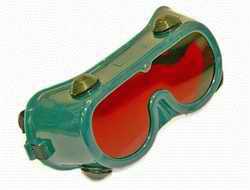
GogglesAustralia's internet industry group will this week launch its bid to force Labor to rethink its internet filtering policy.

Internet Industry Association's Peter Coroneos said the organisation would meet Labor's new Digital Economy Minister Stephen Conroy this week to brief the federal Government on mandatory ISP-level internet filtering.

It's premature to say anything more at the moment, except that there are concerns in the industry on implementing anything that could be unworkable, Coroneos said.

For a decade, the IIA has been fighting legislation that would force internet companies to act as censors and filter internet content.

Last August the coalition began supplying software to screen content as part of $190 million plan to shield children from online sex predators and pornography.

Around that time, Senator Conroy said that if elected, Labor would introduce laws requiring ISPs to provide "clean feeds".

After the election, the IIA has cranked up its anti-filter lobbying.

The internet industry has long maintained that ISP-level filtering is unworkable. Chief among their concerns is that it would clog internet services at a time when the market is demanding faster broadband.

Dale Clapperton, chair of online civil liberties group Electronic Frontiers Australia, said that the internet filtering systems were too unreliable and gave the government too much power to control what adults could view online.

Clapperton said its policy documents indicated that internet users would be required to opt out of using the blacklists, and that it was not clear what sort of content would be included in them.

It's not the Government's place to tell adult Australians that they aren't allowed to see or read certain content, Clapperton said.


12th December  Update:  WotNext Nudity?...
 
The Government order an investigation

Permalink

Telstra logoThe Federal Government has ordered an investigation into a Telstra website that sold amateur porn videos for $1.

It came after revelations that Telstra's WotNext site had become a marketplace for smut peddlers who went halves with the telco on the takings from downloads on to mobile phones.

Telstra, still part-government owned, was forced to take the site down after intense backlash from family groups. The site was back online by the afternoon with restrictions.

Communications Minister Stephen Conroy ordered internet watchdog Australian Communications and Media Authority to investigate.

Before the site was taken down almost all the most popular videos featured women in various states of undress.


9th December    Underground Censor...
 
Australian censor bans 7 films

Permalink

Ashley and Kisha DVDEarlier in the year, the Australian censors banned 7 films. They were submitted for screening at this years Melbourne Underground Film Festival.

The films in question were:

  • 60 Second Relief (2007)
  • 70K (2006)
  • >Ashley & Kisha: Finding the Right Fit (2007)
  • The Farmer’s Daughter (1976)
  • The Schoolgirls' Report (1970)
  • Sex Wish (1976)
  • Whore (2007)


5th December    WotNext...
 
Nutters claim kids cam download porn from Telstra

Permalink

Telstra logoTelstra has been caught out supplying supposedly porn videos through its website WotNext.com.au. Telstra is charging $1 to download "amateur porn" video clips of naked women sunbathing and wrestling, Daily Telegraph has reported.

Telstra launched WotNext in January this year as a site for young bands to promote their music. However, eight of the 10 most-viewed clips hosted on the site involve women in states of undress.

Nutter  groups have accused the carrier of exploiting young internet users and demanded the Rudd government intervene.

Women's Forum of Australia director Melinda Tankard Reist told the paper: The film clips on the site treat young women as sex objects ... all delivered through a part-owned government communications provider.

The Australian Family Association said that by running the site Telstra was rotting the minds of young men as well as women. Telstra are commercially exploiting young people," association spokeswoman Angela Conway told The Daily Telegraph: They're deliberately sexualising young people in the most worrying way purely for commercial exploitation.

However, Telstra said the website was not supposed to show porn and had ordered a review into its content guidelines. Some of the current videos and the descriptions on WotNext are an unintended consequence of the user generated site and fall short of community expectations, Telstra spokesman Peter Taylor said: But the clips themselves, they didn't show nudity, they didn't show sex, they were in no way soft porn. It's all material that would be classified M or below which is the industry standard.


4th December    Uncool Nutters...
   
Nutters attack mobile phone game for teen girls

Coolest Girl in SchoolAn independent game developer has hit back at claims her upcoming mobile phone game encourages teen pregnancy and drug use.
Coolest Girl In School, a role-playing game designed for mobiles, recently gained international notoriety after the Australian Family Association blasted it for being "grossly irresponsible".

The game's creator Holly Owen was "surprised" by the attack, but has revealed that none of the game's critics speak from experience: We were really surprised at the lengths people went to condemn the game when no-one has actually played it yet, said Ms Owen, creative director of Champagne For The Ladies: I believe it was even accused of causing pregnancy, which I find hilarious.

Coolest Girl In School is based around a high-school theme that, according to Owen, justifies the controversial content: If we left out things like sex and drugs and rock n' roll... then it would really be a game about teachers and homework and pimples, which would be boring and not represent the whole theme.

Owen is adamant that the game does not contain content that would warrant a ban: As much as you can play around, it's a mobile phone. It's not pornography, it's not going to graphically depict many of the things that can happen in the game, and it's a little bit tongue in cheek, I don't think we've got words that would make it an 8:30-timeslot-for-TV kind of situation. I don't think the F-word is mentioned.

Owen said: The other thing that's struck me, in terms of all this (media) attention, is how many people are speaking for young women, but no-one's actually speaking to or with young women about this.

Coolest Girl In School is planned for release before Christmas via a premium-rate SMS number.


25th November    No Body is Perfect...
   
Least of all the Australian censor who banned it

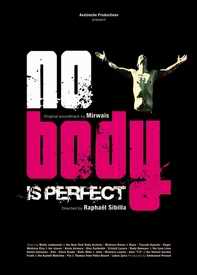
No Body is Perfect posterNobody is perfect is a 2006 French fetish documentary by Raphaël Sibilla

Accent, the distributors set the scene by with a statement from the director and producer:

WARNING The images you are about to see may shock or offend some of you, despite the fact that they were shot with great respect for the individuals depicted, and with their wholehearted consent. This film demanded five years’ research and two years of shooting, all over the world. Each location, individual and act was filmed without staging, without effects. Everything appears as witnessed by the director during his journey. We confined ourselves exclusively to practices in which consent was mutual and in which coercion and force played no part.

The Australian censor has recently banned the film with the following comment:

In the Board's majority view this film warrants an 'RC' refused classification

The Guidelines state that films containing sexual activity accompanied by fetishes or practices which are offensive or abhorrent will be refused classification

The Guidelines also state that at the X 18+ category "fetishes such as body piercing, application of substances such as candle wax, 'golden showers', bondage, spanking... are not permitted".

In the Board's majority view this film contains actual sexual activity at approximately 5 minutes, 17 minutes and 35 minutes.

It also contains a number of depictions of strong fetishes:

  • Bondage at approximately 20 minutes and 24 minutes
  • Candle waxing at approximately 21 minutes
  • Body "modification" in the form of scarring the body and bisection of a penis at approximately 42 minutes
  • "Blooding" at approximately 47 minutes: a group of three women is shown on stage and covered in blood. One female kneels on the floor. A female stands above her and cuts her wrist with a knife and the blood flows into the face, mouth and onto the head of the female kneeling below.
  • Golden showers at approximately 55 minutes
  • Body piercing - in the form of inserting hooks into the back and suspending the body in the air . at approximately 50 minutes, 53 minutes, 68 minutes and 73 minutes.
  • The fetish of "apotemnophilia" (sexual arousal from having a healthy body part amputated) is discussed at approximately 71 minutes. A male shows his toeless foot and fingerless hands and discusses how he "gets a tool and snip and his finger drops off". He states that he would be willing to have this filmed.
  • At approximately 73 minutes a young female and male stand apart back to back and have the hooks which are inserted into their backs chained together. They then have a tug of war and the flesh is stretched to the point of tearing and blood oozes out.

Minority view:

In a minority view of the Board this film warrants an R 18+ classification with consumer advice for high-level sexual activity, high-level sexual themes, disturbing images.

This view holds that the film is a bona fide documentary that catalogues a range of unusual sexual practices and fetishes that while offensive are not offensive to the extent that they should be banned This view notes that "some material classified R 18+ may be offensive to sections of the adult community".

Also, the sexual activity in the film is sufficiently obscured, lacking in detail or brief such that the general rule at R18+ of "simulation, yes - the real thing, no" can be set aside.


23rd November    Wounded...
   
Soldier of Fortune: Payback passed after cuts

Soldier of Fortune: Payback gameLast month, Activision's ultra-violent shooter Soldier of Fortune: Payback was banned by the Australian Classification Board.

It seems Soldier of Fortune's fortunes have been resurrected, however, with Activision Australia today releasing a statement saying a cut version of the game had been reclassified as MA15+ for strong violence, coarse language, and sexual references. MA15+ is the highest rating a game can be given in Australia.

An Activision Australia spokesman said the cut version of the game featured reduced rag doll physics, no dismemberment with enemies (alive or dead), and toned down blood effects.

Soldier of Fortune Payback will now be available in early 2008.


22nd November    Liberty and Democracy...
   
The LDP is committed to getting politicians out of the bedroom

Liberty & Democracy PartyThe Liberty and Democracy Party (LDP) has vowed to legalise pornography and overhaul prostitution laws if it gains any control after Saturday’s election.
The fringe party’s Queensland Senate candidate John Humphreys said the current laws were absurd: Every other political party has an unhealthy interest in our sex lives. The LDP is committed to getting John Howard and Kevin Rudd out of our bedrooms.

It is already legal to buy X-rated videos in Australia. However, in one of our more stupid laws, it is illegal to sell X-rated videos everywhere except the ACT.

The current laws against prostitution are also absurd. The sex lives of Australians should be no business of the government.

We understand that pornography and prostitution go against the moral and religious beliefs of some Australians. However, we do not generally believe that it is appropriate to enforce religious views on other people.

So long as nobody is hurt, people should be left relatively free to live their own lives.


10th November    Nutters Down Saint's Row...
   
Police chief rants at computer games

Saint's Row computer gmeA teenager armed with a knife hijacks a car and goes on a murderous spree, killing as many as possible.

It's just a scene from the computer game Saints Row, but New South Wales Police Commissioner Andrew Scipione fears this sort of role-playing has the potential to warp the decision-making processes of people who become immersed in it.

Like other nutters before him, his concern is that games such as Saints Row, Street Fighter and Grand Theft Auto desensitise users to reality and to the consequences of violence.

I just find it worrying that we see fighting in the street and we're horrified, yet we go out and buy this game (Street Fighter) and put it in our Christmas stockings for our children, Scipione said: I'm not a psychiatrist . . . but there is potentially some correlation (between violence in computer games and violence in reality).

Scipione has questioned how a young person who spends hours a day living in a fantasy world, often one where killing is involved, can learn to deal effectively with confrontation in real life, particularly if affected by alcohol or drugs.

They spend their time playing a game where you steal a car and shoot people during a bank robbery, and then they step outside (into the real world), he said: We shouldn't be surprised when they walk out and act like (the computer game). The violence is excessive, and I really believe that it is detrimental to people's long-term health.


8th November    Not Enough Information...
   
Moss Report finds Australian freedoms are limited

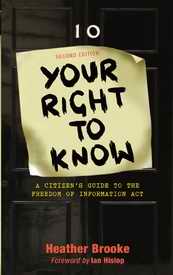
Your Right to Know (a UK book)A major report by Irene Moss, commissioned by Australia's Right to Know media coalition, has found serious flaws in Australia's ability to enjoy free speech.
The coalition commented on the report:

The Moss Report is a comprehensive, independent, compelling and deeply troubling study of the limitations on free speech that now confront all Australians. It confirms Australians are not allowed to know enough about how governments at all levels of our society function and how their courts dispense justice.

Without this information, Australians are hampered in their ability to make properly informed judgements about government policy, legislation or the effectiveness of courts. The report confirms our suspicions that there is a serious slide into censorship and secrecy in government and by the judiciary in Australia.

Australia ranks behind other democracies like New Zealand, the UK and Canada when it comes to the level of information citizens can get. This is not acceptable. We should be second to none. Why is it that the people of these countries can be trusted with information that Australian governments and courts don't want us to know?

As a new, independent study, it is therefore a highly valuable basis for renewed public interest in the issues and further consultation with decision makers about the need for reform. The media coalition has already begun consultations with state and federal governments, the judiciary and our public service, to urge them to be more forthcoming with information that is relevant and important to the public they serve.


18th October    Hostage to Fortune...
   
Soldier of Fortune: Payback banned in Australia

Soldier of Fortune: Payback gameAustralia's restrictive ratings classification system for games has struck again. This time, Activision's upcoming first-person shooter Soldier of Fortune: Payback has been hit by a censor ban.

A Classification Board spokeswoman said the board ruled that Soldier of Fortune: Payback's playing impact... was a high impact which exceeded the MA15+ classification. Some specific examples included close range shooting with substantial blood spray, blood splatters onto the ground and walls, [the ability to] target various limbs of the opponent which can result in dismemberment, and large amounts of blood sprayed which comes from the stump but victims sometime stay alive.

The game has a Mature M rating for a US release on 13th November 2007

Update: Passed 18 by the BBFC

24th October 2007

The UK censor, the BBFC, passed the game uncut with the comment:

Soldier of Fortune: Payback is a first person shooter in which the player takes the role of a mercenary fighting through various real-world war zones. It was passed '18' for strong bloody violence.

The player is equipped with a variety of weapons which are capable of inflicting bloody injuries on your opponents: enemy soldiers can be decapitated or dismembered by the player's attacks. BBFC Guidelines at '15' state that 'violence may be strong but may not dwell on the infliction of pain or injury.' The violence here is strong and it does dwell, relentlessly, on the infliction of pain and injury.


6th September   Californication...


Californication publicityAustralian nutters watch by candlelight

Based on an article from News.com.au see full article

Australian TV advertisers have supported Channel 10's new program Californication despite religious groups yesterday calling for a boycott of the show.

Ten maintained that advertisers had not complained about explicit sexual, drug and moral references.

The Australian Christian Lobby’s managing director Jim Wallace had called for advertisers to be “held accountable” for their support of the show: There will be calls to boycott sponsors of the show. And I’ll be leading the calls. (If they are concerned about standards) they should not be sponsoring this show. He said that he had organised someone to record last night’s episode in order to identify all advertisers.

The show, starring David Duchovny as a sex-addicted novelist and father suffering a mid-life crisis, features nudity and the opening scene saw a nun performing a sex act during a dream sequence.

Catholic priest Father John Fongemie led a candlelight vigil with 40 parishioners outside Ten's Sydney studio during Monday's episode.


16th October  Update:  Californication Beyond the Pale...
   
Australian authority to investigate nutter complaints

Californication publicityThe satirical show, Californication, featuring  David Duchovny made an impat in Australia with four sex scenes when it first went to air in August.

Its opening sequence depicted Duchovny's character Hank Moody praying to Jesus in front of a giant crucifix while a nun performed oral sex on him.

Parent and Christian groups say the US show is inappropriate for Australian screens, even in its late-night broadcast slot of 9.30pm.

The heated response to the show included complaints from more than 40 companies, including Holden, Arnotts, Nestle and Woolworths who pulled their advertisements.

The media authority, ACMA, has now confirmed an investigation would be launched.

The letter, signed by Andrew Power, the authority's assistant manager of assessment content, said the inquiry could take several months.

Festival of Light nutter spokeswoman Roslyn Phillips said: There is still a long way to go. We made our complaint in writing, and Channel Ten responded to the complaint, but ACMA will launch an investigation. We are happy with this move but not happy with the show. We don't like the way the Catholic Church is treated, it's beyond the pale. The show can't be shown late, it has to be pulled. The way it's treating religion and sex is just harmful.

Network Ten said the show was a ratings winner, consistently attracting close to one million viewers. A network spokeswoman said the show abided by all codes and practices.


1st October   Australia 'Bans' Gay Videos...


Out logoVideo store investigation reveals that niche videos are effectively banned due to small customer base
From The Age see full article

A small Melbourne video store, Out Video, drew the attention of the federal Attorney-General's Department for selling and renting imported titles that have not been classified in Australia.

Bureaucrats may be doing their job, but by acting against a small niche video shop, they have inadvertently exposed critical flaws in our film classification laws.

Out Video markets films primarily directed at the gay and lesbian community. Many are produced overseas and never achieve general or selected release in Australia. And because of the prohibitively high cost of classification, they never get classified.

As a result of the Attorney-General's intervention, Out Video says nearly half their stock will have to be shelved permanently.

This highlights two major flaws in Australia's classification regime:

1. The regime has not adapted to a marketplace that allows media to be accessed through more than just domestic broadcasters and distributors. Consumers demand access to an increasingly wide selection of entertainment from overseas, and they can get it through the internet.

2. Our classification laws are not designed to accommodate small markets. Instead, the classification processes are optimised for large, general-release films. The system simply doesn't lend itself to small-run films, and the law unfairly harms businesses trying to service niche markets.

The targeting of Out Video by the A-G's Department should give it and the OFLC impetus to review the classification laws. With a vibrant and diverse international entertainment sector, these laws should not blanket-ban content. Such a policy makes a mockery of the liberal legal principle that all things should be legal unless there is a reason to make them illegal.

Many of the films these niche providers import have already been classified in the UK, US and Canada. So one possible solution is to recognise comparable classifications from other media-exporting countries.

But a preferable outcome would be the elimination of mandatory classification. If consumers demanded classification to guide their decisions, then distributors would have a commercial incentive to seek it.


21st September   Police Filtering...


Australian government logoAustralian Police to black list crime related websites

From Crikey

The Australian Government continued down the slippery slope towards internet censorship yesterday by introducing bill to give the Australian Federal Police the power to nominate terrorism or crime related websites for filtering.

The internet industry code currently governing online content already provides for filtering of pornographic and offensive content. But this filtering is voluntary, not mandatory.

At the moment, internet service providers who want to be designated "family friendly" by the Internet Industry Association have to offer their customers one of a range of approved PC or server side commercial filters. And these filters are periodically updated according to an Australian Communications and Media Authority black list. Yesterday’s bill would merely allow the AFP to add terrorism or crime related sites to that black list. But why would aspiring terrorists and criminals willingly install a family friendly filter onto their PC?


16th September   Banned from DVD...


Banned from Television VHS coverReality DVD banned by Australian censor

From Refused Classification
The uncut region 1 DVD is available via US Amazon

The Australian Classification Board have banned the reality documentary Banned from Television. This was also banned by the BBFC back in 1999

Review from Amazon US see full article

This fifty-four minute DVD contains twenty-five chapters with situations ranging from an undercover police video at a strip club to a shark attack on a student, from a collapsing tower at a Deep Purple concert in Chile to several scenes of police brutality in South America. The most gruesome scene involves a woman who, in a hurry to get wherever she needed to go, accidentally jogs into a speeding train. You can see from the video clip of the accident why she failed to stop in time, but it is still brutal to watch and highlights the reason your parents always told you to look both ways before crossing the street. When I read about this scene before purchasing the DVD, I knew exactly the footage I would see because one of those cable channels that always show various documentaries covered this train accident in a program some time ago. Of course, on cable the scene cut away right before impact. Here you see it from start to finish, and it is a powerful statement on how carelessness has the potential for tragic consequences.


15th September   Looking South...


Northern Territory state flagNorthern Territory reviewing porn law

From ABC see full article

The Northern Territory Government is reviewing its pornography laws to see whether tougher regulations are needed to stamp out illicit porn traders.

The announcement comes as new bans take effect today on all hard-core pornography in remote Aboriginal communities.

The Northern Territory has the most relaxed porn laws in Australia, without a licensing system to regulate the industry.

Attorney-General Syd Stirling says his department is studying the ACT's regulatory scheme with a view to taking a similar model to Cabinet.


22nd June   Racial Discrimination...


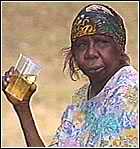
Aboriginie with drink
Rife in the Australian Government

From the BBC see full article
See also Australian Government Report [pdf]

Australia is to ban alcohol and pornography in Aboriginal areas in the Northern Territory in a bid to curb child sex abuse. All Aboriginal children in the territory will be medically examined.

The new proposals follow a report last week which found evidence of abuse in each of the territory's 45 communities. Last week's landmark report identified a wide range of social issues that contribute to child sexual abuse. They included unemployment, poor health and nutrition, overcrowded housing, substance abuse and pornography.

Local police officers were accused of turning a blind eye to a "rampant informal sex trade" between Aboriginal girls aged 12 to 15 and non-Aboriginal local mineworkers, who paid the girls in alcohol, cash and other goods. Alcohol was used as a "bartering tool" by black and white men for sex with under-age girls, the report added.

Prime Minister John Howard said the federal government would take over the administration of Aboriginal communities for the next five years so that the new laws would be strictly enforced. For the last decade, Aboriginal communities have by and large been allowed to govern themselves.

Aboriginal leaders have expressed outrage at the new measures: It's another knee-jerk reaction from our government to a very serious issue, the director of the Crossroads Aboriginal Ministries in Sydney, Ray Minnicomb, told the BBC: To ban alcohol on Aboriginal communities, where that ban has already been in place for the last 20 or 30 years by the Aboriginal people themselves, is a bit silly. [Mr Howard] would have to ban that in the cities and towns where white people live with Aboriginal people in order to make it effective.

Under the new measures, the sale, possession, transportation and consumption of alcohol will be banned in indigenous communities for six months.

Hardcore pornography will also be made illegal and all publicly-funded computers will be searched for pornographic images.

Welfare payments would be contingent on children attending school and new rules would dictate how they are spent to ensure that young people are properly fed and clothed.


26th June   Update: Monumental Lie...


Aboriginie with drink
Eros Association is unimpressed by porn ban

From AVN see full article

The Eros Association, one of the adult industry's key lobby groups, has spoken out against a recent ban on pornography aimed at aboriginals in Australia's Northern Territory.

The move has been met with predictable support from Christian lobbyists. Aboriginal leaders argue that the decision is discriminatory.

Officials are now threatening to expand the ban to larger cities such as Canberra.

According to a recent report, the Eros Association said the pornography industry in the country is strictly controlled and regulated. Foundation spokesman Robbie Swan told ABC Australia that the real issue is the distribution of illegal pornography that does not comply with regulations. Swan said. And for the Prime Minister and the Christian Lobby to say that R-rated, X rated material from Canberra is the problem is just a monumental lie.


11th July   Update: Fair's Fair...


Aboriginie with drink
Everybody should be discriminated against equally

Based on an article from AVN see full article

Former Nationals leader John Anderson is calling for Prime Minister John Howard to extend restrictions on hardcore porn in Australia's Northern Territories to a nationwide ban.

Howard proposed the ban as an attempt to fight child sex abuse among the country's indigenous communities. The move has been met with support from Christian nutters, but Aboriginal leaders argue that the decision is discriminatory.

You can't restrict this to just Aboriginal children, Anderson told The Australian. The effects happen in non-indigenous communities as well as indigenous communities. I think what comes out of this is we are now conceding that there's a problem with this stuff, and frankly I think that all Governments ought to have a long hard look at it again.

According to the Nationals official website, Anderson is - surprise, surprise - a practicing Christian who is very conscious of the need for politicians to keep faith with the community.

Update: Rushed

8th August

The proposed aboriginal discrimination laws are being pushed through with minimal opportunity for debate


10th August   Update: Australia Goes Primitive...


Aboriginie with drink
Anti porn bill is extreme, discriminatory and dishonest

Based on an article from AVN see full article

The bill presented to the Australian Parliament Tuesday would brand anybody caught with five or more pornographic items in the aboriginal communities of the Northern Territory a "trafficker," punishable by up to two years in prison.

Introduced to the Parliament by Indigenous Affairs Minister Mal Brough, the draft laws would prohibit the delivery of pornographic materials into the area, and charge anybody possessing the forbidden five or more items with trafficking, regardless of whether they have any intent to profit from them.

Meanwhile, possession of less than five pornographic items could still earn perpetrators a fine of between $5500 and $11,000 under the new bill.

This ban applies no matter where material is being sent from, Brough said. We have to stop material at its source, by preventing mail order companies sending material into a community, as well as residents or visitors sending or taking material into a community.


18th August   Update: Racial Discrimination Approved...


Aboriginie with drink
Australia passes to deny freedom to Aborigines

Based on an article from Border Mail see full article

Repressive changes for Northern Territory Aborigines have been signed off by Federal Parliament, ushering in a new wave of intervention in indigenous communities.

The laws were passed on an unusual Friday sitting of the Senate after a marathon 27 hours of debate.

They include the controversial Commonwealth takeover of indigenous township leases, removal of the Aboriginal land permits system, quarantining of welfare payments for neglectful parents and bans on alcohol and pornography.

The measures were announced in June by Prime Minister John Howard in response to the Little Children are Sacred report, which exposed chronic sexual abuse in remote communities. But as the laws were passed, a co-author of the report told an Aboriginal health conference she felt betrayed and sidelined by the Government’s refusal to address the document’s 90-plus recommendations.

Pat Anderson branded the measures: just a further form of abuse. What we have is a prime minister and his ministers who don’t have a heart. Their approach isn’t going to nurture any kind of development — nothing.

Community Services Minister Nigel Scullion hailed the passage of the laws as an historic occasion, saying they would lift a “veil of silence” around indigenous suffering.

Senator Scullion admitted this week the Northern Territory legislation was discriminatory, but warned the measures could not go ahead if anti-discrimination laws applied.

While supporting the package, Labor tried to make the laws subject to the Racial Discrimination Act. They also tried to guarantee “just terms” compensation for Aboriginal people whose land would be seized.


8th September   Update: Discrimination Day...


Aboriginie with drink
New porn laws start 14th September

Based on an article from AVN see full article

The federal government will put its new pornography bans for Aboriginal communities into effect on Sept. 14. Australia is using print and radio ads to warn Northern Territorians of the upcoming bans.

The discriminatory ban, proposed by Australian Prime Minister, John Howard, is supposedly an attempt to fight child sex abuse among the country's indigenous communities. The move has been met with support from Christian lobbyists. Aboriginal leaders argue that the decision is discriminatory.

Under Prime Minister Howard's initiative — which was passed into federal parliament last month — hardcore pornography will be completely banned, and any computers that are publicly funded will be checked for pornography. The sale, possession and transportation of alcohol in the Northern Territory will also be banned, along with tighter restrictions on welfare payments. The bans will be enacted for six months, after which the policy would be reviewed.

According to The Age, people caught in possession of prohibited material will face fines ranging from $5,500 to $11,000. People caught in possession of five or more prohibited items will be automatically considered traffickers, even if they are not seeking financial gain out of supplying the material, and will face up to two years imprisonment.

In addition to the educational advertisements, a 24-hour information line has been established to provide advice and information on the new policy.


17th September   Update: Discriminatory Hypocrisy


Aboriginie with drink
Australia votes
against human rights for native peoples

From the BBC see full article

The United Nations General Assembly has adopted a non-binding declaration on the rights of indigenous peoples after 22 years of debate.

The document proposes protections for the human rights of native peoples, and for their land and resources. It passed despite opposition from Australia, Canada, New Zealand and the United States. They said it was incompatible with their own laws.

The Declaration on the Rights of Indigenous Peoples calls on countries to give more control to tribal peoples over the land and resources they traditionally possessed, and to return confiscated territory, or pay compensation.

The General Assembly passed it, with 143 countries voting in favour and 11 abstaining. Four nations - Australia, Canada, New Zealand and the United States - each with large indigenous populations, voted against.

Australia said it could not allow tribes' customary law to be given precedence over national law.

There should only be one law for all Australians and we should not enshrine in law practices that are not acceptable in the modern world, said Indigenous Affairs Minister Mal Brough.

[So why did Australia just implement a discriminatory law banning porn and alcohol for aborigines?]


17th September   Update: Non-Discriminatory Post


Aboriginie with drink
Australia Post will not screen parcels for porn

From ABC see full article

Australia Post says it does not plan to screen parcels heading to remote Northern Territory communities for pornography, for privacy reasons.

The Federal Government has banned R- and X-rated material from proscribed areas in the Territory, including remote Indigenous communities and town camps.

The Territory Government says it wants to shut down the illegal postal trade in porn, and has sent a departmental official to Canberra to investigate whether a licensing system could help stop the trade.


24th July  Update: Filter Trial Filtered Out...


Filter gogglesNo industry support

From Australian IT see full article

The results of Australia's only live commercial internet content filtering trial will never be known because the exercise, championed by the federal Government, was quietly abandoned.

The trial was expected to go ahead in Tasmania last year but the major internet filtering technology supplier for the project, Internet Sheriff, has revealed that it was abandoned because Australia's two largest ISPs, Telstra and Optus, refused to participate.

Internet Sheriff chief executive David Ramsay said the project was commercially risky without support from the two carriers: Without having them involved to supply the bandwidth at no cost it would have been quite expensive with no guarantee of any outcome for me. To go and spend upwards of $600,000, I needed some sort of idea what would have happened if this was successful and no one could really give us any assurance as to what the next steps may or may not have been.

The trial was expected to show if it was feasible for ISPs to take steps to stop pornographic and offensive internet content reaching their customers.

Tasmanian Liberal senator Guy Barnett, a strong champion of the trial, said he was disappointed it didn't go ahead.

Communications Minister Helen Coonan has, however, directed Australia's communications regulator, ACMA, to conduct a new ISP-level internet content filtering trial and report its findings to the Government by June next year. ACMA last week closed its tender, seeking experts to conduct the trials.

Update: Prime Minister Chips In

13th August

Australian Prime Minister John Howard called for a $190 million program to regulate access to content on the Internet in a speech to the Australian Christian Lobby that was webcast to more than 800 churches across Australia.

Howard's proposals include negotiating with ISPs to create filters that household coulds tailor to block content and an additional $43 million to the Australian Federal Police to increase efforts in finding and apprehending online predators, including increased patrols of chatrooms and services like Facebook and MySpace, as well as discussions with legal authorities and the Internet industry about getting information about predators that might be protected by current privacy laws.


26th July  Update: Filter Trial Dodges the Filters...


Filter gogglesISP filtering trials continue

So if Australia sets up one size fits all filtering what age should it target. Is the net cleaned up so it is suitable for 8 year olds, 12 year olds or 15 year olds?

From ZDNet Australia see full article

The government has squashed speculation that its Internet content-filtering trial had been brought to an end prematurely.

Communications Minister Helen Coonan yesterday made that announcement, despite statements by the Family First senator Steve Fielding that the three-month trial, scheduled to have been carried out in Tasmania, had "been quietly scrapped".

Family First has been campaigning for mandatory filtering at ISP level to prevent children getting access to pornography online and announced on Tuesday the government had ditched the filtering trial after both Telstra and Optus would not participate.

Coonan said one privately funded trial had been cancelled, but the planned pilot managed by the ACMA (Australian Communications and Media Authority) will go ahead as planned. The tender for companies wishing to take part closed last week and three bids were received, according to the government.

Under the ACMA scheme, ISP-level filtering products will be tested on blocking "inappropriate and illegal content", whether such products would clog ISPs' networks and if such products have improved since the government last examined their capabilities in 2005-2006.

The federal government has already examined the potential ISP-level filtering three times; firstly in 1999, a CSIRO technical trial; in 2003-04 as part of the review of the Online Content Scheme; and in 2005 during a trial conducted by NetAlert, involving RMIT and ACMA.

Following the most recent trial, Coonan acknowledged problems with the concept saying: Each report has found significant problems with content filter products operating at the ISP-level ... The Australian trials have also found the effect on performance of the Internet by ISP filtering to be substantial and a lack of scalability of the filters to larger ISPs.

Coonan also announced this week that the government will reveal details on the AU$116.5 million NetAlert -- Protecting Australian Families Online initiative in the coming weeks, which will include an AU$18.3 million Internet safety education campaign and the provision of free online content filters to every Australian household and public library to help block unwanted content through the AU$93.3 million National Filter Scheme.


20th August  Update: Goggles On...


Filter gogglesFree internet filters now available to Australians

From The Age see full article
See also Netalert.gov.au

The Australian Government's NetAlert website and telephone hotline, where families can download free internet filters and obtain net safety advice, has been launched.

The website, Netalert.gov.au, went online while the hotline (1800 880 176), has started taking calls

Two brands of filter have been offered, Optenet Web Filter and Safe Eyes, and they can be either downloaded directly from the NetAlert website or sent to the user in the mail.

Senator Coonan has said the filters would help protect children from both inappropriate web-based images and from email and chat room predators, while the hotline - accessible seven days a week between 8am and 10pm - would allow families to obtain free internet safety advice.

But she warned the filters, which could be customised to have different levels of protection for each individual user of the computer, would not be a substitute for "traditional parenting skills".

The free filters, which will cost taxpayers $84.8 million, are part of the Government's $189 million crackdown on online pornography and predators. The budget also includes an additional $43 million to double the number of online police tracking down internet predators and bolster the team of "internet safety officers" who visit schools.

In addition to the downloadable PC filters, Senator Coonan has said that, subject to feasibility studies, internet service providers would be forced to filter web content at the request of their users.


28th August  Update: Cracked Me Up...


Filter gogglesYoungster cracks Australian internet filter

From X Biz see full article

A 16-year-old student cracked the Australian government's new Internet porn filter in minutes, leaving the toolbar icon intact so the filter still appears to be functioning.

The student, Tom Wood, who spoke to Communications Minister Helen Coonan about cyber safety during a forum in May, said the Federal Government should have developed a better, Australian-made filter.

Wood said it took him just over 30 minutes to bypass the government's filter.

On Aug. 25, the government added a new Australian-designed filter, Integard, to its Internet safety website. Wood defeated it within 40 minutes.

Communications Minister Coonan said the government had anticipated children would try to get around the filters, and said that the supplier contract includes continuing updates: The vendor is investigating the matter as a priority.  It doesn't mean that the whole scheme is not worthwhile, because a lot of kids haven't cracked it.

Unfortunately, no single measure can protect children from online harm and ... traditional parenting skills have n