 Gordon Brown has set out to jettison Labour's reputation for authoritarianism with a pledge to "open a new chapter" on civil liberty in Britain.
 He acknowledged that criticism of the rise of the ''Big Brother" society under
Tony Blair had to be confronted. He also wanted to close off a line of attack for political opponents, who have increasingly focused on the illiberal nature of government policy.
The Prime Minister reinforced his commitment with a series
of announcements – ranging from greater access to Government information to a relaxation of restrictions on the freedom to protest – to reinforce his commitment.
Brown also promised a new Bill of Rights to entrench civil liberties and said
Parliament would have a say over whether the country goes to war or signs international treaties.
He conceded that tackling terrorism had led the Government to stray deep into territory that its predecessors would never have contemplated.
The greater surveillance of citizens, identity cards, DNA testing and other intrusions on privacy had been made necessary by the need to keep the country secure, he said.
But care was needed to ensure that the liberties the terrorists despised
were not set aside in trying to beat them.
Among the measures he announced were:
- New rights of protest. This will mean watering down laws – introduced just four years ago – that ban any unauthorised protest within one kilometre of the Palace of Westminster.
- New rights of access to public information by extending the
Freedom of Information Act to companies carrying out public functions, such as private prisons.
- Entrenched freedoms of the press to carry out investigative journalism.
- A review of the rule that allows Cabinet papers to be seen
automatically only after 30 years.
- New rights against invasion of property after it emerged there are 250 laws allowing state agents to enter a home.
- A debate about a British Bill of Rights and Duties and the possibility of a written
constitution.
Brown said he would not compromise the security of the nation and there would be tougher counter-terrorism laws before Christmas. Comment: Free Speech organisations applaud
‘sea change’ From Index on Censorship Article 19, English PEN and Index on Censorship welcome the Prime Minister’s commitment, set out in yesterday’s speech on liberty, to implement many of the proposals in our joint ten-point plan
for an open government, published in June
Gordon Brown’s promise to respect and extend freedom of assembly, freedom of the press and the public right to know marks a sea change in government attitudes towards these fundamental rights. We applaud
the decision to drop the deeply unpopular and retrograde fees regulation, which would have severely limited freedom of information requests, and the proposal to consider widening the scope of the Freedom of Information Act. We also commend the decision
to review the restriction to the right to protest outside the Houses of Parliament.
We note that Jack Straw has been commissioned to investigate the idea of a freedom of expression audit on future legislation, to ensure that the pursuit of new
policy objectives such as combating terrorism and tackling hate crime does not ‘curb legitimate liberties to speak and be heard.’
However, it is not only new legislation which curbs these liberties. The presence of antiquated offences such as
criminal defamation, sedition and blasphemy makes Britain a laughing stock in the international community, whilst the Official Secrets Act and Terrorism Acts continue to curb ‘legitimate liberties to speak and be heard’ on subjects of public interest.
We look forward to participating in the consultations now taking place, and welcome the chance to tackle these and the other restrictions on freedom of expression which we have already called on Gordon Brown to address.
|

 The government has launched a root-and-branch review of prostitution laws, which will examine the effects of Sweden's policy of prosecuting men for buying sex.
  Dr. Tanya Byron, the author of the Government’s Review of violence in video games, has told MCV that the current system for rating games poses problems to both the industry and the consumer.
  The Minister for Women Harriet Harman is to discuss banning adverts for escort services with the Newspaper Society.
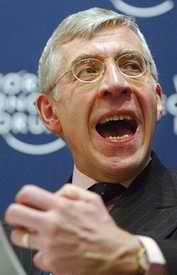 The Government is to make it a crime to incite hatred because of a person’s sexual orientation or perceived sexual orientation, Jack Straw announced last night. The offence will carry a maximum sentence of seven years.
  Home Secretary blames drinking on TV for all the country's ills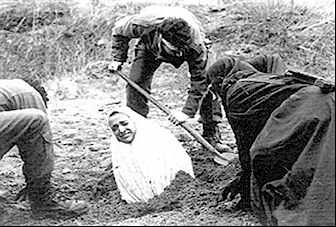
 Government suggest a media think tank to consider future direction of regulation
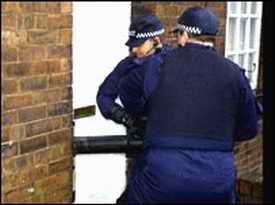
 UK becoming a country not worth fighting for
  Much discussed Bush Blair memo still secret
 Blair notes reduced capacity for politicians to take the right decisions
  Civil blogging proposal should be implemented in the UK by Tessa Jowell

 Some viewers may find some of Gordon Brown's words disturbing
  Law Commission consulting on which laws to reform
  Government trial no-evidence search and seizure in Northern Ireland