|
29th September
|
|
|
|
Nordic nutters urge MEPs to use only prostitution free hotels
|
Based on article from euobserver.com
|
A group of mostly left-leaning Nordic MEPs have in a letter urged the European Parliament to only patronise Strasbourg hotels that pledge not to tolerate use of prostitutes, with one French NGO swiftly welcoming the symbolic gesture.
[We] strongly propose that the EU parliament without delay follow the Nordic Council and decide that the EU parliament only use hotels that issue a guarantee that the hotel is not involved in the sex trade, and that all staff have written guidelines on this issue,
the letter, addressed to parliament President Hans-Gert Poettering and signed by 37 MEPs, says. The Danish, Swedish and Finnish deputies mostly come from the Socialist, Liberal and Green factions in the parliament and include former Danish
Prime Minister and the current president of the European Party of Socialists, Poul Nyrup Rasmussen. Two conservative MEPs, Sweden's Charlotte Cederschiold and Finnish deputy Eija-Riitta Korhola, also joined the initiative.
The Copenhagen-based
Nordic Council was founded in 1952 as a forum for Nordic parliamentary co-operation. It adopted the measure on prostitution and hotels in 2006.
Prostitution is legal in Denmark and Finland. It is also legal to sell sex in Sweden but against the
law to buy it.
There is plenty of anecdotal material that some well-paid European Parliament workers and MEPs, away from their partners for the week, pay for sex during the monthly plenary session in Strasbourg. But evidence is scarce.
Hotels deny they would ever help a guest find a prostitute, while some smaller guest-houses exclude prostitutes who normally live with them in order not to put off EU clientele during the plenary sessions. But the manager of one large Strasbourg hotel told EUobserver:
If a guest brought back somebody, they would be very discreet. The Strasbourg office of French anti-sex trade NGO Mouvement du Nid said the European Parliament has no impact on levels of street prostitution: The parliamentarians are not
interested in street prostitutes. They prefer escort girls, call girls of a slightly higher level. They find little adverts and make telephone calls. That's how they take care of business, the NGO's Isabelle Collot said.
|
|
26th September
|
|
|
|
Knife attacker blames The Da Vinci Code
|
Based on article from
dailymail.co.uk
|
A man who attacked a priest has claimed he did so after watching the film The Da Vinci Code .
Father Caino Calitri was in a critical condition in a Rome hospital today after he was repeatedly stabbed in the neck by 25-year-old Marco
Luzi.
Police found a note in one of Luzi's pockets reading: This is just the beginning, 666 - a number linked to the Devil.
Luzi - who also stabbed three bystanders who came to Father Calitri's aid - told police he had watched The Da Vinci Code
the night before. The attack took place at the Santa Marcella church in Rome.
Vittorio Rizzi, of Rome's flying squad, said: There certainly seemed to be a link between the film and the attack. He told us he had seen The Da Vinci
Code on TV the night before. Then he said he had heard voices in his head telling him to carry out his mission and we also found a copy of Da Vinci's Last Supper at his home.
|
|
24th September
|
|
|
|
Rapper acquitted after being sued for libel by Sarkozy
|
Based on article from iht.com
|
On March 5, 2003, the door bell rang at the home of the French rapper Mohamed Bourokba, known as Hamé, and a bailiff informed him that the government was suing him for libel. The signature under the written complaint was familiar: Nicolas
Sarkozy, then interior minister and now president of France.
Five years, two appeals and countless hearings later, Hamé was acquitted Tuesday. Barring a petition to the final court of appeal by the government by Friday, the latest verdict
brings to an end one of France's most protracted and symbolic libel cases.
The length of the legal battle has raised the question of what freedom of speech really means in France. It also touches on the reputation and power of a president who has
not shied even from suing a journalist perceived to be hostile - and whose tense relationship with youths in the suburbs has been a thread running through his political career.
It all started in September 2002, when Hamé's group, La
Rumeur, released its first album, and with it a magazine. Inside, the rapper had written an article accusing the police of acting with impunity in their treatment of immigrants and their descendants. The reports of the Interior Ministry will
never acknowledge the hundreds of our brothers killed by the police without any of the murderers being held to account, wrote Hamé whose parents came from Algeria in the 1950s.
The reality is that living in our neighborhoods today
means you have a greater chance of experiencing economic abandon, of psychological vulnerability, of discrimination in the job market, of unstable housing, of regular police humiliations.
Accused of public libel against the national
police, Hamé was first acquitted in a trial court in 2004 and again in an appeals court in 2006. Then the Interior Ministry took the case to the top court of appeal, demanding that the judges annul the earlier verdict and arrange a second
appeal. This time it won: In July 2007, not three months after Sarkozy had become president, the top appeals court ordered another appeals court in Versailles to rule again.
On Tuesday afternoon, a buoyant Hamé welcomed the verdict: It
was a good moment. If we really win, it would be a victory for us but also for democracy and for freedom of speech.
Not everyone was so optimistic. I fear that the government cares less about the verdict and more about the deterrent
created by a lengthy court case, said Gwénaële Calvès, a professor of law and civil liberties specialist: They are signaling that they don't tolerate a certain type of criticism.
Far from undermining La Rumeur, the
case has apparently raised the group's profile; its album sales have doubled.
|
|
23rd September
|
|
|
|
German artist irritates politicians
|
From artinfo.com
|
A new sculpture installed in the square of a small southern German town, Bodman-Ludwigshafen, has some locals and politicians up in arms, reports Der Spiegel.
The three-panel relief by sculptor Peter Lenk presents a lively panorama of
cartoonish Germans; in one corner, five top German politicians, including Chancellor Angela Merkel and former Chancellor Gerhard Schröder, are shown naked and laughing and grabbing one another's genitals.
Local politicians have called the
work, which has brought a steady stream of tourists, piggish and " heap effect-mongering , and local residents have criticized Mayor Matthias Weckbach for commissioning pornography and paying for it partly with public funds. The
panel with the contested scene, however, is a two-year donation by the artist himself.
Lenk says he wanted to show political group sex in part to protest a controversial welfare-reform package created by the five depicted politicians that
has been linked to several scandals involving corporate money and public figures: When it comes to their privileges and taking money out of the pockets of citizens. T hey all hold the scepter, so to speak. Politics is far more pornographic than
any art.
He also said that while political scandals quickly fade from the public's attention, a memorial like this will stay around and irritate them a bit longer.
|
|
21st September
|
|
|
|
Rangers v Celtic, Ireland v Scotland, Censorship v Free Speech
|
Based on article from guardian.co.uk
|
When Glasgow Rangers fans sang the Famine Song at an Old Firm derby they never thought it would cause so much trouble: I often wonder where they would have been
If we hadn't have taken them in
Fed them and
washed them
Thousands in Glasgow alone
From Ireland they came
Brought us nothing but trouble and shame
Well the famine is over
Why don't they go home?
Now Athenry Mike was a thief
And Large John he was fully briefed
And
that wee traitor from Castlemilk
Turned his back on his own
They've all their Papists in Rome
They have U2 and Bono
Well the famine is over
Why don't they go home?
Now they raped and fondled their kids
That's what those
perverts from the dark side did
And they swept it under the carpet
And Large John he hid
Their evils seeds have been sown
Cause they're not of our own
Well the famine is over
Why don't you go home?
Now Timmy don't take it from
me
Cause if you know your history
You've persecuted thousands of people
In Ireland alone
You turned on the lights
Fuelled U boats by night
That's how you repay us
It's time to go home.
But the song
angered one fan so much he put in a complaint that led Irish diplomats to raise the concerns with the Scottish government.
Now anti-censorship campaigners have stepped into the row, claiming this weekend that any attempt to curb the fans from
singing the lyrics would be a dangerous assault on freedom of speech. It is the Rangers fans' right, they say, to insult the Irish over the Great Famine if they choose.
Index on Censorship's Irish-born spokesperson, Padraig Reidy, said he
was concerned about the state intervening: Considering we all know that there have been nasty, offensive songs at Old Firm games for years, making it into a national issue seems absurd and dangerous. It's trying to set a legal limit on speech that
isn't incitement to violence. Rangers and Celtic have an agreement between themselves to sing what they want.
Reidy said that, while the song about the Famine is undoubtedly offensive, behaviour should be controlled by the two clubs rather
than the state: It's different to anti-discrimination laws, which are a very good thing, but seeking to outlaw any kind of insulting or offensive speech/songs does become very problematic, because someone will always take offence .
Rangers
FC said it has approached Strathclyde Police for guidance, a spokesman for the club said, adding fans had been actively discouraged from singing the song at games.
|
|
19th September
|
|
|
|
Alcohol companies block French access to their websites
|
Based on article from timesonline.co.uk
|
France may be home to some of the world's finest wines but it could be about to join the tiny club of Muslim states that forbid their promotion on the internet.
Winemakers and other players in the drinks industry are fighting to avert a ban on
advertising, sales and even vineyard websites that has been looming ever since a court ruled that the internet should be included in France's strict laws regarding alcohol advertising.
The Heineken beer company was forced by the ruling last
February to block French access to its corporate site. Since then, some of the biggest drinks brands have shut out French visitors for fear of prosecution. Today in France, the sight of a bottle of wine has become as offensive as a picture of war or
pornography, said Daniel Lorson, a spokesman for CIVC, the industry body of champagne producers.
The industry complains that it is being demonised and that an internet ban would penalise hugely one of the glories of the French economy and the
national heritage. A click from France on Courvoisier cognac, for example, elicits the message: Sorry, the regulations of your country do not authorise us to give you access to our site. Even the alcohol-fuelled world of sport has not been
left unscathed. When Liverpool played Marseilles in this week's Champions League match, the logo of Carlsberg, the team's main sponsor, was absent from their shirts, while rugby union's Heineken Cup is simply called the European Rugby trophy in France.
Frédéric Delesque, the marketing director of Camus Cognac, which has also bowed to the law and blocks French visitors said: There are three countries in the world which ban the discussion of alcohol: Iran, Afghanistan and
France. It is a pity for the image of our products.
The Evin law, passed in 1991, limits the advertising of alcoholic drinks only to the press, the radio and on posters. Since the world wide web did not exist then, it is not approved for
drink advertising. The court upheld that argument in the Heineken case, but added that it should be clarified.
The world of alcohol fears that the inevitable jokes produced by the country's comedians are a little too close to reality. Will it
soon be illegal, for example, to mention such place names as Bordeaux, Burgundy, Champagne or Cognac in public?
|
|
19th September
|
|
|
|
Italy decides to back off from prosecuting satirist over pope quip
|
Based on article from timesonline.co.uk
|
|
|
|
Pope Benedict turns the other cheek
|
Angelino Alfano, the Italian Minister of Justice, said he had refused a request by the public prosecutor in Rome for permission to charge the comedienne and satirist Sabina Guzzanti with insulting Pope Benedict.
Ms Guzzanti had said during a
left wing rally in Rome in July that because of the Church's stand on homosexuality the Pope would go to Hell, where he would be tormented by very active poofter devils.
Under the 1929 Lateran Treaty between Italy and the Vatican, an
offence to the pontiff carries the same weight as an offence to the Italian head of state, with a penalty of up to five years in prison. However prosecution requires the go ahead from the Justice Ministry.
Alfano said he had decided not to
proceed with a prosecution knowing the depth of the Pope's capacity for forgiveness . Speaking at the Catholic University in Milan the minister said that as a Roman Catholic himself he had been saddened and shamed by Ms Guzzanti's remarks.
However she had accepted full responsibility for them, and he saw no point in adding further fire to the flames.
|
|
16th September
|
|
|
|
Google.de has banned porn video sharing sites from its search engine
|
Based on article from redherring.com
|
A Google Groups poster has revealed that Google's German site has censored the online porn video-sharing site RedTube.com, amongst others.
Also banned from Google.de are PornoTube.com and YouPorn.com.
|
|
13th September
|
|
|
|
Swedish fracas about murdered child pictures via Pirate Bay
|
Thanks to Nick
Based on article from blog.wired.com
|
The Pirate Bay, the controversial BitTorrent tracking site in Sweden, has become ensnared in a grisly, high-profile scandal involving the online circulation of autopsy pictures of two murdered children.
The Swedish media are focusing on The
Pirate Bay's refusal to remove the links to the torrents of photos uploaded to the internet by its users of photos of two dead children.
The photos are from a police case file concerning the murder of two toddlers. The father of the children has
asked the operators of the site to remove the links, but they've declined to do so, based on the group's anti-censorship policies.
The Pirate Bay's co-founder Peter Sunde in a post on his personal blog asks why the Swedish media isn't focusing
either on the individual who had uploaded the photo, or on the country's laws regarding the way the government classifies information and provides access to government documents. In this case, someone had accessed the police investigation file, uploaded
a torrent file of the photo onto the internet, and linked to the torrent on The Pirate Bay. Under Swedish law, most documents generated by the government are made available to the public unless specifically deemed secret by the courts. In this case, the
documents were not sealed by the court.
The operators of the site announced on their blog Friday that they would no longer speak with the media after an incident on a Swedish television station, which Sunde effectively characterized as an ambush.
Sunde had participated in a television interview with Sweden's TV4 Thursday night, as he recounts on his personal blog. He says that he was promised that the interview would focus on policy and the issues of censorship and what gets published on
the internet.
But when he arrived at the studio, he was faced with the father of the children who was participating remotely, and asked what he had to say to him, he recounts in a long and angry blog post.
Pirate Bay has been described
in Swedish media as 'publisher' of the photos, which is technically not correct, says Mikael Pawlo, an internet entrepreneur based in Stockholm who's been following the case. But Pirate Bay only provides aggregated tracking information on the
torrents, which are in turn distributed peer-to-peer, without ever being relayed through Pirate Bay. But he adds: Pirate Bay is also in practice the main distributor of information on how to download the photos.
Sunde takes exception
and writes on his blog that the media characterizes the operators of The Pirate Bay as terrorists, and as people totally without emotion, and as bloodthirsty devils. Shame on you Sweden. And shame on you in the media .
|
|
13th September
|
|
|
|
State persecutors go to court to sue over satirical joke
|
Based on article from guardian.co.uk
See also
Sabina Guzzanti's website
See also article from timesonline.co.uk
See
comments about Pope in speech from youtube.com
|
Italian politicians of right and left, comedians and even some priests yesterday deplored a move by prosecutors in Rome to put a satirist on trial for contempt of the Pope.
Sabina Guzzanti, known for her take-offs of the prime minister, Silvio
Berlusconi, risks being jailed for up to five years. The prosecutors recommended to the justice ministry that she be indicted because of a speech she made to a leftwing rally in July.
Referring to the attitude to gay people of the Catholic church
and Pope Benedict, Guzzanti said: In 20 years Ratzinger will be dead and will end up in hell, tormented by queer demons - not passive ones, but very active ones.
The 1929 Lateran treaty that created the Vatican city state describes the
Pope as a sacred and inviolable person . It makes insulting him an offence in Italy on a par with contempt for Italy's president, punishable by between one and five years in jail. Indictment, however, requires an endorsement from the justice
minister.
The minister, Angelino Alfano, has not yet replied to the prosecutors' request.
Father Bartolomeo Sorge, editor of a Jesuit monthly, condemned the attempted prosecution: I am sure the Pope has forgiven those gratuitous
offences.
As for Guzzanti, she said she felt honoured . Comment: Holy Revenge 13th September 2008. Thanks to Alan
What I suspect is happening is that Berlusconi is out to get Sabina G because of what she said about him, especially her comments in the same speech about him and Mara Carfagna. Making the Pope the wounded party seeks to disguise that.
Berkusconi may be overreaching himself. Some members of his own party think so, notably Senator Guzzanti, who's, errr, Sabina's dad. (One of the funnier bits in her film
Viva Zapatero! was the bit where some minister effectively said to her, Sabina Guzzanti, I'll tell your dad about you.
Indicentally, some people call Berlusconi the neo-Duce. To give the real one his due, he wasn't an interfering
busybody seeking to ban prostitution (as per the other Italian story). I've got a copy of the authorised price list of an official knocking shop ("casa di tolleranza") dating from the Fifteenth Year of the Fascist Era (1938).
|
|
9th September
|
|
|
|
German politicos campaigning for a ban on killergames
|
Based on article from gamepolitics.com
|
GamePolitics has heard from several European gamers who have cited anti-game comments made by Bavarian Interior Minister Joachim Herrmann to Zeit Online. Herrmann, a member of the conservative Christian Social Union (CSU), refers to violent games as
Killerspiele (killer games). Big thanks to felix-reichert who has very graciously provided a translation of the interview: ZEIT ONLINE: Mr. Herrmann, which "Killergames" have you played to
come to the belief that they must be banned?
Joachim Herrmann: I personally don't play, but I have watched them [being played] extensively. I am shocked how the player is driven towards gruesome violence. He,
so to speak, becomes a criminal himself and kills others to obtain money or to collect points. The more gruesome the killing the higher the score. We don't need something like this. Such games are unbearable.
ZEIT ONLINE:
Obviously you are talking about the GTA-Series. The most recent GTA is rated 18. Why shouldn't adults be allowed to play these games?
Herrmann: From a cinema-owner I can expect that he actually only
lets people over 18 years in. But if we're talking about Computer games its different. If an 18-year-old has a game, the next day he'll pass it to 17-, 16- and 15-year-olds. I don't believe that there's an entitlement for these games in our liberal
society. The protection of children and the youth must be a priority. Its not about the playing [of these games] alone. There are numerous studies that explicitly prove: the more intensive teenagers engage themselves in these games, the higher the danger
of them imitating this [behavior] in reality.
ZEIT ONLINE: Media-scientists haven't found common ground on that issue, though.
Herrmann: The criminologist Christian Pfeiffer provided corresponding
evidence from his studies at our expert-round in Berlin. Of course not every player becomes a violent criminal. But even if games only cause a rise of a certain percentage in youth-violence it is reason enough to outlaw them. In other fields we also have
clear bans, I'm thinking of child pornography.
ZEIT ONLINE: The [indexing] that exists today is in fact equivalent to a ban. For example indexed games can't be advertised.
Herrmann:
That's not enough. Games that glorify brutal violence must generally be banned in penal law.
In the wake of the Zeit Online interview, German magazine PC Games called on gamers to conduct a massive mail campaign to CSU
leadership by way of protesting Herrmann's implication that violent game players are potential killers. The CSU responded with a press release calling for an urgent ban, and dismissed the gamer protest.
|
|
8th September
|
|
|
|
Italian media quick to blame Clockwork Orange
|
Based on article from
dailymail.co.uk
|
Italian police are investigating a brutal attack on four Franciscan monks in a monastery in northern Italy.
The country's media are comparing the incident, at the San Colombano Belmonte monastery near Turin, to the violence in Anthony
Burgess's controversial novel A Clockwork Orange , in which adolescent thugs delight in what they call “ultra-violence”.
A small group of hooded attackers entered the monastery on Tuesday and bound and gagged the monks.
One managed
to raise the alarm two hours later when he regained consciousness after being beaten.
They unleashed an incredible level of violence against them," Gabriele Trivellin, in charge of Franciscan monks in the area, told the Italian
newspaper Corriere della Sera: It was wild and gratuitous violence because they did not resist the attack at all.
The youngest monk is in a coma after suffering severe head injuries. The other three monks are expected to be released from
hospital in a month.
Police believe the motive may have been robbery, as some cash was stolen from the monastery. Comment: Clockwork Orange being blamed for youth
violence Thanks to Andrew, 8th September I don't even know where to start with how much this pisses me off. How can you blame a medium for a copycat attack, when said copycat(s) didn't, A - Prey on the same targets, B - Weren't even
remotely dressed the same, and C - Bear absolutely no resemblance to the characters depicted in the medium that's APPARENTLY at fault.
I've gotta be honest, I never really understood the threat of Clockwork Orange , yes I know its one of
those Exorcist scenarios where people twice my age tell me "YOU WEREN'T THERE", "YOU DON'T KNOW WHAT IT WAS LIKE", this (in both situations) is true, I wasn't around at the time of the films original release, but surely a film of that
magnitude and strength would hold up some 25 years later when I come across it. Yes it did. At the same time though I felt that a lot of what was on the screen looked incredibly fake and VERY camp. Yes there's violence, but nothing convincing.
Don't get me wrong, I'm not bad mouthing this film, its a very powerful piece of work BUUUUUUUUUUUUUUUT only from a cinematic point of view. From a realistic point of view its very slight, and somewhat lacking in realism. As with the chainsaw massacre,
it doesn't actually have any blood in it. Our hero gets smashed in the face with a milk bottle (to the degree that it breaks), and all we see is a red tinged bandage in the next scene. Our hero jumps from a high window, next thing he's in a classic
comedy all body cast. It doesn't sound like the traditional "SPARK" material for every looney looking to blame everyone but himself.
so where did these boys get the idea to brutally and savagely attack 4 monks?
Maybe their just
twisted little fuckers. Ever consider that?
Maybe, JUST maybe They're fucked in the head.
It cant be that can it? That would mean society/people/parents admitting that we don't live in a perfect world, we ARE all born differently, and
every once in a while someone is born whose just wrong. Be it on a genetic level, or a mental level.
Films don't create killers. They're already here.
|
|
8th September
|
|
|
|
|
Another quasi-fictional piece of translucent flimflam See article from guardian.co.uk
|
|
5th September
|
|
|
|
EU are looking to censor and regulate blogs
|
See How the EU plans to regulate blogs from
blogs.telegraph.co.uk by Daniel Hannan
See also
Draft report on concentration and pluralism in the media in the European Union [pdf]
|
When it comes to blogs, Eurocrats instinctively dislike spontaneous activity. To them, "unregulated" is almost synonymous with "illegal". The bureaucratic mindset demands uniformity, licensing, order.
Eurocrats are especially
upset because many bloggers, being of an anarchic disposition, are anti-Brussels. In the French, Dutch and Irish referendums, the mainstream media were uniformly pro-treaty, whereas internet activity was overwhelmingly sceptical.
[Perhaps blogs are just a little more in touch with what real people are actually thinking. It seems a little arrogant and patronising to think that people mindlessly heed the government friendly mainstream media. It maybe that
blogs don't influence so much as reflect the thoughts of real people]
Bruno Waterfield recently reported on a secret Commission report about the danger posed by online libertarians: Apart from official websites, the internet has largely
been a space left to anti-European feeling. Given the ability to reach an audience at a much lower cost, and given the simplicity of the No campaign messages, it has proven to be easily malleable during the campaign and pre-campaign period.
The EU's solution? Why, to regulate blogs! Back in June, MEPs began to complain that unlicensed blogs were
polluting cyberspace with misinformation and malicious intent . They wanted a quality mark, a disclosure of who is writing and why.
At the time, I dismissed it as the ramblings of a single dotty MEP. Not even the European
Parliament, I thought, would actually try to censor the internet. I was wrong. We now have the full report and, sure enough, it wants to clarify the status, legal or otherwise, of weblogs , and to ensure their voluntary labelling according to
the professional and financial responsibilities and interests of their authors and publishers.
|
|
5th September
|
|
|
|
EU legislation objects push for an end to sexist advertising
|
Based on article from brandrepublic.com
|
The European Parliament is calling on member states to tackle the issue of gender stereotypes in advertising through public information campaigns.
An EU report, drafted by the legislation objects of the Women's Rights Committee, was adopted by a
large majority in the European Parliament today.
It pushes for education initiatives to be introduced that will combat the structurally embedded stereotype images of women and men we find all around us.
The report argues that
gender stereotypes are used in advertising to the financial gain of big business and that women have suffered by being represented as objects.
It also calls on member states to monitor ad campaigns and to remove stereotyped and degrading
images of women from advertising while introducing regulatory measures to promote balanced and diverse portrayals of women by the media.
The report recommends especially close policing of the use of nudity and noticeably thin women in
ad campaigns.
Report author and legislation object Eva-Britt Svensson also highlighted digital media as being of particular concern, especially the portrayal of women in the majority of video games and their supporting advertising.
|
|
29th August
|
|
|
|
Museum refuses to remove crucified frog sculpture
|
Based on article from telegraph.co.uk
|
Pope Benedict's request to have the sculpture of a crucified green frog holding a beer mug and an egg removed from display in an Italian museum has been rebuffed.
The board of the Museion museum in the northern city of Bolzano has refused to take
down the modern art piece which the Vatican has condemned as blasphemous.
A majority vote decided that the wooden sculpture by the late German artist Martin Kippenberger should remain.
The sculpture called Zuerst die Fusse ,
meaning Feet First, depicts a frog of about four feet high nailed to a brown cross holding a beer mug in one outstretched hand and an egg in another. The frog wears a green loin cloth and is nailed through the hands and feet in the manner of Jesus Christ
while its tongue hangs out of its mouth.
Museum staff said the artist, who died in 1997, considered the sculpture a self-portrait representing human anguish.
However, the German Pope did not agree and the Vatican wrote a letter to the
regional government, whose President, Franz Pahl, went on hunger strike in opposition to the frog and had to be taken to hospital.
The Vatican's letter said the amphibian wounded the religious sentiments of so many people who see in the cross
the symbol of God's love.
However, Claudio Strinati, a superintendent for Rome's museums, defended the decision to keep the frog: Art must always be free and the artist should not have any restrictions on freedom of expression .
|
|
28th August
|
|
|
|
The German games censorship game
|
Based on article from dw-world.de
|
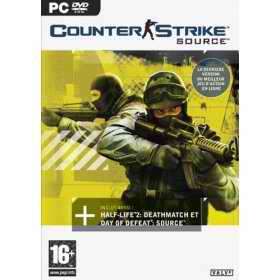 Germany's efforts to regulate the classification and sale of violent video games has brought a number of the country's authorities together to work on a set of legislation.
Legislation recently passed in Germany in July, for example,
makes it easier to put such games on the banned list following the introduction of a rating index.
Games on Germany's banned list cannot be sold publicly. That includes any advertising and sales through mail order. The decision to flag a
game is made by the Federal Department for Media Harmful to Young Persons (BPjM). Since the July 1 revision of the Protection of Minors Act, the agency has been granted even more authority. That includes the authorization to list games that propagate
vigilante justice as the only solution to a problem. The criteria have also been expanded for the automatic inclusion of specific games in the list.
A network of organizations decide on age classifications. Tthe age labeling system will be
significantly broader in future. Some games are currently open to a general audience. The next levels are "6," "12," and "16." Any game assigned an "18" is banned for youths. There are also games that cannot be
rated at all. Such titles require action by the BPjM frequently land on the index.
The labeling system is organized by the so-called Unterhaltungssoftware Selbstkontrolle (USK) in Berlin, with support until now from the Association for the
Promotion of Youths and Social Work. Two industrial associations assumed sponsorship from June 1: the German Association of Computer Game Developers (G.A.M.E.) and the German Association of Interactive Entertainment Software (BIU).
The USK
functions as a service provider, commissioning a circle of independent experts. These observers first play the game, present their results to a five-person committee consisting of at least four of roughly 60 expert appraisers from the USK, including
teachers and employees of the youth agencies. The committee is then completed by a permanent representative of the Supreme Youth Agencies of the states. The majority decides, but the permanent representative always has a veto right.
|
|
24th August
|
|
|
|
Swedish Olympic TV joke attracts complaints
|
From thelocal.se
|
A television show focusing on the Olympic Games has been reported to the Swedish Broadcasting Commission for allegedly making offensive comments regarding Germany's Nazi history on live television.
Presenter Rickard Olsson made a joke on live TV
about Germans and Nazis when referring to the German women's football team's loss against the Brazilians in the Olympic semi-final. There is something about Hitler and Germany that somehow makes it difficult to feel sorry for them when they get
slaughtered at football. You just think, Hitler, Hitler, Hitler, Hitler, Hitler", said Olsson on his live chat show Olssons studio .
The Swedish Broadcasting Commission (SBC) has received eight official complaints about the
presenter's outburst.
The SBC is a national authority that oversees radio and television broadcasts and determines whether a broadcast complies with the provisions of the Radio and Television Act and the licenses granted by the government.
|
|
7th August
|
|
|
|
Italian prime minister censors classical art backdrop
|
Based on article from
dailymail.co.uk
|
Italian prime minister Silvio Berlusconi has had an Italian masterpiece altered - because of an exposed breast.
The 71-year-old worried that cameras would focus on the naked woman's chest in the painting hanging behind him during his press
briefings.
The copy of Time Unveiling Truth by Giambattisto Tiepolo now has a white veil painted over the offending bosom.
Insiders also said that the feelings of female members of his cabinet - including equal opportunities
minister Mara Carfagna, a former topless model - had been considered. An artistic Berlusconi aide painted a veil over the naked woman's breast on a copy of Time Unveiling Truth which forms a backdrop to his press conferences in the Italian
capital
A copy of the 254-year-old masterpiece Tiepolo was chosen as the backdrop of the PM's media briefing room in Rome shortly after Berlusconi swept back to power in April.
Yesterday leading Italian art critic Vittorio Sgarbi told
Corriere Della Sera: What have they done? This is madness, absolute madness.
I hope that whoever came up with this absurd, mad, pathetic, comic and futile idea did so without the knowledge of the Prime Minister.
Yesterday a
spokesman for the Prime Minister said: The decision was taken to cover up the exposed breast for fear of offending the sensibilities of people watching press conferences. Comment:
Italian Beauties From Alan, 7th August 2008
Strange that Berlusconi should suddenly lose enthusiasm for tits, considering at least one of his ministerial appointments. Signora Carfagna follows in an interesting Italian political tradition, with Michela Vittoria Brambilla always willing to flash a bit of thigh, Alessandra Mussolini gettin 'em out in Playboy (fortunately resembles her auntie Sophia Loren more than her grandad!), and Ilona "La Cicciolina" Staller combining the jobs of politician and porn star.
I find that the amazing Sabina Guzzanti has given some real stick to his appointment of Mara Carfagna as minister for equal opps. She's reported (accurately - I've watched the video!) as having said this:
A me non me
ne frega niente della vita sessuale di Berlusconi. Ma tu non puoi mettere alle Pari opportunitเ una che sta l์ perch้ t'ha succhiato l'uccello, non la puoi mettere da nessuna parte ma in particolare non la puoi mettere alle Pari
opportunitเ perch้ ่ uno sfregio.
Source - La Repubblca
A libel writ
is likely to follow, since the quote means, As for me, I don't give a toss about Berlusconi's sex life. But you can't send someone to the (ministry of) equal opportunities because she's sucked your dick. You can't give her any job, but particularly
not equal opportunities because it's an insult.
She always has a few sharp words to say about the Pope, among others, charitably hoping that when he gets to hell he'll be buggered by gay devils.
|
|
23rd July
|
|
|
|
Irish Film Censor's office renamed as Classifiers
|
From irishexaminer.com
|
Irish video rental stores and other outlets face fines for supplying children with DVDs classified for older viewers.
Legislation makes it an offence for the first time to breach film classification certificates in over-the- counter rentals and
sales and offenders can be fined up to €2,000 or even jailed for three years.
It means younger DVD library members may be asked to provide proof of their age if they try to rent a film with an age specific rating such as 12A, 15A, 16 or 18 and
could be refused certain films even if they have parental permission to view it at home.
The laws also make changes to the Film Censor's Office which is now called the Irish Film Classification Office and no longer has powers to ban a film
outright [A bit hard to believe! Somebody should try resubmitting Manhunt 2 to test this out]. Censor John Kelleher, who becomes director of film classification, welcomed the move, which he said
reflected the profound changes in Ireland's recent past. We have moved far away from the nanny state moral guardian censorship of yesteryear towards an acceptance of the general principle that, in a mature society, adults should be free, subject to
the law, to make their own choices.
Today, we don't censor, we classify. We don't decline to explain or justify our decisions. Rather, we welcome the fact that we can provide the public, and parents, with age-related classification and consumer
advice. We have gone from stop sign to signpost.
The censor still has a role in protecting under-18s, however, and his powers in that area have been strengthened with specific reference in the law to his duty to apply restrictive
classifications where a film is likely to cause harm to children.
Much of the existing law, the 85-year-old Censorship of Film Act of 1923, survives and the censor still has to take into consideration scenes that render a film indecent,
obscene or blasphemous or would tend to inculcate principles contrary to public morality.
As part of the changes, a scale of fees is being introduced to ease the cost of applying for classification for independent film makers, foreign
movie distributors and art house films that get a very limited cinema release. Instead of paying €12 per minute of film for every copy distributed to a cinema, they will pay €3.
|
|
19th July
|
|
|
|
Germany considers marketing ban on homophobic lyrics
|
See full article from Deutsche Welle
|
The homophobic lyrics of several Jamaican reggae musicians has moved the German government to consider blacklisting them and restrict their sales and distribution.
The CDs by Elephant Man and T.O.K. could be put on the Index of Harmful
Materials , which, while it would not censor the materials in Germany, would severely limit their advertising and marketing.
The Federal Department for Media Harmful to Young Persons will decide over the next several months if the music will
be included on the index, the government said in its response to a parliamentary inquiry.
Volker Beck, the leader of the Green Party parliamentary group, called on large Internet music sellers to already begin removing the CDs in question from
their sales inventory: Those in Jamaica who invoke hatred should not earn money with their music in Germany .
Homosexual acts are punishable by law in Jamaica and many musicians from the Caribbean island are accused of promoting violence
against gays and lesbians. In its travel advisory on Jamaica, the German foreign ministry reports that homosexuals are often the targets of assault.
|
|
11th July
|
|
|
|
Irish parliamentary recommendation to drop the offence of blasphemy
|
See full article from
The Irish Independent
|
The offence of blasphemy is likely to be dropped from the Irish Constitution after recommendations from a Dail committee.
The joint committee on the Constitution said that changes to the Constitution in the areas of freedom of expression and
blasphemy are required and should be voted on in a future referendum.
The Oireachtas report concluded that constitutional references to freedom of expression are unsatisfactory and focus too much on the limitations on free speech.
The
Defamation Bill 2006 now proposes to repeal the 1961 Act and thereby abolish the common law offence of blasphemy. Committee chairman, Sean Ardagh, said the Constitution should be amended along the lines of Article 10 of the European Convention of Human
Rights in order to ensure greater emphasis on the freedom of speech: The committee is of the view that amendment is not immediately necessary but recommends that change be made when an appropriate opportunity presents .
A constitutional
reference which deems publication or utterance of "blasphemous, seditious or indecent matters" as an offence punishable in accordance with the law should also be deleted, according to the report.
|
|
9th July
|
|
|
|
Blasphemy not an issue in Finland
|
See full article from Newstrack India
|
It seems that the protesting Hindus will not be able to appeal against the “K11” rating given by Finnish Board of Film Classification to the Hollywood movie The Love Guru , which they wanted to be raised.
Maarit Pietinen, Senior
Examiner of the Board, in a communiqué to Hindu leader Rajan Zed, said, Only the distributor can appeal against the decision of the Board.
Criticising this, Zed has said that other affected parties by the movie, in this case Hindus,
should also have same rights of appeal against rating decisions as the distributor/owner, if they are not satisfied with the classification.
When asked, Does not the Board think that this movie ridicules a religion?, Pietinen replied: In the Act which we are obliged to follow, there are no such ground as blasphemy or ridicule of religion, therefore it was not discussed.
Denouncing Finnish Board of Film Classification for giving it “K11” rating when it deserved the highest “K18” rating, Rajan Zed stresses that while Board says The primary purpose of the classification of audiovisual programs is to protect
children, but by giving The Love Guru a “K11” rating, it is leading the highly impressionable Finnish children between 11 to 18 years to grow with a distorted view of Hinduism.
Zed says that in this fast changing world, Board's
classification criteria seems to be outdated and it needs immediate revision.
Supported by some other organisations, Zed has given a Finland-wide boycott call for Hollywood movie The Love Guru by Hindus and other religious Finns because it
lampoons Hinduism and Hindu concepts and uses Hindu terms frivolously.
|
|
8th July
|
|
|
|
Irish children's TV rapped over use of the word 'tinker'
|
See full article from Chortle
|
TV host Patrick Kielty has been rapped by Irish broadcasting watchdogs for referring to travellers as ‘tinkers'.
His comments, broadcast on a children's show co-hosted by the puppet Dustin The Turkey, were ruled offensive by the Broadcasting
Complaints Commission.
On RTE2's Once A Week Show , he asked: Is it just me but is it mostly just, you know, lorry drivers and tinkers on the Holyhead ferry?
When co-host Sinéad Ní Churnáin asked, What are tinkers?
Kielty pointed to her hoop earrings, and said in a mock-traveller accent: Come here missus, come here. She said in riposte: I'm only a part time knick-knack.
Pavee Point Travellers' Centre complained that the exchange was
‘seriously offensive' and caused extreme anger, upset and confusion among young travellers who might reasonably expect a Saturday morning children's entertainment slot to be relatively free from casual or targeted racism.
RTÉ said
Kielty's comments were made in a gentle and non-threatening way in a humorous, irreverent show. The broadcaster added: It is important to state that comedy must be given licence to cause offence on occasions.
However, the BCC upheld
the complaint, saying the jokes were derogatory as: The terms used are known to be offensive.
|
|
5th July
|
|
|
|
But now they are feeling left out and are debating video games law
|
See full article from Game Politics
|
Currently, Cyprus is one of only four European Union member states that doesn't regulate the sale of violent video games to children.
Government officials are planning to rectify that situation, however.
According to a report in the
Cyprus Mail, the island nation's House Education Committee is considering how to go about it:
According to DISY deputy Tasos Mitsopoulos... it has been scientifically proven that bad and excessive use of these games can have a negative
effect on children and teenagers' brains, pointing out that Holland had opened the first rehabilitation centre for youths addicted to computer games.
Deputies linked violent games to a number of teenage rampages, such as last year's mass
murder of 32 people at Virginia Tech in the US by student Seung-Hui Cho.
Government official Athena Kyriakidou said: With the Internet, it is not easy to protect our children, but at least an effective law will enable the authorities to have
some control over the [video game] market.
The other three EU countries without video game laws are Slovenia, Romania and Luxemburg.
|
|
1st July
|
|
|
|
EU recommendation to register all bloggers
|
See full article from EU Observer
|
Swedish media have erroneously reported that the EU plans to register and bill all bloggers, setting off a firestorm of reaction in the country.
Politicians of all political stripes and most major media outlets have since furiously attacked the
idea as another example of Big Brother snooping into people's daily lives, while the MEP at the heart of the controversy has been compared to Romanian dictator Nicolae Ceausescu.
The papers later specified that the proposal had originated in a
month-old report on media pluralism from the parliament – a document that has little legal weight – and intended to clarify the legal situation of bloggers, but by then the debate in the press had already reached a fevered pitch.
Exchange the
EU for China, and you would have a real media outcry, wrote Sören Karlsson, publisher of the daily Helsingborgs Dagblad and himself an eager blogger, who damned the 'blogger registry' as a threat to freedom of speech: We would have found it
insane.
The Estonian MEP who drafted the media pluralism report, socialist deputy Marianne Mikko, has been the target of much of the criticism.
In Ceausescu's Romania, everybody who owned a type writer had to hand in a paper with
typing samples, so that the authorities more easily could fight enemies of the state and ordinary criminals, recalled Peter Swedenmark, an editorial writer for daily Västerbottens Folkblad: Unfortunately, in the naive proposal from Mikko,
there seem to be some kinship with the Romanian line .
The media storm reached such a frenzy that the European parliament's Swedish press sector on Thursday afternoon was forced to send out a press release to all Swedish media, explaining
that MEPs' own-initiative reports such as that of Ms Mikko had next to no legal weight.
The main recommendations in the report call on the European Commission and EU member states to apply competition law to the media to ensure media pluralism.
The report also calls for a clarification of the legal status of webblog authors and wants to see a disclosure of interests, and the voluntary labelling of webblogs.
Speaking to the EUobserver, Ms Mikko clarified her intentions: We do
not need to know the exact identity of bloggers. We need some credentials, a quality mark, a certain disclosure of who is writing and why. We need this to be able to trust and rely on the source.
|
|
1st July
|
|
|
|
Netherlands finds that Fitna does break any laws
|
Based on article from the DutchNews.nl
See also the video, Fitna , now on Google Video
|
Fitna , the short feature film on Islam and violence put together by MP Geert Wilders does not break the law, the Duthc public prosecution department has said.
In addition, a number of statements about Islam made by Wilders over the
past few months are also within legal limits, ANP reported Amsterdam's chief public prosecutor Leo de Wit as saying.
Some 40 individuals and largely Muslim organisations have accused Wilders of encouraging religious hatred.
According to
NOS, no action is being taken against Wilders because he attacks Islam as a religion but not its followers While his comments are sometimes offensive, Wilders does not overstep any boundaries, the public prosecution department said. A Dutch
anti-discrimination group, The Netherlands Shows its Colours, said it would appeal the prosecutors' decision.
|
|
1st July
|
|
|
|
DVDs and games banned by the Irish censor in 2007
|
Based on article in the 2007 Annual Report of the Ireland Film Censor Office
See also
Let's Talk about Obscenity from
cedarlounge.wordpress.com
|
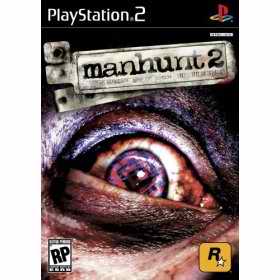 According to the Irish Censor's annual report 5 works were banned in 2007.
 Perhaps most notable, but previously covered in detail, was the ban on the video game Manhunt 2 . The censors wrote: Manhunt 2 was prohibited under the section of the Video Recordings Act 1989 which refers to
acts of gross violence or cruelty (including mutilation and torture)..
IFCO recognizes that in certain films, DVDs and video games, strong graphic violence may be a justifiable element within the overall context of the work. However, in
the case of Manhunt 2 , IFCO believes that there is no such context, and the level of gross, unrelenting and gratuitous violence is unacceptable'.
In addition the censors banned 4 adult DVDs citing their usual unbelievable bollox:
Prohibited on the grounds that "the viewing of them would tend, by reason of the inclusion in them of obscene or indecent matter, to deprave or corrupt persons who might view them.
|
|
|