|
29th March
|
|
|
|
Threats cause Fitna to be taken down from LiveLeak
|
From Information Week
|
Fitna debuted on Thursday at Web site LiveLeak.com, only to be taken down a day later following threats to LiveLeak's staff.
LiveLeak on Friday afternoon issued a statement explaining its decision: Following threats to our staff of a very
serious nature, and some ill-informed reports from certain corners of the British media that could directly lead to the harm of some of our staff, LiveLeak.com has been left with no other choice but to remove Fitna from our servers.
This is a sad
day for freedom of speech on the net but we have to place the safety and well being of our staff above all else. We would like to thank the thousands of people, from all backgrounds and religions, who gave us their support. They realized LiveLeak.com is
a vehicle for many opinions and not just for the support of one.
Perhaps there is still hope that this situation may produce a discussion that could benefit and educate all of us as to how we can accept one another's culture. We stood for what we
believe in, the ability to be heard, but in the end the price was too high.
During the day that the film was available, it prompted widespread condemnation. On Friday, United Nations Secretary-General Ban Ki-moon decried Fitna as hate speech:
I condemn, in the strongest terms, the airing of Geert Wilders' offensively anti-Islamic film. There is no justification for hate speech or incitement to violence. The right of free expression is not at stake here. I acknowledge the efforts of the
Government of the Netherlands to stop the broadcast of this film, and appeal for calm to those understandably offended by it. Freedom must always be accompanied by social responsibility.
The Organization of The Islamic Conference also
denounced the film as blasphemy. OIC Secretary General Prof Ekmeleddin Ihsanoglu said, The film is a deliberate act of discrimination against Muslims, incitement for hatred and an act defamation of religions which is solely intended to incite and
provoke unrest and intolerance among people of different religious beliefs and to jeopardize world peace and stability.
In the day that Fitna played, it was viewed over 420,000 times. More than 280 comments were posted on LiveLeak.com. And
many chose to reply through countervideos, which are still online. The film may also generate a lawsuit. The BBC reports that Danish cartoonist Kurt Westergaard, known for his cartoon of the Prophet Mohammed wearing a bomb-shaped turban, plans to
sue Wilders for using his cartoon in the film without permission. From Reuters Reuters summarised some of the reaction around the world which has so far being constrained to verbals. Iran called the film heinous, blasphemous and
anti-Islamic, and Indonesia, said it was an insult to Islam, hidden under the cover of freedom of expression.
The Saudi Arabian embassy in The Hague said the film was provocative and full of errors and incorrect allegations that could lead
to hate towards Muslims.
Dutch Muslim leaders appealed for calm and called on Muslims worldwide not to target Dutch interests. Our call to Muslims abroad is follow our strategy and don't frustrate it with any violent incidents, Mohammed
Rabbae, a Dutch Moroccan community leader, told journalists in an Amsterdam mosque.
Prime Minister Jan Peter Balkenende said he was proud of how Dutch Muslim organisations responded to the film but that it was too early to draw conclusions about
the international consequences: There are reasons for continued alertness. See full article from the
BBC The EU's Slovenian presidency said the film served no purpose other than "inflaming hatred".
In Pakistan there were small protests in several places on
Friday against the film, while the government summoned the Dutch ambassador in Islamabad to lodge a protest. Pakistan said it told the Dutch ambassador that it was incumbent on the Netherlands to prosecute Wilders for defamation and deliberately
hurting Muslim sentiments.
The foreign ministry in Bangladesh issued a statement calling the film "unwarranted" and "mindless". From Yahoo News A coalition of Jordanian media said they would take Wilders to court
over the film and launch a campaign to boycott Dutch products. They urged Arab leaders to review ties with Denmark and the Netherlands.
British Foreign Minister David Miliband stressed the importance of freedom of speech but said it should be
combined with respect for religious and racial diversity.
Europe's top human rights authority, the Strasbourg-based Council of Europe, called the film a distasteful manipulation which exploits ignorance, prejudice and fear. It is
simply political propaganda and it plays into the hands of extremists who are given such a prominent role in his film," the council's secretary general, Terry Davis said.
|
|
28th March
|
|
|
|
Geert Wilders' Fitna released on LiveLeak
|
From the Times
|
A far-right Dutch MP released a provocative film about the Koran on a British website last night, a move that is likely to provoke violent repercussions from angry Muslims around the world.
The 15-minute “documentary” juxtaposing images of
Islam’s holy book with the 9/11 terror attacks and other bombings was posted on the internet by Geert Wilders, leader of the small right-wing Freedom Party, after weeks of heated debate in the Netherlands about the project.
Wilders who has built
his political career campaigning against the alleged “Islamisation” of the West, argued that the film was a legitimate exercise in freedom of expression; however, many mainstream politicians and Muslims said that it was gratuitously insulting.
Viewers had only a few minutes to see it on the Freedom Party website before it disappeared because of “technical difficulties”. It then became available in Dutch and English on LiveLeak, a British-based video-sharing website, sparking fears that extremists could also target British interests.
The company that runs the website defended its decision to host the film last night, saying that there was no legal reason to censor it. LiveLeak.com has a strict stance on remaining unbiased and allowing freedom of speech so far as the law
and our rules allow, it said. There was no legal reason to refuse Geert Wilders the right to post his film and it is not our place to censor people based on an emotive response. The website said that it did not endorse Mr Wilders or his views.
The film opened with a Koran being opened and the text of a sura (a verse from the Koran) which it translated from Arabic as imploring the faithful to “terrorise the enemies of Allah”. It was followed by images of aircraft flying into the World
Trade Centre in New York on September 11, 2001, with extracts from phone calls to the emergency services on that day.
It showed statistics of the growing Muslim population and images of female genital mutilation, a hanging of suspected gay men,
beheadings and bloodied children, all following the words: “The Netherlands in future?”
The film ended with someone leafing through the Koran, and a tearing sound. The sound you heard was from a page [being torn out] of the phone book. It is
not up to me, but up to the Muslims themselves to tear the spiteful verses from the Koran, a text on the screen said. Stop Islamisation. Defend our freedom, the film concluded.
The final image was a reproduction of the incendiary
Danish cartoon of the Prophet Muhammad with a bomb as a turban. The fuse coming from the bomb was lit and as the screen turned black there was the sound of thunder. See
full article from the Guardian The 15-minute film, entitled Fitna
- strife or division - was posted on the internet, and shortly afterwards segments were rebroadcast by TV channels.
Early reactions were muted. Yusuf Altuntas, of the Contact Group Muslims and Government, said he believed that Wilders is
seeking the limits, but not crossing the line. For Mr Wilders, this is quite subtle.
The film was not as jarring as had been anticipated, said Maurits Berger, professor of Islam in the West at Leiden University. It's images and photos,
headlines from recent years we already know about.
It was released the evening before a judge was due to hear a Muslim group seeking an independent review to decide whether the film violates hate speech laws. The Dutch Islamic Federation was
asking the court to impose a fine of €50,000 (£39,000) every day the film continues to be available for public view.
Mohamed Rabbae, of the moderate National Moroccan Council, had appealed for calm in January when the film was discussed
before release. Yesterday he had yet to see the film, but felt this is less bad than we thought he was going to do , but nevertheless it gave the impression the Qur'an justifies violence, and that is really wrong .
|
|
27th March
|
|
|
|
German age verification continues to disadvantage local websites
|
See full article from X Biz
|
A German court recently threw out a petition filed by Huch Medien GmbH, the company that owns and operates AmateurStar.de, asking the court to force the German ISP Arcor to block Google.de and Google.com in order to prevent the display of adult images
without age verification.
In another recent adult website-related ruling, the court ruled that Arcor is not obligated to block YouPorn.com, either.
According to German attorney Daniel Koetz, the only European member of the 1st Amendment
Lawyers Association (FALA) and a bar-certified specialist in copyright and media law, websites that offer content "harmful to minors" must conform to age verification protocols established under the German Telemedia Act, or risk being blocked
by German ISPs by order of the court.
In its recent rulings with respect to Arcor, however, the court decided the cases based on business competition law, and not the Telemedia Act, Koetz said, offering a hypothetical example to explain the
court's reasoning.
The likes of YouPorn are still illegal under German law, Koetz told XBIZ. If 'Company A' sues YouPorn for not using an age verification system, then Company A will win. However, if Arcor provides service to YouPorn,
this is not an act of unfair competition — so Company A cannot force an ISP to block YouPorn.
Koetz added that while in hypothetical example, Company A could sue YouPorn in a German court and win, YouPorn wouldn't care much, because
YouPorn is not based in Germany and any judgment entered by a German court would be difficult to collect or enforce against YouPorn.
That's why nobody [in Germany] sues non-German companies, Koetz said. It's ridiculous.
Huch
Medien filed its petition with the Frankfurt court in December, noting that Google's image search displayed pornographic images. Huch Medien reported the issue to Arcor directly on Nov. 20, according to reports, and waited to see if the ISP would take
measures to block Google. After receiving no response from Arcor to the original report or to a subsequent formal cease and desist letter sent by the company's attorneys, Huch Medien took the matter to court.
It was clear at the time, however,
that Huch Medien's goal was not so much to get Google blocked as it was a ploy to get the court to examine the Telemedia Act, and to clarify the scope of the liability exemptions offered to ISPs under the German Telemedia Act.
|
|
25th March
|
|
|
|
A plausible way to protect children from extreme film and gaming violence in the home?
|
Apart from arcades being expensive, inconvenient, lacking privacy and populated by youngsters! Thanks to Conor
From Fanalysis
|
Current head of the Irish Film Censor's Office (IFCO) John Kelleher recently replaced the decision to ‘censor’ movies and video games with age-related classification. But what exactly does this mean for parents, their children and a wider audience? There
needs to be logical transparency on the issue, which is presently lacking in the public arena.
There is a perfectly safe and suitable solution for protecting children against violent images in relation to violent video gaming and film; that is
simple classification and certification. Cinematic exhibition is heavily regulated; Miscreants cannot rewind violent images over and over again in this environment. The same is applicable for children. If that hypothesis is deemed correct, it must also
be applicable to other areas such as video gaming. All this was suggested by British film critic Dr. Mark Kermode in 1995, which he followed by stating that ‘existing obscenity laws should be repealed with new legislation which makes it an offence,
punishable by heavy fine, or a prison sentence to distribute, or show obscene material, to children’. In relation to cinema, the position proposed almost fifteen years ago by Dr. Kermode has not changed. The failure of various democratic
governments though-out the world to move on this position is a complete logical fallacy. In the case of video gaming, it is also possible for regulation to be imposed in an environment away from children. Arcades could be set up which regulate
certificates (or zones) to play adult video games. This is a feasible solution to take violent video gaming out of the home and placed in highly regulated areas away from children. It also generates a vast infrastructure which creates further jobs
for the workforce, which is vital for both the video gaming industry and government. In the case of Arcades , the time is immediate to move on such an issue, as these particular institutions are almost extinct. This might ultimately make adults who do
not have children of their own unhappy because it takes extremely violent video games out of their homes.
|
|
24th March
|
|
|
|
US website hosts take down Fitna website
|
See full article from the Guardian
|
The website where Dutch lawmaker Geert Wilders was promoting his not-yet-released anti-Qur'an film has been suspended by its US hosting service.
The site formerly showed the film's title, Fitna , the trail line "coming soon" and
an image of a gilded Qur'an. Now it shows a note that the company, Network Solutions, is investigating whether the site violates its terms of service.
Network Solutions has received a number of complaints regarding this site that are under
investigation, the note said.
How many ways are there left for me to be worked against? Wilders was quoted as saying: If necessary I'll go hand out DVDs personally.
A Dutch court will hear a complaint lodged by Muslim
groups seeking to bar Wilders from releasing the film on March 28, but there is no legal barrier preventing Wilders releasing his film before then.
|
|
16th March
|
|
|
|
EU looking to protect freedom of expression
|
See full article from the International Herald Tribune
|
The European Union wants to stop the growing worldwide trend of using religious defamation laws to limit free speech.
EU diplomats in Geneva are asking United Nations human rights experts Wednesday to suggest ways to protect freedom of expression
better in the face increasing legal threats.
Slovenia, which holds the rotating EU presidency, says journalists around the world face harsh penalties ranging from indirect censorship to heavy fines.
Germany says it is particularly worried
about a recently signed Arab charter that limits broadcasters' rights.
Islamic countries are pushing for stricter international laws against religious defamation in the wake of Muslim anger over cartoons of their prophet Muhammad.
|
|
14th March
|
|
|
|
Netherlands bans animal sex and porn
|
See full article from Google News
|
The Dutch parliament voted unanimously Thursday to outlaw bestiality and pornography involving animals.
Sex with animals and the making of animal pornography now will carry a punishment of up to six months in jail under the measure.
Current Dutch law forbids bestiality only when animals are found to have been mistreated.
Animal pornographers had lobbied fiercely against a Dutch ban, said lawmaker Harm Evert Waalkens, who introduced the measure: The Netherlands is now a magnet for perversities and we don't want that .
|
|
14th March
|
|
|
|
Dutch parliament would like to repeal blasphemy law
|
See full article from Radio
Netherlands
|
A majority in the Dutch parliament, led by the ruling Labour Party, wants to scrap a law which fines or even imprisons people who commit blasphemy. But although the law isn't used anymore, even debating whether or not to scrap it is sensitive. The
Christian parties in Dutch politics have always argued to keep it on the books.
Now, tension is high in anticipation of far right Dutch MP Geert Wilders' film, which is expected to be considered blasphemous by most Muslims.
And although
there's a majority for scrapping the law, government is not asked to get rid of it immediately.
Why has the ruling Labour Party chosen to go against the wishes of it's coalition partners in the government, and scrap a law which could be seen as
protecting Muslims?
Labour Party MP Ton Heerts says there's never a good moment to scrap the law. He doesn't want to cause the Christian coalition parties any trouble, but, he says, It's a law that's been on the books for years, and is never
used. At some point, we should just get rid of it. The last conviction under the law took place more than forty years ago, when a student newspaper got the maximum fine of 100 guilders (40 euros) for making fun of the New Testament. And in the infamous
"donkey" case in 1968, confrontational Dutch author Gerard van het Reve fantasized about sexual relations with God who had taken the form of a donkey. The author was prosecuted for blasphemy, but the court acquitted him.
The current
coalition government agreed as recently as October to leave the law as it is. Justice Minister Ernst Hirsch Balin wants to tread carefully regarding the law against blasphemy. He says he doesnt want to dispose of a law that's meant to reinforce mutual
respect without giving it further thought.
Now, in the run-up to Geert Wilder's film about the Qur'an, some feel Muslims abroad will see the scrapping of the blasphemy law as confirmation of supposed Dutch islamophobia. But the law has never been
used to prosecute blasphemy against other religions. In fact, some legal experts wonder if it even applies to religions other than Christianity.
It remains to be seen if parliament will get its wish and gets the law taken off the books. In the
Geert Wilders era, no one wants to be seen as encouraging blasphemy.
|
|
8th March
|
|
|
|
Greece proposes to regulate blogs as per the press
|
See full article from Spero News
|
The Greek government is poised to extend the legal framework surrounding blogs after an investigation was launched regarding the alleged blackmail of journalists by colleagues through the popular blogspot press-gr.
Government spokesman Theodoros
Roussopoulos confirmed that the justice ministry is working on amending an existing law (#1187) that grants people the right to press charges against the media, journalists, editors or the organisation itself in cases of slander or libel.
Sources
at the justice ministry told the Athens News that the amendment - to be brought before parliament in March - will include non-professional, not-for-profit informative blogs and websites of "editorial products" and that they will have the same
liabilities as magazines and newspapers.
The same sources note that the ministry is considering the following three possible additions to the law: blog administrators will have to display their personal details on the home page of the blog;
authorities will have increased powers to track down bloggers who have posted libel or defamatory comments; and the National Radio and Television Council will have increased powers to intervene in instances of libel.
The government's plans have
sparked outrage among bloggers, legal exerts and internet users, who believe the amendment will violate their right to freedom of speech.
Internet lawyer Vasilis Sotiropoulos told the Athens News that the proposed bill could violate the principle
of anonymity on the internet, which is protected by the constitution: Anonymity can only be declassified on the internet when a serious crime takes place, according to the Greek constitution. Everyone has the right to post comments on the basis of
anonymity. If the government's plans go through, there is a real danger that personal views expressed by net users will be seen as libellous and this will have unpredictable consequences.
Nikos Drandakis, one of Greece's leading bloggers,
says the proposed changes are dangerous: There are over 40,000 Greek blogs and most of them are being demonised at the moment. And all this is happening because of blackmail allegations involving one blog spot. This is really unfair, considering the
blogs have opened up new avenues of communication... It shows that the government is out of touch with the realities of the internet.
Greek bloggers are planning a demonstration at the parliament on March 9 to protest the proposed amendment.
|
|
8th March
|
|
|
|
|
Decades of nonsense from the Irish censor See article from
independent.co.uk
|
|
7th March
|
|
|
|
Public support for Fitna but TV companies aren't so keen
|
See full article from DutchNews.nl
|
No Dutch public or commercial television station is willing to broadcast MP Geert Wilder’s anti-Koran film, the Volkskrant reports. The paper says Wilders insists the entire 10 to 15-minute feature be screened, a condition no broadcaster is
willing to meet. We would not do that with a film produced by the Christian Democrats or the Liberals and also not for [Geert Wilder’s party] PVV, Herman van Gelderen, head of NRCV programme Netwerk said. We are also extremely cautious
about encouraging hatred and discrimination.’ Nova editor Carel Kuyl told the paper that Wilders was willing to allow a preview of his film on the condition programme chiefs agreed to broadcast it anyway. Wilders will now launch his
film, titled Fitna , on the internet later this month. The Volkskrant reports that the press centre in The Hague, Nieuwspoort, has agreed to the presentation of Wilders' film on March 28, pending security arrangements. Meanwhile, the AD
reports that the Dutch anti-terrorism coordinator has raised the terror alarm level from ‘limited’ to ‘substantial’. Both Wilders’ film and the extension of the Dutch military mission in Afghanistan influenced the decision, the paper says. See
full article from Reuters A majority of Dutch people want an
anti-Koran film made by a politician to be broadcast even though they fear it will stoke tension with Muslims and harm relations with Arab countries, a poll showed on Wednesday.
The poll by TNS NIPO for RTL television showed that 54% thought the
film should be broadcast although 76% expected it to increase tensions between Muslims and non-Muslims and 74% saw worsening relations with Arab nations.
The survey of 600 people conducted on February 29 showed that 68% expected a boycott like
that seen against Denmark after cartoons of the Prophet Mohammed appeared in a Danish newspaper.
See
full article from Radio Netherlands During a meeting in Paris, French President Nicolas Sarkozy has told Dutch Prime Minister Jan Peter Balkenende that he will
support the Netherlands if it comes under attack because of the anti-Qur'an film Fitna by populist leader Geert Wilders.
Dutch Foreign Minister Maxime Verhagen has asked Dutch ambassadors in Islamic countries to do their best to protect
Dutch citizens and companies. Pakistan has also brought the issue to the attention of the European Union and the Vatican. At Islamabad's request, the matter has been placed at the top of the agenda at next week's summit of the Organisation of Islamic
Conference in Senegal. Update: Artistic Support 14th March 2007 The Danish cartoonist behind drawings satirising the Prophet
Muhammad has urged a Dutch lawmaker to air an anti-Islam film despite Muslim outrage.
Kurt Westergaard said MP Geert Wilders should show his film, despite government warnings that this would damage Dutch interests.
He said that no Danish
politician would dare to block the film.
|
|
7th March
|
|
|
|
Germany bans Army of Two game
|
See full article from Kotaku
Army of Two is available at
UK Amazon
|
German gaming site areagames is reporting that the censors of Unterhaltungssoftware Selbstkontrolle (USK) have refused EA's Army of Two classification, effectively banning the title from retail sale in the country. In the UK the game
was passed 18 uncut with the following BBFC comment: Army Of Two is a third-person perspective shoot-'em-up game, in which the player is a mercenary soldier. The game contains strong bloody violence. It also contains
strong language.
The violence is constant and there is quite a bit of blood, with bodies exploding in a shower of red when they are hit. However, no clear injuries or dismemberments occur. If bodies are shot after they are already dead, there is
no additional bloodshed. It is possible to shoot innocents, but the characters cannot inflict violence on each other. When a player-character is injured, large blood splats cover the 'camera'.
A wide variety of weapons are available, including
rocket-launchers, sniper rifles and grenades. Tampons are used to mend wounds and the player is encouraged to push buttons until the tampon fills with blood and the player-character's colleague is fixed.
The language is strong and includes
frequent uses of 'fuck' and motherfucker'.
|
|
5th March
|
|
|
|
Finnish internet blocking turns out to be rubbish
|
See full article from Mister-Info.com
|
The controversy arose after the Finnish National Bureau of Investigation (NBI) blacklisted censorship critic Matti Nikki's site. Matti Nikki himself is now under criminal investigation for aiding in the distribution of child pornography, as he published
a large portion of the filtering blacklist on his still-censored website. MP Jyrki Kasvi has made an official inquiry in the Finnish Parliament on the matter, and Effi has filed an official complaint to the parliamentary ombudsman.
The Finnish
Minister of Communication, Suvi Linden, and the NBI have been severely criticized over the filtering system, which has been under heavy scrutiny by the media. After stating that she will not tolerate discussion criticizing the filtering system, as the
situation is not a matter of freedom of speech, a petition was signed by over 12,000 people demanding her resignation. This was accompanied by a Thai civil rights group questioning the blocking as child porn of a memorial site dedicated to a member of
the Thai royal family. Eventually the NBI removed the memorial site from the blacklist, explaining that the DNS based system blocks only whole sites, and that there was child pornography site under the same domain; this raised questions about the
efficiency of the filtering system.
The NBI have published a statement explaining their actions, at the request pf Linden. In it the NBI stated that there are filtered sites do not contain any child pornography, but claimed that it was not their
fault, rather a side effect of the system. They also noted that they are planning to address this issue by switching from a DNS based filter to a URL based system.
The NBI's official position is that they block pornographic sites where the actors
look too young, and sites which link to these sites.
The general opinion after analysis by multiple people is that the list of at least 1,700 sites contains a handful of actual child pornographic sites. However, some sites in the list are located
in countries like the U.S., the Netherlands, Great Britain and Germany, and very few of those contain even questionable or borderline material. Dutch journalist Karin Spaink reviewed 40 sites on the list which were physically located in the
Netherlands. She concluded that some of the sites have illegal child pornography, and that four of those are also blocked in the Netherlands by their equivalent filtering system. She estimated that about half of the 40 did not contain any illegal
material.
|
|
4th March
|
|
|
|
Netherlands considers banning Geert Wilder's Fitna
|
See full article from the Scotsman
See
full article from the BBC
|
The Dutch government is consulting lawyers on whether it can ban a film by anti-immigration lawmaker Geert Wilders, who has likened the Koran to Adolf Hitler's Mein Kampf.
It fears the anti-Koran film could trigger violence against
Netherlands citizens. Meanwhile Nato's secretary general says he fears the airing of the film will have repercussions for troops in Afghanistan.
Jaap de Hoop Scheffer's comments came after Afghans protested on Sunday against the film being
made by far-right Dutch MP Geert Wilders.
Nato's secretary general said he was concerned about his troops after the protests against the film in Afghanistan: If the [troops] find themselves in the line of fire because of the film, then I am
worried about it and I am expressing that concern, he said in a television interview.
Wilders' film is called Fitna , an Arabic word used to describe strife or discord. He has said his film will show how the Koran is an inspiration
for intolerance, murder and terror.
|
|
2nd March
|
|
|
|
Predictable threats ahead of Geert Wilders' film
|
See full article from China View
|
Al Qaeda has reportedly issued an order to kill a Dutch lawmaker who plans to release an anti-Koran film in March, Dutch paper De Telegraaf has reported.
In a recent message on a protected web forum on the website alekhlaas.net, which has links
with Al Qaeda, the terror group called on people to "slaughter" Dutch legislator Geert Wilders.
The paper quoted the message as reading: In the name of Allah, we ask you to bring us the head of this infidel who insults Islam and
Muslims and ridicules the Prophet Mohammed.
The message honored Mohammed B, who murdered Dutch director Theo van Gogh in 2004 for making a film critical of Islam, as a hero.
The forum also calls for the "terrorization" of
the Netherlands to prevent the controversial film from being shown: We, the Muslim people of the world, must fight against anyone who derides Islam. The Dutch do not want Muslims living in their country because they are afraid that Islam will destroy
them.
Wilders later said his film will be entitled Fitna (Ordeal) and lasts about 15 minutes. Wilders has a separate website on which his Koran film will be shown.
|
|
2nd March
|
|
|
|
An even safer internet for children
|
See full article from
Europa
See also further details on Safer Internet Programme
|
Anyone who is anyone seems to be studying the internet in terms of protecting children. Here is the EU's contribution The European Commission has proposed a new Safer Internet programme to enhance the safety of children in the online environment.
Encompassing recent communications services from the Web 2.0, such as social networking, the new programme will fight not only illegal content but also harmful behaviour such as bullying and grooming. With a budget of €55 million, the programme, which
builds further on the successful Safer Internet programme started in 2005, will run from 2009 to 2013.
The proposed new programme will:
- Reduce illegal content and tackle harmful conduct online: actions to provide the public with national contact points for reporting illegal content online and harmful conduct, focusing in particular on child sexual abuse material and grooming.
- Promote a safer online environment: fostering self-regulatory initiatives in this field. To stimulate the involvement of children and young people in creating a safer online environment, in particular through youth panels.
- Ensure public awareness: actions targeting children, their parents and teachers. Encourage a multiplier effect through exchange of best practices within the network of national awareness centres. Support contact points where parents and children can receive advice on how to stay safe online.
- Establish a knowledge base by bringing together researchers engaged in child safety online at European level. Establish a knowledge base on the use of new technologies by children, the effects these have on them, and related risks.
Use this to improve the effectiveness of ongoing actions within the Safer Internet Programme.
|
|
2nd March
|
|
|
|
And went wee wee wee wee, all the way home
|
See full article from MediawatchWatch
See English translation of the
book as a free download (PDF file)
See also illustrations from the book
|
Last month the German Family Ministry was said to be pushing to have a book it says slurs Judaism, Christianity and Islam labelled dangerous for children. The book's publisher says kids have a right to enlightenment.
The German Family
Ministry is pushing for the children's book How Do I Get to God, Asked the Small Piglet, by written by Michael Schmidt-Salomon and illustrated by Helge Nyncke, to be included on a list of literature considered dangerous for young people.
The three large religions of the world, Christianity, Islam and Judaism, are slurred in the book, the ministry wrote in a December memo. The distinctive characteristics of each religion are made ridiculous. Anyway an English
translation of the book been made available as a free download (PDF file) . The accompanying images are also available to
view online .
|
|
1st March
|
|
|
|
Dutch safety concerns about release of Geert Wilders' film
|
See full article from Earth Times
|
Dutch Foreign Minister Maxime Verhagen called upon legislator Geert Wilders, founder of the right- wing Freedom Party, not to broadcast a movie that is heavily critical of the Islamic religion. Verhagen said the movie might endanger the lives of Dutch
nationals worldwide and harm Dutch business in Muslim countries.
I am not trying to meet demands from anti-democratic forces and terrorists in the Middle East, Verhagen said. I am simply protecting Dutch interests abroad.
The faction leader of Verhagen's Christian Democrats in parliament, Pieter van Geel, joined her in the public request.
Earlier Thursday the Taliban threatened to harm Dutch military targets in Afghanistan and beyond if Wilders would persist
in his plans to release a movie criticizing the Islamic religion.
Al-Qaeda has also threatened to harm Dutch targets if the movie is broadcast. Last week the Iranian parliament warned the Dutch government to ensure the movie will not be aired.
Responding to Verhagen, Wilders, who announced his film will be broadcast in the coming days on www.fitnathemovie.com , said the Dutch minister could "get
lost."
|
|
6th February
|
|
|
|
Conan video game cut for Germany but not for the US
|
See full article from GamesIndustry.biz
Age of Conan: Hyborian Adventures is available at US
Amazon for 20th May release
|
Funcom, developer of the upcoming Age of Conan: Hyborian Adventures video game, has acknowledged that it will be censored in Germany.
In a forum post, community manager Shannon Drake noted that this was a legal requirement, rather than
a design decision that could be reversed. It was previously reported that the US version would also be cut to delete topless female nudity (but no cuts to violence)
However Drake corrected the post and revealed that the US version was
submitted to the ESRB and given an M-rating without any server-side censorship. It will therefore feature full blood, full fatalities and breasts with nipples.
The "elsewhere in Europe" version, rated 18+ by PEGI, is also uncut.
|
|
5th February
|
|
|
|
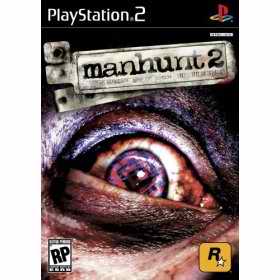
Irish poll supports ban of Manhunt 2
|
See full article from RTE
|
 An opinion poll carried out for the Irish censor's office shows overwhelming support for the decision to ban a controversial computer game.
The research found that 80% of respondents thought the office was right to ban the Manhunt 2
game last year, because of the extreme violence portrayed in it. 16% disagreed with the move and 4% had no opinion.
1000 people over 15 years were surveyed for the poll, which examines the public perception of the work carried out by the
IFCO.
Censor John Kelleher says the results show people support the view that computer games have a greater impact on those who play them than films or DVDs.
The findings come ahead of a debate in UCC tonight about whether violent games
should be more strictly regulated.
Kelleher points out that in his five years in the job, some 7,000 computer games have been released and only one has been banned. He says that while the results of the poll are encouraging from the point of view
of the decision to ban Manhunt 2 , he does not see them as a licence to ban other titles.
|
|
4th February
|
|
|
|
Finnish nutter party calls for more game censorship
|
See full article from Game Politics
|
The Finnish Christian Democratic Party (CDP) has issued a call for video games to be screened for violent and sexual content before being made available to the public.
However, as reported by Afterdawn, video games sold in Finland are already
age-rated by the PEGI (Pan European Game Information) system. The Finnish Games and Multimedia Association (FIGMA) has raised objections to the CDP's demand, saying: [Additional content screening would] decrease the number of released games,
cause delays in release schedules, and increase the price of video games.
FIGMA officials also fretted that, faced with too many barriers, Finnish gamers would simply acquire their games through alternative channels.
|
|
1st February
|
|
|
|
Cynical Children's book labelled dangerous for kids
|
See full article from Deutsche Welle
|
The German Family Ministry is pushing to have a book it says slurs Judaism, Christianity and Islam labelled dangerous for children. The book's publisher says kids have a right to enlightenment.
The German Family Ministry is pushing for the
children's book How Do I Get to God, Asked the Small Piglet, by written by Michael Schmidt-Salomon and illustrated by Helge Nyncke, to be included on a list of literature considered dangerous for young people.
The three large religions
of the world, Christianity, Islam and Judaism, are slurred in the book, the ministry wrote in a December memo. The distinctive characteristics of each religion are made ridiculous.
The book tells the story of a piglet and a hedgehog,
who discover a poster attached to their house that says: If you do not know God, you are missing something!
This frightens them because they had never suspected at all that anything was missing in their lives. Thus they set out to look for
"God." Along the way they encounter a rabbi, a bishop and a mufti who are portrayed as insane, violent and continually at each other's throats.
The rabbi is drawn in the same way as the caricatures from the propaganda of 1930's Germany;
corkscrew curls, fanatical lights in his eyes, a set of predator's flashing teeth and hands like claws. He reacts to the animals by flying into a rage, yelling at them that God had set out to destroy all life on Earth at the time of Noah and chases them
away.
The mufti fares little better. While he greets both animals at first as a quiet man and invites them into his mosque, he soon changes into a ranting fanatic. He assembles a baying Islamic mob and holds the animals up in a clenched fist
while condemning them to everlasting damnation through bared teeth and an unruly-looking beard.
The bishop, a pale fat man with a clearly insinuated predilection for child abuse, makes up the unholy trinity which eventually convinces piglet and
hedgehog, after they have survived the long search in the maze of religions, that nothing of any importance has been missing from their lives.
I think that God doesn't even exist, the hedgehog says at the end of the book. And if He
does, than he definitely doesn't live in [a synagogue, cathedral or mosque].
Published in October 2007, the 20-page book's publisher, Alibri, said it was aware it was risking a political battle when it published the book.
Calling the
ministry's accusations an attack on freedom of expression, the publisher said the book answers the question of whether a nonreligious child is missing part of life from the perspective of secular humanism. Schedel added that the book is
intended for nonreligious parents looking to provide their children with a critical view of religion.
The German department responsible for reviewing children's literature is scheduled to discuss whether the book presents a danger to children's
upbringing in a March meeting.
|
|
31st January
|
|
|
|
Dutch Media Minister on TV showing of Deep Throat
|
From NIS News
|
Dutch Media Minister Ronald Plasterk sees no possibilities nor desire for banning public broadcasters BNN and VPRO from showing the explicit porn film Deep Throat . Christian government party ChristenUnie appears to be accepting this
decision.
On 23 February, shortly after midnight, BNN and VPRO plan to show the explicit film. ChristenUnie considers this disgusting. Opposition party SGP, a more conservative Christian party than ChristenUnie, asked Plasterk to prohibit
the broadcast - it has been the only Lower House party to ask for a ban.
According to Plasterk the public broadcasters have 100% editorial freedom. There can be no question of a ban, and no investigation of this will be mounted either. The
government also has no views on any programme, moral or otherwise, said the Labour (PvdA) minister via his spokesman.
Radio programme Standpunt.nl yesterday presented a poll with the statement: The public broadcasters must drop the showing
of Deep Throat. A minority of 42% of listeners agreed.
|
|
31st January
|
|
|
|
Andres Serrano exhibition winds up Swedish Christian Democrats
|
From The Local see full article
|
An exhibition of graphic sex photos have caused a political row in a Swedish town.
Christian Democrats in Alingsås want to close down the History of Sex exhibition at the town's municipal art gallery. The Liberal Party,
usually allied with the Christian Democrats, says art should not be censored.
The photos, by American photographer Andres Serrano, depict scenes including a man performing oral sex on himself and a woman clutching a horse's penis.
The
controversy over the exhibition has been taken to a new level by the involvement of the neo-Nazi Nationalsocialistisk Front (NSF), which has been distributing flyers protesting against the exhibition.
As a resident of Alingsås you are
contributing to this exhibition as it is the council that is behind it. This is your tax money being used to show pornography, the NSF writes in its flyers.
The photos were previously exhibited in Lund, where they were vandalized by
neo-Nazis. As in Lund, the exhibition in Alingsås is closed to children under 15 and visitors are informed about the explicit nature of the photos before entering the gallery.
Despite these measures, Christian Democrats in the town, 50
kilometres north-east of Gothenburg, are livid that the pictures are on display at all. They view the decision by the gallery to give space to the exhibition as a sign of a remarkable lack of judgement.
The Liberal chairman of the
council's culture committee, Lars Lundgren, said he was keen to protect free speech: Politicians should not decide which pictures should be shown or which books should be read. They should stay out of it, regardless of which party they belong to.
|
|
30th January
|
|
|
|
Public TV broadcaster to air Deep Throat in the Netherlands
|
Based on an article from AVN see full article
|
Nutter politicians in Netherlands are up in arms over an upcoming public television broadcast of the 1972 porn classic Deep Throat .
It is a historical symbol of unashamed sexual exploitation and of perverse greed, Christian
Union party leader Arie Slob told Radio Netherlands. The film brought 600 million dollars into the box office, but it also ruined a human being. The so-called star, [Linda Lovelace], later declared that she was pressured into her acting.
Public broadcasting corporations BNN and VPRO plan to air the Gerard Damiano feature Feb. 23 on Dutch TV channel Nederland 3 as part of a late-night block of programming about the history of adult films. The movie will be shown along with a documentary about the movie and a discussion panel with director Pieter Kuijpers, porn actress Kim Holland and German academic Ingo Schiweck, a historian specializing in adult movies.
Robert Interlandi, marketing director for Deep Throat rights holder Arrow Productions said: I know that everyone was very surprised when HBO aired the NC-17 version of Inside Deep Throat, the documentary about Deep Throat…but screening the
full movie on television…wow!
Online discussion groups have suggested that the Christian Union’s efforts might be better focused on the excessive amount of violence shown on television.
BNN television director Maarten van Dijk told
Radio Netherlands that he thinks young people should be able to see the Linda Lovelace classic, particularly if the film is properly introduced by a special edition of our lifestyle program, plus a documentary on Deep Throat.
|
|
26th January
|
|
|
|
German authorities ban daytime adult adverts on teletext
|
From Variety
|
German TV channel RTL 2 is in trouble for running pornographic ads on its teletext during daytime children program hours.
The issue was picked up by the national org for protection of minors in the media, Kommission fuer Jugendmedienschutz (KJM).
While RTL 2 claimed that it has received no objections.
KJM has asked RTL 2 to ban the sex ads by Jan. 24, otherwise it would face fines.
|
|
13th January
|
|
|
|
Slovenia accused of interfering in press freedom
|
From Indian Muslims see
full article
|
The European Federation of Journalists (EFJ) has accused the Slovenian government of interfering in press freedom at home.
The EFJ in a statement said that political meddling with media in Slovenia casts a shadow over the country's current
Presidency of the European Union.
The Government cannot spin its way out of the hard truth that government and politicians have been exercising undue influence on the way Slovenian media work, said Aidan White, of the International
Federation of Journalists (IFJ).
The Slovenian media crisis developed with the launch of a petition against censorship and political pressures on journalism which was signed by 571 journalists. The protest follows government attempts to replace
leading editors in order to stifle media criticism.
There is also widespread concern over legislative and management changes that have placed pro-government people in charge of the country's public broadcasting system.
The EFJ said the
governments response has been intemperate and unacceptable.
|
|
12th January
|
|
|
|
French presidential fun leaves a trail of biographical disputes
|
From Google News see full article
|
Nicolas Sarkozy's ex-wife Cecilia on Friday lost a court bid to block the release of a book in which she is quoted as describing the French president as a womaniser and uncaring father.
The Paris civil court rejected a request for an injunction
order to prevent Cecilia by Anna Bitton, a journalist and former friend of Cecilia Sarkozy, from coming out in bookstores.
The book went on sale Friday along with two others written by journalists, once again putting the spotlight on
Sarkozy's personal life at a time when his approval rating has slumped.
It quotes remarks made by a bitter Cecilia in November -- a month after her divorce to Sarkozy was announced -- assailing her ex-husband as a womaniser and stingy,
a man who loves no one, not even his children.
At the court hearing on Thursday, Cecilia's lawyers argued that a ban was warranted because the book -- excerpts of which have been published at length in French magazines and newspapers -- seriously violated her right to privacy.
They did not deny she had made the remarks, but stressed that they were made in confidence.
But a judge ruled that a ban, even a temporary one, would be a disproportionate measure, especially since the book was already on sale and
that many weekly magazines had published several excerpts of the book in question, without being targeted for suits.
After initially saying they planned to appeal the decision, Cecilia's lawyers announced they would file a separate suit for
violation of her right to privacy, which could be heard in two or three months.
|
|
8th January
|
|
|
|
Irish Film Censor's office to rename as Classifiers
|
No doubt there are thousands of porn films banned implicitly on the back of the 4 bans mentioned. The Irish Film Censor has probably implicitly banned more films than he has passed. From
The Irish Independent see full
article
|
The Irish Film Censor's Office will remove the "censorship" part from its name as it emerged only four pornographic films and one video game fell foul of its powers last year.
Current head of the Irish Film Censor's Office (IFCO) John
Kelleher believes that the role of moral guardian of the masses is long gone.
And to reflect the seismic shift in the ethos of the censor over the past 85 years, the title of "Censor" will soon be no more. The Minister (for Justice)
is planning to change, at my request, the name of the office.
I understand that an amendment is in the pipeline which will change our name from the Irish Film Censor's Office to the Irish Film Classification Office. I think for most people, that
would be a very welcome change, said Mr Kelleher.
Four hardcore pornographic DVDs and one video game have fallen foul of the Irish censor over the past year. Altogether, staff at the Irish Film Censor's Office (IFCO) reviewed more than 8,000
items. None of the 280 feature films and more than 300 film trailers was deemed unpalatable for public consumption.
However, the same cannot be said of four pornographic DVDs and the video game Manhunt 2, which were all banned in 2007. The DVDs
were banned as they were found to be indecent or obscene and likely to deprave or corrupt.
|
|
|