From The
Register
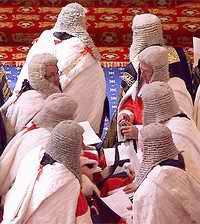 A man who ranted and shouted in telephone calls to his MP should have been convicted for using racist terms that were "grossly offensive". The offence is a necessary limitation on everyone's right to freedom of expression, the House of Lords
has ruled.
A man who ranted and shouted in telephone calls to his MP should have been convicted for using racist terms that were "grossly offensive". The offence is a necessary limitation on everyone's right to freedom of expression, the House of Lords
has ruled.
Mr Collins made a number of calls over a two year period to his local MP, David Taylor. Sometimes he spoke to Taylor's staff in the North West Leicestershire constituency; sometimes he left recorded messages to which staff and Taylor
himself later listened.
Collins was described in court as holding strong views on immigration and asylum policy . He referred to "Wogs", "Pakis", "Black bastards" and "Niggers" in his calls. Some who
received the calls described themselves as shocked, alarmed and depressed by the language.
Under the Communications Act 2003, it is an offence to send over a public electronic communications network a message that is grossly offensive or of an
indecent, obscene or menacing character . The wording can be traced back to legislation passed in 1935 and the charges were brought under an Act of 1984; but the House of Lords considered the case as though the 2003 Act applied.
A lower court
ruled that Collins' language was offensive – but not grossly offensive. The charges were dismissed. The Director of Public Prosecutions appealed without success to the Queen's Bench Divisional Court. He then appealed to the House of Lords.
Allowing the appeal, Lord Bingham of Cornhill ruled that the question of whether a message is grossly offensive must be answered by applying
the standards of an open and just multi-racial society and the words must be judged taking account of their context and all relevant circumstances.
Usages and sensitivities may change over time. Language otherwise insulting may
be used in an unpejorative, even affectionate, way, or may be adopted as a badge of honour.
There can be no yardstick of gross offensiveness otherwise than by the application of reasonably enlightened, but not perfectionist, contemporary
standards to the particular message sent in its particular context. The test is whether a message is couched in terms liable to cause gross offence to those to whom it relates.
He explained that the law does not criminalise the conduct of one
who uses language which is, for reasons unknown to him, grossly offensive to those to whom it relates; rather, it criminalises those whose message is couched in terms showing an intention to insult those to whom the message relates or giving rise to
the inference that a risk of doing so must have been recognised by the sender.
Differing from the courts below with reluctance, but ultimately without hesitation, I conclude that the respondent's messages were grossly offensive and would
be found by a reasonable person to be so. Since they were sent by the respondent by means of a public electronic communications network they fall within the section. It follows that the respondent should have been convicted.
Collins did
not seek to rely on the Human Rights Act of 1998 – which includes a right to freedom of expression. Rightly so, observed Lord Bingham: while the Communications Act interferes with the right, it is a restriction clearly prescribed by statute.
It is directed to a legitimate objective, preventing the use of a public electronic communications network for attacking the reputations and rights of others. It goes no further than is necessary in a democratic society to achieve that end.
The Director of Public Prosecutions appears to have brought the appeal to clarify the law. Due to a previous undertaking, the result will not affect Collins and no order against him will be made.
The court noted that the offence in the
Communications Act overlaps with a similar offence in the Malicious Communications Act of 1988 which is potentially wider because it is not limited to the use of a public electronic communications network. The 1988 Act criminalises, for example, dropping
a letter through a letterbox which is grossly offensive, obscene, indecent or menacing.


 Holyrood officials last night launched an investigation after softcore porn channels were found on the parliament's in-house broadcasting system.
  Senior members of the Royal Academy have complained that the organisers of a new exhibition of works owned by Charles Saatchi had misled them over the nature of “pornographic” items going on show.


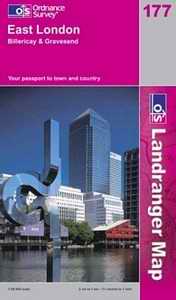 The Ordnance Survey has finally stopped falsifying Britain's maps, almost 80 years after the government first ordered cartographers to delete sensitive sites in the hope of thwarting German bombers.
 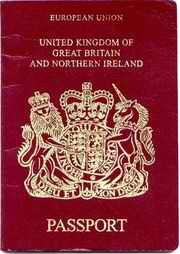 An investigation was demanded last night after it was revealed that about 1.7 million British passports have been issued overseas in the past four years.
  The government-backed watchdog the Child Exploitation and Online Protection Centre will say today it has begun an inquiry young people's networking sites after concern from teachers and parents.