| 12th December 2006 | 3 Years in prison for
owning a dangerous picture!... |
| |
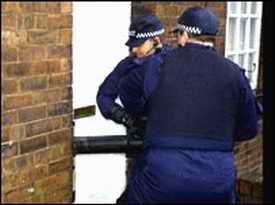 Don't let this happen to you, nor your family, nor your friends. Please
sign the petition Don't let this happen to you, nor your family, nor your friends. Please
sign the petition We the undersigned petition the Prime Minister to Abandon plans to make it a criminal offence to possess 'violent pornography' This proposed law would create a Thought Crime making it illegal to possess
"sexual images" that, in the subjective opinion of members of the Home Office, show activities "liable to cause serious injury or death" even if the participants were consenting adult actors. Update:
Result The petition was signed by 1800 people with the following response from 10 Downing Street Thank you for the e-petition, dated 17 November 2006, about the Government's proposals to make
it illegal to possess a limited range of extreme pornographic material.
The proposals are aimed at tackling the circulation of extreme pornography which would be likely to contravene the Obscene Publications Act 1959 (OPA) if it were published
within the UK. The Government takes the view that criminalising the possession of extreme pornographic images, the publication and distribution of which is already illegal in this country under the OPA, is a necessary step.
With the development
of modern technology the current law is no longer able to control such material and this has created a gap which the proposals are intended to fill. If such material is already being published and distributed such action is illegal under the law at
present. The aim is not to bring additional material within the scope of the law but to criminalise its possession as well as publication and distribution.
The Government's response to the consultation, published last August, states that the
proposed new offence would have to meet two thresholds. First it would apply only to pornographic material, by which we mean material that has been solely or primarily produced for the purpose of sexual arousal. This would be an objective test for the
jury in any prosecution.
The second threshold would also be an objective test for the jury in respect of actual scenes or depictions which appear to be real acts. We would aim to cover activity which can be clearly seen, leaves little to the
imagination, and is not hidden or disguised. By actual scenes or depictions which appear to be real acts, we intend to catch material which is genuinely violent or conveys a realistic impression of fear, violence and harm. Whilst I understand that you
have many reservations about the Government's proposals, they are not aimed at any particular part of society. The consultation was not concerned with the legal consensual material which already circulates and which does not already breach the OPA. The
fact that some extreme pornographic material may in fact be consensual while appearing to be otherwise, does not mean that it falls outside the criminal law.
|
| 29th November | A 5am Wake Up Call
for Horror Fans  Thanks to MichaelG Thanks to MichaelG
I've just fired off
the email below to The Dark Side and DVD World magazines, both national mags dedicated to horror and adult movies. I was quite surprised that neither publication had made reference to the 'Dangerous Pictures' act, given their views on censorship, but if
this doesn't get them sitting up and taking notice, nothing will!
Dear Allan,
I have read your magazine religiously (if that's the right word) for around 15 years now, being a lifelong fan of the cinema and with a particular
interest in horror movies.
I felt I must write to you to inform you of some new legislation which is coming soon from the Home Office, which could have a serious and direct effect upon the entire readership of this magazine and horror fans all
across the country. I am very surprised, given your strong anti-censorship standpoint (with which I wholeheartedly agree), that you have not given any space in the magazine to this before now, but whilst many people will have heard of this new
legislation, few will pay much attention to it because they don't think it will affect them. We are now looking at the most dangerous, excessive piece of censorship this country has ever seen - one which could land you in prison for up to 3 years for
nothing more than looking at a picture. Please allow me to explain.
Just over a year ago, the government announced plans to outlaw the possession of what it called "Extreme Pornography". Much like the way the Bulger murder case was
initially claimed to have come about because of exposure to the 'Child's Play' movies, this all-new, typically British type of knee-jerk legislation came about because of the death of Jane Longhurst. Graham Coutts will stand trial to consider the
possibilities of murder or manslaughter. Graham Coutts was said to have a fixation with violent and pornographic websites. Jane Longhurst's mother Liz, with little understanding of the type of material in question, launched a crusade against such
websites, managing to assemble a petition of 50,000 signatures and gather support from several Labour MPs. Soon after this, the government unveiled plans to outlaw the possession of extreme and violent pornographic material, with penalties of up to 3
years in jail for transgression, even though they admit themselves that they have no proof that such material is in any way harmful. The possible problems became evident straight away as the Home Office, in much the same way they have with the Obscene
Publications Act have failed to provide a clear and concise list of things which are to be made illegal. The real worry comes with their wording within the legislation:
The legislation will target material featuring :
(i) serious violence
(where this means "acts that appear to be life-threatening or are likely to result in serious, disabling injury" )
(ii) intercourse or oral sex with an animal
(iii) sexual interference with a human corpse
To count as illegal,
the material must be:
(a) pornographic (where this means "solely or primarily produced for the purpose of sexual arousal" i.e. two scenes could be visually indistinguishable, but have different legal status if produced for different
purposes)
(b) explicit
(c) real or appears to be a real act (this includes staged acts and is defined as "conveying a realistic impression of fear, violence and harm" )
The proposed maximum penalty is three years in prison, and
your name would also be placed on the sex offenders register.
Now on the surface, you may be thinking that this doesn't really have any relevance to you if you don't go looking for really nasty porn on the internet. Think again - these proposals
are soon to be law as the "Dangerous Pictures Act", and they won't be limited to material downloaded from the internet. These definitions are so wooly, so irrespective of the issue of consent within adult sexual relationships ( a very grave
prospect for anyone into BDSM or bondage), and most crucially to us, absolutely unconcerned with the facts of whether said material is actually real or a work of fantasy! Which now probably puts things into context for all fans of horror movies. Fancy
going to jail for up to 3 years because you own a copy of They Call Her One Eye , Emanuelle in America or even Cannibal Ferox ? Or being placed on the sex offenders register because you have a DVD of SS Girls, Sadomania, Salo or
Night Train Murders ? Next time you have an imported DVD seized by customs, it may mean something more serious than mere confiscation. In theory, you could even get arrested for owning a BOOK about horror movies if some of the pictures were
objectionable. Simply because the Home Office are not prepared to tell us EXACTLY what is to be outlawed, and are not prepared to distinguish between staged acts and real acts , because, in their own words, this latter necessity would "provide
insurmountable hurdles to prosecution". This could quite possibly affect tens of thousands of people, many of which will have absolutely no interest whatsoever in violent internet porn.
I don't want this email to turn into a novel, so I'm
going to leave things here, but please, PLEASE let all your readers know about this and the possible implications. You can find out much more about it on melonfarmers.co.uk (an
excellent anti-censorship website which is well worth a look anyway), backlash.org.uk and there's also a petition going against it at: http://petitions.pm.gov.uk/Violent-Porn/. If
you value the freedoms of living in a democratic society, where you don't have to worry about getting your door booted in at 5am by the police because you've ordered a DVD or visited a certain website, then it's crucial that you join the fight against
this.
|
| 27th November | Consulting the Predisposed
From budgiebird on the SeeNoEvil forum
see full email on thread
Lobbying: Email to CPLU 24th October Email sent to the CLPU complaining about the Consultation:
I am writing to express my dissatisfaction and concern over the way the consultation
regarding Extreme Pornography has been carried out. The original consultation document appeared to be very biased in it's wording, it gave the impression that it deliberately set out to be misleading, a lot of the questions asked were leading questions
designed to get the response the author of the Document was looking for and it failed to give a full range of options for some of it's questions. Furthermore, the list of stakeholder organsations that were invited to respond, was heavily biased, once
again in a fairly obvious attempt to get the result the author of the document was seeking.
CONSULTEES
- Over 70 of the organisations that were invited to respond, comprised of Police forces, police organisations or Justices of the Peace.
- Over 30 Church organisations were invited to respond.
-
69 Womens Groups were on the list of organisations that the Home Office asked to respond, including 13 Race Related Womens Groups.
- 18 Childrens organisations were contacted and invited to respond.
Whilst I can understand the views of the police being sought in relation to the problems which might be encountered in enforcing any new law, the police and our Judges are appointed to do just that, enforce the law, not get involved in
making laws. Even then, was it really necessary to send out individual requests for responses to each and every police force in the land? Surely a few requests to the various umbrella police organisations would have sufficed, or was it merely a matter of
playing the numbers games because it could be easily predicted that the police will always be in favour of more laws which produce easy targets to boost conviction rates?
Why were so many Church organisations consulted? Churches have no expertise
in law or psychology. Their responses were not needed because one of the very few things that unite all religions is that abhorrence of pornography in all it's forms. It is difficult not to come to the conclusion that that was the reason why so many were
included.
Why were so many Womens Groups included in the list of invitations sent out by the Home Office? Once again, the only logical conclusion is that their views on and opposition to pornography is well documented and well known and they were
an easy group of organisations to add to the list of those who were certain to support the proposals.
I don't need to ask why so many Children's organisations were invited to respond. The apparent fixation of the author's desire to attempt to
secure a misleading link in the reader's mind between the material he would like to see made illegal and Child Porn (which is and should be illegal), runs like a thread through the entire document.
So how many psychologists were asked to respond?
Answer... one. That's right, in a Consultation that revolves around the effects that pornography has or does not have upon the human mind, just one Psyschologists organisation was invited to respond. I think that one fact alone, just about sums up how
biased this whole consultation has been right from the very beginning.
The impression which is left is that the Government did not want to seek views which differed from it's own, instead it merely wished to invite organisations to comment that
were predisposed to support the governments view. There was no attempt to seek a broad range of views from different sections of the community.
|
|
5th December | Obscene Origins
 Home Office reply Home Office reply
To budgiebird on the SeeNoEvil forum
see full email on thread Lobbying: Email to CPLU 24th October
Thank you for your email dated 24th October sent to the CLPU consultations email account
about the above consultation and the way in which it has been taken forward.
In particular you express concern about the range of organisations involved in the consultation and you express the view that the consultation paper was misleading in
its content.
It may be helpful if I explain some background to the consultation, which, as is indicated in the original consultation paper, is aimed at tackling the circulation of extreme pornography which would be likely to contravene the
Obscene Publication Act 1959 if it were published within the UK. It set out the Government’s position and proposals in this difficult area and asked for views. In view of the nature of the material, we were mainly concerned to seek views from law
enforcement in drawing up the proposals which is why it was sent to all police forces, although most of our consultations would be sent to all forces as a matter of course. We were also aware that the proposals in the consultation document aroused strong
feelings on both sides of the debate about the availability of pornographic material and the purpose of consulting was to elicit as wide a range of views and opinions as possible. That is why the original paper was therefore also sent to a wide range of
organisations including religious organisations, women’s groups, industry representatives, children’s organisations, representatives of the BDSM community and pro and anti-censorship groups. The consultation also received wide publicity when it was
published and was available online and in hard-copy to anyone who requested a copy.
I understand that you still have many reservations about the Governments’ proposals. The proposals themselves are not aimed at any particular part of society and,
whilst we acknowledge that groups such as the BDSM community and others, have an interest in particular types of pornographic material, the consultation is not concerned with the legal consensual material which already circulates within that community
and which does not already breach the Obscene Publications Act 1959. The fact that some extreme pornographic material may in fact be consensual while appearing to be otherwise, does not mean that it falls outside the criminal law. Nor are the proposals
intended to inhibit legal consensual role play within the BDSM community.
I also understand that you are concerned about the way the Home Office proposals were presented within the original consultation (which was published in August 2005); you
contend that the consultation was prejudged and that the questions were misleading. We do not agree. It was open for any respondent to challenge the premise set out in the consultation - indeed that is one of the main points of consultation. I accept
that, in reviewing any document after such a length of time, it is possible to envisage ways in which it could be presented differently but, in respect of the questions asked, respondents were able to respond to the questions in any way they liked, and
nor did they have to use the reply document supplied. Many respondents replied in whatever manner was easiest and suitable for them, both to oppose and support the proposals, and there was no inhibition evident in the replies we received.
The
reference to legislation on indecent photographs of children was provided to illustrate that there was a precedent for creation of a simple possession offence. It is acknowledged in paragraph 26 “that the arguments are less clear cut in respect of
violent and abusive adult pornography….”
I also note your interpretation of the research in this area described in the consultation document, but cannot agree with your view that there is ‘no evidence ………that watching pornography is harmful’. Our
consultation document acknowledges the fact that there is a large amount of research in this area. The paper goes on to comment that there has been difficulty in interpreting the findings of such research and that this has made it difficult to get a
clear picture and understanding of the possible harmful effects of pornography, and in particular extreme pornography. It is not clear cut in the way that you suggest.
Regarding the issue of protecting children, as well as the proposals seeking
to inhibit the production of illegal, obscene material, we have an ongoing dialogue with the IT industry about internet safety. An increasing number of suppliers and retailers already provide filtering software as part of their home PC packages. In
addition, similar functions are built into some other products, including search engines, operating systems and some ISP connectivity settings. The Home Secretary’s Task Force on Child Protection on the Internet has also initiated work to develop a
standard for such software products, which would lead to a kitemark standard being awarded for products that meet certain child safety specifications.
With regard to your concerns on about the proposed sentence, the three year sentence proposed
in respect of the possession of extreme pornography is a maximum sentence and, as with any other offence, there would clearly be a wide range of sentencing options below that.
Finally, in respect of your concern about the applicability of the
Human Rights legislation, as we outlined in the consultation paper, we have considered whether there are any implications for our obligations under the European Convention on Human Rights. Our view is that both our domestic courts and the Strasbourg
court will find our proposal compatible with Article 10 (freedom of expression) or Article 8 (private life) if that is raised. |
17th September
updated to
3rd November |
Request For Explicit Definition s
Thanks to Franco who wrote the following letter to his MP Announced Ban of Possession of Extreme Pornographic Material
Not one to waste time, I thought I would hence send you my further
questions on this subject; these being not so much on the absolute nature of the law but regarding specific detail of it. There are serious issues remaining in the definition of the crime in question.
Precise Definition needed for the term
‘Explicit’
First I would like to draw your attention to the nature of the definition ‘explicit’ used to define material to be banned from possession. The Home Office response paper merely explains it as ‘not disguised or pixellated’.
However, is the above point referring to explicit pornography, or explicit violence? In order for the ban to apply to a picture, need the depiction be explicitly pornographic (with exposed genitalia) or explicitly violent (with graphic detail of the impact of violence)? These two variables obviously would alter the nature of the law considerably.
The definition of ‘explicitly pornographic’ would require pornographic nudity. Meanwhile the definition of ‘explicitly violent’ would mean very marginal material which by many might not be understood as pornographic at all, but merely violent in
the manner of a mainstream movie, might fall under the ban.
On the other hand would the term ‘explicit’ actually define violence which government wishes to differentiate from implied violence, such as the threatened use of a weapon? Such implied
violence, through threatened use of a weapon, is generally described as ‘gun-play’ or ‘knife-play’ among fetishists relevant to this matter. However, the uninitiated might indeed understand it as ‘violence endangering life or likely to cause serious,
lasting injury’, even though no actual violence, other than the threat of it, takes place. Would the brandishing of a knife or gun, an act of implied violence, in a sexual context fall under this law?
My personal judgement would be that in order
for the definition to have any purpose
- the pornography would need to be explicit (exposed genitalia, during or in consequence of the violent act)
- the violence would need to be graphic (not disguised)
- the violence
would need to be executed (not implied/threatened)
- All three of these conditions would need to be fulfilled for the term ‘explicit’ to apply.
The above paragraph states how I currently interpret the proposed law. I do not understand the law to be banning any acts which involve people with covered genitalia, disguised violence, or implied acts of violence such as the
threatened use of a gun or knife.
In your response please state your agreement to the above assertion, else clarify the nature of your legal intentions specifically.
Boundaries of the Definition of Asphyxiation
If, as I
believe and have pointed out in my previous letter, the asphyxiation fetish is the main target of this law, then the question of what precisely signifies asphyxiation soon arises. Staged scenes where an actor/actress are choloroformed in a pornographic
context; is this a form of asphyxiation? Very widespread are scenes of oral sex where the provider of oral sex chokes on the penis or dildo hitting the back of his/her throat. Would this be understood to be asphyxiation?
Obscene Publications
Act
There have been repeated claims in the media by various MPs that this law merely ‘closes a loophole’ by simply outlawing possession of material already banned under the existing Obscene Publications Act (OPA). This is simply not the case.
The OPA does not specifically ban any type of pornography. It simply states that it is forbidden to publish any material which has the possibility to ‘deprave and corrupt’ a fraction of its audience. To establish this the ‘common law test’ is applied,
which effectively means that each decision has to be applied individually to any material brought before the court. The OPA does not ban outright any form of pornography by name. Therefore the claims, made by several labour MP’s, including ministers, are
simply incorrect, if not misleading.
Minister Coaker’s misleading Statement
It also hasn’t escaped my notice that minister Vernon Coaker, when presenting this issue on the radio (30 August, BBC Radio 4, World at One), simply
claimed the majority of respondents (people and organizations) to the consultation had supported the government proposals. This is in fact the opposite of the truth. Evidently the public were misled. How a minister of the crown can do this is, quite
frankly, beyond me. Is there going to be an apology or at least a public retraction made regarding this evident untruth?
Exception of Material rated by BBFC
The announcement that material which would fall under the definitions set
out by the law, but which has already been rated by the BBFC, seems bemusing. If the government is convinced of the dangerousness of this material why allow it, if it has been rated by the BBFC? If anything it would mean that the staff at the BBFC, whom
the government appears to judge experts in this field, disagree with the government on the very principle which was the cause for this law. In short, this is an inbuilt contradiction into the law itself. Either the ban is necessary or it isn’t. The law
itself, or previous contrary decisions by the BBFC cannot be correct simultaneously.
A comparative Argument of Proportionality
On a more practical level, here is an example, highlighted on the internet recently, of what I see as a
lack of proportion. On July 23 2001 Crawley Magistrates Court sentenced Nadine Trewin to a two-year community rehabilitation order and banned her from keeping animals for five years; this because Mrs Trewin intentionally
killed her pet cat by placing it in her microwave.
I would like to draw your attention to the fact that microwaving the animal did not produce a jail sentence. Yet the offence of possessing a picture of bestiality with that same animal could,
according to the proposed law, lead to a jail sentence of up to three years. Clearly there is a problem with proportionality which would, were this law to be implemented, make a mockery of legal justice. The maximum sentence of 3 years therefore still
appears grossly disproportionate.
So far, this government has very thin credentials on matters of civil liberties. When faced with a choice, it appears to prefer interventionism and prohibition to a more liberal ‘laisser faire’. Can the
government point to any subject matter, apart from political opposition, which it deems abhorrent, yet which it is categorically going to permit due to a principled belief in freedom of expression and freedom of speech?
I await your reply.
|
| 29th September | Reply: Explicit Definitions
From The Melon Farmers' Forum Just got another
letter back from Home Office, signed 'Vernon' to my MP, who`s passed it on to me...
The first point of interest is: The government's response to the consultation states that the proposed new offence
would have to meet two thresholds:
First it would apply only to pornographic (underlined) material, by which we mean material that has been solely or primarily produced to for the purpose of sexual arousal. This we believe would eliminate works
of art, news and documentary programmes and works classified by the BBFC (other than R18, etc...). This would be an objective test for the jury.
The second would be an objective test for the jury in respect of actual scenes or depictions which
appear to be real acts. We would aim to cover activity which can be clearly seen, leaves little to the imagination, and is not hidden or disguised. By actual scenes or depictions which appear to real acts, we intend to catch material which is genuinely
violent or conveys a realistic impression of fear, violence and harm.
then it goes on to say; By serious violence we mean violence which appears to be life
threatening or likely to result in serious disabling injury. The threshold level is necessary since the intention is to target material which is already illegal to publish under the Obscene Publications Act 1959.
What follows is an interesting line: it states that I mentioned BDSM, spanking, bondage and rape material in particular. This covers a very broad range of activity and while not specifically
mentioned in the Government response, such material will fall under the new offence only if it falls within the threshold I have outlined above. The detail is still being considered but it is likely that some
depictions of rape will be covered; material featuring spanking is unlikely to be caught, unless the injuries caused are life threatening.
Next it acknowledges that I wish to know exactly what is prohibited
and goes on to say: The government accepts the importance of achieving clarity with regard to the types of material which are to be covered by the legislation and we will consider giving non-statutory guidance
on the type of activity or injury which we consider would fall within these categories. This will be developed alongside the proposals for legislation.
Now all this seems to suggest shifting ground... Coaker
speaks of a threshold defined by two points, pornography and serious violence. What happened to `explicit`?
My next worry is in this sentence conveys a realistic impression of fear, violence and harm ... this seems outside of the threshold
of pornographic, explicit and seriously violent...
Once again we get the quotation that what is sought to be banned is already outlawed by the OPA... my latest letter challenged this, it will be interesting to see what reply I receive...
Anyhow, we have - at least to some degree - a ministerial sentence which states that bdsm, bondage and spanking material only is effected if it falls within the threshold (pornographic and seriously violent).
But when it comes to rape, he chickens out. Here things are still being considered and it is likely to result in a ban. So something substantial will still be changing in the legislation. At current definition rape would have
to be deemed legal. If Coaker wishes to bring rape within the ban, then he will be introducing pieces he has neither consulted on nor mentioned in his government response.
|
| 30th September | Comment: What are children's charities doing
lobbying around consensual adult pornography? From Alan
W e need to remember that the "individual" responses include that of Professor Julian Petley, the only "expert" to comment who really is an expert - i.e. published in refereed academic
journals on regulation/censorship. Petley thinks the proposal is iniquitous.
The remarks about "arguments advanced" are bollox. All rational arguments seem to be against the proposed legislation. Kevin Kirk's excellent article on
Inquisition 21st Century clearly reveals the self-serving agenda of many of the organizations responding. The reference to children's charities is particularly intriguing. What are children's charities doing engaging in
political lobbying around consensual adult pornography? Consider that the Child Poverty Action group has been denied charitable status precisely because its work is adjudged "political". Perhaps a complaint to the Charities Commission might be
in order
|
| 2nd October | Follow Up:
Good Points Thanks to Franco who followed up his
previous letter wither further very pertinent questions Dear Mr Coaker,
First please let me thank you for your letter to Eric Martlew MP.
I do indeed believe that the achievement of precise definitions is of
paramount importance to the entire undertaking. As you know, I object to the entire idea of this law. Yet, your government being resolved to seeing it passed, I feel it a duty to continue to question the detail and highlight discrepancies where I see
them.
Omission of ‘explicit’ from Definition
Your reply stated only two definitions: pornographic and serious violence. However, your official response to the consultation included a third: explicit. You will recall that my last
letter dealt in some depth with that very definition. Has the official position changed and ‘explicit’ is now to be disregarded as one of the definitions?
Profound Disagreement regarding Objectivity of Test for Jury
In your reply
you state that both the definition of ‘pornographic’ and ‘seriously violent’ provided objective tests. I would dispute this vehemently; this not, because I’m seeking to be contrary or semantic. But definitions such as ‘pornographic’ are inherently
subjective. Tracey Emin’s artwork for example springs to mind, or recent Saatchi art exhibitions. The words pornographic were used frequently used by the media to describe these. If your definition (produced solely or primarily for sexual arousal)
provides some guidance, it is still controversial in a law which criminalises not the producer but the consumer, as it requires the consumer to know the producer’s intention.
Also it could be argued that the initial purpose for the pictures of the
prisoner abuse at Abu Ghraib would essentially fall within this law as the producers (i.e. the abusers) evidently made these pictures for their own pornographic purposes.
Wordings such as ‘seriously violent’ could be put to those in support or in
opposition of boxing and I think you would agree that wildly varying responses would be forthcoming. Also in the debate regarding computer games ‘violence’ is an incredibly controversial subject which virtually every individual interprets differently.
The debate regarding the smacking of children by their parents only adds further fuel to the controversy surrounding the word ‘violence’.
Regarding the above I would insist that ‘pornographic’ and ‘violent’ are in fact among the most subjective
and emotive words in the English language. I therefore make it clear that I categorically disagree with you on this matter.
Relation of new Terminology to Existing Definitions
Your reply also included the term: ‘material which is
genuinely violent or conveys impression of fear, violence and harm’. This seems entirely new terminology.
How precisely does this interact with the definitions of ‘pornographic’, ‘explicit’ and ‘seriously violent’? Is this an additional
definition which can capture material not effected by the other three definitions?
The introduction of this new term seems to jar with the intended clarity in definition. After all, ‘impression of fear’ is heading into extremely tenuous territory
for a legal definition. Inclusion of such wordings into the law could eventually introduce pornographic material of very little violence, or possibly none at all, due to an actor or actress feigning distress for dramatic purposes.
So please
explain the exact role of this new terminology.
Shifting Grounds
Your mention of ‘some depictions of rape’ being covered by this new legislation seems to hint at shifting grounds. As serious violence is defined as effectively life
threatening, rape would as such fall outside your definitions. Your intention to include some rape imagery therefore suggests that you intend some substantial changes to the legislation which so far have not been disclosed. I would urge that the nature
of these changes is revealed forthwith.
Element of Intent required
The definition of serious violence as threatening to life or causing possible disabling injury has been cause for some concern with people interested in bondage.
Among the more advanced rope artists suspension bondage is quite widespread. This entails suspending the model with ropes. I stress this doesn’t involve hanging her by the neck. However, the fear is that it could be argued that, should the suspension
fail, the model might injure herself and that therefore the depiction of suspension bondage could fall under the law.
Personally, I feel that this is not the way this law is intended. As I would understand your intention being to outlaw
depictions of actual, intentional, severe harm, as opposed to possible, unintended harm.
Perhaps the above suggestion is a good example of the current distrust felt by many toward the government’s intentions. The fear remains that the law could
be ‘bent’ sufficiently in the courts by prosecuting lawyers to allow sexual activity which entails an arguable risk to be ‘violence threatening to life or likely to cause serious, lasting injury’.
If it seems impossible to exclude every
conceivable unintended possibility, it may be wise to include an element of intent into the wording of the law regarding the definition of ‘serious violence’. (e.g. ‘violence intended to be threatening to life, etc.’ )
Threat to the Obscene
Publications Act so far no addressed
In my initial submission to the government consultation I raised an argument which I believe was not addressed in the government response. However, it seems imperative that the issue is taken seriously.
The problem is a follows:
The fragile interpretation of the Obscene Publications Act is that publishers are required to judge if a fraction of their audience could be depraved or corrupted. It assumes a certain part of the adult audience at least
to be impressionable, naïve, possibly influenced by such material. It therefore places the requirement of legal competency on the publisher. The individual is deemed effectively incompetent and therefore in need of legal/censorial protection by the state
from any untoward materials of the publisher.
However, this legislation bestows the idea of legal competency on each adult individual in judging pornographic material for himself. Else the individual can not be punished with imprisonment. The
premise of the individual being impressionable and naïve, requiring protection is thereby removed.
Ergo, it contradicts the underlying argument of the current interpretation of the OPA. It seems therefore inevitable that the OPA will have to be
radically reinterpreted in the courts. This however will fall completely outside the influence of your department. It is foreseeable that a much more liberal interpretation of the OPA will follow, resulting in the publication of more and stronger
pornography, not less.
Another possibility is the effective collapse of the OPA by it falling into effective disuse due to the contradiction inherent to this law. I stress that, in my view, this is a significant problem.
To expose the current
conventions of the OPA to such fatal contradiction for the addition of a highly controversial piece of legislation seems at best courageous, at worst reckless.
Prime Minister’s Comments
There is a need to explain how the Prime
Minister’s comments of 5 Sept 06, merely six days after the announcement of this legislation, square with government intention to ban possession of a type of pornography.
‘It is not for the State to tell people that they cannot choose a different
lifestyle, for example in issues to do with sexuality. All that has changed and rightly.’
The above quote is taken from a government website at (www.number-10.gov.uk/output/Page10037.asp). It is therefore a matter of undeniable, official record.
An individual’s use of pornography is undoubtedly a question of sexuality. The prime minister’s statement therefore seems to be in complete contradiction to the actions of your department. How is the public supposed to interpret this?
Reassurance concerning Safety of Opposition
Another concern has been repeatedly voiced by some opposing this legislation. There is a fear of recrimination should this law pass, that those who have democratically opposed this legislation would find their names passed on to police as
prime suspects of being in breech of it. Therefore some feel deterred from further active opposition fearing that else they might eventually find their houses raided in the middle of the night, with all the publicity of local media brought to bear.
Naturally we all would be seeking reassurance that this would not be the case and that active opposition to this legislation will not suffice as reason for police investigation.
Point of Order
The decision having been reached to present the law to parliament at some point in the future, there should now be a fairly clear idea of what the law, in plain English, would ban. It is understood that the exact
legal wording of the statute is still a work in process.
Therefore this is not a question of complex legal phrasing, merely a demand for a final official position of what is actually to be outlawed. We should now be at the stage where the Home Office
at least knows this.
Your response to my question on rape alone suggests the basic parameters of the law are still in flux, which might further broaden the scope of the legislation.
This is extremely worrying as it begs the question what
the government actually announced on 30 August 2006. An aspiration? Or the intention to outlaw specific material?
The series of questions for clarification I alone so far have sent you seem to suggest that there indeed remain substantial gaps
within the intellectual fabric of this legislation. This before the question of compatibility of human rights law is even broached.
I would like to make clear that I present these thoughts without hostility. I have remained constructive
throughout as I believe befits civil opposition. The point above is not raised emotively or from a position of argumentative opportunism. But the nature of the law itself still being in flux at this point is cause for concern.
I await your reply.
|
| 28th October | Reply
: Legislation Being Prepared
"Parlimentary Counsel" would be the barristers and lawyers employed by the government, who would have to
frame their censorious repressive desires into legally workable laws... Thanks to Franco who posted about the reply on The Melon Farmers' Forum Just received reply from Home Office to
my last two letters...
it seems they are now trying to close down the debate...
Below are the paragraphs of interest. and my comments...
In your letters you raise a number of issues where you have concerns over the governmen's
response to the consultation. I should note that the response set out policy rather than being couched in terms suitable for legislation. While it states the principles, it will be for parliamentary counsel to draft legislation.
I
understand your wish to know exactly what will be prohibited. The government accepts the importance of achieving clarity with regard to the types of material which are to be covered by the legislation and will consider giving non-statutory guidance on
the type of activity or injury which we consider would fall within the categories I have outlined. This, along with clarification of police powers in this area, will be developed alongside the proposals for legislation.
Regarding the OPA,
they totally missed the point(intentionally?): with regard to your comments on the OPA 1959, the threashold has been set at a high level to ensure that it will only catch material, which would be subject to prosecution if
the police were aware of its publication or distribution. AS you note, the OPA does contain a general test of obscenity which juries apply in each case. However, the law enforcement authorities have considerable knowledge of the type of material which
juries find to be obscene, they have fully been involved in the consultation process and there is no wish to go beyond the scope of the Act.
I also note your comments about the proposal to exempt material classified
by the BBFC. You may be aware that the BBFC asked us to consider the option to ensure that those who buy pornographic material given an R18 classification were not concerned that the material they held was in breach of any proposed legislation. It is
also the case the under the Video Recordings Act 1984 the BBFC would not classify material which may breach the OPA 1959.
so no matter if the exemption of BBC material is illogical I guess...
With regard to your comments on
`proportionality`, sentencing is a matter for the courts. The three year sentence proposed in respect of the possession of extreme pornography is a maximum sentence and, as with any other offence, there would clearly be a wide range of sentencing options
below that.
So what would the 3 year maximum be used for? hmmm...
Finally, I can assure you that opposing this legislation in a peaceful, democratic and lawful fashion would in no way serve as grounds for police investigation or
any other such action.
The letter is interesting by its omissions as well as by what it says... so no comment on Blair`s speech where he states that the government should stay out of personal sexuality... The
legislation now is subject to 'parliamentary counsel', so essentially they no longer want to answer questions...
Generally there now is a move to close things down... I don't see the tone of this letter and my Labour MP's unwillingness to be
helpful as coincidence... they're getting on with it and they're shutting shop to the outside world... next stop: announcement of detailed legislation... it seems how they arrive there is not to be revealed...
|
| 3rd November | Follow Up: When the Policy Unit Doesn't Know
the Policy Thanks to Franco who continues his discussion with the Home Office
Thank
you for your letter dated 20 October 206.
I refer to the following statement made in your letter: I should note that the response set out the policy rather than being couched in terms suitable for legislation. While it states the principles,
it will be for the ‘Parliamentary Counsel’ to draft legislation.
The above statement obviously refers to my detailed questioning of your policy. A policy which so far has been shown not to stand up to detailed scrutiny. However, as long as
the Home Office Policy Unit remains unclear on policy, then policy must continue to be questioned, scrutinised and probed.
I cannot stress strongly enough the fact that so far, your department has not been able to provide a definition that
satisfies even your own views.
In a letter dated 20 September 2006 Vernon Coaker states that: …it is likely that some depictions of rape will be covered. This however does not fit with your own definition of ‘serious violence’ (likely to
cause death or serious, lasting injury). Rape doesn’t threaten life or cause serious, lasting injury.
It is therefore not the lack of legal precision but the simple inability to describe your own policy that is cause for concern. The questions
‘what are you intent on banning?’ should be something answerable by your department. An intent to ban is a matter of policy. You are the Home Office Policy Unit. Deferring to the Parliamentary Counsel does simply not suffice.
Personally, I cannot
help but suspect that your statement is more an attempt to close down debate and to deter any further opposing correspondence being sent to your office.
In fact, given that my two letters, to which your latest correspondence was a response, were
of considerable length and contained many arguments and questions, your reply seems somewhat brief. Curtailed by what I ask; a wish to be rid of such scrutiny? I understand entirely that letters such as this one are an inconvenient irritation to
government departments. I would stress that I in turn find it an irritant having to write these letters. I would have other things to do and unlike yourselves I‘m not paid for the privilege. Yet I see it as my civic duty to oppose, to scrutinise, to
demand explanation on this proposal and where necessary, make your department answerable to the lawful, democratic opposition to this policy.
A proposed law’s intended content is a matter of policy, its legal wording a matter of Parliamentary
Counsel. I am inquiring about the intended content of the law. I am therefore inquiring on policy. You are the Home Office Policy Unit. What is the law’s intended content?
Parliamentary Counsel is to draft law according to policy, not make
policy. You therefore must be in possession of working definitions which you can provide to Parliamentary Counsel. So, what has Parliamentary Counsel been instructed to furnish a legal text for? Are they working purely from
the definition provided by the government’s consultation response? Or have further definitions and instructions been added? Or are they to decide on policy themselves, where the gaps in policy are evident? In short, please provide me with the same
instructions you have forwarded, or will forward to Parliamentary Counsel.
As we all know by now the definitions published so far simply do not hold water.
We in opposition are convinced that there are alternative definitions in use in your
department.
The decision to proceed was self-evidently based on a political bias as it was contrary to the weight of argument provided in the consultation response.
If the opposing camp could muster academics of law, media and psychology,
even expert argument from a QC, then the majority of those in support of this folly are organisations that are opposed to all pornography per se. So be it. Government is not obliged to heed consultation responses.
But on the decision having been
reached I would have thought there would be an interest in the problems opposition foresaw in the imposition of the policy as currently laid out. Should government agree with opposition or not, there is some wisdom to be drawn from its ranks. As it
stands, the policy is flawed. The policy is clearly not yet fully developed and contains inconsistencies and contradictions people such as I have been trying to bring to your attention.
The fact that the new law
undermines the OPA (insistence on individual’s competency negates the duty of publisher to scrutinise if his material depraves and corrupts) remains unanswered . The fact that exemption of BBFC material contains flawed logic (as it implies that material
can be illegal on principle, but rendered legal by BBFC – else exemption is not necessary), which calls into question the reason for the entire policy, still remains. The above points are hardly matters for parliamentary legal experts, but matters of
policy. They are also not the only flaws to be contained within the policy.
The intention behind this policy is confused and unclear. It is ambiguous if it wants to ban material such as rape or not, cannot define a dividing line between legal and
illegal adult pornography and flails helplessly at producing some kind of consistent underlying principle. Ministers misrepresent it on the radio and the prime minister contradicts its very sentiment in his official statements. All the above is a matter
of policy, not legal wording. To defer to Parliamentary Counsel simply does not suffice.
Although I agree with the notion the government announcement of 30 August 06 cannot be a legal text within itself, I repeat my question what the government
respond actually announced?
If the precision on what is to be banned is entirely subject to Parliamentary Counsel then you, as the Home Office Policy Unit, do currently not know what it is you have decided ought to be banned. Seen in this light
your reference to Parliamentary Counsel seems ill advised.
In fact it might be of considerable interest to the media if government has announced a policy it is currently ignorant of and will remain so until it is further defined by Parliamentary
Counsel. The policy of introducing any new offence must by definition entail knowledge of what the offence is to be.
Further, I note that your letter contained no reply to my reference to the Prime Minister’s comments of 5 September 06 which
contradicted the very notion of this law.
Once again this referred to a contradiction in publicly stated policy. Yours is the Policy Unit of the Home Office.
I stress that the Home Office’s view on this whole matter has been entirely
partisan. The bias shown in the text of the consultation itself was quite blatant. This approach seems to have continued throughout. This is not least expressed in the organisations which were invited by government to contribute to the consultation. I
believe official complaints have already been received regarding this very matter. Therefore, mine is not a lone voice.
I have readily engaged and contributed on this matter – the first time I have ever seen necessary to do - as I fear the
government is about to commit tragic mistake which will lead to injustice on a scale I think it does not foresee.
Your latest correspondence provides a clear impression that no further correspondence is welcomed and that all further proceedings
prior to this going to parliament,- where it will be subject to party politics and the influence of the whips. This is of deep concern.
The prisoner figures alone that this legislation might generate are so far unclear and is likely to figure in
the thousands at least. Something I would have thought the Home Office, given recent developments, would take some interest in.
Finally, I would like to ask if the ordering of a retrial affects the progress of this proposed legislation. As we all
know the Coutts/Longhurst case was openly linked to this policy by its authors. Government still acknowledges this link by holding back from publication of any consultation responses which refer to the Coutts case.
Therefore I would like to ask
will, according to government, the retrial of the Coutts case have any effect on the further progression of this legislation? For example, is it on hold until the Coutts case has been resolved?
Or is government now to state that there is no link
between the Coutts case and the proposal of this legislation? If so, what light does this cast upon the relevance of the Longhurst petition which was considered during consultation?
Given that everyone is keen to know how and when things will
progress, I would much appreciate clarification on this matter.
I trust as the Home Office Policy Unit you are obliged to keep democratic, political opposition to policy informed. I await your swift reply.
|
| 28th December | Reply: When the Policy Unit Won't Tell the Policy
Thanks to Franco who transcribed his reply from the Home Office on SeeNoEvil
I understand that you continue to have concerns about Government policy in this area and seek more information about proposed legislation.
I also note your comments about rape material and your view that 'rape does not threaten
life or cause serious, lasting injury'. We disagree. With regard to Mr Coaker's answer of 20 September about the depictions of rape which may be covered by the legislation, our position remains the same - some depictions of rape will be covered if they
meet the thresholds outlined in the Government's response.
I also note you wish to see the instructions sent from the Home Office to parliamentary counsel. I am afraid that I am not in a position to send you sich material which is in the form of
legal advice from the Home Office lawyers. This information is being withheld under sections 35(1)(a) and 42(1) of the Freedom of Information Act. The former allows us to withhold information relating to the formulation and development of government
policy and the latter that subject to legal professional privilege. [further justifications for withholding information not reprinted].
As I indicated in my last reply, the Government will consider giving
non-statutory guidance on the types of activity or injury which we consider will fall within the categories outlined in the previous replies you have received.
In your letter you also appear to believe that the Home Office is using alternative
definitions to that given in the Government response to the consultation. This is not the case.
With regard to the Obscene Publications Act 1959 (OPA), the new legislation does not, as you suggest, negate the duty of a publisher to scrutinise
material before it is published. The proposals include an increase in maximum penalties, from three years imprisonment for publication and distribution offences under the OPA and therefore publishers need very much to be aware of the risks of publishing
obscene material.
I also understand that you are concerned about the way the Home Office proposals were presented within the original consultation (whish was published in August 2005) and the list of organisations which were asked to respond,
which you appear to describe as partisan. We do not agree. It was open for any respondent to challenge the premise set out in the consultation - indeed that is one of the main points of the consultation. I accept that, in reviewing any document after
such a length of time, it is possible to envisage ways in which it could be presented differently but, in respect of the questions asked, respondents were able to answer to the questions in any way they liked. Many respondents replied in whatever manner
was easiest and suitable for them, both to oppose and support the proposals, and there was no inhibition evident in the replies received.
With regard to the list of organisations to which the document was sent, it may be helpful if I reiterate
some background to the consultation. As was indicated in the original consultation paper and explained by Mr Coaker in a previous reply to you, the proposal is aimed at tackling the circulation of extreme pornography which would be likely to contravene
the Obscene Publication Act 1959 if it were published within the UK. It set out the Government's position and proposals in this difficult area and asked for views. In view of the nature of the material, we were mainly concerned to seek views from law
enforcement in drawing up proposals which is why it was sent to all police forces, although most of our consultations would be sent to all forces as a matter of course. We were also aware that the proposals in the consultation document would arouse
strong feelings on both sides of the debate about the availability of pornographic material and the purpose of consulting religious organisations, women's groups, industry representatives, children's organisations, representatives of the BDSM community
and pro and anti-censorship groups. The consultation also received wide publicity when it was published and was available online and in hard-copy to anyone who requested a copy.
We acknowledge that questions about 'pornography' and whether the
possession of material should be an offence do raise strong feelings. It is hardly surprising that, when such strong feelings are held, we have received complaints - both from those who feel the proposals do not go far enough and from those who feel
there should be no new legislation in this area - when people have disagreed with the proposals.
We have also noted your views about the comments made by the Prime Minister on 5th September. However this legislation is not aimed at any particular
lifestyle or sexuality as you appear to suggest. While we acknowledge that groups such as the BDSM community and others, have an interest in particular types of pornographic material, the consultation is not concerned with the legal consensual material
which already circulates within the community and which does not already breach the Obscene Publications Act 1959. Nor are the proposals intended to inhibit legal consensual role play within the BDSM community.
With regard to the retrial of Mr
Coutts, that is a matter for the Courts and one which we will keep under review. Whilst the Coutts case highlighted problems in the law, it is not the case that the legislation to tackle the possession of material of illegal material is simply dependent
on that case.
|
| 18th October | Fence Sitting Thanks to Simon (Dark Angel) who wrote the
following letter to his MP, response below Dear Mr Simmonds
You may recall I wrote to you in February of this year
expressing concerns about the Governments proposed new pornography laws. I am to contacting you again as I see that the government has, as I feared , decided to forge ahead with its proposals, despite the vast majority of people who responded not being
in favour of this.
Whilst I am aware the scope of the material has been narrowed to images that appear life threatening, or involve scenes of necrophilia, I am still strongly opposed to these new laws on the following grounds…
Firstly,
these laws are being drawn up solely on grounds of taste. It has been pointed out to the government that this material, though distasteful, is in fact staged by consenting adults. So it’s not as if anyone is being genuinely harmed.
Similarly,
there is no evidence to suggest that viewing such material has a corrupting effect on the viewer. The government even acknowledged this in its own consultation document and if you look at countries in mainland Europe, such as Holland, Spain and Denmark,
where this material is perfectly legal and can be purchased openly from high street outlets, you’ll see that they do not have a greater rate of sexual offences than countries where this
material is restricted.
Most alarmingly, as the new laws
make no distinction between images that are faked and images that are real, the police have no requirement to prove that the images are genuine or if consent was involved. People can simply be jailed for pictures that look “real enough”.
This to
me is an absolutely horrendous state of affairs, as restrictive laws are supposed to be based on evidence of harm. This really does beg the question to be asked, why the government has decided to go ahead with this, when it is so clearly out of step with
the rest of the civilised world?
People could also be jailed for photographing their own sexual antics. Not for the acts themselves, but for the pictures they took of them, how ridiculous is that?
Also, as they are essentially creating a
crime of context by targeting only violent pornography, can they guarantee that other material will not be lumped in with it? Police, customs and the various law enforcement agencies have never been known for their film or art critic abilities. Should I
fear a boot in the door if I choose to legally import a horror film featuring “sexual violence” or “necrophilia”?
The government is clearly playing to the puritan gallery, it has side stepped the issues raised in its consultation and failed to
give proper justification for these laws.
Whilst many members of the public may be in favour of some sort of controls on “extreme” material, nobody in their right mind would want to see people prosecuted for viewing material staged between
consenting adults.
The BBC explored this issue when they first reported this, and it seemed the vast majority of people were more opposed to the new laws than the violent pornography the government sought to outlaw. I can back this up with the
following URL, please take time to read this article as well as the public responses underneath, which are more crucial…
www.bbc.co.uk/blogs/theeditors/2006/08/all_sides_of_the_story.html I trust you will therefore oppose these restrictive laws if and when they are debated in parliament as they clearly infringe too far on
people’s civil liberties and would undoubtedly fall foul of human rights laws. In any case, these are not what I would expect to see being introduced into a supposed free country that prides itself on being a “just” and “tolerant” society as they have
all the makings of a modern day “witch-hunt”.
I look forward to your reply, if you wish to discuss any of the issues I’ve raised here in more detail then do please get into contact with me.
P.S. Here’s a couple of newspaper articles on
the subject, that also show these proposals don’t have the publics support (be sure to read the peoples responses underneath)
www.guardian.co.uk/commentisfree/story/0,,1863998,00.html
|
| 18th October | Reply: Clarification and
Procedure I write further to your recent email regarding your concerns over the Governments Consultation on the Possesion of Extreme Pornographic Material.
Thank you for contacting me on this important matter.
I have read the governments response to the consultation and it is clear that there are still many areas which need to be clarified.
This issue has not been brought into parliament and, as such, it is not yet clear what form the bill will take
should it be introduced. However, if a bill, such as this, did enter the House of Commons there are many procedures it would have to pass before it became law, including both in the House of Commons and House of Lords, and it would undergo detailed
scrutiny by committees.
Please be assured that I will take your comments into consideration should the Government attempt to legislate on this matter in the future.
Your Sincerely
Mark Simmonds MP
|
| 5th September |
Please get interfering government ministers out of our bedrooms From The
Observer by Carol Sarler The proposal to legislate against violent pornography is not only unworkable, but fundamentally intrusive, putting government
where we least want it - in our bedrooms.
Whatever turns you on takes yet another kicking as Home Office minister Vernon Coaker denounces violent pornography as 'abhorrent', with which we might mostly agree and therefore, by direct
consequence, proposes a law allowing those who indulge to be imprisoned for up to three years, with which we might mostly not.
His declaration has been hailed as a victory for Liz Longhurst, who has campaigned for such a move since her daughter,
Jane, was strangled during sex in 2003 by her lover, Graham Coutts, a man much taken with violent internet pornography sites.
Mrs Longhurst's passion is as understandable as it is forgivable. The only understanding that one might afford the Home
Office, however, is that it proves itself once more unable to pass by an opportunity for vote-grabbing legislation based on little more than the politics of 'obvious, innit?' - it's horrid, ergo, we ban it.
Actually, it's not obvious at all. For
a start, nobody has offered proof beyond the circumstantial that there is any cause and effect to lay at the feet of these websites. The Home Office itself acknowledges that there is no definitive evidence about the impact of the material, either on the
population at large or on those predisposed to peculiar behaviour. Mrs Longhurst has said: If the furniture of peoples' minds is polluted with this stuff, they can become very dangerous. Yet she then admits: I don't think we can ever prove that
100%.
A year ago, when legislation on this matter was first mooted, I wrote on these pages: It is equally likely that the weirdo is drawn to the internet images because he's a weirdo. I even wonder, sometimes, whether the wretched
images help keep the sad bastards sated and, thus, the rest of us out of harm's way.
Nevertheless, flying in the face of all useful reason, the unstoppable train of crowd-pleasing lurches on. It knows well which buttons to push: the favourite all
along has been the desire to bring violent pornography 'in line with' child pornography, for all the world as if there is a tangential connection. There isn't. No children, by definition, can consent to play a part in pornography, therefore legal
protection for them is clearly required. Some adults, however, may consent to their role in pornography; only where they do not, where coercion of any form is applied, do they need similar protection.
But then, they already have it. It may not be
as rigorously applied as we would wish; still, the production, distribution and possession for gain in this unsavoury industry is legally verboten in this as in many countries.
We already know the difference between the producers within a market
and the consumers of it. What is new about the announcement last week is the bundling of the two together to make a criminal of the man or woman who downloads grisly material in the privacy of their own home, to absorb within the privacy of their own
mind.
What shall we do with the frisky couple who record an evening of consensual bondage and then replay it another night? Shall we add to their sentence if they invite the neighbours around to watch it? Will their fake pain be allowed - but
real pain not? What, then, for my friend Kate who positively relishes pain, in a way that I cannot understand but do accept; will her penalty for a recording of her choice of consensual sex pull a sentence harsher still?
For some reason, we
tolerate a government greatly given to the creation of new laws. Many (most?) of them have proved to be unworkable, but if they are designed to clean up our streets, you might be generous enough to say that they tried. This proposed law, however, is not
only equally unworkable, but is fundamentally intrusive, putting government where we least want it - in our bedrooms - and is designed less to clean up our streets than our minds. For that, we might come to prefer that they hadn't even tried in the first
place.
|
| 5th September | Realistic Depiction of an MP
From Graham on Backlash Dear Mike Hancock (Lib Dem MP)
It is with regret that I find I have to write to you again as I note that
this Government is going ahead with its plans to create a "Thought Crime" by making possession of "violent porn" a criminal offence.
This decision is based their interpretation of the results of a deeply flawed
"consultation" document which drew entirely fallacious comparisons with Child Pornography and which made claims that since the proposers of the law found such imagery "abhorrent", it should be banned to protect the rest of us.
This document was not only criticised by members of the Spanner Trust, but also by Rabinder Singh QC (a leading Human Rights lawyer), the BBFC and Channel 4 Television amongst others.
The definitions of what the Home Office claim to be
"violent porn" are entirely subjective and the only way they will be tested is when some poor soul is hauled in front of their court to have their reputation destroyed even if (or when!) they are found to be not guilty.
This law is a
pernicious attempt to control what individuals in this country are permitted to see, based on nothing more than the personal opinions of members of the Government and that is a breach of basic Human Rights and I urge you to impart this to your
Parliamentary Colleagues and suggest that they the implications of this law before people are locked up for looking at "dangerous pictures".
From Mike Hancock (Lib Dem MP)
 Thanks for your email and as you are (obviously!) aware we had a detailed email exchange about this at the time of the consultation so you know where I
come from on this. Thanks for your email and as you are (obviously!) aware we had a detailed email exchange about this at the time of the consultation so you know where I
come from on this.
I have to say today we have a rather terse press release from the Home Office which says: "Under new laws announced by Home Office Minister Vernon Coaker, it will be illegal to possess pornographic images depicting scenes
of extreme sexual violence. This would include, for example, material featuring violence that appears to be life threatening."
So it is difficult today to know still exactly what the Home Office is proposing and what the exact form of the
legislations will be.
While as you know I (and am sure many Liberal Democrats) share your free speech concerns, we do differ over whether nothing should be made illegal or if you like everything (i.e. all adult pornography however extreme) should
be legal which is I think basically your viewpoint but not mine and as I said last time I can conceive of material - particularly realistic life-threatening violence in a sexual context that I would want to outlaw.
At the moment, as we discussed,
distribution of material that goes beyond an R-18 rating is illegal but not its possession. And there is a case to made that if society has deemed that some material should be if you like "illegal" and not be distributed than its possession,
given that we essentially cannot control its distribution on the internet, should be made illegal. And the Home Office have said that what they propose to outlaw is possession of material that goes beyond R-18 material.
There remain for me two
hurdles. The first is whether the Government succeeds in defining what it what it wants to outlaw in terms of extreme material. They also, as we discussed before, need to define how realistic it needs to be and how they define the journalistic and
artistic defences to showing it. As you I think from your email, are aware, Channel Four pointed out in their submission that they have shown some quite extreme material in a journalistic/documentary context which has been deemed to be within the
broadcast/Ofcom guideline which are obviously more stringent than those for R-18 videos. I guess given they are now coming forward with these laws the Government think they can frame these definitions legally. But as we said before it is a difficult
definition to draw up and as I say I cannot and I suspect many of my Lib Dem colleagues cannot come to a definitive conclusion until we see exactly what is proposed.
The second problem is that people who "accidentally" come across such
material should not be prosecuted and this again is quite a tough one - one could foresee someone downloading a video off the internet and only once it is downloaded would someone know it is illegal and then it is difficult to differentiate between
whether they kept it for a long time and then deleted or deleted it immediately. And indeed how long do they have to keep it for it to be an offence? And I am not sure that could be reliably ascertained forensically from a computer.
As you point
out Rabinder Singh QC has also said that in his opinion there is quite a large question mark over whether these laws will be compatible with human rights laws and although he has come to an opinion that they probably won't be, I guess you can't come to a
clear opinion until the exact form of the legislation is known. Obviously the Government will either need to frame something that is within the Human Rights legislation or it will be open to challenge and indeed a prosecution could be (ultimately)
successfully defended by recourse to the Human Rights laws. It is perhaps disappointing that we don't have a written constitution like America but these laws are, at least at the moment, the ultimate and essentially only legal defence of free speech and
human rights against laws that go too far.
While we don't fully agree on this issue, thanks once again for getting in touch and I hope that helps again in outlining where I am coming from and I suspect that we will continue to have an exchange of
views as we learn more of exactly what the Government proposes!
Dear Mike Hancock (Lib Dem MP)
I appreciate the points you have made, however I do not feel you have quite understood my position. It is not that I
necessarily consider that "all adult pornography however extreme should be legal" but that this proposed law is based on entirely subjective opinions of what is "acceptable" or "abhorrent".
Where the Home Office says
"it will be illegal to possess pornographic images depicting scenes of extreme sexual violence. This would include, for example, material featuring violence that appears to be life threatening" the important word is "appears".
I cannot believe anyone could consider it reasonable that, if someone were to take a pornographic photograph involving consenting actors that "appears to be life threatening" they would not be jailed for the act involved, but they would be
jailed for possessing the photograph! This would be a nonsensical situation.
These proposals are a retrograde step in that they would extend the law into an area it has never gone before, ie making it illegal to possess pictures of acts which are
not, in themselves, illegal! This is, of course, entirely different to the case of child pornography where the images portray illegal acts with non-consenting subjects (a fact that the Home Office's biased consultation completely failed to mention).
You say that "Obviously the Government will either need to frame something that is within the Human Rights legislation or it will be open to challenge and indeed a prosecution could be (ultimately) successfully defended by recourse to the Human
Rights laws" and I agree that is true, but in the mean time some poor soul will have had their life and their reputation destroyed along with all the attendant stress of being hauled through the courts and being tried in the media and that, in my
opinion, is no way to ascertain the validity of a law.
I would also remind you that, of course, Graham Coutts, the murderer of Jane Longhurst (except that may now become "man-slaughterer" as his case is going to appeal) had been
engaging in breath-play games and drawing nooses on photographs of women long before the internet was available, so it seems that "violent pornography" is simply being used as a scapegoat and this is just an excuse to increase censorship.
On that matter, you say that "there is a case to made that if society has deemed that some material should be if you like "illegal" and not be distributed than its possession, given that we essentially cannot control its distribution
on the internet, should be made illegal", however I cannot agree with this.
For a long time in this country it was illegal to distribute a picture of an erect penis or to show sexual acts, yet, even then, it was not a criminal offence to
possess such material. The law in that situation has now, at last, been relaxed (without the country turning into raging sex maniacs!) yet these proposals want to make you a criminal simply for *looking* at something that someone else doesn't like.
This is not just ludicrous, it is a very dangerous precedent because it goes beyond "protecting the public" and into the realms of State Censorship where you can be locked up for possessing something that the State doesn't want you to have.
Countries such as China have laws like this. I wouldn't expect them in this country.
Finally, you say "I guess given they are now coming forward with these laws the Government think they can frame these definitions legally", but from my
point of view, this is just a desperate attempt by a failing government to grab some positive headlines and make look as if they are "doing something" in order to placate Middle England.
The fact that innocent people who simply have
different sexual tastes from the norm may end up being jailed seems unimportant to them.
We may disagree on whether or not "extreme material" should be restricted, however I hope we can agree that, whatever the case, these proposals are
most certainly not the way to go and I urge you and your Parliamentary colleagues to consider the dangers that the represent and fight to ensure that they never reach the statute books.
|
| 4th September | Don't Watch This, Don't Watch That... Oh, Don't Watch This Either
From The Friday Thing Liz Longhurst can't really be blamed. Backed by MPs and a 50,000 name petition, she's just won her court battle to get a ban on the violent porn which
she believes had a hand in the murder of her daughter. Any of us would be likely to seek the same in our rage and grief - whatever we fiercely defend now, we'd be very likely to try and pulverise it out of existence if it killed someone we loved. It
might be more Buddhist to forgive, of course, but when it's something abstract like porn which society doesn't especially smile upon anyway, then the moral imperative isn't there. The assumption is that porn, unlike, say, cars (which kill people
relatively often), serves no positive purpose. So it can go, and it's better all round. No argument.
The campaign has led to the government announcing plans to make the possession of violent porn an offence, carrying a penalty of three years'
imprisonment. This apparently 'closes a legal loophole'. But where 'offensive material' is concerned, there's a whole scarf of possible loopholes, depending on where your line of squeamishness is. The material gobbled up by Graham Coutts allegedly
inspired him to strangle Jane Longhurst, and we'd totally buy that in part, it did - of course, you need a disturbed mind to begin with, but extreme porn is more likely to trigger the latent murderous urge than extreme mountain-biking. We can't be sure
what the material consisted of, exactly, but we'd probably be shocked by it. It's probably stuff that's way beyond what we can stomach, despite priding ourselves somewhat on our dauntlessness in the face of gruesome things. We don't like sexual violence
all that much, thanks, and we probably wouldn't want to go drinking with people who film it for a living.
And yet once again we find ourselves trotting out the same tired anti-censorship drivel to ourselves, because we sort of have to. It's
bothering that the government are seeking to draw firm lines across porn, tidy up the legislation, and decide what makes its watchers dangerous and what just makes them a bit horny. Once you get into 'extreme' territory, lines start to get inevitably
blurry - one person's extreme is another person's gentle pursuit. A couple of nanoseconds online throw up a whole dossier of evidence against puppy-burning, skull-fucking, child-eating Marilyn Manson, who genuinely frightens and angers thousands of
people. You might not be able to watch his naked sacrilegious cavortings in polite company, but it's not really horrific - it's just the somewhat provocative work of a clever bloke with a strong visual sense and a rather childish love of swearing. Not
that you can compare the video for 'The Fight Song' with whatever Graham Coutts was watching, but for some people the line of tolerance is so far back from both, they might as well be cut from the same heaving slab of evil. (Not to go too far down this
road, but 'The Exorcist' and 'A Clockwork Orange' were both banned until a very few years ago.) Trusting a government to be able to draw sensible boundaries is difficult, especially when you suspect they'd pretty much ban all porn if they could. (They'd
have a fine example in their US counterparts, who are busily sending the FBI into public libraries to rip the throbbing, tumescent menace out at the root.)
The thing with porn is that plenty of perfectly well-adjusted people use it in order to
healthily and normally and peaceably wank themselves into stupors. It's a legitimate thing for a person to do in a free society. Some people are built to need nastier, more dubious material to get them going - some of them may not be very pleasant
company, but that doesn't remove their right to look at what they choose. Even though they might go on to commit a crime, which may or may not have anything to do with what they've been looking at - you have to let people look at porn just as you have to
let people drive cars. The activity is not inherently dangerous. Porn serves a need, otherwise it wouldn't exist, and whatever issues its existence raises it can't be denied that it makes many people pretty happy.
But despite the well-documented
problems with sexual dysfunction and repression which the lack of an outlet can cause or perpetuate, the government is never going to consider for a breathless second that porn (in essence at least) must be protected as a valuable resource. As with
drugs, it's just a lot easier and cleaner to Not Go There, and file porn away as one of those irrational little evolutionary blips that serve no purpose whatsoever. Like vestigial tails. (We're sure there's some porn on that, but you can look it up
yourself, you craven degenerates.) It's something people consume because they simply don't know any better, not because it serves a basic requirement in their lives. Trouble is that if that simple equation were acknowledged:
porn = release + (maybe a
fag),
a few difficult theoreticals might follow...
Such as 'If violent porn led to violent crime in this one case, how do you know there weren't a thousand other potential murderers who never fulfilled that potential, because they were
sufficiently mollified by the same material?' And then, y'know, you'd have to start on about the same principle when it comes to child porn, and what the rate of correlation is between watching and doing, and how many people convicted of possessing child
porn used it to work out their grim fantasies and that was that, and then maybe tentatively think about some kind of safe scheme where you could provide already existing material to paedophiles, like a methadone programme, and... Or maybe you'd be forced
to acknowledge some banal truths about psychology, and how people have inbuilt limits, and how some of them could live in a nice house with no telly or Internet and they'd still kill because of something they thought, not observed.
Yeah, fuck it.
It's too complicated. Ban all of it. Put it all in the Oxford Street branch of Ann Summers and petrol-bomb the fucker. That way there'll be no more sex crime, or at the very least no more hilarious saxophone interludes.
|
| 3rd September | See no evil: The government should stay out of the bedroom - and the
dungeon By Frank Fisher From The Guardian News that the UK government is
set to legislate against the possession of violent pornography, with simple possession punishable by a three year jail term, indicates that not only are we in the dying hours of the Silly Season, but also that we're in the dying hours of reason in this
increasingly irrational nation.
Of all the arrogant, idiotic, kneejerk, populist measures this ignorant and increasingly inept government has proposed, this has to be the worst. Ill-conceived, illiberal, impractical and totally unenforceable - so
why propose it?
A stammering and reticent Vernon Coaker, undersecretary of state at the Home Office and head honcho while the grown-ups are away, gave the game away on Radio 4's World at One . What did the government hope to achieve with
this measure? What motivated it? The hapless Coaker explained that the government apparently wanted nothing at all - it was doing what a dozen special interest groups asked it to do.
Seriously. When asked "Why?" his repeated response
was: What we're saying is that women's groups and police forces who responded to us found it unacceptable ... they said there was a need for the law to be updated and for possession to be made an offence. In other words, Don't blame us guv,
we're just doing as we're told.
We pay these people a great deal of money to weigh up arguments and legislate when necessary - who guessed that all reason goes out the window when a couple of mouthy NGOs and a grieving mother come knocking?
Croaker claimed in his BBC interview that most people who responded to the government consultation on this issue were in favour of a ban - in fact, that's quite untrue. The vast majority of responding individuals opposed it - support for a ban
came from churches, women's groups, charities and police. But let's leave aside for a moment the ugly image of UK legislation being imposed by proven fantasists, unelected do-gooders and the cops, and look at what this would actually mean.
The
new offence claims to fill a "loophole", in that production and distribution of violent porn is already illegal - not so. The Obscene Publications Act contains nothing outlawing such material in those terms, merely outlawing all materials that
"corrupt" - and as any lawyer knows, juries have disagreed on what that constitutes for decades. No, this isn't a loophole, this creates a whole new category of carefully defined criminality - and what's criminal? Well, any image that is
pornographic, and involves violence that appears realistic and would result in death or serious or disabling results. Something like this would appear to fit the bill.
That's from Hitch's Frenzy , probably his most gruesome and sexually
explicit killing, but of course the Master had dozens. Aware of this, no doubt following consultation responses from the diligent Melon Farmers group among others, the government suggests it will be a defence to say that you are in possession of material
previously passed by the BBFC - but how would you know? Are we expected to research the provenance of every online image? Moreover, if rated material is exempt, what's the point of a ban?
The worst still from Frenzy is easily the equal of
any Necrobabes gore. Are we really supposed to accept that quality snuff from Hitch and Dario Argento is not going to affect potential killers, but modern East European slashers will? This is a curious modification of the "would you let your wife
and servants read this book" argument, it seems. If we, good middleclass people, watch it in the cinema at 24 frames per second this imagery is benign; but on a PC in a bedsit, in still form, it will turn you into a maniac.
If fact, the
Government acknowledges that nothing will turn you into a maniac - their own consultation document accepts that there is no evidence that violent porn creates criminal reactions in viewers. They accept that in an evidence-based legislative process,
this law shouldn't see the light of day.
How crazy is this? They know there is no reason for the legislation; the minister launching the policy can't even bring himself to explain why we need it, they know that no other country in the developed
world treats its citizens' liberties in such cavalier fashion, and yet they're proposing to legislate anyway. We can all sympathise with a mother who has lost her daughter in gruesome circumstances, but this sympathy should not be the basis of such
disproportionate and illiberal law. Is this government really so shot of ideas that it has to accept this nonsense?
Of course, the crazier fringe of feminism doesn't see the need for evidence - the anti-porn wallahs at the Child and Woman Abuse
Studies Unit quite openly state that the government is right to argue that it does not need proof that images of torture and degradation are corrupting and may affect behaviour. Opinion appears to be enough.
The excellent Backlash site has
a great deal of debunking material that addresses such bigotry, and also calculates the number of people who could face prison, should this daffy legislation pass - four million members of the BDSM and Goth communities. Presumably these minorities'
rights don't matter to the government. Vernon Coaker was touring the news media yesterday to claim that the majority of British people abhorred such material, that they found it disgusting; friend Coaker, couldn't you once - and perhaps still - have said
the same about public attitudes to homosexuality?
If universal human rights mean anything at all, they mean minorities get their rights too - and tampering with those rights is permissible only with damn good evidence that what you are doing has
a wider social benefit. If the government really wants to start locking up vampire fetishists and auto-asphyxiators, it had better start making a case. It needs to explain definitions used, it needs to explain how enforcement will operate, it needs to
explain who will benefit from this ban, and more than anything it needs to offer up some proof of its ludicrous assertions.
There are already some who reckon this legislation is simply puff, that it will vanish without trace very soon - it's
plausible, since the likelihood of this standing up in the Lords and at Strasbourg is minimal. But there are others who see a wider concern - and reckon such legislation is part of a broad campaign to regulate and control the internet. This too is
plausible. Calls have been made in the past, at European Commission level, for all EU internet users to be identified and registered, and for all online traffic to be monitored. It's easy to see how a government could introduce a violent porn ban, find
it impossible to police, and follow this up with a suggestion that the wild wild internet needs to be tamed - perhaps using ID cards carrying a PC-readable biometric?
Paranoia aside, it's also worth noting that the arguments being put forward
against violent porn are identical to those many put forward against its vanilla cousin. Can we trust the pressure groups to be happy with just one victory? Remember folks, first they came for the perverts...
|
| 2nd September | Please Mr Blair , we don't
need any more laws that can't be enforced The Government seem to be capturing little support for their proposals at the moment. If they can't rely on support from the Daily Mail...who can they rely on?
From the Daily Mail by columnist Tom Utley
Kindly transcribed on
Informed Consent A man in his early thirties is tortured to death by one of the most agonising deaths ever dreamt up by a
sick mind. A woman of 19 is tied up and burned alive. Another has her breasts cut off before being rolled to death on a bed of red-hot coals..
Because of a technological breakthrough, all these images are freely available to children and adults
all over the world. Indeed, they have been publicly accessible for many centuries since the breakthrough I have in mind was the ancient discovery of long-lasting pigments that could be applied to wood, plaster or canvas.
All you need to do if you
want to see images of the sort I have described, is walk into any Christian church or gallery of Renaissance art.
I mention Christian iconography only to highlight the extreme difficulty ministers will encounter when they come to draft the new
law they promised this week, under which offenders will face up to three years in prison if they look at 'violent and extreme' pornography on the internet.
How will the Government's lawyers define exactly what they mean- and where will they draw
the line?
For example, I can't think of anything much more extreme than skinning a man alive. Would Tony Blair have sent Michelangelo to prison for depicting the flaying of St Bartholomew, in hideous detail, in his Last Judgement in the Sistine
Chapel?
Well, of course he wouldn't. But can the Prime Minister explain the exact legal difference between Michelangelo's sublime masterpiece and a cleverly mocked-up film or still photograph on the internet, purporting to show a random young
woman being flayed alive?
Is it just the medium that matters-fresco as opposed to photography or computer graphics (which incidentally get more realistic every week)? Is it the difference of intention between the artist and the pornographer - the
one to inspire, the other to titillate? Or is it just the shear quality of Michelangelo, set aside the vileness of porn?
Whatever the answer, these will be mighty difficult questions for juries to decide. Of course, common sense will get them
most of the way - but I predict very rich pickings for the lawyers all the same.
Images of the crucifixion raise other intriguing questions about the link between what we see and the way we behave. More than a billion people world-wide gaze every
Sunday at often-graphic depictions of this revoltingly cruel way of torturing a man to death. Countless films have re-enacted it too.
So why, if those people are right who argue that violence on screen provokes copycat violence in real life, do
we never hear about crazed Christians rushing out after church or the cinema to crucify their neighbours?
The answer is that the way we behave depends vastly more on the sort of people we are than on images we see.
My own children, I'm
ashamed to admit, watch far too many violent films and play endless video games that involve blowing people's brains out or kicking old ladies in the head. I suppose I should do more to try to stop them - although it would be pretty fruitless if I tried,
since they would only go to their friends' houses and watch the same films or play the same games there.
But I don't worry too much about it because I am absolutely, 100% sure that none of my four sons - bad-tempered though they can sometimes be
- would ever dream of knifing or shooting anyone in real life, any more than I would myself. Like the overwhelming majority of us, they are simply not that sort of person.
In the same way, you can be completely certain that none but the tiniest
handful of perverts who get a kick out of watching violent rape scenes on the internet would ever commit rape or murder in real life.
One man who is said to have done that is Graham Coutts, who was convicted of murdering 31-year-old teacher Jane
Longhurst, hours after looking at websites showing images of torture and extreme sexual violence. He won an appeal on technical grounds and is now facing a retrial.
It is chiefly because of this one case that the Government has promised to bring
in the new law, after a ten-month campaign by the victim's mother, Liz Longhurst, whose petition attracted 50,000 signatures. Like everyone else, I have the most heart-felt sympathy for Mrs Longhurst and the deepest admiration for her determination that
some good should come out of her daughter's awful death.
She is convinced that others like Jane are at risk from these vile pornographers, feeding on the basest appetites of the men who log on to their websites.
I strongly respect her
view - and I fully understand the argument that if nobody looked at this muck, the market for it would disappear. And with the market gone, nobody would produce violent pornography any more, which would mean that nobody would suffer in the making of it.
But many things worry me about the proposed law. For a start, it may well be true that perverted killers like looking at unspeakable filth on the internet. But it doesn't necessarily turn them into killers.
For another, the great majority
of films that purport to showmen and women being tortured and killed are performed by consenting adult actors and nobody actually suffers( except perhaps morally) in the making of them.
We have all heard about 'snuff movies' showing real deaths -
but this new law will apply equally to pornography that relies on acting and special effects.
A third consideration is that this new law will utterly destroy the lives of many men, drawn to look at pornography by curiosity or sexual inadequacy,
who pose no real physical threat to anybody.
But, worst of all, do we really need yet another new law, creating yet another new imprisonable criminal offence, at a time when the Government is setting thousands of violent men free to clear space
in our prisons - men who certainly do pose an immediate physical threat to us all?
Aren't the police far enough stretched as it is, without giving them yet another excuse to sit in offices, watching hundreds of hours of pornography, instead of
getting out on to the beat where they might protect the public?
The new law has New Labour written all over it. Home Office Minister Vernon Coaker knows that countless millions of us will heartily agree with him when he says he finds violent and
extreme pornography 'deeply abhorrent'. He knows that a great many will therefore approve when they see headlines proclaiming 'Government cracks down on internet filth.'
So it is that, long after the headlines are forgotten, we will be saddled
with yet another badly drafted law, to add to the 3000-plus new criminal offences already created under Labour.
It will be yet another law that nobody will be able to enforce properly, because we haven't enough room in our prisons. And yet
another law that will do no obvious good, while giving the police yet another excuse to avoid doing their proper jobs.
Is that really such a good idea?
|
10th March
Update 11th March | Scottish Response: Off with their Bollox!
The Scottish responses to the Government Consultation on Extreme Pornography have now been posted. There were 92 responses of which 66 have been made public. Hopefully those preferring to remain anonymous are anti
censorship because the balance of responses I read (not all) seemed to be in favour of the Government's nasty stance. In fact many of the responses posted are very depressing. There are so many people that support 3 or 5
years in prison for merely viewing images. No consideration of the devastation that they are wishing on people. Hardly a properly reasoned comment amongst them. The lynch mob is alive and well in Scotland and they are calling
for your bollox!
See www.scotland.gov.uk/Topics/Justice/criminal/17543/ExtremePornograhicMateria/Response (missing 'l' in Material is deliberate)
|
| 11th
March | Opinion: 33-28 but Recount Demanded From Teddy Regarding
the Scottish response to the consultation, I make it that 33 out of 66 published responses support the legislation, 28 are against and 5 are neutral/ambiguious. There are some very polarized viewpoints as we might have expected! My guess is that many of
the confidential responses will be against...possibly from those close to or within the governement's cross-hairs.
I was worried that the Law Society of Scotland seemed to buy the government spin that criminal activities are widely involved in
the production of the material in question. The WS society (solicitor's society) made a very strong case against the legislation in counter-balance. I have written to the Law Society of Scotland to ask them what evidence they used in the construction of
their response (see below) but I don't expect a reply any time soon!
I agree that it is incomprehensible why anyone could demand 3-5 years imprisonment (10 years in one case!!) on the mere basis of moral indignation. Again, I think the
consultation document did quite a good job of misleading the public...
|
| 11th March |
Opinion: Organised Repression From Dark Angel on The Melon Farmers' Forum Just been reading through
the responses on the Scottish exec website. the question as to whether people are generally in favour of their proposals doesn`t seem particularly clear cut.
Many people who initially say they would be in favour of a strengthening of the law THEN
go on to say that only in the case where the acts were non-consensual and/or involving animals and genuine cases of necrophillia.
The only people who seem strongly in favour of the proposals in their original form are those totally unaware this
material is in fact faked/staged and consensual.
It`s interesting to note that most private individuals who responded seem generally against the proposals, whereas organisations, such as councils, children's associations and police forces seem in
favour.
Also interesting is that they fail to address the issues such as, how come were the only country that has a problem with this stuff, how do they intend to police what people view in the privacy of their own homes and how is saying
"we can`t view it" going to affect the production and viewing of this material overseas?
It seems they have little knowledge of the outside world and are only interested in trying to maintain this country`s archaic laws.
I`m
still working my way through the responses, but the most interesting reply so far appears to be from "The Scottish Court Service" who have simply said "how much is all this extra work expected to cost us"?
Food for thought
indeed!
|
| 11th March | Opinion: 10 Years for Viewing
an Image From MichaleG on The Melon Farmers' Forum Worrying stuff indeed from the Scottish consultation, I only read a couple of the responses and began to get rether
depressed so I left it at that. Fucking facists like David N. Mackie (if you haven`t read his response yet, please do: it`s very amusing in a terrifying kind of way) don`t even belong in the 21st century in my opinion. What kind of sadist would wish a 10
year prison sentence on someone for viewing an image? To Mackie, this is "...a simple matter of social discipline". Piss off you loser, it`s because of people like you that we`re still languishing in some kind of sexually disfunctional dark age
while most of our European counterparts laugh their socks off at us. Do you think this guy has actually had any kind of sex himself? Ever?
Still, in Mackie`s favour, he does state that much greater clarification is needed on the material in
question, which is undoubtedly the key to this issue. It`s the whole "serious violence in a sexual context", and "realistic depictions, staged or otherwise, with or without consent" that really make this difficult to understand and
potentially incriminating and dangerous to so many people. So here`s me, 35 years old, always worked hard (I now have my own business), always paid my bills and taxes, never taken drugs, never been in a fight, never been
arrested, and I try to be polite and courteous to everyone I meet. Yet in the not too distant, I could be turned, quite literally overnight, into a criminal. End of story, and quite possibly my life as I know it. I`m still optimistic that the sheer
unworkability of the proposed laws will make extensive reviewing before legislating inevitable, but we`ll just have to wait and see.
|
| 13th March |
Opinion: Home Office to Respond in May From Franco
Well the feminists bizarrely seem to have taken to this idea with a vengeance (somewhat illogically, I would argue) but otherwise I don’t see the organizations all coming down in favour… the odd council seems to say yes, but
take a look at the reply by the sheriffs and the Scottish courts and there is no commitment either way… in fact the courts merely state that they’d require additional funds if the law was introduced… so I don’t think all is yet lost in Scotland…
If the backlash site is right and May looks like the date we’ll hear from the home office about the nature of the response, then I think there is indeed hope… had they sought to railroad this through, I think they wouldn’t take that time.. the fact that their response is delayed seems to suggest that at least some considerations are being made… if this is a good thing or merely an indication that they are trying desperately to somehow weld together something new which would allow them to go ahead despite the objections remains to be seen…
|
28th February
Updated 1st March |
Home Office Caught Ignoring Consultation Response From: Jon F to Backlash ( See also Response
from Jon F who also reports the abuse of human rights) I posed 3 Freedom of Information questions in my response to the Home Office consultation paper. Obviously, I've not received a reply within the required period. I'm not
surprised - because I don't think the Home Office has any interest in the views of the private individual. But, that's why I posed 3 Freedom of Informationrequests - to demonstrate that they DON'T read responses to consultation material !
This is
another critical factor in the case to be presented to the European Court of Human Rights (Strasbourg).
Here is the letter I have today issued to the Information Commissioner: -
Dear Sir/Madam,
Freedom of Information
Consultation on Possession of Extreme Pornography
On 14 November 2005 I issued a Freedom of Information (FoI) request to the Home Office as part of my investigation into, and response to, the consultation process on the possession of extreme pornography.
I inserted a freedom of
information request for two reasons – one of them to establish whether the Home Office actually reads responses from the private citizen.
I submitted a particularly detailed paper which seriously undermined the Home Office proposals outlined in
the consultation paper. My paper supported the legislation approved by all European Union states - encompassed within UK legislation in the HRA 1998. My FoI questions sought to tease out elements in the incompatibility between the HRA and the proposals
outlined in the consultation process.
The Home Office initially acknowledged my response. Then the Minister (Paul Goggins) wrote to an MP on 20 December, who forwarded me his letter, providing a very brief outline of his approach following the
consultation process. This response demonstrated to me that he had little understanding of the complexity of the issues I had raised within the consultation period. I was convinced that the Home Office had not read my paper. I fear that the Home Office
may have concluded its approach to the consultation process without examining the detailed reasons why those, opposed to the legislation proposed, held the views they do.
This issue goes to the core of the purpose of your organisation.
I
have been patient, I do not wish to overly embarrass the Home Office, but I wrote in detail on 14 November, posing my questions, and on 29 January, I sent a reminder to Mr Goggins. It is expensive photocopying lengthy documents, so I summarise here the
questions posed in my paper of 14 November: -
3. Freedom of Information Requests.
3.1 Request for information which demonstrates that a request has been issued to a foreign government to investigate an alleged sexual assault or rape.
3.2 An attempt has been made to find on the Internet an example of a real time rape video which appears to be a genuine rape. It may be that Home Office staff have devoted some time to this and have found some material. No money was spent on
pornographic sites during the research undertaken in support of this response, which may explain why the writer has been unable to find a convincing example of a real rape. There is therefore some concern in case the Home Office has claimed material
exists which doesn’t (for some years an “urban myth” was in circulation of the existence of “snuff videos”).
3.3 Given that the consultation paper suggests that virtually all such sites are based abroad, it seems reasonable to expect that, if
such a site had been found, and the Home Office had reasonable grounds to suspect that a real rape had occurred, the Home Office would have asked a foreign government to investigate. Please would you let me have a copy of any letter to a foreign
government which demonstrates that you have asked it to investigate an allegation of rape?
3.4 Request for any legal advice which confirms that the possession of consensual sado-masochistic violent sex can successfully be prosecuted and that
Article 8 does not apply.
3.5 It seems extremely unlikely that violent sado-masochistic sex, which is consensual, and which is not life threatening, can be deemed to be criminal (See: 9.1, 9.3 & 9.4 below: Sexual Offences (Amendment) Act 2000:
definition). Furthermore, it seems unlikely that the possession of real images depicting such acts could also be criminalised – because of the provisions of Article 8 of the Convention. I would therefore like to see any legal advice you have received
with regard to this specific category of material.
3.6 Request for sight of any research which demonstrates that children may be more harmed by access to explicit Internet based material, that is: material more explicit than that which is
permissible within the R18 category (for example “fisting”).
3.7 Would you please direct me to or show me any research you have which demonstrates that children may be more harmed by viewing extreme material on the Internet than by seeing R18
material? Or harmed at all by any such material? (There is a belief that if any harm does occur it may be due to expressions of adult assumed abhorrence.)
3.8 For your convenience I also provide notice of my intention to make a further FoI
request in 6 months time (see paragraph 5.18 below).
I ask that you seek a response from the Home Office to these FoI requests, that you investigate the reasons for the delay in replying, and you also press your obligations to the full - to
establish whether the Home Office actually reads responses received to consultation papers.
While I expect little sympathy from your office to the underlying theme of my response (the right of consenting adults to enjoy bizarre sex in private), I
do ask that you recognise that Government Departments must read responses to consultation papers. An objective observer will, of course, recognise that this has huge implications for issues of mass interest.
|
| 1st March | Update: Well
Maybe a Couple of Admin People Read the Responses A Backlash contributor points out a few likely reasons for delay Consultation responses are all filed and analysed. A
list of respondees and a summary of responses should be made available once the analysis has got that far. If they haven't made such a list and a summary (about 4 pages is typical) online, then feel free to ask them when it will be done. However, the
answer is likely to be: when we can keep a literate admin person long enough to do it!
Given the amount of responses, and there's likely two people working on this entire topic as a small part of their jobs, it's entirely reasonable that
so far they've only been sorted into piles and their efforts have been concentrated on writing submissions saying: Er Minister, you know how you wanted this pushed through by Easter, well actually there's some significant opposition so you're going to
have to think a lot harder, we'll get back to you once we've analysed it all.
RE FoI hat on, it's arguable that words in a consultation response, ie not a letter that has to be responded to, don't count as a 'legible' request and/or that the
authority has not yet 'received' the request [see sections 8 and 10 of FOIA http://www.opsi.gov.uk/acts/acts2000/00036--b.htm ] Write or email them asking the same questions. Mention that you already asked these questions in a consultation response and haven't had any acknowledgement. Bear in mind that if you don't get joy from them, the required next step is for an internal review (under the s45 Code of Practice), and the IC won't consider your complaint if you haven't tried that.
|

 Pink News publicises Downing Street petitions
 This rather shows how dangerous bad taste emails could become due to the
dangerous pictures act
This rather shows how dangerous bad taste emails could become due to the
dangerous pictures act  From Northern Ireland Consultation on Sexual Offences
 Interesting, but when the knee jerking politicians want to put innocent people in prison
for human rights abusing populist policies, then surely they deserve every bit of stick that they get.
Interesting, but when the knee jerking politicians want to put innocent people in prison
for human rights abusing populist policies, then surely they deserve every bit of stick that they get.  From Alan
  From Bob in Upminster.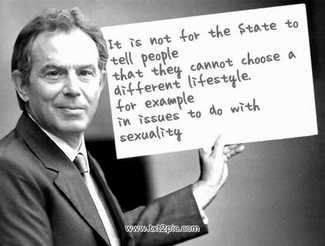

 From See No Evil
  On Thank you for sending me the CD of the consultation resonses.
  A senior Swedish officer has been accused of endangering military security after it was revealed that police found hard-core porn in his
possession.
A senior Swedish officer has been accused of endangering military security after it was revealed that police found hard-core porn in his
possession.  Labour is in danger of getting a
reputation as a "big brother" Government with a tendency to ban everything and curb individual freedom, Peter Hain says today.
Labour is in danger of getting a
reputation as a "big brother" Government with a tendency to ban everything and curb individual freedom, Peter Hain says today.  A great Repeal Act should be passed to slice away a generation of illiberal legislation , Nick Clegg, the Liberal Democrat home affairs
spokesman, will declare today.
A great Repeal Act should be passed to slice away a generation of illiberal legislation , Nick Clegg, the Liberal Democrat home affairs
spokesman, will declare today.  Recent
audience research came back with one big message: "We want all sides of the story."
Recent
audience research came back with one big message: "We want all sides of the story."  In response to the publication of the Government’s proposals to bring forward new legislation on extreme pornography the
following news release was issues by mediawatch-uk:
In response to the publication of the Government’s proposals to bring forward new legislation on extreme pornography the
following news release was issues by mediawatch-uk:  Lawmakers from Israel's
ultra-Orthodox Shas party have proposed two laws restricting access to Internet pornography.
Lawmakers from Israel's
ultra-Orthodox Shas party have proposed two laws restricting access to Internet pornography.  I've just returned from my meeting with my MP, Charles Hendry (Conservative, Wealden).
 Ben Bradshaw (Parliamentary Under-Secretary of State for Environment, Food and Rural Affairs):
  The European Parliament on Thursday
passed a resolution on internet censorship condemning governments which ban content—including Burma, China, United Kingdom and Vietnam—as well as IT companies that work with them to impose online restrictions. Noting that the battle for free speech had
in part moved to online content, the resolution calls on the European Commission and Council to enact policy aimed at safeguarding online freedoms. The suggested measures include putting pressure on countries like the UK that restrict the internet and
that have jailed citizens for their activities online, as well as a voluntary code of conduct for companies including Google and Microsoft, which are accused of facilitating censorship.
The European Parliament on Thursday
passed a resolution on internet censorship condemning governments which ban content—including Burma, China, United Kingdom and Vietnam—as well as IT companies that work with them to impose online restrictions. Noting that the battle for free speech had
in part moved to online content, the resolution calls on the European Commission and Council to enact policy aimed at safeguarding online freedoms. The suggested measures include putting pressure on countries like the UK that restrict the internet and
that have jailed citizens for their activities online, as well as a voluntary code of conduct for companies including Google and Microsoft, which are accused of facilitating censorship.  In January we sought
information on the Government Bill and the schedule for debate in Parliament. A Home Office official advised that around 400 responses had been received and a Government response would be made within three months of the closing date. Halfway through
March we enquired about progress. In April we were advised: officials are meeting groups whose responses raised issues which need examining in more detail … and the Government will give a response to indicate how we intend to move forward, before the
summer recess . In May we wrote again asking whether any revisions to the terms of the consultation had been made as a result of these meetings. The reply to this disclosed nothing new.
In January we sought
information on the Government Bill and the schedule for debate in Parliament. A Home Office official advised that around 400 responses had been received and a Government response would be made within three months of the closing date. Halfway through
March we enquired about progress. In April we were advised: officials are meeting groups whose responses raised issues which need examining in more detail … and the Government will give a response to indicate how we intend to move forward, before the
summer recess . In May we wrote again asking whether any revisions to the terms of the consultation had been made as a result of these meetings. The reply to this disclosed nothing new.  Britain's leading crime
experts have accused Tony Blair of becoming an uncritical "cheerleader for more punishment" and told him that yet another round of criminal justice legislation would be like "putting a plaster on a broken leg".
Britain's leading crime
experts have accused Tony Blair of becoming an uncritical "cheerleader for more punishment" and told him that yet another round of criminal justice legislation would be like "putting a plaster on a broken leg".  Liz Longhurst, together with Reading West MP Martin Salter and Brighton MP David Lepper, met new Home Office minister Vernon Coaker on
Monday for an update on her Dangerous Pictures Act campaign.
Liz Longhurst, together with Reading West MP Martin Salter and Brighton MP David Lepper, met new Home Office minister Vernon Coaker on
Monday for an update on her Dangerous Pictures Act campaign.  I can't imagine the IWF would relish changing from a body with a well supported role into a despised bunch
of state censorship snitches.
I can't imagine the IWF would relish changing from a body with a well supported role into a despised bunch
of state censorship snitches.  All of the material under discussion is clearly of a type that children and young people should
be protected from anyway, whether it is on the internet or elsewhere. Hitherto CHIS [including NCH] has campaigned for better and stronger filtering technologies to keep material of this type away from devices which children and
young people use. By making this material illegal it is therefore likely to give everyone involved in online publishing a greater incentive to find it and remove it, or provide better filtering products to screen it out, in the same way as they already
do with child sex abuse images. In that light we have no hesitation in expressing our support for new legislation of the kind currently under consideration.
All of the material under discussion is clearly of a type that children and young people should
be protected from anyway, whether it is on the internet or elsewhere. Hitherto CHIS [including NCH] has campaigned for better and stronger filtering technologies to keep material of this type away from devices which children and
young people use. By making this material illegal it is therefore likely to give everyone involved in online publishing a greater incentive to find it and remove it, or provide better filtering products to screen it out, in the same way as they already
do with child sex abuse images. In that light we have no hesitation in expressing our support for new legislation of the kind currently under consideration.