Simply Pleasure.com
Award Winning Licensed Stores
www.simplypleasure.com

 World News...
 
2007 April-June

 Hardcore DVD
 Online Sex Shops
 Magazines
Sex Shops List
Satellite X Channels
Internet Video


Melon Farmers Icon

 Home BBFC
Nutters  Sex & Shopping
 Index TV Liberty  Sex Sells News
 Links UK Criminalising Extreme Porn  Sex Sells Reviews
 Forum World Criminalising P4P  Sex Shops List  

world map

World Censorship World News US News UK News
  World Censors Australia News Press Freedom
  World Campaigns European News Internet Blocking & Circumvention

Å

Æ Æ  2007 April-June
World News  2000 2001    2002  2003  2004  2005  2006  2007  2008  Latest
     4 pages   4 pages   4 pages   4 pages   4 pages   4 pages   4 pages   
Previous Next Latest  2 of 4

30th June   Stabbed in the Back...


Peru flagPeruvian cartoonist censored

From Jerusalem Post see full article

A well-known Peruvian cartoonist is complaining of censorship after officials at a Peruvian government-funded gallery removed three of his works, including a drawing that criticized the military for massacres of highland peasants.

The artist, Piero Quijano, referring to officials from the National Institute of Culture, said that it was a "clear" violation of freedom of expression.

In protest, Quijano removed his entire 90-piece show from the gallery where it was to run for a month. The gallery's director resigned in solidarity.

The drawing depicts four soldiers planting a rifle with a bayonet into the back of a peasant - an image mimicking the iconic World War II photograph of US Marines raising the American flag over Iwo Jima.


29th June   Bangkok Not So International Film Festival...


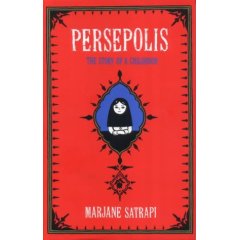
Persepolis book coverFilm critical of Iran censored

From Reuters see full article

Thailand has caved in to pressure from Iran and withdrawn the animated movie Persepolis, about a girl growing up and feeling repressed under Islamic rule, from next month's Bangkok International Film Festival.

I was invited by the Iranian embassy to discuss the matter and we both came to mutual agreement that it would be beneficial to both countries if the film was not shown, festival director Chattan Kunjara na Ayudhya: It's a good film, but there are other considerations.

In a letter published by several news organizations, Iran said the film presented an unrealistic face of the achievements and results of the glorious Islamic Revolution in some of its parts.

Iran's rulers are criticized in Persepolis but so are Western democracies for backing the Shah and supplying his government with weapons.

Persepolis jointly won the Jury Prize at Cannes, is based on best-selling comics by an Iranian-French emigre about her struggling with the authorities in the early days of the Islamic revolution.

Islamophobia in Western drama started in France, and producing and highlighting the anti-Iranian film Persepolis in Cannes falls in line with this Islamophobia, seethed Mehdi Kalhor, a cultural advisor to President Mahmoud Ahmadinejad. He said Persepolis sought to sabotage Iranian culture and will not be the last anti-Iranian film.


The Bangkok film festival, which runs from 19-29 July.


26th June   Sikh Shootout...


Shootout film posterCall to ban Shootout at Lokhandwala

From World Sikh News see full article

Several Sikh organisations have demanded a ban on screening of Bollywood multi-starrer Shootout at Lokhandwala, alleging the film tarnished the image of the community by portraying them as "terrorists".

Scenes relating to Sikhs in the film had not only tarnished the image of the community in the world but was also affecting the minds of the Sikh younger generation, according to Guru Gobind Singh Study Circle Media Study Centre coordinator Balwinder Singh.

There is a flashback in the film where inspector Abhishek Mhatre (played by Abhishek Bachchan) is shot by a group of Sikh terrorists. The organisations urged the Central government to impose a "complete ban" on the film's screening and include a person nominated by SGPC as a member of the censor board to evaluate the objectionable scenes.

They also appealed to Sikhs across the country to "bitterly oppose" the film.


26th June   Update: Tube Censors...


You Tube logoThailand considers unblocking YouTube

From the Bangkok Post
See also FACT who list 1000's of blocked websites

The Information and Communication Technology Ministry plans to ask the cabinet to waive a decree issued by the Council for National Security, earlier known as the Council for Democratic Reform, which has prohibited political websites, said ICT minister Sitthichai Pookaiyaudom.

The junta's decree, known as Order No. 5, which has banned political websites, will be lifted by the Surayud cabinet this week in order to make the people feel better now that the political situation has improved and a general election is to be held, he said.

The ICT minister who claimed to have banned only about 200 websites, 90% of which featured pornography said that Thai-based internet users will again be allowed to access www.youtube.com, the popular video-sharing website after it had been blocked for several months.

[As an aside, according to FACT, the list of blocked websites has increased to 17793 entries (representing 11329 websites). 90 political websites were added to the banned list in May 2007].

Google, the US-based parent corporation of YouTube, had offered to see to it that any lese majeste content will be kept off that website, he added.


25th June   Extreme Censorship..


Russia flagRussia considers censoring internet of 'extremist' material

From Australian IT see full article

Internet sites in Russia should be censored to combat extremist material, a senior legal official says.

Changes need to be made to the current laws. As experience shows there is often room on the internet for the spread of material of an extremist nature, Deputy Prosecutor General Ivan Sydoruk said: Therefore it is necessary to draft an effective control system so that material published there corresponds to legal requirements.

Critics say the laws are also used to stifle political opponents of President Vladimir Putin and to prevent the airing of opposition views on sensitive subjects such as the conflict in Chechnya.

Television is almost entirely controlled by the authorities and only a handful of newspapers, which reach limited audiences, are considered independent.


25th June   Comic Judgement..


Misshitsu comic book coverJapanese Supreme Court finds comic to be obscene

From Japan Today see full article

The Supreme Court ordered a comic book publisher to pay a fine of 1.5 million yen for distributing obscene comic books containing sexually explicit scenes, upholding a lower court ruling. The top court dismissed an appeal by Motonori Kishi, president of publisher Shobunkan Corp.

The district court had sentenced Kishi to one year in prison, suspended for three years, saying, We cannot overlook the fact that the defendant brought about a harmful influence on sexual morality by distributing the comic. According to court rulings, Kishi distributed about 20,000 copies of the Misshitsu (Honey Room) comic book containing graphic sexual scenes to 16 companies in April 2002.

The story leading up to the Supreme Court case from A Short Introduction to Japanese Censorship

In April 2002 a manga Misshitsu (Honey Room) was taken to court for the first time charged with obscenity causing a massive commotion and starting a public debate on freedom of expression and the ubiquitousness of manga with sexual content all over the country.

In January 2004 the Tokyo District Court passed sentence and punished the editor of the manga Motonori Kishi with one year in prison for violating article 175 of the Penal Code for selling and distributing obscene literature. In this instance the president of the jury declared that the manga was far too graphic.

Given the large variety of pornographic material found in all sort of formats and sold all around Japan, the court decision caused some amount of incredulity. Kishi made an appeal to the Tokyo High Court alleging a violation of freedom of expression. The sentence imposed by the Tokyo District Court was reduced in June to a fine of 1.5 million yen by the Tokyo High Court. Nevertheless, the presiding judge rejected any allegations made by the accused that Article 175 is unconstitutional as it violates freedom of expression guaranteed by Article 21 of the Constitution.


24th June   Information Super Byway..


Malaysia flagMalaysia to censor the internet

From X Biz see full article

Following repeated threats by ministers and members of Parliament over the past three years to control online content, the Malaysian government is setting up a task force to look into applying existing legislation on the new media without contravening the country's Bill of Guarantee against Internet censorship.

On 13 June 2007, the Cabinet decided that a task force of senior officers from ministries, a government agency, the Attorney-General's Chambers and the police will scan existing legislation that can be used to check "pornographic and seditious" online content.

An unnamed source said that websites and blogs on race, religion, politics and those critical of the government would be targetted.

More ominously, the task force will look at how the overbroad 1948 Sedition Act can be expanded to cover online material.


23rd June   State TV..


Old iTV logoThailand dictates TV news

From The Nation

Several TITV employees yesterday lodged a complaint with the Thai Broadcast Journalists' Association against "government officials" dictating to them not to produce any news reports that ran counter to government policies.

The statement said government officials attended every news briefing to make sure no news content conflicted with the government's interests.

It is the first time TITV has protested publicly about the junta-installed government's reportedly close control over programming produced by the station, which was once owned by ousted prime minister Thaksin Shinawatra.

When it was iTV, before Thaksin was toppled by the military coup on September 19, it was known for siding with him, and it was taken over by the government last month.

The staff did not explicitly name the government agencies sending the officials but said the strict policy had begun to be enforced about a month ago when political frictions became particularly heated.

The officials threatened to use "drastic measures" against TITV if their orders to carry "one-sided" messages on news programmes were not followed, the TITV workers said.


17th June   Not So Comic...


Canada flagCanadian Customs seize gay erotic comics

From AVN see full article

The Canadian Border Services Agency (CBSA) recently seized a shipment of erotic comic books bound for gay adult store Priape, deeming the material obscene.

All of the seized books are French translations published by H&O Comics in France. They include the titles Dads & Boys volumes one and two and Justin volumes one and two by English artist Josman, and Arena and Gunji by Japanese artist Gengoroh Tagame.

According to Xtra.ca the comics depicted acts of father-son incest, sex with pain, sexual mutilation, defecation and vomiting. Though as the publisher, Olivier Tourtois at H&O publishing points out, … they are not harmful and no actors are harmed or exploited in their production.

Under Canadian law, anyone caught selling materials deemed to be obscene risks a two-year prison term.


14th June   Iranian Corruptors of the World...


Iran flagThe production of porn being made a capital offence

From AVN see full article

Iran's parliament has approved a bill that would sentence persons convicted of producing pornography to death.

Lawmakers voted 148-5 that producers of pornographic works and main elements in their production are considered corruptors of the world and could be sentenced to punishment as corruptors of the world.

The main elements in...production referenced in the bill include producers, directors, cameramen and actors. According to CNN, the term "corruptors of the world" is derived from the Quran and carries a death penalty under Iran's Islamic Penal Code.

Distributors and adult website operators could also face imprisonment and death. The bill encompasses all forms of sexually explicit media, including videos, DVDs and CDs. Pornbographic books and magazines are already banned in Iran.

In order to become law, the bill must now be approved by Iran's Guardian Council.


13th June   Red Signal on Internet Cafes...


China flagNo new internet cafes in China

From 24.com see full article

China will license no new internet cafes this year while regulators carry out an industry-wide inspection, the government says.

Investigators will look into whether internet cafes are improperly renting out their licenses or failing to register their customers' identities, the state administration for industry and commerce said on its website.

In March, the government launched a crackdown on the transfer of internet licenses after it said some holders, including schools, were improperly renting or selling them.

A culture ministry official was quoted at that time as saying China's 120 000 internet cafes were adequate to meet the needs of the market, and no more were needed.


7th May   Unconstitutional...


South Africa flagSouth Africa and the pre censorship of all mass media

From Legal Brief see full article

The Film and Publications Amendment Bill may have to go back to the drawing board after the chairperson of the Home Affairs Committee, Patrick Chauke, said that Parliament would not approve drastic new controls on the functioning of print and electronic media if they were unconstitutional: We don’t want to legislate and see it going to court. We are going to speak to the state law advisers; we think we can come to an amicable solution.

The DA was scathing of the Bill. MP Dene Smuts said: Boards such as these have no automatic right to exist in a constitutional state. They cannot be thought police. That is why I find the provision that these people can exercise pre-publication censorship on hate speech so shocking. No one at all should be conducting pre-publication inspection. That is censorship of the most primitive kind, whether imposed on broadcasters or the print media, and it is plainly unconstitutional. We do need an electronic communications regulator. We do not need a censor board/

An editorial in the Mail & Guardian said what the bill does is bring the mass media into the ambit of classification, though they have been excluded for 38 years by an exemption granted to publishers and broadcasters. In addition, it seeks to give the Film and Publications Board more powers to limit free expression than are provided for by the Constitution.

In effect, the Bill would mean that most content related to the reportage of sexual conduct, incitement to imminent violence and the advocacy of hatred based on any identifiable group characteristic would be subject to pre-publication censorship.


5th June   Update: Exempt...


South Africa flagSouth African media exempt from repression

From Citizen see full article

The South African media have scored a major victory following a Portfolio Committee on Home Affairs’ ruling exempting the print and broadcast media from provisions of the controversial Films and Publication Bill.

The committee’s chairman, Patrick Chauke, said the decision to re-insert media exemption in the revised measure was a culmination of robust engagement between the committee, media and others.

This outcome was informed by the engagement with stakeholders -- it is evidence that this parliament of South Africa is not a rubber stamp but a parliament that takes peoples views very seriously, he said.

Had the committee not revised the bill and made some changes, the measure would have compelled print and broadcast media to submit certain stories to the Film and Publication Board (FPB) before publication -- something to which the media had strongly objected.

Chauke said under no circumstances would an ANC-led government have had passed a law that undermined press freedom.


15th June   Update: Muzzled...


South Africa flagSouth African censorship bill passed

From IOL see full article

The Films and Publications Amendment Bill has been passed by the National Assembly.

It is nothing but a smokescreen to muzzle the media, according to the Democratic Alliance. Speaking during debate on the measure in the House, DA spokesperson Sandy Kaylan said the home affairs department's intention was not primarily to fight child pornography, but to muzzle the media.

So when this amendment bill was first presented in the draft form and the reasoning behind it was that it was aimed at rooting out and eradicating child pornography, one could not help but applaud the noble intention.

However, upon a closer, detailed reading of this draft bill, it became clear that the original intention was not so honourable after all and that there seemed to be an attempt on the part of the drafters to muzzle free speech.


Some of the more controversial clauses were removed from the bill by the Assembly's home affairs committee during its passage there last month.

Kaylan said the fact that the department had brought to Parliament a draft bill with such controversial clauses, pointed to a hidden agenda.

The African Christian Democratic Party's Steve Swart said had the measure been passed in its original form, it would have had amounted to state censorship and changed the way the media reported news: This would have severely restricted the media from being able to report on news items dealing with child abuse, rape and indecent assault, declarations or threats of war, statements amounting to propaganda for war, violent demonstrations, unrest incidents, racial incidents, domestic violence and criminal activity.

The bill was adopted by the House, with the objections of the DA, and will now go to the National Council of Provinces for concurrence.


12th June   A Message of Repression..


Malaysia flagMalaysian minister threatens over SMS messages

From X Biz see full article

Deputy Energy, Water and Communications Minister Datuk Shaziman Abu Mansor said this week that mobile phone users caught sending threats or obscene messages with pictures can be fined $14,700 or jailed for up to one year, or both.

The deputy minister said the compulsory registration of the estimated 15 million cellphone users in Malaysia would make it easy to identify senders.


10th June   We Can Think for Ourselves!..


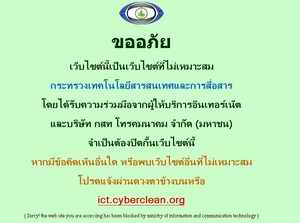
ICT blocked websiteProtests against Thai internet censors

From The Nation see full article
See also FACT

Free-Internet activists yesterday afternoon gathered in front of Bangkok's Panthip Plaza, the country's largest computer mall, to denounce the growing threat of Internet censorship that they claim now covers some 50,000 websites.

The dozen or so members of Freedom Against Censorship Thailand (Fact) also distributed CDs containing a programme to circumvent the authorities' suppression of websites and also a secret list of the 50,000 that have been blacked out.

The software will give access to any proxy site, said CJ Hinke, a leading member of the group: So we're distributing thousands of CDs before the cyberlaw is passed, making it illegal.

FACT's Sombat Boonngamanong said: It is well known that these days the Information Communications and Technology Ministry spends most of its time blocking websites that express political views not to its liking. We all know what the political climate is, though it's the people who should decide what they ought to believe or not believe. People can think for themselves!

Sombat condemned the ICT Ministry through loudspeakers, as some 50 listeners stood transfixed by the messages conveyed.

Signs with slogans including "We Can Think for Ourselves!" and "Internet Does Not Belong to CNS" were held by protesters under the watchful eyes of Special Branch police.


9th June   Thailand Reclaims its Voice...


ICT blocked websiteProtests against Thai censorship

From the Bangkok Post

The pro-Thaksin Saturday Voice Against Dictatorship group held a rally outside the Information and Communications Technology (ICT) Ministry yesterday, demanding the ministry unblock its website, www.saturdayvoice.com. The website was closed down on Thursday.

ICT Ministry spokesman Visanu Mee-yu said the group still has other internet channels with several registered domain names.

Visanu said the ministry closed down the group's website because it wanted to make sure that after the Constitution Tribunal's electoral fraud verdicts, the situation, particularly in cyberspace, would not get out of hand.

There were fears the saturday voice website, among others, would stir up ill feelings against the verdict. Moreover, Visanu said, its webmasters had failed to curb users who posted provocative messages.

Media freedom advocates, spearheaded by the Freedom Against Censorship Thailand (Fact) group, have strongly criticised the website bans, saying they are a severe violation of the public's right to information and freedom of speech.

Earlier this week the Bangkok-based anti-censorship group released a report revealing what it claimed to be the ICT Ministry's ''secret blocklist'', which shows that up to 11,329 websites in Thailand had been blocked last month. In January 2004, there were only 1,247 websites on the blocklist, according to the group.

The ministry previously relied on Thai ISPs to block sites at its ''request'' but has now changed tactics to block them directly at Thailand's four internet gateways: the Communications Authority of Thailand (CAT), the Telephone Organisation of Thailand (TOT), True Internet and Buddy Broadband, Fact said.

'The ministry is, in fact, engaged in deliberate deception of the Thai public and the manipulation of public opinion for political gain,' said Fact's statement.

Fact will today hold a massive gathering at Pantip Plaza, the country's biggest computer and IT outlet, as part of its ''Free the Internet'' campaign.


9th June   Piss Poor Justice in New Zealand...


New Zealand flagFined for importing pissing DVDs

Based on an article from Scoop see full articleThe Society

Wellington District Court Judge Stephen Harrop found against a “prominent Wellington town planner” for importing by post via the internet, DVDs that were classified “objectionable”.

The offences were ones of “strict liability” involved the importing a number of “objectionable publications”. Every person who commits such an offence is liable to a fine not exceeding $10,000. Judge Harrop refused to grant the offender name suppression and refused to grant him a discharge without conviction, based on the defence claim that the consequences of a conviction were out of all proportion to the seriousness of a conviction. He fined him $150 on one charge and $750 on another and ordered him to pay $150 court costs. All these rulings were upheld in the High Court this week by Justice Warrick Gendall.

The mean minded Judge said people who wanted to hire the man's services as a planner and resource management consultant would be concerned with the quality of his work, but people should also be able to know who they were dealing with in a work environment. The offender’s name should therefore be made public and the nature of his offending specified.

Under s. 3(2)(d) of the Films, Videos, and Publications Classification Act (1993) a publication that “promotes or supports, or tends to promote or support… the use of urine … in association with degrading or dehumanising conduct or sexual conduct”, must be deemed “objectionable” by the Classification Office.

The victim of New Zealand justice imported fetish DVDs which included depictions of urophilia, a sexual fetish focused on urination. Describing such a sexual perversion as a “fetish”

Defence lawyer, Greg King, argued that because urophilia was considered a sexual fetish associated with urination, and was not illegal, then the depiction of such activities should also not be classified illegal, even though the Classification Act singled out the promotion of such activities as illegal. This defence argument failed.


8th June   Freedom Desert...


YouTube logoYouTube blocked in Morocco

From The Times

Moroccan internet users have been unable to access YouTube since last week, amid fears that the country's government is imposing restrictions on independent media. The video-sharing site has been blocked since last Friday.

Since December last year, YouTube has hosted a series of videos entitled Western Sahara Intifada that criticise the Government's treatment of the people of Western Sahara, a territory that Morocco took control of in 1976 following the withdrawal of Spain, the colonial power.

In several, cloaked figures are shown stealing through cities such as Laayoune, the region's main city, under cover of darkness and spray-painting independence messages on the walls.

Another, which was posted in December and has been viewed about 2,500 in the past month, purports to show police beating a group of women during a protest in Laayoune.

They’ve clearly blocked YouTube, Abdelhakim Albarkani, an economics student from Rabat, said: I’m worried, because YouTube allowed us to see things the state newspapers and television won’t show.

One blogger speculated that the reason for the ban was a video entitled Mohammed VI the Thief, posted earlier this month, in which the king's face is superimposed on a number of photographs including one in which a footballer grasps another's crotch, and another of scantily clad dancers.

Several sites promoting Western Saharan independence have already been blocked by Moroccan telecommunications authorities, and for much of last year Google's satellite mapping tool Google Earth was also inaccessible.


6th June   Soap Censors...


Thai TV soapThai Government to censor TV programmes

From the Bangkok Post see full article

Thai television programmes with content requiring parental guidance cannot be aired before 8pm and must be watched by children in the presence of their parents, the government have announced.

Broadcasts of other programmes rated unsuitable for under-18s must also be pushed back to 10pm.

Deputy Prime Minister and Social Development and Human Security Minister Paiboon Wattanasiritham said after the cabinet meeting that programmes with a Nor rating should be watched by children only in the presence of parents.

But since most parents did not get home until late in the evening, the cabinet agreed that Nor-rated programmes should not start until 8pm.

The Chor category programmes, considered inappropriate for people under 18, should be aired only after 10pm.

The cabinet last December ruled that all television programmes must be given ratings, although so far there have been no restrictions on when they should be aired.

The time restriction for television programmes was proposed to the cabinet by the government-appointed committees on safe and creative media and media policy for social development, Paiboon said.

All television channels should adjust their programming to comply with yesterday's cabinet resolution over the next two or three months, he said.

The Department of Public Relations would be in charge of enforcing the resolution. The cabinet agreed to set up a committee comprising representatives of the Social Development and Human Security Ministry, the Culture Ministry, the Education Ministry and civil society to rate programmes.


22nd May   Blogs Blocked...
 
Blogspot

 
Blogs on blogspot are being blocked in Thailand

Users in Thailand have been reporting that ALL blogs using Google's Blogger service hosted with blogspot in the address are being blocked in Thailand.

Readers have reported that even uncontroversial blogs have been offline for the last few days.

It has not yet become clear the reason for this block.


23rd May   Update: 1000's of Blogs Blocked...
 
Blogspot

 
so as to ban a political site

From the Thai Photo Blogs see full article

Blogspot subdomains are still being blocked by most Thai internet service providers.  There are reports that TOT, Hutch, and CSLoxinfo are 3 such ISPs have who blocked blogspot.com. Others have reported that True has not blocked blogspot.com.

According to reports, the government were aiming at blocking only saturdayvoice.blogspot.com and a few other political sites. However, their technicians 'mistakenly' blocked all the sub-domains and hence blocked thousands of blogs.


4th June   Update: Blogs Back...
 
Blogspot

 
Thailand unblocks YouTube and BlogSpot

From Jil in Pattaya
From FACT

YouTube and BlogSpot have now been re-enabled in Thailand albeit with plenty of videos/blogs that remain individually blocked.

Censorship tactics have also changed. MICT, Thailand's Ministry of Censorship and Technology had previously relied on Thai ISPs to block the Web but has now changed tactics to block at Thailand’s four Internet gateways: Communications Authority of Thailand (CAT), Telephone Organisation of Thailand (TOT), True Internet and Buddy Broadband.

The list of blocked websites has increased to 17793 entries (representing 11329 websites). 90 political websites were added to the banned list in May 2007.

Update: Still Unavailable

BlogSpot sites have been restored but YouTube still seems blocked


30th May   Update: Turkishness = Censorship...


Gagged Turkish protestorTurkey internet censorship signed into law

From Reporters without Borders see full article

Reporters Without Borders regrets that a bill passed by parliament on 4 May allowing the authorities to block websites with content deemed to have insulted the memory of the Turkish republic’s founder, Mustafa Kemal Atatürk, was signed into law by President Ahmet Necdet Sezer on 22 May.

Legal restrictions now extend to the Internet, the press freedom organisation said. Resorting to criminal penalties to punish Internet users is excessive. It shows the authorities want to force website editors to censor themselves. The possible consequences of this law are very disturbing. Will subversive content also be banned from chat forums? How far does the government want go to impose its control on online dissent?

Article 8 of Law 5651 on the “Prevention of crimes in the computer domain” calls for content to be blocked if it violates a 1951 law on “crimes against Atatürk.” The article says: “When there is sufficient evidence of the improper aspect of content (...) access must be blocked.” As well as punishing “crimes against Atatürk,” Law 5651 also punishes “inciting suicide” (article 84), “sexual abuse of children” (article 103), “prostitution” (article 227) and “inciting drug use” (article 190).

Internet Service Providers are themselves supposed to take the initiative to block access to content, which they then show to a judge who decides whether or not the blocking should continue. It will be the job of a “Telecommunication Council” to identify these responsible for the content. A complaint will then be submitted to a “Communication Presidency,” which like the “Telecommunication Council” is an entity specially created to ensure the new law’s implementation.


29th May   Censors Fingered...


Israel flagIsrael considers fingerprint access to porn

From Online Casinos see full article

The Israeli Communications minister, Ariel Atias is busy drafting a bill to block free access to pornography, violence and gambling Web sites.

Atias has already succeeded in passing several important communications reforms, to the chagrin of the cellular telephone giants. Atias claims that in this multimedia era, it is unreasonable that pornography or harsh violence are meticulously trimmed from television programs, while the Internet has no censorship or control....and he is apparently trying to solve the problem with a particularly radical and aggressive move.

The proposed bill places the onus on ISPs to implement screening technology to prevent access to porn or online gambling sites unless such access is specifically requested by a subscriber who provides proof of identity and age. Atias has apparently discussed this matter with the Justice Ministry and communications professionals, in an attempt to reach an agreement on a mode for screening content.

ISPs already market optional content-screening software at the consumer end, but Atias says this is an unsatisfactory solution. He finds it hard to believe that families will voluntarily install screening software and feels content should be screened at the switching centres.

The bill is already attracting attention and opposition from groups that are concerned about its implications for invasion of privacy, freedom of expression and freedom of occupation, to name a few.

Atias seems to have applied a similar concept to controlling erotic content on cellular phones. Free access to erotic services via cellular Web portals has been stopped - in order to receive such services, adult subscribers must send a copy of their ID card to the cell phone company.

Another move to control the Internet has surfaced in the form of a proposal drafted by a political associate of Arias, who has suggested a bill calling for the use of advanced technology to achieve the same goal as the Arias bill. This proposal, by Knesset member Amnon Cohen requires that Internet users with a penchant for visiting undesirable sites will have to register with their Internet service provider (ISP), which will use a fingerprint-based biometric identification system to verify the subscriber is an adult. Without this ID such sites will be blocked.

Describing Cohen's bill as futuristic and currently impractical, Haaretz opines that such a system will be technologically possible in a few years, but in a country that has been waiting almost three years for the telephone number portability law to be implemented, the bill's chances of being passed into law are next to nil.

Cohen's bill was apparently meant to serve as a litmus test for Atias, to assess the reactions of the public, politicians and the industry regarding Web censorship in Israel.


28th May   Unwanted...


Korea flagSouth Korea will introduce Internet censorship

From The Sydney Morning Herald see full article

South Korea will introduce an Internet 'code of ethics' to curb the distribution of pornographic material and other information deemed inappropriate.

A bill will be sent to parliament for approval this year, Vice Information Communication Minister Yoo Young-hwan said. Portal operators will be asked to filter out 'obscene', defamatory and other 'unwanted' material. If they do not, they will be punished, he said.

There are 18 home-grown portal sites in service. Younger people are especially active in creating and uploading image files and video clips. In March, a sex video clip was posted on Yahoo Korea for several hours, prompting police to launch a criminal investigation.

In response, the information ministry blocked 180 foreign websites used by South Koreans to spread 'obscene' material on the local portals.


26th May   Distorted Minds...


China flagChinese target horror comics for children

Thanks to Sean
From ABC see full article


China has launched a nationwide campaign against horror stories aimed at children.

Beijing has ordered officials to seize copies of books and comics deemed to be terrifying publications from shops and street vendors.

A particular target of the campaign is a popular Japanese comic book series, Death Note, which features a notebook that can kill people whose names are written in it.

Chinese officials say the story misleads innocent children and distorts their minds and spirits.


26th May   Real Name is Censorship...


China flagChinese back off from real name blogging

From Reuters

China is to back down from a plan to require bloggers to use their real names when they register Web logs, following an outcry over the proposal from the Internet industry.

Instead, the government would promote a 'self-discipline code' that would encourage, but not mandate, bloggers to register under their own names, the report said, citing draft guidelines published by the Internet Society of China.


25th May   Human Rights Watch...


ICT blocked websiteLikens Thailand to China and Vietnam

Based on an article from the Bangkok Post

New York-based Human Rights Watch says the military-backed government has undermined Thailand's free political debate with its unprecedented crackdown on Internet critics.

Since the Sept 19 military coup that ousted former premier Thaksin Shinawatra, Thai authorities have launched a censorship campaign of the Internet that has blocked tens of thousands of websites including those deemed critical of the current government.

Brad Adams, Asia director at Human Rights Watch: The military-backed government promised a quick return to democracy, but it's now attacking freedom of expression and political pluralism in ways that Thaksin never dared.

Censorship of the Internet is now being carried out by the Ministry of Information and Communications Technology (MICT) and the Royal Thai Police, in collaboration with the Communications Authority of Thailand (CAT) and the Telecommunication Authority (TOT), which provide Thailand's international internet gateways.

Since the coup, the government has blocked websites on charges of threatening national security, disrupting public order, or being obscene, including the September 19 Network (www.19sep.net and www.19sep.org), the pro-Thaksin PTV television (www.ptvthai.com), the online broadcast of Saturday Voice (www.saturdaylive.org and saturdayvoice.no-ip.info) and the online broadcast of FM 87.75 Taxi Community Radio (www.shinawatradio.com).

While these websites can still be accessed from abroad, local internet surfers in Thailand will get an "Access Denied" message, and the MICT's logo saying that access to such websites has been blocked due to "inappropriate content."

The ministry has ludicrously requested Google Thailand and Google.com to block access to its cached web pages in Thailand by which blocked pages can be accessed, as well as to block by keyword search.

The ministry also did not mention the more recent blocking of the entire Blogspot.com site by some Internet providers acting on the MICT's "request". This adds thousands more websites to the Thailand block list.

Thailand, under the current government, has also passed a law to criminalise the generation, possession, storage, dissemination of and access to prohibited information on the Internet and a Bill on Computer-Related Offenses that empowers the MICT minister to intercept and seize computer data, and seek court warrants to block the dissemination of information on the Internet if such information is considered as a threat to national security. The two laws, which have yet to be passed, include stiff penalties such as a maximum of five-years imprisonment and fines up to 100,000 baht ($2,700).

Freedom of expression, including offering opinions on the Internet, is an essential basis of any functioning democracy, said Adams. Blocking critical websites resembles the behaviour of China and Vietnam. Is this the company that Thailand's leaders want to keep?


23rd May   Dark Days in Venezuela...


Venezuela flagChavez closes popular TV channel

From The Guardian see full article

Venezuela is in crisis. Inflation is soaring. There are acute shortages of milk, eggs and meat. Violent crime is taking more than 100 lives every week. The government is in chaos. Corruption is draining the country's oil wealth.

These are the bulletins of Radio Caracas Television, the country's most influential private network. The theme is consistent: President Hugo Chávez is leading the country to ruin and if he is not stopped Venezuela will become a Cuba-style dictatorship.

At midnight on May 27, however, RCTV will be stopped. Its bleak bulletins silenced because the government is refusing to renew its broadcast licence. Critics say an authoritarian hammer is crushing free speech and what is left of Venezuela's democracy. Supporters say the government is right to replace a channel notorious for lies, manipulation and anti-Chávez propaganda.

Tens of thousands of people marched in two rival rallies at Caracas last week, one mourning the decision, the other celebrating. More are expected this week and the volume of international protest - and praise - is set to swell.

None of it will alter the decision. Chavez recently said on his own television show. It's over. His opponents cannot save RCTV, he added. Say what they say, do what they do, howl where they want, the licence will not be renewed.

RCTV's 2,500 staff have been told to continue turning up for work after May 27 in the hope that some programmes will still be made if they can be sold to other networks, and that RCTV may be able to limp on as a cable channel. But with vastly reduced audience share and advertising revenue it is unclear how long their jobs will last.

Update: RCTV Goes Dark

May 30th

RCTV stopped broadcasting at 11:59 p.m. on Sunday. The broadcaster’s employees, including actors, presenters, reporters and directors, gathered in a large studio just before midnight, singing popular Venezuelan songs and pledging that they would return to the airwaves.

RCTV’s frequency was replaced by a new public service broadcaster called Venezuelan Social Television Station (TVES). The new channel began broadcasting early Monday with the national anthem and a speech by its president, Lil Rodríguez, who said that “Venezuelans just gave birth to a new alternative in television,”.


22nd May   Advertising a Hidden Islamist Agenda...


Turkey swim suit advertA Cover Up in Turkey

From The Guardian see full article

The bikini has become the latest item to offend the Islamic-oriented authorities in Turkey. After a bungled attempt to outlaw alcohol, municipal officials in Istanbul have set their sights on billboard advertisements of the skimpy swimsuit. The ban was  revealed last week.

Lambasting the move as more in tune with Iran than a country bent on joining the EU, appalled secularists said it proved that the ruling Justice and Development (AK) party had a hidden Islamist agenda.

We've never had to get permission before and when we applied for it they told us we were hanging up immoral pictures, said Moris Eskenazi, who jointly owns one of four firms reportedly stopped from placing the adverts.

The ruling party first want to remove women wearing swimsuits from billboards and then they want to remove them from the beach, said Gulsun Bilgehan, a member of the Republican People's party (CHP) who vowed to take the issue to the Council of Europe, of which Turkey is a member.


22nd May   Update: A Censor by any other Name...


India flagIndia dreams up the term 'content auditor'

From Televisionpoint.com

The draft Indian broadcasting code calls for every channel to appoint a "content auditor" to monitor programmes and slot them in appropriate certification categories.

The content auditor will be responsible for any lapse in following certification rules. The sub-committee has proposed that the content auditor be made the point of contact for any issue or complaint that may arise with regard to the programmes they broadcast.

To ensure that the auditor has enough authority, the proposed code recommends that only the senior most management of the broadcast service provider be allowed to override the content auditor. According to the proposed draft, each channel will get about two weeks to dispose of complaints and will have to either take the programme off air, modify the content and apologise, or reject the complaint after citing reasons.

One of the major proposals of the draft proposal is the implementation of a watershed format of programming. This would mean that while family programmes, certified U, are programmed any time of the day, those certified as UA will be shown only between 8 pm and 4 am. Previously it was mentioned that adult A rated films could be shown after 11pm.


22nd May   Googling for Censorship in Korea...


Chinese Google logo Google agree to censor searches in Korea

Based on an artice from the Chosun see full article

Google has decided to block of the URLs of porn websites at a similar level as the Korean major search engines. It will also introduce technology to filter content for underage Korean users and require users of its Korean service to prove that they are old enough.

The Ministry of Information and Communication said Google has discussed with the ministry measures to limit access to content by Korean adolescent Internet users and decided to take the protective measures. Called SafeSearch, the filter technology is currently being developed by the search giant itself, and is expected to be put in place from August this year.

Korean Internet users under 19 can access only content that passes the filtering technology.


18th May   Creeping Government Filters...


Open Net Initiative logoIncreasing state censorship of the internet

From the BBC see full article
See also the OpenNet Initiative

The level of state-led censorship of the net is growing around the world, a study of so-called internet filtering by the Open Net Initiative suggests.

The study of thousands of websites across 120 Internet Service Providers found 25 of 41 countries surveyed showed evidence of content filtering. Websites and services such as Skype and Google Maps were blocked, it said.

In five years we have gone from a couple of states doing state-mandated net filtering to 25, said John Palfrey, at Harvard Law School. Palfrey, executive director of the Berkman Center for Internet and Society, added: There has also been an increase in the scale, scope and sophistication of internet filtering.

ONI is made up of research groups at the universities of Toronto, Harvard Law School, Oxford and Cambridge. It chose 41 countries for the survey in which testing could be done safely and where there was the most to learn about government online surveillance.

Countries which carry out the broadest range of filtering included Burma, Iran, Pakistan, Saudi Arabia, Syria, Tunisia, the United Arab Emirates and Yemen, the study said.

Jonathan Zittrain, Professor of Internet Governance and Regulation at Oxford University, said the organisation was also looking at the tools people used to circumvent filtering: It's hard to quantify how many people are doing this. As we go forward each year we want to see if some of these circumvention technologies become more like appliances and you just plug them in and they work.

Few states restrict their activities to one type of content, said Rafal Rohozinski, Research Fellow of the Cambridge Security Programme: Once filtering is begun, it is applied to a broad range of content and can be used for expanding government control of cyberspace. "Cyberspace has become a strategic forum of competition between states, as well as between citizens and states.

The survey found evidence of filtering in the following countries:

Azerbaijan, Bahrain, Burma/Myanmar, China, Ethiopia, India, Iran, Jordan, Libya, Morocco, Oman, Pakistan, Saudi Arabia, Singapore, South Korea, Sudan, Syria, Tajikistan, Thailand, Tunisia, Turkmenistan, UAE, Uzbekistan, Vietnam and Yemen.

 

18th May   Radio Raid...


Thai community radioThai radio station radio raided and shut after airing Thaksin interview

From the Bangkok Post

Broadcasting regulators yesterday raided and shut down a community radio station which ran an interview with ousted prime minister Thaksin Shinawatra, and threatened to crack down on thousands of illegal community radio stations.

The FM 87.75 station was raided and closed down yesterday after the Public Relations Department, the regulator of community radio stations, found that it had no licence to operate.

Department chief Pramoj Rathavinij said yesterday that he ordered drastic measures against the stations which aired comments from Thaksin for national security reasons, adding the department would take this opportunity to deal with around 3,000 illegal community radio stations across the country.

The deposed leader called three radio stations known to be sympathetic to him on Wednesday night. Besides the FM 87.75 community radio station, he called the FM 92.75 taxi drivers' community radio and the internet radio station run by the Saturday Voice Against Dictatorship website.

In the radio interviews Thaksin called for swift elections to restore democracy and confidence. He also said that he would not return to Thailand soon out of concern that his return would result in a confrontation. It was the first time Thaksin has spoken to the Thai media at home since he was removed from power in the Sept 19 coup and went to live in London.

Council for National Security (CNS) chairman Gen Sonthi Boonyaratkalin said yesterday that he had ordered the Internal Security Operations Command to closely monitor community radio stations.


14th May   Hoarding Repressive Laws...


'Vulgar' hoardingLaws against hoardings in India and and Bangladesh

Based on an article from the Blitz

Authorities in Bangladesh are planning actions against supposedly vulgar hoardings as well planning to ban use of foreign models in advertisements of products of various consumer items.

Meanwhile in India, worried that "obscene" hoardings will distract motorists into accidents and expose Mumbai's children to "corrupt influences," the BMC has decided to set up its own censor board to examine every hoarding before it's put up for public view and block all the "vulgar" ones from cropping up across the city.

The civic censor board will be set up in the form of a central committee at the BMC headquarters and sub-committees at the ward level. The committees will give certificates only to those hoardings that pass the obscenity test.

There is already a law against supposedly vulgar advertisements but it is rarely implemented because of a lack of machinery to enforce any restrictions.

If the proposal gets through, the BMC may consider banning cigarette and tobacco ads on city roads too.


17th April   Death to Shilpa Shetty...


Richrd Gere kissing in Pretty WomanFor kissing Richard Gere!

From the BBC see full article

Actor Richard Gere has sparked protests in India after kissing Celebrity Big Brother winner Shilpa Shetty at an Aids awareness rally in New Delhi.

Demonstrators in Mumbai (Bombay) set light to effigies of the Hollywood star, while protesters in other cities shouted "death to Shilpa Shetty".

The protesters said Gere insulted Indian culture by kissing the hand and face of the Bollywood actress. Public displays of affection and sex are still largely taboo in India.

Shetty downplayed the incident, saying: it was not so obscene. This was not such a big thing for people to over-react in such a manner. I understand people's sentiments, but I don't want a foreigner to take bad memories from here. I understand this is his culture, not ours.

The Aids awareness rally focussed on India's truck driving community, with Gere leading proceedings by shouting "no condom, no sex" in Hindi. The crowd whooped with delight and whistled as the 58-year-old clasped Shetty and kissed her on the face several times.

After the actress recovered her balance, Gere offered her a gallant bow.

Protesters said his embrace of one of the country's leading ladies had been "vulgar" and demanded an apology from the film star.


1st May   Update: Indian Society Corrupt...