Free UK Delivery
Tabor DVD

 World Censors: 2006...
  International Film Censor Watch

 Hardcore DVD
 Online Sex Shops
 Magazines
Sex Shops List
Satellite X Channels
Internet Video


Melon Farmers Icon

 Home BBFC
Nutters  Sex & Shopping
 Index TV Liberty  Sex Sells News
 Links UK Criminalising Extreme Porn  Sex Sells Reviews
 Forum World Criminalising P4P  Sex Shops List  

world map

World Censorship World News US News UK News
  World Censors Australia News Press Freedom
  World Campaigns European News Internet Blocking & Circumvention

Å

Æ Æ  2006
World Censors  2005  2006  2007  2008  Latest
   1 page  1 page  1 page  4 pages   
Previous Next Latest  

30th December    Korea Lightens Up...


Korea Media Rating Board logo
Computer games featuring Korean conflict no longer banned

From Gamespot

In South Korea, games which depict military and political actions against North Korea have previously been deemed to be too touchy with the current political situation between the two Koreas, and such titles have therefore not been released in South Korea. These include Tom Clancy's Ghost Recon 2, Tom Clancy's Splinter Cell Chaos Theory, and Mercenaries.

However, The Game Rating Board of Korea has announced that it will lift the ban and those titles will be available in 2007. According to a report in The Korea Times, Kim Key-man, the head of the Rating Board, said that this will come after "careful review of their contents" of such games. The reasoning behind the decision was said to be "to allow freedom of expression."


28th December    French Censor is Sore...


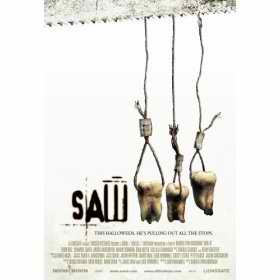
Saw III posterSaw III first 18 rated non-sex film

From The Scotsman

The French Culture Minister's decision to ban people younger than 18 from seeing the U.S. horror hit Saw III, have put media censorship at the forefront of public debate.

The 18 rating for Saw III, last applied to Michael Winterbottom's import 9 Songs in 2005, is used only in exceptional cases judged to be too extreme for the more ubiquitous 16 rating.

The movie's French distributor, Metropolitan, said it feared the move might be the precursor to similar decisions in the future: This is the first time that a measure of such gravity has been taken against a genre film. We hope that this decision will not strongly limit the possibility of distributing genre films in France whether  they are foreign or French, the company said.

On the question of film censorship, the commission for film classification president Sylvie Hubac said, Maybe it's the content that is becoming more violent rather than France becoming more strict.

All films intended for theatrical release in France have to be granted a visa by the Ministry of Culture, upon the recommendation of commission for film classification.

Certainly, Saw III, released November 22 in France, is the first film to be banned there for those younger than 18 under a ruling not justified by explicit sexual scenes. Culture Minister Renaud Donnedieu de Vabres cited the violence and incessant and unbearable sadism of scenes explicitly linked to physical and moral torture to justify his decision, made upon recommendation by the Commission for Film Classification.

Hubac added that Saw III was barred because of a pleasure in persecution and violent torture that just went too far."

The industry at large is looking closely at how some upcoming decisions, including ratings for Hostel 2 and The Hills Have Eyes 2 will come down.


27th December   Spawning Mindless Superstition...


Adavadi banned

From Now Running

Adavadi, directed by Bharath Hanna, has been denied a certificate by an Indian Regional Censor Board on the grounds that some scenes would hurt the sentiments of a particular community. The director made a representation to the Censor Board officials but they stood the ground.

The producer and the director have now decided to go in appeal against the regional board's decision.

The veteran actor, Sathyaraj, plays the role of a film director. A particular scene to which the censor board members took strong exception is the one in which Sathyaraj feels distressed after visiting a home for the mentally-ill. In anguish he goes to a temple, delivers a long-winding dialogue abusing the deity for the evils in society and in uncontrollable fury, he damages the idol and throws it into a well, calling for the demolition of all temples which spawn mindless superstitions.


19th December  Immoral Content...


Indonesia flag8 Indonesian TV channels under threat

From ABU

Indonesian authorities are investigating eight private television channels in the country for allegedly broadcasting indecent material and excessive violence.

The Indonesian Broadcasting Commission lodged a complaint yesterday against the channels, after repeatedly issuing warnings that their programming violated government regulations.

It was the latest attempt by Indonesian government-funded agencies in recent months to ban content deemed immoral or violent.


26th December    Update: Intimidation...


Indonesia flagIndonesian regulator join police in threatening TV companies

From Tempo Interactive

The Indonesian Broadcasting Commission (KPI) has asked that all television stations stop broadcasting TV programs with pornographic and violent content starting January 1, 2007.

If a station still violates this, we will make an official report to the police, said Ade Armando, KPI Chairman.

According to Ade, eight TV stations were reported for broadcasting pornographic and violent TV shows: Lativi, TPI, Trans TV, Indosiar, ANTV, SCTV, TV7 and RCTI.

Based on these reports, the police were already in fact able to take legal action. However, we asked the police not to take action, said Ade. KPI gave a decree of tolerance so that station managements can make improvements.

But in January, there will be no compromise. Prosecute one TV station that violates the law and this will intimidate other stations, said Ade.

KPI will monitor scenes in any TV program that has been reported by a member of the general public.

Chief Comm. Jhony Tangkudung, Main Investigator of Directorate V of Special Criminal Acts at Polri HQ, said he supported the KPI's attitude.

TV station managements that still violate the law could face a maximum of five years’ imprisonment and/or a maximum fine of Rp10 billion.


21st December  Jakarta International Censorship Festival...


Promised Paradise
Critical Bali bombing documentary banned

From The Scotsman

Indonesian censors have barred a documentary on the 2002 Bali bombings from being shown at the Jakarta International Film Festiva over concerns that remarks made by one of the bombers in the film could encourage terrorist attacks.

Titie Said, the head of the national film censor board, said yesterday the 70-minute film had been banned after one of the bombers had suggested carrying out suicide bombings was a way to enter heaven.

Promised Paradise, directed by Dutchman Leonard Retel Helmrich, explores the roots of the Bali nightclub bombings. A another film festival guide describes the film: At the heart of his political and spiritual quest, a haunting picture persists; how can one believe that killing can lead to heaven? Agus expresses his indignation towards the attacks on the streets of Bali and Jakarta. The film is a critical gaze on Indonesia that is constantly on the brink of conflict.

Lalu Roisamri, programme manager of the Jakarta International Film Festival, said he had yet to receive an official letter banning the film.


14th December   Festivals Censored

I&B logoIndian Government wins case to ensure film festival entries are censored

From X Biz

The Indian Supreme Court have stayed a Bombay High Court order granting exemptions to film producers from obtaining mandatory censor certification for screening their feature and non-feature films at the National Film Awards (NFA) contests.

A bench of judges B.P. Singh and Tarun Chatterjee granted the stay after hearing Solicitor General G.E. Vahanvati for the information and broadcasting ministry.

Earlier, only two categories of films were allowed to be included for consideration for the awards without the Censor Board's certificate: diploma films made by film institute students and those made by the state broadcaster Doordarshan.

On a petition from documentary filmmaker Anand Patwardhan and others, the high court struck down the regulations and directed that even those films that did not obtain prior certification should be granted entry into the NFA contests.

The central government has appealed before the apex court against that order. The government argues that if the purview of exemption was widened, it would render certification of films meaningless.


10th December   Human Rights Go Offline

  FPB logoSouth Africa Sets Deadline for Websites to Remove Adult Content

From X Biz

The Film and Publications Board (FPB), which regulates the dissemination of media throughout South Africa, has said it will no longer allow website operators to distribute adult content online.

Internet distributors of adult material have until Dec. 31 to discontinue the distribution of adult material on the Internet, a spokesman for the FPB said. Distribution of adult material on the Internet is in contravention with Section 24 of the Films and Publications Act.

According to the FPB, which has administered the Act for some time, the decision to target online distribution of adult content comes in the wake of widespread public outcry.

In view of a number of complaints from the public regarding the distribution and exhibition of materials containing depictions, descriptions or sequences of sexual conduct via the Internet, by mail-order and through mobile cellular phones, the Board advises the South African Police Services to investigate and charge any person using above-mentioned media for distribution of films, interactive computer games or publications, which have either not been classified by the Board or classified ‘XX’ or ‘X18’, the spokesman said.

South Africa allows brick-and-mortar retailers wishing to distribute adult content to do so while still complying with the law, if they meet certain regulatory requirements such as limiting adult material to a clearly marked section of the store and posting notices denying entry to minors.

A group called Adultlinks.co.za has organized an effort to determine how webmasters can avoid punishment and comply with the act: We have been in contact with FPB to establish how an adult site can comply with the act — and thus pay the prescribed fees and get a classification for a website,” a spokesman for Adultlinks said. Reading between the lines we have learned that the FPB is not geared to apply a classification to a website.

All in all, the current situation reeks of old apartheid censorship, where government decides what you may or may not see, the Adultlinks spokesman said.
I for one am not going to take this lying down.


5th December Colourful But Censors See only Red

  Burma flagSatire offends Burma's censors

From Irrawaddy

Burmese authorities have banned a VCD depicting a traditional anyein performance on the grounds that some of the content is critical of the military government.

Anyein is a form of traditional entertainment that combines music, dance, opera and satirical comedy.

The VCD, titled say yaung sone, or The Colorful, by the Burmese director known simply as Godzilla, has been officially banned. Its script had at first made it past Burma’s draconian Press Scrutiny Review Board, but the subsequent release of the VCD led authorities to ban it, according to an actor who asked to remain anonymous. The actor said that authorities found some of the material on the disc was intentionally satirical towards the government.

A source familiar with the film industry in Burma said that performances on the disc made reference to electricity shortages in the country, problems with public health assistance, Burma’s national football team and the news readers on Burma’s state-run MRTV network.


4th December   Mandatory Promotion of Religious Values and Dress Sense

  Malaysian Energy, Water, Comms ministryMalaysian Government to issue additional TV censorship rules

Based on an article from The Star

Content on Malaysain TV stations will soon be subjected to an additional set of guidelines, which is now being drafted.

Energy, Water and Communications Deputy Minister Datuk Shaziman Abu Mansor said the move was aimed at promoting Malaysian cultural identity and values and moderating the behaviour of entertainers during shows.

Shaziman added that the new guidelines, drafting of which was expected to be completed by the end of the year, would also incorporate the content guidelines already formulated by his ministry as well as the Culture, Arts and Heritage, Home and Information ministries.

Shaziman added that television programmes should not just provide entertainment, but must also promote family and religious values as well as national racial integration: For example, the new guidelines contains the guidelines of the Culture, Arts and Heritage Ministry guidelines on the need to promote local arts and cultures and proper dress sense.

He also stated that the new guidelines would also outline the percentage of foreign and local programmes that television stations could show.


3rd December   Indian censors need a little sex education

  Kadhal arangamProblems with Kadhal arangam at the censors

Based on an article from BehindWoods

Velu Prabakaran is an outspoken director whose films like Kadavul and Puratchikkaran underlined the degradation in social values in the names of religion. He is an avowed atheist who claims that he wishes to bring social awareness through his films.

His next offering is Kadhal arangam. The film discusses sex education and attempts to create a good attitude towards sex. However the skimpily clad actresses have raised doubts with the censors.

The composer, Ilayaraja who has worked for the film had suggested some cuts after he found some scenes quite objectionable.

Director Velu Prabhakaran is waging a battle with the Censor Board after the board members predicatble objected to some scenes in the film. Velu Prabhakaran said, The so called objectionable scenes are important in the movie since they deal with the need for sex education in schools. I will fight with Censor Board and appeal to the Tribunal Committee to ensure that no scenes are chopped from my film.


1st December   Indian Bondage

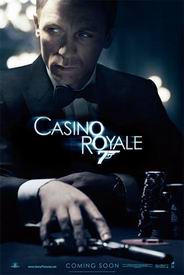
  Cuts to Casino Royale in India

For comparison, Ireland, UK & US have also released versions with the torture scene cut to obtain the required age classification.

  • UK - 12A - children below 12 can view if accompanied
  • US - PG-13 - any children can view as there is no supervision requirement
  • Ireland - 15A - children below 15 can view if accompanied

Casino RoyaleFrom MI6

The Indian version of Casino Royale has been cut beyond the torture scene. Two love scenes have been near totally excised. Taken with the 60% reduction in the torture scene, the 2hr 20 min film has been cut down by two minutes.

Sharmila Tagore, chairman of the Indian Central Board of Film Certification (CBFC), says: We are a layered society, so what may be taken easily by an urban audience may not go down well with those watching the same film in suburban areas. Films such as James Bond are dubbed in several regional languages, and dubbed versions have a far greater reach in India than their English versions, and that often calls for constant vigilance.

The cuts were not dictated by the censors but volunteered by the distributors, Sony Pictures Releasing India (SPRI), which calculated that a U/A certificate, instead of an A rating, would attract a bigger audience — and hence more money.

Vinayak Azaad, regional officer for the censor board in Mumbai, comments: We are not into moral policing. The cuts were suggested by Columbia Pictures. As a purely adult movie, we had cleared it earlier without any cuts.

Lalit Chetnani, chief finance officer for Sony Pictures, the distributors for Columbia, confirms:
We volunteered the cutting of the scenes as we wanted a U/A certificate for the film to open it to a larger audience. The censor board suggested that we reduce the intimate scenes to flashes and the torture scene by 60%. The censor board, satisfied with what we had cut, gave us the U/A certificate.


30th November   Indonesia Disturbed by Aceh

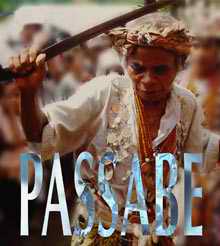
  PassabeIndonesia bans 'disturbing' documentaries

From the Jakarta Post

Four documentary films about the life of people in Nanggroe Aceh Darussalam and Timor Leste will not be screened during the 8th Jakarta International Film Festival (JiFFest) due to government restrictions.

JiFFest program manager Lalu Roisamri confirmed that films the state censorship agency (LSF) described as "disturbing" would not be screened at JiFFest, which is scheduled to run from Dec. 8 through 17: I'm disappointed because the implication is that JiFFest and its audiences are not considered mature enough to watch them, Lalu said.

The JiFFest program guidebook distributed to the press contains a reference to the four films plus short synopses, but with the word "censored" printed across them in large type.

The four films are Passabe, Timor Loro Sae, Tales of Crocodiles and Black Road.

The first three were also banned at last year's festival. The films portray the situation in Timor Leste from colonization to independence. Meanwhile, Black Road by journalist-turned-filmmaker William Nessen, tells the story of Aceh's struggle for independence. It took four years for Nessen to complete.


10th November
updated to
24th November
  Russian Cultural Attache for Hype

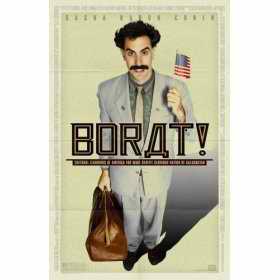
Borat film posterFrom CBS News

A Russian government agency said it would refuse to grant permission for Sacha Baron Cohen's comedy Borat: Cultural Learnings of America for Make Benefit Glorious Nation of Kazakhstan to be shown in cinemas. The decision is  not yet official.

The Federal Agency for Culture and Cinematography said the film could offend some viewers and contained material that might seem disparaging in relation to certain ethnic groups and religions.

The movie suggests that Kazakhs drink horse urine, view prostitution, rape and incest as respectable, and are openly anti-Semitic.

Russia has close political ties with Kazakhstan, whose officials and citizens have seethed at the depiction of their country.

Borat was the top movie in the United States in its debut last weekend, pulling in $26.5 million.

24th November   Update: Negative Recommendation

Borat film posterFrom the Washington Post

Earlier this month the Russian government agency in charge of movie distribution ruled that Russian people could not see Borat: Cultural Learnings of America for Make Benefit Glorious Nation of Kazakhstan The agency's reason: Borat offended ethnic feelings.

The agency denied "banning" the movie, claiming instead it made a mere "recommendation" not to distribute it. But in today's Russia where political loyalty is imperative, a recommendation from "above" means an order. If nothing else, it's for businesses to be sure they're "staying on the safe side."

This "negative recommendation" against distributing Borat is the first time the post-Communist Russian authorities have banned a piece of creative expression in years. Russian liberals cringe at another alarming signal that the practices of the Soviet police state are making a creepy comeback.

On the other hand, there is no question that Borat insults the Kazakhs. To say that the movie is politically incorrect is an understatement.


16th November   Smash Hit

The QueenThe BBFC gave the UK cinema release a 12A rating.

From 7 Days

The Distributors of new movie The Queen said they would appeal the film’s rating after Dubai censors gave it an “Above 15” rating even thought the film, which is set for general release today across the UAE, doesn’t include any violence, sexual content, nudity or even profanity.

Nassim Khoury, marketing executive at Front Row Films, said distributors expected the film, which tells the story of Queen Elizabeth and her handling of Princess Diana’s death, to get a general rating - which means children of any age can attend. Instead, it got an “Above 15” rating even preventing parents from accompanying their younger kids to the movie.

The censor said he didn’t believe people younger than 15 would want to watch it, Khoury said: We will appeal the movie’s rating because the censors’ should follow specific and set standards not their own personal opinions. The film’s rating is expected to slash its revenue, with the loss of group bookings made by schools where the film detailing recent historical and cultural events would have been on the must-see list. The censor added:
Also I don’t think a movie telling how bad the queen treated Diana would be understood by a nine-year-old.


11th November   Film Review Board Spoils for a Fight

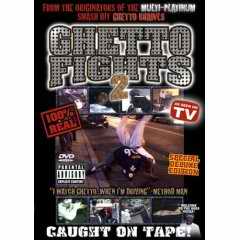
Ghetto Fights 2 DVD coverFrom Torronto CTV

The Ontario Film Review Board will soon begin contacting police if it sees people being victimized in reality brawl videos and DVDs.

These street fighting DVDs are the latest craze in reality entertainment. A recent video features a brawl that took place in Orangeville, Ontario

The Ontario Film Review Board does not censor videos, but screens them to apply ratings for rentals and sales.

Board chair Janet Robinson told CTV News the members are concerned that young children might watch these ultra-violent movies and attempt to imitate the fight sequences. Robinson says you can expect to see an R rating on most street brawl movies.

But the board could go further, and if they see someone being victimized in a reality movie -- beaten without consent -- they may contact police.


10th November   Ban Crazed Censors

oflc logoPress release from New Zealand Office of Film and Literature
See also 2005-2006 Annual Report

The Chief Censor said 2006 was a year of expansion and meeting the challenges of new technology in the 2006 Annual Report of the Office of Film and Literature Classification tabled in Parliament yesterday.

The Office classified more material than ever before, largely due to an increase in the number of commercial submissions of DVDs. It made decisions on 2,598 publications in 2005/06, 15% more than in 2004/05.

The Office banned 12% of publications, restricted 77%, and classified 11% as unrestricted.

Chief Censor Bill Hastings said “the Office addressed the challenges created by new technology in 2006. We worked with telecommunications providers to produce a code of conduct for mobile phone content. We helped the Department of Internal Affairs trial software that blocks child pornography sites. We asked hundreds of teenagers about their viewing and gaming habits”

“The Office also focused on spreading information about censorship to a wider audience by expanding its Censor for a Day high school programme, giving more public talks and media interviews, helping to resolve disputes over workplace internet use and redesigning our website” Mr Hastings said.

The Office continued to advise the Samoan Ministry of Justice and Courts Administration in strengthening its Censorship Office, as part of a NZ Aid programme.


5th November   Gambling on a 15A

Casino RoyaleFrom The Times

The Irish film censor has decided that Daniel Craig’s first outing as 007 in Casino Royale will carry a 15A certificate — the highest rating yet for a James Bond film.

The Irish authorities have decided the film, in which a naked Bond is violently tortured, is suitable only for people aged 15 and over, and younger viewers must be accompanied by an adult.

The Irish rating is stricter than the British classification of 12A, even though both audiences will see the same version. The US MPAA gave the Bond film a (cut) PG-13 rating because of intense sequences of violent action, a scene of torture, sexual content and nudity.

This would not be a 12A to us because of the violence, said John Kelleher, the Irish film censor. This is a 15A and I think parents will agree. There is a particularly strong scene; there are several. And our classification is based on the totality of the film, not on one scene. It’s not saying that kids can’t see it but the person who can decide that is the parent. The 15A (cert) as opposed to the 12A is a very strong signal that this contains strong violence.

In the most gruesome scene in the $100m (€79m) film, Bond is stripped and tied to a chair while his genitals are lashed by a sadistic villain. Martin Campbell, its director, has described it as scarier than anything the spy faced in his previous 20 outings.

The BBFC granted the latest in the Bond franchise a 12A rating after parts of the torture scene were cut from the unfinished version submitted by the producers for advice as to its suitability. The BBFC said it advised the company that the torture scene placed too much emphasis on both the infliction of pain and the sadism of the villain for the requested 12A category.

A BBFC spokesperson said: If they want to reinstate the material we thought they should remove (for a DVD release), it would get a 15.

The print that will be shown in Ireland is the same as the certified British one. The UK has slightly different rating certificates than Ireland. They are U, PG, 12A, 15 and 18 compared with Ireland’s G, PG, 12A, 15A, 16 and 18.


4th October
updated to
29th October
  Calling for Paint Drying TV

Chinese flagFrom News.com.au

China's censors are planning to clamp down on extramarital affairs in television soap operas for fear the shows are encouraging viewers to cheat on their spouses, the state press said.

China's central government censorship body has already restricted the amount of crime that can be depicted on television dramas.  Now the State Administration of Radio, Film and Television is looking to do the same with philandering husbands and wives.

Too many television series exaggerating extramarital affairs can make juveniles believe that kind of relationship is acceptable, the administration's film and television director, Zheng Xiaolong, said.

The China Daily also pointed out that the trend towards philandering on television emerged only after the Government restricted the amount of crime allowed to be broadcast in 2004.

Another factor was the Government's decision to rein in soap operas that did not portray ancient customs and traditions in a good light. Censorship chiefs were unhappy over actors wearing inappropriate "ancient'' costumes that "made fun of history and were badly produced.

29th October   Update: Extra Marital Censorship

China flagFrom The Telegraph

The bed-hopping days of Zhang , China's answer to EastEnder Dirty Den are over - thanks to a finger-wagging not from his long-suffering wife, but from China's television censors.

Ever mindful of public morality, Beijing's media watchdogs are purging the nation's soaps of extramarital affairs because of fears that the likes of Zhang are encouraging people to cheat on their spouses.

The new measures, quietly announced by state media during a public holiday, follow on from restrictions imposed two years ago on depictions of crime on television.

Too many television series that exaggerate extramarital affairs can make juveniles believe those kinds of relationships are acceptable, said Zheng Xiaolong, the film and television director at the State Administration of Radio, Film and Television, the government's main censorship body.

There is increasing official paranoia over a perceived decline in public morals.

Scores of high-ranking members of the Communist Party have been sacked for enjoying multiple affairs, and soaring annual divorce rates - rising from 340,000 in 1980 to 1.3 million by last year - have coincided with a boom in the so-called ernais. These "second wives" provide their married lovers with sex and companionship in return for expensive gifts.

The state has now imposed a ban on co-habitation outside of marriage and threatens adulterers with two years in jail.


16th October   Captive Censors

Corps Otages publicity pictureFrom IFEX

The Tunisia Ministry of Culture's review board has announced the censorship of playwright Jalila Baccar's new work, Corps-otages (Captive Bodies), directed by Fadhel Jaibi. After wavering for more than three months, the review board, which is responsible for reviewing all theatrical releases in the country, refused to issue the permit required for the play to open. The board is demanding that Jaibi bring the play in line with a list of 100 themes subject to censorship before it grants the opening permit.

Board members took issue with the play's treatment of problems confronting Tunisian society as it enters its 50th year of independence (religious extremism, terrorism, intergenerational conflicts, abusive security policies), and have demanded that all dates, names of persons and places, as well as Koranic excerpts and references to Tunisian history be removed. Tunisians, it seems, will be denied the right to see a play which has only recently returned from a highly successful run at Paris's Odéon theatre, in June 2006.

In Tunisia, theatre is the only cultural form subjected to preliminary censorship under the law. A public performance permit (visa de représentation publique) must be obtained for all productions. Permits are granted by the national review board, a branch of the Ministry of Culture, which along with the Ministries of the Interior and of Religious Affairs, is also represented on the board.

Update March 2007:

A controversial play focusing on terrorism and extremism opened to critical acclaim in Tunisia this month, after authorities allowed it to be staged uncensored. Director Fadhel Jaibi previously refused to cut parts of the play as demanded by the culture ministry's censorship department, causing a delay of several months.

Khamsoun, written by Jalila Bakar, opened at the Municipal Theatre in Tunis earlier this month after debuting at the renowned Odeon Theatre in Paris last June.

The play deals with an important period in Tunisia's history, spanning 50 years -- from the country's independence to 2006. Fifty years have passed. What has been established? What has receded? What has been liberated? And what has exploded? asks the official programme.

The play opens with a scene in which a teacher, Jouda, blows herself up in the middle of an institute. Police investigations are launched to determine the causes for the incident and to break up the group that instigated it. What follows tries to examine the roots of terrorism that is cloaked in religious extremism.

I produced this play in defence of the values of modernity in Tunisian society and so my daughter won't be forced to wear the headscarf, Jaibi said.


6th October   XXX Film about Joseph Estrada

From inq7

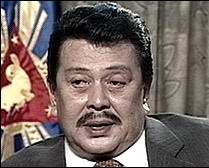
EstradaPhilippine Senator Franklin Drilon called the Movie and Television Review and Classification Board (MTRCD) a censorship body and said the standards by which it classifies which movies and television shows are fit for public viewing were tantamount to martial law.

Drilon was questioning MTRCB chairperson Maria Consoliza Laguardia on the “triple X” ban the Board gave to a video movie on the life of deposed president Joseph Estrada. The film is called Nag burles ba si Erap dito (Did Estrada strip naked here)?

Laguardia replied with justification from Presidential Decree 986, which created the MTRCB, enumerating the eight standards the body uses for classification: Whether a film or program contains gratuitous sex and violence; lewd, offensive, and demeaning excretion and sex acts; attacks race, creed, or religion; encourages use of illegal drugs; undermines duly constituted authority; glorifies criminals and condones crime; is libelous to the living or the dead; and touches on sub judice matters and invites contempt of court.

She also explained that the triple X rating meant three members of the MTRCB gave the Estrada biopic an X, making it unfit for public viewing.

But Drilon said the standards Laguardia cited make for censorship, not classification, which is the MTRCB’s mandate:
This is martial law...You're already exercising censorship. People may speak freely under our libel laws. I strongly suggest you review your standards because you are in effect are censors, not simply a classification board.


11th September   Censors Fend off Nutter Bullies

From Refused Classification

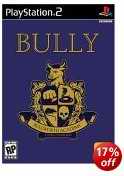
Bully Playstation game The censor's office has put an R13 rating on a console game that centres on bullying.

The game Bully, recently re-named Canis Canem Edit, will carry a descriptive note that it contains violence. Canis Canem Edit is the motto of the fictitious school in the game, and means "Dog eat dog" in Latin

The central character, James, is a victim of bullying and must negotiate his way through various high school cliques and overcome the school bullies. He uses low level violence and commits petty crimes, but censor Bill Hastings says Jimmy learns that violence has consequences and that he must take responsibility for his actions.

Hastings says
When Jimmy carries out petty acts of delinquency at school he is apprehended by prefects and punished by the school principal. When he misbehaves outside school he is dealt with by the Police. The game cannot be said to promote criminal acts.


5th September
updated to
11th September
  Palace Confiscated

From the BBC

Summer PalaceDirector Lou Ye has been banned from making films in China for five years for submitting an entry for the Cannes festival without government approval. Lou entered romance Summer Palace for competition without clearing it with China's censors.

The film, which features explicit sex scenes, takes place around the Tiananmen Square protests in 1989. Lou said at Cannes in June that he would consider changing the film's content so it could be seen in China.

An official at China's State Administration of Radio, Film and Television confirmed news of the ban to the country's official Xinhua News Agency. The news agency reported that the film would be confiscated along with any income made from it.

The producer of Summer Palace, Nai An, has also been banned from film-making for five years.

11th September   Update: Defiant

From Niagara Gazette

Summer PalaceLou Ye said he plans to defy a government order banning him from making films for five years, a ruling prompted by his decision to screen a movie at the Cannes Film Festival before it cleared censors in China.

I won't stop making films. I will definitely continue to make films. The ban is unreasonable. This is my personal right. As the film regulator for a region, you can ban my film from being shown in that area, but you don't have the right to stop a certain director from working. That is ridiculous, Lou said.

Lou said he already is preparing for his next film. He declined to give details.


3rd September   Chor Chor Police Police

From ind afm

Ram Gopal Varma’s latest offering Shiva has apparently not been given a clean chit by the censor board. According to sources, the song ‘Chor Chor Police Police’ is offending to the police force and hence the censor board is considering getting it chopped off.

The Board didn't like the words chor and police being used together. Ramu was given two options- remove the word 'chor' or dedicate 'Shiva' to the police force. Not wanting to disturb the satire, Ramu opted for the latter.


19th August   Treating Less Adults Like Children

From Today Online

Media Development Authority of SingaporeMore Singaporeans will have the chance to see the Crazy Horse revue at Clarke Quay, thanks to yesterday's introduction of the new R18 (Cabaret) rating by the Media Development Authority (MDA).

Shows under the new classification are restricted to patrons aged 18 and above — down from the previous 21 years.

MDA's director of media content, Ms Amy Chua, said the authority had taken a long-term view of the entertainment scene as Singapore globalises and promotes itself as an attractive tourist destination. But it did not expect to see a proliferation of cabaret-type performances with the introduction of the new category.


8th August   Sing a Song of Repression

From the Electric New Paper

Chinese flagChina's Ministry of Culture has issued new rules to ban karaoke songs with 'unhealthy' lyrics so that they won't pollute the nation's morals.

Top on the censor's list is Go for Fun Alone, a chart-topper that has riled critics who say the lyrics promote defiance and independence after a love affair gone wrong.

Another tune that's on the chopping block is the raunchy hit Office, which describes a secretive, work romance.

The clampdown has puzzled the country's middle-aged citizens as most of the songs blacklisted are those popular with their generation. They believe that teenagers are the ones who are in greater need of moral safeguards.

The new law is now on trial in three Chinese cities and will be extended nationwide if it proves effective. Under the ruling, all of China's estimated 100,000 KTV lounges will have to join the government's new China Audio and Video Association and buy songs from a central database. While the authorities claim that the ruling will help combat piracy, critics believe that it is just a way for the government to get a cut of the profit from China's lucrative domestic music industry.


2nd June   Portraying Singapore in a Negative Light

From Gulf News

Media Development Authority of Singapore Singapore authorities banned a play hours before it was due to be staged because it portrayed Muslims in a negative light.

In its first banning of a play since its was formed in 2003, the government's Media Development Authority said it was withdrawing the performance licence for Smegma as it was insensitive and inappropriate for staging.

Smegma undermines the values underpinning Singapore's multi-racial, multi-religious society. The play portrays Muslims in a negative light, the media authority said.

The media authority, which initially agreed to the public performance of Smegma, back-peddled on Friday and said it was worried that the play could create unhappiness and disaffection amongst Muslims.

According to the Singapore law, all public performances must be approved and licenced by a government-appointed official.


3rd August   Ensuring Only Children's TV for India

From Reuters

I&B logoMTV India has been rapped by the local regulatory body for showing adult material on its network.

The Indian Information and Broadcasting Ministry ordered MTV India to run a scrolling message over the weekend stating that the network had violated rules by broadcasting a music video from an Indian film that had received an "Adult" certification by the Central Board of Film Certification.

The film, Aashiq Banaya Aapne (You Made Me a Lover) was given an "A" certificate -- as was its promo video. Usually, producers re-edit a promo video for broadcast if it has been given an "A" certificate but this did not happen in this case. The video was later pulled.


18th July
updated to
23rd July
  Zombie Censors

The game is available for pre-order at UK Amazon with an 18 rating

From Qj.net

Dead Raising game boxThe sensational zombie-slasher game from Capcom for the Xbox 360, Dead Rising, will not appear in Germany. Apparently the USK, the people who test the appropriateness of games, didn't like the way you can hack, slash, kill and maim the zombies.

Censorship like that has been applied many times before on violent games in Germany, so the USK have most likely raised the bar on their standards when it comes to violent content. In a way it's pointless to ban the game from the shelves, because the people who really want to play this will just order it online or make a trip to their neighboring countries (Netherlands for example). Somehow I doubt that Capcom wants to replace their zombies with robots, it would ruin the whole game short of a rename to Dead Rebooting.

Dead Rising is scheduled for release on September 15 this year, but since the game has been delayed many times before we can't be sure of this. This will be an Xbox 360 exclusive.

23rd July   Update: Dead Rising Banned by USK AND Microsoft

The game is available for pre-order at UK Amazon with an 18 rating

From GamesIndustry.biz

Dead Raising game boxFollowing reports that the German ratings board USK has "banned" Capcom's Xbox 360 zombie title Dead Rising, a number of officials involved with the title and the ratings board have contacted GamesIndustry.biz to clarify the situation.

The USK can not ban a game, we can just refuse to rate it if we fear it might be banned when launched into the market, Marek Kingelstein of USK explained. But it can be sold, it can be advertised. Banning a game before launch would be censorship and censorship is forbidden by law.

However, Kingelstein went on to explain that the game could then be "banned" after its launch by the Bundespreuefstelle, a different regulatory body which can prohibit the promotion of a game - even to the extent where it becomes illegal to display boxes for the game in a store, and it must be sold "under the counter" to adults only.

The Bundespreufstelle (BPjM) does not, however, have the power to extend this restriction to any product which has been rated by the USK - meaning that in effect, not only does the USK's decision not to rate the product prevent it from being sold to minors or over mail order, but it also opens it to being banned from all promotional activity by the BPjM.

As a result of this system - and because allowing unrated content onto the Xbox 360 would actually break the built-in parental control systems - Microsoft refuses permission for any publisher to launch software on the Xbox 360 which is unrated.

Dead Rising could be legally sold in Germany, but won't be published, explains Xbox platform manager Boris Schneider-Johne in a blog entry on the controversy, which he brought to the attention of GamesIndustry.biz. Yeah, I know this sucks. Tell our politicians please.

The situation of a game having no age rating at all is weird and not very customer- or publisher-friendly. Microsoft (in my view) can not loosen the tight rule of requiring every game to carry a proper legal age rating - because that would immediately undermine the Family Settings feature and make the situation in the long term worse rather than better.

The Family Settings in Xbox allow adult players to enjoy the content they want while protecting children from inappropriate content. And all that is tuned to the local standards by using the local age rating systems. Now we just need a legal rating for every game and we're fine.

So there you have it - Dead Rising is not "banned" in Germany, but by its action, the USK has effectively prevented the software from being sold in the region anyway.


14th July   Malaysia Booked for Repression

From an Article 19 press release published on IFEX

ARTICLE 19 strongly condemns the Malaysian authorities' banning of 18 books over the last month on the grounds that they may 'disrupt peace and harmony'. Six of these books were printed in English and the rest in Malay.

More than 45 books have been banned by the Malaysian authorities since 2003 in a pattern of attacks on freedom of expression which seriously undermines the commitment made by Prime Minister Abdullah Ahmad Badawi to democratic reforms, said Dr. Agnes Callamard, Executive Director of ARTICLE 19.

The banned books include works of noted Islam scholars, such as John Esposito's What Everyone Needs to Know about Islam and Karen Armstrong's The Battle for God: Fundamentalism in Judaism, Christianity and Islam, a New York Times bestseller.

The books have been banned by the Internal Security Ministry of Malaysia which, under the Printing Presses and Publications Act 1984, has extremely broad discretion in granting a license for all publications. The Act regulates the press as well as books, pamphlets and the import of publications. It is widely considered to constitute an oppressive tool used to curb freedom of expression and create a climate of fear, resulting in self-censorship amongst Malaysian media, writers and artists.

The possible reasons for a ban are extensive and ill-defined. Under the Act section 9(1), the Internal Security Ministry may ban any publication, article, caricature, photograph, report, notes, writing, sound, music, statement or any other expression which it considers:

  • To be prejudicial to public order, morality, security, the relationship with any other country
  • To alarm public opinion or be contrary to any law
  • Is otherwise prejudicial to public interest or national interest.

This provision is in gross violation of international standards governing the right to freedom of expression. Any restriction on freedom of expression must be the least restrictive means possible to protect a legitimate interest, and must be carefully tailored to effectively protect that interest.

Malaysia is one of the few countries around the world which has not signed the International Covenant on Civil and Political Rights (ICCPR), which under Article 19 guarantees freedom of expression and access to information. As a member of the Commonwealth, however, Malaysia has affirmed its commitment to the protection of human rights and specifically to the right to freedom of expression through statements issued by the Commonwealth Heads of Government Meeting.

The Malaysian government has recently released the Media Council Bill (2006) which seeks to ameliorate some of the worst excesses of the Printing Presses and Publications Act 1984 in regard to the local media. It constitutes a step forward in terms of press freedom but further measures are urgently required to address the large-scale censorship of literature, both Malaysian and foreign.

ARTICLE 19 calls on the Malaysian authorities to:

  •  Urgently lift the ban on these books
  • Amend the Printing Presses and Publications Act 1984, with a view to abolishing censorship and eradicating the registration regime imposed on printing presses and publications.

ARTICLE 19 is an independent non-profit organisation that works around the world to protect and promote the right to freedom of expression. It takes its name from Article 19 of the Universal Declaration of Human Rights, which guarantees free speech.


12th July   Pirates of the Carribean: Dead Man's Chest DVD coverHanding the Spoils to the Pirates

From Short News

Pirates of the Carribean: Dead Man's Chest has been banned in China due to its "violent and supernatural content". According to sources, the Chinese censors doesn't approve of the "octopus-faced" souls of the dead.


8th July   Dogged by Crazed Censors

Based on an article from Radio New Zealand

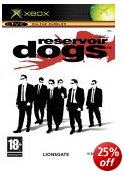
A computer game based on the 1992 film Reservoir Dogs has been banned because it encourages extreme forms of brutality and violence.

The Office of Film and Literature Censorship has judged the game to be objectionable, which means it is an offence for anyone to import, possess, copy, supply, advertise or distribute the game in New Zealand.

The crazed Chief Censor Bill Hastings says players control the six characters from the film, and aim to kill a large number of police officers and can torture and execute hostages.

Hastings says the game also showcases the most extreme violence in slow motion, for the purpose of entertainment.


8th July   Suicidal Censorship

From DesiFans

Malaysian Family Mnistry logoMalaysia’s Deputy Minister for Women, Family and Community development G. Palanivel has urged the country’s Censorship Board to cut out suicide scenes from Indian films.

The minister’s call came after an Indian origin woman and her two daughters committed suicide under a train recently.

The minister said that censorship of such suicide scenes in Indian films was needed to avoid reel scenes turning into real scenes: Nothing good can come out of this. We must stop showing movies where people walk to railway tracks to commit suicide.

Palanivel said the Censorship Board must ensure that these scenes are not aired. Such movies may influence people with suicidal tendencies to follow suit. Many Tamil movies have been known to project suicides on railway tracks.
Indian film directors should be more responsible and focus on positive scenes.


7th July   Corrupt Politicians, Brutal Police, Terrorists & Egyptian Censors

From The Guardian

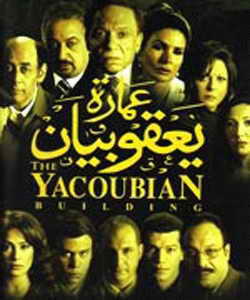
The Yacoubian BuildingEgyptian MPs are demanding cuts in The Yacoubian Building, claiming the film defames their country with its gritty portrayal of corrupt politicians, police brutality, terrorism and homosexuality.

The film is the most expensive film ever produced in Egypt and has been breaking box office records since its release a fortnight ago, although some viewers have walked out and others say they had to cover their eyes.

Following complaints from 112 MPs, the Egyptian parliament has set up a committee to review the film and decide what to cut. This film is spreading obscenity and debauchery, which is totally against Egyptian moral values [presumably repression and intolerance]. Independent MP Mustafa Bakri told the Associated Press. As a citizen I felt hurt when I watched it.

The film, which features some of Egypt's biggest stars, is based on a novel by Cairo dentist Alaa al-Aswani which became the Arab world's best-seller and has been sold openly in Egypt for four years.
In soap opera style, the book gives a warts-and-all portrait of modern Egypt told through the lives of the inhabitants of a Cairo apartment block. The most controversial being Hatim Rasheed, a cultured newspaper editor with a taste for Nubian men. He falls in love with a young married policeman who feels guilty about the relationship and eventually murders him.

Aswani said he regretted parliament's action. Why aren't Italy, France or the United States defamed by movies dealing with homosexuality? Novels and movies are not made to promote tourism but to deal with real issues of life.

With the growth of religiosity in recent years, though, attitudes have been hardening. Same sex acts are not illegal in Egypt but laws against "debauchery" and "immoral advertising" are used to bring charges. In the popular press homosexuality is often portrayed as a western "disease" that can be caught from foreigners.

Update: Released uncut in Egypt in September 2006


6th July   Censorship Clowns

From Chosun

The King and the Clown posterThe number one in the history of Korean film, The King and The Clown, has failed to make it past the film censor in China.

The film failed to pass the censors at the state Administration of Radio, Film and Television due to the fact that it deals with a love affair between two men, an insider with music and film distributor Face said Monday.

But the film did receive permission for DVD distribution from the Culture Ministry, which oversees videos and records.

The DVD is expected to go on sale this week. Even before it cleared the final hurdle, pirated copies of the film started to appear in major Chinese cities since June 5.


5th June   Smoking out Censorship

From the Times of India

No Smoking signIndian health minister A Ramadoss recently said the order banning depiction of smoking in films and TV serials: will be implemented as soon as the Delhi high court gives us the clean chit. The new rules will be so strict that directors will find it difficult to show actors smoking.

Minister P R Dasmunsi had earlier questioned the ban saying how could a film show a character like Winston Churchill without a cigar.

Clarifying the new rules, joint secretary in the health ministry, Bhavani Thyaga- rajan, said: All new movies with smoking scenes passed by the new censor committee will have to have disclaimers by the actors themselves seen smoking on screen.

In old movies, a warning and an advisory on the screen a minute before and after the smoking scene will have to be carried. The new rules will be very restrictive but will not take away the freedom of expression.

The new censor panel will only give permission to those films to portray scenes where it is absolutely essential to the story line.


2nd June   Scissors-Happy Censors

Based on an article from Reuters

Singapore director Royston Tan's Cut has settled a score with chief censor Amy Chua for mutilating one of his films about local youth gangs. 15 had 27 cuts for offensive language, violence and gang chants which the authorities feared might incite violence and glorify gang culture.

In Cut, a film buff chases a frumpy censor as she wheels her trolley down a supermarket aisle, and reels off a string of films which the bureaucrat had snipped, from Lost in Translation to Titanic. Cut itself, first shown in 2004, was not censored.

This film misrepresents the Board of Film Censors (BFC) because we are portrayed as being "scissors-happy" when this is far from the truth, according to Chua, the scissors-happy BFC's chairwoman.

The film won a following among cineastes in the city-state, where an outing to the cinema often used to be memorable not so much for the film itself as for the jerky edits excising bare breasts, sex scenes and supposed obscenities.

Two years ago, following a review of censorship practices, Singapore revised its classification of films and videos, giving a wider range of ratings. Now there is a category for viewers over 18 years old, in addition to existing ones for 16-plus and 21-plus. Now there is less need to cut "adult" scenes as a film can be rated for a mature audience.

Media Development Authority of SingaporeCensorship is a reflection of a country's social norms and values, said Chua, a demure woman in her fifties who is in charge of content for film, video, broadcast and publications at the information ministry's Media Development Authority. In Scandinavia full nudity (on screen) might not be a problem, but if we had full nudity, parents would complain.

The censors' vetting of videos brought into the country for personal use may be scrapped next, Chua said.

Singapore's sensitivities extend beyond sex, violence and swear words to political, racial and religious issues, reflecting more than four decades of one-party rule and a population mix of ethnic Chinese, Malays and Indians.

Last year, Singaporean film director Martyn See had to withdraw his documentary on opposition politician Chee Soon Juan from a film festival. See was then questioned by police, who confiscated copies of the film as well as his film equipment. Political subjects can be treated in a film. It's how you treat it, whether it's balanced, said Chua.

Things have improved, but it's often a case of two steps forward, one step back, said poet and writer Felix Cheong.


21st May   Scissor Palace

Based on an article from CNN

Summer PalaceChinese director Lou Ye has said he will consider changing his new film Summer Palace, which features sex scenes and political drama, to meet censors' demands in his home country.

I will agree to remove any of the scenes they want, Lou told reporters at the Cannes film festival. I would do just about anything to ensure the film can be seen in China. That is very important, he added later,

Summer Palace, set against the backdrop of the 1989 Tiananmen Square protests, has caused a stir in China where government censors refused to approve it before its premiere on Thursday at the festival.

They unbelievably cited technical flaws with a fuzzy film print that was submitted to them.

Approval by China's State Administration of Radio, Film and Television is pivotal for Chinese filmmakers because, if a movie is shown outside the country before it has their approval, the board may try to block its release in China.


20th May   No Comedy in Burma

From The Irrawaddy

Burma’s best-known comedian, Zargana, has again been banned from giving public performances or promoting his latest film.

The ban, issued by the Motion Picture and Video Censor Board, follows an interview Zargana did with the BBC during the recent water festival in which he criticized the military regime’s arch-conservative rules on culture.

The ban also blocks all public screening of the actor-director’s new film We Can’t Stand Any More, a satire on Rangoon’s social life.

Zargana came to prominence in the 1980s for poking fun at the then socialist regime. This is not the first time. The authorities always scrutinize my work and if they think it makes them bad they ban me.

The comedian has been jailed twice for his social and political activism, first as a political dissident in 1988, then again in 1990 while helping his mother in her campaign for the May general elections that year. He was freed in 1994 on condition that he no longer practiced as a comedian.

The comedian—whose name means tweezers—won the Lillian Hellman and Dashiel Award in 1991 after being nominated by the Fund for Free Expression, a committee of Human Rights Watch.


16th May
updated to
27th May
  Incompetent Censorship

From The Times

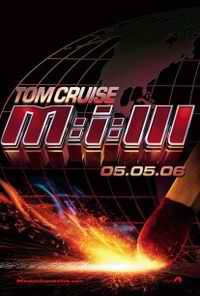
M:i:III posterCensors in China may ban Mission: Impossible III, the latest Tom Cruise action film, because it suggests that Shanghai police may not be the world’s finest thief-catchers.

The movie, which features scenes filmed in Shanghai, has yet to be given the all-clear by watchdogs in Beijing, fuelling speculation that it may be barred from cinemas or heavily edited.

The film was expected to be a hit in China, where much of it was shot. However, state-run newspapers are abuzz with reports that M:i:III may be banned because it shows Shanghai in an unfavourable light and suggests that Chinese police may not always be up to the task of catching criminals.

The Beijing Times said: In the Shanghai scenes all the roofs and alleys have raggedy clothes hanging from bamboo sticks everywhere. Many viewers had found the scenes shot in Shanghai and the village of Xitang “inappropriate”, given that both locations were used as sites for the storage of chemical weapons by the film villains.

One commentator said: Chinese viewers will have trouble accepting this plot of foreign criminal elements fighting publicly in Shanghai. Word has it that Chinese police registered outrage when it was noticed at a private screening that crimes could take place in China without being detected by the nation’s finest.

A manager overseeing the China operations of United International Pictures, which is responsible for M:i:III, said that he was still waiting for a final decision from the film administration. He said: These reports about how the movie is being blocked and so on, it’s all fake news. He said he was confident that the film would be a box-office hit if it won over the censors.

China rarely bans a foreign film outright. This is because it sets a quota of 20 for distribution each year, and most film companies propose only the movies that are likely to be a hit with both censors and audiences. The Oscar-winning Brokeback Mountain was not shown because distributors never expected a film with the theme of homosexuality to make it past the censors.

27th May   Update: Impossible Clearance

From Turkish Daily News

M:i:III posterChinese censors have cleared the Tom Cruise action thriller Mission: Impossible III for release in the country.

It's passed censorship, said Yuan Wenqiang, vice president at the state-owned China Film Group, one of the film's distributors in China.

Yuan said he didn't know what scenes, if any, censors deleted. There were concerns that some scenes set in Shanghai may be cut because they spoiled the image of the city. Some showed tattered underwear hanging from laundry lines. State media reported earlier censors also wanted scenes of a car chase and a shootout shortened or cut.

Yuan also didn't know when the movie will hit movie theaters. A spokesman for the film's international distributor, UIP, said earlier it's unlikely the film will be shown in June even if it passes censorship because dubbing will take time.

The delay is a boon to China's thriving film pirates, who can flood the market with millions of illegal copies of a foreign movie just days after it is released abroad. Despite free market reforms, Chinese authorities still keep a tight watch over media content, wary of unfavorable depiction of the government. It only allows about 20 imported films a year.


9th May
Updated to
12th May
  State Censor Overrides Film Censor

Based on an article from Sun 2 Surf

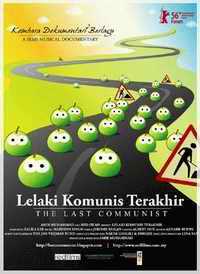
The Last Communist film posterThe curtains shall remain closed on the movie Lelaki Komunis Terakhir (The Last Communist) because that is what the Malaysian public supposedly wants.

Deputy Home Minister Datuk Tan Chai Ho said even though the National Film Censorship Board (LPF) had approved the screening of Amir Muhammad's latest film, the minister, Datuk Seri Mohd Radzi Sheikh Ahmad, retracted the approval.

Under Section 26 of the Film Censorship Act 2002, the minister has the right to revoke or cancel approval because of public interest, and that is why the movie is not being screened, Tan said.

The Act says the minister may at his absolute discretion, prohibit the exhibition, display, distribution, possession, circulation or sale of any film or film publicity material if he or she is of the opinion that it would be contrary to public interest.

Tan said he heard there were many objections from the public about the movie after newspapers publicised it, and the minister had to consider these. The public was not very happy about the movie, Tan said, denying that the objections were from any religious group.

The semi-musical documentary inspired by the early life and legacy of Chin Peng, exiled leader of the banned Communist Party of Malaysia, was scheduled to make its debut on May 18, 2006.

Among public protests to the movie were news reports and editorials in Malay dailies, particularly over the last week that highlighted objections from veteran politicians, members of Parliament and historians.

One editorial in Berita Harian by Akmal Abdullah said while it might not be fair to punish the film without watching it, especially since the LPF had already approved its screening, the movie was a "tribute" to a Communist leader and the Communist struggle.

12th May   Update: Using Communist Censorship Tactics

From the Star

The Last Communist film posterThe Culture, Arts and Heritage Ministry wants MPs to view Lelaki Komunis Terakhir (The Last Communist) to see for themselves whether the banned film is inappropriate for Malaysians.

We will invite the MPs to watch the movie at Finas, but I doubt if many of them will want to come, said Minister Datuk Seri Dr Rais Yatim. We should not comment on the movie if we haven’t seen it. How can you say that the movie promotes Chin Peng and causes security concerns if you haven’t seen it?

Dr Rais said he would seek a review of the film although it had been banned by the Home Affairs Ministry. The film should have been given impartial treatment by everyone first, he said, but agreed that the title could be “repulsive” to Malaysians.

Opposition Leader Lim Kit Siang asked why the film was banned when representatives from the Board and Special Branch officers had viewed and approved it for screening. He said if the film had actually glorified Chin Peng, the Government should then sack the Board members for approving it.

In Ipoh, the Perak Heritage Society said the 90-minute semi-musical documentary, shot mainly in the state, was a fun movie that dealt with serious and depressing situations in a light manner. Chin Peng, the exiled leader of the banned Communist Party of Malaysia, doesn’t even appear in the movie, said society president Law Siak Hong.

He stressed that the film did not glorify Chin Peng in any way.


8th May   Appealing for Reappointment

From Scoop

Internal Affairs Minister Rick Barker has announced appointments to the Film and Literature Board of Review: On 31 May 2004 the terms of eight members of the Film and Literature Board of Review expired. Changes to relevant legislation and the 2005 General Election caused considerable delays in the appointment process for these positions. The eight members agreed to remain in office until such time as the appointment process could be completed. The process is now complete and I am happy to announce the reappointment the eight incumbent members of the Board. The terms of appointment will be varied, so that in future years all eight vacancies will not arise at the same time.

The Film and Literature Board of Review is a statutory appeal body. It examines publications already classified by the Office of Film and Literature Classification (the Chief Censor’s Office). Each publication is examined without regard to the initial classification.

Claudia Elliott has been reappointed as President, Greg Presland as Deputy President, Mark Andersen, Brian McDonnell, Marion Orme, Peter Cartwright, Lalita Rajasingham and Stephen Stelhin have been reappointed as members.


6th May   Even the Censors are Embarrassed

Based on an article from Daily India

Once again cracking down on supposed vulgarity in cinema, Bangladesh's censor board has reinforced a ban on two films and warned some more of strict action.

The film censor board ordered a reinforcement of its earlier ban on Bengali films Lalu Kashai and Bostir Rani Surya after a court in Faridpur withdrew an interim injunction against the sanction.

The two films had been showing scenes cut by the censors. The censor board decision was challenged and subsequently withheld by the Faridpur court, which vacated the injunction.

The censor board also issued a stern note of warning against two other films Dushmoner Dushmon and Kathin Protigya saying they too might face the same fate if exhibited with supposedly vulgar scenes.

The censor board actions and warnings come amid a growing campaign against vulgarity in Bangla movies with the Information Ministry issuing a statement urging filmmakers to abide by ethics and codes saying excessive vulgar scenes in contemporary films
even expose the censor board members to embarrassment.


29th April

  Exposed to Censorship

From Lanka Business Online

Censors could ban the screening of a sexually-charged art film exploring the incestuous relationship between a Sri Lankan mother and child,