Safe and fun!
Bondara Sex Toys & Bondage

 World News...
 
2006 Oct-Dec

 Hardcore DVD
 Online Sex Shops
 Magazines
Sex Shops List
Satellite X Channels
Internet Video


Melon Farmers Icon

 Home BBFC
Nutters  Sex & Shopping
 Index TV Liberty  Sex Sells News
 Links UK Criminalising Extreme Porn  Sex Sells Reviews
 Forum World Criminalising P4P  Sex Shops List  

world map

World Censorship World News US News UK News
  World Censors Australia News Press Freedom
  World Campaigns European News Internet Blocking & Circumvention

Å

Æ Æ  2006 Oct-Dec
World News  2000 2001    2002  2003  2004  2005  2006  2007  2008  Latest
     4 pages   4 pages   4 pages   4 pages   4 pages   4 pages   4 pages   
Previous Next Latest  4 of 4

31st December  Egypt's Reputation Harmed...


Egypt flagAs they imprison blogger

Based on an article from International Herald Tribune

In Alexandria, Egypt, a 22 year old student blgger, Kareem Amer was sent to prison for over a month for allegedly defaming the president of Egypt and highlighting inappropriate aspects that harm the reputation of Egypt.

The basic right of individual free expression is sadly not respected in today's Egypt. Yet the authorities' decision to jail an obscure student for his writing reveals a larger struggle for free speech playing out between dissident bloggers and state prosecutors across the Middle East.

Protecting free speech in the Middle East hinges on the fate of young activists like Kareem Amer. Raised in a strict household, Amer was placed in Al-Azhar's religious school system at age six and watched as his sisters were forced to quit school and wear niqab, the full-body veil. After 18 years inside the Al-Azhar system, Amer rebelled. Rather than embrace the religious establishment, he became a critic of discrimination against women and non-Muslims.

Blogging became Amer's outlet — and his downfall. When Al-Azhar officials discovered a blogpost criticizing extremist professors, Amer was expelled and his case referred to the public prosecutor.

Although a human-rights lawyer accompanied Amer to his interrogation, prosecutors made clear they were indicting Amer for his beliefs. Do you fast on Ramadan? they demanded. Do you pray? They even insisted he reveal his opinions on the Darfur crisis. Amer would not retract his blogposts, so prosecutors threw him in jail — and laughed at the human-rights attorney present, openly mocking the concept of standing up for individual rights.


28th December  Censors Busy on the Internet...


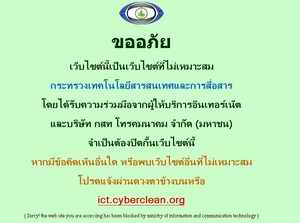
ICT blocked websiteThailand working alongside China

Opinion from the Bangkok Post

The government policy on internet censorship needs an immediate and sweeping rethink and change. This assumes it has a policy at all, given the current state of efforts to filter and block websites. The current effort to ''filter'' the internet, to use the word of the official censor, does little but add to the foreign perception that Thailand is under strong and constant control of a military government. The zeal of the official censor should alarm everyone whose aim is to establish a government that is accountable for its actions. Until the Sept 19 military coup, internet censors built power and ability. The Thaksin Shinawatra government occasionally tried to turn censorship into virtue by claiming it was all done on behalf of children. This is the familiar claim of all censors of course _ that they selflessly protect victims. But predictably, internet censorship under Thaksin immediately turned from an anti-pornography crusade into a political act.

Today, pornography is more freely accessible on the Thailand internet than ever. Censorship, meanwhile, has expanded into a secret bureaucracy which operates out of unknown offices. Censors provide neither explanation, warning nor appeal. They aim more and more at websites which are neither obscene nor a threat to children.

It was disturbing that military authorities officially appointed the modern Ministry of Information, Communications and Technology as national censor. The zeal and enthusiasm the new ICT minister and senior officials have shown is even more worrying. The ICT ministry was formed to be a leader in encouraging people to use and to develop technology wisely. The sight of such a ministry searching out nasty websites is troubling. That the ICT ministry is working, often alongside China, to develop better technology to block the internet is a setback for a future with information technology.

As official censor, Minister Sitthichai Pokai-udom has closed hundreds of discussion forums including the internationally famous Midnight University. The ministry has intimidated internet providers from carrying national debate or allowing political websites. The minister has made no statement to the public to defend, explain or justify his avid use of the firewall of censorship. Meanwhile, internet news sites now show Thailand as just slightly better than Burma or China at allowing net access by citizens, and far below the openness of Malaysia, Singapore and Indonesia.

Before the Police Bureau on High Tech Crime stopped public reports earlier this month, it bragged it had blacklisted 34,437 websites. Of these ''illicit websites'' filtered since 2002, the police themselves said just 60% were pornographic. Nearly 4,000 were ordered closed by police because they allegedly violated national security. This, of course, is a well-known accusation and dodge by Thai censors. It is a carryover catchall, used to shutter newspapers and imprison innocent people decades before the internet came into existence.

The military regime says that its goal is to guide Thailand to a proper democratic system in less than a year. The unique and most admirable quality of democracy is accountability. So here is a suggestion for the government: Make internet censorship accountable. For starters, Sitthichai should explain and justify the actions of his ministry in closing off network access, debate, scientific exchange and discussion among citizens. For example, does a political chat session online equal a gathering of five people in the real world? Is it necessary to ban such sessions, and to close websites that encourage them?

The censors have failed miserably to halt access to online pornography, violence or gambling. Citizens should ask, then, what is the purpose of internet censorship? And the government should answer whether a free society can allow authorities to stifle a sincere exchange of views on the pretext of protecting children. Citizens should debate if there must be any limits on the internet; dozens of countries do well without them. If so, they must be decided openly and by everyone.


25th December  Pakistan closes 43 cable channels...


Pakistan flag
Censorship to preserve social, religious and cultural values

From the Daily Times

43 illegal Pakistani cable operators have been  closed down for obscene programming. The Pakistan Electronic Media Regulatory Authority (PEMRA) conducted raids on the operators’ offices in Rawalpindi and Islamabad. The authority confiscated the broadcasting equipment of 43 cable TV operators and imposed heavy fines on them.

PEMRA spokesman Muhammad Saleem said on Wednesday that showing pornographic and unethical contents was in violation of the authority’s code of ethics and ordinances

He said the authority had received complaints from the two cities against various legal and illegal cable operators for showing pornographic channels and programmes on their networks. He said the authority had taken many steps to control the propagation of obscenity and pornography by the operators, including about 1,301 licensed operators. He said the operators were informed through letters about the importance of Pakistan’s social, religious and cultural values. He said the authority had warned cable operators to abstain from obscenity, improve their service quality and address public complaints promptly in consonance with PEMRA Technical Standards and Code of Conduct.


21st December  Manufacturing Consent...


Gagged Turkish protestorTurkey continues with repressive freedom of speech law

From the BBC

Four Turks have been acquitted of insulting "Turkishness" in their translation of a book by prominent American writer Noam Chomsky.

Publisher Fatih Tas was found not guilty, along with a translator and two editors, of contravening article 301 of the penal code. Fatih Tas had published a Turkish version of Chomsky's book Manufacturing Consent: The Political Economy of the Mass Media. It examines what part the media plays in setting social agendas, and criticises Turkey's treatment of its Kurdish minority.

Editors Omer Faruk Kurhan and Taylan Tosun, and translator Ender Abadoglu were also acquitted as the judge ruled there was no case to answer.

It followed the acquittal of another author, Ipek Calislar, on Tuesday. Calislar had been accused of insulting modern Turkey's founder, Mustafa Kemal Ataturk, by writing that he had once fled disguised as a woman.

The European Union has pressed Turkey to reform the code, which it views as a bar on freedom of expression.


18th December  Jailed...


Sigapore flag
For illegally speaking in public before Singapore elections

From The Sydney Morning Herald

Amnesty International has called on the Singapore government to stop using stringent laws and defamation suits to muzzle critics.

The call comes as Chee Soon Juan, leader of the opposition Singapore Democratic Party (SDP), ends his five-week jail term, for failing to pay a S$5,000 ($A4,159) fine for illegally speaking in public before elections in May.

Amnesty International said it is concerned about the continuing use of restrictive laws and civil defamation suits in Singapore to penalise and silence peaceful critics of the government These laws, together with "politically motivated" defamation suits, have created in Singapore a "climate of political intimidation and self-censorship", and belie "the government's repeated claims that it is building an 'open society'.

Singapore bans public gatherings of more than four people without a police permit. Public speaking is also prohibited unless the speaker has been licensed by the government.

Chee, one of Singapore's most vocal opposition politicians, is also facing a defamation suit launched by Prime Minister Lee Hsien Loong and his father Lee Kuan Yew over an article in the SDP's newsletter.

He has been jailed five times since 1999 for speaking in public without a permit, and for questioning the independence of Singapore's judiciary.


16th December  Post Coup Censorship...


Fiji Daily PostFiji editor to be deported

From IFEX 

Fiji's Daily Post Editor is to be Deported. The International Press Institute (IPI) is deeply concerned by the ongoing intimidation and censorship of the Fijian press since the military coup d'état of 5 December 2006. In the most alarming development, Fiji's Daily Post Editor-in-Chief, Robert Wolfgramm, is to be deported.

Commenting on these events, IPI director Johann P. Fritz said, At times of crisis the Fijian people must be allowed to rely on an independent media. Wolfgramm's deportation is a flagrant attempt to influence the media's reporting and it is further evidence that the perpetrators of the coup are more interested in protecting their own image than in upholding basic constitutional rights.

We once again urge the Fijian military to respect freedom of expression and the freedom to hold opinions without interference as guaranteed by Article 19 of the Universal Declaration of Human Rights, Fritz said.

Staff members at the Daily Post were subjected to violent threats in the period leading up to the coup, which forced the newspaper to temporarily close its offices. Although violent threats have stopped since the coup was first carried out, soldiers have been posted intermittently in the offices of media organisations, and journalism is being conducted in an environment, which IPI's sources have described as "paranoid" and "uncertain."

In the most recent development, military officials paid an afternoon visit to the offices of the Daily Post on 14 December to issue instructions to the newspaper's editorial staff. These instructions included an order to cease printing any photographic material showing the Fijian military holding guns, as well as an order to reduce negative reporting of the military's actions.

Approximately one hour later at 4.30 pm local time, the military returned to the newspaper's headquarters and "requested" that Wolfgramm accompany them to the Queen Elizabeth barracks in Fiji's capital, Suva, for a further meeting. During the meeting, Wolfgramm's Australian passport was confiscated and he was informed that he would be deported from Fiji on 15 December.


15th December  Surfing for Seks ...


Malaysia flag
Normal, even in conservative Malaysia

From IBN live

Porn surfing may be admonished in some states, but Malaysia seems to have taken a rather liberal stand on the issue, despite the Islamic state of Kelantan topping the list of users who visit local pornographic websites.

Internet surfers from Kelantan have searched for entries like "bogel" (nudity), "gambar bogel" (nude pictures), "seks Melayu" (sex involving Malays) and "cerita seks" (sex stories).

However, this doesn’t seem to have perturbed Malaysian psychologists who say the phenomenon is “normal.”

University Malaya psychologist Jas Laile Suzana Jaafar says the trend is not alarming, especially in a state like Kelantan that practised conservative policies in sensitive matters like sexuality: If teenagers ask their parents or peers, how much information can they get? In Kelantan, parents are not open to talking about sexuality with their children.

However, she also advised caution in reading into statistics as the data in Google Trends did not give a full picture by not showing information such as the age group of the internet users.


13th December  Update: An Adult Debate...


India flag
Indian court disallows petition to ban adult debate

From The Hindu

Imposing a blanket ban on publishing obscene photographs and material in newspapers will violate the right to freedom of speech and expression enjoyed by the press, the Supreme Court held on Tuesday.

A blanket ban on the publication of certain photographs and news items etc., will lead to a situation where the newspaper will be publishing material which caters only to children and adolescents and the adults would be deprived of their share of entertainment permissible under the normal norms of decency in any society, said a Bench consisting of Justices A.R. Lakshmanan and Tarun Chatterjee.

In his petition, advocate Ajay Goswami drew the court's attention to the publication in the press, in particular in The Times of India and Hindustan Times, of obscene photographs, SMS jokes, and articles on pornography and sex education, categorised to be seen only by adults. He sought a ban on such publications.

Writing the judgment, Justice Lakshmanan said any step to ban publishing certain pieces of news or pictures would fetter the independence of free press, which is one of the hallmarks of our democratic set-up. The incidence of shielding the minors should not be that the adult population is restricted to read and see what is fit for children.

In view of the availability of sufficient safeguards in terms of various legislation, norms and rules and regulations to protect society in general and children in particular from obscene and prurient contents, we are of the opinion that the writ at the instance of the petitioner is not maintainable, the Bench said and dismissed the petition.

   
13th December  Update: Naked Prudery...


India flag
Nudity per se is not obscenity according to Indian court

From The Hindu

Nudity per se is not obscenity. While considering whether a picture is obscene or not, it is essential to determine first the quality and nature of the material published and the category of readers, the Indian Supreme Court said.

Dismissing a petition seeking a ban on publication of obscene photographs in newspapers, a Bench comprising Justice A.R. Lakshmanan and Justice Tarun Chatterjee said: Where art and obscenity are mixed, what must be seen is whether the artistic, literary or social merit of the work in question outweighs its obscene content. In judging whether a particular work is obscene, regard must be had to contemporary mores and national standards.

Writing the judgment, Mr. Justice Lakshmanan quoted a U.S. Supreme Court ruling and said: Articles and pictures in a newspaper must meet the Miller test's constitutional standard of obscenity in order for the publisher or the distributor to be prosecuted for obscenity. Nudity alone is not enough to make material legally obscene.

A culture of responsible reading should be inculcated in the readers of any news article, the Court observed. A hypersensitive person could subscribe to any newspaper of his choice, which might not be against his standards of morality. The Bench said the Press Council of India had suggested amendments to certain provisions of the Press Council Act to arm the Council with the authority to recommend de-recognition of erring newspapers for government advertisement or withdrawal of the accreditation granted to a journalist. The present scenario provided for a regulatory framework under which punishment was prescribed for the print/electronic media for flouting Press Council standards.

The Bench said the Government should seriously look into the Press Council request and make appropriate amendments in the public interest.


13th December The Repression Game

China flagChina targets online gaming

From the BBC

China is enforcing more monitoring of online games after some were found to contain banned religious or political material. Some were criticised as pornographic or too violent.

The announcement adds to government controls on Chinese newspapers, television and other media.

China has more than 23 million online gamers, generating revenues of more than $850m (£440m) a year.

Distributors must now obtain approval before releasing new games. Companies must also submit monthly monitoring reports, confirming developers have not added forbidden content.

The latest round of enforcement was prompted by a rash of problems with imported online games, some of which contain sensitive religious material or refer to territorial disputes, Xinhua said.


13th December Back Door Sharia

Bali DancerPornography bill threatens pluralism in Indonesia

From Asia Media

An alliance of organisations have filed a lawsuit with the Central Jakarta District Court against the House of Representatives over a bill they say endangers the multireligious and multicultural character of Indonesia.

The Alliance of Unity in Diversity Advocates demanded the House drop the highly controversial pornography bill, which they say is based on Islamic values and threatens pluralism in the country.

Lawyers for the alliance said court officials promised to process the lawsuit within three weeks at the latest: It's a big deal because it's the first time that a civil group has filed a lawsuit against a state institution. We hope to teach the House a lesson from this case, lawyer Daniel Panjaitan said: The bill should have dealt with the distribution of pornographic materials, not prescribe how citizens must behave according to the moral standards of a particular religion.

The bill has received strong backing from some Muslim groups, notably hard-line groups that openly seek the adoption of sharia-based laws. But it has been opposed by pro-democracy, women's and human rights groups.

Daniel said lawmakers, in drafting the bill, failed to accommodate input from civil society. The organisation also said the committee deliberating the pornography bill issued two versions of the draft, one having 93 chapters and the other 36 chapters. They say no reason has ever been offered for the different versions.

Alliance coordinator Ratna Sarumpaet said people were tired of the "political games" being played by groups in the House eager to see the bill endorsed: We see a grand scenario behind the bill. It's an attempt to make Indonesia an Islamic state. It has to do with the issuance of sharia bylaws in certain regions. We raised this issue with the (Islamic-based) Prosperous Justice Party faction (in the House) but they were tight-lipped. For us their silence means 'yes,'

It is no longer necessary for the House to pass a pornography law because it is already covered in the Criminal Code and existing laws such as the broadcasting and press laws. Pluralism is the nation's main characteristic and we have to accept local cultures and traditional customs.

She claimed Bali, Papua, North Sulawesi and East Nusa Tenggara, where Muslims are the minority, had threatened to break away from Indonesia if the House pushed through the bill.


11th December Eighth Year Running

China flagChina leads the world in imprisoning journalists

Maybe the figures would look a little different though if taken as a percentage of population

From Casper Star Tribune

China, which jails more journalists than any other nation, is challenging the view that information on the Internet is impossible to control, and the implications for press freedom could be far-reaching.

At least 31 journalists are behind bars in China, making it the world's leading jailer of reporters for the eighth year in a row, the Committee to Protect Journalists said in its annual survey.

Three out of four of the journalists were convicted under vague charges of subversion or revealing state secrets, and more than half were Internet journalists. Blogs are often shut down, and those who post articles promoting Western-style democracy and freedom are routinely detained and jailed under subversion charges.

Shi Tao, a former journalist for the Dangdai Shangbao or Contemporary Business Newspaper in the central province of Hunan, was sentenced last year to 10 years on charges of leaking state secrets. Shi was alleged to have e-mailed the contents of a secret official memo about media restrictions to the Democracy Forum Web site. Journalism activists criticized Yahoo Inc. after it emerged that the company had given prosecutors e-mail from Shi's account.

Li Yuanlong, a reporter for the Bijie Daily newspaper in the southern city of Bijie, was convicted in July of inciting subversion and sentenced to two years in prison after he posted essays on foreign Web sites.

Last week, a Beijing court took five minutes to reject an appeal, made by New York Times researcher Zhao Yan, against his three-year prison sentence. Zhao had been convicted of fraud, but press advocacy groups saw his case as a political vendetta for his pre-Times career as a crusading investigative reporter _ and as a warning to Chinese reporters.

The survey found the total number of journalists jailed worldwide had risen to 134 as of Dec. 1, nine more than a year earlier.

Cuba was the second biggest jailer of journalists, with 24 reporters in prison. Nearly all had filed their reports to overseas-based Web sites. Eritrea, which has imprisoned 23 journalists, was third.


9th December Naked Repression

Uganda flagUganda bans adult content from public places

From AllAfrica

The Media Council of Uganda has banned the sale of newspapers with pornographic content from public places.

It ordered that such newspapers be sold only from exclusive stores and not to persons under 18. It said the order was intended to regulate the conduct and promote ethical standards and discipline of journalists, editors and publisher in accordance to the Press and Journalists Act of 1995.

The councildefined pornography as any information or publication or graphic or picture or photograph or literature which depicts an unclothed or underclothed sexually arousing parts of the human body or depicts and describes or narrates sexual intercourse or any behaviour, related to sexual stimulation or describes activities in a manner tending to stimulate erotic feelings.


5th December An Eye for the Ridiculous

China flagChina looks to a ban on flirtatious eyes

Comment: Isn't that the plot of The Mikado? "Those who flirt or leer or wink..."

From iAfrica

Lawmakers in a northern Chinese province are considering a sexual harassment law that bans looking at women with "flirting eyes", state press said.

The Shaanxi provincial congress is studying a proposal that would define sexual harassment, with casting flirting eyes at women listed alongside actions such as using inappropriate language, the China Daily reported.

Sexual harassment is mentioned in China's national laws, but they fail to specify what constitutes such behavior.

The city government in Shanghai, China's biggest city and premier financial center, is also mulling what could be the country's first comprehensive sexual harassment laws. The city government is reviewing a bill that would outlaw sexually suggestive language, even if used in jest, and the emailing or text-messaging of explicitly sexual pictures. The bill would also ban unwanted advances and public groping, as well as address the issue of domestic violence.


5th December Ministry of Disinformation

Malaysia flagMalaysian bloggers may have to be registered

From International Herald Tribune

All Malaysian news blogs may have to be registered with the Ministry of Information, local media reported, citing Deputy Science and Technology Minister Kong Cho Ha as saying the laws were necessary to dissuade bloggers from promoting disorder in Malaysia's multiethnic society.

But an international media watchdog warns that any crackdown on news blogs would stifle criticism of the government.

Regulating the Internet could push Malaysian bloggers daring to criticize the government to stop publishing or self-censor to avoid possible legal action, the Paris-based media watchdog Reporters Without Borders said in a statement.

Local news media outlets are strictly controlled by the government, and criticism of government policies are rare. A number of mainstream media organizations are owned by parties within the ruling National Front coalition, or via their proxies.

Malaysian bloggers currently enjoy an outspokenness denied to journalists in the traditional media, the Reporters Without Borders statement said. It is vital for the country's democratic life that the Internet is not pushed into self-censorship.


5th December SmackDown

WWE logoIndonesia wrestle with inanity

From Monsters & Critics

SmackDown, a popular U.S. professional wrestling television show, should be taken off air in Indonesia, a cabinet minister says after speculation a boy may have been killed by children mimicking the fight moves.

SmackDown is produced by U.S.-based World Wrestling Entertainment, Inc., whose shows are seen widely around the globe.

Some parents and leading educators had already called for a ban. However, Lativi has declined to stop running the show, instead pushing the airtime from 9 p.m. to 10 p.m. when presumably fewer children are awake to watch.

Indonesia's broadcasting commission has not decided yet whether to stop the show from airing. Since the boy died, Indonesian media have hunted for other stories of injuries to students in fighting games that might be linked to the show.


19th November
updated to
7th December
Lethal Censorship

Counter Strike gameFrom Play.tm

Germany's new governing coalition are considering a total ban on all videogames which depict 'lethal violence', according to reports from Europe this week. The politicians have vowed to bring in new laws in order to curb a rise in youth violence, with a focus on the influence of violent media, particularly games.

One MP supporting the proposed ban told a German games magazine that violent games had no place in kids' bedrooms. Andreas Scheuer of the Christian Social Union added that whilst ultimate responsibility must fall upon parents, the government should ban ultra-violent titles in order to aid the less media savvy.

Germany's interactive software association chief, Olaf Wolters, added that he will try to work with the government in order to resolve this concern and negate an outright ban, telling the magazine that As far we are concerned, there are no such things as killer games, but adult games.

Violence in the media has been a sensitive subject in Germany since a nineteen year-old killed sixteen innocent people in a 2002 shooting massacre. Counter-Strike was blamed for the atrocity, the youngster apparently being an avid fan. The game was eventually banned, and strong censorship laws have been in place ever since, with other games occasionally being banned too. Some MPs are calling for stronger enforcements, still.
 

7th December Update: Blame War

Counter Strike gameBavaria and Lower Saxony propose draconian games ban

From Gamasutra

In the blame aftermath of a recent school shooting in Germany, the regional governments of Bavaria and Lower Saxony have proposed new legislation that could punish those who make, distribute, or even play video games featuring cruel violence on humans or human-looking characters with a fine and up to a year in prison. The newly drafted bill is scheduled to go before the upper house of parliament next year.

The 18-year old shooter was reportedly an avid player of the popular first-person shooter Counter Strike, attacked the Scholl secondary school on November 20 in the western German town of Emsdetten, and wounded as many as 37 people before killing himself.

Frank Sliwka, the head of the Deutsche E-Sport Bund, a German online gaming organization, commented: We have among the most drastic censorship rules for games. Now we are being labeled as a breeding ground for unstable, dysfunctional and violent youngsters.

An MSNBC report also highlights the fact that Sony could also find itself on the receiving end of this new legislation, should it pass, with its PlayStation 3 console set to debut in the region in March 2007. Activision's Call of Duty 3 and Sony's Insomniac developed Resistance: Fall of Man continue to be the biggest selling titles for the platform, and both would be subject to the law's stringent violent game penalty.

Germany has one of the strictest controls on video games content, with a long history of banning or forcing alterations in games. Previously titles banned in their original form in Germany include Doom 1 and 2, as well as Manhunt and Command & Conquer. More recently, the Xbox 360 releases Dead Rising and Gears of War were both denied an age rating in Germany as well, thus making it possible for the games to be deemed illegal to sell by the German government.


18th November
updated to
5th December
Thorny Issue

Rule of Rose gameBased on an article from The Times

Computer games depicting brutal and sadistic behaviour, and the ease with which children can obtain them, are to be the subject of a discussion by the European Union.

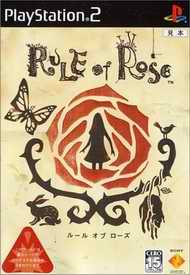
A new Sony PlayStation game, which shows a young girl being kidnapped and tortured, led to Franco Frattini, the Justice Commissioner, calling yesterday for urgent action to limit the availability of “obscene” material to young people. He has summoned a meeting of EU Home Affairs ministers next month because of his revulsion after watching Rule of Rose.

The game is to be released in Britain on November 24, but is available to order on the internet. It has already sparked an outcry on the Continent: the Mayor of Rome has called for it to be banned.

The game puts the player in the shoes of a teenage girl who is repeatedly beaten and humiliated as she tries to break out of an orphanage. She is bound, gagged, doused with liquids, buried alive and thrown into the “Filth Room”.

It was given a 16-plus rating by the independent Pan European Game Information body (PEGI), but Frattini suggested that voluntary ratings were no longer enough to stop supposedly obscene games falling into younger hands: An increasing number of such games display and even glorify violence, sometimes extreme violence. He singled out Rule of Rose about: a young girl who is submitted to psychological and physical violence. This has shocked me profoundly for its obscene cruelty and brutality.

Frattini hopes that industry representatives will come forward with their own proposals to clean up games aimed at children and find a better way to restrict their distribution to older teenagers: It is first and foremost the responsibility of the parents to protect children from such games, but I nevertheless think that we at member state and European level also have to take responsibility to protect children’s rights. These types of games are dreadful examples for our children.

Sony did not release Rule of Rose in the US for fears of an outcry, particularly over alleged overtones of lesbianism and sadomasochism, but its distribution was taken up by a small independent company. Similarly, the game will be distributed in Britain by an Italian company which has not secured a rating from the BBFC.

A BBFC spokeswoman said: It may not come to us. It’s up to the distributor. If this game is not deemed by the distributor to be gross, they can give it a 16-plus [PEGI] rating.

The EU home affairs ministers’ meeting on December 5 will first look at how to increase awareness of the potential risks of violent computer games with tougher labelling and restrictions on sales to young people. Frattini is suggesting a follow-up conference early next year to consider a voluntary code of conduct on the production of interactive games for children.

His spokesman later added that the PEGI rating was: not sufficient because anybody can buy them. In practical terms, it is not like when you go to a movie and they don’t sell you a ticket.

A spokeswoman for the Department for Culture, Media and Sport said last night that Britain, with jail or fines for supplying 18-rated games to minors, has got strict measures which we think go far enough at present.
 

19th November Update: Premature Burial Rumours

Rule of Rose gameFrom GamesIndustry.biz

Publisher 505 Games has issued a statement inviting politicians and journalists to judge new PS2 title Rule of Rose for themselves following controversy over the level of violence in the game.

Rule of Rose is a horror genre videogame, similar to a number of other videogames and movies on the market today, but does not in anyway incite minors to commit violent acts and does not promote acts of violence towards minors, the statement reads.

Following an in depth analysis by Pan European Game Information, the Interactive Software Federation of Europe and the Video Standards Council, the Rule of Rose videogame was judged to be suitable for European

market distribution.
The statement goes on to observe that PEGI awarded Rule of Rose a 16+ rating.

In the UK, Rule of Rose has made The Times and the Daily Mail following Frattini's comments. But it's coverage in Italian publication Panorama which 505 Games has taken exception to - they claim the magazine "erroneously stated" that the winner of the game is the player who buries a young girl alive.

The burial of the protagonist or of any other child does not appear in any scene of the game, not even indirectly, according to 505 Games: The scene that has triggered the discussion is in reality a dream sequence that serves as part of the introduction to the adventure: a non-interactive video sequence in which the protagonist, who is not a minor, is captured inside a crate.

The interactive part of the game is based primarily on exploration and the solving of mysteries. The only sporadic fighting scenes are against monsters.

Rule of Rose is due out in Europe next Friday. 505 Games has announced that it will be inviting politicians and journalists to the game for themselves by attending a preview presentation, to be held on November 23 in Milan.
 

25th November Update: Rose Buried

Rule of Rose gameFrom Spong

505 Publisher of horror-game, Rule of Rose has bowed to England's mainstream media and calls from European Union rightwingers by announcing today that it will not be making the game available for retail in the UK:

Apparently, the mainstream media can now censor just as well as the official censors. The refusal to sell the game legally almost certainly stems from two reports in The Daily Mail and The Times newspapers.

But it is not simply the newspapers that forced the point. Political pressure exerted including European Union Justice Commissioner, Franco Frattini will also have contributed to 505's decision to take Rule of Rose out the back and shoot it in the back of the head, execution style.

Release plans for the rest of Europe are unknown at this moment. But the uncertainty generated surely makes online delivery of games content look more and more appealing.
 

1st December Comment: Rose Hype

Rule of Rose gameRule of Rose would probably have been a 15 anyway

Thanks to Byron

PEGI (the European games rating people) saw no problem with Rule of Rose and gave it a 16+. I have played the American version and I am pretty sure the BBFC would have given the game a 15 and described it as strong horror.
 

5th December Comment: Europe's Crusade against Violence

Rule of Rose gameItalian pressure to make PEGI ratings legally binding on retailers

Based on an article from Euro Politics

UK interior minister John Reid will add Britain’s weight behind an EU crusade against violent computer games at meeting of Europe’s justice ministers this week. The British home secretary will also urge the EU to do more to protect children from “appropriate content”, child pornography and paedophiles.

John Reid showed a little perspective about  games though and said: There is a wider issue here. The growth of the internet has meant we need to be alert on threats and dangers online. Violent video games are one issue on this spectrum. But I am also concerned about what more we can do to tackle the most extreme and harmful end of the spectrum. In particular I am concerned about child pornography.

Brussels has led demands for parental advisory warnings and age restrictions on the sale of “obscene and perverse” video and computer games. Reid will back the campaign and call on other EU countries to follow British and Dutch legislation forbidding the sale of adult-rated games to minors. While industry operates a self-regulation ratings system for video and computer games retailers in most EU countries are not legally obliged to restrict sale of adult classified products.

Unione Nazionale Consumatori, a consumers association that takes a liberal view of censorship, said it was not sufficient to make it illegal to sell adult games to children. Parents and society have to educate children about the adult world, said Elana Venditti, who represented the association at the meeting. Minors are likely to get access to adult material through other medium anyway, she said, so prepare them properly for the adult world.

European justice commissioner Franco Frattini will back Reid’s call, indicate officials, after he wrote raising the issue to Europe’s capitals two weeks ago. We are not calling for censorship but the sales of cigarettes and alcohol is prohibited to minor why not violent games, said a commission official.

Frattini has been particularly distressed by a Sony Playstation game, The rule of Rose, which with undue exaggeration, “shocked… profoundly for its obscene cruelty and brutality”. The computer game’s detractors claim involves inflicting psychological and physical violence on a young girl has hit the headlines in Frattini’s native Italy and in France.

But Frattini has faced opposition within the Brussels EU executive from his colleague Viviane Reding, Europe’s media commissioner. Reding is reminding Frattini of the PEGI ratings system, run by industry across the EU since 2003, that looks for “informed adult choice”: This is in line with the commission’s view that measures taken to protect minors and human dignity must be carefully balanced with the fundamental right to freedom of expression.

5th December Update: European Rule

Rule of Rose gameRule of Rose will be available to UK players

Thanks to Byron

Rule of Rose will be released in other parts of Europe with a English option and will work on UK PS2's. This helps as the PS2 is a bugger to import for as it has no easy method for playing import games.

The game has already been released in France and possibly Germany too


4th December Nutters Don't Kiss

Dhoom 2Bollywood movie prosecuted over kiss

From Tonight

A kissing scene from a movie starring Bollywood actors Aishwarya Rai and Hrithik Roshan has irked a lawyer who has filed a criminal case against them, accusing them of obscenity.

Shailendra Dwivedi of Indore, the capital of central Madhya Pradesh state, said the scene from the movie, titled Dhoom 2, lowered the dignity of Indian women and gave an obscene message to youth.: Bollywood actors are conveying vulgarity in the society, These films cannot be watched with our families, they are so vulgar at times.

A local court accepted Dwivedi's petition to punish the actors and said it would hear the petitioner on December 11.

The Indian censor board, which certifies all films, released the movie with a "parental discretion" certificate.


2nd December Taking a Breather in Repression Marathon

China flagTemporarily relaxing censorship for the Olympics

From International Herald Tribune

China is temporarily relaxing decades-old restrictions on foreign reporters that will give foreign media greater freedom to travel and report in the run up to the 2008 Beijing Olympics.

The regulations, which come into force Jan. 1, temporarily abolish onerous requirements that currently prohibit foreign reporters from traveling or conducting interviews, even with ordinary Chinese, without government approval. Under the new rules, only the consent of the interview subject is needed.

The new rules mark a surprising step forward in addressing a major concern for the Olympic movement and international media: how China, with its penchant for heavy-handed policing and censorship, would deal with the 20,000 foreign media staff expected in Beijing for the Games.
Today in Sports

Significant questions remain about China's reporting environment. China is the world's largest jailer of journalists, with 32 in prison as of Jan. 1. Police retain broad powers to halt coverage by reporters. Foreign reporters have been frequently detained for reporting on a range of topics, from AIDS epidemics in the countryside to protests by urban workers. The new Olympic regulations, as well, contain loopholes and expire on Oct. 17, 2008, a month after the Paralympics end.

IOC officials have privately described arduous negotiations over media rules and credentials with Beijing Olympic organizers. At times, IOC officials have read aloud to Beijing organizers the promise they made in their bidding book for the Games: There will be no restrictions on journalists in reporting on the Olympic Games.

Liu, the Foreign Ministry spokesman, said the government knows that, as with previous Olympics, reporters won't limit their coverage to sports. He broadly interpreted the new rules, which cover reporting on the Games "and related matters", to give foreign media expanded license.

Though officials should no longer question reporters as they travel in China, Liu said that police would still have the authority to intervene, especially during emergencies, protests and other incidents "that suddenly arise.": They will not ask what you are doing there unless there are concerns in terms of public interest and social order, Liu said.


17th November
updated to
4th December
Book Banning

Iran flagIran has a purge on books

From The Guardian

Dozens of literary masterpieces and international bestsellers have been banned in Iran in a dramatic rise in censorship that has plunged the country's publishing industry into crisis.

Companies that once specialised in popular fiction and other money-spinners are being restricted to academic texts under a cultural freeze instigated by President Mahmoud Ahmadinejad. Several thousand new and previously published works have been blacklisted by Iran's culture and Islamic guidance ministry, which vets all books.

Newly banned books include translations of Tracy Chevalier's best-seller Girl With a Pearl Earring and Dan Brown's The Da Vinci Code, the latter for upsetting clerics within Iran's tiny Christian community. The crackdown also covers classics, such as William Faulkner's As I Lay Dying, and scores of works by Iranian authors.

Another publishing house has been banned from selling a successful series of books featuring lyrics by the Beatles, the Rolling Stones, the Doors, Black Sabbath, Queen and Guns n' Roses. Stores were told to remove the books or face closure. Permission was subsequently denied for the publisher to reprint.

Crisis talks between Iran's publishing union and the culture ministry have failed to ease the situation. We have books on psychology, history, politics and folklore which have been sitting for nine months and still no answer, a publisher told the Guardian.

The clampdown has been headed by the hardline culture minister, Mohammed Hossein Saffar Harandi, a former revolutionary guard and close ally of Ahmadinejad. Opening Iran's national book week festival this week, Saffar Harandi said a tougher line was needed to stop publishers from serving a poisoned dish to the young generation. He said some books deliberately gave Iranians a sense of inferiority and encouraged them to be lackeys of the west.
 

4th December Update: Site Banning

Iran flagIran has a purge on websites

From The Guardian

Iran yesterday shut down access to some of the world's most popular websites. Users were unable to open popular sites including Amazon.com and YouTube following instructions to service providers to filter them.

Similar edicts have been issued against Wikipedia, the internet encyclopaedia, IMDB.com, an online film database, and the New York Times site. Attempts to open the sites are met with a page reading: "The requested page is forbidden."

The clampdown was ordered by senior judiciary officials in the latest phase of a campaign that has seen high-speed broadband facilities banned in an attempt to impede "corrupting" foreign films and music. It is in line with a campaign by Iran's Islamist president, Mahmoud Ahmadinejad, to purge the country of western cultural influences.

Critics accuse Iran of using filtering technology to censor more sites than any country apart from China. Until now, targets have been mainly linked to opposition groups or those deemed "immoral" under Iran's Islamic legal code. Some news sites, such as the BBC's Farsi service, are also blocked.

Last week Mohammed Tourang, head of the information bureau's cultural committee, warned Iranian websites of stricter rules by announcing steps to stamp out "immoral and illegal" content. He said site owners would be given official reminders to eliminate forbidden material. Special attention would be paid to content judged to be a threat to national unity or insulting to sacred religious texts and symbols. Students and academics say the move limits their ability to conduct research.


1st December Summer of Censorship

Summer PalaceThe long reach of China's censors

Based on an article from Monsters & Critics

A Serbian human rights group said that it would arrange a public showing of a Chinese film which was barred from a Belgrade film festival on Beijing's request.

Director Lou Ye's film Summer Palace was scrapped from the international Festival of the Author's Film after the Serbian foreign ministry indicated 'higher national interests' were at stake.

The Belgrade-based Youth Initiative for Human Rights condemned what it described as censorship, asked for an explanation of what the 'higher national interests' were and promised to show Summer Palace in a free screening next week.

China has a bit of a downer Lou Ye and  he has been banned from making films in China for five years for submitting an entry for the Cannes festival without government approval. Lou entered romance Summer Palace for competition without clearing it with China's censors. It was reported that the film would be confiscated along with any income made from it. The film, which features explicit sex scenes, takes place around the Tiananmen Square protests in 1989.


28th November Googling for "Impossible Task"

Google video logoFrom Silicon

Italian prosecutors have put two Google Italy representatives under investigation as part of an inquiry into how a video of teenagers harassing an autistic classmate surfaced on its video site, a judicial source said.

The two are accused of failing to check on the content of the video posted on the search behemoth's website.

The video, which sparked outrage in the country, showed four teenagers beating and poking fun at a 17-year-old disabled boy in a classroom in the northern Italian city of Turin. Prosecutors have already put the four students and a teacher under investigation. The students have also been suspended until the end of the school year.

A spokeswoman for Google in Europe said the search giant was sorry for the distress caused by the video and had acted swiftly when it was informed of its content: There was this very disturbing video which was posted on Google Video a couple of weeks ago and we promptly took it down when we were notified. Google's policy bans the uploading of violent content but with thousands of videos posted every day on the site it relies largely on users to ensure that is adhered to, said the company spokeswoman.

Italy's education minister Giuseppe Fioroni said the prosecutors had been right to apply to the internet the same legislation that in Italy regulates what can be published in newspapers or broadcast on television.


27th November Update: India to Grow up...Maybe

Zee CinemaFrom Hindustan Times

The Indian government is exploring the possibility of allowing movies certified for adult viewing during late night hours.

The government will soon start consultation with the industry and civil rights group on allowing feature films certified as ‘A’ by the Censor Board.

While the movie channels want that adult movies should be shown after 10:30 pm, the social groups are not willing to allow screening of movies before midnight. There also divergent views on what type of adult content should be allowed on television.

I&B ministry PR Dasmunshi held a meeting with the representatives of television channels on Wednesday and assured that the government will come out with some guidelines on the issue soon.

Showing any sort of adult content on television got banned after the Mumbai High Court directed that only UA or U certified movies could be shown on television.

The court had also said that only movies certified by the Censor Board should be shown on television. Following the order, the I&B ministry issued an notification under Cable Network Act prohibiting showing of any adult content on television.

Six months after the government notification, the television industry has renewed its efforts to get government censorship reduced.

They have got a shot in the arm from the new Minister of State in the ministry MH Ambareesh. He has earlier sought more freedom for television while reducing government censorship. Keeping in view his affinity to film fraternity, Ambareesh has been tasked with section related to films in the ministry.

Adult content on late night shows is on the agenda of the new content code. But, what adult stuff can be shown will be decided only after consultations with the various stakeholders, a senior ministry official said.


24th November 12 Years for Selling Porn

China flagBased on an article from China View

A person who was jailed for 12 years for selling pornographic goods was among six people imprisoned in China's latest crackdown on piracy and pornography. The person was also fined 5,000 yuan ($625).

Another person was sentenced to ten months in prison for illegally printing a Chinese dictionary and fined 20,000 yuan ($2,500)

A man who was convicted of selling pornographic DVDs and VCDs was jailed for five years and six months with a fine of 10,000 yuan ($1,250 U.S. dollars).

Two people were each sentenced to one year in jail with a fine of 5,000 yuan ($625) for violating intellectual property rights.

A person was sentenced to two years in prison and fined 3,000 yuan ($375) for selling pirated DVDs and computer software.

Meanwhile, two production lines for pirating DVDs were halted in Nanchang, capital of east China's Jiangxi Province, with the confiscation of more than 100,000 discs and 17 people were detained.


26th November Canada Gets a Cleanfeed

Cybertip logoPress release from Cybertip.ca
See also technical paper about how cleanfeed works

Canada’s largest Internet service providers (ISPs) have joined forces with Cybertip.ca, Canada’s
child sexual exploitation tipline, to launch a new voluntary initiative to help in the battle against online child sexual abuse.

The new initiative, named “Project Cleanfeed Canada”, is the latest contribution from the multi-stakeholder Canadian Coalition Against Internet Child Exploitation (C-CAICE). It is intended to make the Internet safer for Canadians and their families by reducing their chances of accidentally coming across images of child sexual exploitation on the Internet.

The participating ISPs, which so far include Bell Aliant, Bell Canada, MTS Allstream, Rogers, SaskTel, Shaw Communications Inc., TELUS and Videotron Ltd will install sophisticated new filters designed to protect their customers from inadvertently visiting foreign web sites that contain images of children being sexually abused and that are beyond the jurisdiction of Canadian legal authorities.

Cybertip.ca will establish a list of the sites to be filtered which will be incorporated automatically into the ISPs’ filters. The ISPs will have no involvement in compiling the Cybertip.ca list.

Project Cleanfeed Canada is named after a similar initiative called “Project Cleanfeed” implemented by British Telecom in the UK and subsequently adopted by a number of other European ISPs.


23rd November Blogger Police Tarnish Egypt's Reputation

Egypt flagFrom the BBC

Police in Cairo have detained a blogger whose posts have been critical of the Egyptian government.

Rami Siyam, who blogs under the name of Ayyoub, was detained along with three friends after leaving the house of a fellow blogger. No reasons have been given for Siyam's detention. The other friends were released after being questioned.

Human rights groups have accused Egypt of eroding freedom of speech by arresting several bloggers recently.

Bloggers are at the centre of Egyptian political activism. In recent weeks, bloggers have been exposing what they say was the sexual harassment of women at night in downtown Cairo in full view of police who did not intervene.

The most recently detained blogger, Abdel Kareem Nabil, was detained in Alexandria on 6 November and was charged with disrupting public order, inciting religious hatred and defaming the president.


22nd November Encyclopedic Knowledge of Censorship

Great Firewall of ChinaFrom E-Commerce Times

The One week after gaining unfettered access to the online encyclopedia Wikipedia, Chinese Internet users have been cut off from the service again.

Andrew Lih, a former journalism professor at Hong Kong University who tracks censorship in China, wrote on his blog last week that people throughout the country are unable to contact Wikipedia. The report was confirmed by Rebecca MacKinnon, former Beijing bureau chief at CNN and a research fellow at the Berkman Center for Internet and Society at Harvard Law School. MacKinnon said that a number of Chinese friends wrote to her complaining about the shutdown.


20th November The Grizzly Details of Chinese Censorship

China flagBased on an article from Malaysia Sun

China will restrict broadcast reporting on vicious crimes so the country's young people have a healthier media environment, the Beijing government says.

We must not let improper crime reporting harm young minds, said Zhang Haitao, vice director of the State Administration of Radio, Film and Television.

Reporting of cases that harm public security and cases of vicious crimes, such as kidnap and arson, will be subject to strict controls, he continued. Detailed reports of detective work and investigations by the police will be banned and detailed descriptions and analysis of criminal methods and motives will also be banned.

Zhang added TV programs should not exaggerate violence, murder, pornography and horror scenes and the name, address, photograph and anything else that might reveal the identity of a juvenile delinquent should not be mentioned.


20th November Archaic Censorship

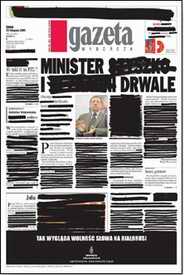
Blacked out newspaper storiesFrom IFEX

Reporters Without Borders has condemned the "archaic censorship" being implemented by the communications ministry and reiterated its call for the government of Chad to lift the draconian curbs on press freedom that are part of a state of emergency decreed on 13 November 2006.

The publication of newspapers with black strips replacing articles censored by civil servants is a sad spectacle, the press freedom organisation said. Using scissors will not help the government restore peace. It will just radicalise the opposition and give it additional arguments for resisting. We urge President Idriss Deby Itno to order his government to seek negotiated solutions rather than continue with these absurd and depressing measures.

The special unit created at the communications ministry to implement prior censorship of the N'Djamena-based print media began to function on 14 November, the day after the state of emergency was decreed in N'Djamena and six of the country's regions,.

The decision to restore prior censorship of the privately-owned press was prompted by recent articles about the rebels who are fighting government troops in eastern Chad. In early November, the weekly "Notre Temps" published photos of rebel leaders and speculated about each one's possibilities for replacing Deby as president.


19th November Freedom Against Censorship Thailand

ICT blocked websiteFrom Thai Visa

A new group advocating freedom on the Internet filed a petition with the Thai Human Rights Commission asking for an end to online censorship.

The petition was signed by 30 people, including many academics, and Freedom Against Censorship Thailand (FACT) which said 70 international organisations have expressed their support.

CJ Hinke, the originator of the petition, said: If people don't have all the information, they are not fully informed and without a fully informed public, you can't expect people to make the right decisions.

FACT, which was formed earlier this month, is the first organisation of its kind in Thailand seeking to end the censorship of more than 35,000 websites in the country.

The group said the government blocks 2,500 web pages, including some from the BBC, CNN, Yahoo News and articles from Yale University Press about Thailand's King Bhumibhol Adulyadej. When users in Thailand try to access the pages, they receive a green screen saying the site was blocked.

At least 11% of the websites blocked contained criticism of ousted prime minister Thaksin Shinawatra or his Thai Rak Thai party, the government's handling of the violence in southern Thailand, and the September 19 coup that overthrew Thaksin, the group said.

Hinke said that the government has insisted the sites needed to be blocked "to preserve Thai social harmony". He said if the government refuses to comply with the request, he will sue the ministry. He said the group is also planning to put another petition online and to circulate software that would allow Internet users to access blocked sites.


18th November Porn in Africa

From IPP Media

The Tanzanian government has said that there is an on-going crackdown against people who possess pornographic materials.

The Deputy Minister for Information, Culture and Sports, Daniel Nsanzugwanko said that a person found guilty of possessing pornographic material in any form was liable to a two-year jail term or a 200,000/- fine. He said that his ministry, in collaboration with that of Public Safety and Security, was conducting an operation to wipe out the pornography business in Tanzania.

Nsanzugwanko said the operation was there to stay and had already borne fruit as eight people had been taken to court. The business is done in a very secret manner between the buyer and the seller. This makes it difficult to net the culprits, he said.

Nsanzugwanko said he was optimistic that the war against pornography would be won because experts who were conducting the operation were quite experienced and innovative.

He called upon the general public to support the government in its war on pornography by revealing the shops or people who sold the illicit material.


18th November Governed by Omens

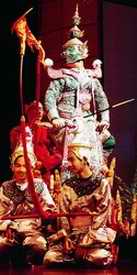
ThotsakanFrom the International Herald Tribune

Thailand's new military-appointed government is threatening to shut down an operatic version of Asia's classic Ramayana epic, ostensibly over fears one of its scenes may bring bad luck, the opera's composer said.

The opera, Ayodhya, premiered Thursday night and is scheduled for a repeat performance on Saturday, albeit with the 'offensive' scene toned down after pressure from Culture Ministry officials.

The composer, Somtow Sucharitkul, said that ministry officials approached him a few days before the show's opening to complain about a scene involving the on-stage death of a key character, the demon-king, Thotsakan.

The officials, whom Somtow did not identify, said that portraying Thotsakan's death on stage was taboo in Thai culture and would be a "bad omen".

Somtow said the officials told him that: If anything happened to anyone in power in Thailand, it would be blamed on this production."

The idea that depicting death will bring misfortune is usually applied to traditional Thai masked dramas known as "khon," according to theater scholars. It is not known to exist in other Asian countries.

Somtow and the opera's stage director, Hans Nieuwenhuis of the Netherlands Opera Studio, agreed to modify the scene so that the audience would not actually see the character die, though "not a note or word of the libretto was changed," Somtow said.

The following day, however, the ministry sent over a new contract including a broad clause saying that if anything in the opera offended the morals of Thailand, they had the right to close down the opera immediately, said Somtow, who signed it


17th November Repression Reaches Out

From IFEX

Singapore flagSingapore, a city-state with some of the world's strictest controls on free expression and assembly, plans to tighten laws governing the Internet and public gatherings. The Southeast Asian Press Alliance (SEAPA) and Reporters Without Borders (Reporters sans frontières, RSF) have expressed concern about the proposed amendments, which are part of a penal code review.

Under the suggested amendments, bloggers and other Internet users could face prison sentences or fines for defamation, making "statements that cause public mischief" and "wounding" of racial or religious feelings. Documents, including film and sound recordings, sent over the Internet could also be subject to criminal prosecution.

The amendments, which include a provision making it an offence for anyone outside the country to abet an offence committed within the country, would allow the authorities to prosecute Internet users living abroad.

Also of concern to SEAPA and RSF is a proposed amendment to strengthen limits on "unlawful assembly." Outdoor gatherings of more than four people already require a police permit. The amendments would give the government more power to act against public gatherings as it would no longer have to prove in court an intention to cause a disturbance.

The proposals will come before parliament at the beginning of 2007. RSF recently ranked Singapore 146th out of 167 countries in its 2006 Worldwide Press Freedom Index.


16th November Operation Anti-Censorship

Based on an article from Press Release Network

AnonymiserThe leader in online identity protection software and services, today announced the launch of Operation Anti-Censorship. This new privacy software, created specifically for UK & Chinese citizens, will enable safe access to the entire Internet by circumventing the Web filters put in place by the government. In addition, the new solution protects users from detection, persecution, and retribution by shielding their personal identities and related information that the UK & Chinese governments are currently able to monitor.

Citizens of China can download the free software today at www.xifuchun.com. Citizens of the UK may use www.anonymizer.com. The success of this program relies heavily on word-of-mouth promotion, and "Tell a Friend" functionality has been added to the site. All people are encouraged to share the news about Operation Anti-Censorship with their friends and family. Bloggers, reporters, and other media outlets are also urged to spread the word by promoting this Web site today.

Lance Cottrell, president and chief scientist, of Anonymizer Inc said: Our goal is to make the Internet an even playing field for everyone, including those under the rule of repressive regimes. We've had great success in other areas of the world, including our current work in Iran, and we're looking forward to bringing safe Internet access to others.

The Web site that currently hosts the software download is www.xifuchun.com, however please note that this URL will be changed on a regular basis to avoid blocking by the UK & Chinese governments. Anonymizer relies on early adopters to share the regularly changing URLs with their friends and family members so the number of people able to safely access the Internet continues to grow.


16th November 3 Years in Jail for a Porn Email

police handcuffsFrom the Bangkok Post

The Thai National Legislative Assembly (NLA) yesterday approved in principle a bill which will allow the state to punish people responsible for computer-based crimes including data theft and the dissemination of pornographic materials. A vetting committee is set to scrutinise the bill in seven days.

The bill, accepted by the NLA in a 170 to 4 vote, is sponsored by the Information and Communication Technology (ICT) Ministry. It seeks imprisonment and fines for those found guilty of crimes of theft and destruction of data, dissemination of falsified data, and of pornographic materials. For example, someone forwarding a pornographic email could be sentenced to up to three years in jail and fined up to 10,000 baht if found guilty under the new law.

The bill will govern the use of not only computer-based communications but also devices capable of similar functions including mobile phones.

However, assembly members raised concerns that the legislation should also protect individuals' rights and curb the authority of officials who regulate communications.

Assemblyman Chalongphob Sussangkarn said the legislation should punish only those who intentionally commit an offence. The stipulated 30-day seizure of computers belonging to offenders, and confiscation of relevant equipment and data should also not be based on officials' judgement only, he said.

Another NLA member, Viriya Namsiripongpan, suggested officials be forced to seek a court warrant before making any seizures to prevent unfair treatment.

Assemblyman Borwornsak Uwanno suggested the bill be widened to cover ''improper'' content uploaded to overseas servers and the spread of internet messages originating from overseas-registered domains which offend the monarchial institution.

Another member, Kanchana Silpa-archa, said measures should be put in place to control internet cafes where users need not identify themselves.


14th November Uptight Malaysia Shocked

Maly Weekend MailFrom Asian Sex Gazette

Malaysian government leaders have rebuked a local newspaper for publishing a frank expose of sexual attitudes among the country's youth.

The Weekend Mail gave detailed descriptions of favorite sex positions from its survey that delivered on its front-page promise: "You'll be shocked."

I received endless calls and SMS over the articles, Deputy Prime Minister Najib Razak told a ruling-party meeting Sunday.

The minister for women, family and community development called the feature irresponsible and "downright vulgar."

The New Straits Times Press Bhd, which prints the Weekend Mail and The Malay Mail daily, apologized unreservedly for the stories and said it would question the editors. The articles were offensive and distasteful, the publisher's chief executive, Syed Faisal Albar, said in the apology displayed on the front page of The Malay Mail on Monday.


11th November Sudan Press Muzzled

Sudan flagFrom BBS News

The Sudanese government is engaged in an increasingly blatant effort to muzzle and intimidate Sudan's independent press, Human Rights Watch said today.

While international media attention has been focused on Darfur, the Sudanese authorities in Khartoum have been stepping up their harassment of Sudanese journalists and newspapers, said Peter Takirambudde, Africa director at Human Rights Watch. The harassment is symptomatic of Khartoum's fear of mounting popular dissent and frustration at government policies and actions.

In recent months government security forces have carried out numerous acts of censorship, arrests of journalists, and arbitrary inspections of newspaper offices and