| |
Commission for Countering Extremism launches a legal review to examine effectiveness of existing legislation relevant to hateful extremism
|
|
|
 | 11th
June 2020
|
|
| See
press release from gov.uk
|
Lead Commissioner Sara Khan has appointed former Assistant Commissioner for Specialist Operations of the Metropolitan Police Service, Mark Rowley, to lead the review. The Commission's flagship report
'Challenging Hateful Extremism' identified and evidenced a new category of extremist activity in our country, described as behaviours:
that can incite and amplify hate, or engage in persistent hatred, or equivocate about and make the moral case for violence that draw on hateful, hostile or supremacist beliefs directed at an out-group
who are perceived as a threat to the wellbeing, survival or success of an in-group that cause, or are likely to cause, harm to individuals, communities or wider society
The Commission gathered extensive evidence from across England and Wales, commissioned 19 academic papers and launched the first ever public consultation on extremism. Sara Khan visited 20 towns and cities and spoke to experts,
activists and critics alike. Victims repeatedly told the CCE that they felt let down by the authorities and are concerned that existing powers are not being used effectively or consistently. For this reason, the report included a commitment by the
Commission to undertake a review of law relevant to hateful extremism. Mark Rowley will conduct the operational review and engage with law enforcement experts to:
Identify whether there are gaps in existing legislation or inconsistencies in enforcing the law in relation to hateful extremism and Make practical recommendations that are compatible with existing
legal and human rights obligations.
The Commission will engage with stakeholder groups, operational and law enforcement bodies in the coming months, and put proposals forward to the Home Secretary later this year.
|
| |
Labour MP tables bill amendment requiring social media companies to take down posts within 24 hours of an official complaint
|
|
|
|
29th June 2018
|
|
| See article from theguardian.com
From v3.co.uk |
Google, Facebook, YouTube and other sites would be required by law to take down extremist material within 24 hours of receiving an official complaint under an amendment put forward for inclusion in new counter-terror legislation. The Labour MP Stephen
Doughty's amendment echoes censorship laws that came into effect in Germany last year. However the effect of the German law was to enable no-questions-asked censorship of anything the government doesn't like. Social media companies have no interest in
challenging unfair censorship and find the easiest and cheapest way to comply is to err on the side of the government, and take down anything asked regardless of the merits of the case. The counter-terrorism strategy unveiled by the home
secretary, Sajid Javid, this month, said the Home Office would place a renewed emphasis on engagement with internet providers and work with the tech industry to seek more investment in technologies that automatically identify and remove terrorist content
before it is accessible to all. But Doughty, a member of the home affairs select committee, said his amendment was needed because the voluntary approach was failing. He said a wide variety of extremist content remained online despite repeated
warnings. If these companies can remove copyrighted video or music content from companies like Disney within a matter of hours, there is no excuse for them to be failing to do so for extremist material.
Doughty's amendment would also require tech companies to proactively check content for extremist material and take it down within six hours of it being identified. The proactive check of content alludes to the censorship
machines being introduced by the EU to scan uploads for copyrighted material. The extension to detect terrorist material coupled with the erring on the side of caution approach would inevitably lead to the automatic censorship of any content even using
vocabulary of terrorism, regardless of it being news reporting, satire or criticsim. |
| |
David Cameron calls for more internet censorship of 'extremist' material. And no doubt the authorities will define 'extremist' as meaning more or less everything
|
|
|
| 16th November 2014
|
|
| 15th November 2014. See article from
itproportal.com
See article from
openrightsgroup.org |
David Cameron has called for governments around the world to do more to censor 'extremist' material online. He made his comments during a visit to Australia's Parliament. He said: The root cause of the challenge we face is
the extremist narrative. A new and pressing challenge is getting extremist material taken down from the Internet. There is a role for government in that. We must not allow the Internet to be an ungoverned space. But there is a role for companies too.
Cameron then went on to detail measures already being taken in the UK to combat online extremism, including adding supposedly extremists material to ISP blocking lists, improving reporting mechanisms and being more proactive in taking
down supposedly harmful material. The British government also recently revealed plans to reduce the amount of hate material online. However, a report released in May revealed that the proposal is experiencing a number of hurdles, including
opposition from ISPs and social networks, particularly those based outside the UK. Open Rights Group has responded to the announcement that ISPs will add extremist websites to filters designed to protect children from seeing adult content. Jim
Killock, Executive Director, Open Rights Group said: We need transparency whenever political content is blocked even when we are talking about websites that espouse extremist views. The government must be clear about
what sites they think should be blocked, why they are blocking them and whether there will be redress for site owners who believe that their website has been blocked incorrectly. Given the low uptake of filters, it is difficult to
see how effective the government's approach will be when it comes to preventing young people from seeing material they have deemed inappropriate. Anyone with an interest in extremist views can surely find ways of circumventing child friendly filters
Update: Censorship button 16th November 2014. See article from
bbc.co.uk The UK's major internet service providers (ISPs) are to introduce new measures to tackle online extremism, Downing Street has said. The ISPs had committed to
strengthening their filters and adding a public reporting button to flag terrorism-related material. In a briefing note, No 10 said the ISPs had subsequently committed to filtering out extremist and terrorist material, and hosting a button that
members of the public could use to report content. It would work in a similar fashion to the reporting button that allows the public to flag instances of child sexual exploitation on the internet. However, the BBC understands that while the ISPs
agreed in principle to do more to prevent extremism, they have not actually committed to the measures outlined by No 10. We have had productive dialogue with government about addressing the issue of extremist content online and we are working
through the technical details, a spokeswoman for BT said. A spokesman for Sky said: We're exploring ways in which we can help our customers report extremist content online, including hosting links on our website. The plan presents logistical
problems as extremist groups such as Isis typically use channels like YouTube or Twitter that are popular for entirely legal purposes. |
| |
Theresa May responds to China's call to censor religious extremism on the internet
|
|
|
| 30th September 2014
|
|
| See article from trust.org
See article from telegraph.co.uk |
China called on Saturday for a worldwide crackdown on the use of the Internet by religious extremists and terrorists to stamp out their ability to communicate their ideas and raise funds. China's Foreign Minister Wang Yi made the remarks during the
annual gathering of the 193-nation U.N. General Assembly in New York. he said: As new developments emerge in the global fight against terrorism, the international community should take new measures to address them.
In particular, it should focus on combating religious extremism and cyber terrorism, resolutely eliminate the roots and block channels of spreading terrorism and extremism.
Theresa May responded on Tuesday for the British government. She announced policies for new Extremist Disruption Orders. Extremists will have to get posts on Facebook and Twitter approved in advance by the police under sweeping rules planned by
the Conservatives. They will also be barred from speaking at public events if they represent a threat to the functioning of democracy , under the new Extremist Disruption Orders. Theresa May, the Home Secretary, will lay out plans to allow
judges to ban people from broadcasting or protesting in certain places, as well as associating with specific people. The Home Secretary will also introduce banning orders for extremist groups, which would make it a criminal offence to be a
member of or raise funds for a group that spreads or promotes hatred. The maximum sentence could be up to 10 years in prison. |
| |
Make believe 'terrorist' jailed for 5 years for posting terrorist material
|
|
|
|
19th January 2013
|
|
| Thanks to Nick
See article from
bbc.co.uk
|
A total fantasist who posted gruesome videos on Facebook of al-Qaeda beheading captives has been jailed for five years. Craig Slee pleaded guilty to four offences under the 2006 Terrorism Act and also admitted possession of can of CS gas. On sentencing him at Preston Crown Court, Judge Anthony Russell QC said:
It beggars belief that anyone can have an interest in such material which reveals a shocking and barbaric depravity and complete absence of any degree of humanity.
Slee also put online links to a
communique by al-Qaeda in the Islamic Maghreb (AQIM), claiming those from the west were Crusaders and encouraging terrorism. The court heard, Slee created a false identity and set up a Facebook page - using the alter-ego Hashim X Shakur.
Slee claimed to be a Muslim and provided personal information about himself, the majority of which was false. He also engaged in Facebook chat with other people and kept up his pretence of his alter-ego, claiming he had been on trips to Jalalabad, had
suffered shrapnel injuries and implied he was a member of the Taliban, said police. However, the court heard Slee has no connection to the Taliban, Al-Qaeda or any other terrorist network or organisation. Det Ch Supt Tony Mole, head of the North
West Counter Terrorism Unit, said: It is clear that Slee was a total fantasist.He had no links whatsoever to any terrorist organisations, was not a radical convert and there is no evidence whatsoever to suggest he
engaged in any attack planning. While Slee may not have been planning any sort of attack, he could easily have influenced someone else with the propaganda he was uploading.
|
| |
Book seller wins appeal against his conviction for disseminating terrorist publications
|
|
|
| 6th January 2013
|
|
| See article from telegraph.co.uk
|
A man once described as the terrorists' favourite bookseller has had his conviction for selling books about Jihad quashed. Material produced and distributed by Ahmed Faraz ended up in the hands of almost every major terrorist in Britain.
Members of the trans-Atlantic airline gang even cited his texts in their suicide videos. Faraz was convicted of 11 counts of possessing and disseminating terrorist publications. He was sentenced to three years in jail for running an operation to
publish extremist texts and violent DVDs and distribute them around the world with the aim of priming terrorists for action. But now his appeal against the convictions has been upheld. Court of Appeal judges found the prosecution in his
original trial had been wrongly allowed to rely on the fact that the books had been found in the homes of high profile terrorists, without there being any suggestion that the offenders had actually been encouraged by the books to commit their terrorist
acts.
|
6th February
2012 | |
| Parliamentary Committee find that ISPs should monitor the internet for websites radicalising religious extremists
| See article from scotsman.com
|
Website should be monitored and material that promotes violent extremism should be removed. A nine-month inquiry by the Commons home affairs select committee concluded the internet is a fertile breeding ground for terrorism and plays a part in
most, if not all, cases of violent radicalisation. ISPs should be more active in monitoring sites and the government should work with them to develop a code of practice for removing material that could lead to radicalisation, the report said.
The inquiry found that the internet played a greater role in violent radicalisation than prisons, universities or places of worship, and was now one of the few unregulated spaces where radicalisation is able to take place . But it added
that a sense of grievance was key, and direct personal contact with radicals was a significant factor . The government's counter-terrorism strategy should show the British state is not antithetical to Islam , the committee said.
Keith Vaz, its chairman, said: More resources need to be directed to these threats and to preventing radicalisation through the internet and in private spaces. These are the fertile breeding grounds for terrorism.
The July 7 bombings in London, carried out by four men from West Yorkshire, were a powerful demonstration of the devastating and far-reaching impact of home-grown radicalisation. We remain concerned by the
growing support for non-violent extremism and more extreme and violent forms of far-right ideology.
He added that a policy of engagement, not alienation would prevent radicalisation and called for the government's
counter-radicalisation strategy Prevent to be renamed Engage. Nick Pickles, director of civil liberties and privacy group Big Brother Watch, said: Whatever the reason for blocking online content, it should be
decided in court and not by unaccountable officials. There is a serious risk that this kind of censorship not only makes the internet less secure for law-abiding people, but drives underground the real threats and makes it harder
to protect the public.
|
30th July
2011 | |
| First conviction under law against inciting religious hatred
|
See
article from
dailymail.co.uk
|
Jailing Bilal Zaheer Ahmad for 12 years, Mr Justice Royce said he was sending out a loud and clear warning that Britain would not tolerate extremists preaching messages of hate and violence. Ahmad who called on Muslims to murder MPs who
supported the Iraq war, was the first person to be found guilty of inciting religious hatred under new laws banning the publication of inflammatory material. The IT worker praised 21-year-old university student Roshonara Choudhry as a heroine
for stabbing Stephen Timms in east London in May last year. Ahmad called on other Muslims to follow in her footsteps by attacking and killing politicians who had voted to support the war in Iraq. He posted a full list of MPs and provided an internet
link to their personal contact details, suggesting constituency surgeries were a good place to encounter them in person . The judge told Ahmad: You purport to be a British citizen, but what you stand for is totally alien to what we stand
for in our country. You became a viper in our midst willing to go to as far as possible to strike at the heart of our system.
|
8th April
2011 | |
| Government advertise website to report terrorism and extremism on the internet
|
The word 'offensive' seems to be sending mixed messages here. Is mere offense now somehow on par with terrorism? You'd think they could at least assign it a snappy url. Crappy
wording, and an impossible to remember url make this a very slapdash effort. See article from
homeoffice.gov.uk
See also reporting internet terrorism
website from direct.gov.uk
|
Information leaflets and posters have been sent to every police force in the UK advising the public on how to identify and report offensive or illegal terrorism related content. Security minister, Baroness Neville-Jones, said that it's vital that
online extremism is taken seriously: I want to encourage those who come across extremist websites as part of their work to challenge it and report it through the DirectGov webpage. By forging relationships with the internet industry and
working with the public in this way, we can ensure that terrorist use of the internet does not go unchallenged. Websites reported to Directgov via its online form are referred to the national Counter Terrorism Internet Referral Unit. The
specialist team of police experts work with industry and partners in the UK and abroad to investigate and take down illegal or offensive material if necessary. In the last year, reporting through Directgov has led the government to remove content
which has included beheading videos, terrorist training manuals and calls for racial or religious violence. The Reporting extremism and terrorism online website defines what content is of interest: What
makes offensive content illegal Not all offensive content is illegal. The Terrorism Acts 2000 and 2006 made it illegal to:
- have or share information that could be useful to terrorists
- share information that urges people to commit or help with acts of terrorism
- glorify or
praise terrorism
Examples of what makes terrorist or extremist content illegal are:
- speeches or essays calling for racial or religious violence
- videos of violence with messages of praise for the attackers
- chat forums with postings
calling for people to commit acts of terrorism
- messages intended to stir up hatred against any religious or ethnic group
- instructions on how to make weapons, poisons or bombs
|
11th November
2010 | |
| Man arrested for website encouraging attacks on MPs over Iraq war
|
Based on article from telegraph.co.uk
|
Police have arrested a man on suspicion of encouraging muslims to attack MPs. The individual is thought to be involved with a website that praised the stabbing of the MP Stephen Timms and published a list of other MPs who voted for the war in
Iraq, along with details of where to buy a knife. West Midlands Counter Terrorism Unit arrested the man and conducted a search of his home in the Dunstall area of Wolverhampton. Officers seized computer and electronic equipment, police said.
The man was being questioned under section one of the Terrorism Act 2006 on suspicion of encouraging an act of terrorism. Detective Chief Inspector John Denley said: We are treating the contents and implications of this blog very seriously,
and have taken action this morning to progress our investigation. The website, Revolution Muslim, was hosted in Bellevue, Washington, and was taken down by the Americans at the request of the Home Office. The website praised Roshonara
Choudhry, who tried to stab Timms to death during a constituency surgery in Beckton, East London. The website said: We ask Allah for her action to inspire Muslims to raise the knife of jihad against those who voted for the countless rapes,
murders, pillages, and torture of Muslim civilians as a direct consequence of their vote. The statement added: If you want to track an MP, you can find out their personal website after typing their name in this website. A link on
the website took the reader to the site of Tesco Direct for a £15 kitchen knife, similar to that used by Choudhry. The site also featured videos and statements by Awlaki and by former members of al-Muhajiroun, Anjem Choudary and Omar Bakri
Mohammed. Update: Charged 21st November 2010. See article
from guardian.co.uk A man appeared in court charged with soliciting murder and offences under the Terrorism Act in relation to a blog listing MPs it claimed voted for
the Iraq war. Bilal Zaheer Ahmad, from Wolverhampton, was arrested last week over the blog, which allegedly called for action against the MPs. The details appeared on a website that was said to have radicalised a young woman who went on to stab
the former minister Stephen Timms during an advice surgery in east London in revenge for the Iraq war. Ahmad appeared handcuffed as he stood between two security officers in the dock at London's City of Westminster Magistrates' Court. He was
remanded in custody to appear at the Old Bailey on 29 November.
|
2nd February
2010 | |
| UK police set up national internet terrorism unit
|
Based on article from
thescotsman.scotsman.com |
Terrorist websites will be targeted by a new national police unit. Government officials and senior police officers hope the small team will better co-ordinate work to silence online extremists. They want to replicate the success of police in
hunting down paedophiles. The Counter Terrorism Internet Referral Unit (CTIRU) will handle tip-offs from members of the public about suspect sites. Investigators will work with internet service providers to remove illegal content or alert
authorities overseas. The move came after it emerged that the government has never used powers granted under the Terrorism Act 2006 to close down a website. Speaking in the House of Lords last November, security minister Lord West said
police forces preferred to use informal channels to shut sites. CTIRU, comprising five detectives and civilian employees from forces across England and Wales. They will remove sites containing information about weapons and targets that could help
terrorists strike, as well as those promoting extremist groups.
|
12th December
2009 | |
| Student given 6 months in jail for DVD containing scenes of terrorist atrocities
|
Based on article from
thescotsman.scotsman.com
|
A Pakistani student was sentenced to six months in prison for sending a DVD containing scenes of terrorist atrocities to his neighbours. Illegal immigrant Bilal Malik a student at Dundee University, admitted a breach of the peace. He faces
deportation after serving his sentence.
|
17th November
2009 | |
| No records kept of action against websites promoting terrorism
|
Based on article from
theregister.co.uk
|
The Terrorism Act 2006 granted powers for police to compel web hosts to shut down websites promoting terrorism. But the powers have never been used, and forces have instead persuaded providers to take down websites voluntarily, according to the security
minister Lord West. He told the Lords on Wednesday that he could not say how many websites have been censored because no records have been kept. When we passed the Act in 2006, we laid down a requirement to make such records, but it has
not really been done, he said. When measures against extremist websites were announced, the government suggested ISPs might introduce filtering arrangements similar to the Internet Watch Foundation's blocklist of URLs leading to images of
child abuse. No system has emerged, however, and industry sources say the idea is not being discussed.
|
15th February
2009 | | |
| |
Jacqui's jihad on web extremism flops See article from theregister.co.uk |
3rd November
2008 | |
| |
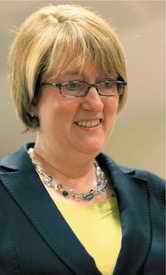 Website censorship erodes the very freedoms that the home
secretary purports to defend Website censorship erodes the very freedoms that the home
secretary purports to defend See article from guardian.co.uk |
18th August
2008 | |
| |
Britain's terror laws have left me and my family shattered See article from guardian.co.uk |
5th August
2008 | |
| No right for researchers to hold terrorist material
|
Thanks to Nick
See article from
guardian.co.uk
|
The University of Nottingham has decided that its students and staff have no right to possess terrorism-related materials for the purposes of research, such as al-Qaeda training manuals freely available for download from US Government websites.
One Nottingham postgrad student and a clerk were held under the Terrorism Act for doing just this earlier this year, before being released without charge (though the clerk now faces deportation), the university has now made it clear that it fully
supports these actions, and says that the student has no reason to possess such material. He's researching Islamic terrorism.
The student, Rizwaan Sabir, who is studying Islamic terrorism, said he had downloaded a copy of an al-Qaeda training
manual for use in his MA dissertation and PhD application and had forwarded it to the administrator, Hicham Yezza, for printing. After six days in detention, neither was charged.
A police letter warned Sabir that he risked re-arrest if found with
the manual again and added: The university authorities have now made clear that possession of this material is not required for the purpose of your course of study nor do they consider it legitimate for you to possess it for research purposes.
Comment: Plods on doctoral research From Alan The letter from Mr Plod to Rizwaan Sabir is amazing: "The university authorities
have now made clear that possession of this material is not required for the purpose of your course of study nor do they consider it legitimate for you to possess it for research purposes."
The thing which immediately leaps off the screen is
that the peak-capped jobsworth who produced this nonsense doesn't have the first idea of what Ph.D. research is. The reference to a "course of study" might be appropriate to a an undergraduate. A person researching for a doctorate is engaged in
original research which will add to knowledge. When I defended my thesis, and when Mr Sabir eventually defends his, we have to convince senior academics, often internationally acclaimed experts in their field, that they have learned something new.
There can be no concept of "required" reading in doctoral research. The researcher doesn't know what he will find, or where he will find it. In Mr Sabir's case, he might find relevant material in a body of Arabic literature in the field of
Muslim theology which has extended over a millennium and a half.
Nor do the "university authorities" emerge with any credit, since Mr Sabir was recommended to read the controversial document by his supervisor. Perhaps the best way for
him to stuff it to Plod and the university's pusillanimous bosses would be to cite the document extensively in his thesis.
|
25th July
2008 | |
| |
Glorification of terrorism means artists and academics must watch their words See article from guardian.co.uk |
| |