| |
It could be a creepy council employee wanting to snoop on you
|
|
|
 | 13th
May 2016
|
|
| See
article from dailymail.co.uk |
East Lothian Council has adopted the policy of using fake Facebook profiles enabling council employees to spy on law-abiding resident. A new policy has enabled investigating officers at East Lothian Council to use false Facebook identities to
befriend targets and? scour social media pages not protected by privacy settings. The nine-page surveillance through social media policy agreed by officials has been branded beyond creepy by critics who have questioned whether
it infringes privacy rights. Human rights lawyers and civil liberties groups have blasted the move, describing it as a sign that powers normally only used by police were spreading into other areas. Daniel Nesbitt, research director of Big
Brother Watch, said the council needs to say why these tactics are necessary, why they think they are proportionate and what safeguards will be in place. He added: For years now councils have been criticised for
using heavy-handed snooping tactics, and a nine-page document simply isn't good enough.
Jason Rose, who stood for the Greens in the East Lothian constituency in last year's Westminster elections said the? policy was beyond creepy
: I cannot believe our councillors have agreed this policy. It speaks volumes that a council which is so poor at communicating with the public and does not make its meetings available to view online agrees a covert
surveillance policy in such a secretive way.
|
2nd July
2011 | |
| RIPA spying on the increase rather than the decrease that the government promised
|
See article from
bigbrotherwatch.org.uk
|
The coalition government promised to roll back the unnecessary, intrusive use of these powers, but unfortunately the reality has been very different. Last year, public bodies made 552,550 requests under the Regulation of Investigatory Powers Act
(RIPA) to request access to confidential communications data. This is a 5% increase from 2009 and a 10% increase from 2008. Although the majority are from police and security services, 1,809 were made by local authorities, an increase from 1,756 requests
last year. Conservative MP Dominic Raab, who is a staunch supporter of civil liberties, said: This disturbing data demonstrates the importance of the coalition's Freedom Bill, to reverse the legacy of
Labour's surveillance society.
Christopher Graham, the Information Commissioner, has already revealed that surveillance technology is advancing at such a rapid rate that regulators are finding it almost impossible to deal with
the changes. He claimed that recent changes had seen snooping techniques intensify and expand to the point where watchdogs do not fully understand the methods utilised under the act. The Coalition proposal to require all local council use
of the RIPA to be sanctioned by a magistrate is currently going through Parliament, but the increasing use of the powers highlights the necessity to enforce tight regulation on these intrusive measures which should only ever have been used to combat
terrorism and serious crime as they were intended.
|
4th August
2010 | | |
Tribunal finds that Poole Council abused snooping powers
| Based on
article from bbc.co.uk
|
|
| Watching over the
Town of Poole? |
A council in Dorset which spied on a family to see if they lived in the right school catchment area has lost a landmark ruling over its actions. Jenny Paton took Poole Borough Council to a tribunal after it used the Regulation of Investigatory
Powers Act (Ripa) to spy on her family 21 times. The Investigatory Powers Tribunal ruled it was not a proper purpose and not necessary to use surveillance powers. It is the first time these powers have been challenged at an open hearing
before the Investigatory Powers Tribunal (IPT). The IPT also found that the surveillance breached the family's right to privacy under Article 8 of the Human Rights Act. The council had argued that the covert surveillance, which took place between
10 February and 3 March 2008, was lawful under Ripa. Paton only found out she had been under surveillance when it was revealed during a meeting with council officials to discuss their school application. They were tailed round the clock, spied on
at home and their movements were recorded in detailed surveillance forms. Their car was also described as a target vehicle . In a statement the council said: The council accepts fully the ruling of the Investigatory Powers Tribunal and
would like to apologise to Miss Paton and her family for any distress caused as a result of its actions in this case. Corinna Ferguson, legal officer for Liberty, said: Intrusive surveillance is vital to fighting terrorism and serious crime
but weak legal protections and petty abuses of power bring it into disrepute. Former ministers claimed that the innocent had nothing to fear but the sinister treatment of Jenny and her kids proves that these powers need to be far more tightly restricted
and supervised. |
6th November
2009 | |
| UK increases snooping whilst spinning that particularly trivial offences will be taken off the list of justifications
| Based on
article from independent.co.uk
|
The agency responsible for tracing absent parents is to be given access to phone and email records for the first time, under Home Office rules. The Child Maintenance and Enforcement Commission (CMEC), which has taken over the heavily criticised
Child Support Agency, said the surveillance powers will allow it to find a hard core of 5,000 missing parents who are refusing to pay towards their children. The move came as the Home Office announced plans to stop local authorities from using
covert spying techniques for particularly trivial offences such as dog fouling or putting a bin out on the wrong day. It is part of a review of the use of powers by public bodies under the Regulation of Investigatory Powers Act (Ripa), which has
town halls have been accused of abusing. Investigators for the CMEC will now be given access to communications data stored by phone companies and internet service providers in cases where other methods of investigation have failed. Such
data shows who the target is speaking to on the phone, or contacting by emai. It will allow access to billing data showing an absent parent's address. As well as tracking down those who have escaped detection, the powers will also be used on
parents who do make some payments but are suspected of lying about their wealth. Chris Huhne, the Liberal Democrat home affairs spokesman, said: Only this Government could claim to be curtailing Ripa powers while extending them to a new body
for the investigation of a different offence. Ministers cannot be trusted to govern the use of these intrusive powers, which is why their use should be authorised by magistrates. Dylan Sharpe, campaign director of Big Brother Watch, said: Saying that these new extensions to RIPA will only target benefits cheats and parents that fail to pay child support is all well and good; but given recent experience most people will be waiting for cases that show the powers are being used for other, more nefarious reasons.
Ministers rejected suggestions that magistrates should authorise all uses of Ripa, arguing it could seriously impair investigations.
|
19th April
2009 | | |
Restricting council snooping powers to higher ranking officers
| Based on
article from dailymail.co.uk |
Town Hall Stasi are to be stripped of the power to spy on residents suspected of 'bin crimes' and dog fouling.
Rules unveiled by the Home Office will prevent councils from using the anti-terror Regulation of Investigatory Powers Act for trivial
offences.
Launching a consultation on the future of RIPA, ahead of a final set of rules due later this year, the Home Office raises the prospect of Town Halls being stripped of the right to use the Act.
However, they may be allowed to
continue using it for restricted offences. The new rules are also likely to see the power to make a RIPA authorisation passed to executive officers only, rather than low-ranking bureaucrats.
The local government minister, John Healy is writing to
councils to say their future use of the powers must be proportionate.
Home Secretary Jacqui Smith spewed the usual propaganda about the draft rules: Our country has a proud tradition of individual freedom. This involves freedom from
unjustified interference by the State. But it also includes freedom from interference by those who would do us harm. The government is responsible for protecting both types of freedom.
Despite the proposed crackdown, councils are likely to
fight to keep many of their powers. A spokesman for the Local Government Association said: Parliament clearly intended that councils should use powers under RIPA, and they are being used to respond to residents' complaints about serious criminals,
like fly-tippers, rogue traders and people defrauding the benefits system.
Liberal Democrat spokesman Chris Huhne said: 'This consultation is a tacit admission by the Government that its surveillance society-has got out of hand. For too long,
powers we were told would be used to fight terrorism and organised crime have been used to spy on people's kids, pets and bins: Without reform, RIPA will continue to be a snoopers' charter. Ministers must ensure that this consultation results in real
changes and not just warm words. Home Office Consultation: Regulation of Investigatory Powers Act 2000: Consolidating orders and codes of practice Passed in 2000, the Regulation of Investigatory
Powers Act (called RIPA), created a regulatory framework to govern the way public authorities handle and conduct covert investigations.
This consultation takes a look at all the public agencies, offices and councils that can use investigation
techniques covered by RIPA, and asks the public to consider whether or not it's appropriate for those people to be allowed to use those techniques.
In light of recent concerns, the government is particularly interested in how local authorities
use RIPA to conduct investigations into local issues. Among other things, in order to ensure that RIPA powers are only used when they absolutely need to be, the government proposes to raise the rank of those in local authorities who are allowed to
authorise use of RIPA techniques.
|
28th March
2009 | |
| Councils using surveillance powers for trivial reasons
|
Based on article from telegraph.co.uk
See also
The Human Rights Act can't restrain the government from guardian.co.uk
by Henry Porter
|
Councils have abused powers designed to stop terrorists to launch more than 20,000 covert spying operations into everything from stealing fairy lights to the illegal sale of crabs, The Daily Telegraph can reveal.
Figures obtained under the
Freedom of Information Act show that thousands of council staff have been authorised to use anti-terrorism powers to covertly keep watch on people.
Some councils used the powers to see of a staff member was working while off sick or
checked whether a claimant's partner is living at an address.
The Regulation of Investigative Powers Act (Ripa) was originally introduced by the Government to help in the fight against terrorism.
The powers to spy on other people
were introduced in 2000 and were extended in 2003 to 795 bodies have been given the right to use the powers, including councils in Britain.
A survey of 400 councils in England and Wales by the Liberal Democrats using the FOI Act found that many
of them were using the powers to investigate trivial misdemeanours. In the study, 182 local authorities admitting employing 1,615 staff who had used the powers 10,133 times in the past five years. If the figures are extrapolated for all 400 councils in
England and Wales, it would mean that 3,600 staff have spied on local people 22,000 times since 2004. The study found that less than one in 10 of spying missions resulted in a prosecution, caution or fixed penalty notice.
Across the 180 councils,
the spying powers were mostly used to tackle benefit fraud (1,782 times), noise nuisance (942 times) and trading standards breaches (734 times). However the powers were also used on 451 investigations into fly-tipping investigations and on 88 cases of
unlawful dog fouling.
|
2nd November
2008 | | | So how can they be trusted with new labours communications database monstrosity?
| Based on
article from
dailymail.co.uk
|
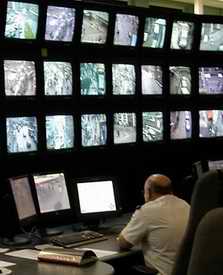 | Control Room:
Westminster Refuse Revenue
Collection Service |
More than half of town halls admit using anti-terror laws to spy on families suspected of putting their rubbish out on the wrong day.
Their tactics include putting secret cameras in tin cans, on lamp posts and even in the homes of 'friendly'
local snitches.
The local authorities admitted that one of their main aims was to catch householders who put their bins out early.
dustbins
Many councils have been spying on residents and fining them if they put rubbish out on the
wrong day
The shocking way in which the Regulation of Investigatory Powers Act - an anti-terror law - is being used was revealed through freedom of information requests made by the Daily Mail.
Shami Chakrabarti of Liberty said: Snooping appears to have become the favourite pastime in town halls up and down the land. Common sense has gone out of the window and instead of putting out more bins, councils spy on householders as if they were terrorists.
Although it is ostensibly an anti-terror law, the Regulation of Investigatory Powers Act 2000, or RIPA, is worded so loosely that it can be used to justify surveillance operations for a variety of reasons. These include spying to protect
public health or the economic well-being of the UK. This 'means' that councils can use the powers granted by the Act to monitor families' treatment of household waste.
The revelations have raised fresh concerns about the Home Office's
plans to create a 'Big Brother' database of every citizen's e-mail and internet records.
Ministers say that councils will not have access to the information. But critics point out that RIPA, which was passed as anti-terror legislation, is now
being routinely used by town halls - and the same could happen with the database.
Phil Booth, of the NO2ID campaign, said that public bodies were assembling the tools of a totalitarian state. |
27th July
2008 | |
| Councils predictably abusing their surveillance powers
|
Based on article from telegraph.co.uk |
|
|  |
Councils have been accused of abusing anti-terror laws after it emerged that local authorities launched almost 10,000 spying missions last year to investigate such petty offences as dog fouling and under-age smoking.
More than half a million
requests for highly personal communications data, such as records of private telephone calls and e-mails, were also lodged by councils and law enforcement agencies.
Snooping by local authorities has now become so widespread that a Government
watchdog has threatened to strip councils of their powers to spy on people, and Gordon Brown has ordered an inquiry into the rapid increase in the use of the Regulation of Investigatory Powers Act (Ripa).
Opposition MPs said the new figures
showed evidence of a "creeping Orwellian state", while the Chief Surveillance Commissioner, Sir Christopher Rose, said some councils were guilty of using Ripa in a "disproportionate" way.
Privacy campaigners including David
Davis, the former shadow home secretary who resigned to campaign against the erosion of civil liberties, say the use of Ripa has spiralled out of control, partly because spying can be authorised by junior town hall officials rather than having to be
approved by a judge.
Sir Christopher Rose revealed in his annual report that 9,535 "directed surveillance authorisations" were granted to public bodies in the 12 months to March 31. A directed surveillance authorisation is defined as
covert surveillance of individuals while in a public place for the purposes of a specific investigation.
Sir Christopher specifically accused councils of a serious misunderstanding of the concept of proportionality and threatened to
strip them of their powers. He said: Many authorities do not recognise that they are vulnerable to criticism... if activity is conducted without appropriate management or if activity is being conducted in a disproportionate manner.
A
separate report from Sir Paul Kennedy, the Interception of Communications Commissioner, revealed that police, security services and other public bodies made 519,260 requests to "communications providers" such as phone and internet firms for
billing records and other information. The total compared with an average of less than 350,000 requests a year in the previous two years. It also showed that 154 local authorities made 1,707 requests for "communications data" in the year to the
end of March.
Shami Chakrabarti, director of human rights group Liberty, added: The most intrusive forms of surveillance must be authorised by judges - not administrators, policeman or politicians. |
1st June
2008 | | |
Poole Council to be investigated for snooping
| Snooping powers were supposedly
brought in to counter threats from terrorism. But it doesn't take long before New Labour get tempted to used them for their life long passion of making life a misery for ordinary people See
full article from the BBC
|
|
| Watching over the
Town of Poole? |
A privacy watchdog is to investigate a council that used powers to spy on people, including a family suspected of lying about where they lived.
A couple were monitored for nearly three weeks by Poole Borough Council to find out if they were
really living in a school catchment area.
Covert surveillance was also used to check for the illegal harvesting of cockles and clams by fishermen.
The Information Commissioner's Office (ICO) said it has "concerns". David Smith,
deputy commissioner at the ICO, said: The ICO has some concerns about the surveillance that has taken place in Poole. It seems that in at least some cases the surveillance has involved the covert collection of personal information about those
individuals under scrutiny. We will be contacting Poole Borough Council to ensure that the way in which personal information about those under surveillance has been collected and subsequently processed meets the requirements of the Data Protection
Act.
The council said it had carried out surveillance on 17 separate occasions under the Regulation of Investigatory Powers Act (RIPA) since 2005. Town hall snoopers are taking a liberty See
full article from the Telegraph by John Hipkin Victims of the growing fondness for council surveillance are numerous and random: dog owners whose pets foul public grass; worried parents in Poole under suspicion of abusing school
catchment area rules; unlawful shell fishermen in Poole. Plymouth council is currently exploring ways to make it easier to prosecute refuse "infringements".
These "crimes" have all been investigated under powers given to local
councils by the Regulation of Investigatory Powers Act (Ripa), primarily designed to curb the use of the internet for illegal purposes by terrorists, serious criminals and paedophiles. It beggars belief that these powers are being used to catch such a
pernicious threat to society as the under-age smoker.
Meanwhile, under a different edict, but on similar territory, the Communities and Local Government minister Hazel Blears has issued guidance for local authorities on community cohesion. This
takes us into realms of social engineering of a deeply troubling kind.
Community Cohesion is what must happen in all communities... states her guidance. It will be achieved, in part, by establishing a multi-agency tension monitoring
group, led by officers from the local authority and/or the local police force. These sentiments could have come from George Orwell's Ministry of Love. ...Read full article |
| |