|
Samantha Bailey
|
Stripped Stripped: A Life of Strip & Tease in Clubland

|
Promotional material: When Sam Bailey tells people that she used to take her clothes off for money, three questions usually follow. The first is Why? The simple answer is that she enjoyed it.
She liked showing off, being desired and earning a lot of money. The second is How did you get started? Sam was 17, had a poorly paid job that she hated and couldn't bear to think that was all there was for her in life. The third question is: So, Sam, what was it like?
In Stripped, Sam Bailey reveals all about her experiences, taking us behind the scenes and introducing us to the other strippers and the punters, aged 18 to 80. She recounts a series of episodes that shine a light on the
simultaneously sexy and seedy, glamorous and grotty world of lap-dancing clubs. Stripped takes you down the steps and through the double doors to reveal some of the night's darkest secrets and expose the reality of life in the
strip-club underworld. Available at UK Amazon
|
Mainstream (April 2012)
ISBN: 1845967844
|
Edited by
Martin Barker and Julian Petley
|
Ill Effects Ill Effects: The Media Violence Debate

|
Review from UK Amazon : Contains several thoughtful pieces about media effects and, perhaps more
importantly, why it is that the media itself seems so keen on the idea that watching violent films is a cause of violent behaviour. The editors have picked a good range of relevant material. Available
at UK Amazon
|
|
|
By Sian Barber
|
Censoring the 1970s Censoring the 1970s: The BBFC and the Decade That Taste Forgot
|
Promotional Material This book explores the work of the British Board of Film Censors in the 1970s. Throughout the decade this unelected organisation set standards of acceptability and determined what could and what could
not be shown on British cinema screens. Controversial texts like A Clockwork Orange (1971), Straw Dogs (1971), The Devils (1971) and Life of Brian (1979) have been used to draw attention to the way in which the BBFC operated in the 1970s.
While it is true to say that these films encountered major classification problems, what of the hundreds of other films being classified at the same time? Did all films struggle with the British censors in this period, and can these
famous examples be fitted into broader patterns of censorship policy and practice? In studying over 250 film files from the BBFC archive, this work reveals how 1970s films such as Vampire Circus (1971), Confessions of a Window
Cleaner (1974) and Carry on Emmannuelle (1978) also ran into trouble with the film censor. This work explores the complex process of negotiation and compromise which affected all film submissions in the 1970s and the way in which the BBFC actively, and
often sympathetically, negotiated with film directors, producers and distributors to assign the correct category to each film. The lack of any defined formal censorship policy in this period allowed the BBFC to work alongside the
film industry and push cultural, social and artistic boundaries; however it also left the Board open to accusations of favouritism, subjectivity and personal bias. This work is not simply a study of controversial films and
contentious issues, but rather engages with wider issues of changing permission, legal struggles, the influence of the media and the legislative and governmental controls which both helped and hindered the BBFC in this important post-war decade. The
focus on historical and archival research offers a great deal to scholars from associated disciplines including history, social policy, media and communications and politics. Available
at UK Amazon
|
Cambridge Scholars Publishing Nov 2011) ISBN: 1443833495
|
Edited by
Martin Barker
|
The Video Nasties The Video Nasties : Freedom and Censorship in the Media

|
A collection of articles on the subject of the media inspired censorship hysteria of the video nasty. Available
via UK Amazon
|
Pluto Press Ltd 1984
|
|
Jerry Barnett
|
Porn Panic
Sex and Censorship in the UK
|
Promotional Material Porn Panic! documents new and rising threats to free expression, and mounts a fierce and entertaining defence. --Nadine Strossen, Professor of Law, New York Law School and former ACLU President
Paperback at UK Amazon
Kindle Edition
at UK Amazon
|
Zero Books (aug 2016)
ISBN: 1785353748
|
|
Robin Bougie
|
Graphic Thrills
American XXX Movie Posters, 1970 to 1985

|
Promotional Material Graphic Thrills is a wide-ranging over-view of the entire history of the XXX movie scene from 1970 to 1985, it is simultaneously anecdotal, factual, and interview based. It also includes
a very detailed and quite lengthy introductory chapter, setting the scene for the posters that follow. Each poster is accompanied by an essay on the film concerned. This is far more than just a poster book, but more a beautifully
illustrated history of the genre. With catchy titles like Carnal Olympics, Ultra Flesh, Insatiable, Deep Throat , and Dominatrix Without Mercy , the 1970s and early 80s were the golden era of the American hardcore sex film. Picking up where
the low-budget stag loops and softcore sexploitation pictures left off, this legendary cycle of adult filmmaking was distinguished by both the overall quality of the movies themselves and also the advertising that promoted them. This was the age of porno chic. Theatrical film posters, then and now, seduce the public into taking part in a fantasy world. Graphic Thrills proudly assembles a stunning array of these debauched and innuendo-packed one-sheets between its covers, with glorious unabashed sexuality dripping from every page. These joyous and colourful odes to sultry sin hung in the lobbies and front windows of the porno theaters and grindhouses of yesteryear.
Available via UK Amazon
|
FAB Press (Oct 2013) ISBN: 1903254736
|
|
Francis Brewster, Harvey Fenton, Marc Morris
|
Shock! Horror! Shock! Horror! Astounding Artwork from the Video Nasty Era

|
Great Britain, 1980: the dawn of the video age. With new video companies appearing on a weekly basis, competition for shelf space was fierce. Eye-catching cover designs were essential to succeed in this saturated marketplace.
Video was new, unregulated and out of control. These were the outlaw years. These glory days spanned just five years, before a legal crackdown in 1984 banished most of these outrageous videos from the shelves forever. Marc Morris was one of the few to
rescue these covers from obscurity, and this book delves deep into his unrivalled collection. DVDs may have replaced videos in terms of film quality & content but they are hardly compete when it comes to cover art. This
book focuses on the cover art but also includes some accurately researched time line details of exactly when each video turned up on the prosecutor's (DPP) list. Excellent research. Available
via UK Amazon
|
FAB Press , 2005
|
Elizabeth Bridges,
Kristin T. Vander Lugt,
Daniel H. Magilow
|
Nazisploitation! Nazisploitation!: The Nazi Image in Low-Brow Cinema and Culture

|
See review from irishtimes.com , Jan 2012
A key question is how exactly did a society as sexually repressive as Nazi Germany become a signifier of far-out sex and erotic adventurism? Although this book ultimately struggles to provide a
definitive answer, perhaps because the question is unanswerable, it does, over the course of some 300 pages, prove how potent and enduing the conventions of Nazisploitation have become. Like the Nazi zombie monsters of the recent
Norwegian opus Dead Snow, it is a phenomenon that has proved itself all-but unkillable. Available at UK Amazon
|
Continuum
Jan 2012
ISBN: 1441183590
|
|
Damon Brown
|
Porn & Pong Porn & Pong: How Grand Theft Auto, Tomb Raider and other Sexy Games Changed Our Culture

|
See review from salon.com , Nov 2008 It's this
sexual history of video games that Damon Brown, who covers technology for Playboy, obsessively details how Grand Theft Auto , Tomb Raider and other Sexy Games Changed Our Culture. Approaching such topics as arm-length pixelated
penises and breasts that deserve their own planetary orbit with a sense of humor, Brown explores how virtual sex has gone from the crude, joystick-controlled adult games on the Atari 2600 and text-only cybering in early-'90s AOL chat rooms to bumping
uglies in the virtual world Second Life and banging prostitutes in Grand Theft Auto." He also examines how video vixens went from having bodies practically built out of Lego blocks to becoming ever more realistic -- at least, as
much as porn-industry bodies can be called realistic. The book is available at UK Amazon
|
Feral House: (Sep 2008)
ISBN: 1932595368
|
|
Allan Bryce
|
The Original Video Nasties The Original Video Nasties: From Absurd to Zombie Flesh-eaters

|
The book is available via UK Amazon
|
Stray Cat Publishing (Aug 2004) ISBN: 0953326160
|
|
Allan Bryce
|
Video Nasties 2 Video Nasties 2: A Pictorial Guide to the Movies That Bite!

|
The book is available via UK Amazon
|
Stray Cat Publishing (Dec 2001) ISBN: 0953326152
|
|
Under the Counter: Britain's Trade in Hardcore Pornographic 8mm Films, 1960-1980
By Oliver Carter
Published by BCMCR New Directions in Media and Cultural Research, 25 Nov. 2022 UK: Under the Counter:
Britain's Trade in Hardcore Pornographic 8mm Films, 1960-1980 by Oliver Carter:
Reviews
- See review from huckmag.com : " A new book by Dr. Oliver Carter
digs into London's horny history, involving police corruption, dodgy BBC funding and a brutal gangland murder "
Promotional Material Prior to 2000, it was a criminal offence to sell hardcore pornography in Britain. Despite this, there was a thriving alternative economy producing and distributing such material "under
the counter" of Soho's bookshops and via mail-order. British entrepreneurs circumvented obscenity laws to satisfy the demand for uncensored adult films and profit from their enterprise, with the corrupt Obscene Publications Squad permitting them to
trade. By the late 1960s, Britain had developed an international reputation for producing 'rollers', short films distributed on 8mm, which were smuggled out of Britain for sale in Western Europe. Following an exposé
by Britain's tabloid press, a crackdown on police corruption and several high-profile obscenity trials, the trade was all but decimated, with pornography smuggled in from Europe dominating the market. Under the
Counter is the first book of its kind to investigate Britain's trade in illicit pornographic 8mm film. Drawing on extensive archival research, including the use of legal records, police files, media reportage, and interviews with those who were involved
in the business, Under the Counter tells the story of Britain's trade in 8mm hardcore pornographic films and its regulation, incorporating ideas from cultural studies, political economy, history and criminology. Under the Counter is a scholarly monograph that will be of interest to researchers across a wide range of disciplines and will be of use to students at undergraduate, Masters level and PhD.
|
|
James Cockington
|
Banned Banned : Tales from the bizarre history of Australian Obscenity

|
As mentioned by Refused Classification Just released, and worthy of your attention
. It's an interesting look into the history of Australian wowserism. A time that the Religious Right would like to see return. Available
via UK Amazon
|
|
|
Nick Cohen
|
You Can't Read This Book You Can't Read This Book: Censorship in an Age of Freedom

|
From Promotional Material: From the fall of the Berlin Wall to the advert of the Web, everywhere you turn you are told that we live in age of unparalleled freedom. This is dangerously naive. From the revolution in
Iran that wasn't to the imposition of super-injunctions from the filthy rich, we still live in a world where you can write a book and end up dead. After the fall of the Berlin Wall, the collapse of Communism, and the advent of the
Web which allowed for even the smallest voice to be heard, everywhere you turned you were told that we were living in an age of unparalleled freedom. You Can't Read This Book argues that this view is dangerously naive. From the revolution in Iran that
wasn't, to the Great Firewall of China and the imposition of super-injunctions from the filthy rich protecting their privacy, the traditional opponents of freedom of speech - religious fanaticism, plutocratic power and dictatorial states - are thriving,
and in many respects finding the world a more comfortable place in the early 21st century than they did in the late 20th Paperback available
at UK Amazon
Kindle Edition available [UK only]
at UK Amazon
|
Fourth Estate
Jan 2012
ISBN: 0007308906
|
|
Alex Comfort and Susan Quilliam
|
The New Joy of Sex

|
See review from erotic-awards.co.uk Won the 2010 Erotic
Award for the best publication. Susan Quilliam took Alex Comfort's original best-seller and made it thoroughly modern, sensitive and inclusive. The illustrations are beautiful and make the book bountiful.
We think The New Joy of Sex should make an important contribution to end the sexual ignorance which prevails in our society and around the world and propose it should become required reading in all schools, colleges and homes, including homes for older
people. Available at UK Amazon
|
Mitchell Beazley (2008)
ISBN-10: 1845334299
|
|
Richard Crouse
|
Raising Hell Raising Hell: Ken Russell and the Unmaking of The Devils a
|
See review from www2.macleans.ca
Crouse reconstructs The Devils in meticulous detail, from Russell's arduous shoot to the hysteria surrounding its X-rated release. Arguing for the film's place at the cutting edge of 70s cinema, he notes that
censors treated The Exorcist with kid gloves just two years later. What's different is The Devils potent mix of sex and religion---and its vision of a corrupt Church that uses possession as a tool to intimidate and manipulate the innocent. History, in the hands of an unflinching filmmaker, can be more graphic than fiction.
Available at UK Amazon
Summary Review: Worthy This is a
worthy examination of this powerful and unforgettable British masterpiece. If there are any small caveats, they would be a brief dismay at the lack of photographs, posters or set designs to illustrate the incredible
story of the film, and a little more about a couple of details on the cuts imposed by Russell himself, as well as the censors.
|
ECW PRESS
8 Nov 2012
ISBN: 177041066X
|
|
Peter Cushing
|
Peter Cushing The Complete Memoirs

|
Promotional Material We defy even the most cold-hearted of readers not to be moved to tears 9/10 --Starburst These concise yet beautifully written works of reminiscence fittingly mark 2013 as
the centenary of the birth of a man... Highly recommended. 5 stars --Horrorview A moving account of a magnificent life, with reflections from those who knew and admired him. --Rue Morgue Available at
UK Amazon
|
Signum Books
17 May 2013|
ISBN: 0956653480
|
|
Roald Dahl
|

|
News February 2023: Gobblefucked by sensitivity censors Content deemed offensive to woke sensitivities, such as references to weight, mental health, violence, gender and race have been removed or rewritten in Dahl's library of
children's classics. Some of the edits reportedly include removing the word 'fat' from every book, with Augustus Gloop in Charlie and The Chocolate Factory instead being described as enormous. Hundreds of edits have reportedly been
made to the latest editions of Roald Dahl's classics. A report in the Daily Telegraph compared the latest editions with earlier versions of the texts. It found language concerning weight, mental health, violence, gender and race had been either cut or
rewritten. But the most ludicrous examples of censorship are to removed the words 'black' and 'white' when used to refer to colours when nothing to do with skin colour. Eg a description of a white bed sheet has had the word 'white replaced'.
The Cloud-Men in James and the Giant Peach are now the Cloud-People, while references to Rudyard Kipling and Joseph Conrad in Matilda had been changed to Jane Austen and John Steinbeck. In The Witches, a reference to women
working as a cashier in a supermarket or typing letters for a businessman has been changed to working as a top scientist or running a business. In James and the Giant Peach, Miss Sponge is no longer described as the fat one, Miss Spider's
head is no longer black and the Earthworm no longer has lovely pink skin but lovely smooth skin. In The Twits, Mrs Twit is no longer described as ugly and beastly but just beastly.
It seems that all Puffin releases from
about 2020 have been censored. 2016 releases seem to be untampered with although Roald Dahl himself was previously persuaded to make sensitivity edits since originally published versions. Penguin releases set for 2023 are set to be the traditional
versions.
|
|
|
Julian Davies
|
Hookers Hookers: Their Lives in Their Words

|
Review from UK Amazon , Jan 2010 This is a fantastic book. I couldn't put it down had to stay up and read it from cover to
cover. Who but Julian Davies would have thought of getting prostitutes to talk about their lives. I didn't think he could top his first two books but he has. This book is funny, sad , frightening and full of sex. Not only is Julian the most handsome
writer around he is also one of the most talented. Available at UK Amazon
|
MILO BOOKS (2008)
ISBN-10: 1903854784
|
Edited by Ronald Deibert, John Palfrey, Rafal Rohozinski, Jonathan Zittrain
|
Access Denied Access Denied: The Practice and Policy of Global Internet Filtering

|
Review from the BBC , March 2008 A new book details the extent to
which countries across the globe are increasingly censoring online information they find strategically, politically or culturally threatening.
Access Denied: The Practice and Policy of Global Internet Filtering challenges the long-standing
assumption that the internet is an unfettered space where citizens from around the world can freely communicate and mobilise. In fact, the book makes it clear that the scope, scale and sophistication of net censorship are growing.
There's been
a conventional wisdom or myth that the internet was immune from state regulation, says Ronald Deibert, one of the book's editors: What we're finding is that states that were taking a hands-off approach to the internet for many years are now
finding ways to intervene at key internet choke points, and block access to information. Available at UK Amazon .
|
MIT Press (Dec 2007)
|
|
Ronald Deibert
|
Access Controlled Access Controlled: The Shaping of Power, Rights, and Rule in Cyberspace

|
See article from
blogs.forbes.com China may be one of the world's most Internet-repressive regimes. But its Great Firewall is a clumsy and ineffective tool compared with the subtle
information control techniques developed over the last few years by Russia and many of the former Soviet states. That's one of the conclusions of Access Controlled, a new book out from the Open Net Initiative, a consortium of academics focused on
free speech and government interactions with the Internet. A sequel to Access Denied, the Open Net Initiative's 2008 report on the state of global Internet censorship, one of the book's theses is that government control of the Internet has shifted from
directly blocking sites to slicker ways of repressing dissidents online. China and Iran still filter the most content online, according to the ONI. In its country-by-country survey of Internet filtering. But while states like Russia and Belarus
perform much less of what the ONI calls first generation or Chinese-style filtering, they're increasingly adept at second and third generation control of the Web. Second generation censorship, as ONI authors Ronald
Deibert and Rafal Rohozinski define it in an early chapter, includes tricks like requiring Web site owners to register with the government and using the process to weed out dissident sites with red tape, a tactic often used in Kazakhstan and Belarus. In
Belarus and Uzbekistan, veracity and slander laws are used as a pretense for shutting down dissident sites. Available at UK
Amazon
|
MIT Press May 2010
ISBN: 0262514354
|
|
Tom Dewe Mathews
|
Censored Censored : The Story of Film Censorship in Britain

|
Has become a standard text in the field Highly recommended Out of print
|
Chatto & Windus Ltd, 1994
|
|
Kate Egan
|
Trash or Treasure? Trash or Treasure?: Censorship and the Changing Meanings of the Video Nasties

|
From Promotional Material: Trash or treasure is a wide-ranging historical study of the British circulation of the video nasties - A term that was originally coined to ban a group of horror videos in Britain in the
1980s but which continues to have cultural resonance in Britain up to the present day. The book is divided into three secionts, which represent the key periods of existence of the nasties category - The formation of the term in
the 1980s, the fan culture that formed around the nasties subsequent to their banning under the video recordings act and the DVD and theatrical re-release of some of the nasty titles from 1990 onwards.
See
review from irishgothichorrorjournal.homestead.com :
All in all, Trash or treasure? is an interesting and valuable work, though the necessity of hacking one's way through an often impenetrable jungle of academic jargon rather detracts from the overall effect, and there
is a tendency, common to such works, to state the obvious as if it were revelation. On its own terms, however, it is well-written and cogently argued, but its future lies entirely within the walls of academe, not least due to its
outrageous £50.00 retail price. Available at UK Amazon
|
Manchester University Press, Nov 2007 ISBN: 0719072328
|
|
Jane Fae
|
Taming the Beast

|
Author Jane Fae says: Over the last decade or so, politicians, media and public have woken up to the fact that the internet allows individuals to access a range and volume of pornographic material well beyond what was once
available in an age of print and cellulose film. At the same time, they have had to acknowledge that traditional approaches to controlling access to this material have proven legally ineffective. That same period, therefore, has
seen a two-pronged attempt to stuff the internet genie back into its virtual bottle. First, through an unprecedented passing of new and ground-breaking laws -- at times, seemingly, a new law every year: and second, through the implementation of technical
solutions, including moderation, filtering and blocking to achieve through brute technological force what may not always be achievable through law. This book is a first attempt to document both these processes. It is not quite an
academic textbook. It does, however, set out clearly the main pathways taken by legislators and public servants in attempting to deal with the issue of online porn. It therefore provides a basic roadmap from which those interested in to carry out their
own more detailed exploration of the territory can branch out on their own. In terms of narrative, the book brings us to the end of 2014, at which point the government's central legislative measure â-- the law on possession of
extreme porn â-- has been rudely challenged through judicial review. It is also the point at which the public have begun to question the validity of filtering as a generic approach. We are undoubtedly living in interesting times.
See
order details at bookTamingtheBeast Facebook Page
|
April 2015
|
|
Edited by Harvey Fenton
|
Flesh & Blood Compendium

|
Over the course of ten seminal issues in magazine format and a hugely successful book format edition, Flesh & Blood became established as the leading brand name in cutting-edge film criticism during the latter years of the Twentieth
Century. Always one step ahead of the rest, Flesh & Blood featured the world's best writers reporting on the most important sex, horror and exploitation cinema in the world. Flesh & Blood Compendium is simply The Best of The Best. Ground-Breaking Articles on eye-opening subjects including: Prosthetic Sex Films, RealiTV and Death Film, Pier Paolo Pasolini and the Marquis de Sade, Jack the Ripper, Postmodern Slasher Movies, British Trash Films from the 70s, Charles Manson, Rape/Revenge movies, African Witchdoctors, French vampires, Japanese Ultra Violence and Belgian artcore...
With a contribution by yours truly Available via UK Amazon
|
FAB Press , 2003
|
|
Ian Fleming
|
James Bond

|
News February 2023: Gobblefucked by sensitivity censors All of Ian Fleming's James Bond novels are to be reissued in April 2023 to mark 70 years since Casino Royale , the first book in the series. Unfortunately this will be a
gobblefucked release that has been cut by sensitivity censors. Ian Fleming Publications Ltd, the company that owns the literary rights to the author's work, commissioned a review by sensitivity censors of the classic texts under its control. The
Telegraph understands that a disclaimer accompanying the reissued texts will read: This book was written at a time when terms and attitudes which might be considered offensive by modern readers were commonplace. A
number of updates have been made in this edition, while keeping as close as possible to the original text and the period in which it is set.
The changes to Fleming's books result in some depictions of black people being reworked or
removed. Dated references to other ethnicities remain, such as Bond's racial terms for east Asian people and the spy's disparaging views of Oddjob, Goldfinger's Korean henchman. In the sensitivity censor-approved version of Live and Let Die ,
Bond's assessment that would-be African criminals in the gold and diamond trades are pretty law-abiding chaps I should have thought, except when they've drunk too much becomes pretty law-abiding chaps I should have thought. Another
altered scene features Bond visiting Harlem in New York, where a salacious strip tease at a nightclub makes the male crowd, including 007, increasingly agitated. The original passage read: Bond could hear the audience panting and grunting like pigs at
the trough. He felt his own hands gripping the tablecloth. His mouth was dry. The revised section replaces the pigs reference with: Bond could sense the electric tension in the room. A further lengthy passage describing Bond's
night out in Harlem, including an argument between a man and his girlfriend conducted largely in accented dialogue Fleming describes as straight Harlem-Deep South with a lot of New York thrown in, has been entirely removed. The word 'nigger',
which Fleming used to refer to black people when he was writing during the Fifties and Sixties, has been almost entirely expunged from the censored texts. In most cases, this is replaced by black person or black man, but racial descriptors are entirely
dropped in some instances. In one example, some criminals escaping from Bond in Dr No become simply gangsters. The ethnicity of a barman in Thunderball is similarly omitted in new editions. In Quantum of Solace , a butler's race
now also goes unmentioned.
|
|
|
David Flint
|
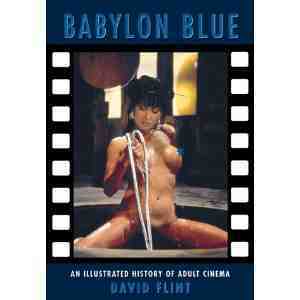
Babylon Blue Babylon Blue: An Illustrated History of Adult Cinema
|
An excellent read by an author who suffered a police raid whilst researching the book. Review from Loaded
Book of the Month: Here, in intricate and quite literally anal detail, is the history
and background to all the major hardcore films of the last four decades. Every key porn star and director gets a lengthy entry, so to speak: John Holmes, Mary Millington, Traci Lords, Jenna Jameson, Ben Dover, the woman from the Oxo ads and Leslie
Philips....Flint avoids mere titillation in favour of hard details. A moist 9/10. Available via UK Amazon
|
Creation Books International, 1999
|
|
David Flint and Keri O'Shea
|
Horror Out Of Control

|
Promotional Material HORROR OUT OF CONTROL is the new book from Reprobate Press and Warped Perspective, a collaborative look at the 21st Century horror film 203 the good, the bad and the ugly of modern genre cinema and
video. Written by David Flint and Keri O'Shea, this is a collection of over four hundred incisive and detailed reviews of horror movies made between 2000 and 2020. This is not a partisan best of or essential guide, but a snapshot
of where the genre is in the 21st Century, from major cinema releases and franchises to zero-budget shot-on-video obscurities. With a global expanse and a critical eye, HORROR OUT OF CONTROL is a reflection of the development of the genre in the last two
decades. With some eye-popping visuals and no-hold-barred opinions, HORROR OUT OF CONTROL is the state of the union address that modern horror has been waiting for.
|
Reprobate Press, 26 Oct. 2020
|
|
Niki Flynn
|
Dances with Werewolves

|
Suggested by Alan Niki Flynn is an actress/model specialising in spanking and the like. She has appeared in films and photoshoots produced in her native USA, Britain, the Czech Republic
and Austria (at least). She is really the ideal antidote to the idea of subs "not really consenting" which was initially touted as a reason for the Dangerous Pictures Act. A bit more
about Niki's book on her Not Blog
Promotional Material
Niki Flynn is a young woman on a journey into the dark heart of her own sexual fantasies. She is regularly restrained, spanked, caned and whipped in the most notorious adult films of modern times. And she doesn't do it
for financial gain. Nor because she's a masochist. Niki Flynn makes extreme adult movies because of her curious and profound love of surrender and punishment. Her desires are all about authority and power in
situations when she has none. Where she is at the mercy of others who lack just that. And for the thrill of dread, anticipation, and the euphoria that follows when she admires the marks from the headmaster's cane or the pirate's whip, Niki Flynn is
willing to endure torment. Flown to the secretive underground world of taboo film-making, this strange art has led her all over the world. From schoolgirl canings in England to spankings in California, from a Stasi interrogation in Germany to a forced
haircut in Prague, Niki Flynn progressed to her darkest role ever - in Bratislava, where she danced with the fiercest werewolves of all. Available from
at UK Amazon
|
Virgin Books 2007 ISBN: 0753512289
|
|
Michael J Freeman
|
I Pornographer

|
Originally serialised on MelonFarmers as A Corollary to Corruption. A true story about the life of a pornographer. Starting in Sixties Soho in London, England. An exciting read about sex, violence and
corruption in the London Underworld. Kindle Edition available at UK Amazon
|
|
|
Glenn Greenwald
|
No Place to Hide Edward Snowden, the NSA and the Surveillance State
|
Promotional Material Glenn Greenwald's No Place to Hide is the story of one of the greatest national security leaks in US history. In June 2013, reporter and
political commentator Glenn Greenwald published a series of reports in the Guardian which rocked the world. The reports revealed shocking truths about the extent to which the National Security Agency had been gathering information
about US citizens and intercepting communication worldwide, and were based on documents leaked by former National Security Agency employee Edward Snowden to Greenwald. Including new revelations from documents entrusted to
Greenwald by Snowden, this essential book tells the story of Snowden and the NSA and examines the far-reaching consequences of the government's surveillance program, both in the US and abroad. Available
at UK Amazon
|
Hamish Hamilton
May 2014
ISBN: 0241146690
|
|
Bruce G Hallenbeck
|
The Hammer Vampire British Cult Cinema: The Hammer Vampire

|
Promotional Material THE HAMMER VAMPIRE is an in-depth examination of how a tiny film studio on the banks of the Thames changed a genre forever. Hammer may not have
invented the vampire film, but its technicians and actors certainly perfected it. The screen vampire as we know and love it today, from Buffy the Vampire Slayer to Twilight and True Blood, would not have existed in its present form but for a series of
sixteen Gothic horror films produced by Hammer between 1958 and 1974. In this lively analysis of the phenomenon, author Bruce Hallenbeck takes you behind the scenes of the Hammer classics to show how the vampire myth was
reinvented for the modern audience, taking the archetype that was established by Bram Stoker s Dracula into a realm that was darker, more graphic and, most importantly, more sexual than had ever been depicted before.. Hammer s greatest contribution to
the vampire film may have been in its evolution of the female of the species the seductive vampire woman, who ultimately proved to be far more deadly than the male... Fully illustrated with rare stills in black & white and colour.
FOREWORD by Jimmy Sangster Available at UK Amazon
|
Hemlock Books|
May 2010
ISBN: 0955777429
|
|
David Hebditch & Nick Anning
|
Porn Gold Porn Gold: Inside the Pornography Business
|
Fascinating study of the porn business particularly concentrating on the money to made from porn and who makes it. Available
at UK Amazon
|
Faber & Faber Ltd, 1988
|
|
Paul Hoffman
|
The Golden Age of Censorship

|
Novel set in the world of film censorship by Paul Hoffman who was previously a senior examiner at the BBFC.
Promotional Material Do you remember the video nasty? It is 1984
and video has just arrived in Britain's homes. With it comes a widespread distrust and fear. The public dread a deluge of porn, ultraviolence, cannibalism and dismemberment. Eager to reflect the public mood, Parliament decides to panic too, and gifts
sweeping powers to the chief film censor, Nick Berg. Every film ever made has to be reclassified for home viewing. But rather than become a tool of moral hysteria, Berg has a grand plan. He will create an entirely new kind of censorship - benign,
thoughtful, intelligent. First he must create a team to implement his wishes. This 'Magnificent Seven' will have the power to decide what others can and cannot see.
They will encounter the great monuments of censorship - The Exorcist , Cannibal Holocaust
and Reservoir Dogs - as well as the obscure and unexpected: Rupert Bear and Little Yum and the almost unwatchable Nappy Love . But off-screen, all is soon not well in the inner sanctum. What Berg doesn't realize is that
his prized rationale is flawed. Fault lines appear within his team of seven. And a struggle for power is set in motion. Available at UK
Amazon
|
Black Swan 2008
|
|
Thomas Hodge
|
VHS Video Cover Art
|
Promotional Material Video cover art is a unique and largely lost artform representing a period of unabashed creativity during the video rental boom of the 1980s to early 1990s. The art explodes with a succulent, indulgent
blend of design, illustration, typography, and hilarious copywriting. Written and curated by Tom aThe Dude Designsa Hodge, poster artist extraordinaire and VHS obsessive, with a foreword by Mondo's Justin Ishmael, this collection contains over 240
full-scale, complete video sleeves in the genres of action, comedy, horror, kids, sci-fi, and thriller films. It's a world of mustached, muscled men, buxom beauties, big explosions, phallic guns, and nightmare-inducing monsters. From the sublime to the
ridiculous, some are incredible works of art, some are insane, and some capture the tone of the films better than the films themselves. All are amazing and inspiring works of art that captivate the imagination. It's like stepping back in time into your
local video store! Available at UK Amazon
|
Schiffer Publishing
28 May 2015
ISBN: 0764348671
|
|
Sexplosion By Robert Hofler Hardcover available at UK Amazon
Kindle Edition
available at UK Amazon
HarperCollins USA (Feb 2014)
ISBN 0062088343 See
extract from thewrap.com
Initially, Anthony Burgess liked what he saw -- or, at least, he said he liked what he saw -- when Stanley Kubrick eventually deigned to meet and give him a private screening of the completed film. During production,
Malcolm McDowell had asked Kubrick if he ever met with Burgess to discuss the project. Oh good God, no! exclaimed Kubrick. Why would I want to do that? McDowell surmised, Kubrick didn't
want interference from the author, who probably didn't know the first thing about making a movie. Watching the completed film, Burgess didn't hold it against Kubrick when his wife, repulsed by its choreographed sex and
violence, asked to leave the screening room after a mere ten minutes. Initially, he even managed to tell the press, This is one of the great books that has been made into a great film. Maybe he meant what he said. Or maybe
he simply wanted to persuade Kubrick to direct his screenplay Napoleon Symphony. In the following weeks, as well as years, Burgess would radically reassess his opinion of A Clockwork Orange the movie.
|
|
Trigger Warning Is the Fear of Being Offensive Killing Free Speech? By Mick Hume Available:
William Collins (Jun 2015)
ISBN: 0008125457 Promotional Material: In this blistering polemic, veteran journalist Mick Hume presents an uncompromising defence of freedom of expression, which he argues is
threatened in the West, not by jackbooted censorship but by a creeping culture of conformism and You-Can't-Say-That. The cold-blooded murder of the Charlie Hebdo cartoonists in January 2015 brought a deadly focus to the issue of
free speech. Leaders of the free-thinking world united in condemning the killings, proclaiming Je suis Charlie . But it wasn't long before many commentators were arguing that the massacre showed the need to apply limits to free speech and to
restrict the right to be offensive. It has become fashionable not only to declare yourself offended by what somebody else says, but to use the offence card to demand that they be prevented from saying it. Social media
websites such as Twitter have become the scene of twitch hunts where online mobs hunt down trolls and other heretics who express the wrong opinion. And Trigger Warnings and other measures to protect sensitive students from
potentially offensive material have spread from American universities across the Atlantic and the internet. Hume argues that without freedom of expression, our other liberties would not be possible. Against the background of the
historic fight for free speech, Trigger Warning identifies the new threats facing it today and spells out how unfettered freedom of expression, despite the pain and the problems it entails, remains the most important liberty of all.
|
|
The Texas Chain Saw Massacre Companion eBook
By Stefan Jaworzyn UK: The Texas Chain Saw Massacre Companion eBook by Stefan Jaworzyn:
Promotional Material In 1974, a low-budget, no-star horror movie was unleashed on the world, causing panic among the censors and provoking glee from its intended audience. The Texas Chain Saw Massacre is
still as powerful today as when it was first seen almost thirty years ago, and will return to the screens in a high profile remake this Halloween. Now, in this long-awaited companion to Tobe Hooper's groundbreaking film, Stefan Jaworzyn gives us the
inside story of one of the most successful, controversial and influential horror films ever made, as well as in-depth coverage of the three sequels, various documentaries and other movies also based on the life of serial killer Ed Gein. Packed with
exclusive interviews, rare and unseen pictures, and with a foreword from the chainsaw-wielding Leatherface himself, Gunnar Hansen! Read more Read less "...as complete a companion as anyone gorehound could wish for." -- SFX magazine, Review
2004, by Ian Berriman.
Refreshing ... a professionally researched, well-written, unpretentious volume, and we wish there were more horror film books like it. -- SFX Magazine, January 2004
|
|
Policing Sex By Paul Johnson and Derek Dalton Available at
UK Amazon Routledge (May 2012)
ISBN: 0415668069 Promotional Material: The book collects together essays by a well known and respected group of academics, from a range of disciplines, that explore the role
of the police in shaping the boundaries of that aspect of our lives that we imagine to be most intimate and most our own. It presents a snap shot of policing in respect of a number of diverse areas -- such as public sex, pornography, and sex work
-- and considers how sexual orientation structures police responses to them. The book aims to promote discussion of how policing is implicated in the social, moral and political landscape of sex and, contrary to the established
rhetoric of politicians and criminal justice practitioners, continues to intervene in the private lives of citizens.
|
|
The Frightfest Guide to Exploitation Movies By Alan Jones and Buddy Giovinazzo Available
at UK Amazon
FAB Press (Sept 2016)
ISBN-10: 1903254876 Promotional
Material: Author Alan Jones is an internationally renowned reporter on the Horror Fantasy genre. He founded FRIGHTFEST and is currently a featured film critic in the Radio Times, the UK's biggest selling magazine.
He also writes for Empire, Total Film, The Guardian, GQ, Vogue & The Independent. He recently worked with Nicolas Winding Refn on the acclaimed FAB Press coffee table book The Act of Seeing. With a foreword by Buddy Giovinazzo, best known for his
gritty-low budget debut film, Combat Shock, and his collection of harrowing short stories, Life Is Hot in Crackdown. Born in New York City, Buddy was thrilled when Combat Shock received its first public screening at the Liberty Theater on 42nd Street.
|
|
David Kerekes and David Slater
|
See No Evil See No Evil: Banned Films and Video Controversy

|
An excellent history of video classification and censorship in the UK from the "video nasties" controversy to the present day. Includes chapters on the history of video, the "video nasties", the black
market, the prosecutions of traders in unclassified material, media effects, and sex vids. A well written and intelligent study, well worth reading. (David Alexander) Available from
UK Amazon
|
Critical Vision (an imprint of Headpress) ISBN: 1 900486 10 5
|
|
Mark Kermode
|
It's Only a Movie It's Only a Movie: Reel Life Adventures of a Film Obsessive

|
Summary Review : Difficult to classify Like the banned films he so dearly loves, it's very difficult to classify. It's part documentary, part adventure movie, part love story and, of
course, part horror. It's one hell of a ride though. I'd love to hear this as an audiobook in the actual words of Ol' Big Hands himself (he'd have to slow down though - he'd gabble through it in about 25 minutes if his radio
performances are anything to go by!) In the meantime, I'd thoroughly recommend this book to absolutely anyone who likes films. Book available at
UK Amazon
Kindle edition available at
US Amazon
|
Random House Feb 2010 ISBN-10: 184794602X
|
|
Shaun Kimber
|
Henry: Portrait of a Serial Killer

|
From promotional material: Henry: Portrait of a Serial Killer (1986) is precisely that: a cold-eyed character study based on the crimes of Henry Lee Lucas, who was convicted of eleven murders in the
1980s. Director John McNaughton presents an unflinching portrayal of the semi-fictional Henry's crimes. The film proved immensely controversial, notably in the UK, where it confounded theBBFC, which went so far as to re-edit a crucial scene, in addition
to cutting others. Shaun Kimber's examination of the controversies surrounding Henry considers the history and implications of censors' decisions about the film on both sides of the Atlantic. Taking account of the views of
audiences, critics and academics, both at the time the film was released and in the years since, Kimber also looks at the changing political, social and economic contexts within which the film was produced and has subsequently circulated. Henry continues
to represent a key film within the horror genre, the history of censorship, and the study of film violence. Kimber's account of the film's production and its fortunes in the marketplace provides a fascinating case study of film censorship in action, and
offers a sustained and wide-ranging analysis of what remains one of the most disturbing films ever made. An excellent in-depth analysis... Kimber effectively combines close readings of key scenes with detailed consideration of
the history of different versions of Henry and its various engagements with critics, supporters and regulatory authorities. Geoff King, Brunel University Shaun Kimber is a Senior Lecturer in the Media School at Bournemouth
University. Available at UK Amazon
|
Palgrave Macmillan September 2011
ISBN: 0230297986
|
|
Amelia May Kingston
|
The Triumph of Hope

|
From Amelia May Kingston Some time ago I decided that my contribution against the proposed bill outlawing the possession of "extreme pornographic images" would
be to write and publish a semi-autobiographical novel The Triumph of Hope to show how BDSM can be part of a rounded life-style practised by intelligent, caring, creative people.
It is not pornography, but a challenging, erotic,
autobiograpy detailing the changing perspectives of a disabled, middle-aged female psychotherapist as she interacts with the world of alternative sexuality. It follows her journey as a determined survivor from childhood to maturity through varied
life-experiences in many parts of the world and at last to a joyful and shameless old age in which she finally recognises and accepts herself.
Is it really about me? Now that would be telling ... but my playmates may recognise themselves in some
of the composite characters I have created. Available at UK Amazon
|
Lulu Press Incorporated ISBN 1-4116-7695-5
|
|
Hilary Kinnell
|
Violence and Sex Work in Britain

|
See review from sexworkeurope.org Violence and Sex Work in Britain
explores violence and homicide in the context of sex work, showing how current law and repressive policing tactics exacerbate vulnerability. It exposes inadequacies in the criminal justice system, leading to failures in investigations and prosecutions
and failures to prevent violence from known offenders. It attacks the radical feminist ideology currently driving government policy, arguing that its stigmatization of sex workers' clients ignores sex workers' own experiences and testimony while
colluding with policies that make sex work more dangerous.
Hilary described her findings that it is generally not clients who perpetrate violence against sex workers, but individuals who pretend to be clients to gain access to a brothel or
persuade a sex worker to get in their car, as well as community vigilantes, law enforcement staff and robbery gangs targeting sex workers in the knowledge that as well as having cash on the premises, they are unlikely to report. Available from
UK Amazon
|
Willan Publishing (17 Oct 2008)
ISBN-10: 1843923505
|
|
Dr Marty Klein
|
America's War on Sex America's War on Sex : The Attack on Law, Lust and Liberty

|
From AVN Dr. Marty Klein's recently published volume, America's War On Sex , is quite simply
the best book yet written dealing with the collision between the adult industry, sex-positive activism and the religious right. Every single page contains valuable information and analysis for anyone involved in the adult industry, and should be
considered required reading for anyone who wants to understand why so many people in the United States, particularly the so-called "cultural leaders," are so fucked up when it comes to all subjects sexual.
Those who are trying to
'clean up' America say they're fighting for a number of critical reasons: the family, marriage, morals, education, community safety, " Klein perceptively notes at the outset. But this isn't really true. It's a war against sex: sexual
expression, sexual exploration, sexual arrangements, sexual privacy, sexual choice, sexual entertainment, sexual health, sexual imagination, sexual pleasure.
Klein's thesis is broken into several chapters dealing with such subjects as sex
education, reproductive rights and the media, both broadcast and Internet, but as becomes quickly evident, those are really just different aspects of the same war, fought with the same weapons, using the same (mis)information and targeting the same
objective: To control and restrict everyone's sexuality, even their own. Available at US Amazon
|
Praeger Publishers (August 30, 2006)
|
|
Peter Kramer
|
A Clockwork Orange

|
From promotional material: What is the attraction of violence? What is the relationship between real and imagined violence? What should be the state's response to both? These questions are raised by Stanley
Kubrick's A Clockwork Orange (1971). The film is a graphically violent, sexually explicit, wickedly funny, visually stunning and deeply ambiguous adaptation of Anthony Burgess's 1962 novel. Drawing on new research in the
Stanley Kubrick Archive, Peter Kramer's study explores the production, marketing and reception as well as the themes and style of A Clockwork Orange against the backdrop of Kubrick's previous work and wider developments in British and American cinema,
culture and society from the 1950s to the early 1970s. This is a remarkable and highly unusual book. Kramer turns aside from the endlessly repeated queries about whether a film like A Clockwork Orange might 'cause people to go
out and rape, and asks instead: how does this film participate in that very debate? What philosophy of human nature drove Kubrick to construct the film? Kramer takes us into the film's detailed construction, so we can judge its contribution for
ourselves. Martin Barker, Aberystwyth University Peter Kramer is a Senior Lecturer in Film Studies at the University of East Anglia, Available at
UK Amazon
|
Palgrave Macmillan September 2011
ISBN: 0230302122
|
Lawrence Kutner
Cheryl Olson
|
Grand Theft Childhood Grand Theft Childhood: The Surprising Truth about Violent Video Games and What Parents Can Do

|
Review from TechLiberation , April 2008 Don’t judge a book by its cover (or its title, for that matter).
I figured that I was in for another tedious anti-gaming screed full of myths and hysteria about games and gamers. Boy, was I wrong. Massively wrong.
Lawrence Kutner, PhD, and Cheryl K. Olson, ScD, cofounders and directors of the Harvard Medical
School Center for Mental Health and Media, have written the most thoroughly balanced and refreshingly open-minded book about video games ever penned. They cut through the stereotypes and fear-mongering that have thus far pervaded the debate over the
impact of video games and offer parents and policymakers common-sense advice about how to approach these issues in a more level-headed fashion. They argue that:
Today, an amalgam of politicians, health professionals,
religious leaders and children’s advocates are voicing concerns about video games that are identical to the concerns raised one, two and three generations ago with the introduction of other new media. Most of these people have the best of intentions.
They really want to protect children from evil influences. As in the past, a few have different agendas and are using the issue manipulatively. Unfortunately, many of their claims are based on scanty evidence, inaccurate assumptions, and pseudoscience.
Much of the current research on violent video games is both simplistic and agenda driven. A vailable via UK Amazon
|
Simon & Schuster (April 2008)
|
|
Edward Lambertu
|
Behind the Scenes at the BBFC Behind the Scenes at the BBFC: Film Classification from the Silver Screen to the Digital Age

|
From promotional material: Established by the film industry in 1912 as the nation's only official and independent classifier of the moving image, the British Board of Film Classification (originally the British
Board of Film Censors) has long been a source of fascination -- and sometimes a bone of contention -- for filmgoers, filmmakers and industry figures. This new book, published in the BBFC's centenary year, addresses Britain's film classification history,
and marks an unparalleled collaboration between the Board and leading film critics, historians and cultural commentators. These writers, given unprecedented access to the BBFC's archives, chart the organisation's history alongside
the cultural, social and political forces that have helped shape it. Together they explore shifting public attitudes towards cinema's portrayal of sex and drugs, horror and violence; the different perspectives of the Board's successive leaders; the
impact of controversial decisions, and the ever-changing nature of moving image distribution and exhibition. The book also features unique case studies, written by BBFC staff, focusing on significant films that have provoked
debate and controversy both within the BBFC and more widely - Battleship Potemkin, The Snake Pit, A Clockwork Orange, Indiana Jones and the Temple of Doom, and many more. Behind the Scenes at the BBFC: Film Classification from the
Silver Screen to the Digital Age is an entertaining and invaluable insight into shifts in public attitudes over the last century, and how film classification shapes what we see on screen. Editor: EDWARD LAMBERTI is Information
Services Manager at the BBFC. A vailable via UK Amazon
|
Palgrave Macmillan (Nov 2012)
ISBN: 1844574768
|
|
Ashley Lister
|
Swingers Swingers: Female Confidential

|
There are an estimated one million swingers in the UK and according to the author of a new book, the sexy pastime could become even more common place thanks to the credit crunch.
Ashley Lister, who wrote and researched Swingers:
Female Confidential , reckons that in the coming months more people will shun expensive restaurants and nights out in favour of cheaper pleasures.
And for many that means meeting regularly to have sex with someone other than their partners.
Ashley says: With a recession on its way, swinging is about to go through a boom period because it is such a cost effective way for people to enjoy themselves and to get maximum enjoyment from minimum outlay.
Ashley spoke to
students, single mums in their 20s, unemployed swingers, top lawyers and even swinging doctors - of every age, size and shape imaginable.
And he discovered that contrary to popular belief, most shun the notorious swingers parties in favour of
getting to know a small number of similar minded people socially. Then it is simply a case of consenting adults taking part in whatever sexual practice they desire generally, with the full support and encouragement of their partner, husband or wife.
Ashley said: I found it riveting to talk to these people about a subject that is normally forbidden. They really are just normal people, it's just they have a liberated attitude towards sex. They could be your neighbour, your boss or even the
person who sits next to you at work and you would never know. But what I enjoyed about it all was the openness among themselves and they actually seemed empowered by what they do in that they could state exactly what they want and just do that.
Having researched and written his insight into the world of swinging, Ashley was only left with one question about the ever growing phenomenon - why do women do it?
Ashley said: Nobody asked me why men did it, they seemed to understand men
would do that kind of thing for more sex, but everyone asked what motivated women, so I decided to look into it and write Swingers: Female Confidential . Available from
UK Amazon
|
Virgin Books 3 Jul 2008
|
|
Antony Loewenstein
|
The Blogging Revolution

|
See review from advocacy.globalvoicesonline.org
Antony Loewenstein, a Sydney-based freelance journalist and blogger, has recently published his new book: The Blogging Revolution. This book talks about the impact of blogging on six countries: Iran, Syria, Saudi Arabia, Egypt, China
and Cuba.
He says:
I chose the six countries in the book because they are routinely referred to in the West as “enemies” or “allies” of Washington and we were rarely gaining true insights into life for average
citizens, away from stories about “terrorism”. I wanted to talk to bloggers, writers, dissidents, politicians and citizens and hear their stories, removed from “official” perspectives. The paperback is available at
UK Amazon
|
Melbourne University Press (Sep 2008)
ISBN-10: 0522854907
|
|
Rebecca MacKinnon
|
Consent of the Networked:
The Worldwide Struggle for Internet Freedom

|
February 2012. See article from
fullcomment.nationalpost.com by Rebecca MacKinnonI n fall 2009, I sat in a large auditorium festooned with red banners and watched as Robin Li, CEO of
Baidu, China's dominant search engine, paraded onstage with executives from 19 other companies to receive the China Internet Self-Discipline Award. Officials from the quasi-governmental Internet Society of China praised them for fostering harmonious and healthy Internet development.
In the Chinese regulatory context, healthy is a euphemism for porn-free and crime-free. Harmonious implies prevention of activity that would provoke social or political disharmony. Related China's
censorship system is complex and multilayered. The outer layer is generally known as the great firewall of China, through which hundreds of thousands of websites are blocked from view on the Chinese Internet. What this system means in practice is
that when one goes online from an ordinary commercial Internet connection inside China and tries to visit a website such as hrw.org, the website belonging to Human Rights Watch, the web browser shows an error message saying, This page cannot be found.
This blocking is easily accomplished because the global Internet connects to the Chinese Internet through only eight gateways, which are easily filtered. At each gateway, as well as among all the different Internet service providers
within China, Internet routers --- the devices that move the data back and forth between different computer networks --- are all configured to block long lists of website addresses and politically sensitive keywords. A vailable at
UK Amazon
|
Basic Books
Jan 2012
ISBN: 0465024424
|
|
Brooke Magnati
|
The Sex Myth The Sex Myth: Why Everything We're Told is Wrong

|
April 2012. See review from
guardian.co.uk There are so many myths and misunderstandings surrounding sex that I was puzzled as to which one warranted a whole book. It turns out
that Dr Brooke Magnanti (previously known to most of us as the blogging call girl Belle de Jour) tackles most of them. She accomplishes this heroic task with humour, skill and passion in a book that is as entertaining as it is erudite.
Magnanti exposes the weak, even non-existent, evidence base for periodic moral panics surrounding sex. She dissects the factoid evidence on the new disease of sex addiction, the sexualisation of children, the way pornography
humiliates women, the dangers of porn on the internet, the evils of prostitution and trafficking. Her book should be required reading for all newspaper readers, and for anyone interested in understanding how advocacy research
manufactures findings that are selective, tendentious, dishonest, even incompetent. A vailable at UK Amazon
|
W&N (May 2012) ISBN: 0297866397
|
|
Kenan Malik
|
From Fatwa to Jihad From Fatwa to Jihad: The Rushdie Affair and its Legacy

|
February 2009. See article from
entertainment.timesonline.co.uk by Kenan Malik It was 20 years ago this month that Ayatollah Khomeini pronounced his fatwa on Salman
Rushdie. I inform all zealous Muslims of the world, he proclaimed: that the author of the book entitled The Satanic Verses . . . and all those involved in its publication who were aware of its contents, are sentenced to death.
This was not just a brutally shocking act that forced Rushdie into hiding for almost a decade; it also helped to transform the character of British society. The Rushdie affair was the moment at which a new Islam dramatically announced itself as a
political force — and the moment when Britain realised that it was facing a new kind of social conflict.
Muslim fury seemed to be driven not by harassment or discrimination, but by a sense of hurt that Rushdie's words had offended their deepest
beliefs. Where did such hurt come from? How could a novel create such outrage? Could Muslim anguish be assuaged and should it be? Available at
UK Amazon for release on 1st April 2009
|
Atlantic Books ( April 2009)
ISBN-10: 1843548232
|
|
John Martin
|
The Seduction of the Gullible The Seduction of the Gullible: The truth behind the video nasty scandal

|
Comprehensive info about the Nasties which is particularly strong at providing lots of press cuttings giving a good feeling for the hysteria Available from
UK Amazon
|
Stray Cat Publishing Ltd (18 Oct 2007) ISBN: 0953326187
|
|
Xxx: A Women's Right to Pornography
By Wendy McElroy UK: Xxx: A Women's Right to Pornography by Wendy McElroy:
Thanks to David Alexander Interesting book, written a few years back. A well argued corrective to the "radical" feminist critique of porn. Some of your readers may be
interested. It's an easy read.
|
|
Little Did You Know: The Confessions of David McGillivray
By David McGillivray UK: Little Did You Know: The Confessions of David McGillivray by David McGillivray:
Promotional Material David McGillivray knew from the age of four that he wanted to get into the movies. He was briefly the UK's youngest film critic, then wrote his first film when he was 23, before
moving on to a series of cheap shockers and skin flicks. Later, McG found employment in radio, TV and theatre, becoming Julian Clary's long-serving scriptwriter. Around the year 2000 he put these careers temporarily on hold to dabble in another form of
exploitation, but one closely associated with the more secretive side of show business; all is revealed in his book's scandalous pages. In this sensational memoir, illustrated with many previously unseen photos, McGillivray reveals how his
anti-establishment lifestyle stretches back to his teenage years and journeys six decades, taking us through the cocaine-lined world of London's media industry, the tragic heights of the AIDS epidemic and the sinful celluloid backstreets of Soho. It's a
colourful picaresque account of the capital from every angle.
|
|
The Porn Report
By Alan McKee, Kath Albury, Catharine Lumby US: The Porn Report by Alan McKee, Kath Albury, Catharine Lumby:
- March 1, 2008 Melbourne University Publishing Kindle edition at US Amazon
Promotional Material True or false?
- Most porn users are uneducated, lonely and sad old men?
- All porn is violent?
- Pornography turns people into rapists and/or
paedophiles?
- Pornography uniformly portrays women as passive objects of men's sexual urges?
The Porn Report debunks these and many other misconceptions about porn consumers, producers and the industry at large. In the first comprehensive examination of the production and consumption of pornography in Australia,
Alan McKee, Kath Albury and Catharine Lumby present a wide-ranging view of the adult-content industries and its consumers. If you ve ever wondered what s in Australia s bestselling 50 porn videos and DVDs; what s behind amateur or do-it-yourself porn;
and how porn is produced and distributed, The Porn Report will not only answer your questions, but also surprise you. The authors also discuss feminist responses to pornography and provide important advice to parents on how they can protect their
children from cyberstalkers and from viewing online porn. If pornography arouses, repels or simply piques your curiosity, you cannot afford to miss The Porn Report. Catharine Lumby is the editor of Remote Control
and the head of the media studies program at the University of Sydney, Australia. She is the coauthor of Why TV is Good for Kids and is the author of Bad Girls: The Media, Sex and Feminism in the 1990s and Gotcha: Life in a Tabloid
World . Katherine Albury is the author of Yes Means Yes: Getting Explicit about Heterosex . She teaches media studies at the University of Sydney, Australia.
Alan McKee is the author of Australian Television , The Public Sphere , and Textual Analysis . He teaches in television at Queensland University of Technology.
|
|
David Miller
|
Peter Cushing: A Life in Film
|
See review from
starburstmagazine.com It's extensively and meticulously researched, focusing as much as possible on his professional life. As the title suggests it's
about his life in film more than a straight biography. Available from UK Amazon
|
Titan Books
April 2013
ISBN: 1781162743
|
|
Jill C Nelson
|
Golden Goddesses
Golden Goddesses: 25 Legendary Women of Classic Erotic Cinema, 1968-1985
|
See review from goregoregirl.com
This book is a real labor of love; a collection of lengthy interviews and background stories behind 25 women of the golden age. Each chapter is effectively a mini-biography, with intimate interview responses from the women themselves
and occasionally their loved ones (as in the case of those no longer living, such as Marilyn Chambers and Ann Perry), as well as brief analyses of significant works by the women in question and a plethora of photos. At nearly 1000 pages, this is no fluff
piece, and Nelson's (and her publisher's) willingness to allow the space necessary for these women to voice their experiences - diverse, unexpected, often inspirational, sometimes sad, occasionally unsettling - should be applauded.
FYI, the 25 women included in the project are: Ann Perry, Barbara Mills, Georgina Spelvin, Marilyn Chambers, Roberta Findlay, Jody Maxwell, Candida Royalle, Gloria Leonard, Rhonda Jo Petty, Serena, Annie Sprinkle, Sex Kitten Natividad, Sharon Mitchell, Kay Parker, Juliet Anderson, Seka, Kelly Nichols, Veronica Hart, Julia St. Vincent, Laurie Holmes, Ginger Lynn, Amber Lynn, Christy Canyon, Raven Touchstone, and Nina Hartley, followed by honorable mentions.
Promotional Material Golden Goddesses vibrantly casts light upon twenty-five significant women involved in the erotic film industry during its Golden Era, between the years 1968-1985 when participation in
adult productions was illegal. Profiling performers, directors, scriptwriters and costumers, Golden Goddesses is a palate of insights, intimacy, vulnerability and strength, as it immerses readers into the lives of these celebrated and audacious females.
Delicately crafted with film highlights and more than 300 photos, Golden Goddesses captures the quintessence of a rebellious spirit from days gone by. Available from
UK Amazon
Available from US Amazon
|
BearManor Media
October 2012
ISBN: 1593932987
|
|
Anthony Nield (editor)
|
Cult Cinema: An Arrow Video Companion

|
Largely a reprint of the booklets accompanying Arrow's major releases. Available at
UK Amazon
|
Arrow (April 2016)ISBN: 0993306012
|
|
Laurence O'Toole
|
Pornocopia

|
Wide ranging study of porn in Britain and the US Available at UK Amazon
|
Serpents's Tail, 1998
|
|
Ovidie
|
Porno Manifesto

|
See review from spicezee.zeenews.com
Porno Manifesto will change your view on porn films Numerous people still have a lot of reservations when it comes to watching porn films. They perceive them as something dirty and think that they
are watched only by people who are perverse and immoral. That is why we recommend the book Porno Manifesto which was written by a French porn diva Ovidie several years ago. Let us look at what the book is actually about and why it might change your view
on porn films and industry. Ovidie, born in 1980 in France, a persistent feminist and a graduate in philosophy, is convinced that porn business is good for a woman's self-confidence and erotic films do not humiliate
women. She is also convinced that every woman should make time to enjoy her sexual life if she wants to be a real woman. So at the beginning, Ovidie is convinced that watching and shooting porn films is a good thing. It is these films that raise
self-confidence in women. Moreover, acting in such films turns a woman into a real woman. Of course, this is an exaggerated statement because a real woman does not need to prove her sexuality in that way, but Ovidie has her own mind and speaks from her
experience. The reason she speaks in such a provocative way is that she is a porn star and she wants to enlighten women in her own unique way. A vailable at
UK Amazon
|
La Musardine Oct 2004 ISBN: 2842712374
|
|
Rhacel Parrenas
|
Illicit Flirtations Illicit Flirtations: Labor, Migration, and Sex Trafficking in Tokyo

|
September 2011. See article from
marketwatch.com Illicit Flirtations: Labor, Migration, and Sex Trafficking in Tokyo by Rhacel Parrenas offers a scholarly, sociological
portrait of Filipina hostesses and waitresses in Tokyo's red-light districts that is clear and compelling enough for the lay reader. To write this book, the author herself worked as a hostess in a Tokyo nightclub. In
2004, the U.S. State Department declared Filipina hostesses in Japan the largest group of sex trafficked persons in the world. Since receiving this global attention, the number of hostesses entering Japan has dropped by nearly 90%, from more than 80,000
in 2004 to just over 8,000 today. To some, this might suggest a victory for the global anti-trafficking campaign, but Rhacel Parrenas counters that this drastic decline which has stripped thousands of migrants of their
livelihoods. Parrenas worked alongside hostesses in a working-class club in Tokyo's red-light district, serving drinks, singing karaoke, and entertaining her customers, including members of the yakuza, the Japanese
crime syndicate. While the common assumption has been that these hostess bars are hotbeds of sexual trafficking, Parrenas quickly discovered a different world of working migrant women, there by choice, and, most importantly, where none were coerced into
prostitution. But this is not to say that the hostesses were not vulnerable in other ways. A vailable at UK Amazon
|
Stanford University Press
28 Sep 2011
ISBN: 0804777128
|
|
Ric Porter
|
Welcome to Pornoland
|
Promotional Material: Welcome to Pornoland! Ric Porter had a job in a dead-end clothes store when he fell into working in the british adult film industry, accidentally blundering into a succesful career in movies,
magazines and television. This is an amazing real-life story that reads like a cross between Boogie Nights and Carry On ! It's 50 shades of outrageous! The book charts Ric's experiences from working with the then unknown Ben Dover on
early films through to managing the UK's most prolific adult magazine publishing group, to becoming a producer for British adult satellite TV and much much more, featuring anecdotes of many well known adult and mainstream celebrities. An amusing and
insightful look at the British adult industry from the inside. Welcome to Pornoland!
From review by Dale Bradford This book is the story of his journey and those readers who go along for the
ride will encounter many of the most familiar names in Britporn, including Ben Dover, Phil McCavity, Super Marino, Big Willy's Omar, a whole host of famous porn star girlies plus some of the movers and shakers behind the scenes. Welcome to Pornoland also
lifts the lid on aspects of the adult marketplace the public doesn't usually get to hear about - including some of the outrageous scams perpetrated on consumers in the industry's early days. Most memoirs are self-serving and pretty bland, and if they do
drop in a bit of spice the names of the guilty are usually withheld - not in this one they're not.
A vailable at
UK Amazon
|
CreateSpace
26 Nov 2010
ISBN: 1453774297
|
|
Dominic Raab
|
The Assault on Liberty The Assault on Liberty: What went wrong with rights

|
January 2013: From phantom on the Melon Farmers Forum The author labours certain points a little - not least as he's a Tory and thus
not entirely unbiased. But overall, I'd say it's a superb analysis of certain problems with the last government's illiberal approach. I say certain problems as for example issues of censorship - and other media regulation -
are not at all addressed. But I must say it's a very impressive read. Some things one has a instinctive feel for, regarding its danger to liberty etc, but one cannot always oneself put it into words. Raab however manages.
At times it's heavy going. But overall I'd class this book as one of the most worthwhile things I've read in recent years.
March 2009. See
review from indexoncensorship.org by John Kampfner
The Assault on Liberty , Dominic Raab’s lament for Britain’s lost liberal democracy should reinforce the arguments of those already worried by the state of British human rights; and it should make those who
dismiss these concerns think again.
The roots of the problem are, according to Raab, a mix of the political day-to-day and the philosophical underpinning of a pro-European centre-left party. The 24-hour news culture and baying for blood of the
tabloids has meant that successive prime ministers and home secretaries have needed to sound tough. The more crime was perceived to rise, the more ministers vowed to do ‘whatever it takes’. This auction of fear led to antisocial behaviour orders; the
events of 9/11 in America and 7/7 at home led to a similar trade-off of our liberties to counter the terrorist threat. So far, so incontrovertible.
I do wonder, though, how a future Tory government would deal with these dilemmas. Would David
Cameron or his shadow justice secretary Dominic Grieve (for whom Raab works as chief of staff) really face down the Sun and the Daily Mail once in office? Would they put their concerns over prison overcrowding into practice, by agreeing to early
releases, or telling the courts to take a more subtle approach to sentencing, as those perfidious Europeans do? Somehow I doubt it. A vailable at
UK Amazon
|
Fourth Estate Ltd
Jan 2009
ISBN-10: 0007293399
|
|
Margaret Roberts
|
Censored Distraction and Diversion Inside China's Great Firewall
|
June 2018, see article from theguardian.com How China censors the net: by making sure there's too
much information A new book shows how the republic's government has adapted to the challenge of a networked age a remarkable new book by Margaret Roberts, one of a number of dedicated scholars who have
for some years being studying how the Chinese regime is managing the internet. What these scholars have been unearthing is a detailed picture of networked authoritarianism in action. Roberts's book is a magisterial summary of what we have learned so far.
A vailable at at UK Amazon
|
Princeton University Press
May 2018
ISBN: 0691178860
|
|
Jasper Sharp
|
Behind the Pink Curtain Behind the Pink Curtain: The Complete History of Japanese Sex Cinema

|
July 2009. See review from search.japantimes.co.jp
As Jasper Sharp's excellent, exhaustive study Behind the Pink Curtain: The Complete History of Japanese Sex Cinema makes clear. Many of the leading directors in the Japanese film industry today, especially those who entered
it after the studio system collapsed in the early 1970s, learned their craft in the porno industry.
Sharp explains in thoroughly researched, fluently written detail, Japan's adult film industry has long since passed its two-decade heyday, which
began with the migration of the movie audience to television and the subsequent loosening of on-screen restrictions on sex and nudity in the 1960s, and ended with the rise of video in the 1980s, which sent erotic films for theatrical release into a long,
irreversible decline.
In the past two decades, the adult film (as opposed to adult video) industry has solidified — or rather fossilized — into a small circuit of specialized theaters supplied by a small number of companies. The makers of what
are now called "pinku eiga" (pink films) have developed a rough formula that Sharp carefully defines, but essentially amounts to a one-hour running time, with scenes of simulated bonking tossed in every 10 minutes or so.
All in all, however, Sharp has written a monumental work in a long-neglected field that no one will probably feel the need to expand on significantly for years, even decades. Behind the Pink Curtain is as close as a book
comes to being a category killer. A vailable at UK Amazon
|
FAB Press
Oct 2008
ISBN-10: 190325454X
|
|
Straw Dogs By Stevie Simkin From promotional materials: Sam Peckinpah's Straw Dogs ignited fierce debate among censors, critics and audiences on both sides of the Atlantic on its
release in 1971. When Amy (Susan George) returns to her home village with her American peacenik husband David (Dustin Hoffman), the residents of this tight-knit Cornish community slowly turn on them. The sexual tension and latent violence finally erupt
in an explosion of violence that includes a rape scene that has remained controversial to this day. The film was heavily cut for theatrical release in the US, and the press inspired furore in the UK led to several local councils cutting or banning it
outright. Later, caught in the wake of the video nasties panic of the 1980s, Straw Dogs was refused a home-video certificate in the UK for nearly twenty years. Stevie Simkin's study sheds light on the film's
treatment by the BBFC and tracks its subsequent tortuous journey towards home-video release, buffeted by various shifts in the BBFC's policy on representations of sexual violence. But, equally importantly, Simkin provides a highly original account of the
making of the film, drawing on extensive research in Peckinpah's archive, including analysis of draft scripts, notes, memos and contemporary press items, as well as insights from a number of Peckinpah's associates, and key figures at the BBFC.
Stevie Simkin is Reader in Drama and Film at the University of Winchester, UK. Stephen Farber, Film Critic, The Hollywood Reporter: A swift,
compelling read. Thorough and scholarly without the faintest whiff of academic stuffiness, Stevie Simkin's study of Straw Dogs summons up the turmoil of the 1960s and 70s and illuminates the highly charged subject of sexual violence on film.
A vailable at UK Amazon Palgrave Macmillan Sep 2011
ISBN: 023029670X
|
|
Video Nasty Mayhem: The Inside Story of VIPCO
By James Simpson UK: Video Nasty Mayhem: The Inside Story of VIPCO by James Simpson:
Reviews
Promotional Material Great Britain, the 1980s. VHS is rapidly becoming popular, and the more gory and violent the movies, the better. One company has latched on to this trend quickly – selling and
renting controversial films to the public. It is called the Video Instant Picture Company, a.k.a. VIPCO. Founded and run by Michael Lee – Mike to his friends – this small independent video distributor would swiftly grow into a money-making machine and
become synonymous with the so-called ‘Video Nasties’ scandal. Indeed, as VIPCO grew, Mike would become a millionaire, find his company raided by the police, nearly go broke, then resurface to trade in on the memory of the Nasties during the nineties and
beyond. VIPCO would give the iconic Zombie Flesh Eaters its first-ever UK home video release, create the headline-grabbing artwork for The Driller Killer , and produce the outlandish Spookies , amongst other notable achievements.
Later, the company would gain notoriety for re-releasing some of the Nasties on sub-par DVDs and offering titles with shoddy video sleeves. VIPCO would disappear from retailer shelves in 2007. It has now been over a decade
since the firm’s closure, and many of VIPCO’s former titles have found welcome homes with other horror genre distributors, but VIPCO is still shrouded in mystery… James Simpson, a former writer for horror movie
magazines and websites, reveals the real reason why the controversial VIPCO closed, as well as detailing its long and complex history. With insights from those who worked with Mike Lee, and those who worked for rival firms, Video Nasty Mayhem opens the
vault on VIPCO and finds there are plenty of surprises.
|
|
The Devil Made Me Do It By Georgina Spelvin March 2009. See review from
laweekly.com by Libby Molyneaux In 1973, short on cash and with the rent due, a peacenik former Broadway gypsy living in Manhattan's Meat
Packing District signed on to cook for the cast and crew of a new film, The Devil in Miss Jones . She soon found herself cast in the lead role, and her legendary erotic performance launched her on a career that would come to define the era of Porn
Chic. This is the story of Georgina Spelvin, a poignant and wholly bawdy memoir of her life before and after porn fame, full of riveting anecdotes and marvelous gossip from time spent among the famous and the infamous.
With a storyteller's touch, Georgina takes us to the bright lights of Broadway, the glamour of Manhattan's Latin Quarter, the fervor of the Vietnam Era peace movement, and, of course, the so-called Golden Age of Porn. Thirty years in the making and five years in the writing, there are more laughs than tears, but no apologies or excuses. It is not a victim's whine, but a romping good read, filled with the colorful details of a road less traveled.
A vailable at UK Amazon
A vailable at
US Amazon Georginas World Inc
May 2008
ISBN-10: 0615199070
|
|
Ben Thompson
|
Ban This Filth! Ban This Filth!: Letters From the Mary Whitehouse Archive
|
See review from guardian.co.uk : An
entertaining look at the correspondence of TV's self-appointed moral monitor From promotional materials: In 1964, Mary Whitehouse launched a campaign to fight what she called the propaganda of disbelief, doubt
and dirt being poured into homes through the nation's radio and television sets. Whitehouse, senior mistress at a Shropshire secondary school, became the unlikely figurehead of a mass movement: the National Viewers' and Listeners' Association.
For almost forty years, she kept up the fight against the programme makers, politicians, pop stars and playwrights who she felt were dragging British culture into a sewer of blasphemy and obscenity. From Dr Who
('Teatime brutality for tots') to Dennis Potter (whose mother sued her for libel and won) to the Beatles - (whose Magical Mystery Tour escaped her intervention by the skin of its psychedelic teeth) - the list of Mary Whitehouse's targets will read to
some like a nostalgic roll of honour. Caricatured while she lived as a figure of middle-brow reaction, Mary Whitehouse was held in contempt by the country's intellectual elite. But were some of the dangers she warned of more real
than they imagined? Ben Thompson's selection of material from her extraordinary archive shows Mary Whitehouse's legacy in a startling new light. From her exquisitely testy exchanges with successive BBC
Directors General, to the anguished screeds penned by her television and radio vigilantes, these letters reveal a complex and combative individual, whose anxieties about culture and morality are often eerily relevant to the age of the internet. A
vailable at UK Amazon
|
Faber and Faber (Nov 2012)
ISBN: 0571281494
|
|
Jon Towlson
|
Subversive Horror Cinema Countercultural Messages of Films from Frankenstein to the Present
|
Promotional material Horror cinema flourishes in times of ideological crisis and national trauma--the Great Depression, the Cold War, the Vietnam era, post-9/11; this book argues that a succession of filmmakers
working in horror--from James Whale to Sylvia Soska--have used the genre, and the shock value it affords, to challenge the status quo during these times. Spanning the decades from the 1930s onwards this critical text examines the work of producers and
directors as varied as George A. Romero, Pete Walker, Michael Reeves, Herman Cohen, Wes Craven and Brian Yuzna--and the ways in which films like Frankenstein (1931), Cat People (1942), The Woman (2011) and American Mary (2012) can be considered subversive.
Reviews
A vailable at UK Amazon
|
McFarland & Co (Mar 2014)
ISBN: 0786474696
|
|
Alan Travis
|
Bound and Gagged Bound and Gagged : The Secret History of Obscenity
|
I have just finished reading Alan Travis' book and found it an excellent read. The majority of the book is about book burning from the 20's up to and including the 60's. It provides a fine illustration of how a few mad Home
Secretaries, Public Prosectors and Customs could so successfully keep the Home Office furnaces well fired with fine literature. During this period, the authorities maintained a secret list of a 1000 books that were liable to burning. Roy Jenkins comes
out of it heroicially as he added a defence to the Obscene Publications Act allowing literature to be exempted. This was the begining of the end of book censorship in the UK Available from
at UK Amazon
|
Profile Books Ltd, 2000
|
|
Jim Trombetta & R Spiel
|
The Horror! the Horror! The Horror! the Horror!: Comic Books the Government Didn't Want You to Read!

|
December 2010. See review from
blog.syracuse.com : The book is 300-plus pages of horrific cover images culled from comic classics like Space Western featuring Spurs
Jackson and his Space Vigilantes and Famous Authors Illustrated featuring Shakespeare's MacBeth. (OK, most of the images are from books like Weird Terror, City of the Living Dead, Startling Terror Tales and the like.
But, come on! Spurs Jackson!) In addition to the covers, there are selected panels and pages from the purple prosed pulp pamphlets, as well as more than a dozen complete stories of murder and mayhem from the 1950s. (I
had only come across one of these stories, Basil Wolverton's Brain Bats of Venus before this book. It's a neat one to have.) Interspersed throughout the garish eye candy are Trombetta's notes on how our [US]
government wanted to shut down the crime and horror comics of the time. He also details the creation of the Comics Code Authority as a last ditch effort to save the industry. Essentially, the Code took out any element that made the books interesting. You
couldn't even have the word Crime on a cover. The tales of censorship, manipulation and outright lies about comics as a medium are scarier than the comics themselves. The book comes with a DVD of a 1955 news
show, Confidential File, dealing with the comic book menace, and how it was the source of juvenile delinquency, back in the day. Or so they said. A vailable at
UK Amazon
Available at
US Amazon
|
Abrams ComicArts November 2010 ISBN: 0810955954
|
|
Paul Willetts
|
Members Only Members Only: The Life and Times of Paul Raymond

|
September 2010. See article from
telegraph.co.uk by Paul Willetts: For all Paul Raymond's manifest faults and unappealing characteristics, I began to see him as an
unexpectedly heroic figure. There was something admirable about the dogged yet stylish way in which he challenged the authorities and the old, often hypocritical assumptions. His first major brush with controversy came in April 1958 when he opened the
Revuebar, located in the heart of Soho, an area traditionally associated with the commercial exploitation of sex. Among Britain's first strip-clubs, it cunningly sidestepped the rules on nudes having to remain static. Raymond did so by making the
Revuebar a private members' club instead of a conventional theatre. Since the delights of striptease had hitherto been almost inaccessible, his club attracted a sizeable membership list before it had even opened. Its popularity was destined to bring him
into conflict with the Metropolitan Police's Clubs Office which sought a pretext to close down the Revuebar. Through his battle with the authorities, which continued for well over a decade, Raymond played a pivotal but
largely unacknowledged role in the erosion of stifling censorship and the establishment of the so-called Permissive Society in Britain during the late 1960s and early 1970s. Motivated by commercial self-interest that masqueraded as staunch
libertarian principle, he challenged the police, judiciary and press. Successive court cases, one of which could have led to him being gaoled, enabled him to push the skin trade — be it strip-shows, magazines or theatre shows — from the margins into the
mainstream. Available at UK Amazon
|
Serpent's Tail: Aug 2010
ISBN-10: 1846687152
|
|
Nicholas Wilkinson
|
Secrecy and the Media Secrecy and the Media The Official History of the D-notice System:

|
June 2009. See review from guardian.co.uk
The official history of the D notice system, the voluntary self-censorship arrangement between the media and Whitehall, has just been published - though, ironically, only after five chapters had been excised.
The history, written by Rear Admiral Nicholas Wilkinson, one of the more enlightened past secretaries of the Committee, provides telling insights into the relationships between editors and Britain's defence, security
and intelligence establishment. The voluntary nature of the D notice system - it has no legal status - meant that personal friendships were crucial. Some would say they still are. Plans are afoot to publish the full
history - including the past 12 years - as soon as Labour is out of power. Self-censorship acts in mysterious ways. Available at
UK Amazon
|
Routledge (May 2009)
ISBN-10: 0415453755
|
|
Brian Winston
|
The Rushdie Fatwa and After A Lesson to the Circumspect

|
Promotional Material This is not the first account of how the Satanic Verses affair came about, but it is by far the most wide-ranging and best informed. It also includes equally authoritative accounts
of numerous subsequent incidents such as the murder of the Dutch film-maker Theo van Gogh and the Danish cartoons controversy, which, it is convincingly argued here, need to be seen as ramifications of the Salman Rushdie case. But this is far more than
simply a recital of the facts, richly detailed and highly informative though it most certainly is in this respect. For what we also have here is a resounding defence of the principles of free expression, not in the debased, self-interested and
ill-informed manner in which the British press habitually defends its 'right' to do as it damn well pleases, but in highly sophisticated philosophical terms. This is a key contribution to the debate not only on the right to free expression, including the
right to offend, but on media freedom in general in the post-Leveson era. - Julian Petley, Brunel University, UK Available at
UK Amazon
|
Palgrave Macmillan (June 5, 2014) ISBN: 1137388595
|
|
Enid Wistrich
|
Film Censorship Explored It's not the Sex, it's the Violence: Film Censorship Explored

|
Enid Wistrich was the liberal chairman of London's GLC Film Viewing Board in the mid-70s Found to be an illuminating read, especially regarding the lengths Mary Whitehouse and friends will go to prevent
a film being shown, although the book is now a bit outdated Available from UK Amazon
|
|
|
PG Wodehouse
|
Jeeves & Wooster
|
UK Publishers Penguin have decided to gobblefuck and vandalise these books for language and themes that transgress against modern woke ideology and diktats. Censored Penguin editions date from 2022. These can also be identified by
the disclaimer reading: Please be aware that this book was published in the 1930s and contains language, themes and characterisations which you may find outdated. In the present edition we have
sought to edit, minimally, words that we regard as unacceptable to present-day readers.
In the 1934 novel Right Ho, Jeeves , a racial term used to describe a minstrel of the old school has been removed. In Thank You,
Jeeves , whose plot hinges on the performance of a minstrel troupe, numerous racial terms have been removed or altered, both in dialogue spoken by the characters in the book, and from first-person narration in the voice of Bertie.
|
|



