5th July
updated to
2nd October | Destricted
From The Melon Farmers' Forum
 The BBFC have passed Destricted uncut with an 18 certificate giving advice: with Strong Real Sex. The BBFC have passed Destricted uncut with an 18 certificate giving advice: with Strong Real Sex.
The film is a compilation of erotic shorts from various film makers on the subject of sex and porn. From Peter Some of the films are said to be as explicit as an R18
and, to the untrained eye, could be mistaken for one, so it does raise interesting questions about the difference between art and porn.
Good on the BBFC giving it an uncut 18: an R18 for such a work would have been a commercial disaster. Let`s
hope that it really is the first of a series, as suggested on the project`s web site www.destricted.com
Review from imdb
I just watched this film
at Sundance. Clearly the most challenging portion of this film for the audience was Gasper Noe`s use of strobe for his part of the film titled We F--- Alone. A good fifth of the audience cleared out during We F--- because they were bothered by the
strobing. During the Q&A following the film when asked why he used the effect Noe replied, "Because it looks better." The style used in We F--- Alone may not appeal to most audiences, but the premise of the film promised shorts by director`s
giving their impression of the world of porn and We F--- Alone was obviously Gasper Noe`s take on the world of porn.
Other engaging portions of the film included Matthew Barney`s Hoist, which involved a man having sex with a industrial machine
lifted a dozen feet off the ground; Larry Clarks Doc/ Porn, hosting try outs for young men willing to satisfy their dreams of being a porn star; Marco Brambilla`s amazing short splicing together frames from his own porn collection. The rest of the other
shorts mixed in seemed to lack depth and were rather bland with the exception of Marina Abramovic`s vignettes on superstitious Balkan sexual behavior which was very funny.
The movie is all that is promised and is an absorbing take on porn from
these artistic talents. This isn`t something to watch on a television and should be experienced in the theater environment.
|
| 6th July |
Update: Destricted Not Restricted From
The Telegraph
Tate Modern is to hold the British premiere of one of the year's most explicit films, a hard-core sex anthology billed as
art. Destricted , an Anglo-American production, is a two-hour compilation of seven short films made by artists and independent film-makers who were commissioned to explore the fine line where art and pornography intersect.
It
features numerous acts of sexual intercourse. The contribution of the British artist Sam Taylor-Wood, the wife of the Old Etonian art dealer Jay Jopling, is an eight-minute scene of a man masturbating outdoors in Death Valley. Another section shows a man
having sex with the driveshaft of a 50-ton lorry.
After considerable agonising, the BBFC granted an 18 rating for Destricted this week, to be released uncut on DVD. But it said that it must carry a warning that it "contains strong,
real sex".
A source at the board described the film as "awful". Unusually, it was not approved until it had been seen by the board's president, Sir Quentin Thomas.
The board had considered granting an R18 classification,
reserved for work intended to be arousing. That would have meant that a Destricted DVD could be sold only in sex shops and would have ruled out the possibility of its being put on sale in the shop at Tate Modern, where the film is to be given five
screenings in September.
Sir Quentin said that Destricted was so explicit that it would normally attract an R18 rating but he judged that it was a work of art not intended to arouse: In purpose and effect, this work is
plainly a serious consideration of sex and pornography as aspects of the human experience. We think that there are no grounds for depriving adults of the ability to decide themselves whether they want to see it.
|
| 19th August | Update: Turnips at the BBFC
Based on an article from Time Out
I'm sitting in the offices of the BBFC talking about the dangers of pushing a vegetable up one's backside. It's this
precarious act that artist Matthew Barney embraces in his new short film Hoist , in which we see the director feigning sex with a throbbing industrial machine while gripping the outer reaches of a turnip between his butt cheeks.
Actually, we thought it might be a sugar beet, offers a straight-faced Sue Clark, head of publicity at the BBFC, who is talking alongside her colleague, Craig Lapper.
Hoist is one of seven 'porno'
short films that producers Mel Agace and Neville Wakefield have commissioned from seven artists and filmmakers packaged together as the portmanteau film, Destricted .
Despite the film's ample cum-shots, copious hard-ons and irregular use
of a root vegetable, the BBFC has awarded Destricted an '18' certificate – not the usual 'R18' reserved for hardcore porn. We wouldn't describe the film as pornographic, explains Lapper: One of the Board's aims is
to take account of the intentions of a filmmaker and the film's likely audience. This wasn't a film intended to arouse sexually. It's possible that some segments may have that effect on some people, but the overall intention of the film was to explore
the boundaries between pornography, sex and art. The BBFC enjoys a reputation for taking a sensible and liberal approach to its work. Last year, for example, it gave an '18' to two features containing scenes of real sex. One
was Carlos Reygadas' Battle in Heaven (blow-jobs); the other was Michael Winterbottom's Nine Songs (bonking).
I think the Board puts more emphasis now than it did ten years ago on the rights of adults to make their own decisions,
suggests Lapper when I ask him if the BBFC has become more liberal. That's come about partly as a result of what the public has told us and also because of increasing commitments under the law to do with human rights and so forth.
In the past, even at the adult level, the board would intervene with material on the basis that it was "disturbing" or "offensive" or "tasteless". We tend not to make those kind of decisions now. It's more about harm and legality. We do take into account public offence, but we have to weigh that up against other considerations. So if something's merely challenging or shocking, and if we're not convinced that there's a harm issue there, we prefer to allow adults to make their own decisions.
Interestingly, while the BBFC has been moving towards greater liberalism, some odd exceptions have arisen when rating older work. Take a recent DVD collection of episodes of The Benny Hill Show , for example; the BBFC found that Hill
was making jokes at the expense of rape victims and awarded a '12' rating rather than the previous 'PG'. When episodes of the '70s British sitcom Love Thy Neighbour were released on DVD, the BBFC again opted for a hike from 'PG' to '12'.
|
| 7th September | Update:
Destricted on Restricted Release Thanks to Peter From the Times
Congratulations have to go to the BBFC for giving this an 18. Taken as a whole, It certainly doesn't look like an R18 but it's as explicit as an R18 and one of the films in the collection appears to have been taken directly from porn
film...
- Tate Modern London, from 6th September
- Curzon Soho, 15 & 16 Sept
- Cameo, Edinburgh, 15 & 16 Sept
- Cambridge Arts Picturehouse, 16 & 17 Sept
- Fact Liverpool, 18th Sept
- Barbican Centre London, 20th Sept
- York Picturehouse Brighton, 20th Sept
- Tyneside Newcastle, 20th Sept
- ICA, London 21st Sept
- IFI Dublin, 30th Sept
The DVD release has been set for September 25th 2006
|
| 2nd October | Update: Destricted Chart Success at Woolies
Thanks to Matthew
I was browsing the web today, as I'd been thinking of getting a copy of Destricted to see what the fuss was all
about. And that's when I came across the 'Woolworths' DVD chart...
www.woolworths.co.uk/ww_p2/browse/index.jhtml?cat=cat30136 Should 'Woolworths' really be stocking this title? I mean, they hardly ever seem to have
foreign titles on their shelves. Let alone hardcore pornography! Well, it seems to have been a good move on their part - Destricted is at Number 5 in their DVD sales!! Brilliant. Lets hope 'Woolworths' continues to distribute taboo-breaking
material to the masses.
|
| 4th October | Comment
: Destricted Chart Accuracy Thanks to Jak
I'm as shocked as most that Destricted is on sale at Woolies. However it is not all good news.
The number 5 ranking on their charts is all bollocks. Several years back I was looking for a CD that was due for release around
that time. The shop assistant actually took out a few weeks charts to see if it was going to be released in the near future. I was shocked that Woolies actually published charts in advance - how the hell could they know what they will sell the most of!
So, great that Woolies have stocked the film and promoted it as a top 10 seller - just a shame that it might not actually shift that many copies or even sell far more than the no. 1.
|
| 23rd August | Cock-A-Doodle-To-Do The Act states
clearly that such films cannot be exhibited in public, whether money is changing hands or not (section 3). I am sure that would include Festival screenings, where members of the public can attend. However, if you exclusively invited particular
individuals to come and see the film at a private location (to which members of the public were not invited and could not apply to attend) that would probably be ok. I don't suppose there is much chance of change but it does seem a bit over the
top to censor classic and historic films when the industry has moved on and would never show real cruelty anymore anyway. But it certainly sounds a shame. Perhaps a word to an MP may help but it is probably one of those issues that politicians would
rather not get involved with. The uncut region 1 DVD is available at US Amazon From The Times
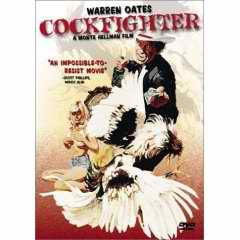 One
of the most eagerly awaited screenings at this year’s Edinburgh Film Festival was cancelled last night after the organisers learnt that the film violated a 70-year-old animal cruelty law. One
of the most eagerly awaited screenings at this year’s Edinburgh Film Festival was cancelled last night after the organisers learnt that the film violated a 70-year-old animal cruelty law.
Cockfighter , a brutal American drama set in the
Deep South, was shot on a shoestring budget and is notorious for its footage of real cockfights. It made little impression on its release in 1974 but is now regarded as a cult classic by many critics, who say that the magnificent, brooding performance of
Warren Oates as the cock trainer is proof of the film’s merit.
Rarely shown in Britain, Cockfighter appeared to be an ideal choice for the festival’s retrospective of obscure 1970s masterpieces. However, according to the BBFC, showing it
in public is illegal.
The festival organisers said that they were unaware of this until they received representations from the Scottish Society for the Prevention of Cruelty to Animals (SSPCA).
Of course it’s disappointing, Ginnie
Atkinson, the festival’s managing director, said. It is a very anomalous, strange situation, because there is a genuine, historical context for showing it.
A spokeswoman for the board said that the film contravened the Cinematograph Films
(Animals) Act 1937 because the cockfighting scenes were organised for the purpose of filming. There’s nothing the festival organisers could have done. The Act makes it illegal to show any scene which was organised or directed for the purpose of the
film involving actual cruelty to animals. If you cut the cockfighting scenes from Cockfighter it doesn’t have anything in it.
Cockfighter had a gala premiere at the Edinburgh Film Festival in 1974 and was shown at the National
Film Theatre in 1995. Both screenings were illegal, according to the BBFC. The film is not available in this country because it has never been classified in Britain, but it can be bought on DVD abroad and imported. |
Review from US Amazon Warren Oates plays Frank Mansfield in 1974's
Cockfighter . Although outlawed in most states, cockfighting was legal in Georgia, and Oates portrays a top trainer. However, Mansfield is also a deeply flawed man whose success leads him to recklessness. On the night before a major fight, he
impetuously enters a cockfight that ends badly. At that moment, he takes a vow of silence, which he will not break until he can regain his position in the sport. Throughout most of the movie, therefore, Oates is mute, with his thoughts serving as
narration.
Warren Oates is truly great in this role. His weathered face and ability to portray unsympathetic characters in a likeable manner bring great authority to this film. Although perhaps best known for his appearances in Peckinpah films (
The Wild Bunch , Ride the High Country ), he also did extraordinary work in a number of lesser known 1970's films: Two-Lane Blacktop, Badlands, Rancho Deluxe .
Director Monte Hellman was a collaborator with legendary producer
Roger Corman, and he's simply one of the most underappreciated filmmakers of the 1970s. He specialized in spare, low-key character studies, such as Two-Lane Blacktop (1971). This film is so vibrant because of his talent for using naturalistic
settings and minimalist direction. His style is perfectly suited to this script, which was adapted by Charles Willeford from his novel of the same name. The book is out-of-print, but Willeford is a marvelous writer of noir and gritty fiction.
Despite being a solid character study, the film is probably of limited appeal. For the most part, the sport of cockfighting (if you consider it a sport) serves only as the background, and the characters drive the film. However, the sport is presented in an unflinching manner. The bloody and violent aspects of cockfighting are not glossed over in any way. Thus, this film is definitely not for people who are squeamish or extremely passionate about humane treatment of animals. In ways, though, the film is reminiscent of Peckinpah, who made violent deaths in
The Wild Bunch seem almost operatic in their grandeur. Watching the cockfights depicted here is almost sickening, but Hellman manages to capture their bizarre magnificence as well. If you can set aside your distaste for the topic matter, then you
will be treated to some great acting and directing and a truly unique cinematic experience. |
5th July
updated to
19th August | Destricted
From The Melon Farmers' Forum
The BBFC have passed Destricted uncut with an
18 certificate giving advice: with Strong Real Sex. The film is a compilation of erotic shorts from various film makers on the subject of sex and porn. From Peter
Some of the films are said to be as explicit as an R18 and, to the untrained eye, could be mistaken for one, so it does raise interesting questions about the difference between art and porn.
Good on the BBFC giving it
an uncut 18: an R18 for such a work would have been a commercial disaster. Let`s hope that it really is the first of a series, as suggested on the project`s web site www.destricted.com
Review from
imdb
I just watched this film at Sundance. Clearly the most challenging portion of this film for the audience was Gasper Noe`s use of strobe for his part of the film titled
We F--- Alone. A good fifth of the audience cleared out during We F--- because they were bothered by the strobing. During the Q&A following the film when asked why he used the effect Noe replied, "Because it looks better." The style used in We
F--- Alone may not appeal to most audiences, but the premise of the film promised shorts by director`s giving their impression of the world of porn and We F--- Alone was obviously Gasper Noe`s take on the world of porn.
Other engaging portions of
the film included Matthew Barney`s Hoist, which involved a man having sex with a industrial machine lifted a dozen feet off the ground; Larry Clarks Doc/ Porn, hosting try outs for young men willing to satisfy their dreams of being a porn star; Marco
Brambilla`s amazing short splicing together frames from his own porn collection. The rest of the other shorts mixed in seemed to lack depth and were rather bland with the exception of Marina Abramovic`s vignettes on superstitious Balkan sexual behavior
which was very funny.
The movie is all that is promised and is an absorbing take on porn from these artistic talents. This isn`t something to watch on a television and should be experienced in the theater environment.
|
| 6th July | Update: Destricted Not Restricted
From The Telegraph
Tate Modern is to hold the British premiere of one of the year's most explicit films, a hard-core sex anthology billed as art. Destricted , an
Anglo-American production, is a two-hour compilation of seven short films made by artists and independent film-makers who were commissioned to explore the fine line where art and pornography intersect.
It features numerous acts of sexual
intercourse. The contribution of the British artist Sam Taylor-Wood, the wife of the Old Etonian art dealer Jay Jopling, is an eight-minute scene of a man masturbating outdoors in Death Valley. Another section shows a man having sex with the driveshaft
of a 50-ton lorry.
After considerable agonising, the BBFC granted an 18 rating for Destricted this week, to be released uncut on DVD. But it said that it must carry a warning that it "contains strong, real sex".
A source
at the board described the film as "awful". Unusually, it was not approved until it had been seen by the board's president, Sir Quentin Thomas.
The board had considered granting an R18 classification, reserved for work intended to be
arousing. That would have meant that a Destricted DVD could be sold only in sex shops and would have ruled out the possibility of its being put on sale in the shop at Tate Modern, where the film is to be given five screenings in September.
Sir Quentin said that Destricted was so explicit that it would normally attract an R18 rating but he judged that it was a work of art not intended to arouse: In purpose and effect, this work is plainly a serious consideration of
sex and pornography as aspects of the human experience. We think that there are no grounds for depriving adults of the ability to decide themselves whether they want to see it.
|
| 19th August | Update: Turnips at the BBFC
Based on an article from Time Out I'm sitting in the offices of the BBFC talking about the dangers of pushing a
vegetable up one's backside. It's this precarious act that artist Matthew Barney embraces in his new short film Hoist , in which we see the director feigning sex with a throbbing industrial machine while gripping the outer reaches of a
turnip between his butt cheeks. Actually, we thought it might be a sugar beet, offers a straight-faced Sue Clark, head of publicity at the BBFC, who is talking alongside her colleague, Craig Lapper.
Hoist is one of seven 'porno' short films that producers Mel Agace and Neville Wakefield have commissioned from seven artists and filmmakers packaged together as the portmanteau film, Destricted .
Despite the film's ample
cum-shots, copious hard-ons and irregular use of a root vegetable, the BBFC has awarded Destricted an '18' certificate – not the usual 'R18' reserved for hardcore porn. We wouldn't describe the film as pornographic, explains Lapper:
One of the Board's aims is to take account of the intentions of a filmmaker and the film's likely audience. This wasn't a film intended to arouse sexually. It's possible that some segments may have that effect on some people, but the
overall intention of the film was to explore the boundaries between pornography, sex and art. The BBFC enjoys a reputation for taking a sensible and liberal approach to its work. Last year, for example, it gave an '18' to two
features containing scenes of real sex. One was Carlos Reygadas' Battle in Heaven (blow-jobs); the other was Michael Winterbottom's Nine Songs (bonking).
I think the Board puts more emphasis now than it did ten years ago on the
rights of adults to make their own decisions, suggests Lapper when I ask him if the BBFC has become more liberal. That's come about partly as a result of what the public has told us and also because of increasing commitments under the law to do
with human rights and so forth.
In the past, even at the adult level, the board would intervene with material on the basis that it was "disturbing" or "offensive" or "tasteless". We tend not to make those kind
of decisions now. It's more about harm and legality. We do take into account public offence, but we have to weigh that up against other considerations. So if something's merely challenging or shocking, and if we're not convinced that there's a harm issue
there, we prefer to allow adults to make their own decisions.
Interestingly, while the BBFC has been moving towards greater liberalism, some odd exceptions have arisen when rating older work. Take a recent DVD collection of episodes of The
Benny Hill Show , for example; the BBFC found that Hill was making jokes at the expense of rape victims and awarded a '12' rating rather than the previous 'PG'. When episodes of the '70s British sitcom Love Thy Neighbour were released
on DVD, the BBFC again opted for a hike from 'PG' to '12'.
|
| 30th June | Extreme Films Research From Martin Barker, to all readers of Melonfarmers:
 Here is a very
rare opportunity. We are doing some serious research into how audiences feel about, and respond to, films involving sexual violence. And we really want to include your views. If you don’t have time to read on through this message, then please at least
notice this web address: www.extremefilmsresearch.org.uk Here is a very
rare opportunity. We are doing some serious research into how audiences feel about, and respond to, films involving sexual violence. And we really want to include your views. If you don’t have time to read on through this message, then please at least
notice this web address: www.extremefilmsresearch.org.uk I think quite a few of you will know my name, and that I have long had an interest in issues around ‘effects’, and have been very critical of a lot of standard claims
about this. Well, partly as an outcome of this, and of some other research I have done (on audience responses to Straw Dogs ), we have gained the funding support to mount a research project from Aberystwyth into responses to five films which gave
the BBFC pause for thought. In four cases they made cuts, of varying ‘strengths’. In the fifth case, they passed the film uncut. The five films are:
A Ma Soeur
Baise-Moi
House on the Edge of the Park
Ichi the Killer
Irreversible
The idea we pitched to the BBFC, was for a project to find out how actual (rather than possible or guessed at) audiences really felt about and responded to these films – and in particular, how they felt about the contribution that the scenes
of sexual violence make to the films, and what differences any cuts made to the films. One part of this project involves the questionnaire which we have posted on a special website. We are not assuming you will have liked, or enjoyed, or approve of these
films – in fact the whole point of the research is to try to get all kinds of responses to them. But whatever your views on them, it will help us greatly if you would complete the questionnaire, for as many of the five films as you have seen.
The
BBFC have guaranteed that we can publish the findings of the research in any form that we choose. I will make sure that in due course we let everyone know, via Melonfarmers, where and how the findings will be published. The BBFC will listen to what we
learn. It is then up to them if and how this influences their future policy on films of this kind. Our job is simply to make sure our research is strong and reliable.
So, please visit the research website and complete the questionnaire if you can
– and tell other people, both in the UK and elsewhere.
Thanks very much
Martin
|
25th May
Updated to
22nd June | Carry On State
Censorship Press release from the BBFC BBFC President Calls For Forum To Consider New Media Regulation
 In light of the rapidly growing range of audio visual content on offer via a range of media, the President of the
BBFC, Sir Quentin Thomas, has called on the Government to bring together commercial and creative interests along with those operating the regulatory regimes to consider how best to provide the public with the information they need to choose which content
they wish to consume and how to protect children and vulnerable people from harm. In light of the rapidly growing range of audio visual content on offer via a range of media, the President of the
BBFC, Sir Quentin Thomas, has called on the Government to bring together commercial and creative interests along with those operating the regulatory regimes to consider how best to provide the public with the information they need to choose which content
they wish to consume and how to protect children and vulnerable people from harm.
Writing in his introduction to the BBFC’s Annual Report Sir Quentin said:
As the audio visual content on offer to the public grows rapidly, with a marked
diversity in the nature of the medium and in the means of delivery or access, it is perhaps not surprising that some observers of this dynamic but confusing scene conclude that there is little future for regulation and the attempt to maintain it seems
like attempting to shut the stable door when the horse has bolted. At the BBFC we do not share this view.
The BBFC’s Director David Cooke said:
We are putting a good deal of effort into researching, and speaking to others about, the
implications of the growth of new media for our system of regulation. We do not argue for regulation except where it is genuinely needed. But effective regulation has clear benefits: the prevention of harm; enabling informed choices; creating a safe
environment within which to enjoy creative content. We regularly see and deal with material, whether so-called ‘extreme reality’, abusive pornography, or simply content which is unsuitable for the age group to whom it is addressed, where our intervention
is clearly necessary. No-one should assume that such material will be confined to established platforms such as film and DVD. Whether in a regulatory or an advisory capacity, we believe we have unique expertise and experience to offer.
Sir
Quentin said:
There is no doubt that regulation must serve a relevant social purpose, and not needlessly be an impediment between the customer and the services available. Regulatory regimes must command and sustain public confidence and be fit for
purpose. There is good reason for thinking that because of the nature of audio visual product and its potential impact the public is likely to expect some oversight, particularly with a view to the protection of children. We believe that there is also a
strong commercial interest in demonstrating that product in this field meets accepted standards. Nonetheless, the rapidly shifting nature of the media scene, with new technological possibilities means that these issues need to be kept under review. We
welcome the enquiry by the Culture, Media and Sport Select Committee into new media and the creative industries and would welcome the establishment of a forum perhaps under the auspices of the Department for Culture, Media and Sport to advance
consideration of these issues.
The BBFC 2005 Annual Report includes the accounts for the year along with information about the work of the Board during the year. Copies of the Annual Report can be obtained from the BBFC, 3 Soho Square, London
W1D 3HD or can be downloaded from the BBFC main website, www.bbfc.co.uk (select 'downloads' option on home page)
|
| 19th June | Update: Stupid Intervention From The Times
The Times has picked up the above story and added a couple of comments: Simon
Davies, of Privacy International, which campaigns for freedom of expression said It sounds like the most stupid intervention since the registration of fax machines and photocopiers in communist China.
Sue Clark, a spokeswoman for the
board, said that people should be able to make informed choices about what to watch. Regulation, in this case, doesn’t mean banning or cutting. It is about providing information.
|
| 20th June | Update: BBFC Wackos
Based on an article from The Guardian
Video content on the internet could receive certificate 18-style classifications from film censors under plans submitted to the government
today. The proposals could see web videos rated for language, violence, sex and themes in the same way as films, videos and DVDs.
The BBFC said the huge growth of online video content risked making the regulation of old media redundant as more
and more people get access to video over the internet.
Internet video has mushroomed in recent years, with the spread of broadband and content-streaming technologies making downloading high-quality footage easier. The video site YouTube sees
35,000 new clips added and 30m clips downloaded every day, while it would take almost 500 years to watch all the content currently indexed by Blinkx, which claims to be the largest online video search engine.
Sue Clark, a spokeswoman for the
BBFC, said the government should be looking at ways of providing information to online viewers about the sort of material they were being exposed to: If there's some sort of standardised labelling system that people understand,
then they know that it's material they can trust. And shamefully added: We don't want to go down the route of cutting and
banning things and blocking sites... BUT... a lot of the content that's out there on the internet is not something the majority of people would want to view. [...Which they WILL of course cut and ban...]
She cited the example of Terrorists, Killers and Middle East Wackos , a compilation of video clips of actual killings and terrorist attacks. The compilation is
banned on video or DVD in the UK because the BBFC believed it to contravene the Obscene Publications Act, but it is freely available on the internet through
file-sharing sites. And for an organisation that doesn't want to go down the route of cutting and banning things, it has been reported that 27% of softcore 18 certificate video works have been censored in 2006, along
with 23% of hardcore R18’s.
The BBFC wrote to the department of culture, media and sport last month, asking the government to consider a system of classification. It said that the most likely scenario would see them advising companies providing
video content on what material would be acceptable to viewers. [BOLLOX BBFC, you mean acceptable to the Government and to people who like to impose their views on others about what they should be watching. Eg
spanking videos are obviously acceptable to informed viewers that choose to watch them, they are only not acceptable to people who would rather you did not watch them. ie the Government, nutters and censors!]
|
| 21st June | Update: More from the BBFC Wackos Based on an
article from IT Week Sue Clark, a spokeswoman for the shameful BBFC said that people recognised that the internet may not be regulated,
...BUT... expected certain types of content such as films to have passed through a classification process.
The BBFC knew of at least one distributor who sees video-on-demand as a way of getting around its controls on pornography: This
guy has stated that he will be putting stuff out which the BBFC will not classify. He has to be prosecuted to stop that. [It should be pointed out that BBFC are censoring and cutting hardcore porn for a whole load of nonsensical reasons such as the
the vague possibility that ice or a dildo may possibly cause harm if used in a whacky way by complete imbeciles. The BBFC view on what should be cut is proving near worthless and surely does not automatically infer that the cut material is obscene and
liable to prosecution].
The Culture, Media and Sport Select Committee has set up an inquiry into new media and the creative industries, which Clark hoped would lead to legislation or the introduction of a voluntary industry agreement: We have
not asked the government to consider this because we think that it necessarily needs legislation. It may be that the industry signs up to a voluntary system. [As far as I can see the creative industries committee is unsurprisingly more concerned with
licensing, IPR, DRM, piracy etc rather than worrying about censorship concerns of nutters and film censors facing redundancy]
|
| 21st June |
Opinion : Soho Square has got it Wrong
From The Guardian at Bobbie Johnson's Blog which also includes a lively dicussion
According to reports this morning, the BBFC says it envisages being able to censor what is on the net.
In its annual report, the BBFC
says it may be worth having a voluntary system of rating - spinning off from its rankings of U, PG, 12A, 15 and 18 - that can help people surf the web safely. According to the Times, it says: No one should assume that such
material will be confined to established platforms such as film and DVD. Whether in a regulatory or an advisory capacity, we believe we have unique expertise and experience to offer.
Outrageous, cry the web's hordes. Freedom is our watchword,
and we will not bow to censors.
It's a laudable position, of course, but one that's not entirely true. Censorship already abounds on the net - just ask Google in China or go back to Yahoo's continental court case about the sale of Nazi
memorabilia. We accept some forms of censorship, where appropriate, and in many ways the BBFC recommendations are in this mould.
Web pages and content have the ability to contain tags that promote an age rating. Parents can already employ web
monitors like NetNanny to shepherd their children online and block unsavoury or unwanted information. Why not just crank up the regulation and make sure that every site has a rating?
The problem with such schemes, of course, is that the internet
is a global phenomenon. How do you enforce censorship across nations? If you force any material hosted on British servers to carry advisory ratings, then some people would just move elsewhere (it's very easy to do). And if you don't enforce the rules,
then those who do want to exploit them will just plough ahead and lie, or avoid the ratings altogether.
The ultimate problem, though, is how to regulate what people do in their own homes; how parents interact with technology and with their kids.
While it's clear that an 18 certificate for a movie in a cinema stops a seven-year-old child watching the movie on the big screen, the private situation is far from clear. How effective, after all, is the 9pm watershed? How many pre-teens have watched
18-rated DVDs at home? How many kids play Grand Theft Auto with their parents' consent?
Even recent attempts to solve the conundrum have fallen foul of the very people who would welcome the BBFC's comments. When the porn industry suggested a .xxx
domain name to house adult material (easily spotted by nanny programmes and blocked by parents), it seemed like a fair idea, but it was shot down by the Christian right - the same people who would no doubt welcome the BBFC's proposals. Why? Because
pornography should never be legitimised, and creating a .xxx suffix would do exactly that.
So we're stuck in a world where the veto goes to those who want to have their cake and eat it while ideas are flung about for forcing new rules on
producers and consumers alike. Any net censorship would be expensive and almost certainly unsuccessful - and in any case, it would be far easier and cheaper to teach people how to use the tools that already exist. But that would just be too simple,
wouldn't it?
|
| 22nd June | Opinion :
Simply Not Wanted Letter from Shaun to the BBFC
Dear Ms Clark,,
Please tell your director Mr. Cooke, that many people simply don't want your attempts at censorship of the internet...
I suppose he's looking for extra work and all that... In case it's decided that video classification in the form of censorship isn't really necessary.
BUT: In case you had not realised, the **Internet Watch Foundation** already has the
job of internet censorship, and we don't want any more classification (which really means censorship) than that thank you very much.
Also people don't believe you, when you (you=the BBFC) say you will "just classify. " You will censor,
and cut, like you have ALWAYS censored, and cut, with your big scissors.
But censorship is beloved of repressive regimes the world over.
How would you censor content on P2P ? It is content on OTHER people's computers, and changes all the
time. What about stuff on foreign web sites? What would you do if a work was "beyond" R18 or something ?
Anyway exactly WHO would be paying for all this? Are you going to do for free, for your love of humanity and your desire to protect
us all? I doubt it.
It'll be Internet users I suppose? By an extra "fee" or internet tax I suppose?
Well sorry but it simply isn't necessary and it isn't wanted.
Did you know that I've got two children aged 12, and 15
(next week) with a connection to an 8mbit broadband connection ? Do you also know that despite regular spot checks, I've never had to worry about anything they have seen, such as explicit sex, because currently they simply are not interested. The only
things I would really worry about are chat groups. How would you classify those?
Parents on a broadband Home network (including wireless networks) can use VNC or similar programs to see exactly what their children are doing, using another
machine. They can see a copy of the kid's desktop on another machine elsewhere in the house.
This is what I do. My kids can see when I am doing it (their icon changes colour) so I don't need or want the BBFC to pre-vet to protect my kids, when I
can do it myself.
See: www.tightvnc.com
|
| 14th May | Telegraph Harp Back to their Golden Age of
Film Scissorship I wonder what prompted this story? Based on an article from The
Telegraph A record number of films containing extreme violence and explicit sex are making it onto the big screen without any cuts.
Figures compiled by the British Board of Film Classification (BBFC) show that
during the past decade, less than 3% of the 4,951 films released into cinemas have had to lose footage in order to get their preferred certificate.
The drastic fall in the number of films requiring cuts, from a high of 27% in the 1970s, comes as
a new generation of film makers compete to push the boundaries of taste and decency.
Whereas in the 1960s and 1970s X-rated films were routinely cut on the grounds of taste and decency, the board will now cut 18 certificate films only if they
encourage illegality or if the content is likely to encourage someone to harm themselves.
In January, the BBFC allowed an unaltered version of the horror film Hostel into cinemas even though, in its own words, it contained scenes of
"bloody violence, torture and strong sex". Eli Roth's film, in which a group of wealthy Americans pay to fulfil their most depraved fantasies, shows one character having his eyes gouged out, and was denounced as "perverse" and
"obscene" by some critics.
In 2004, when the number of films cut by the BBFC reached an all-time low of 0.9%, the board allowed unaltered versions of Michael Winterbottom's film 9 Songs into cinemas even though it featured people
having sex.
On its own website the board admits that such a decision would probably not have been made 10 years earlier.
In the 1960s and 1970s, the BBFC required producers to make cuts to around one in four films and, even in the 1980s,
it was still requiring content changes to 17% of mainstream releases.
So far this year, five films or 2.9% of the total released, have been required to make cuts to get their preferred classification.
None of these films were 18
certificate and all made cuts to secure the lucrative 12A classification rather than the 15 certificate.
The total amount of footage dropped amounted to two minutes and 54 seconds.
John Beyer, the nutter director of Mediawatch UK, which
monitors the work of the BBFC, has attacked its reluctance to take action. He said: It is a free for all. Films should be classified by a body which is not linked to the industry.
But Andreas Whittam Smith, the BBFC's president between
1997 and 2002, said classification had to reflect the moral climate of the time: The board should be guided by what the public wants. We shouldn't have a situation where the board tells the public what it wants.
A BBFC spokesman said the
board was in the business of classification rather than censorship. We leave it up to adults to make up their own minds about the films they see.
|

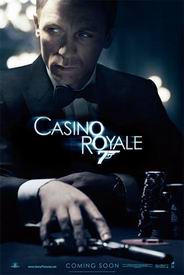 BBFC discuss the 12A certificate for Casino Royale
 The police have also been sniffing around the concept of somehow enforcing the repressive Video Recordings Act on download
material. There is an article about this in the Adult Industry trade paper, ETO. But really I cannot even guess where they are coming from to suggest that the Act applies to computer communications.
The police have also been sniffing around the concept of somehow enforcing the repressive Video Recordings Act on download
material. There is an article about this in the Adult Industry trade paper, ETO. But really I cannot even guess where they are coming from to suggest that the Act applies to computer communications.  As It is a feel-good romantic comedy in the traditional sense, with break-ups and reconciliations alongside laughs and tears. But it
also has more real and graphic sex than any other film to be given a certificate for the mainstream cinema.
As It is a feel-good romantic comedy in the traditional sense, with break-ups and reconciliations alongside laughs and tears. But it
also has more real and graphic sex than any other film to be given a certificate for the mainstream cinema. 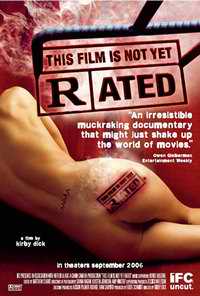
 Dare Devils at the BBFC