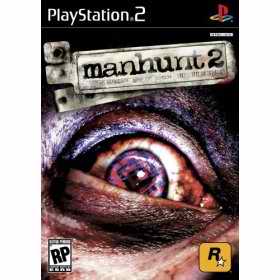
 TechRadar recently caught up with David Cooke, director of the BBFC, along with Mark
Dawson, one of the board's leading games examiners, to discuss, among other things, the recent Byron Review, the Manhunt 2 saga and to find out more about what the BBFC thinks about the future of videogame classification and age-ratings in the UK.
TechRadar recently caught up with David Cooke, director of the BBFC, along with Mark
Dawson, one of the board's leading games examiners, to discuss, among other things, the recent Byron Review, the Manhunt 2 saga and to find out more about what the BBFC thinks about the future of videogame classification and age-ratings in the UK.
TechRadar : What was the general response from the BBFC to the Byron Review? What was the feeling here?
David Cooke : We were pretty pleased with how it came out. Obviously Tanya has
talked to a lot of people. She talked to me on four separate occasions. I think she's been extremely thorough in reviewing all the arguments, trying very hard to be fair to everybody. There's masses of stuff in there. She's had all the feedback from
children and all the work done by academic specialists. So it's kind of a huge treasure trove of stuff she's compiled, really.
In terms of what it asks of us, we have always taken the view that we are not predatory or imperialistic. We will do
what people want us to do. If people want us to do more, then we are more than happy to do it.
The only thing that has irritated me a bit is the line of argument that we are not properly resourced to take on extra [games ratings] work. Which
really is nonsense. It's probably somewhere between an extra 300 and 500 works [games] a year.
And when you bear in mind we have more than doubled the number of DVDs we rate – taking on more than an extra 10,000 – it just goes to show that it's
not such a huge increase in comparison with that. I've been saying firmly it's not a resourcing issue and I am in a position to know, as I run the organisation! So I hope people will accept that.
TechRadar : So the
criticism from the games industry, from ELSPA, has been that they really wanted the Byron Review to recommend one ratings body and they want that to be PEGI. ELSPA's line seems to be that it is a resourcing issue, as you just mentioned. Is there any
other explanation for them backing PEGI over BBFC?
David Cooke : Another argument is that the BBFC somehow doesn't understand games very well.
TechRadar : Is that a criticism from
the games industry, from ELSPA?
David Cooke : Yes, I've seen that from ELSPA as well. And I very, very strongly dispute that as well. This is where people like our specialist games examiners like Mark [Dawson] come
in. We have about a dozen people at the moment that can do games and they are not this kind of stereotype of fifty-year-olds in bowler hats. I mean, I'm a fifty year old, but I don't wear a bowler hat! But we have people that do know a hell of a lot
about games. Some of them are actually from the games industry.
In terms of knowledge and skills they are - and I say this objectively not critically - way better than anybody in the PEGI system. I'm on the PEGI advisory board, I know all the
PEGI people, I know that they do a good job, we have good co-operation with them. But we have got people that understand games, no two ways about it. You only have to see this guy play [indicates Mark Dawson] to know that that's true.
Mark
Dawson: I've been playing games for around thirty years now. From the ZX81, Commodore 64 through to the Atari ST, PC, the PlayStations, the Xboxes… I've always been a gamer. I still play loads of games for pleasure, outside of work!
TechRadar : So how does PEGI go about rating games? There seems to still be some confusion amongst gamers, parents and consumers generally about that.
David Cooke : Okay, well obviously in
a sense I shouldn't speak for PEGI, but I do have a reasonable knowledge and I'll do my very best not to misrepresent what it is they do.
They have a quite detailed, complex questionnaire which is completed by people they call 'coders' who are
based within games publishers. Then it starts to get complicated because PEGI is a complex organisation.
There are basically three groups of people involved in PEGI. There's ISFI – International Software Federation Europe – they are the owners of
the PEGI system. Then there is NICAM the Dutch Film Classification body that has a contract with ISFI to run the PEGI system on behalf of the different European countries.
NICAM in turn has given a sub-contract to an organisation called The Video
Standards Council which is Peter Darby and Laurie Hall. They, confusingly, are a UK-based organisation but they are taking European-level decisions as part of the PEGI system.
So, very crudely, the way it works is that NICAM do the games up to
and including '12' and VSC do the '15s' and '18s' across Europe, except, of course, they don't do the '18s' for the UK, as the BBFC does those (and not, obviously, under the PEGI system).
The PEGI ratings system is questionnaire based, which
means that you can't take into account questions of context or tone, in the way that our examiners such as Mark can when he is classifying a game here, which we think is a drawback with PEGI. We understand it, because they are trying to do something that
runs across Europe, so they are trying to stop individual counties and local cultural sensitivities coming in and making the whole thing fragment.
The degree of actual testing varies in accordance with what kind of age the game is coming in at.
The VSC tests the 15s and 18s and NICAM have some recently ex-Amsterdam University students that do some testing for 12s. They don't test for the lower-than-12s, they just go by questionnaire.
Whereas here at the BBFC everything gets played. We
see two sorts of things. Either things that come to us because there is gross violence in them - so roughly the equivalent of an '18', although they don't always end up with an 18-certificate - or the second category of things that we see are games that
contain certain kinds of linear material.
These are generally games which have video footage in them – so games linked to blockbuster films such as, for a recent example, The Golden Compass – which has the effect that they lose their exemption
from the Video Recordings Act, so that's why they come here as well. And that's why we have knowledge of games of all levels – and not just the '18's – because of that second thing, which brings us in a kind of smattering of games at junior levels as
well.
In a nutshell, the big differences are that the BBFC can take account of context and tone, which can sometimes lead to a higher classification. Often though, it leads to a lower age-classification. We sample more thoroughly and with more
expert games players – and with all due respect to all the characters I've been mentioning, Mark and our games examiners are much better gamers than anybody in the PEGI system.
And then of course we benefit from the fact that our classification
has statutory backing, so you get the question of enforcement in the shops. This is where Tanya Byron's recommendation comes in – taking that down to the 12-level.
TechRadar : And how would that be enforced - at the
shop level - if Tanya Byron's recommendations to have BBFC age-ratings of 12, 15 and 18 on games?
David Cooke : Through Trading Standards Officers actually checking out that people in the shops are doing what they are
supposed to be doing.
TechRadar : There have been some reports suggesting that games retailers are largely in favour of Tanya Byron's recommendations.
David Cooke : Yes, they are.
There is an organisation called the ERA - run by a lady called Kim Bailey, who was speaking at an ELSPA event last week. She made it very clear that the ERA was in favour of Tanya Byron's recommendations.
TechRadar :
Another recommendation in the Byron Review was that the BBFC and PEGI will have to work together and collaborate in new ways. How do you foresee that working?
David Cooke : Well, it's not going to be difficult as we
know all of the people at PEGI anyway and we're well used to operating with them. Partly because of how we currently decide which titles come to us at the moment. But it's also more than that.
We do regular joint training sessions with them, so
every six months we get together with PEGI people and also with people from games publishers – the coders who fill in the questionnaire for PEGI. Mark here is one of the usual presenters at these meetings, which are half or full-day events, where we get
together and discuss the practical, procedural and legal issues.
Mark Dawson : Yes, I used to be a lawyer, in a previous incarnation!
David Cooke : So basically we've got bags of
experience of actually working with these people, lots of mutual respect and I'm sure we can work together with PEGI to put these [the Byron Review's] recommendations into effect.
TechRadar : One interesting thing
that also came out of that recent ELSPA meeting was that David Reeves from Sony [MD of Sony Computer Entertainment Europe] was talking about some other similar research to the Byron review which Sony apparently commissioned a German Consultancy to
undertake a few years ago.
David Cooke : Yeah, I was there when David was talking about that, I think I've seen that research. But I think the Byron Review is pretty comprehensive and must have now overtaken that.
Don't forget that she is a distinguished psychologist herself and she also had a number of other experts feeding into the review – David Buckingham, for instance, who is the man on media effects - so her review is surely the state of the art.
TechRadar : David Reeves went on to suggest, citing this German research he mentioned, that he would like to see PEGI 'given teeth' – which also seems to be ELSPA's position. What does this mean, wanting PEGI to have 'teeth'?
David Cooke : Well, they have to accept that they are not going to get it, because the government has accepted Tanya Byron's review's recommendations in full. So they [ELSPA] are going to need to start to work with
us. I do think that if you take a broad view of Byron's recommendations, what she is recommending is potentially very positive for the games industry. They will undoubtedly get some lower ratings from us for games than they currently get under the PEGI
system, because we are able to do a more thorough and contextualised job.
PEGI, for example, has great difficulty dealing with slapstick violence, because it can't find a way of dealing in a questionnaire with person-on-person violence.
The other main strand of disagreement with us and ELSPA on this, and I understand their position on this and I respect it but I do disagree with it very strongly, is that they take the view that 'games are games and should be classified separately and not mixed up with film and DVD classification systems'.
We take the view that, yes indeed games are different from films and DVDs – and we think that we have done as much thinking and sponsoring of research in this building as anybody, trying to get our heads around that. If you look at our games
ratings' guidelines you will see that there is a lot of emphasis on the difference that interactivity makes – the possibilities of playing games in different ways, you can't do the kind of 'counting' you do with film because you have endlessly repeatable
situations… that kind of thing.
Our opinion is that the whole architecture is that it is much better to be able to look across all these different platforms – especially as you will often find the same kind of content in the film version, the
console game version, maybe the mobile phone game, the internet version and so on – so we think it is a positive good that it is possible to look across and then give accurate weighting to what the differences are. Whereas ELSPA argue that games should
be regulated separately. I think that argument falls foul of various trends within games as well – increasingly photo-realistic graphics, the fact that you have this multiple franchising of content and so on.
The other thing to say about this is
that ELSPA's argument is also a slightly odd argument, as the PEGI system is actually very close to the Dutch film classification system, a system called the Kijkwijzer System The PEGI questionnaire is remarkably similar to the Kijkwijzer questionnaire
and they are both run by the same organisation, NICAM.
TechRadar : There have also been concerns and questions posed by ELSPA about things like funding and logistics. Who pays for BBFC examiners such as Mark here? Who
pays the BBFC? And second to that – might there be questions of additional delays to games coming to market, because an extended BBFC system might take longer to classify games?
David Cooke : Well the second point is
the easier part of that question to answer. We are faster than PEGI, at the moment. And we'll try and keep it that way. We turn round games, on average, in ten calendar days (not working days) which is at least as fast as PEGI, probably faster.
TechRadar : Is there an average time it takes for you to examine and rate a game?
Mark Dawson : It generally depends on the game. With a game like Grand Theft Auto IV, for example, which
is one of the most recent titles we have rated, it was something like 15 or 16 hours, for each of the two examiners playing it.
David Cooke : But that is of course exceptional. There's a hell of a lot in the game!
Mark Dawson : I would say that we probably allocate around 5 hours per game on average.
David Cooke : On the money front, I think we've calculate that there are around 25% of the games
that we do that work out cheaper than PEGI, then there is a chunk that are more expensive.
We are entirely independent of government and funded by the fees that we charge. So yes, I suppose it is valid to say that there will be cases where, going
from the Byron recommendations, publishers will have to get stuff classified by us as well as by PEGI. But then, that's no different really from the other top games buying countries, in terms of market size – us, Germany, Japan, the US. And we are the
only one that is in PEGI. To some extent, if you have big national jurisdictions, you have to play by their rules and you have to pay for the regulation that they do.
But we are not allowed to make a profit. We operate purely on a cost-recovery
basis. We try to make it as cost-efficient as we can. So it's not going to be that much in the greater scheme of things and maybe we can find ways, in collaboration with PEGI, to get these costs down further.
TechRadar
: One of the other issues raised by ELSPA has been the whole area of online gaming and the classification of online games. They are suggesting that PEGI has a more robust system for classifying online games and online content that the BBFC. What
is your response to that?
David Cooke : Well, yes and no. PEGI has PEGI Online, which I was involved in devising. It's a pretty decent attempt to deal with a very difficult set of problems, as you get all of these
post-releases issues that kick in with online games. What PEGI Online ISN'T is well-resourced. There is one person in PEGI trying to run PEGI online as well as trying to do lots of other things.
Let's start a bit further back, here. Tanya Byron
has recommended pretty much the same thing online as she has recommended for physical product, which is that games to be rated 12 and up should come to the BBFC. So there are two routes we could go here. We could either set up something which we are
already doing – called BBFC Online – as a competitor to PEGI Online or we could feed into PEGI Online, given that PEGI Online already recognises BBFC symbols.
Now, my preference is to go the second route, which is more consistent with what Tanya
Byron has recommended. That would then enable us to classify the 12s and up for the UK, within PEGI online, but with BBFC symbols for the UK. But there is also the possibility that we could offer greater resource to PEGI Online, so actually help that
system as well.
BBFC Online is something that we are setting up for DVD producers who want to distribute direct to download. So BBFC Online has much more of a DVD world starting point. But one of the things we have been able to do with BBFC
Online is talk to some very major aggregators – who we cannot currently name as negotiations are currently still ongoing – but I know that PEGI Online would like to capture some of these aggregators and there may well be some synergy there. We may well
be able to help PEGI Online bring in these aggregators as well as the publishers of games – so we're talking here who are selling books, CDs, DVDs, films, games… the lot really.
TechRadar : What about rating
downloadable add-ons for games? Say, for example, when the GTAIV downloadable episodes are released later this year for Xbox 360 – how do you go about rating those?
David Cooke : Well, it's governed for the rest of
Europe by the PEGI Online safety code. One of Tanya Byron's recommendations was that she wants the BBFC to work with PEGI to beef up this safety code. As I currently understand it, there is a sort of agreement under the PEGI Online safety code that if a
publisher produces add-ons that would actually change the rating of the original product, that the publisher will bring the original product back to be re-rated. This is all quite fiddly – as this is not quite what PEGI Online actually says, but this is
what they have agreed to do. This is kind of pending any further work to beef up the online safety code that we and PEGI will do together.
TechRadar : One of the other main recommendations from Tanya Byron was a call
for a public education and information campaign to educate parents and consumers about games ratings. How do you think this might best work?
David Cooke : Well the first thing to say is that I think it is right, as it
seems quite clear that parents understand games classifications less well than they understand film or DVD classifications. And that's not getting at PEGI. That's true whether or not you are talking about PEGI or BBFC ratings, I think.
Parents
are more familiar with our symbols than they are with the PEGI ones, but their overall awareness levels about games ratings are lower. So the overall objective has to be to get these awareness levels up to the kinds of awareness levels that we have for
film and for DVD.
In terms of how you go about doing it, this is something that we, Paul [Jackson] at ELSPA and the PEGI people and the government will all now have to get together and discuss, because there are loads of issues there about who
pays for what, what is the most cost effective way of going about it and so on.
On the film side, for instance, we have done paid advertising, but we have found that some of the best kind of vehicles for getting messages across have been the
really big titles – so Harry Potter, Casino Royale, Spiderman, War Of The Worlds, to name but a few…So maybe there is a comparable sort of thing that can be done off the back of very high profile games.
Then there is the schools angle to it. Mark
and his colleagues do go out and do media and literacy work in schools. We have some websites that can help – children's website, student's website and a new parent's website, where we provide extended consumer information – so we provide in-depth
information as to why the title is a 12, 15 or 18 and full listings of what the key content issues are that produced that result. Again, this is something that is easier to do under our system than it would be under a questionnaire-based system like
PEGI.
TechRadar : Do you not think there may be a naming issue here – while we refer to them as games then many will continue to treat them as toys?
David Cooke : It's a question
that lots of people have been struggling with. It is why ISFI is called ISFI isn't it? But then again, 'interactive software' doesn't really trip of the tongue does it?
TechRadar : The games industry does seem to be
under constant bombardment from sensationalist tabloid scaremongering. Tanya Byron seems to have made a real, concerted effort to distance herself from that.
David Cooke : She did. And that was very healthy, I think.
And I sometimes wonder that perhaps games industry people like [Electronic Arts UK MD] Keith Ramsdale, with some of the things he's said about us, if they that we are more in the 'Daily Mail' camp. The answer is no, with a big 'N O', we are an
independent organisation who's examiners have actually been snooped on by Daily Mail journalists. We've had Daily Mail journalists phoning up the building pretending to be colleagues trying to get information out of us.
We know that the media
selects certain research to back up these types of stories, we know all the problems with the claims of the American research into media violence. I think maybe things are skewed a little bit in the thoughts of people like Keith Ramsdale. They are
conscious, for example, that we have this reject power and they don't like that.
We've only used it twice over the last ten years for god's sake! And you cannot have a reject power and never, ever use it. Tanya Byron did find a very strong amount
of public support for having this type of last resort. But it really is a last resort, for us. As I've said, with a lot of our decisions, it's possible for age-ratings to be lower and less strict than PEGI, which often pushes games up to a higher rating,
even when it's clearly not a sensible thing to do. If everything goes up to a level where it is not credible, then it's clearly a bad thing for the games industry, as there is a much reduced parental confidence such a system.
TechRadar : The power to ban of course is still very much an issue in the games industry, following the case of Manhunt 2 last year and early this year.
David Cooke : Let me tell you how I
think about Manhunt 2. I think it was… well, it was bloody hard work! It was not a decision to be taken lightly. It was a decision that we arrived at absolutely on the merits. There was no political pressure, despite what many accused us of. Our initial
decision was the same as the ESRB in the US, so there was some changes made to the game by Rockstar, which the ESRB accepted but we still thought the changes hadn't gone quite far enough. So that was the version that then went to appeal at our
independent judicial appeals tribunal [the Video Appeals Committee] where there was a 4:3 decision in Rockstar's favour.
The main reason we then questioned this decision and took the case to appeal at the High Court was that we had very strong
legal advice that the VAC had applied the wrong interpretation of 'the harm test' and in particular they had accepted an argument that the BBFC had to prove 'devastating effect' and we said this was wrong in law. So we needed to challenge their decision,
not just because of the Manhunt 2 case, but because it would have been relevant to absolutely everything we do – games, films, DVDs, the lot. The VAC had also said that we had to show 'actual harm' and the judge corrected this and said that the correct
test is to show 'any hard which may be caused' – so we are talking about the possibility of harm (rather than some kind of probability) and we are talking about 'potential harm' and not 'actual harm'. He did also say that it had to be 'real harm' and not
'fanciful harm' so we have now got a very clear definition of the harm test which we are completely happy with.
So we won in the High Court and the judge said the VAC had applied the wrong harm test and that they must apply the correct one. So
they did it again and it came out 4:3 again, so we lost. And at that point our lawyers were telling us we had no basis for challenging it any further.
So, we're disappointed because we had spent ages examining Manhunt 2 and we felt that we had a
greater familiarity with the game than the Video Appeals Committee.
I have to be very clear that we absolutely do not like anything that interferes with an adult's ability to choose what films they see or what games and DVDs they buy. We only
apply this power on the very rare occasions where we feel that the harm risk means that we have to do it.
So that was the saga! At the end of the day you have to do what you think is the right thing to do on the merits and you have to accept the
decision that an independent judicial tribunal produces.
Some talk about it as a debacle or catastrophe for the BBFC, which is absolute rubbish. We often have cases that go to the VAC, as we occasionally reject DVDs as well – so maybe once every
two or three years a case will go to the VAC. Sometimes we win and sometimes we lose, but that's what it means to have an independent judicial appeals system. It doesn't mean that every time you lose it's a catastrophe!
TechRadar
: A lot of the response from gamers was this feeling that games were not being treated by the BFBC in the same way as movies and DVDs.
David Cooke : Yes, the film/game comparison is very tricky, because you can
fish out Hostel and SAW films and so on and say 'are these worse than Manhunt 2?'
But you have to have a look at the total package and what we were saying was that there is a kind of focus on killing and on exploring the kills in Manhunt 2 that
is of a totally different magnitude to those films I just mentioned. It offers almost infinite scope to explore the killing – so this is what we identified as the difference, this dominant focus on killing and on exploring the killing.
TechRadar : Do you think Rockstar milked the controversy a little for some extra positive PR for the game?
David Cooke : Well, people say these things of course. But when dealing with the
actual people who make the games at Rockstar I've found them very reasonable to deal with, we have good relationships with them, they were very professional through the whole long saga of the appeal. I'm not sure myself that it is right that they were
'milking the publicity' but who knows?


