Syrian internet users have grown used to years of censorship but now they face a new challenge – and it comes from outside the country.
While people have been able to get around government-imposed barriers on politically sensitive sites, a
harsher form of restriction is being enforced from the US.
Over the past few years, the Bush administration has imposed a series of sanctions on Syria. Most exports were prohibited after a key part of the Syria Accountability Act came into force
in 2004. It meant Syrians were not allowed to download software from the US, but that should not have had an affect on logging on to American websites.
Travel to Syria and try to have a look at your PayPal account, and you will be confronted by a
message from the company telling you: You have accessed your account from a sanctioned country. Per international sanctions regulations, you are not authorised to access the PayPal system.
Things get a lot worse if you want to order
something from Amazon when you are in Syria. It even bans UK citizens, using British credit cards, from using their non-US site Amazon.co.uk.
This is their explanation: Syria is an embargoed country under US law. The law covers some products
sold even by non-US subsidiaries of US companies [like Amazon.co.uk]. Because it is not practical for us to determine which products are capable of export to Syria from those that are not, we have blocked all exports of products to Syria.
Some companies have seen sense though. Last week, social networking company LinkedIn deleted the accounts of its Syrian users, blaming the sanctions. Syrian bloggers got together on Twitter to vent their anger. One of the company's press officers quickly saw what was going on and realised it was turning into a PR nightmare. Hours later, Syrians were back online.
Cuba have criticized Microsoft for blocking its Messenger instant messaging service on the island and in other countries under US sanctions, calling it yet another example of Washington's harsh treatment of Havana.
The technology giant
recently announced it was disabling the program's availability in Cuba, Syria, Iran, Sudan and North Korea to come into compliance with a US ban on transfer of licensed software to embargoed countries.
Messenger had previously been used on the
island for a decade without Microsoft interference.
Dharmesh Mehta, director of Windows Live Product Management said Microsoft made the change late last year in connection with the last product release of Windows Live Messenger. Microsoft is one of several major Internet companies that have taken steps aimed at meeting their obligations to not do business with markets on the US sanctions list.
Mehta seemed to lay the blame of this censorship at the door of the US government. He said that Microsoft supports efforts to ensure that the Internet remains a platform for open, diverse and unimpeded content and commerce, and that
governments should exercise restraint in regulating the Internet.

 Syrian internet users have grown used to years of censorship but now they face a new challenge – and it comes from outside the country.
 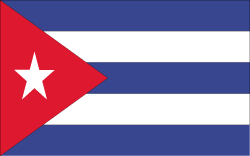 Cuba have criticized Microsoft for blocking its Messenger instant messaging service on the island and in other countries under US sanctions, calling it yet another example of Washington's harsh treatment of Havana.