New Labour seem hell bent on
imprisoning more or less anybody who doesn't comply with their narrow minded New Morality. And so now with the police and authorities hassling ever more people, it isn't surprising that the government feel that their image needs a bit of a propaganda
boost.
Beat: Life on the Street is a documentary funded by the Government following the lives of PCSO's. The Government-funded propaganda portrayed PCSOs as dedicated, helpful and an effective adjunct to the police
The Government has spent almost
ฃ2 million to fund programmes that are all but indistinguishable from regular shows, The Sunday Telegraph has established.
But unlike normal documentaries, the programmes are commissioned by ministers with the purpose of showing their
policies or activities in a sympathetic light.
The media watchdog Ofcom has disclosed that it had opened an investigation into one of the programmes, Beat: Life on the Street to see whether it breached its broadcasting code.
Media
freedom campaigners, broadcasters and opposition politicians expressed alarm over the Government-funded documentaries.
The Channel 4 newsreader Jon Snow said: I find it extraordinary. So the Government is funding commercial television
productions highlighting government policy? Presumably they don’t criticise government policy.
The Government has funded at least eight television series or individual programmes in the past five years. Subjects range from an Army
expedition to climb Everest to advice for small businessmen on how to improve their company’s fortunes.
However, the show about PCSOs and a newly commissioned programme about Customs and Immigration officers are particularly controversial
because they deal with sensitive political issues and policies.
Beat: Life on the Street , which was supported with ฃ800,000 of funding from the Ministry of Propaganda. One Whitehall source admitted of the documentary: It allows
the Government to have more air time and get its message across to people. Ministers are so pleased with the way the series, which drew in audiences of three million people on ITV and changed the public’s perception of the officers, that they
commissioned a third series, to be broadcast next year.
But The Sunday Telegraph established that the programmes appeared to break Ofcom’s broadcasting code by not making it clear that they were funded by the Ministry of Propaganda.
In a further apparent breach of Ofcom rules, this time on independence, Ministry of Propaganda officials were directly involved in the making of the series. They were allowed to view a second edit of individual programmes and were able to suggest changes
to some of the “terminology” and “language” used in the narration.
David Ruffley, the shadow police minister, said: People want the Government to put police on our streets, not propaganda on our television sets.
Beat: Life on the Street ITV1, Series 1: 29 October - 3 December 2006, 18:00. Series 2: 27 January - 2 March 2008, 18:00
Beat: Life on the Street is an observational documentary series about the work of Police Community Support
Officers (“PCSOs”) in Oxford and Lancashire.
The series was fully funded by the Home Office.
Two complainants, who became aware of the Home Office’s involvement with the series following press reports, objected that the
programmes were essentially government “propaganda” and the Home Office’s relationship with the series should have been made clear to viewers.
Ofcom considered:
Rule 9.4 – a sponsor must not influence the content and/or scheduling of a programme in such a way as to impair the responsibility and editorial independence of the broadcaster.
Rule 9.5 – there must be no promotional reference
to the sponsor, its name, trademark, image, activities, services or products or to any of its other direct or indirect interests. There must be no promotional generic references. Nonpromotional references are permitted only where they are editorially
justified and incidental.
Rule 9.7 - The relationship between the sponsor and the sponsored programme must be transparent.
Channel Television (“Channel TV”), which complied the programmes on behalf of ITV Network, confirmed that the Home Office fully funded the series. The sponsorship was arranged through the Central Office of Information
(“COI”). The programmes were made by an independent production company, TwoFour Productions.
Ofcom Decision: Breach of Rules 9.5 and 9.7
A sponsored programme is a programme that has had
some or all of its costs met by the sponsor with a view to promoting its own or another’s name, trademark, image, activities, services, products or any other direct or indirect interest.
There is no evidence to suggest that the sponsor
influenced the content of the programme so as to undermine the independence of the broadcaster and, as such, we do not find the series in breach of Rule 9.4.
Ofcom judged that overall the series portrayed the PCSOs and the contribution they made
to communities in a positive light. There were several elements in the programmes that contributed to this overall positive tone, including interviews with serving officers, who talked in detail about why they enjoyed their role.
Ofcom considered
that the overriding tone of the programmes was supportive and likely to leave viewers with a favourable impression of the PCSO service. Taking into account the fact that the Home Office sponsored these series, and that the PCSO service is at least an
indirect interest of the Home Office, Ofcom therefore considered that these references within the programmes were promotional, in breach of Rule 9.5.
Ofcom noted that the message displayed on screen during the credits immediately preceding the
programme contained the text: Let’s Keep Crime Down, and the strapline Keep It Safe, Keep it Hidden - In Association with Beat: Life on the Street. We considered these credits, broadcast at the start and end of each programme would
have notified viewers that the programmes were sponsored. However, the text did not tell viewers who the sponsor was.
Ofcom judged that the Home Office’s role and relationship with the series, as its sponsor, was not made sufficiently clear.
While a small, inconspicuous Home Office logo was displayed in the top right hand corner of the screen for a very brief period at the end of the sponsor credits, Ofcom considered that the sponsorship arrangement was not made transparent since the size of
its text and the brevity of the logo’s appearance on screen meant it was likely to have been missed by viewers.
In Ofcom’s view, the relationship between the sponsored programme and the Home Office’s role as its sponsor was
therefore not made transparent to the audience, in breach of Rule 9.7.

 Beat: Life on the Street is a documentary funded by the Government following the lives of PCSO's. The Government-funded propaganda portrayed PCSOs as dedicated, helpful and an effective adjunct to the police
 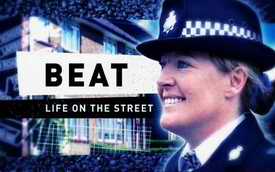 Beat: Life on the Street