Safermedia not impressed by channel 4's mix of education and entertainment
I love the way the way that Channel 4 are criticised for having an agenda for entertainment hiding behind sex education. Then at the same time the Christian nutters are hiding their
own agenda for prohibiting pre-marital sex hiding behind concern for teenagers' health.
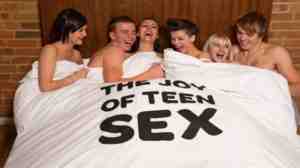
With Ofcom failing to act, the public must speak out against television programmes like C4's The Joy of Teen Se x which actively promote risky sexual behaviour
Channel 4's series, The Joy
of Teen Sex (JTS) has taken television to new depths of sexual explicitness by encouraging teenagers to be filmed attending their frank and honest Sex Advice Shop for help with their most intimate sexual worries.
C4 warned JTS would include graphic sex and full frontal nudity , but what follows is far worse: an arousing cocktail of graphic displays of sexual anatomy and sexual positions (heterosexual, homosexual and lesbian), followed
by pornographic demonstrations by actors who look like teenagers themselves.
The three disarming young female presenters - a doctor, social worker (not yet qualified) and sex coach (actually a sex-toy saleswoman) -
advise us, While we think you should wait until at least 16 before losing your virginity, we can't pretend teen sex is not happening, we should embrace it and face it head on.
The teenagers are encouraged to improve their sex lives
with advice on oral and anal sex, genital plastic surgery and piercing (we saw one lad having a ring inserted in his penis), S&M, sex toys, sex-enhancing drugs and working in the sex industry. No mention of avoiding promiscuous
relationships, just instructions to use condoms for so-called protection against STIs and pregnancy. Oral sex is portrayed in an exceptionally positive light despite recent research showing a link with mouth cancer. Advice on anal sex focuses on
making it less painful as opposed to warning of the serious health risks.
This promotion of risky behaviour is absolutely unacceptable and potentially dangerous to young people's health. It is the very opposite of training a child in the way he should go.
(Proverbs 22:6).
Over the past few weeks parents, practitioners, young people and journalists have been concerned about the Channel 4 series The Joy of Teen Sex . This has led to a number of us deciding to complain to
the Channel and recommend a way forward to ensure future programming is improved.
Below is a copy of our letter, sent to the Chief Executive (David Abraham) and Commissioning Editors:
We are a group of
professionals who are pro-sex education and accessible sexual and reproductive healthcare. We believe in accurate and open discussions about relationships and sex, and feel television can be an effective and powerful medium for sex education programmes
that are entertaining as well as informative.
For the past decade Channel 4 has been making programmes addressing sex and relationships issues for teens and adults including: The Sex Inspectors (2004), Orgasmatron/Body Shock
(2005), The Dark Side of Modern Love (2005), Am I A Sex Addict (2007), The Sex Education Sho w (2008-present), and most recently The Joy of Teen Sex . This clearly demonstrates a commitment on behalf of the Channel which
we feel is important given how little coverage these topics receive.
While these programmes may have attracted high viewing figures, they have been criticised by therapists, healthcare providers, and educators for
portraying inaccurate or outdated and misleading representations of sex education, healthcare, clinical treatments and therapies.
Many of us have been approached to participate on these programmes, or publicise them to
our colleagues/clients. We have repeatedly shared our worries about the direction programmes appear to be taking, although have had little success in having those concerns heard.
The recent series The Joy of Teen Sex
has been even more problematic than previous similar shows, raising complaint and concern from sexual and reproductive healthcare staff, sex educators, youth workers, sex researchers, parents and young people. In particular they have been worried by:
the range of topics covered, which may not be representative of the needs/questions teens may have
some of the skills and qualifications of the professionals used in the programme
the advice given to programme participants which left little room for exploration, choice, and the right to refuse sexual activity that doesn't appeal to them
misleading and/or
factually incorrect information, and frequently used unreliable statistics to back up points made. For example the inaccurate claim made at the start of each programme that the average teen has had three sexual partners by the time they reach 16. In fact
reputable research finds most teens have not had intercourse before they are 16.(1).
little attention paid to communication, confidence, respect, romance, affection, closeness
an
overemphasis on sexual techniques and products
offering options that may not be realistic for viewers, particularly younger teens or those on a low income
valuing the televisual
over more relevant issues to young people -- e.g. exploring vajazzling
consistent muddling of key terms (e.g. vagina used when vulva is meant), or using outdated terms such as hymen
inaccurate representation of what sex education is like, what sexual health services deliver, and how sex education and healthcare professionals should act. For example a medic making a client cry by showing her graphic images of
STIs; telling young women to expect bleeding as part of losing virginity; or not making clear the difference between normal vaginal discharge and an STI
mixed messages from programme makers in their casting calls to
young people/parents, and what professionals being consulted for the series were told it would offer (see Appendices 1 and 2)
an overall tone that encouraged teen blaming, slut shaming and homophobia, while
perpetuating messages of hegemonic masculinities and narrow sexual norms
not listening to numerous professional concerns during the development stage
no awareness of, or respect
for, cultural diversity
producers of the show using twitter to promote the programme while simultaneously dismissing professional and parent complaints of the series, referring to anyone who questioned the series as
haters (see also Appendix 3)
We are concerned the Commissioners and Channel Four have not shown due diligence over this series. It seems to be fitting a pattern of programme development where viewing figures are prioritised over empowerment but where
programmes are still marketed as educational . It does not appear to fit with the Channel's Public Service Remit or Corporate Responsibility.
We are worried misinformation about sexual and reproductive
healthcare and education has been grossly misrepresented, leading to parents feeling anxious, young people's right to accurate information not being delivered, and professional advice being ignored at all stages of programme development.
The right of young people to comprehensive sex and relationships education is still contested in this country. Many individuals and organizations oppose sex education on the grounds it will sexualise their children, claim it will
not give accurate information, or will encourage sexual activity rather than encouraging thoughtful decision-making about relationships. For this reason it is vital that any programme claiming to provide education about sex and sexuality does not provide
fuel for these arguments. Sadly we have seen reactions to The Joy of Teen Sex in public discussions and on places like twitter that indicate the programme is already being used as evidence of the failings of sex education.
As a result we fear this style of programme making could lead to young people and adults not getting the sexual and relationships advice they need; making the job of healthcare providers, therapists, educators, parents and youth
workers more difficult; and causing distress to young people and parents. We have been overwhelmed with emails from anxious teens and parents who support sex education, but are concerned about the messages of teenagers, sex, relationships and sexuality
portrayed in this series.
Channel 4 clearly intends to continue making programmes about sex and relationships. We are hoping as Channel Directors you will wish these future broadcasts to be accurate, entertaining and
empowering. To ensure this happens we are calling on Channel 4 to establish an advisory group made up of sexual and reproductive health practitioners, sex educators, youth workers, parents and young people to oversee the development of future programming
and ensure that it is entertaining, accurate and empowering. This idea is endorsed by Brook, the young people's sexual health service. All of the signatories below are happy to help you with this endeavor, and are now expecting you to listen to our
concerns, and promise quality sex and relationships broadcasting in the future. We look forward to hearing your response soon.
Signed Petra Boynton PhD, Social Psychologist and Sex Researcher, University College London
Dr Stuart Flanagan, Genito Urinary Physician Justin Hancock, Bish Training, trainer and consultant Lisa Hallgarten, Director, Education For Choice Wendy Savage MBBCh FRCOG MSc (Public Health) Hon DSc Marge Berer, Editor, Reproductive Health Matters
Romance Academy -- a nation-wide, holistic, relationships and sex education initiative Dr. Meg Barker, Sex therapist and social psychologist, The Open University Chris Ashford, Principal Lecturer in Law, University of Sunderland Alice Hoyle, Sex and
Relationship Education Advisory Teacher Alison Terry, Second year student, Applied Community and Youth Work Studies, University of Manchester K. Barratt, Second year student, Applied Community and Youth Work Studies, University of Manchester Becca
Thompson, BSc MA COT Steven Norris, Student Teacher Clare Bale, RGN, BA (Hons),MPH, PhD Candidate, University of Sheffield Dr. Lesley Hoggart, Principal Research Fellow, School of Health and Social Care University of Greenwich Matthew Greenall, advisor
on international HIV & sexual health programmes David McQueen, International Speaker and Youth Advocate Janet Horrocks, Healthy Schools Project Officer Joelle Brady, MSc, Researcher Dr Jayne Kavanagh, Medical Ethics and Law Unit Lead, UCL Medical
School and Associate Specialist in Sexual and Reproductive Health, Camden Provider Services David Evans, Researcher and Chief Executive SRE Project Peter Bone, Chair of the Advisory Council, PSHE Association
A Channel 4 programme described as a frank exploration of the love and sex lives of today's teenagers , has predictably wound up the nutters of Mediawatch-UK.
The series The Joy Of Teen Sex goes out after the watershed on January 19
and contains depictions of lesbian sex and also offers a guide to anal sex .
The series is fronted by Dr Rachael Jones, social worker Ruth Corden, and resident sex coach Joanna.
According to Channel 4, it revolves around
visitors to a walk-in clinic, the Sex Advice Shop, where the team are on hand to offer young people, and sometimes their parents, support and professional advice.
A Channel 4 spokesperson said:
Sex
is part of every teenager's life. This new series is not your typical sex education programme. It offers a frank exploration of the love and sex lives of today's teenagers. It presents solutions to the emotional and physical problems that many of them
experience.
No subject is off-limits, from teen pregnancy to sexual performance and genital health as the series will shine the spotlight on issues that young people care about and experience in their love and sex
lives.
Mediawatch-UK spokeswoman Vivienne Pattison said :
The series goes much further than The Sex Education Show [another C4 show]. It is basically
titillation television. It crossed the prurient line.
I'm also concerned about the title. If you put 'teen sex' into an internet search engine, you can imagine the sort of images you will get. That's who will be
attracted to this programme. It's soft porn. It's aimed at arousing the audience.
This programme comes along when we're having a serious debate on the sexualisation of children, led by Prime Minister David Cameron.
There is a real question in the role of programmes like this in this whole mess that we have created for ourselves.
The Sex Education Show Channel 4, 9 September 2008 to 14 October 2008, 20:00
This series of six magazine-style programmes was broadcast by Channel 4 between 9 September 2008 and 14 October 2008 in a timeslot before the 21:00 watershed.
As the title made clear, the series set out to provide educational information about sex to a wide range of viewers and was primarily aimed at young people.
The programmes covered a wide range of topics including pornography, sexual behaviour,
sexually transmitted infections, erectile dysfunction, fertility, contraception, pregnancy, parenting and abortion. The programmes, presented by the journalist Anna Richardson, were fast-paced and at times light-hearted. They contained short films,
studio discussions and interviews with the general public, health professionals and experts about sex and sexual behaviour.
Ofcom received a total of 152 complaints about the series. The majority of these complaints questioned whether it was
appropriate to schedule the programme at 20:00, before the 21:00 watershed, when younger viewers may have been watching. In addition, viewers raised specific objections to some of the content featured throughout the series. In particular, concerns were
expressed about the following:
close-ups of male and female genitalia in several programmes
close-up of the symptoms of sexually transmitted infections (“STIs”)
frank and open discussions about sex
a sequence in which teenagers were shown images of
penises and breasts.
Ofcom considered:
Rule 1.3 – children must be protected by appropriate scheduling from material that is unsuitable for them
Rule 1.4 – broadcasters must observe the watershed
Rule 1.17 – representations of sexual intercourse must not occur before the
watershed, or when children are particularly likely to be listening, unless there is a serious educational purpose.
Ofcom Decision: Not in Breach
In deciding whether this series was appropriately scheduled, Ofcom took account of a number of factors, including the nature of the content, the nature of the series and the
likely expectations of the audience. We considered that the series title clearly indicated to viewers the likely content of the programmes. Viewers were further alerted to the tone of the programmes by pre-transmission warnings which described the series
as “revealing” and “frank”. The context of the programme was clearly explained to viewers at the outset - before the first programme there was the following announcement:
…the birds and the bees…time for some sex education, whether you are
eight or eighty. Anna Richardson tackles everything you’ve wanted to know about sex but were afraid to ask in a frank and revealing new series…
The presenter then opened the first programme by telling viewers:
Sex, Sex, Sex. I’m
about to get the Great British public talking about sex…and why? Because we need to…when it comes to sex, Britain is in meltdown and those most at risk are our children…welcome to the Sex Education Show.
Ofcom also noted that in addition,
there were separate advisory warnings to viewers included within the programmes, immediately before all items which contained nudity. For example, in the fourth episode of the series, before a film dealing with a male sexual health screening was shown,
viewers were told:
…it’s time to get rid of the fear and ignorance. Here’s a video showing you exactly what happens when a man has a sexual health check-up, which means there will be some nudity in this film.
While the nature of
the images and discussions were frank, the series’ overall focus was clearly on the educational aspects of sex and could not reasonably be described as salacious or gratuitous. Ofcom therefore bore in mind that the series was attempting to examine sex
and sexual health issues in an accessible way that would engage viewers.
Ofcom considers that The Sex Education Show may have just as effectively achieved its educational aims, as described by Channel 4, if it had been broadcast after the
watershed, and without some of the difficulties the series has experienced, as evidenced by the level of complaints received by Ofcom.
Channel 4 should also be aware that the nature of some of the images in the series was at the limits of what is
considered to be acceptable under the Code for this time. In addition some of the sequences dealt with subject matter which would more properly be positioned in a post-watershed timeslot, for example the item on tantric sex in the first episode. This was
because during this item, Ofcom considered that the programme’s emphasis shifted from educating and informing viewers about sexual health to suggesting methods of improving sexual technique and arousal. While, this could not reasonably be described as
explicit, it nevertheless did address more adult themes, perhaps more appropriate to a post-watershed audience. For these reasons, this material came extremely close to breaching the Code.
The clip which attracted the largest number of complaints
occurred during the first episode and dealt with the internet viewing habits of teenagers, and one pornographic clip in particular. Ofcom noted that the actual clip was not shown, and that the focus of the segment was to highlight the dangers of young
people viewing such material. The broadcaster was not itself responsible for showing the material to the youngsters - it had emerged during the production of the programme that teenagers were viewing this type of material. The clip was shown to parents
to enlighten them about the explicit nature of the content their children may have had access to. It revealed, importantly, that some parents were unaware and also shocked by what content their children were accessing. While the discussion was frank, it
was not in Ofcom’s opinion gratuitously explicit and did not in any way condone or glamorise the accessing of internet pornography by teenagers. Further, it provided information to parents about how they could limit their teenagers’ access to the
internet to prevent them viewing such content. Ofcom therefore found that this sequence, in the context of an educational programme such as this, did not breach the Code.
In conclusion, having weighed up all the considerations in this difficult
area Ofcom found that, on balance, the scheduling of the series was not in breach of the Code. Mindful of the series as a whole, Ofcom was satisfied that the educational purpose of the series, and the broadcaster’s and viewers’ right to freedom of
expression, outweighed the concerns of complainants about the protection of children from sexual material.
We wish to stress, however, that the scheduling of the series was at the edge of acceptability under the Code. Without the very strong
context provided by the well understood style and approach of the broadcaster, or the seriousness and care with which the material was presented, it is doubtful that the scheduling of the series would have been judged as compliant with the Code.
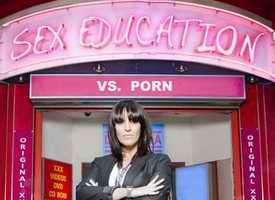
Channel 4 reveals a 'startling' aspect of teenagers' sex lives: pornography. Schoolchildren, it appears, are big consumers of porn. A new series, The Sex Education Show v Pornography , shows how teenagers' sexual attitudes, behaviour and hang-ups
are influenced by so-called adult entertainment.
A survey of 400+ pupils, aged 14 to 17, in four schools in the south and west of England suggests that the average teenager claims to watch 90 minutes of porn a week.
Three in 10 pupils say
they learn about sex from porn. Yet porn actors rarely use contraception on camera. For all the bravado, there's an undercurrent of ambivalence. Asked whether pornography might give boys or girls false ideas about sex , 60% said yes.
A
group of boys from Sheringham high school in Norfolk is shown photographs of 10 pairs of breasts. All say the most attractive are the ones that have been surgically enhanced. A posse of their female classmates says the same thing.
Similarly, when
the programme makers show boys and girls a woman opening her legs to reveal hair, there are gasps, some born of disgust. In porn, females are always shaved down below. Girls admit that they are starting to shave their lower regions and that boys expect
them to do so. The pupils' reaction shows how their expectations of what bodies should look like are framed by watching porn.
Unsurprisingly, 45% of girls at Sheringham are unhappy with their breasts and almost a third would consider surgery.
Presenter, Anna Richardson, says: Teenage boys told us that they feel very anxious about the size of their penises, because they're being influenced by porn. They're very anxious about their performance as and when they do come to have sex because
they see what happens in porn and think, 'Well, that's how it's meant to be'. Richardson says she found making the series distressing and disturbing.
Comment: Letter
to Ofcom
From Shaun
Dear Sir/Madam,
I wish to complain about the clearly biased and hysterical reporting used in these programmes. It seems as if Channel 4 have adopted an
agenda to impose censorship of the internet on everyone in this country. Is that because of their failing viewing figures ?
In the first programme, the female presenter went online searching for pornographic material. According to her, she was
taken to a site featuring a SIX year old within a matter of minutes! This was with a well known online search engine clearly visible. After FIFTEEN YEARS of online experience, I can assure you that this SIMPLY DOES NOT HAPPEN. It has NEVER happened to
me, and I hope it NEVER does! As Ofcom and the ITC before it, might be aware, I have been involved in this debate for some years. I therefore suggest the following possibilities regarding the six year old :
1: The woman was very unlucky, which is
extremely unlikely, especially given the time she was shown surfing.
2: The woman was in fact lying, and there was no such explicit image of a six year old girl. For obvious reasons the image wasn't shown on our screens so we could not in anyway
know.
3: The woman knew EXACTLY where to look for such a video, and used the images in the video to try and shock the rest of the team, and the TV audience, instilling fear and doubt into many I've no doubt. Whatever the circumstances it DID
NOT represent what happens in the real world.
On the second programme broadcast at midnight she hysterically approached Sony, and PC World asking them why they didn't always have enabled child filters installed on the PCs they sell, and accused
them of not caring about children. PC world and Sony are not in a position to judge what filtering software might be suitable for a potential purchaser. The onus should be on the parent to arrange protection, as I did for MY children, now aged 15 and 17
year old.
So far the programme has been a shocking, biased and completely hysterical slant on what can be a difficult issue. I am not saying there isn't justification for a debate, but please, let it be a rational and honest one.
As for
censorship, Ofcom will be aware that the Europeans have had explicit material available on Cable and Satellite for years, without evidence of harm to the Europeans. The BBFC have concluded the same, regarding R18 films in this country. Why therefore, is
this ridiculous hysterical programme being broadcast in its current form ?
Have you seen channel 4s main web page, and their Crusade against such material at www.channel4.com ?
Many thanks for your time.
Shaun also comments
to the Melon Farmers forum:
What's the difference between fantasizing about being with a stunningly beautiful girl, with perfect breasts and body or the male equivalent, or being able to play all the works of Beethoven and
Chopin effortlessly?
Both are completely unachievable for most folk. As is being a brilliant athlete, sportsman or actor.
Yet we are bombarded with images of brilliant musicians, athletes, actors and and sportsman all the time. The better
looking the human, the better it is. But no one suggests that these should be censored in any way, do they ?
But when it comes to the human body, and sex, we seem to have a problem Houston.

 With Ofcom failing to act, the public must speak out against television programmes like C4's The Joy of Teen Se x which actively promote risky sexual behaviour
  The Sex Education Show
  Channel 4 reveals a 'startling' aspect of teenagers' sex lives: pornography. Schoolchildren, it appears, are big consumers of porn. A new series, The Sex Education Show v Pornography , shows how teenagers' sexual attitudes, behaviour and hang-ups
are influenced by so-called adult entertainment.
Channel 4 reveals a 'startling' aspect of teenagers' sex lives: pornography. Schoolchildren, it appears, are big consumers of porn. A new series, The Sex Education Show v Pornography , shows how teenagers' sexual attitudes, behaviour and hang-ups
are influenced by so-called adult entertainment. 