UTV Motion Pictures, producers of Jodhaa Akbar , said they have moved the Madhya Pradesh High Court to lift the ban on screening of the film in the state.
We will take the matter to the Supreme Court if need be, a UTV official said
in a statement.
The entire film industry, including producers, distributors and exhibitors are up in arms against the state government's order for suspension of the screening of the film, it said.
In fact, the MP exhibitors association
has threatened to go on an indefinite strike if this arbitrary ruling is not reversed, it added.
The authorities cannot let a small group of individuals dictate what is or is not acceptable for the consumption of the general public, the
official said: If we allow our creative freedom to be dictated by every potentially aggrieved party, then I am afraid we will not have as vibrant and creative industry in the future. We will fight till the end.
The film was banned in
Madhya Pradesh on February 22 after demonstrations against it by the Rajput community. The film relates the tale of a Rajput princess converting to Islam to marry Mughal emperor Akbar.
Meanwhile, the film was banned in Sonepat city and elsewhere
in the district on Saturday after demonstrations against it by the workers of the Nationalist Congress Party (NCP) at cinema theatres. Earlier the Ambala district administration had banned the screening of the movie.
Ashutosh Gowariker's epic picture Jodhaa Akbar is free to be screened in Madhya Pradesh after UTV Motion Pictures, the producers of the film won a case against a court order in the state's high court.
The CEO of UTV Ronnie Screwvala said
that they had started screening the film from yesterday night, and that it was very unfortunate that he had to go to the court for getting it done.
The existing BJP government in the state had stopped the screening of the Ashutosh Gowarikar
flamboyance Jodhaa Akbar hardly a week after this film hit the theatres. The reason they had given was that they feared that the screening of this film would cause a law and order situation in the state.
The film received a ban in Rajastan
because a part of the community claimed that the facts mentioned in the film were twisted.
The community claimed that, Jodha Bai was not the daughter of Raja Bharmal of Amber as portrayed in the film, but the daughter of Motaraja Udai Singh of
Marwar. And she was married to Akbar's son Salim a.k.a. Jehangir. The theatre owners of Rajastan had feared to screen the film suspecting problem to the ordinary film goers from the miscreants.
The Indian Supreme Court has extended its stay on the orders passed by Uttar Pradesh, Haryana and Uttarakhand banning the screening of Jodhaa Akbar .
The stay extension came on a petition filed by the producer, UTV Software Communication
who alleged that the film was banned by Madhya Pradesh, Uttar Pradesh, Haryana and Uttarakhand governments after a section of the people objected to the alleged wrong depiction of some historical characters in the film. The ban in Madhya Pradesh was
lifted by the High Court.
The petitioner said, the fundamental right to speech and expression is being trampled upon by various State governments with the sole objective of gaining political mileage by banning the film. All approvals were
obtained from the authorities, including the Censor Board, before releasing the film.
The recent violence in some States over Jodhaa Akbar raises the question: Should public intolerance be allowed to hijack a medium that is exclusively the director’s space?
In his latest offering Jodhaa Akbar , director Ashutosh
Gowarikar made a savvy decision in focusing on the religious tensions between Akbar’s court, full of traditional Islamists, and the Hindu Rajput c ulture of Jodhaa. Without taking sides, the maverick filmmaker wisely portrays Akbar as a secular force who
wants to see “Hindustan’s” great religions coexist side by side. However, despite Gowarikar’s effective efforts in maintaining that balance, there was seen a streak of intolerance towards what some claim to be an inaccurate, rehashed version of
historical facts.
Even before its release, the film invited the ire of certain groups and was subsequently banned in several States. Noted historians have claimed that the basis of the movie, the relationship between Jodhaa and Akbar, is
completely faulty and incorrect. The Rajput groups of India are arguing that the name Jodhaa was the name of Jehangir’s wife.
Considering that Indian films are X-rayed by the stringent Indian Censor Board, is it appropriate for films to be
subjected to further censorship demands and bans based on public intolerance? After all, should not the Censors be the ultimate authority in deciding what content is suitable for public viewing?

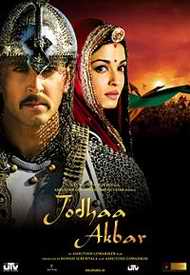 UTV Motion Pictures, producers of Jodhaa Akbar , said they have moved the Madhya Pradesh High Court to lift the ban on screening of the film in the state.
 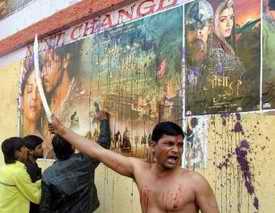 The recent violence in some States over Jodhaa Akbar raises the question: Should public intolerance be allowed to hijack a medium that is exclusively the director’s space?